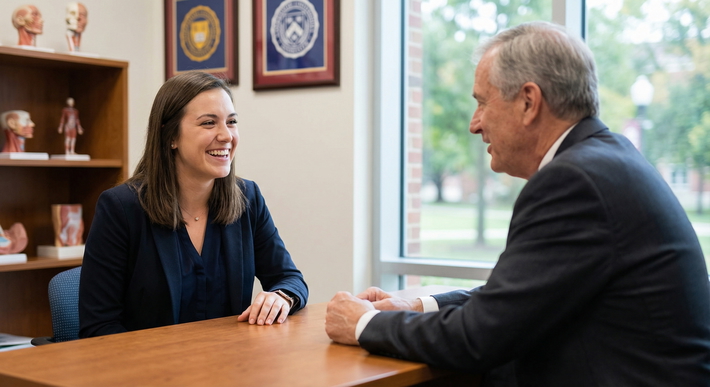
The interview went well. You felt it. The program sold you on their culture, the residents were friendly, the tour ended with a branded water bottle. Now you're back in your hotel room, heart racing, and you want to tell them they're your #1. Right now. I'm going to tell you to stop.
The Problem: The Post-Interview Adrenaline Trap
You just aced a medical school interview and the first impulse is to lock it down, fire off a Letter of Intent (LOI) while every detail is fresh, while your name is still bouncing around the admissions office. It feels proactive. It feels like love.
It's not. That's the Honeymoon Effect. You're riding the neurochemical wave of a well-orchestrated sales pitch. Programs are designed to make you feel this way. I've watched countless premeds draft an LOI at 11 PM the night of the interview, only to realize three days later that the curriculum doesn't match their learning style or the location is a dealbreaker.
The risk isn't just poor decision-making. An immediate LOI can smell desperate. Admissions committees have seen the overeager applicant who commits before comparing notes. It signals impulsiveness, not a quality they want in a future physician. You also lose strategic leverage. By committing on Day 1, you remove yourself from the dance of rank-list timing. The committee hasn't even finished scoring your interview yet. You're essentially yelling "Pick me!" before they've opened the folder.

Timeline Guide: Days 1-2 (The "Hot" Phase)
At this point, you're still buzzing. The lunch was better than expected. The simulated patient encounter clicked. You're certain this is the one. That feeling is valid. It's also unreliable.
Here's what you actually need to do in the first 48 hours:
- Write down everything. After each interview, I fill a notebook page with impressions: the energy of the students, the specifics of the integrated curriculum, whether the anatomy lab felt suffocating. Do this while it's raw, but label it as "Draft Zero."
- Do not open your email drafts. No LOI gets written yet. None.
- Save the thank-you notes. A short, genuine thank-you to your interviewer(s) within 24 hours is fine and expected. It's not an LOI. Keep it separate.
Sending an LOI now signals high interest, but you haven't earned the right to declare intent yet. You're competing against a flood of other candidates who are also in this phase. Your note will blend into a pile of similar "I just loved the program" emails. It lacks weight because no time has passed. The committee knows you haven't slept on it. An LOI sent on Day 1 smells like the Honeymoon Effect even if you're sincere.
Timeline Guide: Days 3-5 (The "Cooling" Period)
This is the moment you become an objective evaluator instead of a smitten applicant. The adrenaline has faded. You've slept on it. Now you open that notebook and ask hard questions.
At this point, you should review your interview notes with a critical eye. Did you actually connect with the residents, or were they just polite? Is the PBL curriculum going to drive you nuts after three months? Can you realistically afford to live there on loans? I once advised a student who adored a program's mission until she cross-referenced the cost of housing and realized she'd be commuting an hour each day. That kind of clarity only comes after the Honeymoon Effect wears off.
Make a simple scoring sheet. Rate the program on a scale of 1-5 across:
- Curriculum fit
- Location viability
- Resident/student culture
- Clinical exposure
- Gut feeling (after cooling)
If the program still lands in your top three, then you start drafting. If it doesn't, you save yourself an embarrassing retraction later. I've seen letters rescinded when a better offer came, a move that burns bridges. Better to stay silent than send a lie.
Timeline Guide: Days 5-10 (The Strategic Window)
Now you've validated your interest without looking desperate. The timing here is deliberate. Admissions committees are actively reviewing interview notes and beginning to shape rank lists. A thoughtful LOI arriving in this window lands like a well-aimed arrow.
Here's why this is the "Sweet Spot":
- Volume has thinned. The impulsive Day-1 senders are done. Your email isn't lost in a stampede.
- You appear organized. You took time to confirm your decision. That reads as maturity, not indecision.
- It's early enough to influence. Most committees haven't finalized rankings by Day 10. You can gently sway a tie.
At this point, you should draft a letter that's specific. Mention a particular interaction, "Speaking with [name] about the global health elective solidified my interest." Cite the program's unique elective in medical Spanish if it aligns with your background. Generic praise is forgettable. Show you paid attention beyond the branded water bottle.
I recommend sending it to the program coordinator or the director of admissions, depending on the school's preference. If you're unsure, a quick call to the office to ask where to direct an LOI is perfectly fine.
The data isn't scientific, but the concept holds: a Day 6 LOI cuts through the noise. It says, "I've thought about this carefully, and you're the one." That carries weight.
Timeline Guide: Day 10+ (The Final Send)
If you're still holding the letter on Day 14, something's off. Either you're not truly sold, or fear of commitment is paralyzing you. Be honest. It's okay to decide this program isn't your top choice. No LOI is better than a half-hearted one.
But if you are certain, at this point you should give it one last polish. Read it aloud. Check for spelling errors, I've seen a typo in a program's name tank an otherwise perfect LOI. Keep it to one page. The tone is confident, grateful, and final. Not desperate. Not begging. Something like: "After deliberate thought, I am writing to express my intent to matriculate at [School Name] if offered admission. This is my top choice."
Then hit send. And then, I mean this, step away. Don't refresh your email every six minutes. Don't call the office to "make sure it arrived." You're done. One polite follow-up with the coordinator a few days later to confirm receipt is fine, but beyond that, let it rest. Obsessive checking won't change the outcome, and it will eat at your sanity while you still have other interviews to crush.

So here's the nudge. Stop romanticizing the immediate impulsive send. Real intent, the kind that moves acceptance letters, requires a cooling-off period. Wait. Review. Then, between Day 5 and Day 10, send a letter that proves you're the thoughtful future physician they want. And after that, close the laptop and go live your life. You've got more interviews to ace.
Key takeaways:
- Wait at least 48 hours after the interview to avoid the Honeymoon Effect. Write notes, not letters.
- Send your LOI between Day 5 and Day 10 for maximum strategic visibility. You'll be taken seriously.
- Always review your interview notes objectively before committing. If it's not a true top choice, don't send anything.