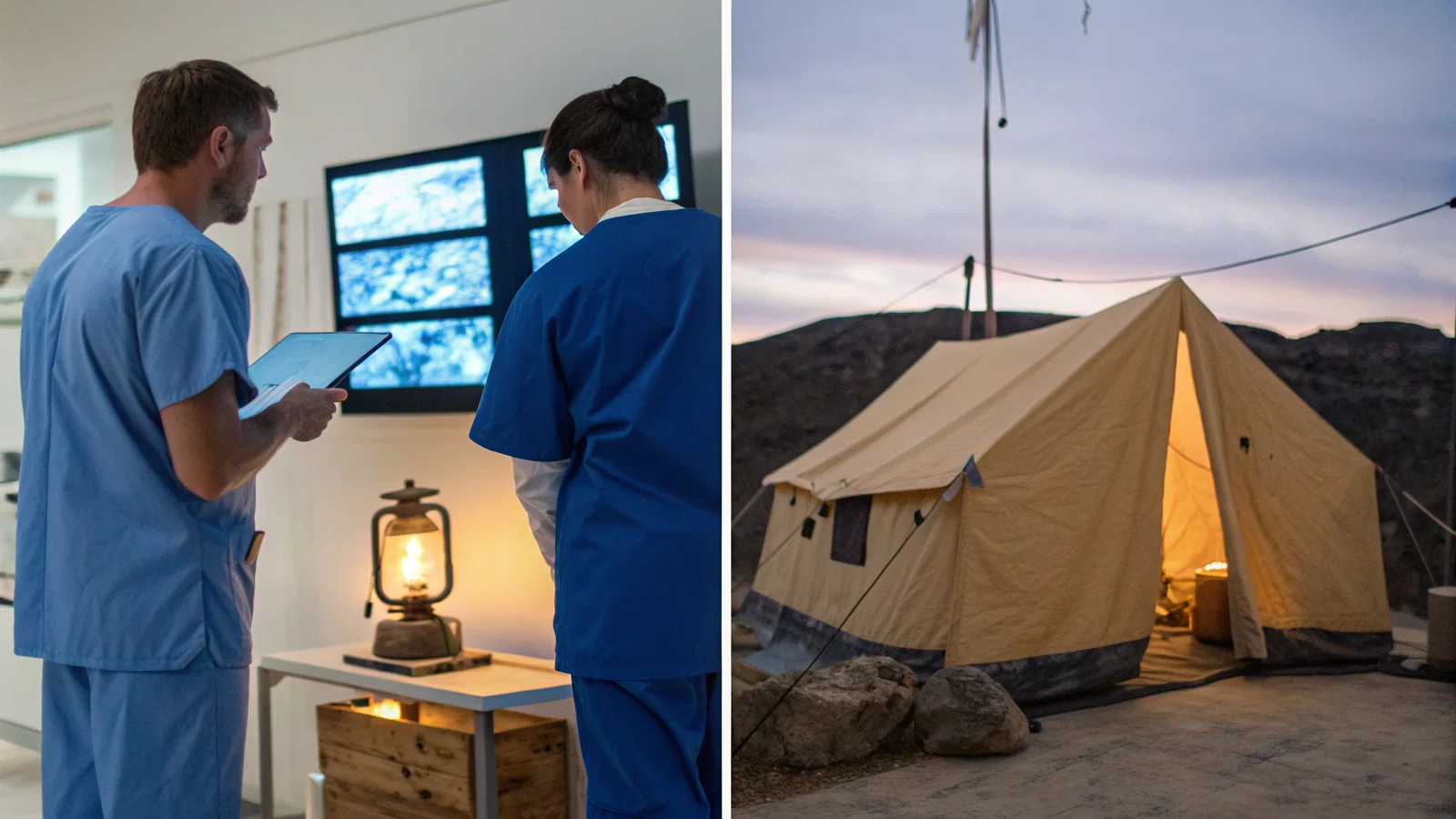
More than 60% of US medical students will participate in some form of medical mission work before graduation. Six out of ten. That number should make you pause, because it means the mere act of going no longer separates you from anyone. When the majority of the applicant pool checks the same box, the box stops mattering. What matters is the architecture of the experience: who supervised you, who can vouch for you, and what you can prove came out of it.
I have sat through enough residency selection meetings to tell you the uncomfortable truth about how these experiences are read. Applicants see a transformative journey. Program directors see a line item and ask one blunt question: was this vetted, or was this a vacation with a stethoscope? Everything in this article follows from that question.
The Landscape: A Statistical Snapshot of Medical Missions
Strip away the romantic framing and medical missions fall into exactly two paradigms, and the distinction is not cosmetic. It is structural, and it changes how every downstream reader interprets your file.
University-Sponsored (Institutional): A rotation arranged through your medical school or an affiliated academic partner. Curriculum-integrated, faculty-supervised, frequently credit-bearing, and documented in your official academic record. Think global health electives in the fourth year, exchange programs with partner institutions, faculty-led brigade trips with defined learning objectives.
Independent (Autonomous): Anything you organize yourself. An NGO you found, a rural clinic a family friend connected you to, a disaster-relief deployment during a gap year, a faith-based organization you fundraised to join. You built the logistics, you hold the risk, and you own the narrative.
Here is the strategic implication most students miss: the type of mission matters far more than the act of mission work. A supervised two-week elective in a low-resource district hospital signals assessed clinical competence. An unstructured independent trip signals whatever the reader decides it signals. And readers, I promise you, are cynical by default. They have read too many personal statements about "the child who changed everything" to take any of it at face value.
The University-Sponsored Model: The 'Vetting' Advantage
Let me break down specifically why institutional missions carry disproportionate weight, because students consistently underestimate this.
The rotation lives in your official record. A university-sponsored global health elective appears in your MSPE. It is graded or evaluated. It has learning objectives on file, an assessment instrument, and a faculty member whose name is attached to your performance. When a program director reads about that rotation, they are reading something the institution has certified. That is not a small thing. That is the entire currency of medical education: third-party verification of competence.
Letters of recommendation follow a strict hierarchy. I have watched program directors physically set aside letters. A letter from an attending physician, "Dr. Alvarez, Associate Professor of Surgery, who supervised your management of ward patients for four weeks", is spendable currency. A letter from a clinic coordinator, however kind, however glowing, is a sentiment. It tells the committee you are pleasant. It tells them nothing about whether you can be trusted with a decompensating patient at 3 a.m. University-sponsored trips generate the first kind of letter almost by default, because faculty are structurally present.
Risk mitigation is real and it matters more than students think. Institutional trips come with liability coverage, evacuation insurance, established site relationships, and safety protocols. This is not just about your physical safety abroad. It protects your transcript. A student who gets hurt, gets stranded, or gets entangled in a scope-of-practice incident on an independent trip has a problem that follows them into licensing questions. A student on a university rotation has an institution standing behind them. Program directors know this, and the ones who have managed international partnerships for years quietly discount independent trips precisely because of what can go wrong.
Networking is the hidden multiplier nobody prices correctly. The faculty member leading your brigade trip to Guatemala is frequently a residency program director somewhere, was trained by one, or shares a listserv with thirty of them. I have seen a student match at a program because the attending on her Ecuador rotation picked up the phone and called a former co-resident. That phone call does not happen after an independent trip, because there is no attending. There is no one to call.
The composite picture from program director survey data looks like this:
A 9.2 against a 6.8. That gap is not about the quality of your experience. It is about the verifiability of your experience. Committees trust what can be checked.
The Independent Model: Autonomy and Narrative
Now the counterargument, and I will make it honestly, because dismissing independent missions would be lazy analysis.
The gap-year narrative is genuinely powerful. A student who takes six months, self-funds, arranges visas, and embeds with an NGO in a refugee health setting has demonstrated something a scheduled elective cannot: sustained commitment without institutional scaffolding. Resilience. Resourcefulness. I advised an applicant who spent five months with a mobile clinic network in northern Jordan. She did not have a single faculty signature on the experience. She had something better, a story about building a vaccination tracking spreadsheet out of nothing because the paper records kept disappearing. She matched. The interview was twelve minutes of questions about that spreadsheet.
Niche specialization is the real prize. University rotations are standardized products. They go where partner institutions exist, which means a predictable map of sites. Independent work lets you go hyper-specific: disaster response logistics, a particular tropical disease burden, prison health, humanitarian demining medicine. If your application narrative is "I am pursuing infectious disease with a focus on neglected tropical diseases," an independent three-month placement studying schistosomiasis beats a generic university elective that happened to be abroad. Specificity reads as authenticity. Committees are starved for it.
The challenge is quantification, and this is where independent applicants fail. Without institutional backing, your CV line has to do all the work, and most students write it lazily. "Volunteer, Rural Health Clinic, Peru" is worthless. It could mean anything, so it means nothing. "Coordinated a four-person student team screening 300+ patients for hypertension and diabetes across six villages; built referral pathway to regional hospital" is an accomplishment. Numbers, scope, outcomes. If you cannot quantify it, a committee will assume there was nothing to quantify.
The grit factor is real but conditional. Program directors do respect the initiative required to self-organize international work. They respect it when it is framed as initiative. Framed as tourism, two weeks, no follow-up, vague outcomes, it reads worse than having done nothing at all, because it suggests you think the committee cannot tell the difference. They can.
Here is the decision logic I give every student who asks me:
If you answer "no" to any of the three gates, take the institutional route. Independent work is a high-variance bet. You only place it when the conditions justify it.
Data Analysis: Impact on Match Rates and Specialty Selection
Now the part where I get specific about outcomes, because the patterns here are consistent and most applicants have them backwards.
Competitive specialties skew hard toward institutional experiences. In surgery, neurosurgery, and similar high-competition fields, the composite data shows a stronger correlation between university-sponsored international rotations and successful matches. The mechanism is not mysterious. Competitive programs are selecting for people who thrive inside structured, hierarchical, high-accountability systems, because that is what their residencies are. A graded, faculty-supervised elective is a proxy for exactly that. An independent trip, however impressive, is a proxy for something else: individualism. Surgery does not select for individualism. It selects for reliable performance under supervision, and your application should speak that language.
The soft-skill data favors structure. Structured rotations with formal evaluation instruments correlate with stronger documented performance in interpersonal and communication skills milestones, the exact competency domains where end-of-rotation evaluations feed into your MSPE narrative. Independent trips generate no such evaluations. You may well have grown enormously as a communicator. Growth no one assessed is growth no one can cite.
Geographic bias cuts against conventional wisdom. Students assume an exotic international location outshines a domestic one. Wrong. For family medicine, psychiatry, and community-oriented programs, a structured rural rotation, the Mississippi Delta, Appalachia, an IHS site in the Southwest, frequently outperforms international travel. Those programs are asking a practical question: will this person serve our underserved population? A month in rural Kentucky answers it directly. A week in Bali does not. Location impresses committees far less than alignment between where you went and what the program does.
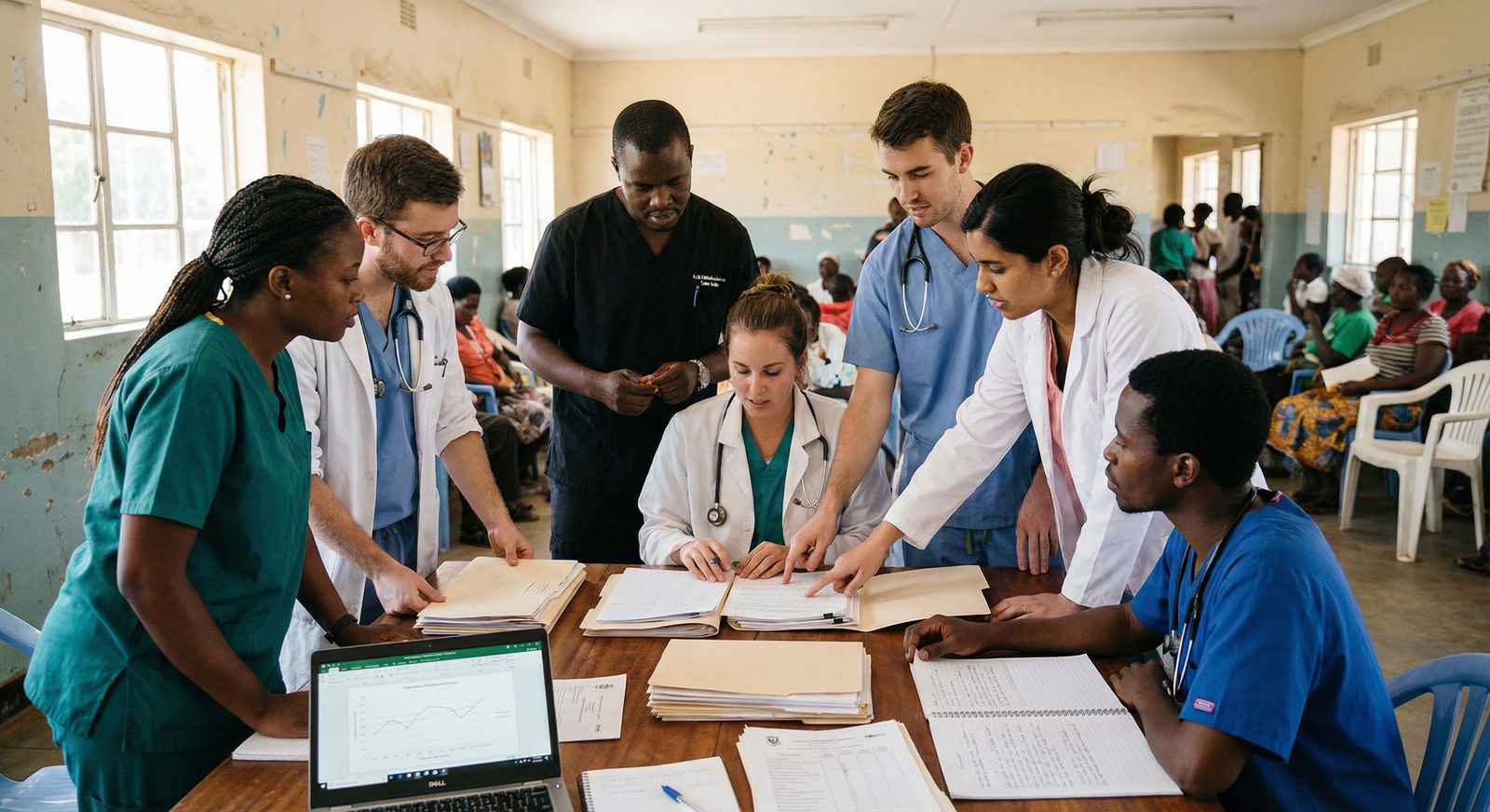
The red-flag analysis, because independent missions can actively damage an application. Three patterns trigger it:
- Scope-of-practice violations. If your personal statement describes you, a second-year student, "assisting in deliveries" or "performing procedures" abroad that you would never be permitted to do at an American hospital, you have confessed to an ethics violation in writing. I have seen committees catch this. It does not get discussed as a gray area. It gets discussed as a character concern.
- Mission tourism. Under two weeks, no continuity, no measurable output, heavy on photographs. This pattern is so common it has a nickname in committee rooms, and it is not a kind one.
- Misaligned framing. Describing the experience as something done for you, what you gained, how it changed you, rather than what you did. Program directors serving underserved communities notice immediately when a patient's suffering appears in your essay primarily as set dressing for your personal growth. Fair or not, it reads as extraction.
None of these red flags attach to university-sponsored trips, because the institutional structure prevents them by design. That is the whole point of the vetting advantage.
Strategic Implementation: How to Choose and Frame
The strongest applicants I have worked with do not choose between the two models. They sequence them.
The hybrid approach. Use a university-sponsored rotation to establish verified clinical credibility, and an independent project to establish narrative distinctiveness. The institutional trip answers "can this person perform under supervision?" The independent project answers "who is this person?" You need both questions answered, and each model answers one better than the other.
CV formatting is a signal, not a formality. University experiences go under your official title: "Global Health Elective, Department of Family Medicine, [Institution], [Site]." Independent experiences must carry a leadership title you actually earned: "Project Lead," "Logistics Coordinator," "Team Lead." Then quantify. Patient volumes, team size, funds raised, protocols built. The title tells them your role; the numbers tell them your impact. Omit either and the line collapses.
The interview pivot differs by model. For the university trip, speak collectively and clinically: "Our team managed X; I was responsible for Y under Dr. Z's supervision." For the independent trip, speak diagnostically: "I identified problem Y, and here is how I solved it." The first demonstrates you function in a system. The second demonstrates you build one. Confuse the two registers, claiming solo heroics on a faculty-led trip, or describing your independent work in passive institutional language, and you will sound like you are inflating or shrinking yourself. Both are fatal in a room full of people paid to detect exactly that.
Timing relative to the ERAS cycle. Experiences must be complete, or credibly framed as scheduled, by the time your application goes out in September. A global health elective in October of your application year helps your interview conversation but contributes nothing to your initial screening. Plan institutional rotations for late third year or early fourth. Place independent work in a gap year or pre-clinical summers. And protect your dedicated Step 2 study period like your match depends on it, because it does.
Conclusion: Synthesis and Final Verdict
The trade-off reduces to one line: structure versus autonomy. University-sponsored missions buy you verification, the grades, the letters, the institutional signature that committees trust. Independent missions buy you differentiation, the specificity and self-direction that no standardized elective can produce.
My verdict, after watching both succeed and both fail: university-sponsored is the safer bet, and safety wins competitive matches. Independent work is the strategic bet, and it wins differentiation when, and only when, the duration, funding, and niche are all real. If they are not, the bet loses.
Final advice, and I mean this: optimize for the quality of the learning, not the prestige of the letterhead. A superb independent project beats a lazy institutional elective. A superb institutional rotation beats mission tourism. The applicants who match well are not the ones who went somewhere impressive. They are the ones who can prove, in writing and under questioning, exactly what they did there.