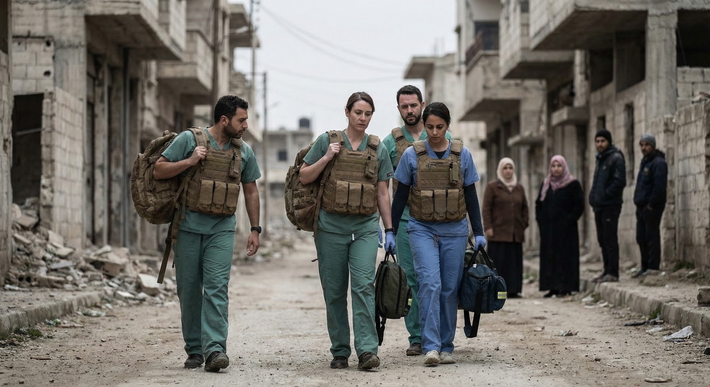
You step off the plane and the air hits different. Climate-controlled. Filtered. Your home airport smells like coffee chains and industrial cleaner, and for a second you can't place why that feels wrong. You've been gone three weeks, maybe six, and the terminal looks exactly as it always has. Same signage. Same moving walkways. Same people staring at phones. Nothing has changed. Except you.
Your bag feels heavier than it should. Not from souvenirs. From the fact that you just left a clinic where the autoclave broke twice a week and the pharmacy was a locked cabinet with more empty slots than stocked ones. Now you're standing under LED panels bright enough to perform surgery by, and your brain keeps waiting for the generator to cut out.
This is the moment program directors quietly call invisible re-entry. Invisible because nobody greets you with a debrief team. Invisible because your family is thrilled you're back and already planning dinner. Invisible because your co-residents ask "How was it?" the way they'd ask about a vacation, then move on before you've figured out which version of the truth to give them.
The loneliness lands fast. You've held stories no one in this terminal can hold with you, not really. The teenager with rheumatic heart disease who waited too long. The mother who thanked you for antibiotics like you'd handed her a miracle. The night the power failed mid-procedure and you finished by headlamp. Those experiences sit in your chest like a second pulse. And the people who love you most can't feel it.
The Moment You Realize You Don't Recognize Your Own Life
I still remember my own return: fluorescent glare, a Cinnabon, someone arguing about a delayed flight over a spilled latte. Trivial chaos. Back where I'd been, chaos meant a child seizing without benzos in stock. My nervous system hadn't recalibrated. Familiar things felt foreign, the volume of choice in the food court, the casual waste, the way nobody made eye contact unless they wanted something.
Program directors know this pattern. They just don't name it in orientation. "Invisible re-entry" is their private shorthand for the resident who comes back technically functional but emotionally sideways, quiet in rounds, snappish about supply waste, oddly flat when everyone expects glowing stories. The sensory overload isn't dramatic. It's a thousand small mismatches. Your apartment looks excessive. Your commute feels pointless. A patient complaining about a two-hour wait triggers something sharp and unhelpful in you.
And here's the part that isolates you further: you can't fully explain it without sounding ungrateful or dramatic. So you don't. You smile. You say it was amazing. You put your bag down in a bedroom that suddenly feels like it belongs to someone else.
Reverse Culture Shock Is Real, And Program Directors Rarely Prepare You
Let me tell you what actually happens in your head when you return to "normal."
Your threat system doesn't shut off on the flight home. In the field, hypervigilance was adaptive, you scanned for what could go wrong because things did go wrong. Back home, that same wiring collides with abundance and predictability. Grocery stores become exhausting. Group chats feel loud. The relative ease of your home hospital starts to feel morally complicated instead of relieving.
There are four stages almost nobody warns you about.
First comes the high, relief, hot showers, clean water you don't boil. That lasts days, maybe a week. Second is the crash: irritability, sleep weirdness, a sense that ordinary conversations are theater. Third is the comparison trap, where every resource at home gets measured against what you left behind and found wanting, or guilty. Fourth is the long plateau of partial integration, where you function but carry a private split between the person who was out there and the person expected to be here.
Family and friends mean well. That's what makes their reactions sting. They want you "back." They celebrate your return by restoring the old script, jokes, plans, questions about whether the food was weird. When you go quiet or get intense, they read it as jet lag or moodiness. It feels invalidating because it is a mismatch of frames. They're responding to the trip they imagined. You're carrying the one you lived.
Here's the insider secret program directors admit only after hours, if they admit it at all: most residencies have zero formal reintegration support. No structured psychological debrief. No protected time. No trained facilitator. You're expected to land, take a day off if you're lucky, and show up for rounds like the mission was a conference with worse Wi-Fi. I've watched faculty shrug and say, "They're adults, they'll process." That's not a plan. That's abdication dressed as trust.
Look at those numbers and you'll see why people say coming home is harder than leaving. Purpose clarity collapses. Belonging tanks. Isolation spikes higher than it ever did abroad, because abroad, at least the team shared the frame. At home, you're the only one holding it.
The Guilt Trap: Why Coming Home Feels Like Betrayal
There's a specific flavor of survivor guilt that medical missions produce, and it's meaner than people admit.
You didn't survive a disaster. You flew home on a schedule. That's exactly the point. Patients you treated, or couldn't fully treat, stayed in the system you left. You return to a world where a delayed lab result is an inconvenience and not a potential death sentence. Your body knows the difference even when your mouth is busy saying thank you for the welcome-home dinner.
Privilege awareness doesn't stay intellectual. It becomes cognitive dissonance with teeth. You stand in a shower that never runs cold and feel ridiculous for noticing. You waste a gauze packet in clinic and flinch. You hear a colleague complain about the EHR and something in you tightens, because you just worked where the "chart" was a notebook and a prayer. You can't simply "move on" from what you witnessed because your moral map got redrawn. Pretending otherwise is how people get brittle.
What attendings secretly wish they'd known before their first mission is simple and uncomfortable: the hardest clinical day abroad is often easier than the third week home. Abroad, the work is urgent and shared. Home, the meaning has to be self-generated while everyone else assumes you're fine. Several senior faculty have told me, off the record, that their first mission left them angry at their own hospital for months. Not because the hospital was bad. Because the contrast made waste and inequity impossible to unsee. They didn't need pep talks. They needed permission to let the anger metabolize into something useful instead of silent contempt.
That loop is real. Comfort triggers guilt. Guilt summons faces and cases. Worthiness wobbles. You reach for comfort again, or punish yourself by refusing it, and the cycle tightens. Breaking it isn't about "being grateful." It's about refusing to let guilt be the only translator of what you learned.
What Actually Happens in Debriefing (And Why It Often Fails)
Most mission debriefs are checkbox exercises. I'll say that plainly.
You sit in a room or on a Zoom call. Someone asks what went well, what could improve logistically, whether the formulary was adequate. Maybe there's a slide about self-care. People share a sanitized highlight and a careful challenge. Then everyone is "debriefed," and the organization files it under mission complete. That is a medical-operations review. It is not emotional processing.
Program directors will admit, when they're being honest, that their psychological training for this is thin. They're excellent at clinical systems. They're not therapists, and the debrief scripts they inherit from mission groups often weren't written by people who understand resident mental health under performance pressure. So you get a hybrid that satisfies risk management and leaves the actual human material untouched.
There's a hard difference between "medical debrief" and "emotional processing." One asks whether the sterilization protocol held. The other asks what it did to you to choose who got the last vial. One is necessary. The other is what determines whether you integrate or compartmentalize until something cracks later, in a relationship, in a code situation, in a quiet stretch of night float.
And the story you tell colleagues? That's usually not your real story. You know the acceptable version: teamwork, resourcefulness, grateful patients, personal growth. The real story might include moral injury, rage at global inequity, a moment of clinical doubt you still replay, or the shame of wanting to leave early. You edit because professionalism culture rewards polish. I've watched returned residents become excellent performers of normalcy, coffee with friends, solid smiles, eyes somewhere else entirely.
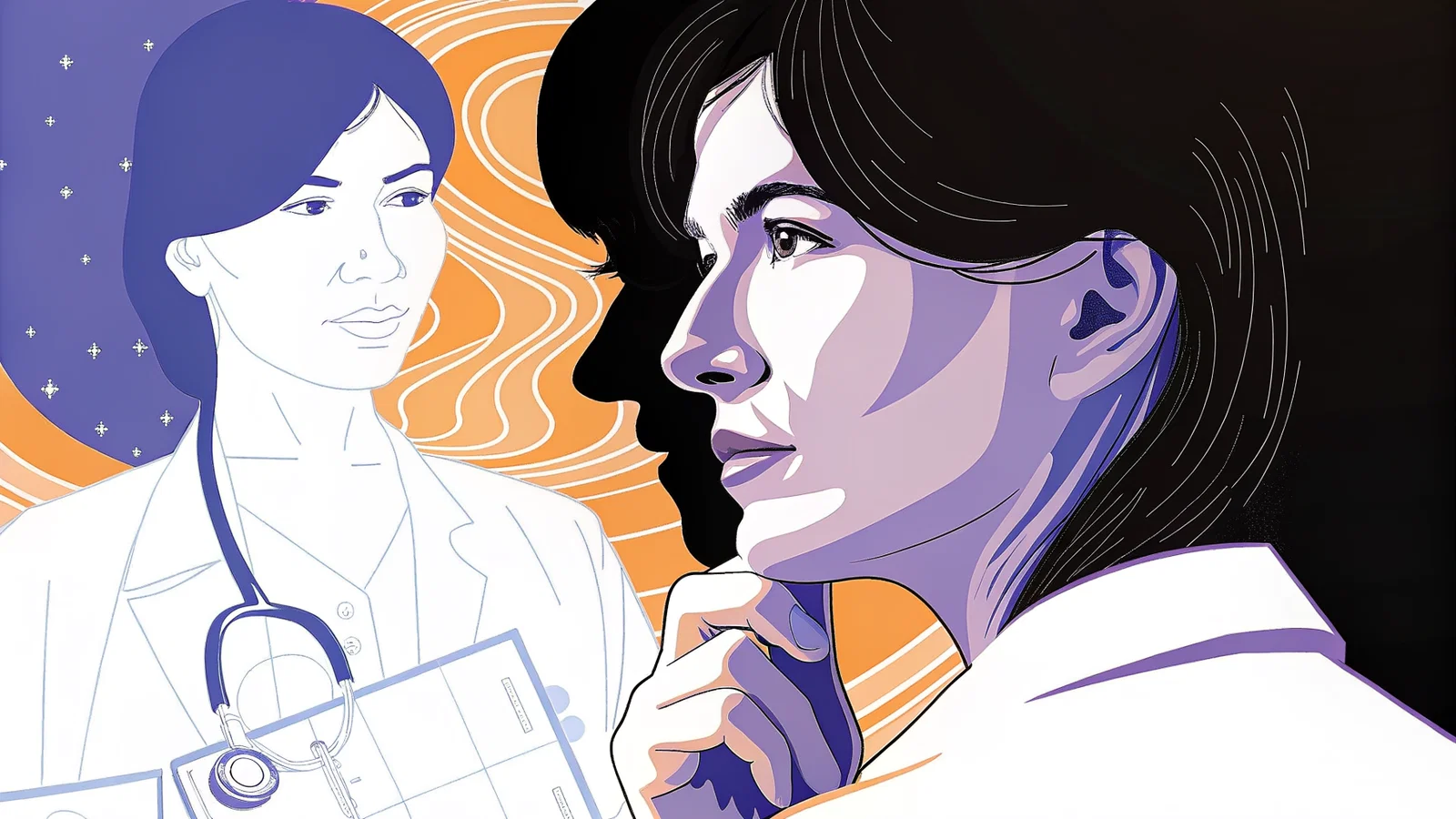
That performance costs energy you don't have to spare. If your only processing channel is the public narrative, the private material goes underground. Underground is where it turns into irritability, numbness, or a brittle kind of idealism that burns out fast.
Reintegrating Without Losing What the Mission Gave You
You don't have to hand your experience back at customs. You do have to work it deliberately, because institutions mostly won't do it for you.
Start with honest processing, not forced positivity. Write the cases that stuck, not for Instagram, for yourself. Name the guilt without letting it run the schedule of your life. Talk to one person who has actually done this work, not five people who want the highlight reel. Sleep and basic routines matter more than people admit; a dysregulated body makes every moral injury louder.
Find community with other mission-returned providers. Not the glossy global health interest group that meets twice a year, the quieter networks of people who will sit with the ugly parts. Some specialties have informal circles. Some faith-based and secular mission orgs maintain alumni groups that are more useful after return than before departure. Use them. Isolation is the accelerant; shared language is the extinguisher.
Create your own debrief ritual when the official one is thin. One attending I know blocks a half-day within the first week home: no clinical work, phone on do-not-disturb, a long walk, then a structured write-up of what she saw, what she did, what she can't stop thinking about, and one clinical habit she'll change. Another resident pair debriefs each other across two evenings with agreed rules, no fixing, no performing. Ritual isn't woo. It's scaffolding when the hospital offers none.
Then put the mission perspective to work in your ongoing practice. That's the integration that lasts. Become the person who notices unnecessary waste without shaming colleagues. Build teaching moments about diagnostic reasoning under constraint. Mentor juniors who are romanticizing their first trip so they leave with eyes open. Let the experience sharpen your advocacy and your humility in equal measure. The point was never to stay split between two worlds. It was to let the harder world teach the comfortable one something true.
Surface readjustment is logistics and sleep. Emotional processing is where most people try to sprint and wipe out. Meaning integration is when the guilt loosens and the lessons stabilize. Transformed practice is the long game, and it's available if you don't abandon the experience just to appear "fine."
You're not broken for finding home stranger than abroad. You're responding accurately to a real rupture in context, meaning, and moral atmosphere. Training programs still treat that rupture as a soft skill issue or a private mood. They're wrong. Prepare for re-entry with the same seriousness you prepare for the clinical work. Build your people before you go. Schedule your processing before the plane lands. And when you walk back into your hospital, don't rush to become who you were. Become someone who carried the mission forward without drowning in it.
The doctors who do this well don't erase the strangeness. They metabolize it into better judgment, cleaner priorities, and a lower tolerance for nonsense about what patients "should" be grateful for. That's not reverse culture shock talking. That's growth with its work boots on, headed into the next shift, eyes open, still yours.