
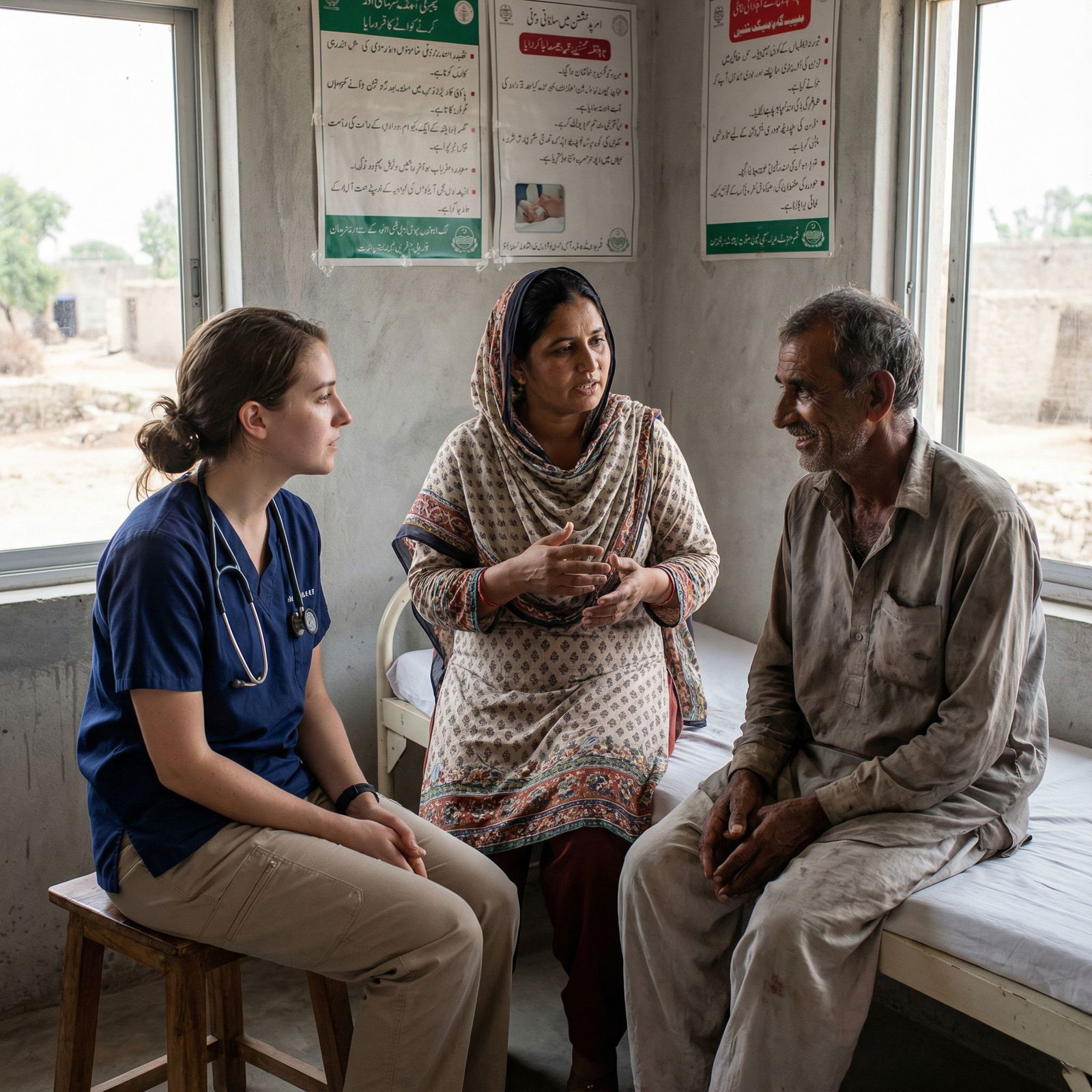
It’s January. You’re tweaking your CV before uploading it to VSLO, and there it is in the “Experiences” section:
“Medical mission trip to Guatemala – one week, provided care to underserved communities.”
Your preclinical advisor loved it. Your classmates were impressed by the Instagram pictures. But sitting on the other side of the table? Faculty are not all nodding along.
You want to know what they’re actually thinking when they hit that line. I’ll tell you. Because it’s not what your school’s global health interest group brochure told you.
The First Thing We Think When We See “Medical Mission Trip”
Let’s start with the uncomfortable truth:
When faculty see short-term “medical mission” or “medical tourism” on a CV, the default reaction is suspicion, not admiration.
I’ve sat in applicant review meetings where the room literally went quiet after someone read, “Provided direct medical care to rural patients in Honduras as an MS1.” Then someone said exactly what half the room was thinking:
“So this student did procedures abroad they’re not allowed to do here?”
That’s the core issue. Not your intentions. Not your “passion for global health.” Scope of practice, ethics, and exploitation.
Here’s the mental checklist that silently runs through an experienced reviewer’s mind when they see that one-week trip:
- Was there any actual supervision by licensed local clinicians?
- Did this student do anything they’re not credentialed to do at home?
- Was this about patient care, or about the student’s photo-op and personal statement?
- Did this help the local system, or burden it?
- Is this a red flag about judgment?
Nobody says this out loud in public-facing advising sessions. In closed-door rank meetings, they do.
The more senior the faculty, the more burned they’ve been by students who went abroad, did reckless stuff, and then bragged about it in personal statements. So they’ve become jaded.
What Differentiates Ethical Global Health From Medical Tourism
You need to understand the distinction the faculty actually care about. Not the marketing language on the program website.
They don’t care what you call it. “Global health elective,” “international medical outreach,” “mission trip.” Labels are cheap. Structure is what matters.
Here’s how faculty mentally separate “ethical global health” from “medical tourism,” even if they never use those words.
| Feature | Ethical Global Health | Medical Tourism Red Flag |
|---|---|---|
| Duration | Months | Days–1 week |
| Role | Observer/assistant, teaching, systems work | Direct procedures beyond training |
| Supervision | Local licensed clinicians | Mainly visiting foreigners or none |
| Partnership | Long-term institutional link | One-off trip, no continuity |
| Framing on CV | Emphasizes learning and systems | Emphasizes “providing care” |
If your experience looks, sounds, and smells like the right column, you have work to do in how you present it. And in how you think about it.
I’ve seen two applicants with nearly identical trips on paper:
- Applicant A wrote: “Performed suturing and wound care independently for rural patients in Haiti.”
- Applicant B wrote: “Shadowed local physicians in rural Haiti and assisted with logistics, patient flow, and health education under supervision.”
Same trip. Very different faculty reaction. Applicant A got multiple people around the table frowning and writing notes. Applicant B got a nod and we moved on.
Why? Judgment. If you openly advertise that you broke scope of practice in a setting with vulnerable patients, it reads like a walking ethics problem. No matter how “helpful” you felt at the time.
The Conversations That Happen in Rank Meetings
You won’t ever hear this part unless you’re behind closed doors.
Let me walk you into an actual committee discussion. Internal medicine, Midwest academic program. Applicant’s file up on the projector. US MD school, Step 2 244, solid clerkship comments. Then the personal statement:
“During my medical mission to Kenya as a first-year, I was able to suture lacerations, drain abscesses, and manage infections, which reinforced my passion for internal medicine.”
I remember the program director putting their pen down and saying, “Okay. Where was the supervision?” Someone else chimed in, “He was an MS1 doing procedures in another country that he can’t do here. That’s not a great look.”
What followed wasn’t subtle:
- Question about cultural humility and ethics
- Concern for boundary issues, both now and as a resident
- A comment: “This sounds like medical tourism, not partnership”
He didn’t get tanked just for that. But he slid from “probably rank near the top” to “middle of the list, if there’s space.” That’s how this really plays out. Not always a fatal hit, but a drag on your application that you’ll never see in your feedback.
On the flip side, I’ve seen the opposite. Applicant with a clearly structured global health experience:
“Over two summers, I worked with a long-standing partnership between my school and a teaching hospital in Malawi. My role focused on data collection for a quality improvement project on hypertension management and developing patient education tools in collaboration with local staff.”
Immediate reaction in the room: “Okay, that’s serious global health work.” Someone asked, “Did they publish?” Not, “Were they unsafe?” Very different energy.
The Red Flags Hidden in Your Wording
Here’s where most students shoot themselves in the foot: how they describe what they did.
There are certain phrases that instantly make faculty tighten up. If your CV or personal statement uses them, you’re asking to be judged harshly.
The biggest landmines:
“Provided care to underserved patients”
Translation in our heads: “Did stuff they are not licensed to do.”“Saw 80–100 patients per day in clinic”
As what, exactly? Translator? Observer? Unsupervised decision-maker? You’re inviting questions.“Performed procedures including suturing, injections, and casting”
As a pre-clinical student? You just admitted to practicing medicine without appropriate credentials.“These patients would not have received care otherwise”
That line is catnip for premeds and early med students. Faculty? We roll our eyes. It signals naive savior narrative and usually isn’t even true; it just means they wouldn’t have gotten your care.
Let me be blunt: if you did unlicensed procedures and now you’re bragging about it, you’re telling us you don’t understand boundaries. That’s a bigger problem for a residency program than your Step score ever will be.
Here’s how to defuse that:
- Emphasize observation and assistance, not heroic solo interventions.
- Name supervision clearly: “under the supervision of local attending physicians.”
- Talk about systems, context, and learning, not your “impact.”
If you can’t describe the experience without making yourself the main savior, that’s already a problem.
The Ethical Questions We Expect You To Have Asked (But Most Don’t)
Faculty who know global health assume that a mature student will have wrestled with at least some of these questions:
- What is my scope of practice here, and who decides it?
- How is this program accountable to the local health system?
- What happens to patients after I leave?
- Who benefits most from this trip—me, the sponsoring org, or patients and local clinicians?
If your reflection never gets past, “It made me appreciate how privileged I am,” that’s first-year undergrad-level thinking, not future-physician-level ethics.
I was in a panel once where we asked a strong applicant about her three-week trip to the Dominican Republic. She led with the usual line: “It opened my eyes to health disparities.” Then one of the interviewers pushed: “Did you have any concerns about your role there?”
She paused, then said this:
“Yes. Looking back, I’m not comfortable with some of what we did. I was allowed to do tasks I wasn’t trained for, because the local resources were stretched. At the time I felt helpful. Now I realize that good intentions aren’t enough, and that experience pushed me to seek more structured, longitudinal global health work with clear scope and supervision.”
That answer changed the whole room’s read on her. She went from “possible red flag” to “mature, self-aware, learns from experience.” She matched there.
You don’t have to have done everything perfectly. But you do have to show that you’re capable of ethical self-critique. If your takeaway is just “it was amazing to help so many patients,” you sound either naive or arrogant.
How to Salvage a Questionable Trip You Already Did
Let’s be honest. A lot of you are reading this after you already went on that one-week “mission trip” that, in hindsight, looks a little like a voluntourism brochure.
You can’t un-do it. But you can control:
- How prominently you feature it
- How you describe it
- How you talk about it when asked
First: decide whether it even belongs on the CV. If it was essentially shadowing plus a few days of handing out vitamins, it might be better as a one-line “international experience” under hobbies rather than a headlining “clinical” entry.
If you keep it as a formal experience, reframe it smartly:
Bad:
“Provided medical care to rural patients in Peru, including basic procedures and medication management, which strengthened my desire to work with underserved populations.”
Better:
“Participated in a short-term global health trip in rural Peru, observing local physicians and assisting with logistics, translation, and patient education. This experience highlighted both the appeal and ethical complexity of short-term international work and motivated me to seek more longitudinal, partnership-based opportunities.”
See the difference? One is self-congratulatory and blind to ethics; the other admits limitations and shows growth.
Second: be ready for the interview question: “Tell me about this trip.” If you oversell your role, someone with real global health experience will smell it instantly. They know what’s realistic for a first- or second-year to be doing.
Third: do something better after. A single, somewhat sketchy trip followed by serious domestic underserved work, or a structured research collaboration with a global site, reads differently than “I did this once and learned nothing.”
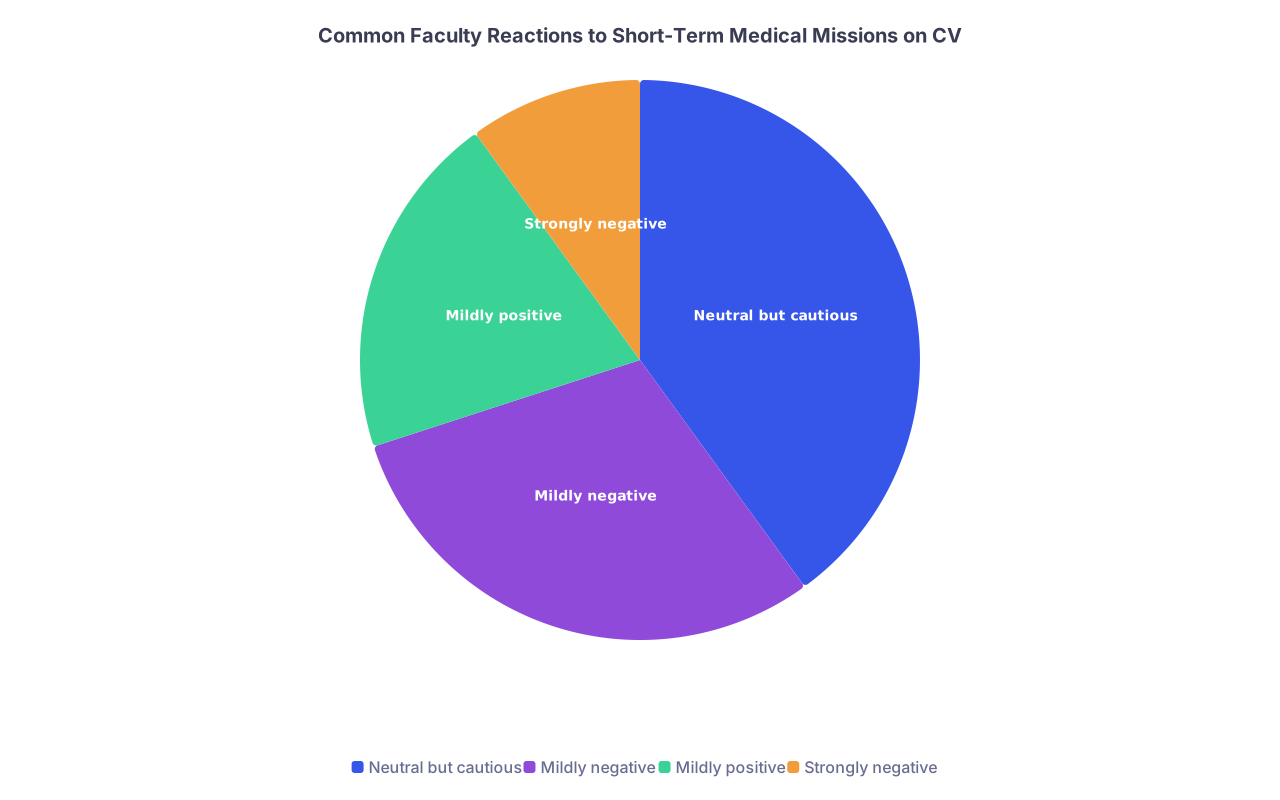
| Category | Value |
|---|---|
| Neutral but cautious | 40 |
| Mildly negative | 30 |
| Mildly positive | 20 |
| Strongly negative | 10 |
That’s roughly the breakdown I’ve heard around tables over the years. Notice: few are strongly positive.
What Serious Global Health Actually Looks Like To Us
If you’re truly interested in global health and not just trying to pad your CV, there’s a pattern faculty recognize. It doesn’t require international travel, but if you do go abroad, it has certain features.
Real global health work usually looks like:
- Longitudinal involvement (months to years), not a one-off week
- Embedded within institutional partnerships, not random NGOs you found on Google
- Clear supervision and appropriate scope of practice
- Focus on systems, education, research, or quality improvement
- Humility in how you talk about it
I’ve seen applicants who never set foot outside the US get more respect for global health commitment than those with three different “mission trips,” because they:
- Worked for two years with a refugee clinic in their city
- Did a serious project on language access or chronic disease management
- Collaborated with public health or policy teams
Faculty who do global work know that “overseas” isn’t the definition. Power, equity, sustainability, and humility are.
So if your motivation is genuine, shift your energy:
Spend less time searching “medical mission summer student” and more time asking your school, “What long-term partnerships exist, locally or internationally, where I can do something that doesn’t vanish when I leave?”
How to Answer Tough Questions About Medical Tourism in Interviews
If you have one of these trips on your CV, assume at least one interviewer will be skeptical. Some won’t bring it up. The ones who know the field might.
Here’s the mental script I’ve seen work well.
If they ask, “What did you actually do there?”:
Answer specifically but bounded:
“I was a second-year student, so my role was limited. I primarily observed local physicians, helped with logistics and patient education, and occasionally performed basic tasks like taking vitals under direct supervision. The experience actually made me more aware of the risks of students overstepping their role in short-term settings.”
That communicates three things: honesty, humility, and awareness of scope.
If they push on ethics—“Do you have any concerns about that model of care?”:
Do not defend the trip to the death. Show you’ve thought about it.
“Yes. I’ve become increasingly uncomfortable with short-term trips that are not part of long-term partnerships. At the time, I was drawn by the chance to help. Since then, I’ve learned more about medical tourism and how it can unintentionally undermine local systems or put students in inappropriate roles. That’s why I’ve focused my later work on more sustained, collaborative projects.”
That’s the kind of answer that calms down the global health faculty in the room.
What you absolutely should not say:
- “They really needed me.”
- “There were no doctors, so we had to step up.”
- “We did what we could, even if it wasn’t strictly allowed.”
That’s how you walk yourself into the “do not rank” bin for some programs.
Use the Experience to Show You’ve Grown Up
There’s one way a questionable mission trip can actually help you: as evidence you’ve matured.
If you’re going into something like family med, IM, EM, peds, or anything that touches underserved care, faculty want to know whether you’ve moved past the savior phase.
You can frame it as your turning point:
- You went in thinking you’d “save people”
- You realized the limits and risks of that mindset
- You came back and sought deeper, more ethical work
- You now have a more grounded view of what it means to work in low-resource settings
That arc is powerful. And believable. A lot of faculty took the same path themselves, just with less Instagram.
The key is honesty. If your CV screams “mission trip hero” but you claim in the interview that you were just an observer, that dissonance will hurt you.
Align your:
- CV descriptions
- Personal statement
- Interview answers
Into a coherent story that respects patients and doesn’t exaggerate your role.

| Step | Description |
|---|---|
| Step 1 | Short term trip |
| Step 2 | Reflect on ethics |
| Step 3 | Recognize scope limits |
| Step 4 | Seek mentorship |
| Step 5 | Join long term project |
| Step 6 | Develop sustained commitment |
That’s the path faculty respect. Not “I did three different one-week mission trips in three countries.”
FAQ: What Faculty Really Think About ‘Medical Tourism’ on Your CV
1. Should I leave my short-term mission trip off my CV entirely?
If it was genuinely superficial—3–5 days, mostly tourism with a little clinic time—and you learned nothing meaningful from it, yes, I’d seriously consider leaving it off or demoting it to a brief mention under “travel interests.” If you can speak about it thoughtfully and honestly, you can keep it, but don’t make it the core of your “service” identity.
2. Is it ever okay to have done procedures abroad that I couldn’t do at home?
From a faculty perspective, no, not as a student. If it happened, don’t brag about it. Focus on what you should have been doing, and discuss your current understanding of appropriate scope. Advertising that you “performed procedures independently” as a preclinical student in another country is one of the fastest ways to raise red flags.
3. How can I show genuine interest in global health without looking like a voluntourist?
Build longitudinal work. That can be a multi-year project with a local free clinic, refugee/asylee populations, or a formal global health track with your school. Emphasize partnership, systems improvement, and humility over heroics. Faculty are very good at spotting the difference between a “gap year mission” person and someone who’s actually committed to health equity.
4. Will one questionable mission trip hurt my chances of matching?
Usually it won’t sink you by itself, but it can chip away at your application if it’s framed poorly. It becomes more dangerous when combined with other signs of poor judgment. If you show honest reflection, clear ethical growth, and stronger experiences afterward, most programs will move past it. If you double down on the savior narrative, some will quietly move you down their rank list.
Three takeaways to keep in your head:
Most faculty now view short-term “medical missions” with caution, not automatic admiration.
How you describe and reflect on the experience matters more than the plane ticket stamp.
If you’re serious about global health, prove it through long-term, collaborative work—not a collection of passport photos in scrubs.


