
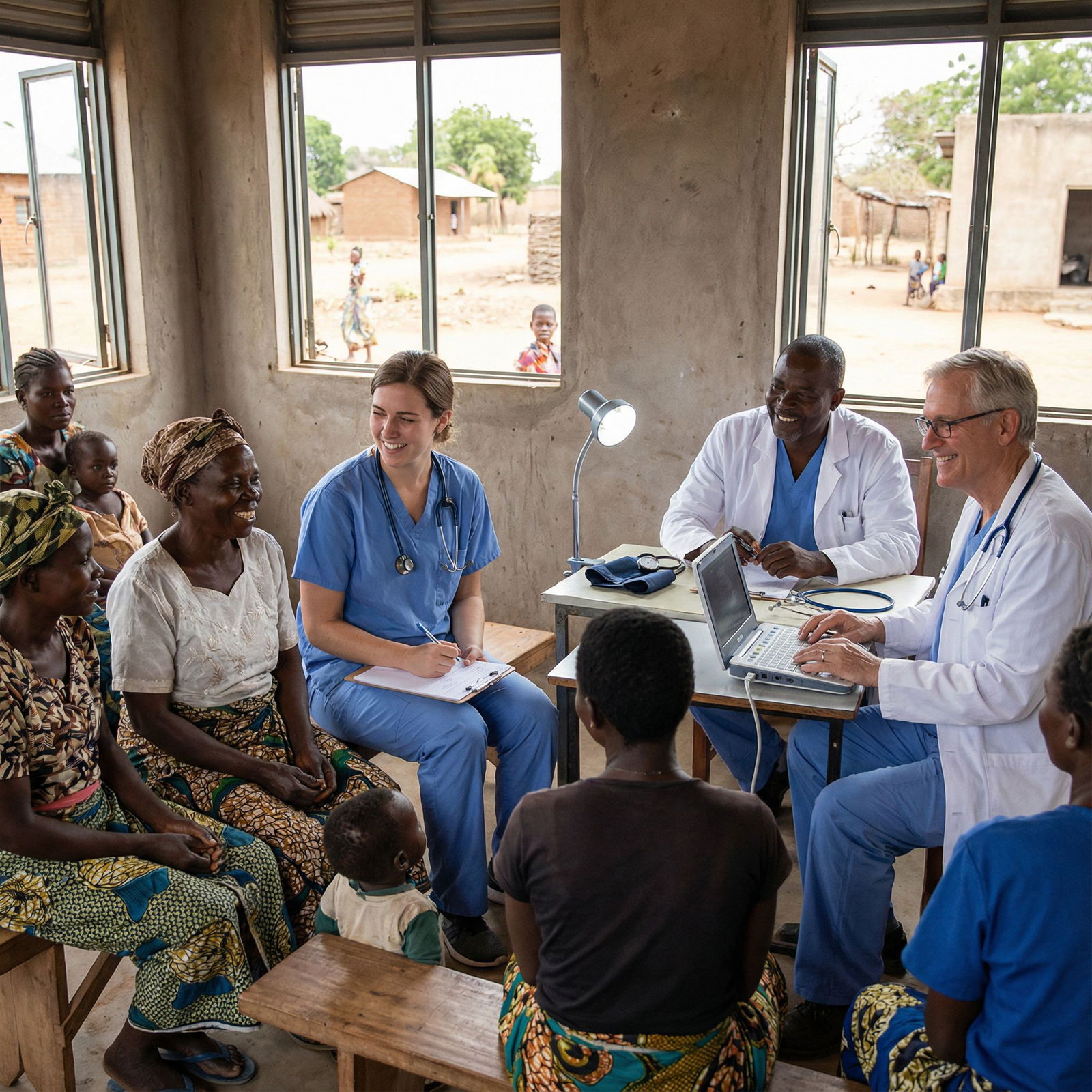
You are one week away from wiring $2,500 to secure your spot on a “life-changing” medical mission. The website shows smiling children, stethoscopes around necks, and the classic sunset group photo. The trip promises “hands-on clinical experience” and “the chance to change lives in just two weeks.”
You are excited. Your classmates are going. And you are about to make a serious ethical mistake if you are not careful.
I have watched too many students come back from these trips with a pit in their stomach once they realize what they were actually part of: unlicensed care, staged photo-ops, no follow-up for patients, and local systems quietly undermined, not strengthened.
Let’s walk through the red flags that tell you a medical mission is unethical, extractive, or performative charity wrapped in feel-good branding. If you see even a few of these, pause. If you see many of them, walk away.
1. “Hands-On Clinical Experience” For Underqualified Students
If you remember nothing else, remember this: if a trip is advertising clinical responsibilities that exceed your training level, that is not an opportunity. That is a liability. For patients, not just for you.
Major red flags:
- Preclinical students promised “direct patient care” or “procedures”
- Undergrads promised “shadowing plus basic treatments”
- No clear supervision ratio or qualifications of supervisors
- Vague lines like “you will help diagnose and treat patients”
You would (hopefully) never walk into an American hospital as an MS1 and start suturing lacerations alone because a flyer said “great opportunity to build procedural skills.” Doing it in a low-income country does not magically become ethical. It just becomes harder for anyone to stop you.
I have heard the same story from too many students:
“They let us run our own station. We saw the patients first and then sometimes the doctor would come by… but honestly, not always.”
That is practicing without adequate supervision. And if the local population is poor, marginalized, or desperate, they are even less likely to question your credentials.
Bottom line: if the selling point is that you will get to do things you are not allowed to do at home, that is exploitation, not education.
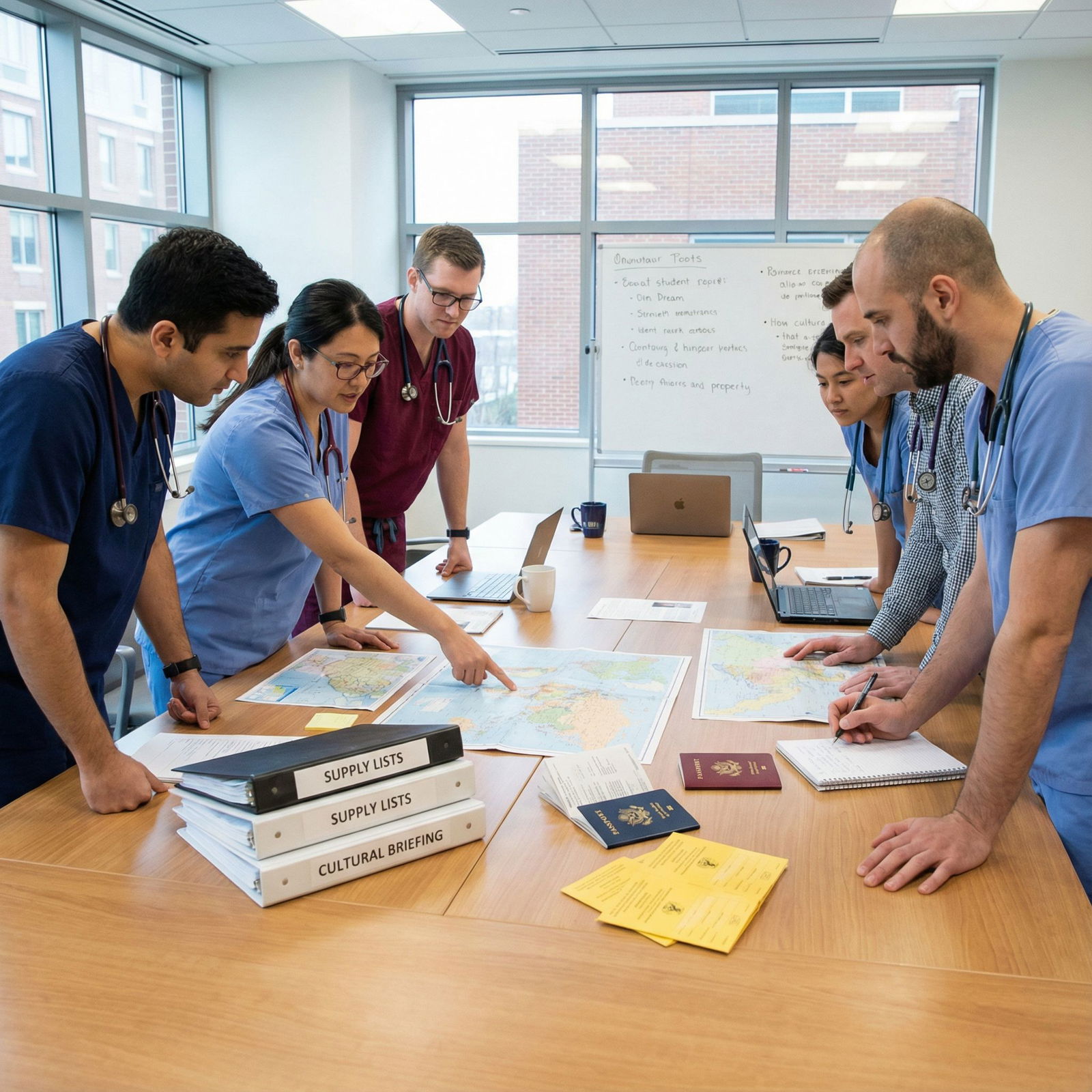
2. No Clear, Local Medical Leadership
Ethical missions are led by people who actually live and work in the community. Unethical ones are run like pop-up clinics dropped from the sky, with foreigners calling the shots for a week and then disappearing.
You should be able to answer, very specifically:
- Who is the local medical authority in charge?
- What is their role year-round, not just during your trip?
- How are plans made with the local health system, not just “in consultation with community leaders”?
If the organization cannot name specific local partners (with roles, not just “we work with local doctors”), be suspicious. If the only leadership profiles on the website are from North America or Europe, that is another red flag.
The worst version: a “mission” that bypasses the local hospital or clinic entirely because “they are too disorganized” or “they charge fees and we are free.” That usually translates to: “We do not like following local rules or acknowledging local expertise.”
You should be uncomfortable anytime you hear:
- “We are more efficient than the local system.”
- “People trust us more than local doctors.”
- “The ministry of health is slow; we just go straight to the people.”
That is how you quietly undermine local healthcare and reinforce the idea that outside saviors are better than local professionals.
3. No Continuity of Care or Follow-Up Plan
If a trip is not deeply obsessed with follow-up, it is playing with patients’ lives. Period.
Danger signs:
- Short-term trips (1–2 weeks) with no written plan for who manages complications or chronic diseases after you leave
- No integrated referral pathway to local clinics or hospitals
- Emphasis on “number of patients seen” rather than outcomes or continuity
- No system for medical records that stays with local providers
Ask very concrete questions:
- “If we start someone on antihypertensives, who refills them?”
- “If there is a complication from an antibiotic or a procedure, who handles it next week?”
- “Where are the records stored and who owns them?”
If the answer sounds like: “We give them enough meds for a few months and then we will be back next year,” that is not medical care. That is drive-by treatment.
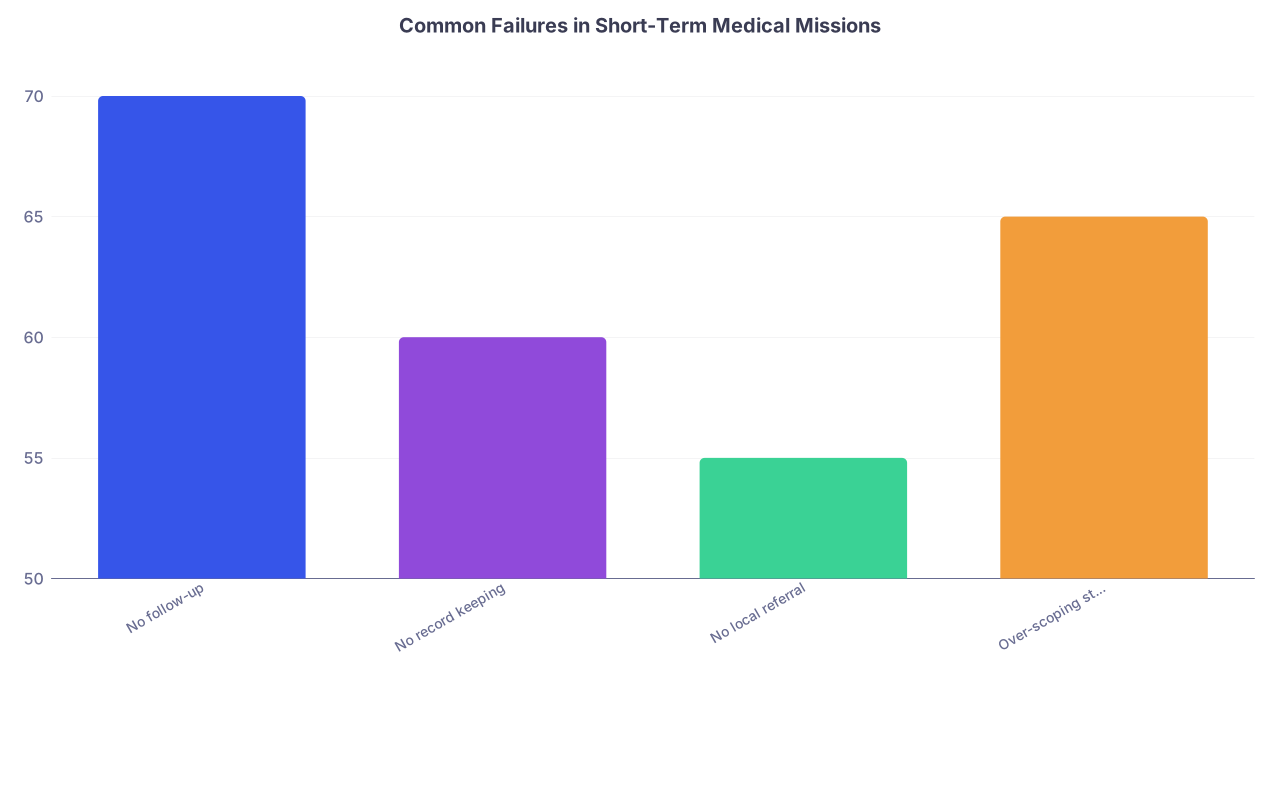
| Category | Value |
|---|---|
| No follow-up | 70 |
| No record keeping | 60 |
| No local referral | 55 |
| Over-scoping student roles | 65 |
Those percentages are not made up for effect. When people have audited short-term missions, the rates of poor continuity, sloppy documentation, and abandoned patients are exactly that bad.
4. Vague or Nonexistent Credentialing and Scope Limits
This one is simple: if no one has asked for your license, training level, or CV, do not go.
Trip organizers should care deeply about:
- Who is licensed to practice and where
- Who is still in training and exactly what they can or cannot do
- Matching scope of practice to local regulations
If they do not:
- No credential verification forms
- No pre-trip orientation about scope of practice
- No written policies on what students can and cannot do
- No mention of malpractice, liability, or local licensing
…then they are either ignorant of medical ethics or intentionally ignoring them. Both are bad.
Imagine a hospital at home letting random foreigners walk into clinic and “help out” without checking licenses. You would call that insane. Apply the same standard abroad.
5. Poverty Tourism and Performative Storytelling
Scroll the organization’s Instagram or website. You will see the truth faster than any mission statement.
Red flags:
- Tons of photos of foreign volunteers, very few of local clinicians
- Children’s faces splashed everywhere, no consent mentioned
- Posed “with the poor” photos, especially of patients in vulnerable states
- Dramatic “before and after” photos for conditions that need long-term care
- Self-congratulatory captions: “So humbled to be able to change lives here”
If the visuals make you feel like a hero and reduce patients to scenery, that is not an accident. It is the brand.
You should also worry if:
- There is no clear media policy about photography and social media
- You are encouraged to “share your experience” in real time, with selfies in clinic
- Organizers say things like “photos help us fundraise, so take a lot!”
That is where missions slide into what they really are: poverty tourism with a stethoscope.

6. High Fees with No Transparent Budget
You are asked to pay $2,000–$4,000 “to cover trip costs and support the clinic.” Fair enough—flights and logistics are not free. But where is that money actually going?
Ethical programs will show you a breakdown. Unethical ones hide behind vague language about “support” and “sustainability.”
Look for:
- Itemized costs (flight, lodging, food, local staff, supplies, admin)
- Clear statement of how much goes to local health systems vs. US/EU overhead
- Distinction between volunteer fees and direct patient care funding
If all you see is one big number and generic claims like “your fees support local healthcare,” assume most of it is paying for your experience, not their system. And yes, that matters.
Pay close attention if:
- The lodging is very comfortable (nice guesthouse, private rooms, tourist excursions)
- There are built-in tourist activities (safaris, beach days) listed as part of the “package”
- The organization is for-profit but still uses “mission” language
| Program Type | Budget Detail | Local Partner Funding | Tourism Focus |
|---|---|---|---|
| Ethical university-affiliated | High | Clear, substantial | Low |
| Ethical NGO with local board | Medium-High | Documented | Low-Medium |
| Commercial 'voluntourism' trip | Low | Vague | High |
If they will not show you basic numbers, assume the worst.
7. “We Do Everything” Instead of Supporting Existing Systems
Any program that boasts about how many services it provides in a week—“surgery, dentistry, primary care, OB, pediatrics!”—without heavy emphasis on integration with local systems is almost certainly causing harm.
Classic mistakes:
- Bringing in services in a way that makes local clinics look inferior or redundant
- Creating temporary parallel systems where people wait for the foreign team instead of using local care
- Donating equipment that no one can maintain (or that requires parts that are impossible to source locally)
You should be very suspicious if:
- The team “sets up shop” in a school or church instead of working inside existing clinics or hospitals
- There is no formal agreement with the local health authorities
- Locals describe the trip as “the time the real doctors come” while ignoring their own year-round providers
Listen carefully to how organizers talk about local care. If you hear contempt, condescension, or constant comparison—“they cannot do X, so we step in”—that is your cue to back away.
8. No Serious Pre-Departure Training in Ethics and Culture
An ethical program will spend more time training you than using you. If orientation is an afterthought, you should assume the ethics are, too.
Minimum things you should see:
- Pre-departure sessions on ethics of short-term global health work
- Deep dive into local healthcare structure, common diseases, and referral patterns
- Cultural humility training, not just “learning a few phrases”
- Clear behavioral expectations (confidentiality, consent, media, boundaries)
Red flags:
- “Orientation” is a 1–2 hour Zoom about what to pack and basic safety
- No assigned reading or modules on global health ethics
- Organizers dismiss your questions with “you will understand once you get there”
- The vibe is “adventure + service,” not “partnership + responsibility”

| Step | Description |
|---|---|
| Step 1 | Interest in Mission |
| Step 2 | Research Organization |
| Step 3 | Do Not Go |
| Step 4 | Review Scope and Roles |
| Step 5 | Assess Follow-up Systems |
| Step 6 | Join Mission Responsibly |
| Step 7 | Clear Local Partners? |
| Step 8 | Proper Training Offered? |
| Step 9 | Satisfactory Ethics? |
If the only prep is a packing list and flight details, you are not joining a serious healthcare effort. You are joining a trip.
9. Grandiose Claims, No Data
Pay attention to the language:
- “Transforming healthcare in rural communities”
- “Providing care where none existed before”
- “Changing lives in just one week”
Then look for the receipts:
- Any published data?
- Any basic outcomes tracking?
- Any evaluation beyond “we saw 800 patients”?
If there are no numbers beyond visit counts and no attempt to measure impact over time, you are dealing with storytelling, not accountability.
Unethical missions love anecdotes: the dramatic case they “saved,” the child they “rescued,” the “gratitude” from the community. Ethical programs are quietly obsessed with boring things: hypertension control rates, vaccination coverage, continuity, handover quality.
If an organization claims big impact but cannot show small, unglamorous metrics, be wary.
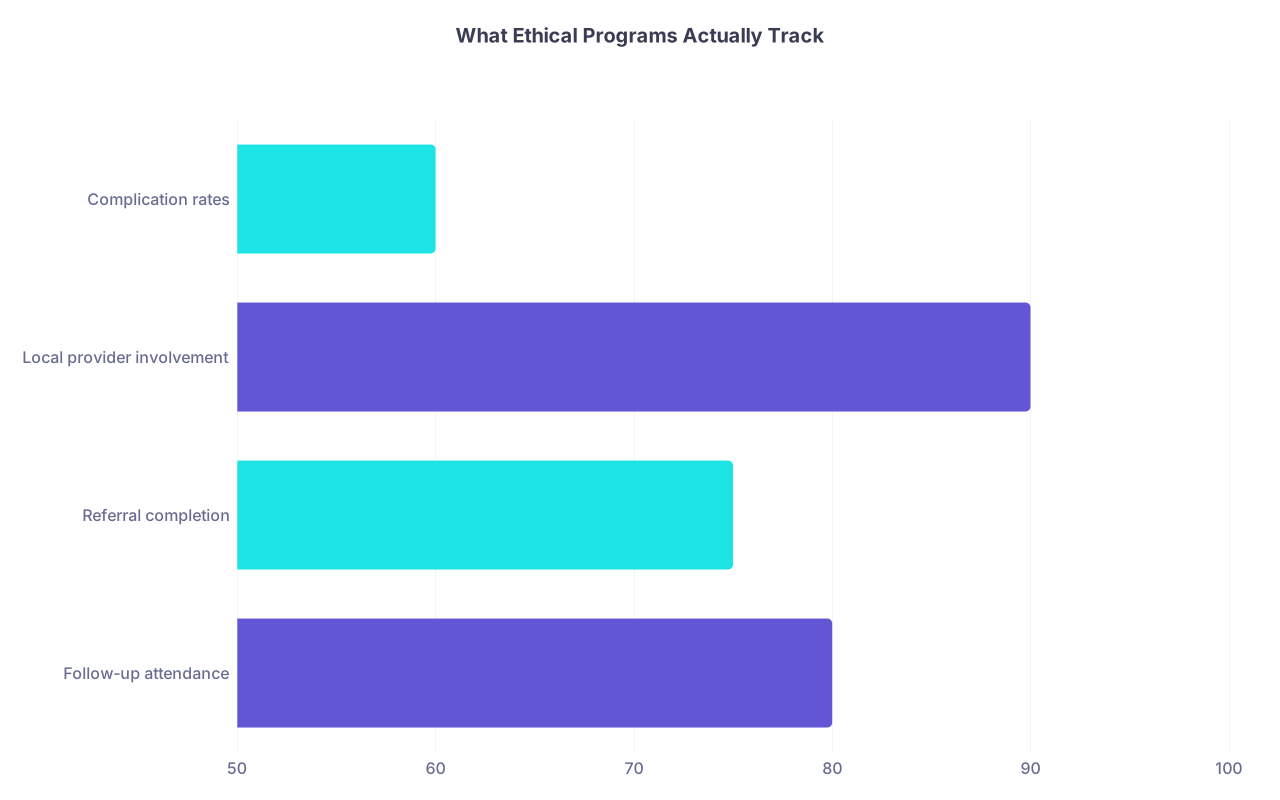
| Category | Value |
|---|---|
| Follow-up attendance | 80 |
| Referral completion | 75 |
| Local provider involvement | 90 |
| Complication rates | 60 |
These are the kinds of numbers you want them to at least be trying to collect.
How to Vet a Medical Mission Before You Say Yes
You avoid bad missions by asking questions that unethical organizations hate.
Ask them, bluntly:
Who are your local partners?
Names, roles, and how long you have worked together.What exactly will my role be, given my training level?
What procedures or tasks are off-limits to me?How is follow-up handled after we leave?
Who manages chronic medications, complications, and referrals?What is your policy on photography, social media, and patient consent?
Do patients explicitly consent to having their images used for fundraising?How are volunteer fees used?
Show me an approximate budget breakdown.How do you measure the impact of your work?
What have you changed or improved in the past 3–5 years?
If the answers are vague, defensive, or dismissive—walk away. The worst mistake you can make is telling yourself, “Well, at least I am doing something.”
“Something” can be harmful. Unethical missions count on your guilt and your desire to help to override your judgment.
If You Realize Too Late That a Trip Is Unethical
Sometimes you only see the red flags when you are already on the ground. I have seen that too. The question then is what you do about it.
Here is what you do not do:
You do not lean in and take on the unethical tasks “because they will just find someone else if I say no.” That is how harm persists.
Instead:
- Refuse to exceed your scope. If they pressure you to practice unsupervised, you say no.
- Seek out local clinicians. Ask how you can assist them rather than run your own station.
- Speak up about consent and photography. If you see colleagues taking inappropriate photos, challenge it.
- Document concerns and debrief when you return. With your school, your department, or a trusted mentor.
- Do not go back. And do not send others there.
You may upset people. You may feel like you “wasted” the trip. You did not. You protected patients from worse harm and you refused to participate in a broken system.
That matters.
FAQ (Read This Before You Sign Up)
1. I am a preclinical med student. Is there any ethical way for me to do a medical mission?
Yes, but not the way most glossy websites promise. As a preclinical student, your roles should be clearly non-clinical or heavily supervised: observing, helping with logistics, assisting local staff within strict limits, working on public health education that has been requested by local partners, or contributing to research or quality improvement under proper oversight. If a trip offers you independent patient care, prescribing, or procedures, that is not ethical. Look for programs tied to universities or established NGOs with a track record and explicit student scope-of-practice policies.
2. What if the community “has no other care” and this is all they have?
That line is used constantly to silence ethical concerns. In reality, there is almost always some existing system—under-resourced, yes, but present. Even in very remote areas, there are usually government clinics, health posts, or community health workers. A mission that claims to be the only option often has not bothered to integrate with local structures. Your ethical obligation is not to provide any care at any cost. It is to support and strengthen local systems so people are not left depending on foreign visitors who vanish after a week.
3. Are church- or faith-based missions automatically bad?
No. I have seen some faith-based organizations do excellent, long-term, community-rooted work with superb ethics. I have also seen others push proselytizing, ignore local protocols, and treat the trip as a spiritual high more than a healthcare intervention. The same red flags apply: scope of practice, local leadership, follow-up, transparency, and respect for patient autonomy. If religious activities are tied to receiving care (“come to the service first, then the clinic”), that crosses an ethical line.
4. If I skip these trips, will I be at a disadvantage for residency or my career?
Not if you choose wisely. Residency programs are increasingly aware of the damage caused by “voluntourism.” A superficial trip where you did unsupervised procedures in a village school impresses no one who understands global health. What stands out much more is thoughtful, ethical engagement: long-term work with immigrant communities at home, partnerships with reputable global health centers, research or QI projects with local collaborators, or multiple visits to the same site under a structured program. Depth and integrity beat exotic stories every time.
Open your browser right now and pull up the website of the mission trip you are considering. Go line by line through their claims and ask yourself: Would this be acceptable if it were happening in my own country, to my own family? If the answer is no, close the tab. Then start looking for work that respects patients as much as it excites you.


