
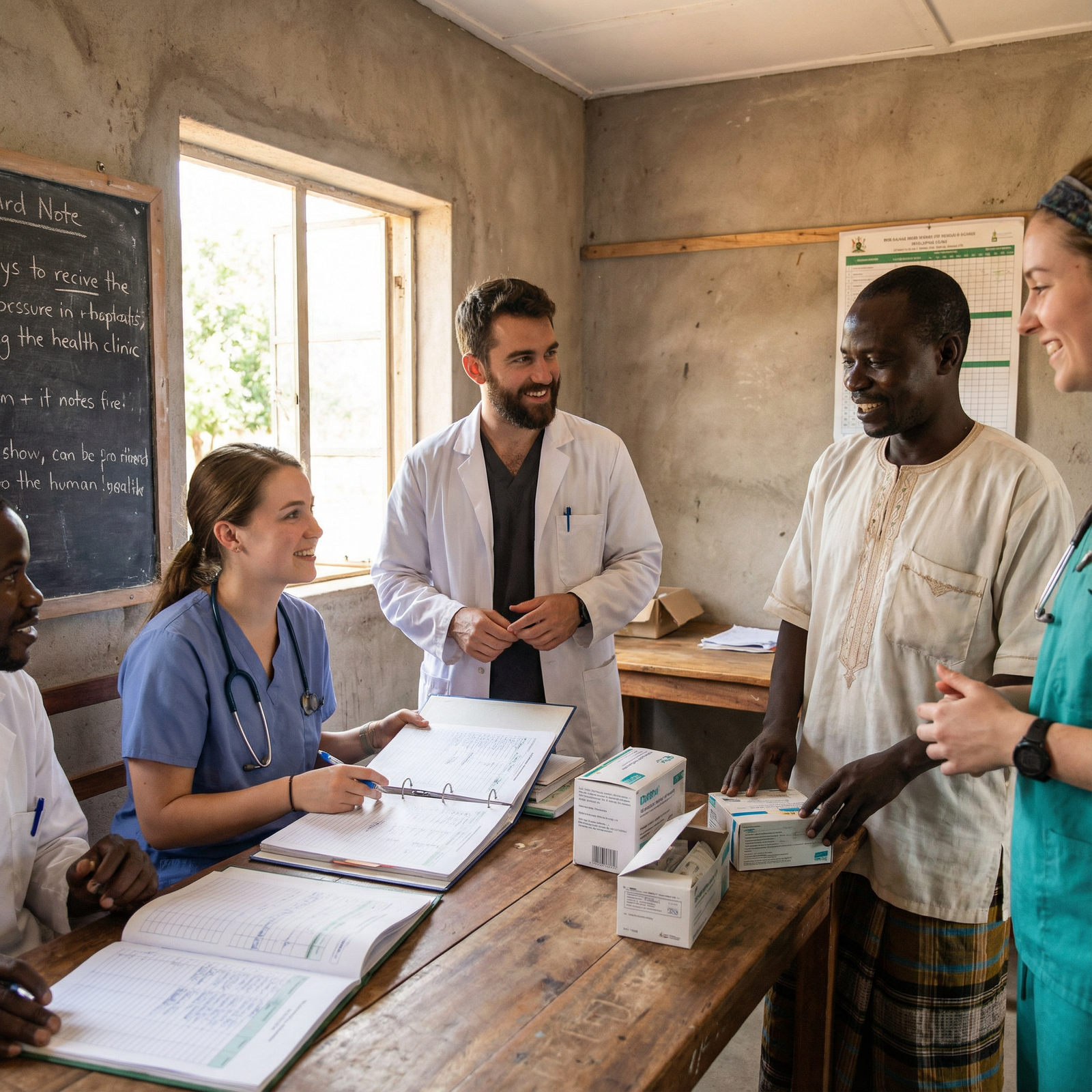
Medical missions are not automatically virtuous. Intentions do not cancel harm.
That clashes with the feel‑good photos, the church slideshows, and the Instagram feeds of students in scrubs smiling next to kids they met 24 hours ago. But if you look at the data, the published ethics literature, and—frankly—the way these trips are marketed, a lot of “service” is uncomfortably close to tourism with stethoscopes.
If you’re a student or resident thinking about “global health,” you’re walking into one of the murkiest ethical spaces in modern medicine. Let’s strip away the halo effect and talk about what’s actually happening.
The Problem Starts With Who The Trip Is Really For
Most short‑term medical missions (STMMs) are designed around the sending institution’s needs, not the host community’s.
Universities and NGOs talk about “capacity building” and “sustainability.” Then they run one‑week brigades with rotating teams, minimal follow‑up, and a photo dump at the end for donors.
You can see the priorities by where the money flows.
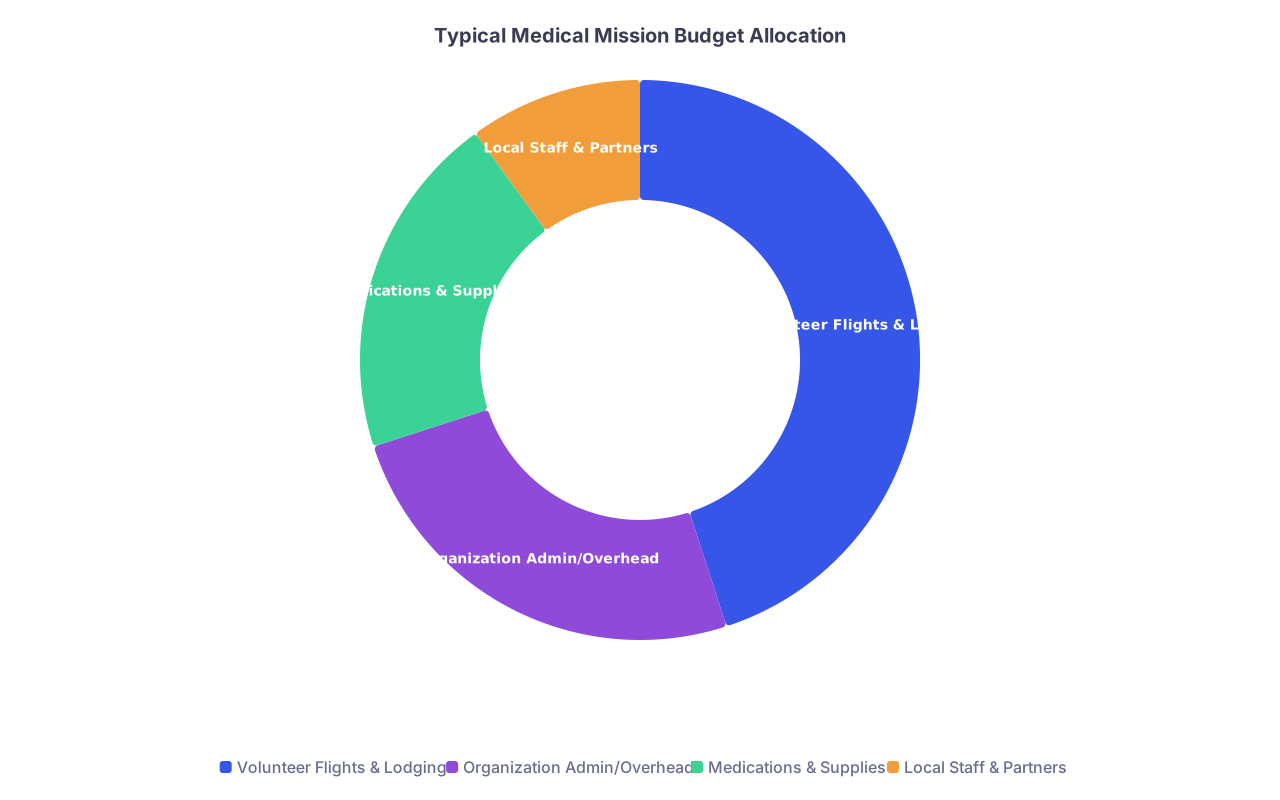
| Category | Value |
|---|---|
| Volunteer Flights & Lodging | 45 |
| Organization Admin/Overhead | 25 |
| Medications & Supplies | 20 |
| Local Staff & Partners | 10 |
If almost half the budget goes to flying outsiders in and putting them up, you’re not doing “efficient care delivery.” You’re doing experience delivery.
I’ve watched American students get told, explicitly, “This will look great on your residency application,” while standing in a makeshift clinic in Central America. Not “this will strengthen the local health system.” Not “this will help you understand structural determinants of health.” Just: this is gold for your CV.
When the primary measurable outcome is “number of students who got global health exposure,” you’ve already shifted away from altruism. The community becomes the means, not the end.
Doing Things Abroad You’d Never Be Allowed to Do at Home
Here’s the ugliest ethical grey zone: scope of practice magically expands once a plane ticket is involved.
You know this scenario:
- Preclinical students doing pelvic exams and prescribing antibiotics.
- Undergrads in T‑shirts taking vitals, triaging “patients,” and helping with wound care.
- Residents being pushed into procedures they’ve barely seen in their home hospital because “this is a good learning opportunity and they really need it.”
In the U.S. or UK, this would be malpractice or a lawsuit waiting to happen. In a low‑income country, it’s rebranded as “flexibility” and “doing the best we can with limited resources.”
The ethical literature has been hammering on this for over a decade. The same pattern keeps showing up: students and trainees routinely exceed their normal scope of practice on STMMs, often with minimal supervision. That’s not “service.” That’s practicing on poor people.
You want a clean test? Ask yourself: would this be legal or acceptable in my home institution? If the answer is no, and the only reason you’re doing it is because you’re offshore and people are desperate, you’re not being altruistic. You’re exploiting an ethical vacuum.
The Data: Feel‑Good Trips, Weak Outcomes, Real Risks
Most organizations trumpet “we saw 2,000 patients in 5 days!” as if volume equals value. That’s not evidence of impact; it’s evidence of a stampede.
Look at what we actually know:
- Studies of short‑term brigades show high patient satisfaction (no surprise—free meds are popular), but weak or absent data on long‑term health outcomes.
- Continuity of care is a mess. Teams rotate in and out, often with different protocols, no shared records, and no way to follow complications.
- There are documented cases of iatrogenic harm: incorrect diagnoses, inappropriate antibiotics, poor procedural technique, and zero follow‑up.
The most disturbing part? Almost no system for adverse event reporting. If a visiting team causes harm—a misdiagnosed diabetic ketoacidosis, a botched minor procedure—there’s rarely a formal mechanism to track it. The harm just disappears into the background noise of “low-resource settings.”
That’s not how ethical healthcare is supposed to work.
Dependency, Market Distortion, and Undermining Local Care
Altruism isn’t just about what happens during the week you’re there. It’s about what you leave behind.
Short‑term medical missions often produce three predictable distortions:
Dependency. Communities structure expectations around intermittent free foreign care. Patients wait for the next brigade to refill meds instead of engaging with the (imperfect but existing) local system.
Undermining local clinicians. When foreign teams hand out meds and diagnostics for free, local doctors who charge (because they have rent and staff salaries) look like the “bad guys.” I’ve heard patients say, “Why pay Dr. X if the Americans will be here in July?”
Distorted priorities. Teams bring whatever they can obtain or what excites donors—glucose strips, dental tools, random point‑of‑care tests—whether or not they align with national guidelines or local public health priorities.
You won’t fix a fractured health system with a suitcase pharmacy.
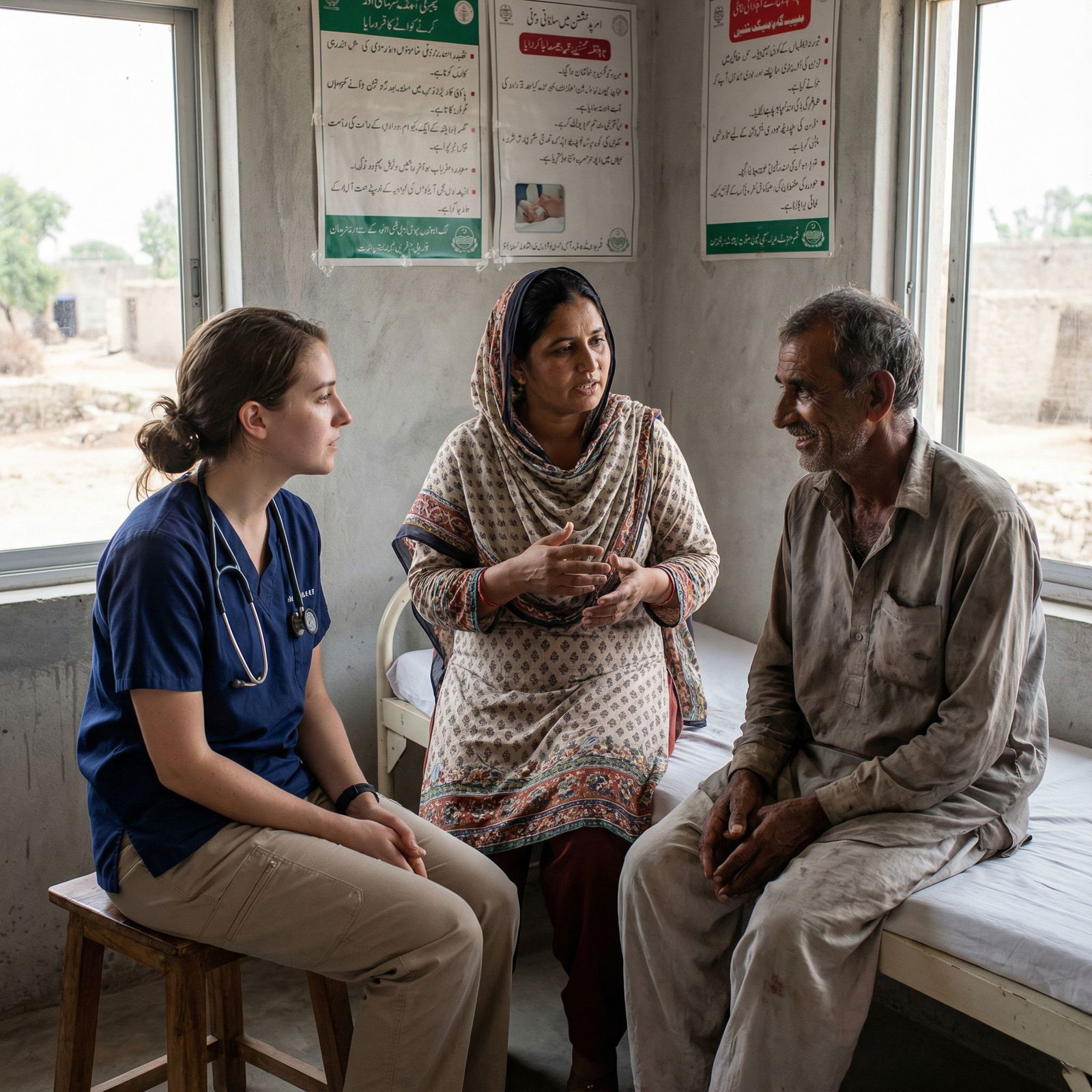
When your presence makes the local system look worse instead of stronger, that’s not altruism. That’s reputational damage disguised as charity.
The Savior Narrative: Exploiting Poverty for Personal Growth
Let’s talk about the hero complex.
You’ve seen the tropes: white‑coated American surrounded by smiling brown children; captions about “these kids have so little but are so happy.” It’s poverty porn, and medical missions are knee‑deep in it.
The savior narrative does four things very efficiently:
- Centers the visitor as the protagonist.
- Flattens complex structural problems into “they need us.”
- Turns patients into set pieces—anonymous, voiceless, interchangeable.
- Feeds the idea that a short trip can “change lives” rather than minorly dent the edge of a massive structural deficit.
I’ve sat in “reflection sessions” where students say things like, “This trip really made me appreciate how lucky I am” as if the main ethical outcome is their increased gratitude. Do you hear the problem? The suffering of others becomes fodder for your personal insight.
That’s not evil. But it’s not altruistic either. It’s self‑improvement tourism with a stethoscope.
Training vs Service: Be Honest About Which It Is
Every mission trip tries to pretend it’s fully both: great service and great training. In reality, they’re often competing objectives.
Host communities need continuity, system support, and adequately supervised care. Trainees need hands‑on experience, feedback, and chances to push their limits a bit. You cannot always maximize both at the same time, especially on a one‑week whirlwind.
The ethics literature makes a clear distinction: educational objectives are legitimate—but only if they’re secondary to patient welfare and do not compromise care quality.
The problem is that nobody wants to tell paying students, “You will mostly observe and help with logistics because that’s what’s safe and ethical.” So instead, the missions “stretch” scope, shift complex decisions onto inexperienced shoulders, and rationalize it because of “limited resources.”
If you’re going primarily to learn, just admit that to yourself. Then ask: is this the most ethical way to get that learning? Could you work with underserved populations in your own country instead, with proper supervision and legal accountability? Often the answer is yes.
What Ethical, High‑Value Missions Actually Look Like
Not all missions are disasters. There are serious, well‑run, genuinely helpful programs out there. They just look less glamorous. And more like real work.
They have features like:
- Long‑term, formal partnerships with local institutions where local leaders set priorities.
- Clear scope of practice rules: students don’t suddenly become attendings because they crossed a border.
- Emphasis on capacity building—training local clinicians, supporting local residency programs, improving infrastructure—over racking up visit numbers.
- Integration with local health systems, including shared records and referral pathways.
- Honest accounting: what was done, what it cost, what went wrong, and what will be corrected next time.
| Feature | High-Risk Short-Term Trip | Ethically-Designed Mission |
|---|---|---|
| Primary beneficiary | Visiting trainees | Local patients & system |
| Scope of practice | Expanded, poorly enforced | Matches home-country standards |
| Partnership length | One-off or sporadic | Multi-year formal collaboration |
| Continuity of care | Minimal, fragmented | Planned follow-up & integration |
| Budget priority | Travel & optics | Local staff & capacity building |
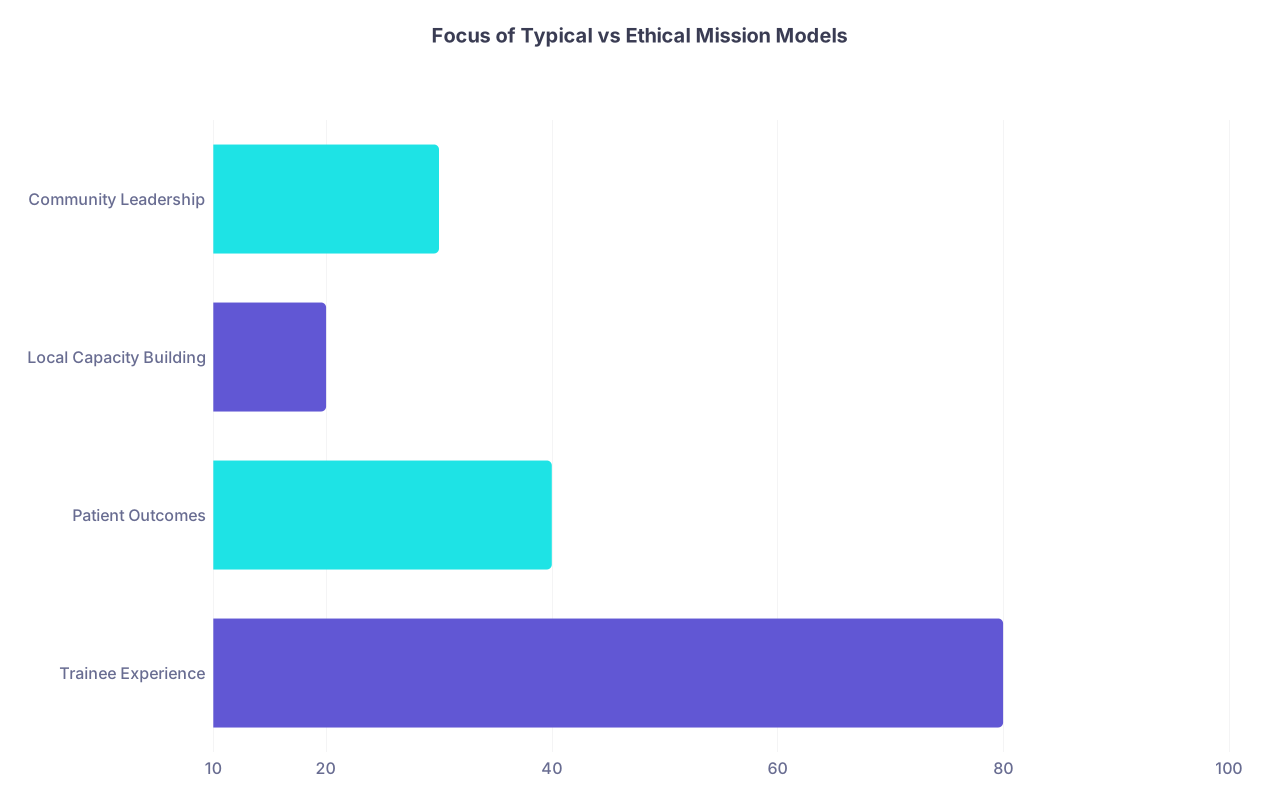
| Category | Value |
|---|---|
| Trainee Experience | 80 |
| Patient Outcomes | 40 |
| Local Capacity Building | 20 |
| Community Leadership | 30 |
Now imagine the same chart where “Ethical Model” flips those numbers for capacity building and community leadership. That’s the direction serious programs are trying to go.
Your Responsibility as a Trainee: Stop Outsourcing Ethics
You don’t get to hide behind “but the organization said it was fine.”
You’re still responsible for what you do to patients, even across borders. If you’re willing to intubate overseas after watching one video because “they need someone,” you own the consequences.
Before signing onto any medical mission, interrogate it like a skeptical clinician, not a desperate applicant.
At minimum, ask:
- Who asked for this mission in the first place—local health leaders or your school/church/NGO?
- What’s my exact role, and how does that compare to my role at home?
- Who is supervising me, and what’s their on‑site presence and legal authority?
- How is follow‑up care handled once we leave?
- What support (financial, educational, infrastructural) goes to local staff after we’re gone?
If the answers are vague, defensive, or hand‑wavey—“we just do the best we can”—that’s your red flag. Altruism doesn’t need secrecy. It needs transparency.

| Step | Description |
|---|---|
| Step 1 | Offered Mission Spot |
| Step 2 | Decline or Ask Hard Questions |
| Step 3 | Consider Joining |
| Step 4 | Clear Local Partnership? |
| Step 5 | Scope Same as Home? |
| Step 6 | Continuity of Care Plan? |
The Hardest Question: Would They Be Better Off If You Didn’t Go?
This is the question almost nobody wants to ask.
Not “will I learn something?”
Not “will I feel more grateful for my life?”
Not even “will some people get some temporary benefit?”
The real question: Would this community be better off long‑term if this trip did not happen and the same money went directly to local health infrastructure and staff?
Because those flights, T‑shirts, insurance policies, and per diems are not free. They’re resources that could fund salaries for local nurses, stock chronic meds for months, upgrade lab capacity, or fix a broken autoclave.
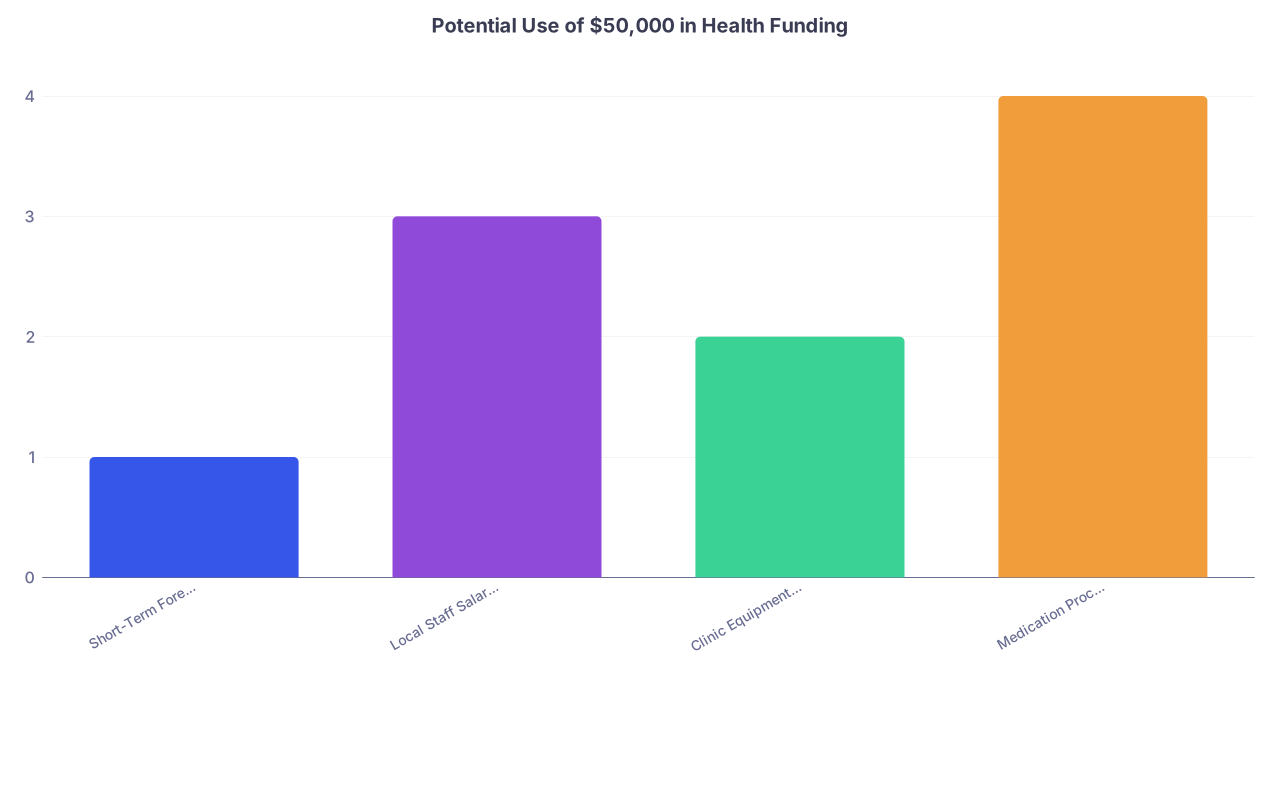
| Category | Value |
|---|---|
| Short-Term Foreign Mission | 1 |
| Local Staff Salaries | 3 |
| Clinic Equipment Upgrade | 2 |
| Medication Procurement | 4 |
One splashy mission vs. sustained, boring but high‑yield investment. If you always choose the trip, don’t pretend altruism is your primary driver.
So, Should You Ever Go?
Yes—if you’re willing to treat medical missions as ethically complex, not automatically noble.
Worthwhile reasons to go:
- You’re embedded in a long‑term, locally led partnership where your role is clearly defined and appropriately limited.
- You’re contributing skills that are actually scarce there (e.g., sub‑specialty expertise, teaching for local trainees) under structured collaboration.
- You’re prepared to listen more than you “lead,” and to accept that “what they need” may not match your fantasy of dramatic clinical heroics.
Bad reasons:
- You want a heartbreaking photo for your personal statement.
- You’re bored with domestic rotations and want something more “real.”
- Your school or church makes you feel guilty if you don’t sign up.
If you walk into a mission thinking “I am here to help,” you’re already slightly off. If you walk in thinking “I am a guest in a system I barely understand, and my first duty is to not cause harm,” now we’re getting somewhere.
The Bottom Line
Medical missions are not automatically altruistic. They live in an ethical grey zone where good intentions, ego, structural inequality, and real need collide.
If you strip away the marketing, three things remain:
- Short‑term missions often prioritize trainee experience over sustainable local benefit, and routinely stretch or ignore normal ethical and legal standards.
- True altruism in global health looks boring from the outside: long‑term partnerships, capacity building, strong local leadership, and trainees who accept narrow, supervised roles.
- As a future physician, you don’t get a moral discount because your passport’s stamped. Your obligation is the same everywhere: don’t do what you’re not trained to do, don’t undermine local systems, and don’t confuse your growth with their good.


