
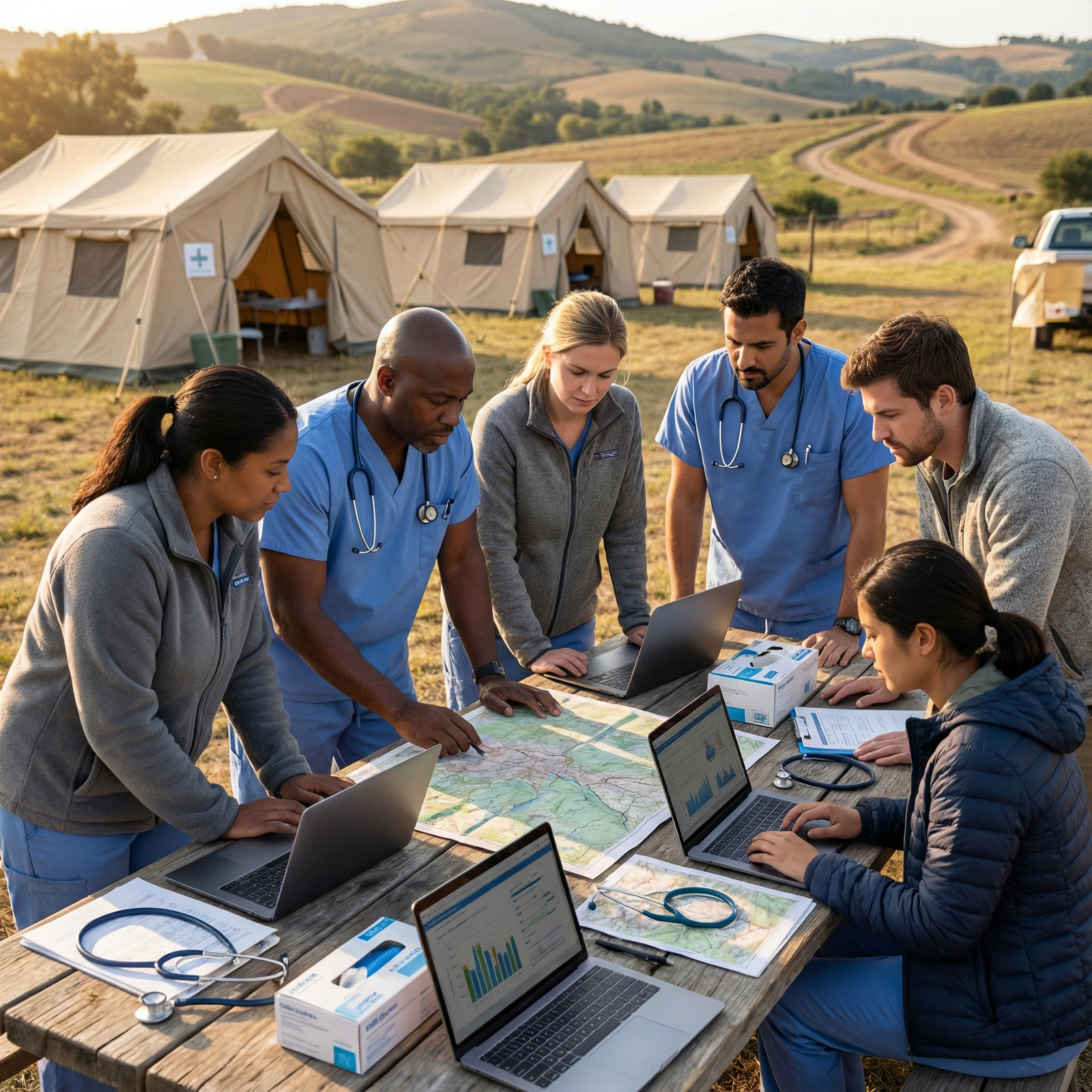
From Passion to Action: How to Start Your Own Medical Mission Initiative
Medical Missions are one of the most direct ways for healthcare professionals, trainees, and students to translate compassion into tangible Community Health impact. Whether you are a medical student interested in Global Health, a resident exploring volunteer opportunities, or an attending looking to formalize your ongoing work, starting your own Healthcare Initiative can be both deeply rewarding and logistically complex.
This expanded guide walks you through the full journey—from clarifying your purpose to building a sustainable, ethical, and community-centered Medical Mission. It blends practical steps with best practices in Global Health and medical ethics so your project not only “does good,” but does it responsibly.
Understanding the Need for Ethical, Impactful Medical Missions
The Global and Local Health Landscape
Around the world, health disparities remain stark:
- The WHO estimates that about 5 billion people lack access to essential health services.
- Many communities face chronic shortages of healthcare workers, diagnostics, medicines, and preventive services.
- The COVID-19 pandemic further exposed and worsened existing inequities, particularly in low-resource settings and marginalized populations.
These gaps are not confined to low- and middle-income countries. In high-income nations, underserved urban neighborhoods, rural areas, migrant and refugee populations, and Indigenous communities often lack adequate access to care.
Medical Missions and Healthcare Initiatives can help address specific, well-defined gaps—but only when they are thoughtfully planned, locally grounded, and aligned with broader Community Health and health system priorities.
The Evolving Role of Medical Missions in Global Health
Historically, many missions were short-term, episodic trips focused on direct clinical care. While such missions can provide much-needed services, they can also unintentionally:
- Undermine local health systems if not coordinated
- Create dependency on visiting volunteers
- Provide care that is not culturally appropriate or sustainable
Modern, ethical Global Health emphasizes:
- Working with communities, not just “for” them
- Strengthening local capacity and systems
- Focusing on long-term impact, not only short-term volume
- Respecting local leadership, expertise, and cultural norms
Well-designed Medical Missions now often blend:
- Direct patient care
- Training and mentoring of local health workers
- Health education and prevention programs
- System-strengthening initiatives (e.g., protocols, referral pathways, data systems)
Real-World Examples of Sustainable Healthcare Initiatives
Operation Smile
- Focus: Free cleft lip and palate surgery for children and adults.
- Model: Combines surgical trips with training local surgeons, nurses, and anesthesiologists to build long-term in-country capacity.
- Impact: Operating in 60+ countries, it has improved quality of life, speech, nutrition, and social integration for thousands.
Doctors Without Borders (Médecins Sans Frontières – MSF)
- Focus: Emergency medical care in conflict zones, disaster areas, and epidemics.
- Model: Long-standing presence in complex humanitarian crises, guided by neutrality, impartiality, and independence.
- Impact: Demonstrates how structured teams, robust logistics, and strong ethical frameworks can deliver care in extreme conditions.
Project Medishare (Haiti)
- Focus: Emergency response, primary care, and health system strengthening.
- Model: Transitioned from short-term relief to long-term capacity building—supporting training, infrastructure, and local leadership.
- Impact: Illustrates how a mission program can evolve from acute response after an earthquake to sustainable Community Health initiatives.
These examples show that meaningful Volunteer Opportunities in Global Health go far beyond a single trip—they are about long-term partnership and shared ownership.
Step 1: Clarify Your Passion, Purpose, and Ethical Framework
Assess Your Motivation and Focus Area
Before booking a flight or ordering supplies, spend time on introspection:
- Who do you feel most called to serve?
- Children, older adults, refugees, people experiencing homelessness, rural populations, specific ethnic or marginalized groups
- What health issues resonate most with your values or expertise?
- Primary care, maternal and child health, mental health, infectious diseases, non-communicable diseases, surgical care, rehabilitation, palliative care
- Where do you envision working?
- Your own city, rural regions of your country, or a specific international location where you have cultural or language ties
Document your answers—these will guide every subsequent decision.
Define a Clear Vision and Mission Statement
A strong vision and mission help you:
- Align your team
- Communicate with funders and partners
- Make consistent, values-based decisions
Examples:
Vision statement (future-oriented):
“A world where every rural family in Region X has access to compassionate, high-quality primary healthcare.”Mission statement (how you will act):
“To partner with local health workers in Region X to strengthen Community Health through regular mobile clinics, health education, and training initiatives that build sustainable local capacity.”
Include ethical commitments: respect for local leadership, equitable partnerships, transparency, and non-harm.
Articulate Your Ethical Commitments
In the context of Global Health and Medical Missions, ethics must be explicit:
- You will only provide care within your scope of training and licensure
- You will avoid displacing or undermining local clinicians
- You will prioritize continuity of care and follow-up whenever possible
- You will obtain proper local approvals and informed consent
- You will commit to culturally humble, non-paternalistic practice
Put these in writing early and revisit them regularly.
Step 2: Do Rigorous, Community-Centered Research

Conduct a Needs Assessment with the Community, Not for It
Effective Healthcare Initiatives start by listening. A robust needs assessment typically includes:
- Data review
- Ministry of Health reports, WHO data, NGO publications
- Existing Community Health surveys, demographic and disease burden data
- Local stakeholder interviews
- Local physicians, nurses, community health workers, traditional healers
- Community leaders, religious leaders, women’s groups, youth leaders
- Direct community input
- Focus groups and listening sessions
- Informal conversations during site visits
- Surveys co-designed with local partners
Key questions to explore:
- What are the most pressing health problems—according to the community?
- What services already exist? Where are the gaps?
- What cultural beliefs or practices influence health behaviors?
- What has or hasn’t worked with previous Medical Missions?
Document this process—funders, ethics committees, and partners will want to see that your project is grounded in real community priorities.
Map Existing Initiatives and Potential Partners
Before launching something new, understand what’s already happening:
- Are there existing clinics, mobile services, or NGOs in the area?
- Are there university Global Health partnerships you can join rather than duplicating efforts?
- Are there local or national professional societies involved in Community Health?
Perform an “asset map”:
- Local clinicians and community health workers
- Health centers, pharmacies, laboratories
- Schools, faith-based organizations, community associations
- Local NGOs or public health programs
Your mission should complement, not compete with, existing structures. Co-design your role with these stakeholders—perhaps you can fill a narrow but critical niche (e.g., diabetic retinopathy screening, mental health support, point-of-care ultrasound training).
Step 3: Build the Right Team and Partnerships
Assemble a Multidisciplinary, Diverse Team
A resilient Medical Mission team usually includes:
- Clinical staff:
- Physicians across relevant specialties
- Nurses, nurse practitioners, physician assistants
- Pharmacists, lab technicians, dentists, physical/occupational therapists
- Public health and Community Health professionals:
- To design education, prevention, and monitoring and evaluation systems
- Students and trainees:
- Medical, nursing, pharmacy, and public health students—ideally with clear supervision and learning objectives
- Non-clinical support:
- Logistics coordinator
- Finance and fundraising lead
- Communications and advocacy lead
- Data manager or quality improvement lead
Seek team members with:
- Cultural and linguistic ties to the region
- Prior Global Health or Medical Mission experience
- Strong adaptability, humility, and teamwork skills
Prioritize Local Partnerships and Leadership
Sustainable Healthcare Initiatives are locally led and externally supported, not the reverse. Wherever possible:
- Identify a local lead organization (clinic, hospital, NGO, community group) to be your core partner.
- Co-develop goals, work plans, and metrics with them.
- Ensure local partners have real decision-making power over priorities and operations.
Formalize the partnership via:
- Memoranda of understanding (MOUs)
- Shared governance structures (joint steering committees)
- Regular communication channels (monthly virtual check-ins, joint site visits)
Cultivate Institutional Support
If you are a student or trainee:
- Engage your medical school, residency program, or university Global Health office.
- Seek faculty mentors with experience in Medical Missions, Community Health, or international collaborations.
- Explore institutional frameworks that support ethical Global Health electives.
If you are faculty or an attending:
- Build a departmental or hospital-wide Global Health committee.
- Clarify liability, credentialing, and supervision frameworks for your team.
- Align your mission with broader institutional Global Health strategies.
Step 4: Design a Clear, Focused, and Feasible Plan
Set SMART Goals Aligned with Local Priorities
Use the SMART framework (Specific, Measurable, Achievable, Relevant, Time-bound):
- Instead of: “Improve maternal health in Village X.”
- Aim for: “Within 12 months, increase antenatal care attendance (≥4 visits) among pregnant women in Village X from 40% to 65% through monthly mobile clinics and community health education sessions.”
Co-create these goals with local partners and confirm they match their priorities and capacity.
Define the Scope of Services
Common components of Medical Missions and Healthcare Initiatives include:
- Clinical care
- General outpatient clinics
- Targeted specialty clinics (e.g., ophthalmology, cardiology, pediatrics)
- Screening programs (hypertension, diabetes, HIV, TB)
- Health education
- Community talks on nutrition, maternal and child health, vaccination, sexual and reproductive health, mental health
- School-based programs for adolescents
- Capacity building
- Workshops for local clinicians (e.g., resuscitation skills, essential obstetric care, ultrasound skills)
- Joint case discussions, tele-mentoring, quality improvement projects
- Systems support
- Workflow optimization in clinics
- Development of protocols and checklists
- Support for data collection, registries, or inventory management
Resist the urge to “do everything.” A narrower, well-executed focus is almost always more impactful and sustainable than a broad but superficial agenda.
Plan for Continuity and Follow-Up
Short-term trips are ethically complex without follow-up:
- Coordinate with local clinicians to ensure:
- Clear documentation of diagnoses, treatments, and next steps
- Referral pathways for complex or chronic conditions
- Arrange for:
- Medication continuity (avoid starting treatments that can’t be maintained)
- Scheduled return visits or telehealth follow-ups
- Standardize documentation:
- Use bilingual forms or integrate with local health records if possible.
Step 5: Secure Funding, Resources, and Transparent Financial Systems
Explore Diverse Funding Sources
To support your Volunteer Opportunities and mission operations, consider:
- Grants
- Global Health or Community Health grants from universities
- Foundations (e.g., Gates Foundation, regional or disease-specific foundations)
- Government programs or multilateral agencies (WHO, UNICEF, USAID, etc.)
- Philanthropy and sponsorships
- Individual donors, alumni, or local community fundraising
- Corporate sponsorships from healthcare companies, pharmacies, diagnostics companies
- Crowdfunding
- Platforms like GoFundMe, Indiegogo, or local equivalents
- Emphasize ethics, transparency, and community partnership in your messaging.
Create a Detailed, Transparent Budget
Your budget should include:
- Travel and accommodation for volunteers (if not fully self-funded)
- Local transportation and logistics
- Medical supplies, medications, diagnostics
- Equipment purchase or rental
- Licensing/registration fees and insurance
- Local staff salaries or stipends (if applicable)
- Administrative and communication costs
- Monitoring and evaluation activities
Build in contingency funds for unexpected delays, currency fluctuations, or emergencies. Commit to public financial transparency—provide donors and partners with clear, periodic reports on how funds are used.
Leverage In-Kind Support
Beyond cash, seek:
- Donated or discounted medications and supplies (following safety and quality guidelines)
- Equipment loans from hospitals or universities
- Pro bono services (legal, accounting, translation, graphic design)
Ensure all donated medicines and devices are appropriate, safe, and usable in the target setting, and follow local regulations on drug importation and equipment use.
Step 6: Manage Logistics, Legal Considerations, and Risk
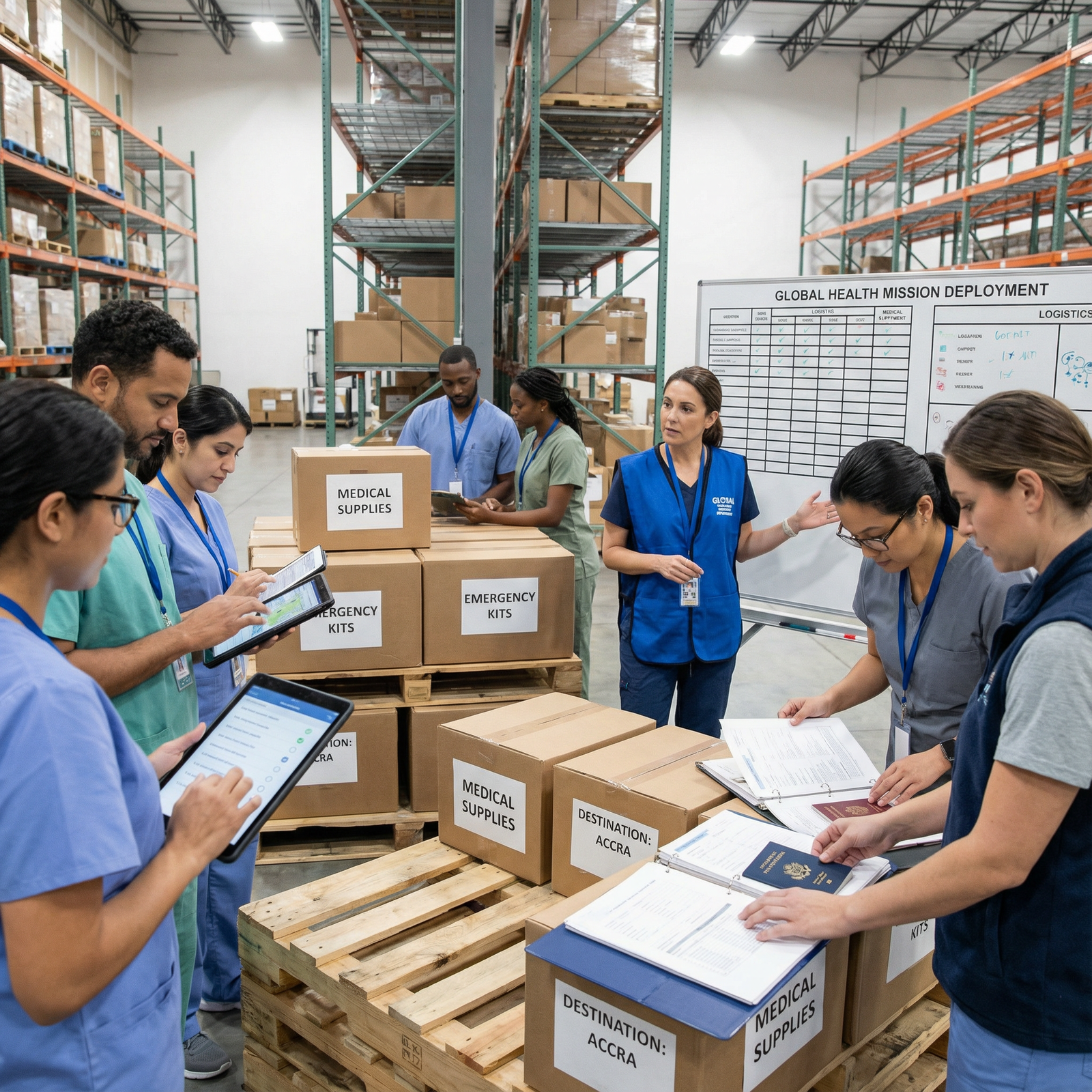
Plan Operational Logistics in Detail
Successful Medical Missions rely on meticulous logistical planning:
- Travel and accommodations
- Flights, ground transportation, visas
- Safe, culturally appropriate lodging close to the service site
- Supply chain
- Quantify expected caseloads and calculate supply needs
- Arrange storage (cool chain for vaccines/insulin, secure storage for controlled substances)
- Confirm availability of essential items locally to avoid unnecessary imports
- Clinic operations
- Site layout (triage, waiting area, consultation, pharmacy, testing, counseling)
- Patient flow and registration systems
- Schedules for team members, including rest time to avoid burnout
Develop checklists and standard operating procedures (SOPs) for common scenarios.
Ensure Legal, Regulatory, and Ethical Compliance
Key considerations:
- Licensing and credentialing
- Confirm local requirements for foreign clinicians (temporary licenses, registration with local medical councils)
- Verify whether students/trainees can participate and under what level of supervision
- Visas and permits
- Humanitarian or volunteer visas as required
- MOUs or letters of support from local authorities
- Insurance and liability
- Professional liability/malpractice coverage that extends to the mission setting
- Travel and evacuation insurance for team members
Engage legal counsel or institutional Global Health offices where possible.
Prioritize Safety, Security, and Well-Being
Develop a risk management plan:
- Security assessment of the region (political stability, crime, conflict)
- Emergency protocols (medical evacuation, natural disasters, outbreaks)
- Infection prevention and control measures, including personal protective equipment
- Pre-deployment health requirements and counseling for volunteers:
- Vaccinations, malaria prophylaxis (if applicable)
- Mental health support before and after missions, especially for exposure to trauma
Step 7: Launch, Monitor, and Continuously Improve Your Initiative
Launch with Community Involvement
Plan a respectful, locally co-led launch:
- Involve community leaders, local officials, and partners.
- Use local language(s) and culturally appropriate messaging.
- Make sure the community understands:
- What services are offered—and what are not
- When and where you will be available
- How care will continue after your direct involvement
Avoid overpromising. Clear, honest communication builds trust.
Monitor, Evaluate, and Learn in Real Time
Establish a simple but robust monitoring and evaluation (M&E) framework:
- Process indicators
- Number of clinic days, patients seen, trainings conducted, educational sessions held
- Outcome indicators
- Blood pressure or glucose control rates
- Vaccination coverage in the target group
- Antenatal care visit completion rates
- Qualitative feedback
- Interviews with patients, local staff, and community leaders
- Reflection sessions with your team
Use this data to:
- Adjust workflows during the mission
- Identify unanticipated barriers or harms
- Report back to the community and funders
Embed a culture of continuous quality improvement—debrief after each mission, update protocols, and track trends over time.
Step 8: Design for Sustainability and Long-Term Impact
Strengthen Local Capacity, Not Dependency
To move from one-time Volunteer Opportunities to a lasting Healthcare Initiative:
- Train local clinicians and community health workers in skills you introduce.
- Share educational materials in the local language and adapt them collaboratively.
- Co-author protocols or guidelines with local staff.
- Support local leadership in presenting outcomes at conferences or in publications.
The ultimate success of a Medical Mission is when the community no longer needs you for that particular service.
Build Long-Term Relationships and Governance
Consider:
- Multi-year agreements with local partners
- Annual or semi-annual return visits that align with community schedules (e.g., not during harvest season or major holidays)
- Joint strategic planning every 1–2 years
- Shared decisions about when to scale up, pivot, or intentionally wind down involvement
Document institutional memory so the project outlasts any single leader or cohort of students.
Integrate Ethics, Reflection, and Reciprocity
Sustainable Global Health work should also include:
- Ethical reflection:
Structured debriefs on power dynamics, privilege, moral distress, and cultural humility. - Reciprocity:
Opportunities for local partners to visit your institution (where feasible), co-teach, or access training resources. - Local benefit first:
Ensure that research, publications, or educational gains from your mission do not overshadow the primary goal of serving community needs.
Frequently Asked Questions (FAQs)
1. Do I need to be a physician to start a Medical Mission or Healthcare Initiative?
No. While physicians are important for clinical decision-making, Medical Missions and Community Health projects are often led by:
- Nurses, nurse practitioners, or physician assistants
- Public health professionals
- Allied health professionals (e.g., pharmacists, therapists)
- Medical or nursing students working under strong mentorship
What matters most is that clinical care is provided by appropriately trained, licensed professionals, and that leadership includes local stakeholders. Non-clinicians can lead logistics, fundraising, program design, and evaluation, in close partnership with healthcare professionals.
2. How can I find safe, ethical Volunteer Opportunities if I’m not ready to start my own mission?
Look for organizations that:
- Have long-term, locally led partnerships
- Clearly state their ethical guidelines and scope of practice
- Provide robust pre-departure training and supervision
- Emphasize capacity building and continuity of care
Ask specific questions about supervision, follow-up care, and licensing. Red flags include unsupervised student procedures, lack of local partners, or “medical tourism” focused more on visitor experience than community benefit.
3. What are common ethical pitfalls in Medical Missions, and how can I avoid them?
Common pitfalls include:
- Practicing outside your scope or training
- Providing one-off care with no follow-up
- Ignoring or bypassing local health systems and leaders
- Using communities primarily as “learning experiences” for visiting volunteers
To avoid these, commit to:
- Strict adherence to scope of practice and local regulations
- Close coordination with local clinicians and health authorities
- Clear plans for follow-up and referral
- Continuous ethical reflection and feedback from community partners
4. How much does it typically cost to run a Medical Mission, and how can I keep costs reasonable?
Costs can range widely—from a few thousand dollars for a small, local Community Health initiative to tens of thousands for international missions with large teams. To manage costs:
- Limit team size to what is truly needed.
- Prioritize hiring and buying locally when feasible.
- Seek in-kind donations and institutional support.
- Use simple, cost-effective interventions with proven impact (e.g., hypertension screening and treatment, vaccination support, health education) rather than expensive technologies that are hard to maintain.
Always ensure your budget includes fair compensation for local partners and staff.
5. What should I do if my first mission does not go as planned?
Expect challenges—logistical delays, lower-than-expected turnout, or unexpected clinical scenarios are common. When things don’t go as planned:
- Conduct a structured debrief with your team and local partners.
- Ask the community what worked and what didn’t.
- Document lessons learned and adjust your protocols and expectations.
- Be transparent with funders and supporters about challenges and how you will improve.
Adaptability, humility, and a long-term mindset are more important than a “perfect” first mission.
Starting your own Medical Mission or Healthcare Initiative is ambitious, but when grounded in community partnership, ethical practice, and long-term vision, it can become a powerful force for advancing Global Health and Community Health. As you move from passion to action, let collaboration, humility, and sustainability guide every decision—so that the impact of your work endures long after any single trip ends.


