
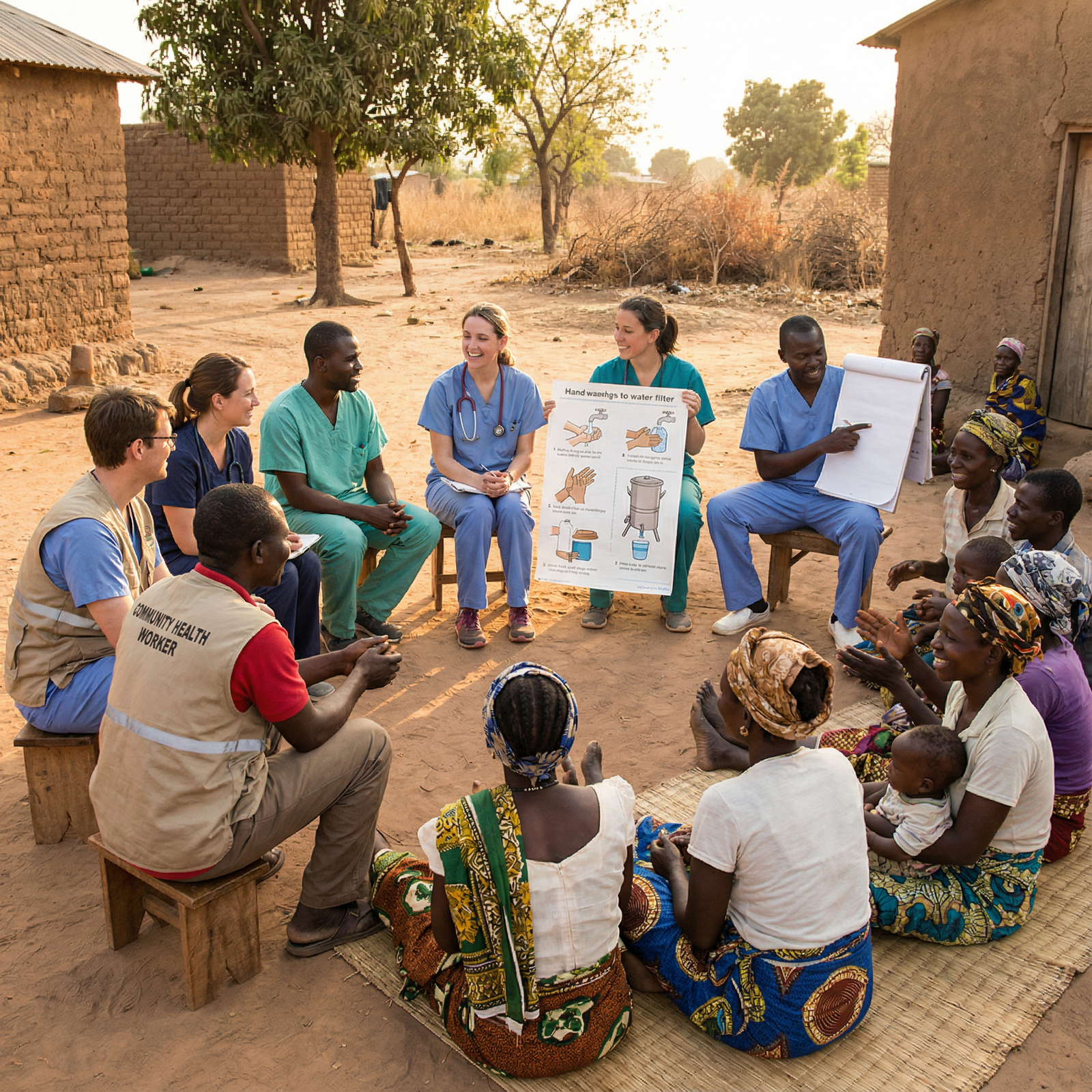
The way most people take photos on medical missions would get them thrown out of an IRB meeting.
You are practicing in a cross-cultural, often vulnerable setting, with power imbalances, language barriers, and a camera in your hand—and many teams act like that camera is exempt from every ethical rule they know from research, clinical care, and professionalism. It is not.
Let me break this down specifically.
1. The Core Problem: Power, Poverty, and the Lens
Medical mission photography is not neutral. It never has been.
You have:
- A clinician (or trainee) from a high-income country
- Holding a camera or smartphone that costs more than the patient’s annual income
- In a setting where people are grateful, intimidated, or both
- Often surrounded by poverty, illness, or crisis
That is a recipe for distorted consent and exploitative storytelling if you are not brutally intentional.
The three biggest structural problems I see over and over:
Power imbalance is ignored.
“They said it was fine” gets thrown around as if a nod in a noisy waiting area equals valid consent. It does not. A patient in a temporary clinic who thinks saying no might affect their care is not choosing freely.Poverty is aestheticized.
People treat cracked walls, crowded wards, and thin children as “authentic” backdrops. You would never post a similar photo of a vulnerable patient in Boston or Berlin, but suddenly it is “impactful” when in rural Haiti.Stories are extracted, not shared.
Narrative becomes a one-way export: you take images and stories back to impress donors, admissions committees, and social media followers. The patient, the local staff, the community never see the output, never have a say.
If you do not start here—understanding that every photo is framed by power—then talking about consent forms and HIPAA is cosmetic.
2. Ground Rules: Apply Clinical Ethics to Your Camera
You already know ethical principles: autonomy, beneficence, nonmaleficence, justice. The problem is that most mission teams stop applying them when the phone camera opens.
So map them explicitly.
Autonomy: Real Consent or Nothing
Autonomy means the patient chooses freely, understands the choice, and is not penalized for saying no.
For photography on medical missions, that means:
No “ambient consent”.
“They did not object” is not consent. Silence is not agreement, especially across language and culture.Consent must be clearly separated from care.
They must know: “If you say no to a photo, your care will be exactly the same.” Say this. Out loud. In their language.Interested ≠ understood.
People may be flattered or curious, but that does not guarantee they understand where the photo goes—Instagram, fundraising decks, conference posters. You need to explain.Right to withdraw.
Ethically, if feasible, have a way for people to say later, “Do not use my images.” Practically hard, yes. But at least for organized projects (websites, campaigns), there should be a record of who’s in each image and how to de-identify or pull it if needed.
Nonmaleficence: Do Not Harm (Psychologically, Socially, or Clinically)
Harm is not just physical.
- A child labeled online as “HIV-positive orphan” can face stigma for life.
- A photo of a disfiguring wound may circulate in that community long after you leave.
- A mis-captioned “before/after” can humiliate a patient who never agreed to be a case study.
Ask yourself a straightforward question before you press the shutter:
“Could this image, in the worst case, harm this person or their reputation?”
If the answer is anything but a clean no, you do not take it.
Beneficence: Who Actually Benefits?
Be honest. Often, the main beneficiary is:
- Your med school personal statement
- Your residency application “global health interest” slide
- Your NGO’s fundraising brochure
- Your social media image as a “doctor who serves”
That is not inherently evil. But if you claim the photo is “for awareness,” then make sure:
- Awareness is tied to a concrete pathway for benefit (funding a local partner, supporting a long-term program)
- The depicted person or community does not bear the cost of your storytelling (stigma, misrepresentation, broken confidentiality)
Justice: Would You Do This at Home?
This is the most brutal filter and the most useful one.
If you would not:
- Photograph a homeless patient in your academic hospital’s ER, full face visible, with a gaping wound
- Post it on your personal Instagram with a caption about “how grateful you are”
- Without a written consent form clearing explicit public, online use
…then you do not do it in a village clinic either.
The ethical standard abroad should be at least as strict as your home institution. Not lower.
3. Consent in Practice: Beyond “Can I Take Your Picture?”
Let us make this concrete. Consent is where most people fail.
Stepwise, Ethical Consent for Photography
Here is a realistic sequence you can actually use:
First: be a clinician, not a photographer.
Finish the interaction. Examine. Counsel. Treat. Close the loop medically before you introduce the idea of a photo.Ask in their language, with a local intermediary.
Translate an explicit request:- “We sometimes take photos to show people in our country what healthcare is like here.”
- “Can we take a photo of you?”
- “You can say yes or no. Your care will be the same.”
Explain destination and audience.
At least at a basic level:- “This may be shown to doctors and students in our country.”
- “It might be used on a website or talk about this clinic.”
If you know it will not leave an internal context (e.g., for team debriefing only), say that.
Specify what exactly will be seen.
Are faces visible? Are identifying features recognizable? Is a sensitive condition being shown? Patients should know.Offer alternatives.
“If you prefer, we can take the photo from behind, or without your face, or just of the clinic / staff.”Check comprehension.
Ask them to repeat in their own words, or ask a simple verification question via interpreter: “Can you tell me what we just asked you?”Obtain and document consent when images are identifiable.
For any image that clearly shows a face or uniquely identifiable feature, and especially if it might be used beyond internal team teaching, you should have:- A culturally appropriate, translated, simple consent form, or
- A recorded verbal consent with the interpreter confirming in the audio
Is this overkill for a quick snapshot of a clinic corridor? No. It is basic respect when real human beings are in the frame.
Vulnerable Groups: Children, Stigmatized Conditions, Emergencies
There are scenarios where the default should be no photography.
Children.
Parents or guardians must consent. The child’s assent matters too, especially older children. Refusal from either side means no photo. And no cute “holding baby” selfies just because the mom smiled and handed the child to you.Stigmatized conditions.
TB, HIV, leprosy, severe disability, mental illness, reproductive health issues. Assume high risk of social harm. If there is any chance they can be recognized—directly or indirectly—you do not take or share these images.Emergencies and resuscitations.
Resuscitations are not your documentary opportunity. They are someone’s worst day. Unless you are part of a formal, IRB-approved documentation project with strict protocols, you leave the camera alone.
4. What You Do Not Photograph (Even If Consent Is “Given”)
Some lines you simply do not cross, no matter what the patient or staff says in the moment. Power dynamics distort “permission.”
Here are categories I advise you treat as off-limits or extremely restricted.
Degrading or dehumanizing scenes.
Patients partially undressed, crying, clearly in severe pain, visibly humiliated. You know what this looks like; you would not accept it for yourself.Graphic wounds or surgeries with identifiable context.
If the face, tattoos, household, or village context could identify them, no. Use tightly focused, anonymized images for teaching—without any linkable context.Images that primarily showcase poverty, not people.
The “sad child with flies” photo is a cliché for a reason. It sells pity, not dignity. If the main point of the photo is “look how poor they are,” you have crossed into poverty porn.Selfies that center you, not the patient.
White coat, big smile, patient on a cot in the background. These are not “memories”; they are branding. If you must take a team photo, do it away from active patient care, with local staff centered, and preferably without patients in frame at all.
5. Storytelling: From Poverty Porn to Partnership Narratives
Photography is only half the problem. The caption and narrative are the other half.
The worst patterns I see in medical mission storytelling:
- Single “savior” hero (you or your team)
- Flattened, one-dimensional patients (“this brave little boy”)
- Implicit comparison: “They have nothing, we brought them everything”
- Zero mention of local clinicians or health systems
If you want to do this ethically, you flip that script.
Principles for Ethical Storytelling
Center local expertise.
You are not the protagonist. The local nurse who has been running that clinic for 15 years is. If your story does not name and credit local partners, you are doing PR, not partnership.Contextualize, do not sensationalize.
Show the structural issues—supply chains, funding gaps, training needs—not just the shock value of crowded wards or malnourished kids.Avoid “before/after savior” framing.
The “this is Maria before we arrived; this is Maria after we fixed her” narrative is manipulative and erases ongoing local care.Use aggregate stories when possible.
Rather than broadcasting one identifiable person’s ordeal, talk about patterns: “Many patients we see present late because the nearest clinic is 3 hours away.”Share back, or do not share at all.
Ethical storytelling means the community or local partners see, understand, and ideally approve the final output. Yes, that takes time. It is called respect.
6. Standards Comparison: Home vs Mission Settings
Let me spell out the double standard that quietly governs a lot of mission media.
| Scenario | At Home Hospital | On Medical Mission (Too Often) |
|---|---|---|
| Photo of identifiable patient in bed | Prohibited without written consent | Taken casually on smartphones |
| Images used on social media | Strict policies, review required | Posted same day, no oversight |
| Use in teaching or presentations | De-identified, IRB or legal review | Patients shown with full faces |
| Photography during procedures | Highly controlled, consented projects | Staff snapping “interesting” cases |
| Patient’s right to refuse | Institutionalized and respected | Assumed, but rarely protected |
If you recognize your team in the right-hand column, you have work to do.
7. Building an Ethical Media Protocol for Your Team
Ethical photography on missions does not happen by accident. It requires systems.
Step 1: Create a Written Media Policy Before You Go
Non-negotiable. A simple 2–3 page document that covers:
- Who is allowed to take photos and for what purposes
- Where and how consent must be obtained and documented
- Which situations are automatically off-limits
- How images will be stored, shared, and eventually deleted or archived
- Who approves any public-facing use (talks, websites, social media)
Then you actually enforce it.
Step 2: Train Your Team Like You Mean It
Do this in a pre-departure session:
- Show good and bad example images (blurred faces vs. exploitative images)
- Role-play asking consent through an interpreter
- Walk through specific scenarios:
- “The local doctor asks for a group photo with patients in the background—what do you do?”
- “A donor emails asking for ‘compelling patient stories’ with photos—how do you respond?”
This is not busywork; it is ethics training.
Step 3: Technical Guardrails
Build some friction into the process:
- Designate one or two media leads who handle all photography and approvals. Everyone else keeps cameras/phones holstered in clinical spaces.
- Use secure, encrypted storage (not random WhatsApp groups) for any clinical imagery.
- Prohibit any team member from posting identifiable clinical images on personal social media without explicit, documented permission.
If that sounds rigid, remember: you would not tolerate random staff posting ICU patient selfies from your home institution either.
8. Visual Strategies That Preserve Dignity
Ethical does not mean dull. You can create powerful visual material without exposing patients.
Here are concrete, practical options.
Focus on Systems, Not Faces
- Photograph:
- The medication stockroom before and after an organizational overhaul
- The triage process outside a clinic
- A training session with local nurses doing simulations
These tell a story about healthcare capacity, not private suffering.
Use De-Identification Intelligently
If there is a strong educational reason to capture a wound, procedure, or clinical sign:
- Frame tightly on the clinical feature (no face, no tattoos, no unique clothing if possible)
- Exclude recognizable backgrounds (family photos, distinctive buildings)
- Avoid captions that link to a small community (“The only patient with X in this 200-person village”)
Highlight Local Ownership
Visuals that are always acceptable and powerful when done respectfully:
- Local clinicians leading ward rounds or teaching sessions
- Joint team huddles with local and visiting staff, focused on a chart or whiteboard
- Infrastructure improvements: solar panels installed, new handwashing stations, reorganized pharmacy shelves
In other words: make systems, staff, and partnerships your protagonists—not anonymous suffering bodies.
9. Where Storytelling Meets Your Own Professional Development
Let us talk about you, because this sits squarely in “personal development and medical ethics.”
Every photo you take on a mission tells me something about your professional identity.
- A selfie with a sick child? That screams “I see this as my story, not theirs.”
- A de-identified teaching photo with documented consent? That says “I understand my responsibilities travel with me.”
- A reflective post centering local partners and systems change? That signals maturity and respect.
Admissions committees and residency program directors are not blind to this. I have sat in meetings where people pulled up an applicant’s “global health” Instagram and quietly decided that this person does not understand power, confidentiality, or humility.
Ethical mission storytelling is not just about protecting patients. It is about the kind of physician you are training yourself to be.
10. A Simple Ethical Checklist Before You Press “Post”
You are going to be tempted to share something. So use a ruthless, quick filter:
Would I do this to a patient in my home hospital?
If not, stop.Could this person, or their neighbor, recognize them?
Face, context, unique condition, village name—anything. If yes, have explicit consent or do not share.Does this image respect their dignity?
Are they depicted as a full human being or as a prop for your narrative?Does the caption center me or the system?
Count the number of first-person singular references versus mentions of local partners or structural issues.Can I clearly articulate the benefit to the patient community—not just to my CV or donor base?
If you are hand-waving, do not post.
If you run that list honestly, you will delete more than you share. That is the point.
11. A Visual Summary of Better vs Worse Mission Media
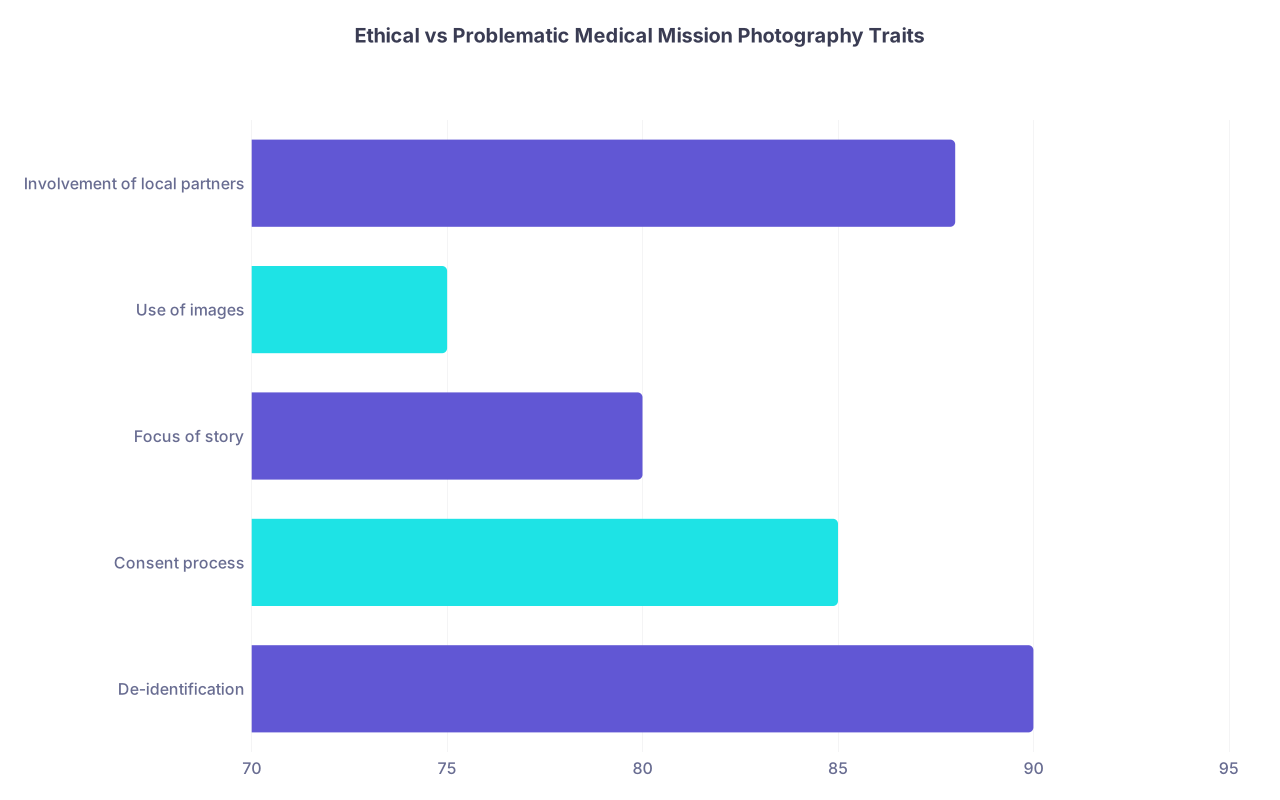
| Category | Value |
|---|---|
| De-identification | 90 |
| Consent process | 85 |
| Focus of story | 80 |
| Use of images | 75 |
| Involvement of local partners | 88 |
Interpret it like this: your goal is to push each of those elements toward the “high” ethical end—strong de-identification, robust consent, system-focused stories, carefully controlled use, and constant inclusion of local partners. If any of those is hovering low in your own practice, that is your homework.
12. Concrete Examples: Fixing Common Mistakes
Let me run through a few all-too-familiar scenarios and how to handle them correctly.
Scenario 1: The Cute Pediatric Selfie
Wrong version:
You just saw a child with pneumonia. After treatment, he is sitting up, playing with a glove balloon. His mom is smiling. You take a selfie hugging him, post to Instagram: “This little guy reminded me why I became a doctor. We are so blessed in the US.”
Ethical version:
You do not take a selfie. If there is a compelling reason for a photo (e.g., to show play therapy or child-friendly care), you:
- Ask the mother, through an interpreter, for permission to photograph the scene, not the child’s identifiable face.
- Frame the image to show toys / environment, perhaps the nurse interacting, with the child from behind or partially visible and non-identifiable.
- Caption: “Local nurses here in X clinic have created a child-friendly corner to comfort kids receiving treatment for pneumonia and other illnesses. Our role has been to support with training and supplies, but they are the ones sustaining this work year-round.”
Scenario 2: The “Dramatic” Before/After Surgery Shot
Wrong version:
You have a patient with a large tumor. You post pre-op and post-op full-face photos on your NGO’s Facebook page with a caption about how your team “changed her life.”
Ethical version:
You:
- Have a detailed consent conversation with the patient, clearly explaining use in NGO materials, long-term digital presence, and the voluntary nature of participation.
- Offer the option of using only partial, de-identified images or general description instead of recognizable photos.
- If she declines anything public, you respect that fully and limit photos to a secure internal record for clinical teaching if she agrees.
- If she agrees, you still write a caption that highlights the local surgical team and emphasizes her agency and resilience, not just your intervention.
Scenario 3: Donor Demands for “Real Impact Stories”
Wrong version:
A donor emails: “We need raw, emotional patient stories with photos by Friday.” Your team scrambles. People start snapping hurried shots of anyone willing, with minimal explanation.
Ethical version:
You respond:
- “We have a strict media ethics policy that prioritizes patient dignity and confidentiality. We can provide de-identified stories, and, where patients have fully consented to public sharing, some carefully selected images.”
- You then work with your local partners to identify any patients who have already expressed interest in advocacy or public sharing of their experiences, approach them in a calm, non-urgent way, and follow a robust consent process.
- You push back on any pressure for volume over ethics.
13. The Bottom Line
Three points, and then I am done:
Your ethical responsibilities do not go on vacation when your passport gets stamped.
If anything, the bar is higher in medical missions because power imbalances are greater.Ethical photography and storytelling are mainly about what you refuse to do.
The pictures you do not take, the captions you do not write, the posts you never publish—that is where integrity shows up.Dignity is the non-negotiable metric.
If your images and stories do not preserve the full dignity, agency, and humanity of the people you serve, they are not “raising awareness.” They are exploiting vulnerability. And you should stop.
Build your mission practice so you never have to look back at an old photo and think, “I would not want someone to do that to me or my family.” Because by then, the damage is already online.


