
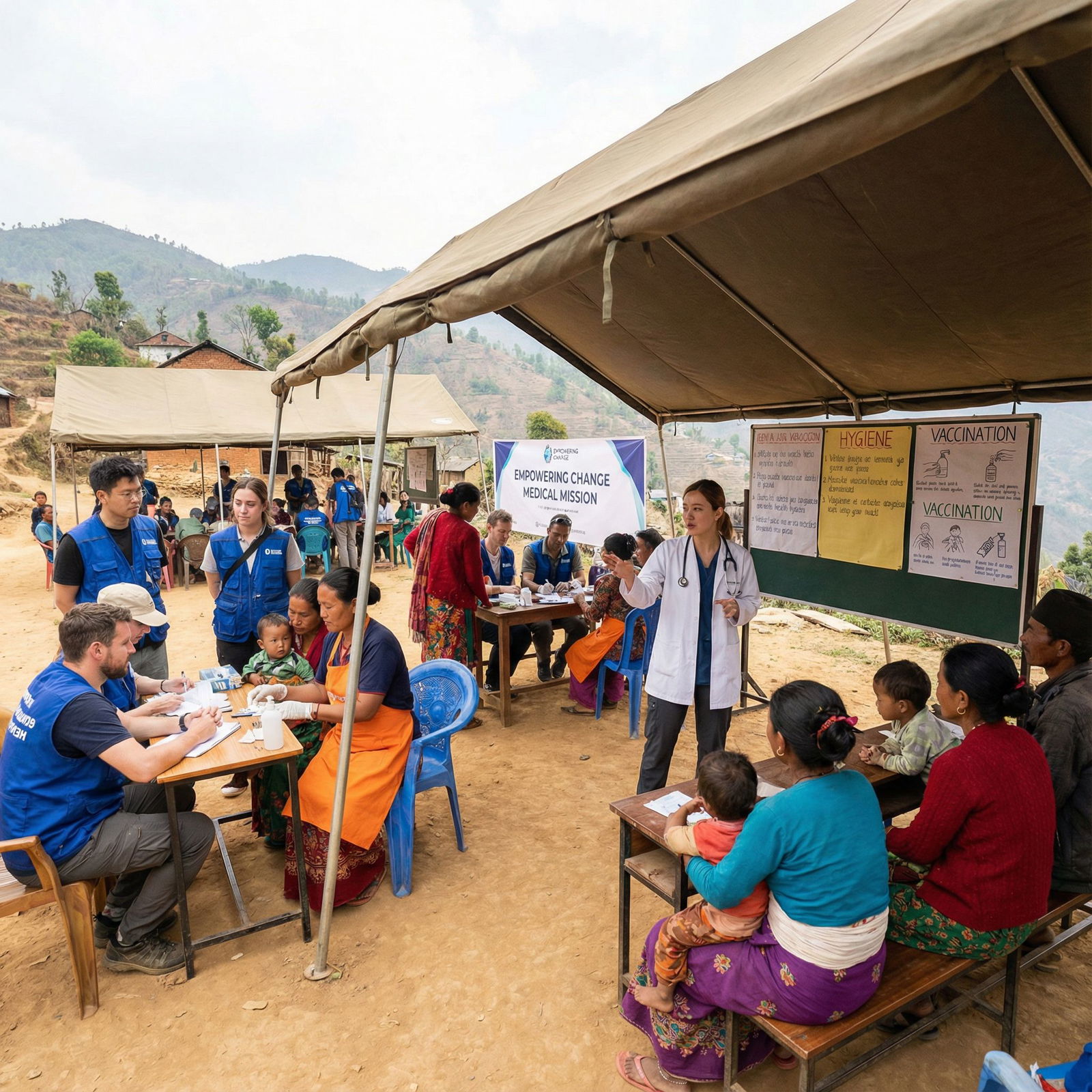
The feel‑good narrative around pediatric medical missions hides something uncomfortable: children absorb the harms of bad mission design faster and more deeply than adults.
If you are going to work with children on medical missions, you cannot simply “have a good heart” and trust that everything will work out. Pediatric-focused missions carry distinct clinical, ethical, legal, and developmental risks that are routinely underestimated. I have watched teams improvise pediatric care on the fly and leave behind a trail of fragmented records, abandoned follow‑up, and confused parents. No one meant harm. Harm happened anyway.
Let me break this down specifically.
Why Pediatric Missions Are Not Just “Adult Missions but Smaller”
Pediatrics is not just internal medicine for little people. Same for missions.
Children differ from adults in at least four high‑risk domains: physiology, dependency, development, and vulnerability to systems failure.
Physiologic volatility. A 2‑kg neonate and a 40‑kg 10‑year‑old both count as “peds.” Dosing windows are narrow, fluid and electrolyte shifts happen quickly, and “they look fine” can turn into decompensation in minutes.
Total dependency. Children cannot consent, cannot self‑advocate, and cannot “follow up” without an adult and a functioning system. If you vanish, they have no recourse.
Development and trauma imprinting. The way you handle pain, separation from parents, or frightening procedures will be encoded in how that child sees healthcare for years. One rough LP in a church basement can poison their trust in the local clinic for a decade.
Structural vulnerability. A broken referral chain affects everyone. It destroys kids. Chronic illnesses, surgical complications, vaccine schedules, neurodevelopmental follow‑up—these are inherently longitudinal. Short‑term teams are structurally bad at longitudinal anything unless they design around that fact.
So the bar is higher. Or it should be.
Core Categories of Risk in Pediatric Medical Missions
We will go category by category and then talk about specific safeguards.
1. Clinical Risk: Getting the Medicine Wrong
The number one clinical error I see in pediatric missions is false confidence. Adult‑trained clinicians valuing “heroic effort” over honest scope recognition.
Common high‑risk patterns:
Weight‑based dosing done sloppily
Scribbled weights, pounds vs kilograms confusion, formula errors. Someone copies a previous note, assumes the weight is right, and re‑doses gentamicin. That is how you get nephrotoxicity and ototoxicity in a toddler you will never see again.Using adult protocols for pediatric diseases
Example: treating pediatric sepsis with fluid strategies designed for adult ICU populations, ignoring WHO pediatric shock guidance and local malaria prevalence. Using adult asthma algorithms while ignoring spacer availability and inhaler technique teaching.Neonatal “ad hoc” care
Teams running pop‑up NICUs in places with no consistent electricity, no blood gases, no reliable oxygen supply, and no established neonatal protocols. Kangaroo care ignored, antibiotics given inconsistently, hypothermia unmanaged. Mortality is framed as “these babies were so sick” instead of “we created an ICU without ICU capability and no exit strategy.”Procedural overreach
LPs, central lines, sedation for procedures, laceration repair, circumcisions, clubfoot casting—performed by people who do them “sometimes” at home with backup, now doing them alone in an unfamiliar setting, often on the last day of the trip. Complications show up two days after the flight home.
You mitigate clinical risk with ruthless honesty and structure, not with “trying your best.”
Clinical Safeguards
Explicit pediatric scope definition
Before the trip, write down exactly which pediatric conditions/procedures you will manage and which you will not. For example:- Will manage: non‑complicated ARIs, diarrhea per WHO, mild/moderate asthma, simple skin infections, routine immunization support.
- Will not manage: neonatal sepsis, complex congenital heart disease, new diabetes diagnosis in a child, intensive care–level sepsis, oncology, non‑accidental trauma workups beyond immediate stabilization.
Put that in writing. Share it with the local host. Stick to it.
Mandatory pediatric dosing system
Not optional. Use:- A single, validated pediatric formulary (e.g., WHO Pocket Book of Hospital Care for Children or national pediatric guideline).
- Kg‑only weights, confirmed and recorded clearly.
- Pre‑calculated dose charts where possible for common meds (amoxicillin, albendazole, paracetamol, salbutamol, ORS).
- A “second check” rule: no high‑risk medications (aminoglycosides, opioids, anticonvulsants) given without two clinicians confirming weight and dose.
Standardized, context‑aligned protocols
You adjust your approach to local reality, not to your home hospital’s protocols. Use local or WHO guidelines for:- Pneumonia, malaria, diarrhea, malnutrition, neonatal infections.
- Immunization catch‑up schedules.
- Asthma management given local inhaler availability.
Do not impose your own pet protocols from Boston or Berlin that the local system cannot sustain once you are gone.
Hard stop on unsustainable procedures
If a complication cannot be safely managed locally after you leave, you do not do the procedure. Full stop. That means:- No elective surgeries without guaranteed postoperative follow‑up.
- No initiating therapies that require frequent lab monitoring if labs are not available or affordable.
2. Ethical Risk: Consent, Power, and “Photo Missions”
Children sit at the intersection of all the mission trip ethical landmines: consent, privacy, exploitation, and power imbalance.
Specific Ethical Pitfalls
Weak or absent consent processes
“The parent brought the child to clinic; that implies consent.” No. That implies help‑seeking. It does not imply understanding of who you are, what organization you represent, your training level, or the risks of what you are about to do.Coercive dynamics
When services are offered for “free” in a context of scarcity, refusal is not truly free. Parents may fear losing access to future care or other benefits if they say no.Mission photography
This is the ugly one. Smiling volunteers posting photos of crying or half‑dressed children online. No meaningful consent, no understanding of where images will end up. Children turned into branding material.“Practice” on foreign children
Trainees doing first‑time procedures (LPs, intubations, IVs, circumcisions) just because “we do not get to do this much at home” and “they would not have care otherwise.” That logic is flimsy and self‑serving.
Ethical Safeguards
Robust, culturally literate consent
At minimum:- Explain in the local language, using trained interpreters, who you are (role and qualifications), what is being proposed, the alternatives (including local providers), and the main risks.
- Make clear that saying “no” will not affect access to current or future services, food, or other aid.
- For adolescents, incorporate assent—speak directly to them, not only the parent.
- For photography or case reports, treat that as separate consent, not bundled into clinical consent.
Red lines on media and storytelling
Your team should adopt and enforce:- No identifiable child images shared publicly without documented guardian consent and local partner approval.
- No photos of genital exams, procedures, or distressed children.
- No “before/after” dignity‑stripping photos (e.g., malnourished child as “before” marketing image).
Training hierarchy restrictions
Create rules such as:- No first‑time procedures on children in mission settings. If you have not performed at least X number under supervision at home, you do not start here.
- Trainees see and help with low‑risk tasks (charting, vitals, play therapy, parent education), not high‑risk interventions they are not independently credentialed for at home.
Shared decision‑making with local clinicians
When in doubt about ethically complex cases (suspected abuse, adolescent reproductive health, refusal of care), decisions should be co‑made with a local licensed clinician who understands the legal and cultural environment. You are a guest.
3. Legal and Child Protection Risk
You are practicing in someone else’s legal ecosystem whether you like it or not. Children are deeply enmeshed in local legal and cultural structures—custody, guardianship, age of consent, reporting obligations, and child protection systems (or their absence).
Typical High‑Risk Scenarios
Suspected abuse or neglect
You suspect physical abuse, sexual abuse, or severe neglect. In your home country, you are a mandated reporter. In the host country, the reporting process may be nonexistent, dangerous, or corrupt. Doing “what you would do at home” can get the child, the caregiver, or your local partners hurt.Guardianship ambiguity
Aunt, neighbor, older sibling, “house mother” from an orphanage—who has legal authority to consent for medical interventions? In many contexts the social and legal guardianship structures do not align with your assumptions.Invasive procedures and minors
HIV testing, pregnancy testing in adolescents, surgical sterilization (yes, I have seen misguided proposals), circumcisions, and other procedures with long‑term implications. You can easily step into legal landmines by bypassing local regulatory norms.
Legal / Protection Safeguards
Pre‑mission legal mapping
With local partners and, ideally, local legal counsel, document:- Who can legally consent for minors, under what conditions.
- Local age thresholds for medical consent, sexual consent, and marriage.
- Existing child protection laws and reporting procedures.
- Known risks in reporting (e.g., state retribution, non‑confidential systems).
This is not optional background reading. It should be part of your team briefing.
Child protection policy with escalation tree
Your organization should have a written child safeguarding policy that includes:- Screening and training of all team members regarding child safeguarding.
- Prohibitions on unsupervised one‑on‑one contact with minors outside clinical indication.
- Clear steps when abuse is suspected: document, stabilize medically, consult local clinician, follow agreed host‑country‑aligned protocol.
Respect local systems, but do not collude with harm
There will be situations where local norms conflict with your ethical instincts. You cannot unilaterally import your country’s legal framework, but you also cannot justify clear harm (“we ignore abuse because culture”). The safeguard is joint decision‑making with reputable local partners plus external advisory input when possible.
4. System and Continuity Risk: The “Hit‑and‑Run” Problem
The worst mismatch between short‑term missions and pediatrics is temporal. Kids need continuity more than almost any population. You are likely there for 7–14 days.
What typically goes wrong:
No follow‑up for chronic conditions
Asthma, epilepsy, type 1 diabetes, HIV, rheumatic heart disease, cerebral palsy. Teams diagnose, hand out a few months of meds, and vanish. Parents have no way to refill, no long‑term plan, no written care summary in a language they or local clinicians can easily use.Fragmented records
Mission clinic cards that do not integrate with local health information systems, if any exist. When the child shows up at the public clinic later, nobody can see what you did or why.Supply‑driven care
Teams bring what they can source cheaply or donate: specific antibiotics, dewormers, vitamins. Care is driven by “what is in the duffel” rather than what is consistently on the local essential medicines list.Undermining local pediatric services
If you show up once a year with free pediatric clinics and lots of branding, you can easily shift trust and patient flow away from the local clinician who is there 365 days a year but charges a small fee. That is not strengthening the system. That is competition.
System‑Level Safeguards
Always work through an existing local pediatric care structure
Ideal hosts:- Local hospitals or health centers with pediatric services.
- Long‑term NGOs with permanent pediatric staff.
- Government health posts that will still be there when your plane leaves.
Avoid solo “pop‑up” brigades in total isolation unless you are part of a larger, integrated system.
Integration of records
Minimum standard:- Every child leaves with a written summary in the local language including diagnosis, treatments given (with doses and dates), allergies, and recommended follow‑up.
- A copy stays with the local facility, following their record system.
Exit and referral plan for every high‑risk child
For any child with:- Chronic disease.
- New high‑risk diagnosis.
- Complicated surgical condition.
- Severe malnutrition.
You create a named follow‑up plan: which local clinician/center is responsible, what date, what medications or resources are secured, and how costs will be covered (or not). If there is no viable follow‑up, you reassess whether initiating the intervention is ethical.
Align with the essential medicines list (EML)
Your pediatric formulary on mission should be a subset of the host country’s EML, not an exotic alternative. Otherwise you start kids on therapies they cannot continue.Stop the vanity metrics
Kid‑focused missions love to claim “we saw 1,200 children in 5 days.” That is not a metric of quality. It is a metric of throughput. Build evaluation frameworks around:- Successfully completed referrals.
- Chronic disease patients linked into long‑term care.
- Vaccination completion rates in partnership with local services.
- Local clinician feedback on whether you helped or hindered.
Developmental and Psychosocial Risks
Children are not just smaller lungs and kidneys. They are developing brains in complex family systems.
You can cause psychological harm without ever touching a scalpel.
How Missions Can Disrupt Children Psychologically
Fear without preparation
Foreigners in white coats, new language, new smells, physical exams, injections—all extremely scary for young children if nobody explains or uses child‑friendly approaches. I have seen teams hold down screaming children for IM injections without a word of explanation to the child, just quick talk with the parent.Attachment and abandonment
Teams that repeatedly visit orphanages, play intensively with specific children, promise to “come back soon,” then disappear for years. Children in residential care are already primed for attachment disruption.Stigma and labeling
Diagnosing “developmental delay,” “autism,” “behavioral problems” with Western labels and then leaving families and schools with no support, no explanatory framework that fits local understanding, and sometimes increased stigma.Cultural clashes in behavior management
Mission staff imposing their own ideas about discipline, autonomy, or family structure and creating conflict between children and caregivers.
Psychosocial Safeguards
Use child‑friendly communication
Even with limited resources:- Get on the child’s eye level.
- Explain procedures in age‑appropriate terms.
- Involve caregivers physically (holding, soothing, restraining if absolutely necessary but as a team, not as an adversary).
- Use play (simple toys, stickers, songs) as procedural distraction where culturally appropriate.
Discipline and affection boundaries
Clear rules:- No corporal punishment, ever.
- Physical affection should be guided by local partner norms and child comfort, not volunteer emotional needs.
- Avoid creating “special” one‑on‑one relationships you cannot maintain.
Do not drop diagnostic labels without local treatment capacity
Example: autism. If there is absolutely no local therapy, support group, or educational pathway, think very hard about how you frame your impressions. Sometimes the most ethical path is to describe strengths and challenges functionally and work with local partners on realistic support strategies rather than slapping on a Western diagnostic label and leaving.Work with local psychosocial professionals if they exist
Social workers, psychologists, community health workers, teachers—often understand the child’s context better than you will after a week on the ground.
Safeguarding Through Team Design and Preparation
All of these safeguards mean nothing if your team composition and preparation are wrong.
Team Composition for Pediatric Missions
You want fewer “general do‑gooders” and more people who actually know what they are doing with children in austere settings.
At minimum, for a pediatric‑heavy mission, I would expect:
| Role | Core Pediatric Responsibility |
|---|---|
| Pediatrician or FP w/ Peds Focus | Clinical lead, scope decisions |
| Pediatric Nurse | Medication safety, procedures, education |
| Local Clinician Partner | Context, continuity, legal alignment |
| Interpreter(s) Trained in Medical Peds | Communication, consent |
| Child Safeguarding Focal Person | Abuse concerns, policy enforcement |
If any of these are missing, your risk profile goes up.
Training That Actually Matters
Pre‑trip training often focuses on packing lists, vaccinations, and logistics. That is the easy part. For pediatric missions, serious preparation should include:
Review of host‑country pediatric guidelines and epidemiology
What are the top pediatric killers in that region? (Hint: usually pneumonia, diarrhea, malaria, neonatal causes, malnutrition.) What are the local standard treatments?Pediatric emergency algorithms adapted to local constraints
E.g., how you will handle:- Status asthmaticus with limited oxygen and nebulizers.
- Seizures without IV access.
- Suspected meningitis with no CT and limited antibiotics.
Safeguarding training
Concrete case discussions: suspected abuse, inappropriate volunteer behavior, photography requests from donors.Role‑play of hard consent conversations
Example: turning down a parent’s request for an elective procedure you consider unsafe, or explaining why you cannot provide a requested resource (like formula, surgery, or adoption).Clear stop‑rules
The team agrees in advance on:- Criteria for cancelling clinics (unsafe environment, no interpreters).
- Criteria for transferring a child rather than improvising care.
- What happens if a team member repeatedly violates safeguarding or consent standards.
Practical Flow: How a Safer Pediatric Mission Day Looks
Let me sketch a simple process that pulls these pieces together.

| Step | Description |
|---|---|
| Step 1 | Child and caregiver arrive |
| Step 2 | Registration and weight in kg |
| Step 3 | Interpreter explains who we are |
| Step 4 | Thank, no care, offer local referral info |
| Step 5 | Triage using local pediatric protocols |
| Step 6 | Clinician assessment with caregiver present |
| Step 7 | Discuss with local clinician for referral |
| Step 8 | Diagnosis and plan per local guidelines |
| Step 9 | Second check for high risk meds or procedures |
| Step 10 | Explain plan to caregiver and child |
| Step 11 | Document in local record and give written summary |
| Step 12 | Schedule with local facility, confirm feasibility |
| Step 13 | Discharge with education |
| Step 14 | Consent from caregiver and assent if older child |
| Step 15 | Within defined scope? |
| Step 16 | Needs follow up? |
Notice what is baked into that flow: kg weights, interpreters, consent, scope checks, second checks, integration with local systems.
That is not bureaucracy. That is how you keep children safe.
Measuring Whether You Are Actually Safe and Useful
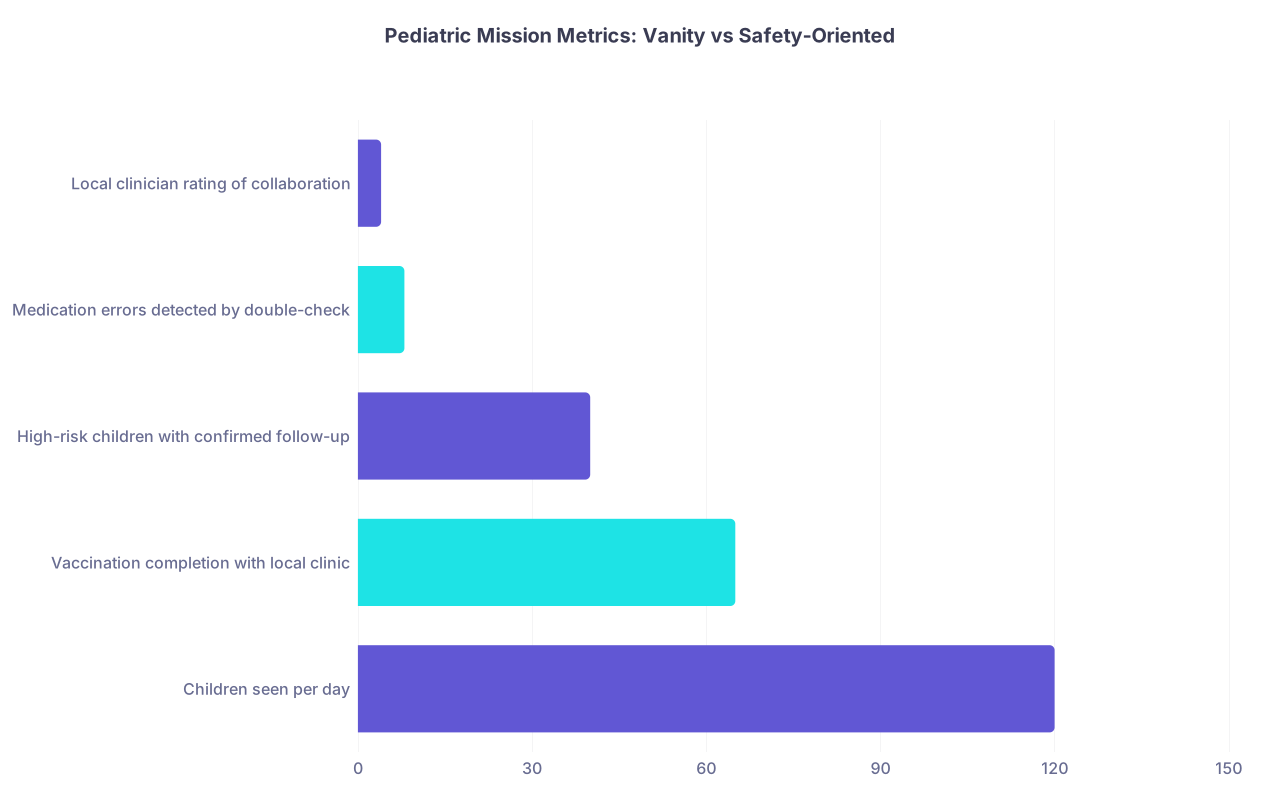
You cannot “feel” your way into ethical quality. You measure. For pediatric missions, focus your metrics on continuity and local integration, not volunteer satisfaction.
Here is an example of shifting from vanity metrics to meaningful ones:
| Category | Value |
|---|---|
| Children seen per day | 120 |
| Vaccination completion with local clinic | 65 |
| High-risk children with confirmed follow-up | 40 |
| Medication errors detected by double-check | 8 |
| Local clinician rating of collaboration | 4 |
The point here: the impressive‑sounding number (120 kids/day) may actually correlate with rushed, unsafe care. The more boring metrics (errors caught, follow‑ups completed, local ratings) tell you whether your safeguards are doing anything.
The Bottom Line Ethically
If your pediatric mission design cannot answer these questions convincingly, you have work to do:
- Who is responsible for this child’s care the day after we leave, and do they know that?
- If something goes wrong medically, can it be recognized and managed locally?
- Have we respected this child and family as persons, not as content or case studies?
- Are we strengthening or weakening the local system that will care for kids long‑term?
Your answer cannot be “God will provide” or “But we are helping more than hurting, overall.” That is how harm gets smoothed over.
The safer pediatric missions I have seen are slower, more boring, less photogenic, and far more effective. Fewer hero shots, more careful charts. Fewer “we saw 2,000 kids!” newsletters, more quiet collaboration with the local pediatric nurse who will still be there next month.
If you are serious about pediatric missions, that is where you should be aiming.
You are not just dropping into a village. You are entering a child’s timeline. What you do in those few days will echo forward. Design your mission so that echo is one of trust, continuity, and competence—not of confusion and avoidable harm.
You get these foundations in place, and then the next step is tougher but more interesting: building genuinely reciprocal, long‑term partnerships where local pediatric voices lead the agenda and foreign teams support rather than steer. That is another level entirely. And it is the direction you should be walking toward.
FAQ (5 Questions)
1. Is it ever ethical to do a short‑term pediatric mission without a long‑term partner on the ground?
Rarely, and the burden of justification is extremely high. Disaster response and acute outbreaks are the main exceptions, and even then you should be plugging into an existing coordination mechanism (e.g., Ministry of Health, WHO cluster) as fast as possible. For routine “service trips,” going in without a robust local pediatric partner almost guarantees continuity failures and system disruption.
2. What pediatric age range should a non‑pediatrician mission clinician feel comfortable managing?
There is no universal cut‑off, but a reasonable conservative stance is: family physicians with solid pediatric experience may manage most children beyond the neonatal period for common conditions, provided they adhere to local guidelines. Non‑pediatric‑trained internists or surgeons should be very cautious with children under 5 and especially under 2, and should not be primary decision‑makers for neonates. Neonatal care without pediatric expertise and strong local infrastructure is a major red flag.
3. Can students or residents safely participate in pediatric missions?
Yes, but not as primary clinicians. Their roles should emphasize observation, documentation, education, and low‑risk tasks within their proven competencies. They must not perform procedures on children that they are not credentialed to do independently at their home institutions. A simple rule: if you need direct supervision to do it at home, you do not suddenly do it solo abroad.
4. How do you handle a situation where parents request an intervention you think is unsafe or non‑beneficial?
You handle it the same way you should at home: with clear explanation, respect, and firm boundaries. Explain why you believe the intervention carries more risk than benefit, offer alternative options if available, and involve a trusted local clinician or leader in the conversation. Do not agree “just this once” to avoid conflict. That is how unsafe precedent is set.
5. What is the most impactful safeguard a small team can implement if they have limited resources?
If you had to choose one high‑yield change: integrate tightly with a local pediatric provider who will still be there after you leave, and channel every complex or chronic case through them with written handover. That single move addresses continuity, legal alignment, cultural context, and a lot of ethical tension. It is not glamorous, but it is where real child safety lives.


