
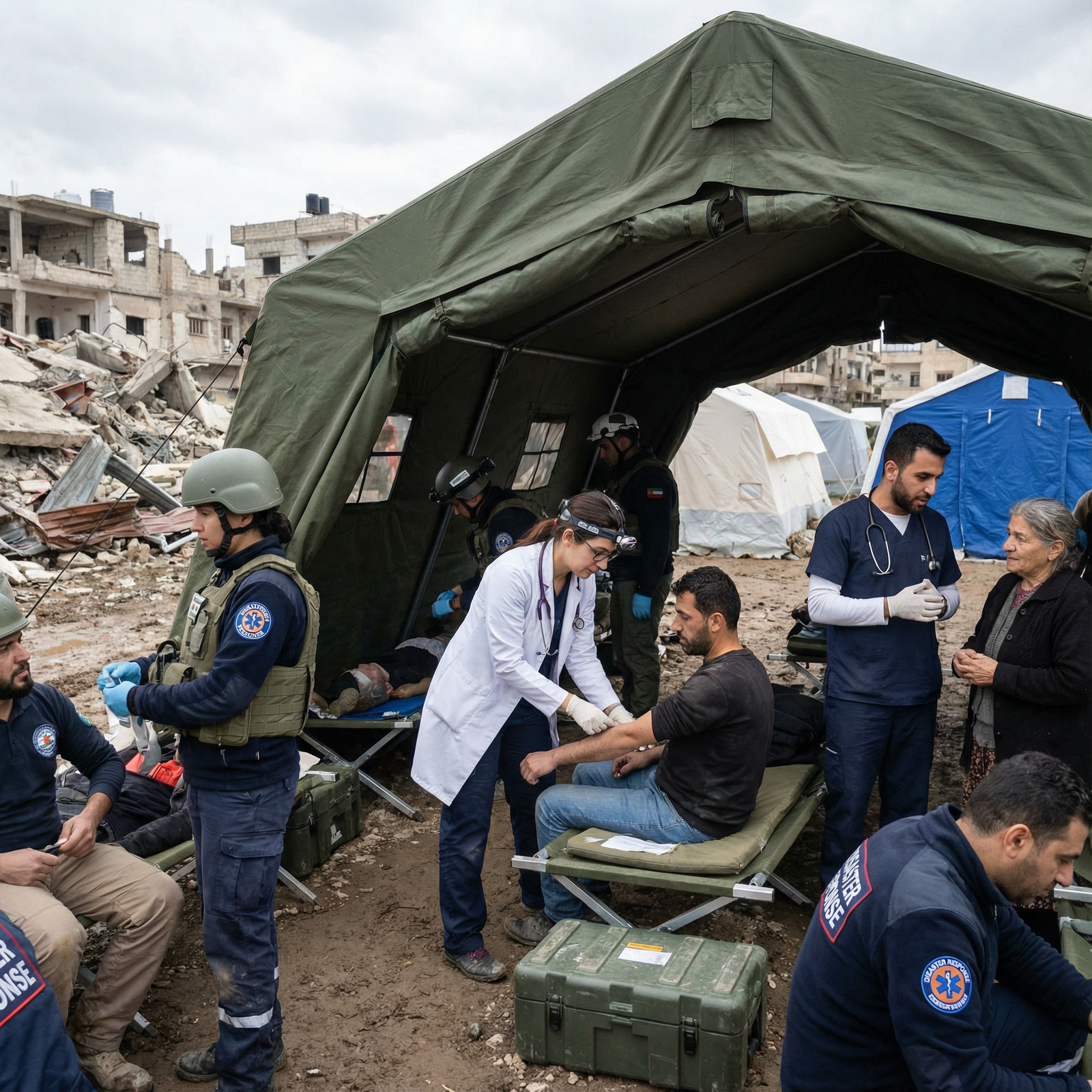
You are in a concrete block clinic in rural Central America. It is 32°C, the generator keeps cutting out, and there is a line of forty patients outside the door. A local nurse tells you, “This child needs a lumbar puncture. The parents already said yes. They trust you. Just do it.”
Your brain flips through every ethics lecture you ever half-listened to. Autonomy. Capacity. Voluntariness. But right now you have: a different language, a different culture, time pressure, and a translator who is also triaging the waiting room. You are supposed to get informed consent. The real kind, not the checkbox kind. How?
That is the problem we are fixing here. Not abstract “respect for persons.” Concrete, workable approaches to informed consent in cross-cultural medical missions.
1. What “Informed Consent” Actually Has to Achieve
Let’s strip away the legal noise and look at the actual core. Wherever you practice, proper informed consent must hit five targets:
- Capacity – can this person understand and decide?
- Disclosure – did you share the key facts?
- Understanding – do they actually grasp what you said?
- Voluntariness – are they free of coercion or undue pressure?
- Authorization – did they clearly say yes (or no)?
On a U.S. ward with shared language and robust documentation, this is hard but doable. On a short-term mission in a low-resource setting with different cultural norms, all five become fragile.
The mistake many teams make is assuming that “they said yes” covers all five. It does not. You can easily get a “yes” while failing three or four of the elements.
Here is how it breaks in the field:
- Capacity is assumed based on age alone, ignoring cognitive status, fear, deference to authority.
- Disclosure is truncated because of language barriers and time pressure.
- Understanding is never checked; a head nod is treated as comprehension.
- Voluntariness collapses under community pressure or reverence for foreign doctors.
- Authorization becomes a vague gesture interpreted as “consent.”
You still need these five elements. But you cannot just transplant a U.S. consent form into a village clinic and feel good about yourself. You have to re-engineer how you achieve each element in that specific context.
2. Common Failure Modes on Medical Missions (That I Keep Seeing)
Before I give you fixes, you need to know the traps. I have watched well-intentioned teams fall into these again and again.
A. “Interpreter as Human Consent Form”
You say three sentences in English. The interpreter talks for 45 seconds. The patient nods. Done, right?
Wrong. You have no idea what was actually said. Interpreters often:
- Compress risk information (“There is small risk but it is necessary.”)
- Add their own opinions (“Doctor from America says it is the best.”)
- Use culturally loaded phrases (“If you do not do this, the child might die,” when that was not what you said)
That is not informed consent. That is filtered persuasion.
B. Coercion by “Gratefulness” and Power Asymmetry
In many settings, the foreign team is viewed as rich, powerful, and almost magical. Patients show you family photos, bring you fruit, call you “doctor” even if you are a pre-clinical student. Gratitude is thick in the air.
People in that position rarely feel free to refuse. Especially when:
- Services are free and scarce.
- Local leaders publicly endorse you.
- You arrive as a group with matching T-shirts, logos, and cameras.
If you do not explicitly engineer space for “no,” you do not have voluntariness. You have consent-by-gratitude.
C. Western Individualism vs. Community-Centered Cultures
You are looking for an individual decision-maker. The village is looking for a family or community decision.
You say, “I need your decision.” They say, “We will ask the elders.”
You get annoyed because “time is tissue.” They get annoyed because you are bypassing their legitimate authority structures.
Outcome: either they ignore their own process and give you a brittle yes, or they slow things down and you quietly override it “for the child’s best interest.” Both are ethically sloppy.
D. Over-scoping the Mission
Teams sign up to do “minor surgeries” and then creep into more complex procedures because the need feels overwhelming and the opportunity is “too good.”
You end up:
- Doing procedures you are not credentialed to do at home.
- Performing them in facilities that cannot manage complications.
- Obtaining consent without accurately describing downstream care, risks, or follow-up.
That is not just a consent problem. That is a mission design problem. But consent is where it surfaces.
3. Pre-Field Work: Setting Yourself Up to Do Consent Ethically
Most teams try to “solve” informed consent at the bedside. Too late. The groundwork is laid months before you land.
A. Clarify the Scope and Intensity of What You Will Offer
You cannot consent a patient to a procedure you should not be offering in that context.
Have explicit answers, in writing, before you go:
- What procedures will we offer?
- What is the maximum complexity we will do?
- What are the local backup options if something goes wrong?
- Will we be around for follow-up, or is there a trusted local system to hand off to?
If you would not do it at your home institution without ICU backup, do not glamorize it as “mission impact” in a clinic with no blood bank. You cannot ethically obtain consent to risks you cannot even manage.
| Procedure Type | Do on Short-Term Mission? | Requirements to Be Ethical |
|---|---|---|
| Simple wound closure | Usually yes | Local follow-up, sterile setup |
| Elective hernia repair | Maybe | Trained surgeon, post-op care |
| C-section | Usually no for teams | OR, blood, ICU, local staff |
| Major cancer surgery | No | Long-term care unavailable |
B. Build a Real Partnership with Local Clinicians
Ethical consent in cross-cultural missions is almost impossible without deep local collaboration.
You want:
- Local clinicians involved in defining what is offered.
- Local leadership to review and approve your consent processes.
- Agreement on who the “authorized decision-makers” are in that culture (individual, spouse, elders, etc.).
If your “partnership” is one WhatsApp call with a local pastor a week before you arrive, you are not ready.
C. Prepare Consent Tools in the Right Language and Format
Do not land with English-only, text-heavy consent templates and expect your translator to “just explain it.”
You need:
- Pre-translated, culturally-adapted consent scripts, not just forms.
- Simple visuals for key procedures (e.g., drawings of incision, injection site, possible outcomes).
- Stratified consent: a very short version for low-risk common treatments; longer structured versions for higher-risk interventions.
And yes, this work is tedious. Do it anyway.
4. On-the-Ground: Operationalizing Consent When Everything is Messy
Here is where it actually lives or dies. You are in front of the patient. It is noisy, busy, you are tired, the translator is tired. You will not make it perfect. But you can make it honest and robust.
A. Use a Structured, Minimalist Framework: “3-3-1” Method
I like a simple framework you can actually remember in the field: 3-3-1.
For any non-trivial intervention, answer:
3 basic questions:
- What is this?
- Why do we recommend it?
- What will happen if we do not do it?
3 core risks (not an exhaustive list, but the big ones that matter locally):
- The most serious common complication.
- The most serious rare but catastrophic risk.
- The most likely minor, but bothersome side effect.
1 real alternative (including “wait and see” or “do nothing,” if that is genuinely acceptable).
If you cannot articulate that clearly to yourself in English, you have no business trying to “consent” someone through an interpreter.
B. Work Deliberately with Interpreters
Treat your interpreter as clinical staff, not as a translation device.
Before clinic:
- Sit with them and rehearse the 3-3-1 script for your main procedures.
- Agree on consistent words for:
- Risk (not guarantee of harm, but possibility).
- Uncertainty.
- “You are allowed to say no.”
During the encounter:
- Speak in short, single-idea sentences.
- Stop often and ask the interpreter: “What did you just say?” in your shared language, to catch drift.
- Watch both the patient and interpreter’s faces. Confusion in either is a red flag.
After the encounter:
- Debrief occasionally: “Are people really understanding this part? Where are they getting stuck?” Then refine your script.
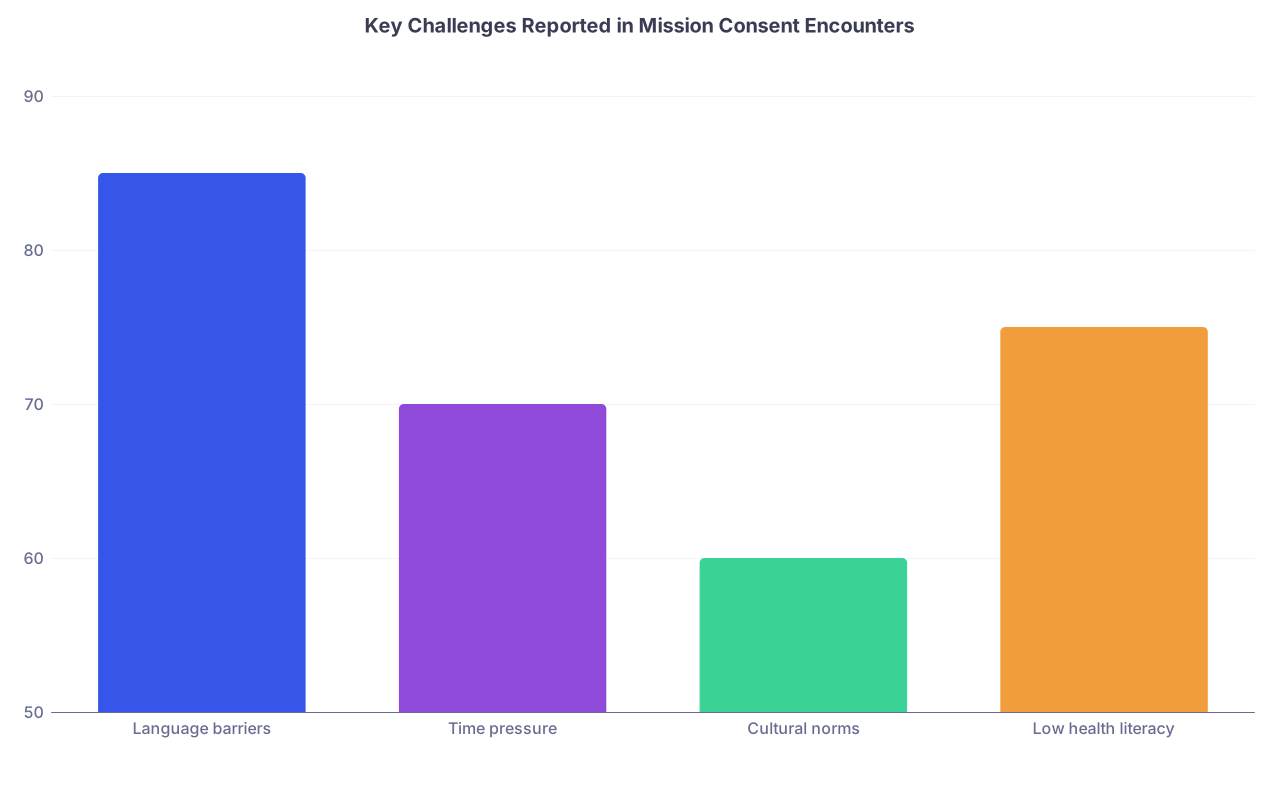
| Category | Value |
|---|---|
| Language barriers | 85 |
| Time pressure | 70 |
| Cultural norms | 60 |
| Low health literacy | 75 |
(Percent of clinicians on missions who reported each as a major barrier in informal surveys.)
C. Test Understanding Explicitly (Not with “Do You Understand?”)
“Do you understand?” gets yes 95 percent of the time. It measures politeness, not comprehension.
Use teach-back, even in the mission chaos:
- “Can you tell me, in your own words, what we are planning to do?”
- “What are you most worried might happen after this procedure?”
- “If you go home today without this, what do you think might happen?”
If the answers are wildly off, you have not obtained informed consent. Go back. Simplify. Use drawings. Or, for higher-risk procedures, delay until better understanding is possible.
D. Create Space for Real Choice
You have to actively deconstruct the power imbalance.
Tactics that work:
- Normalize refusal explicitly:
- “Some people choose this. Some choose not to. Both are acceptable.”
- “If you say no, we will still take care of you today in other ways.”
- Change your body language:
- Sit down at eye level.
- Leave the door or curtain slightly open so it does not feel like an interrogation cell.
- Remove the audience:
- Ask non-essential team members to step out.
- If local leaders are hovering and pressuring, gently ask if you can speak with the patient and close family alone.
Do this especially for procedures that affect fertility, pregnancy, or long-term disability. These are the ones where hidden coercion often lives.
5. Special Scenarios That Trip Teams Up
A. Pediatric Consent in Cultures with Strong Family Hierarchies
You are seeing a 10-year-old needing a potentially painful procedure. Mother, grandmother, and an uncle are in the room. The child is silent, eyes wide.
You have three layers:
- Parental / guardian permission (legal / cultural authority).
- Child assent (developmentally appropriate agreement).
- Extended family influence.
In many settings, the extended family has strong sway. That is not inherently unethical. What is unethical is silencing the child entirely or using family pressure to override their clear distress when alternatives exist.
Practical approach:
- Explain to the adults first, using 3-3-1.
- Then address the child directly with a very simple explanation (“We need to take a little bit of blood to help us know how to treat you. It will hurt like a pinch for a few seconds.”).
- Ask the child if they have questions or fears.
- If the procedure is elective and the child is clearly refusing, think hard before pushing ahead just because adults say yes.
B. Emergency Situations
You are in a mission hospital, and a woman arrives with obstructed labor. There is no time for a 20-minute seminar on cesarean sections.
Ethically, emergency exception to consent still exists in low-resource settings:
- If delaying treatment to obtain full consent would significantly increase risk of death or serious harm.
- And there is no clear evidence the patient would refuse if they had capacity and time.
But you still communicate, even if very briefly. Something like:
- “You and your baby are in danger. We recommend an operation to help the baby be born safely. Without it, you and the baby may die.”
- Name one or two big risks quickly.
- Make clear you are acting to save life, not experiment.
Afterward, explain more fully what was done and why, as capacity returns or family gathers.

| Step | Description |
|---|---|
| Step 1 | Assess clinical status |
| Step 2 | Brief emergency explanation |
| Step 3 | Proceed with treatment |
| Step 4 | Standard 3-3-1 consent |
| Step 5 | Check understanding |
| Step 6 | Proceed |
| Step 7 | Offer alternatives |
| Step 8 | Life threatening now |
| Step 9 | Patient agrees |
C. Research, Photography, and “Teaching Cases”
This is where missions quietly go off the rails ethically.
You cannot:
- Fold people into research or data collection “because this is low-risk and beneficial.”
- Use identifiable patient photos in presentations or social media without explicit consent.
- Turn complex, high-risk cases into de facto “teaching opportunities” for trainees beyond their normal scope without transparent disclosure and oversight.
If you are collecting data for publication, you are doing research. That requires:
- Ethics review (IRB or local equivalent).
- A separate consent process distinct from clinical consent.
- Clear messaging that refusal will not jeopardize care.
For photography: if you would not post that photo of a vulnerable person from your own country, do not do it abroad either.
6. Documentation: What Actually Matters in Low-Resource Settings
I have seen teams obsess over getting a signature in a place where 40 percent of adults are not fully literate. The paper becomes a talisman—“We are covered.” You are not.
The priority is quality of the conversation, not the form. But documentation still matters.
Practical documentation hierarchy:
- Short narrative note:
- “Discussed procedure X with patient / guardian via interpreter Y. Explained diagnosis, recommended treatment, at least 3 key risks (a, b, c), and alternatives (including no treatment). Patient / guardian verbalized understanding via teach-back and agreed to proceed.”
- For higher-risk procedures:
- A simple local-language form with:
- Procedure name (in local language).
- Short statement: “I was told what this is, why is recommended, risks, and options. I had the chance to ask questions.”
- Signature or thumbprint of patient / authorized decision-maker.
- Signature of interpreter.
- A simple local-language form with:
- For illiterate patients:
- Thumbprint + witness signature.
- Read the consent statement aloud in local language and note that was done.
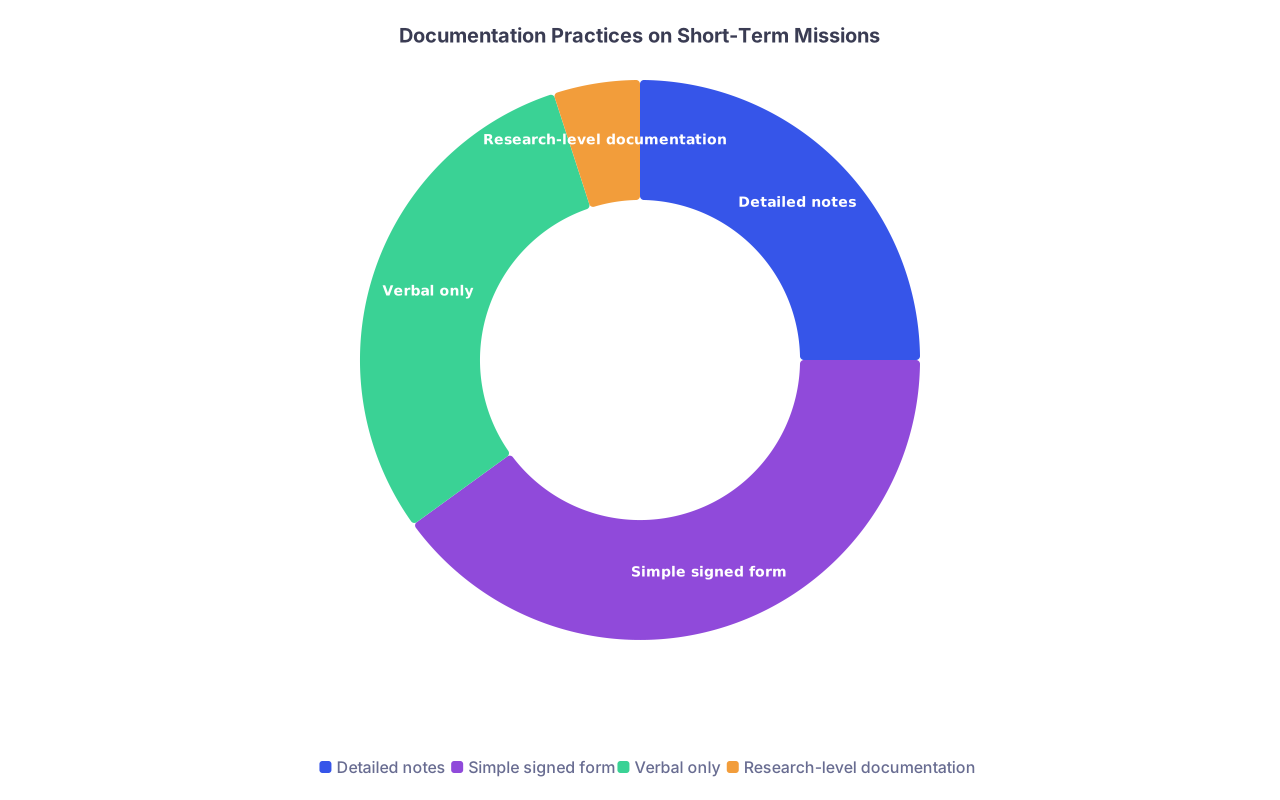
| Category | Value |
|---|---|
| Detailed notes | 25 |
| Simple signed form | 40 |
| Verbal only | 30 |
| Research-level documentation | 5 |
If you have to choose between a rushed form and a slower conversation documented in a brief note, pick the conversation.
7. Personal Development: Training Yourself Ethically, Not Just Technically
You are not just learning how to “get consent abroad.” You are shaping what kind of clinician you become.
Three habits to cultivate deliberately:
A. Ethical Self-Audit After Each Day
Five minutes. Alone or with a trusted teammate. Ask:
- Did I pressure anyone today, even subtly?
- Did language or culture prevent real understanding in any case?
- Did I do any procedure for which I could not have defended my consent process at my home institution?
Write it down. Patterns will emerge. Fix them.
B. Ask Local Colleagues for Brutally Honest Feedback
Not “Was that okay?” You will get polite lies.
Ask instead:
- “If your own family member was in that situation, would you be satisfied with how I explained it?”
- “Where do you think foreigners like us usually get this wrong?”
- “Did you see any situation today where you felt the patient could not really say no?”
Then shut up and listen. Do not defend yourself. Adjust.
C. Study Cases Where Things Went Bad
If your team has been doing missions for years and “nothing bad ever happened,” they are lying or not paying attention.
Look for:
- Cases where post-op complications could not be managed locally.
- Patients who clearly did not understand the expected recovery and lost trust.
- Situations where local norms on decision-making (e.g., husband’s permission) clashed with your instinct to proceed based solely on the patient’s wish.
Pick a couple of these cases and dissect them as if you were sitting in an ethics conference. What would you do differently today?

8. Building Systems, Not Heroics
If informed consent on your mission depends on one particularly conscientious resident “doing it right,” you have already failed. You need systems.
Concretely:
- Standard consent scripts, vetted by local partners, for your top 5–10 procedures.
- Mandatory pre-field training that includes role-play with interpreters.
- A clearly identified on-site “ethics lead” each day who can be called into tricky cases.
- Debrief time built in, not squeezed out, at least every other day.
This is not overhead. This is the only way you avoid repeating the same ethical errors in every community you visit.

| Step | Description |
|---|---|
| Step 1 | Pre-field planning |
| Step 2 | Define scope and risks |
| Step 3 | Develop scripts and forms |
| Step 4 | Train team and interpreters |
| Step 5 | Clinical encounters |
| Step 6 | Ethics lead consult for complex cases |
| Step 7 | Document and debrief |
| Step 8 | Revise scripts and training |
FAQ (4 Questions)
1. Do I really need signed consent forms on short-term missions, or is verbal consent enough?
For low-risk, routine care, properly documented verbal consent is usually enough, especially in settings with low literacy. For higher-risk procedures (surgery, anesthesia, invasive diagnostics), you should aim for a simple, locally-understandable signed or thumbprinted form plus a brief note documenting the conversation. The form does not replace the discussion; it supplements it. If you must choose under time and resource constraints, prioritize a structured, clear conversation with brief documentation over chasing signatures that mean nothing to the patient.
2. How do I handle situations where local norms require a husband or elder’s permission, but the patient wants to proceed?
This is one of the hardest conflicts. Ethically, you respect the patient’s autonomy. Practically, if you ignore local norms you can put the patient at risk socially or physically after you leave. The best approach is pre-field: discuss these norms with local clinicians and agree on how to handle them. In the moment, try to bring both the patient’s preference and the local norm into the same room—literally and figuratively. Advocate for the patient, but do it with local partners, not as a solo foreign hero. If proceeding would create serious risk for the patient after you are gone, you may have to accept limits on what you can ethically do in that context.
3. What if there is no trained interpreter and only a bilingual family member is available?
Using family interpreters is risky, but sometimes you have no better option. For simple, low-risk decisions, it can be acceptable if you keep explanations very concrete and short, and you double-check understanding with teach-back. For higher-risk procedures, you should push hard to find a neutral interpreter (local health worker, teacher, community volunteer). If you cannot, you must ask yourself whether you can truly achieve informed consent for that intervention. In some cases, the safest ethical decision is to limit what you offer until proper communication is possible.
4. Is it ethical to let trainees perform procedures on missions that they are not credentialed to do at home, if supervision is present?
Usually no. The fact that care is scarce does not lower your ethical bar; it raises it. If a trainee would not be allowed to perform a procedure independently at their home institution, the mission setting is not the place to “practice” on more vulnerable patients. Supervision helps, but it does not erase the training gap or the limited capacity to manage complications. Missions should not be backdoor training grounds. If anything, indications to proceed should be stricter than at home, not looser.
Key points to keep in your head when you walk into that hot, crowded clinic:
- Informed consent is not a signature; it is a structured, honest conversation that respects capacity, understanding, and real choice, adapted to that specific culture and language.
- You cannot fix bad mission design with good consent; define your scope, build local partnerships, and prepare tools before you arrive.
- Your duty is not to “do as much as possible,” but to offer what you can explain, justify, and follow through on—so that when a patient says “yes,” it actually means something.


