
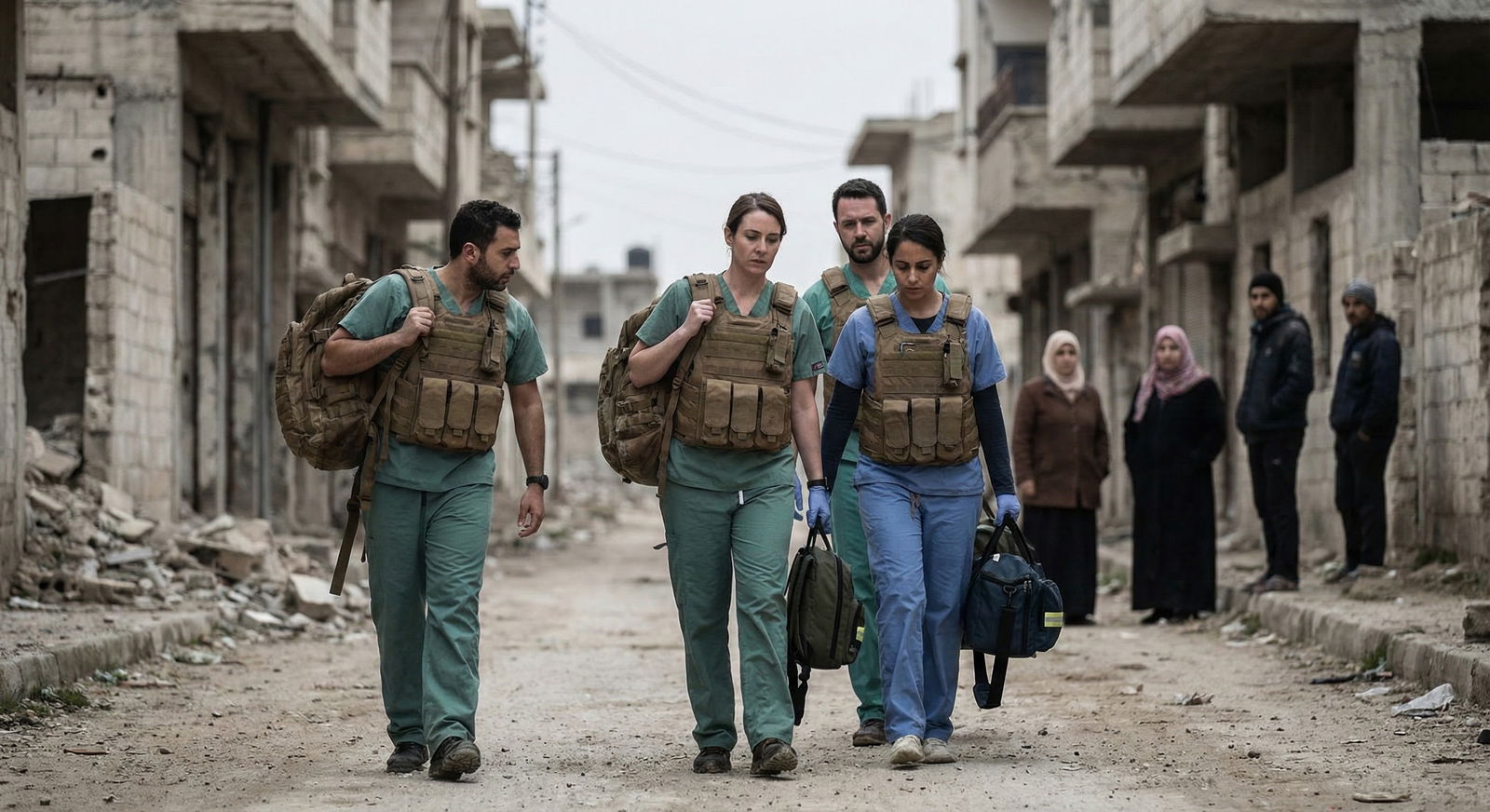
Only 27% of clinicians on short-term medical missions report feeling ethically prepared for the level of rationing they end up doing.
That number does not surprise me. If you have only practiced in well-resourced settings, your internal “this is ethical care” compass is calibrated to a different planet. Then you land in a church basement in rural Guatemala, or a tent hospital in post-flood Pakistan, and you are suddenly deciding—very concretely—who gets pain control, who gets surgery, who gets the last vial of ceftriaxone. Before lunch.
Let me walk through what actually happens, why good people make bad calls, and how to prepare so you are not improvising your ethics at the bedside.
1. Why Triage in Missions Is Ethically Different (And Harder)
In theory, triage and rationing are not new. You saw START triage in disaster medicine lectures. You know the four-color categories. You have heard “greatest good for the greatest number” so many times it has lost meaning.
But mission environments change the variables.
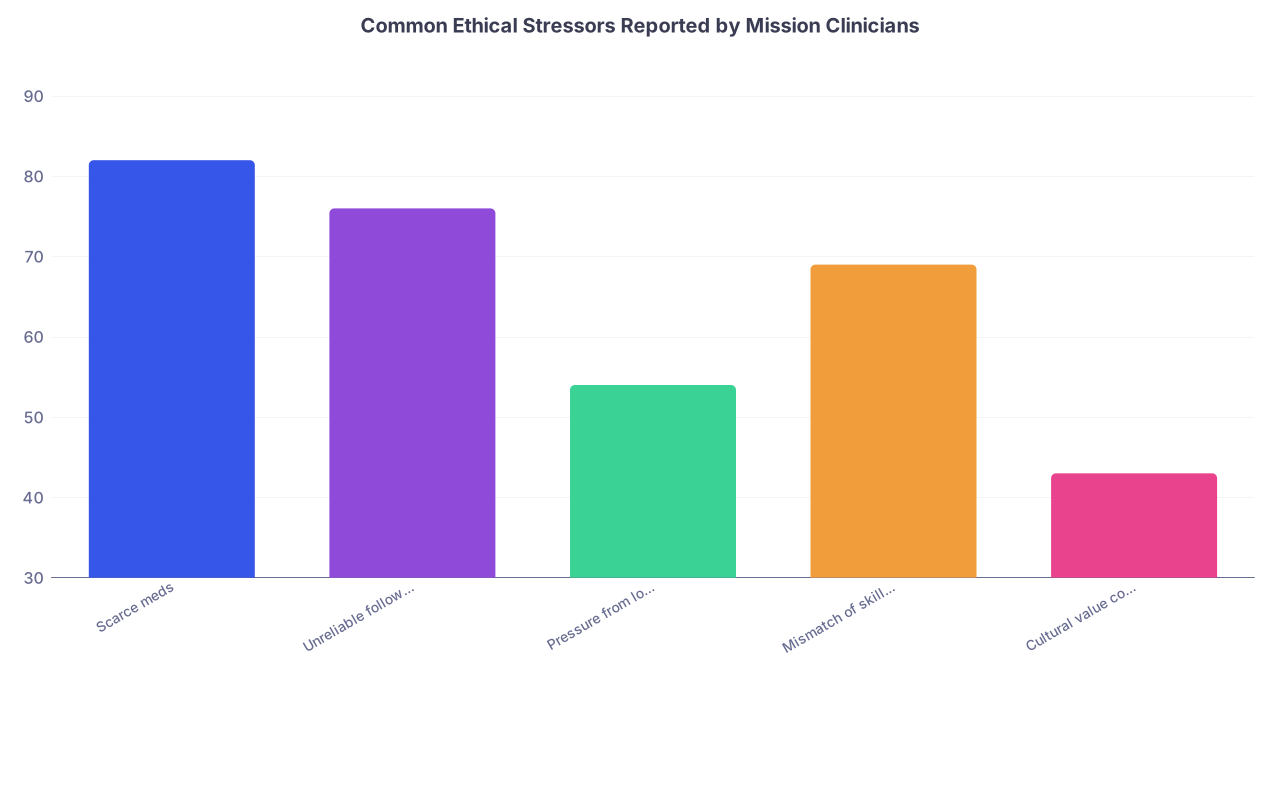
| Category | Value |
|---|---|
| Scarce meds | 82 |
| Unreliable follow-up | 76 |
| Pressure from local leaders | 54 |
| Mismatch of skills/resources | 69 |
| Cultural value conflicts | 43 |
Four things that break your usual ethical autopilot
Extreme scarcity with no backup
In your home hospital, “scarce” means you need pharmacy to override or call the blood bank. On missions, “scarce” means: there is literally one unit of O-negative in the region. Or six doses of an antibiotic for forty febrile kids.
Scarcity changes everything:
- You start thinking in population terms, not single-patient optimization.
- “Standard of care” becomes aspirational, not binding.
- Every high-cost decision has a visible opportunity cost in the room.
No reliable continuity or follow-up
You might be the only physician this patient sees in five years. That fact distorts priorities. The hypertension that can be managed easily back home will not be, here. The chronic pelvic pain that “can wait” in Boston may never get evaluated otherwise.
So now triage is not just about acuity. It is about:
- Likelihood of follow-up (often low).
- One-time interventions vs ongoing regimens.
- How much harm you cause by starting something you know they cannot maintain.
You are a guest in someone else’s system
This point gets glossed over. You are not “rescuing” a vacuum. You are stepping into an existing, often fragile, healthcare ecosystem. Your triage decisions ripple through that system.
Example I have actually heard: a foreign team runs a massive free clinic, hands out 3-month supplies of brand-name PPIs, antihypertensives, insulin. Patients become dependent. Six months later, the local pharmacy is dealing with angry people who cannot afford the meds you normalized. You created demand the system cannot supply.
Ethically, that is on you.
Social pressure and moral injury
You are not triaging behind a curtain. Families watch. Community leaders stand in the doorway. Local partners quietly say: “This family is important here” or “He is the pastor.” You feel the pressure.
Moral injury happens when:
- Your actions violate your own ethical code,
- Or you feel forced to choose between bad options,
- Then you have to fly home and pretend you “helped.”
That is why we need to be very concrete about frameworks, not just intentions.
2. Case 1 – The Last Antibiotic: Saving One Child or Many?
You are 4 days into a 7-day mission in a remote area. The supply line is exactly your checked luggage and a local pharmacy with limited stock.
You have:
- 10 vials of ceftriaxone remaining.
- 3 days of clinic left.
- No guarantee of restock.
Three cases arrive within an hour:
- A 2-year-old with presumed bacterial pneumonia, hypoxic but stable on oxygen you can provide today only.
- A 7-year-old with suspected typhoid, febrile for 10 days, looks sick but hemodynamically okay.
- A 28-year-old postpartum woman, 3 days after a home birth, now febrile, tachycardic, fundal tenderness, no imaging, likely endometritis or sepsis starting.
Each would be treated with ceftriaxone at home without hesitation.
Here’s the pressure: If you “fully treat” each—say 5–7 days IV or IM—you blow through all vials, and the next septic patient gets nothing. In this kind of setting, there will be a next septic patient.
So what is the ethical move?
A workable ethical structure: egalitarian vs utilitarian vs prioritarian
In rationing, you are implicitly picking a principle. Usually one of these three:
- Egalitarian – treat equally; first-come, first-served or lottery.
- Utilitarian – maximize total benefit; treat those most likely to gain the most life-years or health.
- Prioritarian – give priority to the worst-off (usually the sickest or most disadvantaged).
In high-resource hospitals, we often blend these without saying so. On missions, incoherent blending produces ethically messy outcomes.
Here, I would explicitly lean utilitarian with prioritarian tiebreakers. Why?
- Your goal, realistically, is to avert the most serious harm for the largest number.
- You must also be honest about your realistic capacity for monitoring and follow-up.
So for these specific patients, you can reason like this:
- Postpartum woman – high risk of rapid deterioration and death if under-treated. Also likely responsible for other dependents. Antibiotics now may be clearly life-saving.
- 2-year-old pneumonia – high short-term risk but could potentially benefit from shorter course plus oral step-down if they can afford local meds.
- 7-year-old with typhoid – serious but more time-sensitive? Yes. Immediately lethal today? Maybe not. Also has alternative oral regimens (if available locally).
An ethically defensible distribution might be:
- Commit upfront to reserve, for example, 4 vials for unknown future severe sepsis over next 3 days. That is a population-level decision.
- Give the postpartum woman a full course or close to it (e.g., 4–5 days IV/IM plus locally sourced oral step-down if at all possible).
- Give the 2-year-old a shorter parenteral course (2–3 days) then transition to oral if accessible.
- Start the 7-year-old on the best oral regimen available, with clear counseling, reserving IV for deterioration.
This does two things:
- Maintains some stock for future life-threatening presentations.
- Maximizes likely life-years saved rather than just mechanically completing textbook courses for the first few in the door.
Is this “standard of care”? No. Is it ethically defensible in context? Yes. But only if you:
- Apply the same logic to all similar cases.
- Do not quietly stretch vials or under-dose without disclosure.
- Document your reasoning for the team and local partners.
3. Case 2 – The Non-Urgent Hernia vs The Line of Sick Children
Classic mission case. You are the only surgeon within 100 km for the week. The posted schedule: “General surgery, hernia repairs, minor procedures.”
By day 2, you have:
- A full OR list of adult inguinal hernias and gallbladders scheduled.
- A waiting area full of parents with children with untreated clubfoot, neglected burns, and massess that need actual diagnostic workup.
- One OR, limited anesthesia, and only 6–8 cases per day possible.
The hernias are symptomatic, yes. Discomfort, some reduced work capacity. Low short-term mortality risk.
The kids? Some will suffer permanent disability without early intervention. But they are not on your schedule. The local hospital administrator already pre-screened and filled the board with adults—many of whom are community leaders or relatives of staff.
You face two competing obligations:
- Respect local authority and agreements.
- Use scarce surgical capacity where it does the most long-term good.
How to triage surgical cases ethically in this context
The ethically lazy move is to say: “We will just do the list as scheduled; we are guests.” That abdicates your professional responsibility.
Instead, before the first incision, you should think in a framework like this:
Priority axes:
- Time sensitivity – If delayed, does the outcome worsen significantly?
- Magnitude of benefit – Life-saving, limb-saving, function-restoring vs modest symptom relief.
- Resource intensity – Does the case consume rare resources (blood, complex post-op care) that few others need?
In the case scenario, many elective hernias:
- Low time sensitivity.
- Modest but real benefit.
- Typically low resource use.
The untreated pediatric cases:
- Higher time sensitivity for function and development (e.g., clubfoot).
- Larger magnitude of long-term benefit.
- May or may not require similar OR time.
So ethically, you should:
- Re-negotiate the schedule with local leadership as early as possible.
- Propose an allocation rule: for example, at least 50% of OR time is reserved for high-impact, time-sensitive pediatric or limb/life-saving cases.
- Make criteria explicit and clinically grounded, not political.

| Step | Description |
|---|---|
| Step 1 | All potential surgical cases |
| Step 2 | Screen for emergency or urgent |
| Step 3 | Prioritize today |
| Step 4 | Assess time sensitivity |
| Step 5 | Schedule early in week |
| Step 6 | Assess magnitude of benefit |
| Step 7 | Next priority |
| Step 8 | Fill remaining OR slots |
| Step 9 | High time sensitivity |
| Step 10 | High functional gain |
There will be blowback. I have seen administrators insist that the team “honor the list” because the promise has been made to important local figures. Your job is not to blow up the relationship, but also not to collude in ethically skewed triage that privileges social status over clinical need.
A compromise I have seen work:
- Keep some of the original adult cases each day.
- Add a clearly defined slot structure: “2 pediatric deformity / 2 complex urgent / 2 elective adults per day.”
- Have the local team communicate the change to patients, not you making solo pronouncements.
That is not perfect justice. But it is recognizably better than pure VIP medicine disguised as charity.
4. Case 3 – Chronic Disease: To Start or Not to Start?
Third type of case that tests people more than they expect: chronic disease.
You are in a week-long chronic disease clinic in a peri-urban slum. The NGO bought a suitcase of:
- Metformin
- Amlodipine
- Hydrochlorothiazide
- Insulin (enough for maybe 20 patients for 3 months)
- A few statins and ACE inhibitors
You see:
- Dozens of previously undiagnosed diabetics with A1c levels you do not actually measure (you have a random glucose and urine strips).
- Hypertensives with BP 180–200 systolic, some with prior strokes.
- People who have never had a fasting lipid profile but have obvious metabolic syndrome.
The tempting move: start everyone on something. It feels good. It feels “fair.” And yes, some therapy is better than none, right?
Not always.
The adherence and follow-up problem
The ethical crux is continuity. If:
- There is no local, affordable access to the drugs you are starting,
- There is no structured follow-up system,
- And you are dropping in once a year,
Then starting an insulin-dependent diabetic on insulin and leaving may cause:
- Hypoglycemic events without education or glucometers.
- Loss of residual insulin production if you overshoot.
- Psychological and financial harm when the drug runs out and they think “I will die without this.”
With antihypertensives, if you drop someone’s BP acutely and then meds stop, they may be at risk of rebound or at least anxiety and mistrust.
You have to ask yourself very concretely: “Can this person realistically continue this regimen safely once I am gone?”
So a more ethically coherent approach:
Prioritize sustainable interventions
- Lifestyle counseling grounded in local reality (diet substitutions they can actually do, not “eat more salad” where lettuce costs a day’s wage).
- Generic, locally available medications that patients can purchase or receive from local clinics.
Align your formulary with local supply
- Before the mission, map which meds are and are not available locally, at what cost.
- If you bring drugs that do not exist locally, treat them as bridge therapy only and be transparent.
Stratify who you start on treatment
You can use a rough prioritization:
- Very high-risk patients (e.g., BP consistently >180/110, clinical heart failure, known prior stroke).
- Those who demonstrate they can access refills locally (confirmed pharmacy, cost discussion).
- Those with stable living situations who can safely store medicines.
Be honest about what you are doing
Tell patients:
- “This medicine will help lower your blood pressure while you also work with the local clinic to keep treating it.”
- Or, if access is uncertain: “We can give you a 3-month supply. After that, you will need to see [local clinic] to continue, because we will not be here.”
Half-truths are unethical. “Take this, it will fix your blood pressure” without clarifying continuity is not acceptable.

5. Fairness, Bias, and the “Cute Kid” Problem
Let me be blunt: even good clinicians make unfair decisions when stressed and sleep-deprived.
You are more likely to stretch for:
- The child who smiles and clings to your hand.
- The patient whose story is translated well.
- The person who reminds you of your own family.
Meanwhile, quiet patients, those with less charismatic translators, or those from marginalized local communities slide down your internal priority list.
Mission teams often accidentally reinforce existing local inequities. The wealthier, more educated, and more urban patients hear about the clinic first. They come with printed records and pushy relatives who insist they be seen. The rural poor show up late, if at all.
So you need system-level correctives, not just “try to be fair.”
Examples of structural fairness tools
- Numbered ticket system with randomization within priority categories, not pure first-come-first-served, which favors those who can miss work and travel early.
- Triage protocols that classify patients by clinical criteria, then assign probabilities of being seen based on capacity.
- Separate queues for high-risk groups (infants, pregnant women, known HIV/TB, severe disabilities) with clear justification.
| Priority Level | Typical Cases | Target Proportion of Daily Slots |
|---|---|---|
| 1 – Critical | Sepsis, severe dehydration, active labor, acute abdomen | 15–20% |
| 2 – High | Uncontrolled chronic disease, high fever, infants with respiratory symptoms | 40–50% |
| 3 – Moderate | Stable chronic conditions, mild infections | 20–30% |
| 4 – Low | Non-urgent complaints, routine checkups | 10–15% |
This is not about dehumanizing people into categories. It is about recognizing that your emotional intuitions are not a reliable fairness engine under pressure.
6. What You Should Decide Before You Go
If you wait until the second day of clinic to debate core ethical principles with your team, you will default to whoever is loudest or most senior. Not necessarily the most thoughtful.
Before you go, as a team, decide:
Your primary ethical orientation
Example:
- “Our default will be to maximize total health benefit while giving priority to the worst-off. We will apply consistent triage criteria across similar cases.”
Put that in writing. Refer back to it when things get heated.
How you will allocate scarce items
You should have rules in place for:
- The last units of blood.
- The last course of a broad-spectrum antibiotic.
- The final slot on the OR schedule.
And these rules should not be:
- “Whoever we see first.”
- “Whoever is politically important.”
- “Whoever cries the hardest.”
Who makes final calls
Not every decision can be made by committee at the bedside. Set beforehand:
- A small triage group (e.g., medical director, local counterpart, one senior nurse) that makes final rationing decisions when there is disagreement.
- A process for logging these decisions briefly (e.g., a rationing log) both for accountability and debrief.
How you will say “no”
Saying no is ethically necessary. How you do it matters.
Ground rules:
- Never blame “the locals” for your decision in front of patients.
- Do not inflict guilt on patients: “We could treat you but then children might die.” That is your burden, not theirs.
- Use neutral, honest language: “Given what we have, we are prioritizing patients who are more severely ill today. I am sorry we cannot offer this surgery this week.”
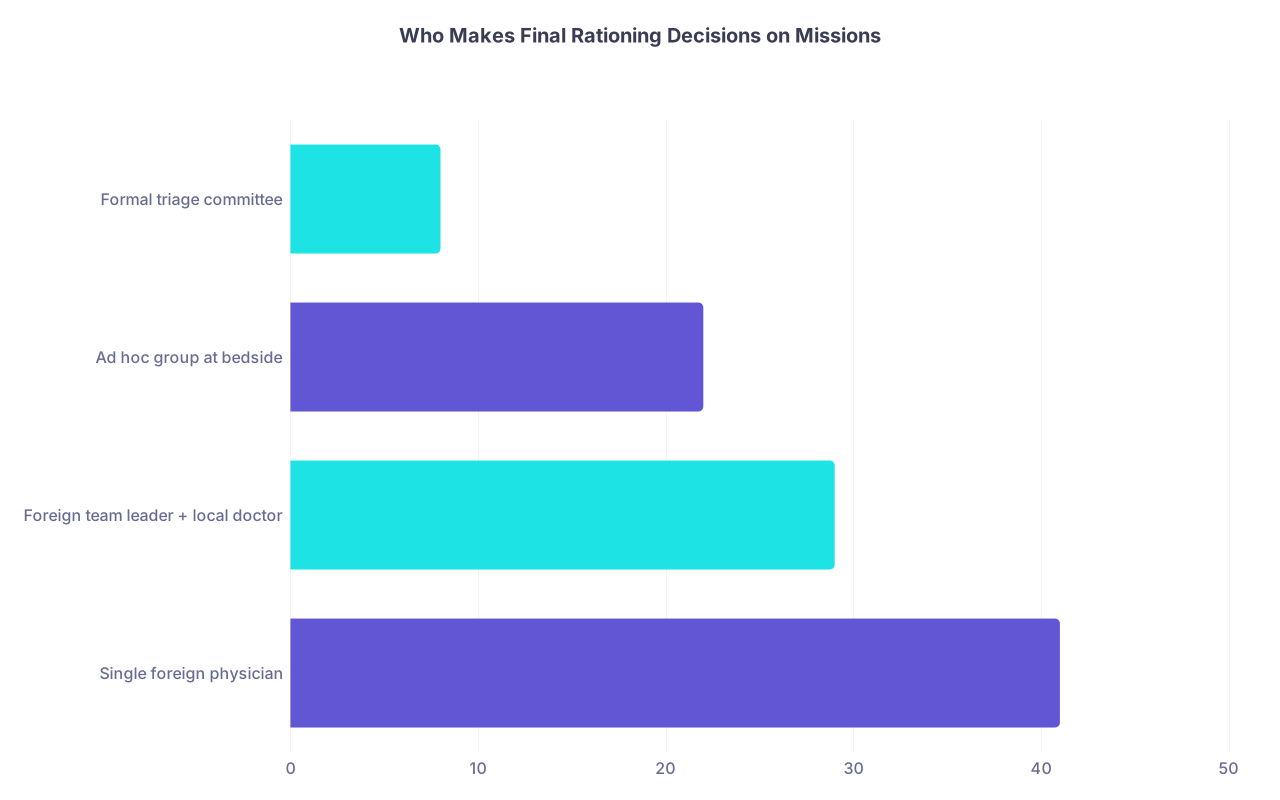
| Category | Value |
|---|---|
| Single foreign physician | 41 |
| Foreign team leader + local doctor | 29 |
| Ad hoc group at bedside | 22 |
| Formal triage committee | 8 |
Those 41% “single foreign physician” decisions? That is a recipe for hidden bias and burnout.
7. Personal Moral Injury and How to Survive It
Even if you do everything right, some decisions will haunt you.
The febrile neonate you could not evacuate.
The trauma case that arrived when blood and sutures were gone.
The elderly woman you refused a hernia repair because you prioritized a teenager’s limb.
You will replay them on the plane home.
Three blunt truths:
If nothing haunts you, you probably were not paying attention.
Rationing real care in front of real people is not clean. You will feel dirty even when you got it right. That is normal.If everything haunts you, you will stop going or you will become numb.
Neither helps patients. You need a way to file these cases in your mind as “agonizing but justified” or “I would change that next time” rather than just generalized guilt.Debriefing needs to be structured, not just “how do we feel.”
After difficult rationing decisions, I recommend:
- A brief same-day huddle: what happened, why we chose what we did, what we would repeat or revise.
- A dedicated team debrief after the mission specifically about ethics cases, separate from logistics and “what went well” cheerleading.
- Personal reflection time that is not just rumination—write down the decision, your rationale, and what principle you applied.
You can even categorize your hard cases:
- Tragic but necessary (no feasible alternative).
- Unclear but reasonably defended (multiple acceptable options).
- Regrettable and correctable (you would choose differently next time with better planning).
Aim to shrink the third category on your next mission. That is growth.
8. Concrete Prep Steps So You Are Not Winging It
If you want something actionable rather than abstract, here is what to do before your next mission.
Build an ethics briefing into team orientation
- One hour on scarcity, triage, and local context.
- Go through 3–4 cases like the ones above.
- Force the team to articulate which patient they would treat and why.
Create a simple triage protocol adapted to the mission
- Not a 40-page hospital manual. A 1–2 page guide with:
- Color-coded acuity levels,
- Examples,
- A rule for what proportion of slots/meds go to each category.
- Not a 40-page hospital manual. A 1–2 page guide with:
Map local healthcare resources and costs
- Which meds exist locally, at what prices?
- Where can patients get follow-up for surgery, chronic disease, maternity?
- What is realistically covered by local insurance, government, or NGOs?
Define red lines
- For example:
- “We will not start insulin in patients who do not have access to regular monitoring and refills.”
- “We will not perform surgeries that require prolonged ICU care if such care does not exist locally.”
- “We will not give one patient a large stockpile of a medication that others need now.”
- For example:
Train yourself to say “I do not know, let me check”
- Especially regarding what is locally sustainable. Defer to competent local clinicians when there is reasonable disagreement; do not assume your training trumps their context knowledge.
9. The Point of Letting These Cases Disturb You
If you only want to feel good about “helping the poor,” triage and rationing will feel like an obstacle. Something in the way of the mission selfie.
If you actually want to practice ethical medicine in low-resource settings, triage and rationing are the core of the work. This is the job.
You are not failing when you cannot give everyone everything. You are failing when you pretend the constraints do not exist, or when you handle them casually, as if it is just “tough luck” for whoever came late.
Let yourself be bothered. Then systematize that discomfort into better structures.
Key takeaways
Triage and rationing on medical missions are not simplified disaster drills; they are messy, value-laden decisions that require explicit ethical frameworks, not just good intentions.
You must decide before you go how you will handle scarce meds, OR slots, and chronic disease treatment, using criteria that maximize benefit, prioritize the worst-off, and align with local sustainability.
Moral injury is inevitable if you take this seriously; the goal is not to avoid hard decisions, but to make them deliberately, transparently, and consistently enough that you can stand by them when you remember each patient’s face later.


