

You are standing in a crowded improvised clinic in rural Honduras. It is 3:45 p.m., there are 40 patients still outside, and you are staring at a 52‑year‑old woman in front of you with a blood pressure of 192/114, fasting glucose of 208, and a plastic bag with random pills—some antihypertensives, some NSAIDs, one expired antibiotic. She will likely never see you again. There is no reliable follow‑up, no EMR, often no phone number that works.
You can write her for three months of amlodipine and metformin and feel good for the photo on your mission brochure. Or you can admit that what you do in the next 12 minutes may affect the next 12 years of her life—for better or for worse.
Let me break this down specifically.
1. The Hard Truth: “Chronic” Disease in a “One‑Time” System
Short‑term medical missions and longitudinal chronic care are fundamentally misaligned. Pretending they are aligned is how you hurt people while feeling virtuous.
What you are actually up against
In many mission contexts:
No longitudinal record.
Today you are “Dr. Smith from USA.” Next month it is a Cuban brigade. Six months later it is a local nurse with two sample boxes. No one sees the whole picture.Medication supply is unstable.
You have three boxes of losartan this week because a donor shipped them. Next month? Maybe only atenolol. Maybe nothing. Patients learn to “stockpile” and mix drugs.Diagnostics are limited and episodic.
You get a one‑time capillary glucose, one BP reading, maybe a random creatinine from a “lab” two towns away. That is it.Follow‑up is uncertain.
Patients may walk 3 hours to see you once. They cannot just “come back in a month” because your team will be in a different country by then.
Ethically, this matters. Chronic disease care without continuity shifts risk from physician to patient. They carry the consequences of your therapeutic guesswork after you board the plane.
So the core question is not:
“How do I manage hypertension and diabetes?”
It is:
“How do I intervene in chronic disease when I have one touchpoint, unpredictable continuity, and limited data—without causing more harm than good?”
2. Ethical Anchors: What You Are Obligated To Do (And Not Do)
Ethics in this setting is not abstract. It is concrete decisions about specific drugs, instructions, and expectations.
Principle 1: Nonmaleficence beats optimization
You are not building a perfect treatment plan. You are trying not to make the next five years worse.
This means you avoid:
- Highly complex regimens that require precise titration and lab monitoring (e.g., starting insulin in a rural setting with no glucose strips, no refrigeration, and no education is usually unethical, not heroic).
- Big medication changes unless you have a compelling reason and confidence in continuity.
- Starting drugs with serious withdrawal or rebound phenomena if continuity is unlikely.
Principle 2: Respect for systems and local practice
You are a guest in someone else’s fragile system. Aggressively “fixing” chronic disease for five days and then vanishing can destabilize that system.
You should:
- Ask local clinicians what first‑line drugs they actually have year‑round, not what guidelines say.
- Align your prescriptions with local formularies and practices, even if you would choose differently at home.
- Avoid introducing fancy meds you know will not be sustainably available (e.g., SGLT2 inhibitors, ARNI, GLP‑1 agonists) unless there is a clear local pathway for access and monitoring.
Principle 3: Honesty about uncertainty
You and the patient both need to understand: this is a snapshot, not enrollment into a comprehensive chronic care program.
Avoid the lie of implied continuity. Do not say, “We’ll see how this is working next month” if you know you will be gone. Say instead: “I may not be here next time. Another clinician may see you. This is what they need to know.”
3. A Framework: Triage Chronic Disease by What You Can Safely Influence Once
You cannot “manage chronic disease” fully in a single encounter. But you can:
- Identify dangerous immediate issues.
- Make a few safe, high‑yield, low‑complexity interventions.
- Leave a clear, simple trail for the next clinician and for the patient.
Step 1: Decide if the situation is acute, semi‑acute, or stable
This is your first internal fork:
Acute crisis that needs urgent higher‑level care:
Hypertensive emergency signs, decompensated CHF, DKA/HHS, suspected ACS, stroke signs. In these cases, your job is stabilization and referral, not chronic management.Semi‑acute high‑risk chronic disease “flare”:
Very high but asymptomatic BP, very high glucose without clear DKA, decompensated heart failure without shock. You might initiate or adjust meds, but your bias should be toward safety and clear handoff.Stable chronic disease or new diagnosis without red flags:
This is where your one‑touch chronic care decisions matter most.

| Step | Description |
|---|---|
| Step 1 | Patient with chronic disease |
| Step 2 | Stabilize and refer |
| Step 3 | Conservative med change plus safety net |
| Step 4 | Simple long term plan and education |
| Step 5 | Red flag or emergency? |
| Step 6 | Very high risk values? |
Step 2: Choose targets you can meaningfully change today
You do not have time or context to fix every chronic issue. Prioritize conditions where:
- The intervention is simple.
- The benefit–risk ratio is favorable even with imperfect follow‑up.
- The treatment is likely to be locally available.
For typical missions: hypertension, diabetes, and basic cardiovascular risk (aspirin/statins in clear secondary prevention) are realistic. Complex rheumatologic disease? Probably not.
4. Concrete Disease‑Specific Strategies (When You May Never See Them Again)
Let’s get specific. We will focus on hypertension, diabetes, and a bit of heart failure and depression, because those are what you will actually see.
4.1 Hypertension
Classic scenario: middle‑aged patient, BP 170–190 systolic, no acute symptoms, probably has had this for years.
Key questions:
- Is this an emergency? Headache plus focal neuro deficit, chest pain, pulmonary edema, vision changes? That is a different game – stabilize and transfer.
- Are they already on something? If yes, what, and how consistently?
What to do
If stable, no red flags, and no reliable record:
Confirm with at least two properly measured BPs, sitting, with some rest time.
Ask about dizziness, syncope, significant orthostasis.
Pick a simple plan, usually:
- Start or continue a once‑daily, locally available first‑line agent. Commonly:
- Amlodipine
- Thiazide (HCTZ)
- ACE inhibitor (enalapril, lisinopril) if renal status and potassium are at least somewhat assessable.
- Start or continue a once‑daily, locally available first‑line agent. Commonly:
Avoid complex multi‑drug starts unless BP is extremely high and you have some avenue for near‑term reassessment.
Why simplicity matters: they may later see a nurse with a BP cuff and no labs. A single clear drug at a modest dose is easier to continue, adjust, or stop safely.
| Scenario | Reasonable Action |
|---|---|
| BP 150–159, no comorbidities | Strong lifestyle counseling, maybe defer meds if follow-up exists |
| BP 160–179, no symptoms | Start one simple, once-daily agent |
| BP ≥180 but asymptomatic | Start one agent, give clear danger signs, seek nearer follow-up |
| Suspected hypertensive emergency | Stabilize and refer if at all possible |
4.2 Diabetes Mellitus
Random clinic glucose of 260 with classic symptoms, or repeated high readings in someone “known diabetic” taking metformin inconsistently.
Constraints:
- Limited or no A1c.
- Glucometers and strips often unaffordable or unavailable.
- Insulin storage and dosing education may be unreliable.
Metformin
Metformin is often the safest base. In a one‑time encounter:
Reasonable to start metformin in an adult with obesity and classic type 2 phenotype if:
- No obvious severe renal impairment (no anuric CKD, no known creatinine >1.5–2.0 in women/men equivalents if you have labs).
- No advanced liver failure or severe heart failure.
Start low (500 mg once daily, then advise increase to BID after 1–2 weeks if tolerated).
That conservative start matters. Aggressive titration you will never monitor can lead to severe GI side effects and abandonment.
Sulfonylureas and insulin
I am blunt about this: in most short‑term settings with unreliable follow‑up and no self‑monitoring, starting a sulfonylurea or insulin in someone naïve to them is high‑risk and often unethical.
Exceptions exist, but they need:
- Strong evidence of prior regimen and local continuity (e.g., you are plugging into an existing diabetes program; you are not the first or last link in the chain).
- Capacity for patient teaching that is actually realistic in their context.
- A way for someone local to check in on them.
In the “we are here for a week with a church group” context, your safest contributions to diabetes care usually are:
- Confirm diagnosis when possible.
- Rationalize meds (stop duplicate drugs, avoid dangerous combinations).
- Encourage consistent metformin use if appropriate.
- Education on diet, foot care, warning signs—and write it down.
4.3 Heart Failure and Cardiovascular Risk
You see a 60‑year‑old man with dyspnea, orthopnea, edema. No echocardiogram. No BNP. You have a stethoscope, hands, and a chest X‑ray if you are lucky.
Here is the minimum:
- If you diagnose probable CHF, choose drugs that are available locally and have clear mortality benefit: ACE inhibitor, low‑dose beta‑blocker, diuretic for symptoms.
- Document symptoms and exam findings in simple language the next clinician can understand (“cannot lie flat, wakes at night breathless, +3 pitting edema to knees, chest X‑ray suggestive of pulmonary edema”).
For cardiovascular risk:
- Do not reflexively start statins and aspirin in everyone over 40 because “prevention.”
Focus on:- Clear secondary prevention: prior MI, stroke, known PAD.
- Patients who are likely to access medications long term.
Random statin starts in a population with uncertain access and no monitoring adds cost, confusion, and polypharmacy without guaranteed benefit.
4.4 Depression and Other Mental Health Issues
This often gets ignored on missions. It should not.
One-time encounters are bad places to experiment with new psychotropic regimens. But you can:
- Screen briefly but thoughtfully (e.g., ask about sleep, appetite, anhedonia, suicidality).
- Start SSRIs conservatively only if:
- You know which SSRI is available locally long term.
- You can explain delayed benefit and side effects clearly.
- There is some form of community or local clinical support.
- Provide non-pharmacologic support: connect to churches, community groups, local NGOs, if they are responsible and not predatory.
If someone is acutely suicidal with a plan and means, your chronic care questions drop down the list. You focus on immediate safety and transfer.
5. Designing Interventions That Survive After You Leave
Your best “chronic disease management” is not the dose of amlodipine. It is the ecosystem you leave behind.
5.1 Documentation that actually helps the next clinician
Write so that:
- A local nurse with basic training can understand.
- The next visiting team can see what happened quickly.
Essential elements:
- Diagnosis, in plain terms.
- What you started or changed, with doses and timing.
- Why you chose those meds (“started low-dose ACE for high BP and leg swelling; suspected heart failure”).
- Specific warnings for future clinicians (“avoid NSAIDs if possible,” “do not stop beta-blocker abruptly”).
Do not rely on digital systems that will evaporate once you are gone. Many contexts need paper records retained locally plus a patient-held card.
5.2 Patient-held information
You should assume:
- The clinic record may be lost or not accessible later.
- The patient is the primary carrier of their health story.
Create something like a chronic disease card:
- Name, age.
- Diagnosis(es): “High blood pressure,” “Sugar disease.”
- Current meds, doses, and timing with simple pictograms if literacy is low.
- When to seek urgent help (shortness of breath, severe headache, chest pain, confusion, very little urine, etc.).

5.3 Education you can deliver in 3–5 minutes
You will not transform diet culture in a village in 4 minutes. But you can do very specific things:
- Tie symptoms to behaviors they control: salt intake and swelling, sugary drinks and fatigue, tobacco and breathing.
- Use local foods and habits, not abstract “Mediterranean diet” nonsense.
- Teach one or two key warning signs and a clear action: “If you cannot sleep flat or your legs swell much more, come to this clinic or this church immediately.”
Group teaching is powerful in mission settings. Five hypertensive patients hearing the same brief talk will reinforce it for each other later.
6. Working With (Not Around) the Local System
If there is a local system, however imperfect, you either work with it or you undermine it.
6.1 Medication choices aligned with local supply chains
Before clinic, you should know:
- What antihypertensives, diabetes meds, and heart meds are on the country’s essential medicine list.
- What the nearby government or NGO clinic usually has on its shelves over a year, not just today.
Then choose:
- Drugs that are on that list and commonly stocked.
- Doses that match local pill strengths. Do not prescribe 37.5 mg of something if only 25 and 50 mg exist locally.
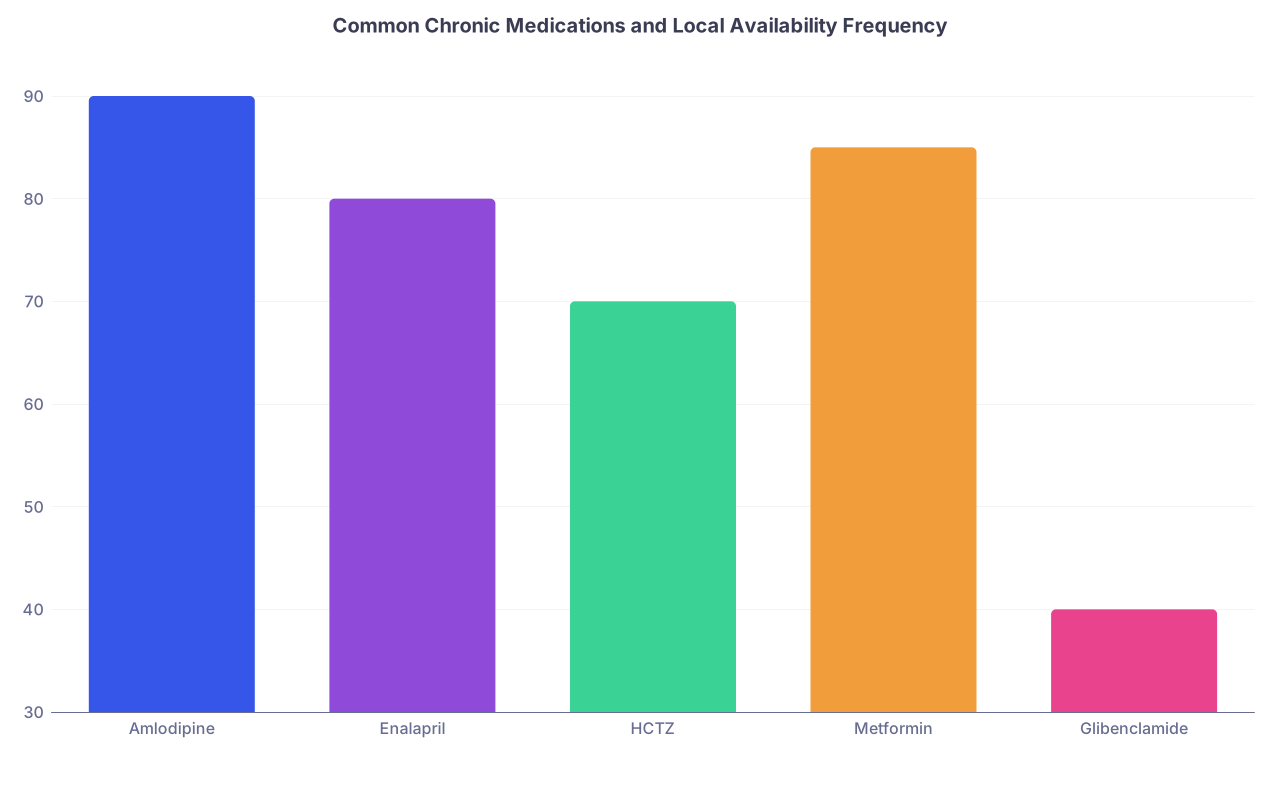
| Category | Value |
|---|---|
| Amlodipine | 90 |
| Enalapril | 80 |
| HCTZ | 70 |
| Metformin | 85 |
| Glibenclamide | 40 |
(Values here are illustrative: percentage of months per year those meds tend to be available.)
6.2 Referral pathways that are real, not imaginary
Do not write: “Follow up with cardiology” if the nearest cardiologist is 10 hours away and costs a month’s income.
Realistic referral means:
- Knowing where patients can go that they might actually reach.
- Knowing cost, waiting time, and what services are truly available.
- Communicating that in straightforward language: “If your breathing worsens, go to the clinic in San Miguel, the one with the blue cross sign, not the small shop.”

| Step | Description |
|---|---|
| Step 1 | Village patient |
| Step 2 | Local health post |
| Step 3 | District clinic |
| Step 4 | Regional hospital |
| Step 5 | Community health worker |
If you do not know these pathways, that is your first ethical task before prescribing long‑term plans.
7. Personal Development: How This Changes You as a Clinician
This kind of work forces you to confront some uncomfortable professional truths.
7.1 You learn humility about control
At home, you have labs, EMR, subspecialists, and follow‑up appointments. You can fine‑tune A1c from 7.8 to 7.2 and pat yourself on the back.
On a mission, you might never know what happened. You must accept:
- You will make reasonable decisions with incomplete data.
- Some of those decisions will have bad outcomes you never see.
- You are not the protagonist; you are a cameo in a story that belongs to the patient and the local system.
That should make you more careful, not more paralyzed.
7.2 It clarifies your ethical spine
You will see teammates:
- Handing out months of NSAIDs to patients with chronic kidney disease because “they are in pain.”
- Starting insulin in a 70‑year‑old with no electricity because “this is what I would do at home.”
- Switching local regimens to match their US guideline preferences, abandoning what the local clinic stocks year‑round.
You have to decide: Are you there to perform medicine as you wish it were, or to practice medicine that will still make sense after you leave?
Sometimes that means saying, “No, we are not starting that. It is not safe here.” That is part of your professional growth.
7.3 It should change how you manage chronic disease back home
Once you have seen what it means to have one touchpoint and no safety net, you start managing even well‑resourced patients differently:
- You prioritize patient understanding and autonomy more.
- You simplify regimens where possible.
- You write notes that another clinician could actually use without three years of context.
In other words, mission ethics loops back and upgrades your everyday practice if you let it.
8. A Practical Mental Checklist Before You Write That Chronic Rx
You are in that hot, noisy clinic. The translator is glancing at her watch. You have 10 minutes.
Run this quickly in your head:
- Am I sure there is no emergency I am missing?
- Can I explain this diagnosis to the patient in simple terms they will repeat later?
- Is the medicine I am about to prescribe:
- Locally available long term?
- Safe if taken imperfectly?
- Simple to understand and adjust?
- Have I written down:
- Diagnosis
- Drug and dose
- Why I chose it
- Does the patient have:
- A written list or card
- One or two clear danger signs and what to do about them
If you cannot answer those reasonably, you are not managing chronic disease. You are doing pharmacologic theater.

9. Mission Program Level Changes: Do Not Just Fix the One Visit, Fix the Model
If you are in any position of influence over a mission organization, you can drastically improve chronic disease care with structural changes.
- Commit to longitudinal presence: same site, recurring teams, standardized formularies, shared paper/electronic records, collaboration with local health authorities.
- Standardize chronic disease protocols adapted to local resources.
- Fund local staff (nurses, CHWs) who are there 12 months a year, not 2 weeks.
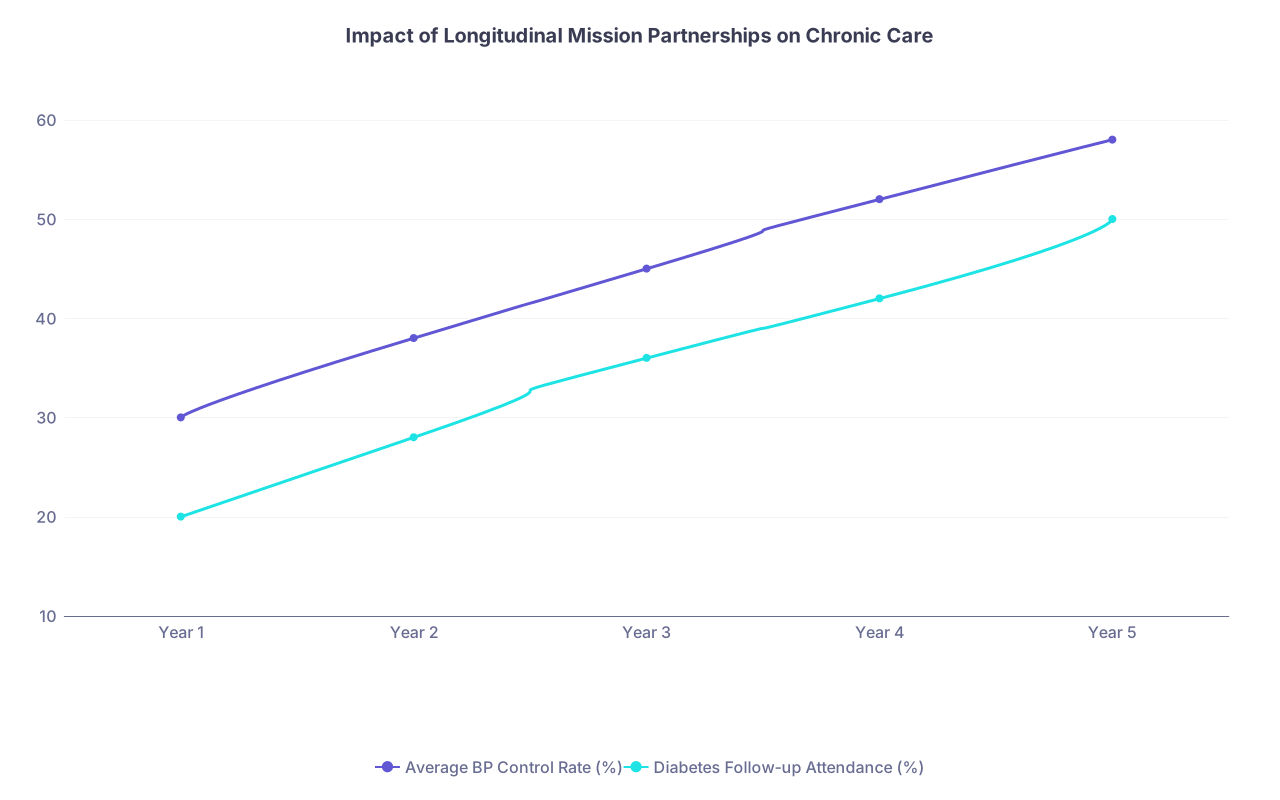
| Category | Average BP Control Rate (%) | Diabetes Follow-up Attendance (%) |
|---|---|---|
| Year 1 | 30 | 20 |
| Year 2 | 38 | 28 |
| Year 3 | 45 | 36 |
| Year 4 | 52 | 42 |
| Year 5 | 58 | 50 |
Again, values are illustrative, but I have seen this pattern: once missions shift from “hit‑and‑run” to “longitudinal partner,” chronic disease metrics actually improve.

FAQ (4 Questions)
1. Is it ever better to do nothing for chronic disease on a short-term mission?
Yes. If you have no idea about local drug availability, no realistic way to document what you are doing, and your team is there for a one‑off “photo op” visit, starting new chronic regimens can cause more harm than benefit. In that case, focus on acute issues, education, and building relationships that might support future, more responsible work.
2. Should I bring “better” medications from my home country even if they are not available locally?
Generally no for chronic disease. Introducing meds that cannot be continued—like GLP‑1 agonists, SGLT2 inhibitors, or newer antihypertensives—creates dependency and confusion. Short courses of antibiotics for acute conditions are different; chronic therapy needs sustainability, not novelty.
3. What about giving a year’s worth of medication to bridge the gap until the next mission?
A year’s worth of meds with no monitoring sounds generous but can be dangerous. Disease status changes, side effects emerge, and patients may stockpile or share pills. If you are going to do this, it must be with very safe, simple drugs, clear instructions, and some reasonably accessible local provider who can adjust if needed.
4. How do I handle it emotionally when I know I may never know what happens to these patients?
You accept that this work is about fidelity to process, not ownership of outcomes. Your responsibility is to make the best, safest, most context‑aware decisions you can in that moment, document them, and strengthen the local system a bit more than you found it. If you have done that, you have met your ethical obligation, even if you never see the end of the story.
Key points:
You are not here to transplant your home clinic into a tent; you are here to make a few safe, high‑yield decisions in a fragile system and then get out of the way. Prioritize safety, simplicity, and sustainability over optimization. And if you have real influence, stop designing missions that assume you will never see the patient again—build ones that expect you will.


