

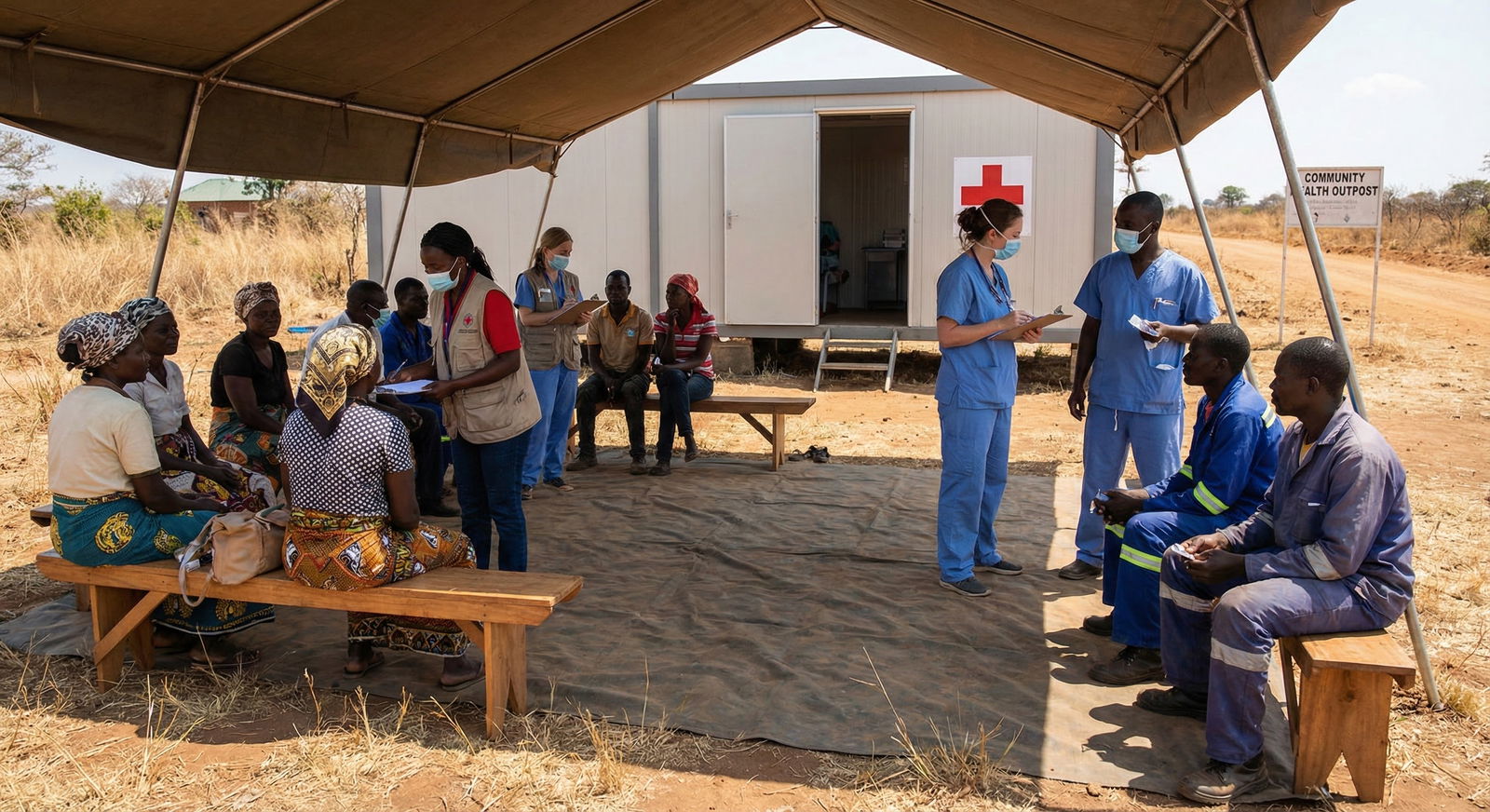
You are 40 minutes into a rural clinic day in northern Guatemala. You have already seen six patients in what would normally take you 90 minutes at home. There is a line out the door. No EMR. No labs. The local nurse just asked whether you will start an ACE inhibitor on a 65‑year‑old man with “kidney pain” who cannot afford follow‑up labs and lives two hours away by bus.
Your attending is in the next room, overwhelmed. The mission lead wants “throughput.” The local team wants “stronger” meds because “the gringos have the good stuff.” You, the trainee, are the one with the prescription pad in your hand.
This is where ethical decision‑making on medical missions actually lives. Not in abstract principles, but in the tension between what you could do, what you should do, and what will happen after your plane leaves.
Let me break this down specifically.
1. Ground Rules: What Changes on Mission, What Does Not
The biggest mistake I see trainees make on short‑term missions is assuming that the ethics are somehow looser because the resources are thinner and the patients are poorer.
That is wrong. Some things do not change.
Non‑negotiable constants, whether you are in Boston, Bamako, or a pop‑up clinic in a church hall:
- You do not experiment on people because they are poor or far from home.
- You do not perform beyond your competence just because “there is no one else.”
- You do not lie about what you can do, what you are giving, or what will happen next.
- You do not ignore adverse events because follow‑up is hard.
The four classic principles still apply:
- Respect for autonomy
- Beneficence
- Non‑maleficence
- Justice
But their expression is twisted by context: language gaps, no follow‑up, power imbalances, cultural differences, supply constraints, and time pressure.
So before talking frameworks, lock in three “mission constants” for yourself.
- I will not do a diagnostic or treatment intervention that clearly cannot be monitored or followed in any meaningful way, unless the alternative is death or major irreversible harm.
- I will not exceed my level of training, even if I am the most “trained” person in the room.
- I will treat local clinicians as colleagues, not assistants, even if they have less formal training.
If you cannot commit to those three, no framework will save you.
2. A Practical Ethical Framework for Trainees: 5 Questions, In Order
On paper, you have the Beauchamp and Childress four principles, you have Belmont, you have WHO guidelines. In the field, you need something you can run in your head in 30 seconds when a mother is begging you for “any injection” for her febrile child.
Use a simple five‑step sequence. In order. Do not skip.
- Can this be made safe enough in this setting?
- Is it sustainable or transitional, or is it a one‑off that collapses after we leave?
- Does the patient (or family) have real understanding and choice?
- Does this respect local systems and colleagues, or undermine them?
- Who is this actually for—patient benefit or our satisfaction / optics?
I will walk through each, but first, see how they fit together as an actual process.

| Step | Description |
|---|---|
| Step 1 | Clinical Problem |
| Step 2 | Safe enough here? |
| Step 3 | Stop - Supportive care or transfer |
| Step 4 | Sustainable or transitional? |
| Step 5 | Modify plan or decline |
| Step 6 | Check understanding and choice |
| Step 7 | Adjust explanation or defer |
| Step 8 | Align with local team and system |
| Step 9 | Negotiate, err on local norms |
| Step 10 | Proceed, document and plan follow up |
This is what you run mentally with each ethically loaded decision.
3. Question 1: “Safe Enough” in This Environment
You cannot import your home standard of care wholesale. But you also cannot drop to “anything goes.” So the first cut is simple:
Given what is actually available here—people, supplies, monitoring, transfer options—is this diagnostic or treatment reasonably safe?
Concrete factors:
- Monitoring: Can anyone check vitals, labs, or symptoms over the next few days or weeks? Or will this patient disappear back to a village five hours away?
- Rescue: If something goes wrong (e.g., anaphylaxis, acute kidney injury, DKA), is there any realistic path to rescue?
- Baseline data: Do you have enough clinical information to reasonably rule out contraindications, given you might not have labs?
Typical trainee traps:
- Starting new chronic meds (ACE inhibitors, antiepileptics, antipsychotics) when you have no plan for labs, dose titration, or adverse effect monitoring.
- Aggressive up‑titration of antihypertensives for asymptomatic chronic hypertension in one‑time clinics.
- Procedures that require sterile technique you cannot actually achieve in that space.
Example:
You are in a church‑based clinic in rural Honduras. A 58‑year‑old man with long‑standing hypertension presents with BP 178/102, asymptomatic, no chest pain, neurologic deficits, or shortness of breath. The local pharmacy can supply amlodipine reliably. The mission will come back in 6 months. No lab access. Local nurse can recheck BP monthly.
“Safe enough” framework: a low‑dose calcium channel blocker with slow titration, plus lifestyle counseling, is reasonable. Starting an ACE inhibitor without any way to monitor creatinine or potassium? Not safe enough.
You do not need absolute safety. You need contextual safety. If you cannot defend the intervention knowing what rescue options exist, step back.
4. Question 2: Sustainable, Transitional, or One‑Off?
Next filter: is what you are about to do part of a sustainable pathway, or are you dropping a medication, device, or expectation that will evaporate when you fly home?
Three categories:
Sustainable: The intervention can be continued with existing local resources and skills. Examples: metformin in a setting where it is stocked and local clinicians use it; WHO‑standard management of childhood pneumonia with locally available antibiotics.
Transitional: Short‑term support while clearly transitioning to local care or a higher level of care. Examples: a 2‑week course of steroids for an acute asthma exacerbation while coordinating with the regional hospital; bridging insulin provided while enrolling someone in a local diabetic program.
One‑off: Something that requires resources, meds, or expertise that will not be present after you leave. This is where the ethical alarms should go off.
| Scenario | Sustainable/Transitional | One-off/Problematic |
|---|---|---|
| Starting metformin | Yes, if stocked locally | No, if not available |
| Initiating dialysis | Only if local access | Yes, if no dialysis nearby |
| Chronic antipsychotic therapy | Yes, if mental health follow-up exists | No, if no psychiatrist or refills |
| Complex wound VAC therapy | Yes, if training and supplies exist | No, if supplies limited to your visit |
| Frequent clinic rechecks | Yes, with local clinic | No, if only visiting yearly |
When you are unsure, ask:
- Can the local clinicians realistically continue this without us?
- Are the meds/devices regularly available locally, or are we importing them?
- If they run out, is there a safe and accepted alternative?
The worst pattern I see: missions introducing western regimens that local teams do not use or cannot supply long term, leaving patients and local clinicians to pick up the confusion when the supply chain breaks.
Your ethical bias as a trainee should be: avoid creating new long‑term dependencies unless they anchor into local systems. If you feel the itch to do something “more advanced,” that is exactly when you check yourself.
5. Question 3: Autonomy When There Is a Language, Power, and Culture Gap
In the US, “informed consent” has become a ritualized consent form plus a quick speech. On mission, you have interpreters, cultural differences around authority, and patients who may say “yes” reflexively to everything you propose.
You need to raise your bar.
Practical consent framework in low‑resource missions:
Plain language, localized: Avoid “kidney function,” “nephrotoxicity,” “decompensation.” Use the best local analog: “The medicine can sometimes make the body filter system weaker. That can cause swelling, shortness of breath, or feeling very tired.”
Teach‑back, not nod‑back: Ask the patient (through the interpreter) to explain what they understood and what they will watch for. If they simply repeat your last phrase, it is not enough.
Real choice, not moral pressure: Do not frame it as “If you do not take this, things will go badly.” Instead, “Here are two options. Here is what is good and risky about each. You choose; we will support you either way.”
Be explicit about follow‑up limitations: You must say out loud, “We will not be here next week. If this problem happens, you will need to go to [specific place] or see [specific person].”
Example:
A woman with painful uterine fibroids is requesting “surgery” because she heard from her cousin that the “American doctors can fix it.” There is no surgical mission currently; local hospital can do hysterectomies, but at high out‑of‑pocket cost.
Your ethical move is not to promise that “next team” will operate or to “add her to a list.” It is to explain what you can actually offer: pain control, iron for anemia, referral information, and the reality that surgery may or may not be possible. You do not sell hope you cannot deliver.
6. Question 4: Respecting Local Systems and Colleagues
You are a trainee. You are a guest. Ethically, that matters.
You may have more formal training than the local nurse or clinical officer. But they have more contextual intelligence than you will gain in five trips. Treat that as a fact, not as a romantic sound bite.
Ethical red flags:
- Overriding local standard regimens simply because they are older or cheaper than what you use at home, without understanding why they are used.
- Giving out “better” medications that the local clinic cannot provide, making the local team look inadequate.
- Creating back‑channel clinics apart from local health structures, for speed or convenience.
When you feel tension between your training and local practice, do not default to “the American way is better.” Default to curiosity first, then negotiation.
A very simple, very effective phrase when you disagree:
“I would normally do X at home because of A and B. How do you manage this here, and what has worked best in your experience?”
You will learn something. Or you will set the stage for a respectful discussion where you might still push for a different plan—but as a partner, not as an uninvited supervisor.
Also: do not promise donations, partnerships, or future teams without your mission leadership explicitly signed on. Trainees routinely over‑promise because it feels generous in the moment. It is not generous; it is deceptive.
7. Question 5: Who Is This Actually For?
This is the uncomfortable one. You came on this mission partly to help, partly to learn, partly for experience. That is fine. That is human.
What gets unethical is when your need to “do something” outweighs what is best for the patient or the system.
Gut checks:
- Would I do this this way if there were no camera, no social media, no CV, no procedure log?
- Am I pushing for this intervention because the patient needs it most, or because I want to practice it?
- If the only benefit of this intervention is my learning and the patient assumes all the risk, is that acceptable here?
Sometimes the right ethical move is to not do the exciting procedure, to not start the shiny medication, to accept the limits of supportive care. That feels unsatisfying in the moment. That is fine. The mission is not built for your emotional satisfaction.
Let me be direct: if you are more excited about “getting to do” a chest tube, LP, or surgical procedure than you are worried about what happens to that person if there is a complication after you leave, recalibrate.
8. Applying Structured Ethical Frameworks Without Paralyzing Yourself
You are not going to run a full research ethics seminar in your head each time. But you can anchor your instincts in established frameworks and then compress them into field‑usable habits.
Think of three layers:
- Principles (what you remember in quiet moments)
- Pocket‑tool (what you actually use with patients)
- Debrief lens (how you process later with your team)
Principles: Four + One
The classic four are fine but too abstract alone. I would add one specifically for mission work:
- Respect for autonomy
- Beneficence
- Non‑maleficence
- Justice
- Solidarity (standing with local patients and colleagues, not over them)
When in doubt, ask: am I standing with this patient and this system, or am I acting on them?
Pocket‑tool: Three Rapid Questions
When things are busy, distill all of this to three immediate questions:
- Will this probably help more than harm in this setting, with these resources?
- Am I creating a problem or dependency that local clinicians cannot reasonably manage?
- Would the most senior ethical clinician I respect be comfortable with this if they saw the full context?
If you cannot say yes, yes, and yes—or at least yes, cautiously, to #1 and #3—then slow down, call your attending, and consider less.
Debrief: Use Cases, Not Vague “How Did It Go”
After clinic, do not just ask, “Any ethical issues today?” That gets you silence.
Instead, pick 2–3 concrete cases and run them through the full 5‑question lens as a group. What you would do differently next time. Where you overreached. Where you were too conservative. Where local colleagues saw it differently.
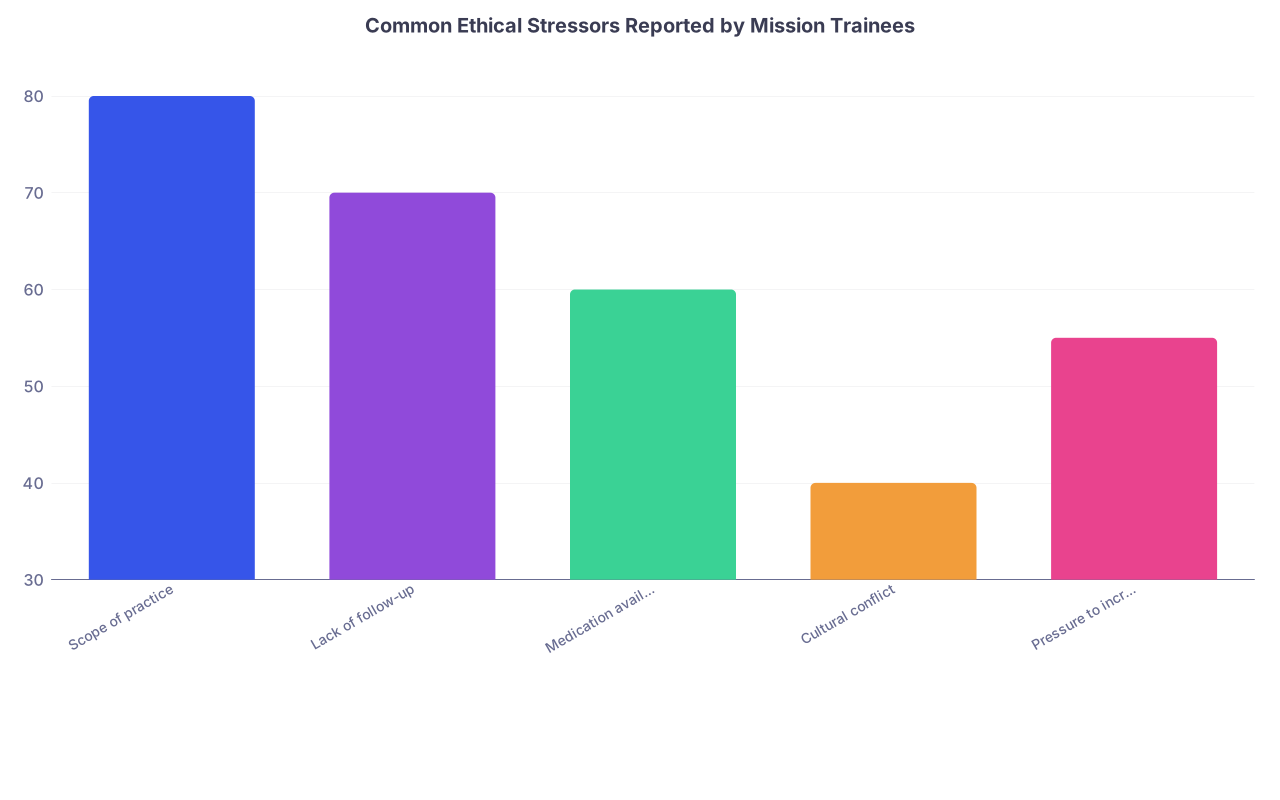
| Category | Value |
|---|---|
| Scope of practice | 80 |
| Lack of follow-up | 70 |
| Medication availability | 60 |
| Cultural conflict | 40 |
| Pressure to increase volume | 55 |
Numbers like these (busy services often see 70–80% of trainees report at least one major ethical conflict per week) are normal. The difference between good and bad missions is whether anyone talks through them in detail.
9. Scope of Practice: The Line You Do Not Cross
I will be blunt. The phrase “well, there is no one else, so you have to try” has justified a phenomenal amount of unethical care on missions.
You are a trainee. Your scope is narrower than your attendings. That does not expand just because you crossed a border.
You should not:
- Perform major procedures unsupervised that you are not credentialed for at home (C‑sections, chest tubes, amputations, complex regional blocks).
- Function as the solo decision‑maker on critically ill patients without immediate access to someone more experienced.
- Prescribe unfamiliar high‑risk meds (chemotherapy agents, advanced antiretroviral salvage regimens, second‑generation antipsychotics) without clear protocols and supervision.
What can flex, ethically, in low‑resource work:
- You may manage conditions you typically defer to specialists at home, if you can do so using established primary care–level protocols and with local or remote backup. Example: starting first‑line TB therapy using national guidelines with a local TB nurse.
- You may perform basic procedures you are trained for in simulation or under close supervision, if the backup is genuinely there, not across town.
A useful internal rule: if an adverse event could rapidly become life‑threatening, and you would not be allowed to manage that at home without attending presence, then you should not be doing it solo on mission either.
10. When Systems Themselves Are Unjust
Sometimes the problem is not the individual decision but the environment: user fees that make emergency care unaffordable, corruption in referral pathways, gender‑based barriers to consent.
You cannot fix the system on a 10‑day trip, but you still have ethical duties inside it.
You face dilemmas like:
- Do you pay out of pocket for a patient’s surgery or transport?
- Do you bypass the official referral system because you know it is corrupt or slow?
- Do you quietly give more meds than allowed because “this family is so poor”?
There is no single right answer, but you need deliberate rules as a team so you are not improvising purely emotionally.
Common, defensible approaches:
- Have a defined, transparent hardship fund managed by local partners, with criteria agreed in advance.
- Avoid one‑off heroics that you cannot replicate or scale; instead, channel support through existing local mechanisms (church funds, NGO partners, clinic social workers).
- Do not lie or falsify records to get patients into care, even when the system is unjust. Work with local colleagues to find the most honest, least harmful workaround.
Otherwise, you will end up with trainees secretly paying fees for some “favorite” patients, bending rules here and there, and creating a mess that local colleagues have to sort out after you leave.
11. Building Your Personal Mission Ethics “Pre‑Brief”
You should not be improvising all of this the morning you start clinic. Before going, sit down—alone or with your mentor—and write out your own hard lines and gray zones.
Concrete exercise:
List 5–10 interventions or situations likely on your mission: starting antihypertensives, contraception counseling, treating depression, minor procedures, disclosing bad diagnoses, etc.
For each, write:
- What would I do at home?
- What are the missing pieces likely there (labs, follow‑up, specialists)?
- Under what conditions would I not do this on mission?
Identify:
- 3 hard no’s (e.g., “I will not start chronic antipsychotics without clear local psych follow‑up.”)
- 3 needs‑discussion items (e.g., “I may treat moderate depression with SSRIs if local clinics use them and follow‑up is realistic.”)
- 3 green lights (e.g., “I will treat acute infections with WHO‑standard antibiotics available locally.”)
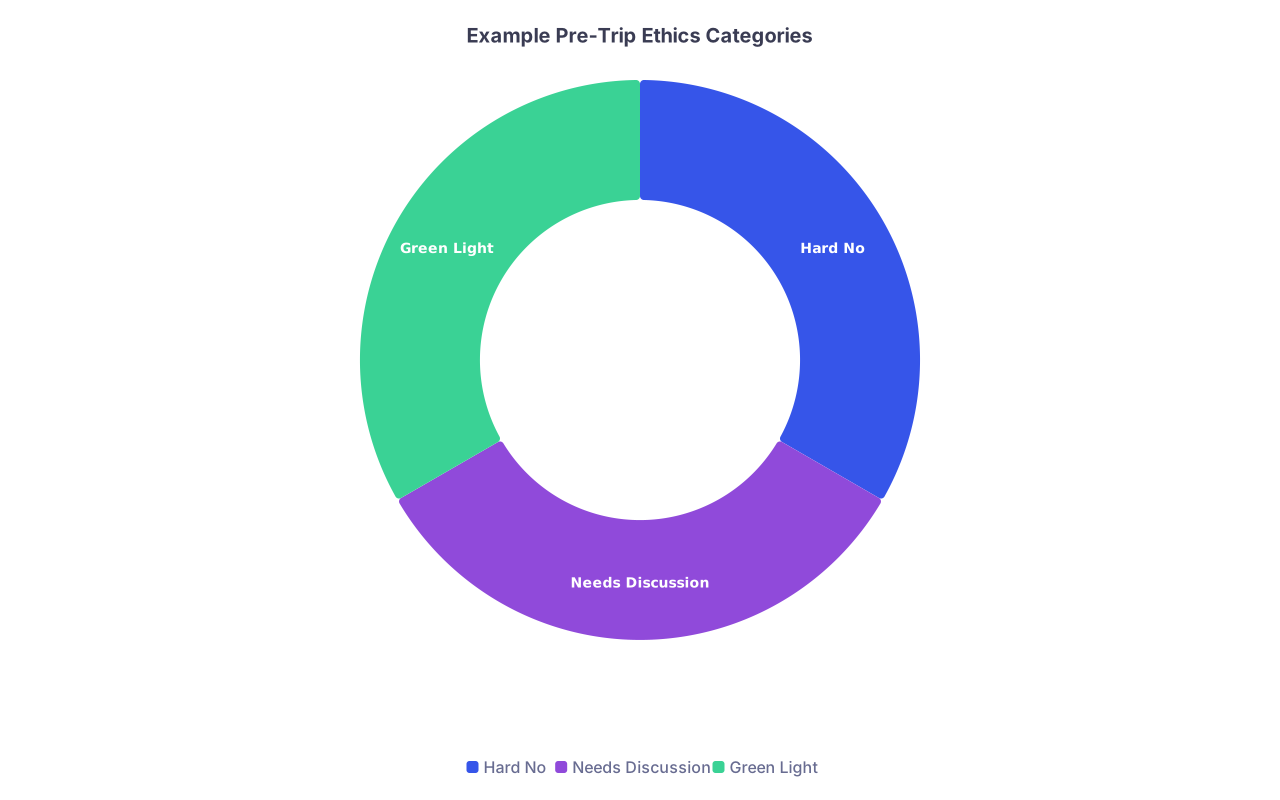
| Category | Value |
|---|---|
| Hard No | 3 |
| Needs Discussion | 3 |
| Green Light | 3 |
Bring this to your attending or mission lead. Not for them to rubber‑stamp, but to sharpen it. You will get pushback on some items. Good. Better to argue in the pre‑brief than at the bedside.
12. After the Trip: Turning Discomfort into Growth
The worst thing you can do with the ethical unease from a mission is to bury it under nice photos and a reflective essay about “gratitude.”
Use it.
Right after you return:
Write down three cases that still bother you. Not eight, not one. Three.
For each, re‑run the five questions:
- Safe enough?
- Sustainable / transitional?
- Real choice?
- Aligned with local systems?
- Who was it for?
Identify a single behavior change for next time. Not a philosophical conclusion—a behavior. Examples:
- “I will not titrate BP meds beyond X dose without confirmed follow‑up.”
- “I will always ask the local nurse how they usually manage condition Y before suggesting my plan.”
- “I will refuse to be the sole decision‑maker in X high‑risk scenario as a trainee.”
You can also map your stress over time. Most trainees ignore this until burnout hits.
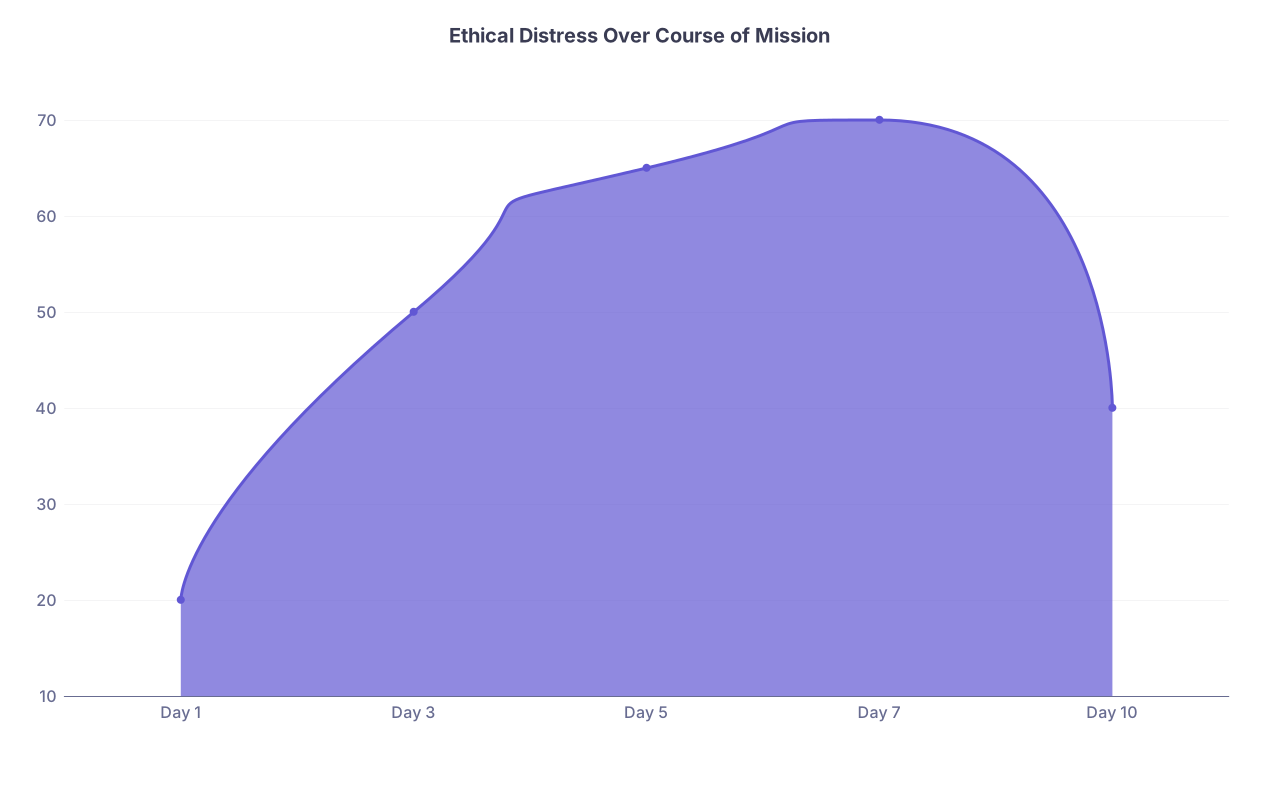
| Category | Value |
|---|---|
| Day 1 | 20 |
| Day 3 | 50 |
| Day 5 | 65 |
| Day 7 | 70 |
| Day 10 | 40 |
That mid‑mission spike is where you either normalize questionable decisions (“this is just how it is here”) or you tighten your framework. You want the latter.
13. A Compact Personal Algorithm You Can Actually Use
Let me give you something you can memorize and modify. Five steps. One line each.
- Check safety: “Could this reasonably hurt more than help here, given what we actually have?”
- Check sustainability: “Am I starting something that can continue without me?”
- Check consent: “Does this person really understand what we are doing and what we cannot do?”
- Check solidarity: “Am I aligned with, not steamrolling, local practice and people?”
- Check motive: “If this never appeared on my CV or social media, would I still do it?”
If you pause at any of these, you do not push through alone. You step out, grab your attending, and say the quiet part out loud:
“I am not sure this is ethical in this context. Can we talk it through?”
That sentence, more than any framework, is what separates responsible trainees from tourists with stethoscopes.


Key Takeaways
- Your ethical bar does not drop because you are in a low‑resource setting; it shifts to focus on contextual safety, sustainability, and solidarity with local systems.
- Run every major decision through a quick mental framework: safe enough here, sustainable or transitional, real patient choice, respect for local colleagues, and honest about whose needs you are serving.
- Define your personal scope and hard lines before you go, and use post‑mission discomfort to sharpen—not anesthetize—your ethical judgment for the next time you pick up a stethoscope abroad.


