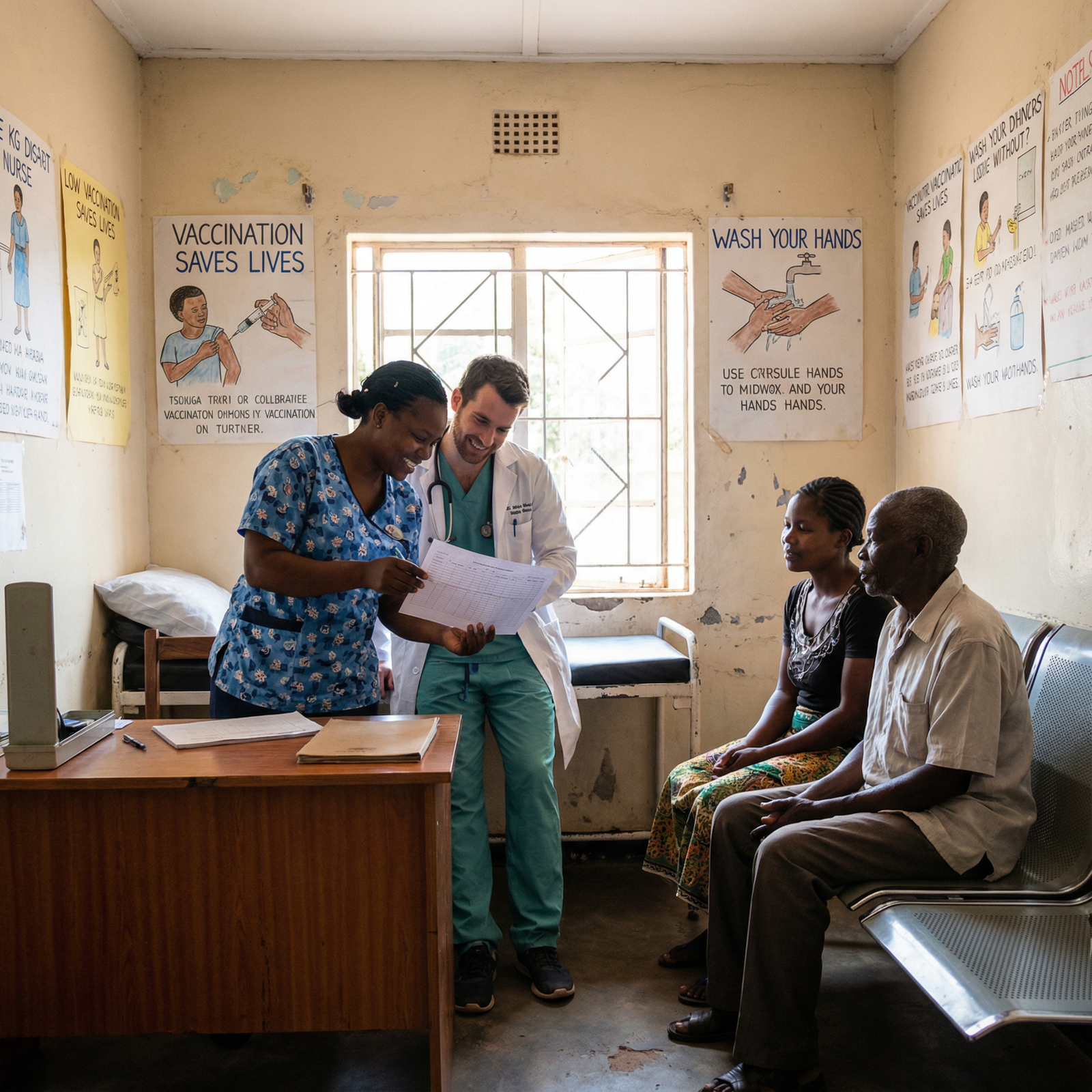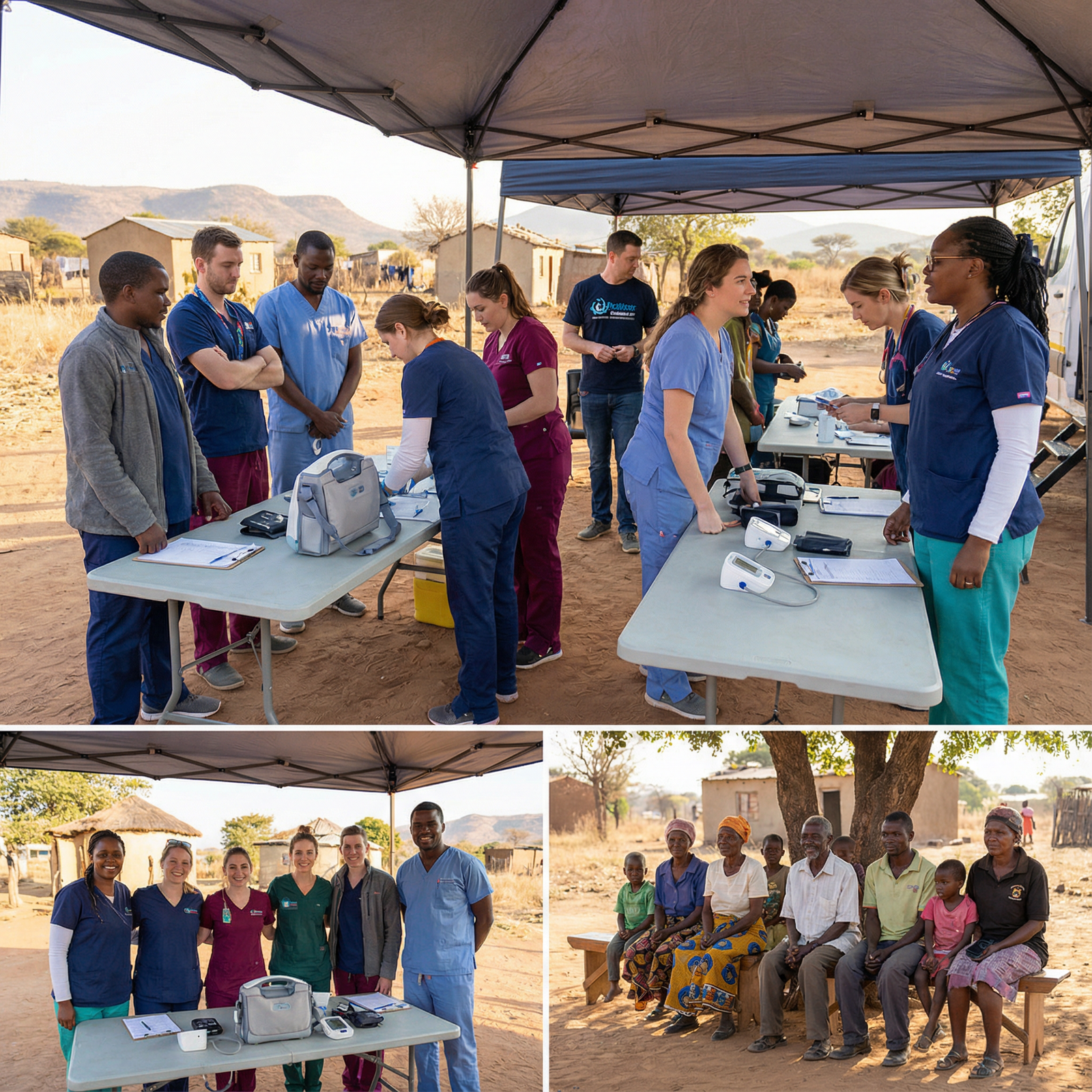
The way most people talk about “sustainable medical missions” is fantasy. Not aspiration. Not ‘work in progress’. Fantasy.
If sustainability were actually happening at scale, you would see stronger local systems, fewer repeat crises, and less dependence on visiting teams every spring break. Instead, you see the opposite: the same village, the same photos, the same medications in duffel bags. Different T‑shirt color, new logo.
Let’s dismantle the sustainability myth and talk about why so many missions quietly collapse the moment the plane lifts off—and what it would actually take to stop that from happening.
The Feel‑Good Lie: “We’re Building Capacity”
Most short-term medical missions claim the same thing: “We’re not just treating patients; we’re building local capacity.”
Usually, that translates to:
“We did a few ‘trainings’, left some laminated handouts, and took a group photo.”
Here’s what the evidence actually shows.
What the data says about short‑term medical trips
The best systematic reviews on short-term medical missions (STMMs) are blunt:
- They rarely measure long‑term outcomes.
- They almost never track what happens to patients after teams leave.
- Local system strengthening is more of a slogan than a demonstrated result.
Multiple reviews in Globalization and Health, BMJ Global Health, and Journal of Medical Ethics all converge on similar points: STMMs are dominated by rich-country volunteers, poorly integrated with local systems, and weak on evaluation. Programs that claim sustainability mostly cannot prove it.
You can feel good about a week of packed clinic days and still have done almost nothing that lasts.
Why “training” is not the same as “capacity”
I’ve watched this play out in real time. A team of visiting physicians “trains” local nurses on diabetes management with a PowerPoint, leaves a few glucometers and some strips, and then posts on social media about “empowering local providers.”
Here’s what they do not mention:
- The strips will run out in 3 months.
- No supply chain agreement exists to restock them.
- No integration with national guidelines.
- No plan for who pays for labs or follow-up meds.
- The local staff are already overloaded and can’t add a chronic disease clinic without dropping something else.
That is not capacity building. That’s a workshop.
Capacity means the local system can do something reliably, without you, within its own resources, policies and constraints. That typically requires:
- Policy change or alignment with existing policy.
- Budget lines, not donations.
- Local leadership ownership.
- Integration into existing workflows and records.
- Monitoring built into routine practice, not a visiting team’s survey.
You almost never see this from one‑week teams cycling in and out.
The Real Reason Missions Collapse: They’re Built Around You, Not the System
Most failed “sustainable” missions have the same structural flaw: the mission is the center of gravity. Not the local system. Not the patients’ long-term reality.
Let me be direct: if your mission requires your presence, your fundraising, or your particular volunteer pipeline to function, it is by definition not sustainable.
The three common failure modes
Hero‑centric models
The visiting surgeon who “brings advanced skills” and does 40 operations in a week, then leaves. Impressive numbers. But no local surgeon is trained to independently perform those procedures, no anesthesia or postoperative capacity is upgraded, and follow-up complications land on a hospital that never agreed to the caseload.Parallel systems
The pop‑up clinic that runs its own records, its own pharmacy, its own triage separate from the local health center 100 meters away. For the community, that’s confusing. For the health system, it’s disruptive. When you leave, you’ve created expectations you cannot maintain, and you’ve undermined trust in the existing clinic (“The foreigners give better medicines for free”).Donation dependence
The mission that stocks chronic medications (antihypertensives, antiepileptics, insulin) without securing any long-term supply mechanism locally. You “start” treatment, feel accomplished, and then the patient’s only source of meds evaporates as soon as your suitcases are in the airport.
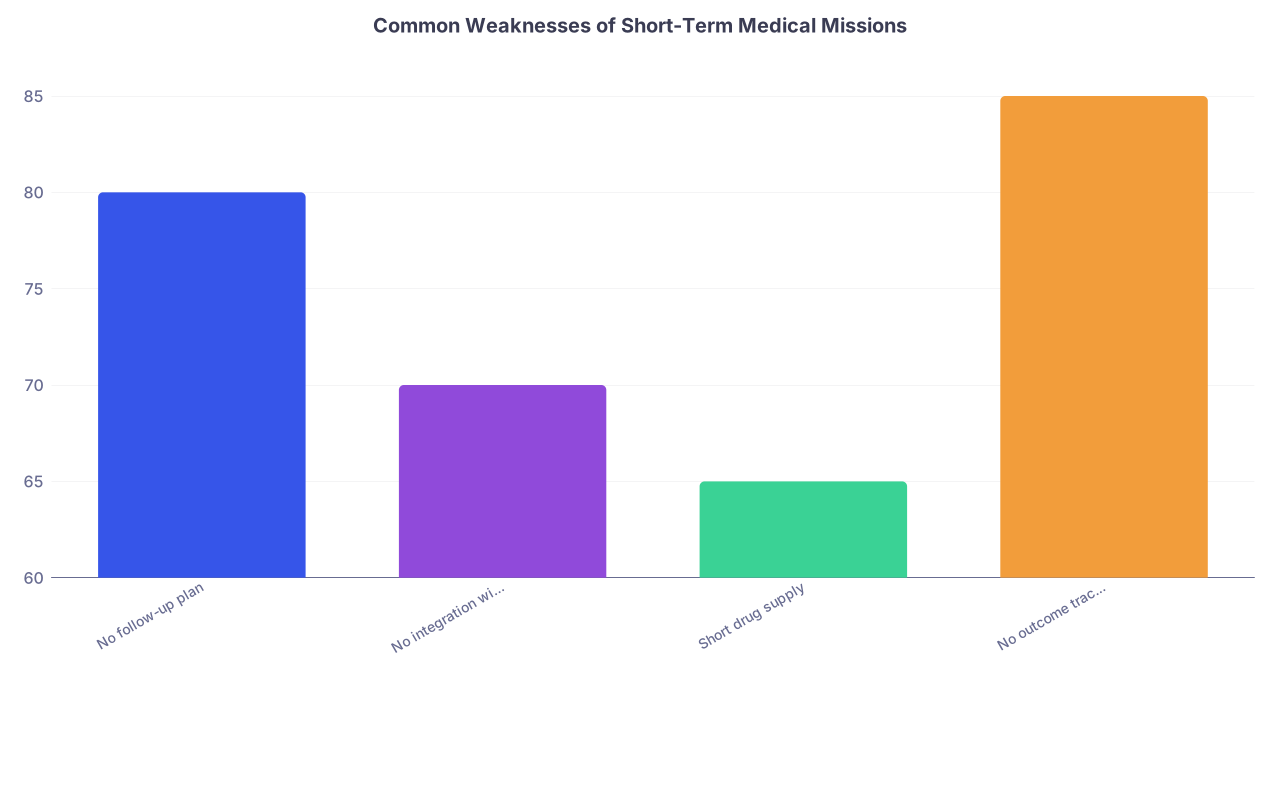
| Category | Value |
|---|---|
| No follow-up plan | 80 |
| No integration with system | 70 |
| Short drug supply | 65 |
| No outcome tracking | 85 |
These patterns are not rare exceptions. They are the default for many STMMs.
Sustainability Theater: How Programs Pretend to Be Long‑Term
Let’s talk about the tricks.
Because people know “sustainability” is a buzzword, they reverse‑engineer the language without changing the substance.
Trick 1: Annual = sustainable
“We’ve been coming to this community for 10 years.”
That’s not sustainability. That’s recurring dependency.
If for a decade your absence still means:
- No functioning clinic,
- No consistent meds,
- No trained local staff able to deliver the needed services,
then you’ve proven your mission is durable, not that the local system is. You’ve shown that your trip is sustainable (for your donors, your students, your vacation time), but the care you provide is not.
Trick 2: Token local partnership
Listing a local hospital or church logo on your website is not the same as co‑governance.
Real partnership looks like:
- The local institution sets priorities.
- They can say “no” to your ideas and you actually listen.
- Budget decisions are made jointly.
- When donors demand photos that conflict with dignity or privacy, the local partner has veto power.
What you see instead, again and again: a local “host” who handles logistics, lodging, and patient recruitment, but has almost zero say in mission design or whether the mission should even continue.
Trick 3: “We leave protocols behind”
I’ve seen binders of beautifully laminated protocols in clinics with no consistent electricity, no printer, no meds listed in the guideline, and no staff turnover plan. Those binders sit on shelves under a light film of dust.
Sustainability doesn’t come from exported documents. It comes from aligning with national standards, existing supply chains, and local training institutions. It’s slow, bureaucratic, and not very Instagrammable. Which is exactly why it gets skipped.
The Ethical Problem: Starting What You Cannot Finish
Medical ethics does not magically stop applying because you crossed a border.
Autonomy, beneficence, non‑maleficence, and justice still exist in Guatemala, Uganda, and rural India. Wild thought, I know.
Yet missions routinely ignore core ethical questions:
- If you start a therapy that must continue indefinitely (e.g., insulin, antiepileptics, antiretrovirals), who ensures continuity after you leave?
- If your surgical patient has a complication two weeks later, who is actually capable and resourced to manage it?
- Are you offering something that the local system explicitly advised against because it’s not aligned with national policy or resource constraints?
Beneficence vs. abandonment
Giving a patient a one‑month course of antihypertensives, with no path to refills, is not pure beneficence. It’s a spike of care in a flatline system.
The ethical line is simple:
If the treatment you initiate makes the patient worse off when it stops abruptly—physically, financially, or psychologically—then you have an obligation to plan for what happens after you leave. Not as an afterthought. As a precondition.
Justice and distortion
There’s also the justice problem: your presence frequently distorts local priorities.
I’ve seen mission teams insist on doing elective procedures or distributing supplements that are low priority in the national burden of disease, simply because that’s what they’re comfortable doing. Meanwhile, hypertension, TB, maternal care—actual epidemic drivers—remain under‑addressed.
When your trip agenda overrides local epidemiology and policy, you’re not practicing “global health.” You’re exporting your preferences.
What Actually Survives After You Leave (If Anything)
Let’s be fair. Not everything dissolves the moment the mission departs. Some things can persist—if they’re designed properly.
The question you should ask, very specifically, is: “What will still be true one year after we stop coming entirely?”
Here’s how different interventions usually fare.
| Intervention Type | Likely 1-Year Outcome Without Further Visits |
|---|---|
| Single-visit pop-up clinic | Almost nothing sustained |
| One-off trainings without follow-up | Minimal behavior change |
| Donation-based drug distribution | Collapse once stock runs out |
| Integrated guideline adoption | Moderate if aligned with national policy |
| Local staff co-trained + mentored | Higher survival if linked to local systems |
The pattern is obvious: anything that lives in your suitcases dies when your suitcases stop arriving. Anything that lives in local policy, local payroll, local training pipelines has a chance.
What about the less tangible stuff—attitudes and confidence?
People love to argue, “Even if the resources are limited, we improve knowledge and confidence.”
Sometimes. But here’s the catch: knowledge that cannot be applied with available tools and structures atrophies. I’ve sat with nurses who were genuinely frustrated: “We learned all these neonatal resuscitation steps, but we still have no reliable oxygen, no bag-valve masks, and one functioning suction machine for the entire hospital.”
You didn’t “empower” them. You showed them what could be done elsewhere, then dropped them back into scarcity.
If You Actually Care About Sustainability, Your Priorities Change
Let me flip this from criticism to design. Because the answer is not “never go.” The answer is “stop lying to yourself about what you’re doing, and redesign accordingly.”
1. Start with exit, not entry
If you can’t clearly answer, before you ever book a ticket:
- When and how will we hand off everything we start?
- Who owns this work locally, on their org chart, with their budget?
- What will function at 80% without us?
…then call your project what it is: a short-term relief trip, not a sustainable partnership.

| Step | Description |
|---|---|
| Step 1 | Idea for Mission |
| Step 2 | Identify Local Partner |
| Step 3 | Do Not Proceed |
| Step 4 | Co-Design Plan |
| Step 5 | Integrate with System |
| Step 6 | Define Exit Criteria |
| Step 7 | Implement and Monitor |
| Step 8 | Redesign or Stop |
| Step 9 | Gradual Exit |
| Step 10 | Local Priority? |
| Step 11 | Local Owner Named? |
| Step 12 | Can Function Without Team? |
Most missions never get past step B in that diagram. They find a contact, not a partner, and then just start booking tickets.
2. Shift from “We provide” to “We support”
The mindset change is brutal for ego but essential:
Wrong framing:
“We go to provide surgeries, clinics, and medications.”
Better framing:
“We support local providers, facilities, and systems to deliver care they’ve defined as a priority—and we’re ultimately dispensable.”
That reframe changes what you fund:
- Instead of buying one-time drugs, you might co-fund a supply chain upgrade or help negotiate with a national procurement agency.
- Instead of building a separate clinic, you might extend hours or clinical capacity at the existing facility.
- Instead of flying in specialists to do rare procedures, you support long-term training placements for local clinicians.
3. Measure what matters over time
If your metrics stop the day you leave, you’re measuring vanity, not sustainability.
Ask:
- Are local providers still using the skills in 6–12 months?
- Is the intervention integrated into routine data systems?
- Has the local institution changed policy, protocols, or budget to reflect the work?
That requires you to do something most mission groups avoid: relinquish the spotlight and let local partners lead the evaluation—and get the credit.
Personal Development: Stop Using “Learning” as a Moral Shield
Medical students and residents love to say: “Even if the impact is small, I learned so much. It changed me.”
That might be true. It does not automatically justify the trip.
Your personal growth is not a trump card that overrides shaky ethics, harm, or waste.
If you’re serious about your own development and ethics:
- Seek placements where a local institution requested your presence and defined your role.
- Work within long-term partnerships (academic twinning, established NGOs with multi-year MOUs).
- Be prepared to do less clinical work and more observing, supporting, and learning the system.
Sometimes the most ethical thing you can do is deliberately underuse your license, especially in settings where your skills are not adapted to local disease patterns, resources, or cultural context.
The Hard Truth Mission Organizations Avoid
Here’s the uncomfortable core:
A truly sustainable model often makes you, your team, and your annual trip psychologically unnecessary.
Not irrelevant—the mentorship, the funding, the technical consults might remain helpful—but not central. The system can run without you.
That’s the opposite of how many mission groups structure their identity and fundraising. Their narrative is: “If we don’t go, no one will.” It sounds noble. It’s often false. Or it was true once and has remained true longer than it should because the mission unintentionally crowded out more appropriate local or regional solutions.
If 10 years in, your proudest statistic is still “number of patients we personally treated,” you are not in the sustainability business. You’re in the charity business. Admit it. Then decide if you’re okay with that—and adjust the ethics of your trip accordingly.
The Bottom Line
Three points, stripped of the marketing language:
Most short-term medical missions claiming “sustainability” cannot demonstrate any durable system change once the teams stop coming. What they sustain is their own trips, not local capacity.
Ethically, starting treatments, services, or expectations without a realistic plan for local continuation is a problem, no matter how heartwarming the photos look back home.
If you’re serious about sustainable medical missions, you design from the start for your eventual absence: local ownership, integration into existing systems, and outcomes that still exist a year after you walk out of the clinic for the last time.
Without that, “sustainability” is just branding on a T‑shirt that will fade faster than the interventions you left behind.