
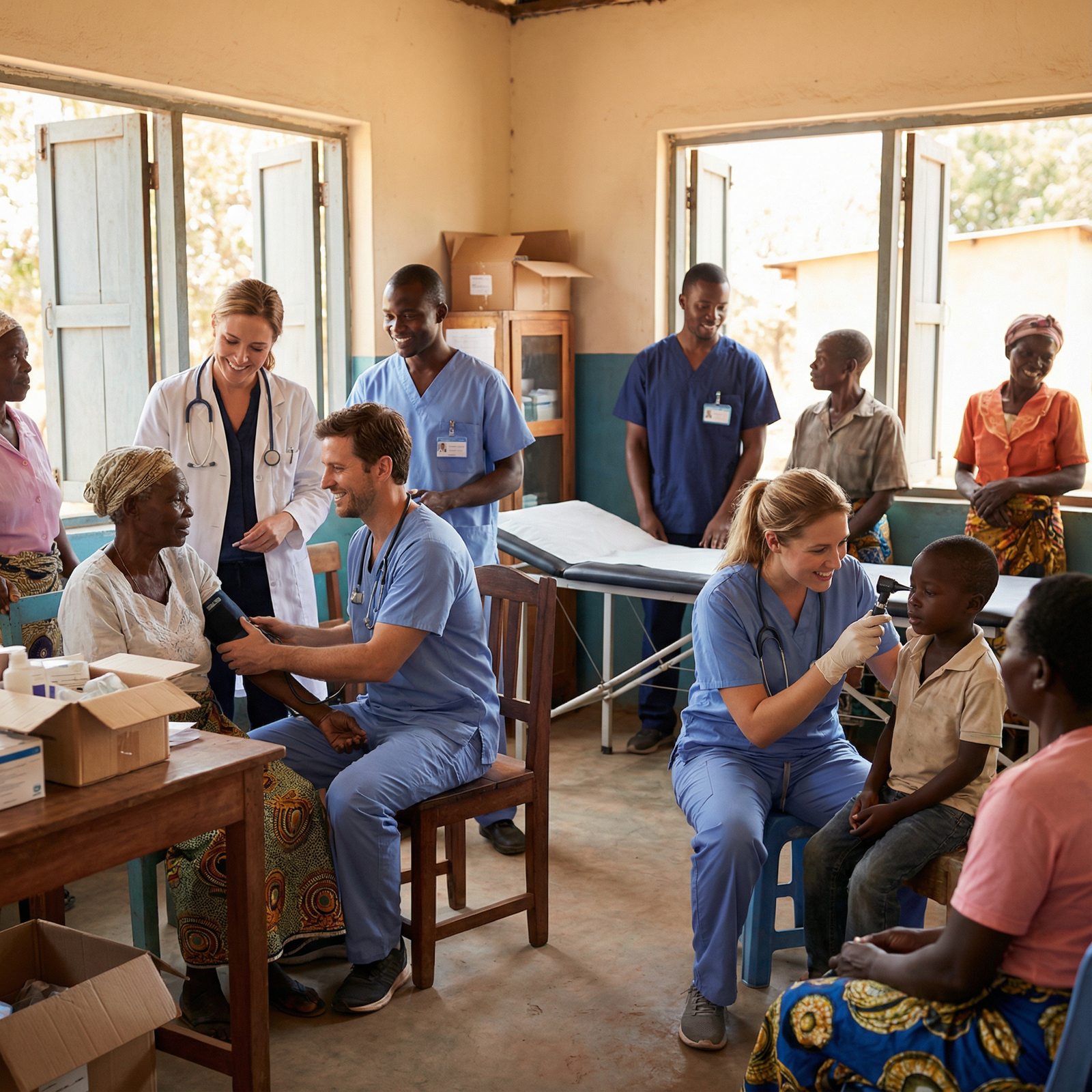
The way mission work actually lands in residency interviews is brutally simple: it either makes you look deep and mature, or naïve and ethically risky. There is almost no middle ground.
Let me walk you through how it really plays out in the room, because the public advice on this topic is sanitized to the point of uselessness.
How Programs Really See “Mission Work”
Here’s the part nobody tells you: “medical missions” is a red-flag phrase for a lot of academic physicians.
They’ve sat through years of applicants enthusiastically describing:
- One-week “brigades” doing procedures they’d never be allowed to do in the U.S.
- Self-congratulatory poverty tourism masquerading as service.
- Grand statements about “saving lives” with zero awareness of local systems, ethics, or sustainability.
So when they see “medical mission” on your ERAS or hear it early in an interview, their brain doesn’t go, “Oh great, compassionate applicant.”
It goes: “Okay. Are you one of the thoughtful global health people or one of the cowboy tourists?”
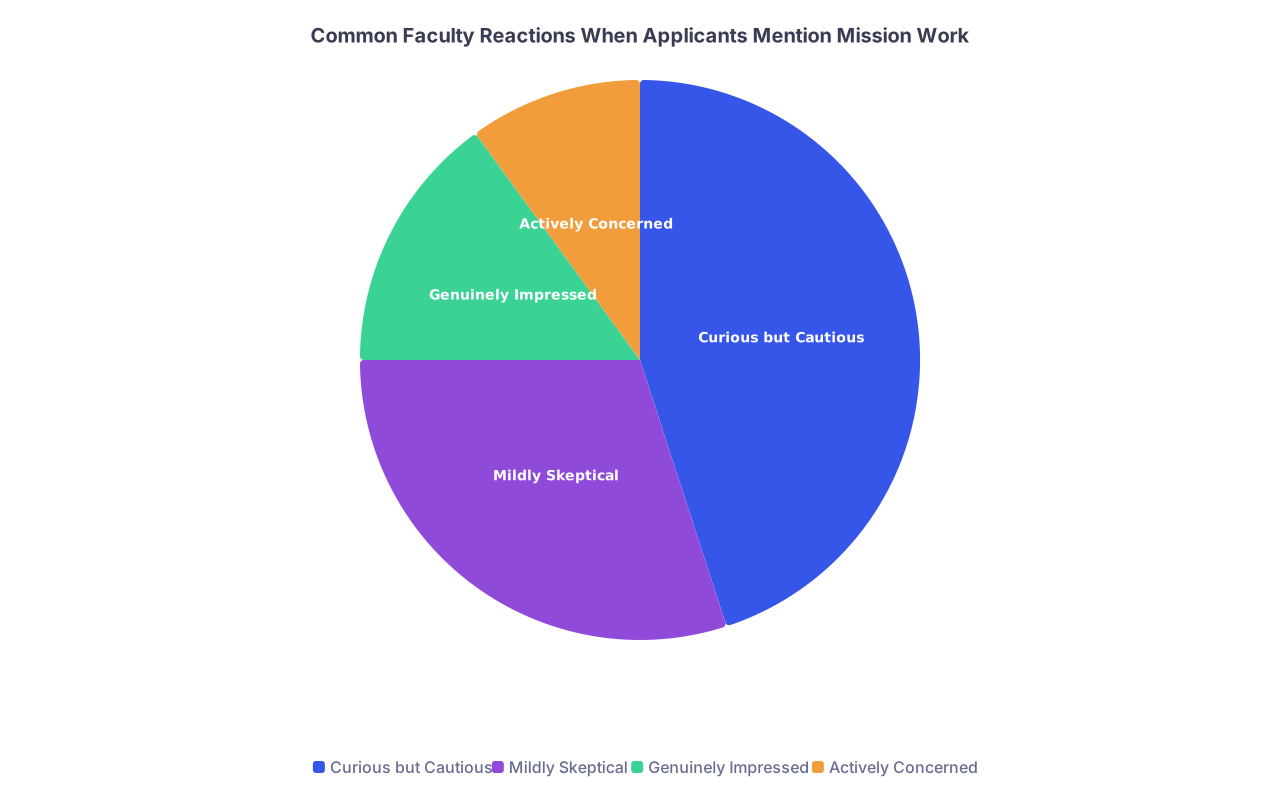
| Category | Value |
|---|---|
| Curious but Cautious | 45 |
| Mildly Skeptical | 30 |
| Genuinely Impressed | 15 |
| Actively Concerned | 10 |
The key is this: your mission experience is not judged on what you did. It’s judged on how you think about what you did.
You’re being screened for three things:
- Ethical judgment.
- Cultural and systems awareness.
- Whether you’re going to be a liability when given autonomy.
If you sound like a savior, you lose. If you sound like a learner, you win.
The Three Ways Mission Work Actually Comes Up
Mission work doesn’t always come up the way you expect. It shows up in three main interview lanes.
1. The Direct Question: “Tell Me About This Mission Trip”
The most obvious one. You listed it. They circled it. Now they’re testing you.
What they’re really thinking:
- “Did this person work above their training level?”
- “Are they reflective or just proud of doing sketchy stuff?”
- “Do they understand power dynamics, resource limitations, and local expertise?”
Bad answer I’ve actually heard (almost verbatim):
“We went to [Latin American country] and saw how little they had. It really made me appreciate the U.S. healthcare system. I got to suture, assist in surgeries, and see so much pathology you’d never see here. It made me realize I can make such a big difference abroad.”
To an ethics-conscious attending, that sounds like:
– Zero mention of local staff.
– Bragging about scope creep.
– Centering yourself in someone else’s suffering.
That’s how you turn a “leadership and service” experience into an “I’ll never rank this person” moment.
A strong answer sounds very different:
“I spent two weeks with a local primary care clinic in rural [country], which was staffed year-round by local physicians. My role was very limited—mostly shadowing, basic vitals, patient education, and logistics support. The most important part for me wasn’t what I did clinically; it was seeing how they managed chronic disease with almost no labs, very limited medications, and a completely different structure for follow-up. It forced me to confront how much I rely on diagnostics here, and to think more about system design than individual heroics.”
Notice the difference:
- You respect local clinicians as the real experts.
- You emphasize constraints and systems, not your “impact.”
- You admit a limited role rather than inflating yourself.
That’s the kind of answer that makes a global health director relax instead of tense up.
2. The Values Question: “Tell Me About a Time Your Values Were Challenged”
Program directors love using your mission work as a stress test for your ethics.
They might say:
- “Tell me about an ethically challenging situation you faced during that trip.”
- “Was there anything that made you uncomfortable there?”
- “If you could go back, would you do anything differently?”
They’re waiting to see if you recognize the built-in ethical landmines:
- Practicing with inadequate supervision.
- Informed consent in a language/culture you barely know.
- Short-term interventions with no follow-up.
- Using donated medications or devices questionably.
If you tell a story where you sound 100% proud and 0% uneasy, that’s a problem.
A mature answer looks like this:
“One situation that still bothers me happened in the second week. A child came in with what looked like pneumonia, but we had no imaging and very limited antibiotics. The team wanted to start treatment and send them home, but I was worried about how we’d follow up. I realized that at home I’d push for admission and close monitoring, and I felt uncomfortable with the gap between what we’d do there versus here. I brought up my concerns with the local physician, and we talked about how they normally handle these situations given their constraints. I followed their lead, but it really forced me to confront how different ‘standard of care’ looks depending on the system and resources.”
No heroics. No melodrama. Just:
- Recognizing tension.
- Deferring to local practice.
- Showing self-awareness instead of judgment.
3. The Pattern Question: “So, What Are Your Future Plans With Global Health?”
This is where a lot of applicants accidentally expose themselves.
Programs are allergic to grand, vague, unrealistic “I want to save the world” answers.
They’re listening for:
- Is this a phase, or a durable interest?
- Is this person going to disappear for three months a year and wreck our schedule?
- Do they understand that real global health is mostly slow, unsexy systems work?
Weak answer:
“I loved it and I absolutely want to keep doing missions during residency and throughout my career. Maybe a couple trips each year.”
To a PD, that reads as:
– Unrealistic about time constraints.
– Zero understanding of long-term partnerships.
– You think missions = repeated short bursts of you flying in and out.
Stronger answer:
“That experience is what pushed me from wanting to do one-off trips to taking global health more seriously. I don’t see myself flying in and out for a week every year. I’d rather plug into longitudinal work, either through our institution or a long-term partner site. During residency, I’m most interested in joining whatever structured global health track exists and contributing to ongoing projects, especially those led by local partners.”
That tells them:
- You’re not a tourist.
- You understand continuity.
- You’re realistic about residency constraints.
The “Quiet Judgments” Attendings Make While You Talk
Here’s what faculty almost never say out loud, but absolutely think.
1. Scope-of-Practice Red Flags
If you casually mention you were:
- Independently suturing complex lacs as an MS1.
- Running your own “clinic.”
- Doing pelvic exams, reductions, or procedures without close supervision.
Someone on that committee will mentally blacklist you. And they’ll be right.
They’re not just judging what you did—they’re extrapolating.
“If they were this casual about scope as a student abroad, what will they be like as an intern here?”
You want to be explicit:
“I was extremely careful to only operate within what I was trained to do, and I always deferred to our attending or the local physician when there was any question.”
If that’s not true of your experience, you don’t brag about the details. You talk about the discomfort you felt and what you learned from realizing the ethical problems.
2. Savior Language vs. Respect Language
The fastest way to tank your credibility is to center yourself as the hero.
Red-flag phrases:
- “They had nothing, and we brought them so much.”
- “We were their only hope for care.”
- “We showed them more advanced techniques.”
That’s how you telegraph a fundamental misunderstanding of global health.
Better language:
- “We were working alongside local clinicians…”
- “I realized how much they were doing with so little…”
- “I learned more from their approach to X than I contributed clinically.”
Faculty who’ve done international work are hyper-aware of this stuff. They’ve watched the damage of well-intentioned, under-informed Western trainees. They’re screening you to see which side of that line you’re on.
3. Depth vs. Tourism
Your interviewer is scanning your story for depth:
- Did you learn any of the language?
- Do you know anything about the country beyond “it was poor”?
- Can you describe their health system in even basic terms?
The applicant who says:
“It was so eye opening to see how happy they were despite having so little.”
…sounds like a study-abroad brochure, not a resident.
The one who says:
“What struck me was how much of their system was built around community health workers, and how powerful that model was for chronic disease follow-up.”
…sounds like someone who belongs in a residency that thinks about systems, equity, and resource allocation.
How to Frame Mission Work So It Helps You, Not Hurts You
You don’t need to hide your mission work. You need to translate it.
Here’s the framing that plays well in serious programs.
1. From “Trip” to “Training Experience”
Stop talking like it was a vacation with stethoscopes. Treat it like a clinical rotation with unusual constraints.
Focus on:
- What you observed about local systems.
- How resource limitations changed clinical reasoning.
- How you adjusted to working as a guest in someone else’s system.
Example pivot:
Instead of:
“I saw so much advanced pathology…”
Say:
“I saw how late patients were presenting because of limited access and cost barriers, and how that shaped everything from triage to treatment choices.”
Now you sound like someone who thinks like a resident, not a tourist with a GoPro.
2. From “Helping” to “Learning and Collaborating”
Any hint that you think you “saved” that village and you’re done.
Emphasize:
- Humility.
- Bidirectional learning.
- Locals as the primary providers.
The line that lands extremely well:
“I went in thinking I was going to help; I came out realizing how much I had to learn about delivering care in under-resourced settings and the limits of short-term work.”
That sentence changes the entire tone of the conversation.
3. From “One-Off” to “Trajectory”
Programs don’t care that you did a trip. They care what it says about your trajectory.
Tie it to:
- Health equity.
- Working with underserved communities at home.
- Interest in population health, primary care, or public health.
If your only underserved experience is one week abroad, you will look unserious. If you can connect it to local free clinics, safety-net hospitals, or longitudinal work with marginalized populations, now it’s part of a clear pattern.
| Applicant Framing | Interviewer Interpretation |
|---|---|
| “I went once, it was amazing.” | Tourism, not a core value |
| “I worked with local clinicians…” | Respectful, team-based mindset |
| “We were their only care.” | Naïve, possible exaggeration |
| “I learned how their system works.” | Systems thinking, maturity |
The Global Health Faculty vs. The Regular Attending
Another thing no one tells you: your mission story lands very differently depending on who’s across the table.
The Global Health / Ethics Person
They’ve:
- Lived abroad.
- Fought with administrators about building real partnerships.
- Seen short-term teams cause long-term harm.
They will push you. They like doing it.
Expect questions like:
- “How did your team think about sustainability?”
- “Did anyone on your team do things they wouldn’t be allowed to do here?”
- “How did you address language barriers and informed consent?”
They’re not trying to fail you. They’re trying to see if you’re coachable and honest.
A respectable answer when something was off:
“Looking back, I do think there were moments when our scope drifted beyond what I’m now comfortable with. At the time, I didn’t have the vocabulary to name it as an ethical problem, but since then I’ve read more and talked with mentors, and it’s made me much more cautious about how I approach similar opportunities in the future.”
Honesty + growth beats denial every time.
The Regular Attending Who’s Just Skimming Your CV
They don’t want a dissertation on decolonizing global health. They want to know:
- Are you safe?
- Are you thoughtful?
- Are you going to be a sane person on call?
They’ll be satisfied with:
- Limited scope.
- Respect for supervision.
- Humility.
Don’t overcomplicate it. Just don’t brag about sketchy stuff.
How Mission Work Ties Into Personal Development and Ethics
At a deeper level, mission work is a stress test of who you are when no one is watching.
Programs are trying to see:
- Did you learn to manage discomfort and uncertainty without inventing confidence you didn’t have?
- Did you develop empathy without romanticizing poverty?
- Did it actually change how you practice—or is it just a line on your CV?
If you want to impress the people who care about ethics, connect your mission experience to how you behave here, not just there.
For example:
“After that trip, I found myself thinking differently on my home rotations when we discharged patients back to very unstable housing situations. It made me much more likely to ask social work to get involved early, and to take seriously when patients told us they couldn’t afford meds or follow up.”
That’s how you turn a potentially problematic bullet point into a clear marker of growth.

| Step | Description |
|---|---|
| Step 1 | Applicant Mentions Mission Work |
| Step 2 | Ethical Red Flag - Hurts Application |
| Step 3 | Superficial - Neutral to Mildly Negative |
| Step 4 | Nice but Unfocused Story |
| Step 5 | Ethical, Mature, Mission-Aligned - Strength |
| Step 6 | Scope Safe and Honest |
| Step 7 | Shows Reflection and Humility |
| Step 8 | Connects to Systems and Equity |
How to Prepare Before You Walk Into the Interview
If you’ve done mission work and it’s on your application, you’re going to get asked. Pretending it might not come up is fantasy.
Do this prep:
- Write out one story from your mission experience that involves an ethical tension or discomfort. Practice telling it in 60–90 seconds, ending with what you’d do differently now.
- Identify one systems insight you gained (triage, chronic care, resource allocation, role of community workers, etc.). This is your go-to “what I actually learned” answer.
- Decide how it fits into your future in a realistic way. Not “saving the world.” Something grounded like “joining a global health track,” “working in safety-net hospitals,” or “continuing to work with underserved communities locally.”
And one more thing: if your mission experience was genuinely problematic in retrospect, you don’t have to glorify it. You can frame it as something that opened your eyes to what not to do.
That kind of honesty stands out because almost nobody does it.
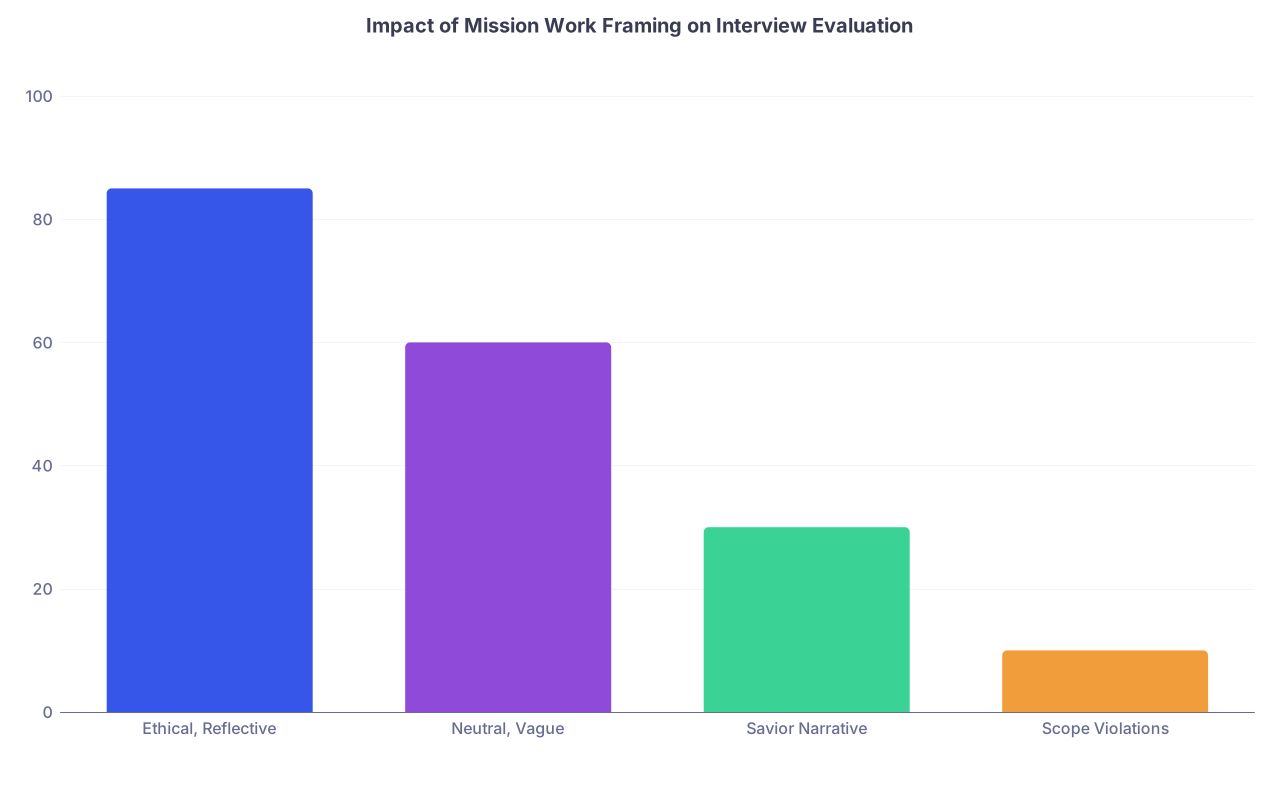
| Category | Value |
|---|---|
| Ethical, Reflective | 85 |
| Neutral, Vague | 60 |
| Savior Narrative | 30 |
| Scope Violations | 10 |


FAQ: Mission Work in Residency Interviews
1. Should I remove short-term mission trips from my ERAS if they were kind of sketchy?
No, but you should de-glorify them in your own mind first. If you leave them on, you must be prepared to talk honestly about the ethical concerns and how your thinking has evolved. If it was genuinely out of control—unsafe, unsupervised procedures, organization with a terrible reputation—then yes, consider omitting it or reframing it as non-clinical volunteering. But erasing everything is usually unnecessary; owning your growth is far more powerful.
2. Is it better to say “global health” instead of “mission work”?
Often, yes. “Mission” is loaded with religious and colonial baggage in academic medicine. If your work was secular and focused on health systems or underserved care, “global health” or “international clinical experience” signals a more grounded approach. If it was explicitly faith-based, you can still say that, but emphasize the clinical and ethical components over proselytizing or “saving” language.
3. What if my only underserved experience is one trip abroad—will that hurt me?
It will not automatically hurt you, but it will look thin if you sell it as some profound lifelong calling. Programs like to see continuity: free clinics, local safety-net rotations, work with marginalized groups here. If all you have is one trip, be modest about it. Frame it as an introduction, not proof that you’re a global health leader. Then, clearly outline how you plan to build on that interest in residency.
4. Can I talk about procedures I did abroad, or should I avoid that completely?
You can mention them, but very carefully. Never brag about doing things beyond your training or unsupervised. If you did procedures, anchor your story in supervision and learning: “Under direct supervision, I assisted with X,” or “I observed Y and practiced Z skill that I was already trained in, like basic suturing.” The more you emphasize your limits, your supervision, and your discomfort with overstepping, the safer—and more mature—you’ll look.
Bottom line: Mission work in residency interviews is a high-variance topic. Played naïvely, it raises red flags about judgment, ethics, and ego. Framed with humility, systems awareness, and honest reflection, it becomes one of the strongest indicators of your growth, your values, and your readiness to handle the moral gray zones of real medicine.


