
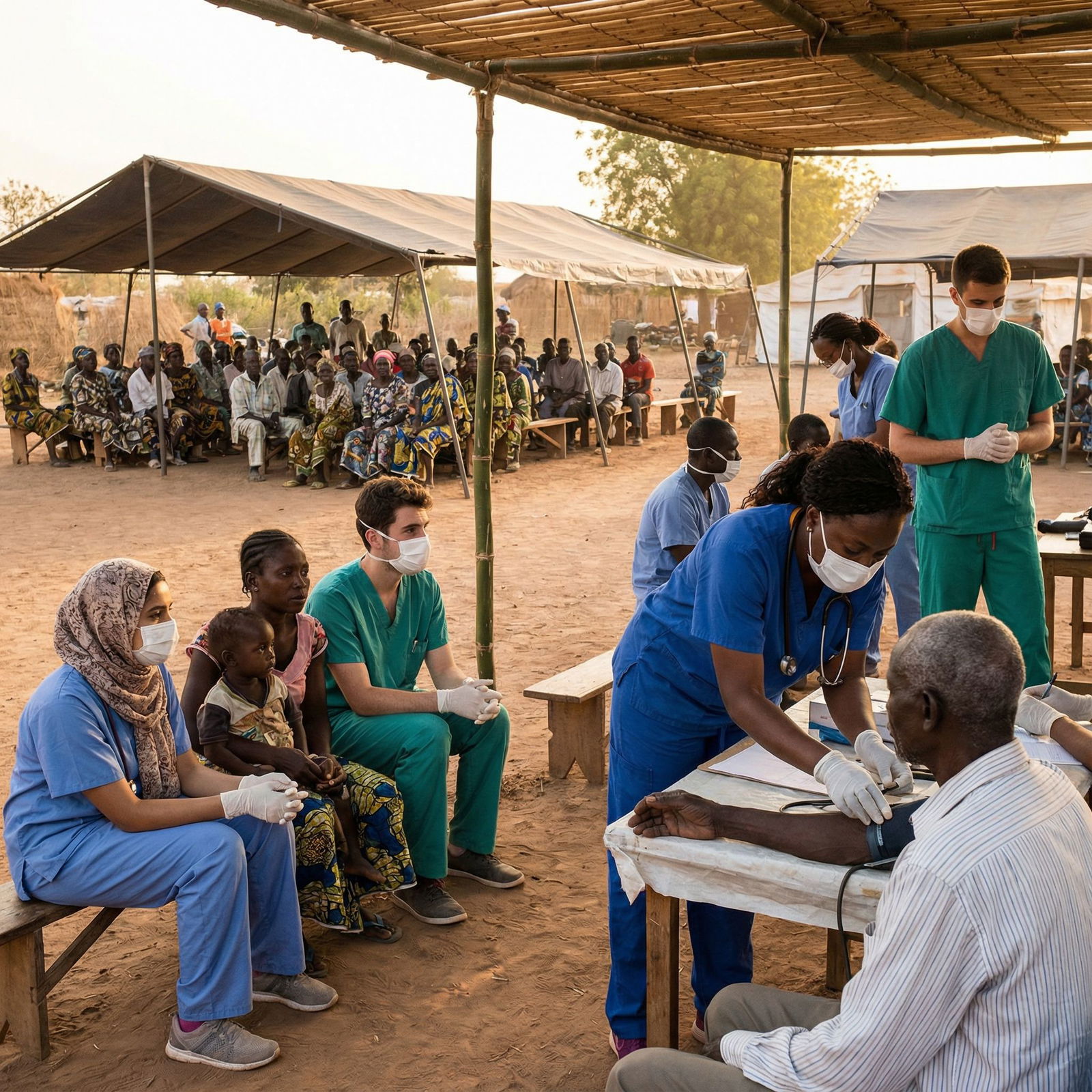
What do people say about your mission when they see your photos without any captions at all?
If your answer is “They see that we care,” you might be wrong. Very wrong.
Because the internet is full of medical mission photos that scream:
- “Look at us, the heroes.”
- “Look at them, the props.”
- “Poverty as background, not as context.”
And every time you post one of those, your mission loses credibility with the exact people you claim to serve—patients, local partners, and increasingly, other health professionals.
Let me walk you through the mistakes that quietly ruin your mission’s reputation, even while everyone is commenting “So inspiring!” on Instagram.
1. Turning Patients into Content
This is the biggest one. The career‑ender if you ever end up in the wrong thread on X, Reddit, or LinkedIn.
Mistake: Treating consent like a checkbox—or skipping it completely
I have seen:
- Residents snapping photos mid‑wound debridement because “this will get a lot of engagement.”
- Medical students filming a crowd in the waiting area for a TikTok “day in the life.”
- Team leaders saying, “They don’t mind, they’re just grateful we’re here.”
That last sentence is a red flag. If someone’s dependent on you for free care, any “yes” is automatically pressured. That is not clean consent.
Common consent failures:
- No interpreter involved; patient does not fully understand where the photo goes.
- “Verbal consent” mumbled in passing while the camera is already up.
- Group consent assumed: “We told them at the start we might take photos.”
- Children photographed with zero parent/guardian involvement.
You must avoid the fantasy that poor patients are less entitled to privacy because “we’re doing good work.” That logic is toxic.
Why this erodes credibility
You are broadcasting that:
- You understand ethics at home but suspend them abroad.
- Privacy is conditional on geography and income.
- Your mission is partly about content creation, not just patient care.
Healthcare professionals, ethicists, and local clinicians see that. And they talk. Quietly at first, then publicly.
Safer approach: Consent that actually respects power imbalance
- Get informed, specific consent for photography, separate from medical consent.
- Use trusted interpreters. Not a teammate who knows five phrases in the local language.
- Make it clear:
- The patient can say no.
- Saying no will not affect their care in any way.
- They can change their mind and ask for deletion.
If you cannot do that properly? Do not take the photo. Not even “just for us, we won’t post it.”
2. Poverty Porn: When “Awareness” Is Actually Exploitation
You know the shot:
- Child with visible malnutrition.
- Cracked feet, torn clothing.
- Western volunteer leaning in, smiling warmly at the camera.
You post it with a caption about “gratitude, perspective, and how much we take for granted back home.”
You think: “I’m raising awareness.”
What others see: “I’m mining someone else’s suffering for my moral branding.”
How this kills your mission’s credibility
- Local clinicians: “We have been working here for years. Why do you only show the worst, most dramatic images?”
- Patients and communities (when they see it later): “So we are objects to pity, not partners in health.”
- Funders who understand ethics: “This looks like manipulation, not transparent reporting.”
There is a reason humanitarian and global health organizations have moved away from this style of imagery. Because it is exploitative. And people notice.
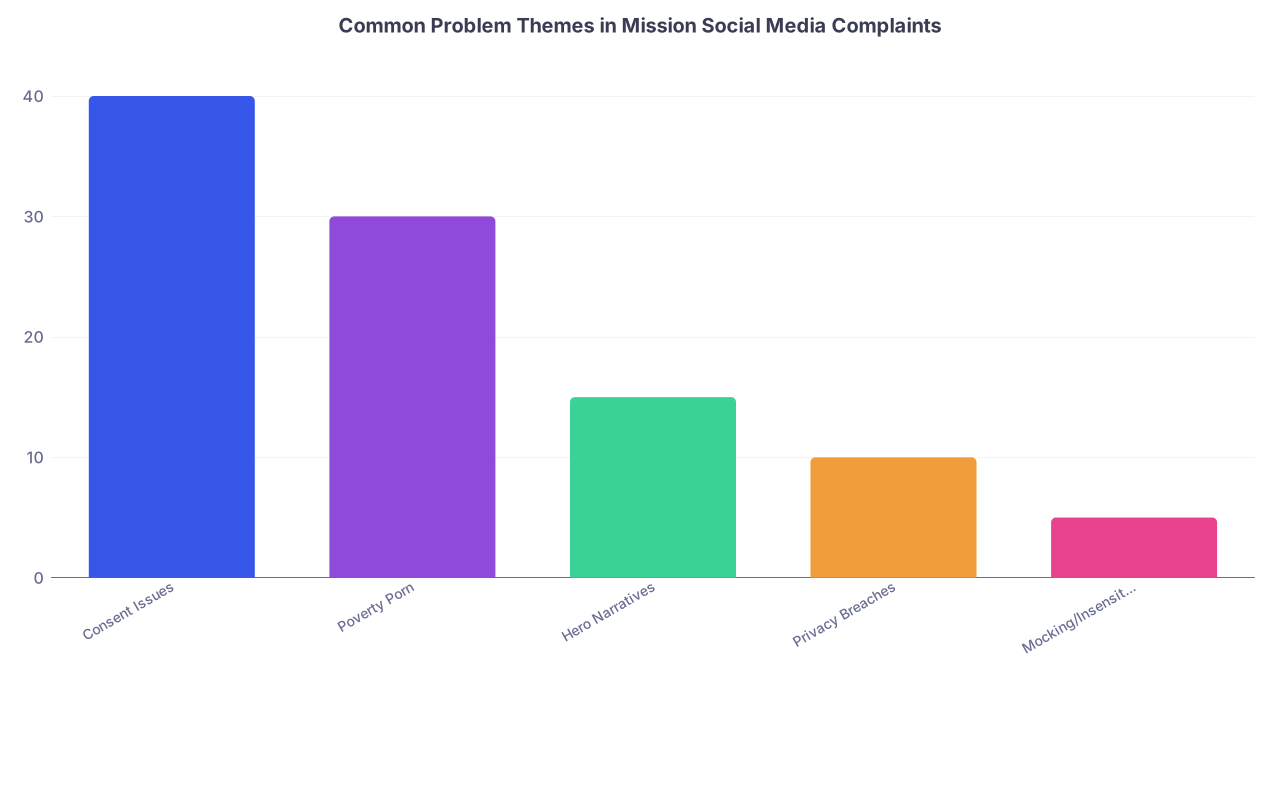
| Category | Value |
|---|---|
| Consent Issues | 40 |
| Poverty Porn | 30 |
| Hero Narratives | 15 |
| Privacy Breaches | 10 |
| Mocking/Insensitive Posts | 5 |
The rule you must not break
If the image’s emotional impact relies on:
- Exposed suffering,
- Visible deformity,
- Or the patient’s vulnerability,
then you need a very strong justification beyond “awareness” or “fundraising.” And even then, it should probably be anonymized, contextualized, and used rarely—if at all.
Ask yourself: Would I be comfortable if this were my own child, my own grandparent, on someone else’s feed?
If the honest answer is no, then do not post someone else’s.
3. Hero Complex Storytelling: “Look What We Did”
This one feels innocent. It is not.
The classic mission post structure:
- “I went to [country] on a medical mission.”
- “They had nothing.”
- “We saw hundreds of patients.”
- “It changed my life.”
Translation:
- They are background.
- I am the protagonist.
- The mission is about my transformation.
What this signals to smart observers
- Mission = experience for outsiders, not long‑term service.
- Locals = passive, voiceless, dependent.
- Sustainability = not even part of the thinking.
Students love these “reflection” posts. Residency program directors and serious global health people roll their eyes. They have seen hundreds. The pattern is too clear.
Better narrative frame that protects credibility
- Start with local context: what local health workers are already doing.
- Position your team as support, not saviors.
- Focus on systems, capacity building, training, protocol development—if those are actually happening.
- Use “we” carefully. “We worked with the local team to…” is very different from “We came and saved the day.”
If the post is mostly about how much the trip changed you, it belongs in your journal, not your public professional profile.
4. Ignoring Professional Boundaries Online
You would never:
- Post an identifiable trauma patient from your US hospital.
- Share a selfie with a sedated ICU patient.
- Live‑stream a code.
Yet on missions, people suddenly think geography cancels professionalism.
High‑risk behaviors I have seen:
- Posting:
- Before / after pictures of surgical patients with recognizable faces.
- Photos of rare conditions where the patient is easily identifiable in a small community.
- Stories of “miracle cases” with enough details for locals to know exactly who it was.
- Creating Instagram Reels during active clinical care.
- Sharing photos from operating rooms where sterility and dignity are both compromised.
It is not just about HIPAA. Even where HIPAA does not legally apply, ethical obligations do.

The big mistake: Assuming “they’ll never see this”
You think: “They do not use Instagram anyway.” That is naïve.
Photos travel:
- Mission partners share them.
- NGOs use them in newsletters.
- Someone posts to Facebook where the patient’s cousin sees it.
Then you have:
- Breach of trust.
- Humiliation of the patient.
- Damage to your mission’s relationship with the community.
Once respect is lost, no amount of antibiotics will fix it.
5. Disrespecting Local Colleagues with Your Feed
Nothing undermines a mission’s credibility faster than insulting the very people you claim to work with.
It sometimes looks subtle:
- “Back home, this would be unthinkable.”
- “There were no real doctors here until we came.”
- “They are doing their best with what little they know.”
Or less subtle:
- Complaining publicly about “corrupt” or “lazy” local systems.
- Comparing your home hospital favorably against the local one in a condescending way.
- Posting photos that show local staff in chaos or disorganization without context.
Why this is lethal for long‑term work
- Local clinicians feel patronized and used.
- Ministries of health see you as arrogant outsiders.
- Other reputable organizations stop partnering with you.
Your social media is not just your personal diary. It is evidence of how you think about your colleagues. It travels.
A serious red flag: If your posts never name or credit local clinicians, but always name and tag foreign volunteers, you are already telling the wrong story.
6. Blurring Educational Value and Voyeurism
“Educational purposes” is a phrase people hide behind.
If your social media is full of:
- Graphic wound pictures,
- Neonatal anomalies,
- Traumatic injuries,
- “Fascinating cases” from the field,
ask yourself: Is this really education, or am I using “teaching” as a fig leaf for shock content?
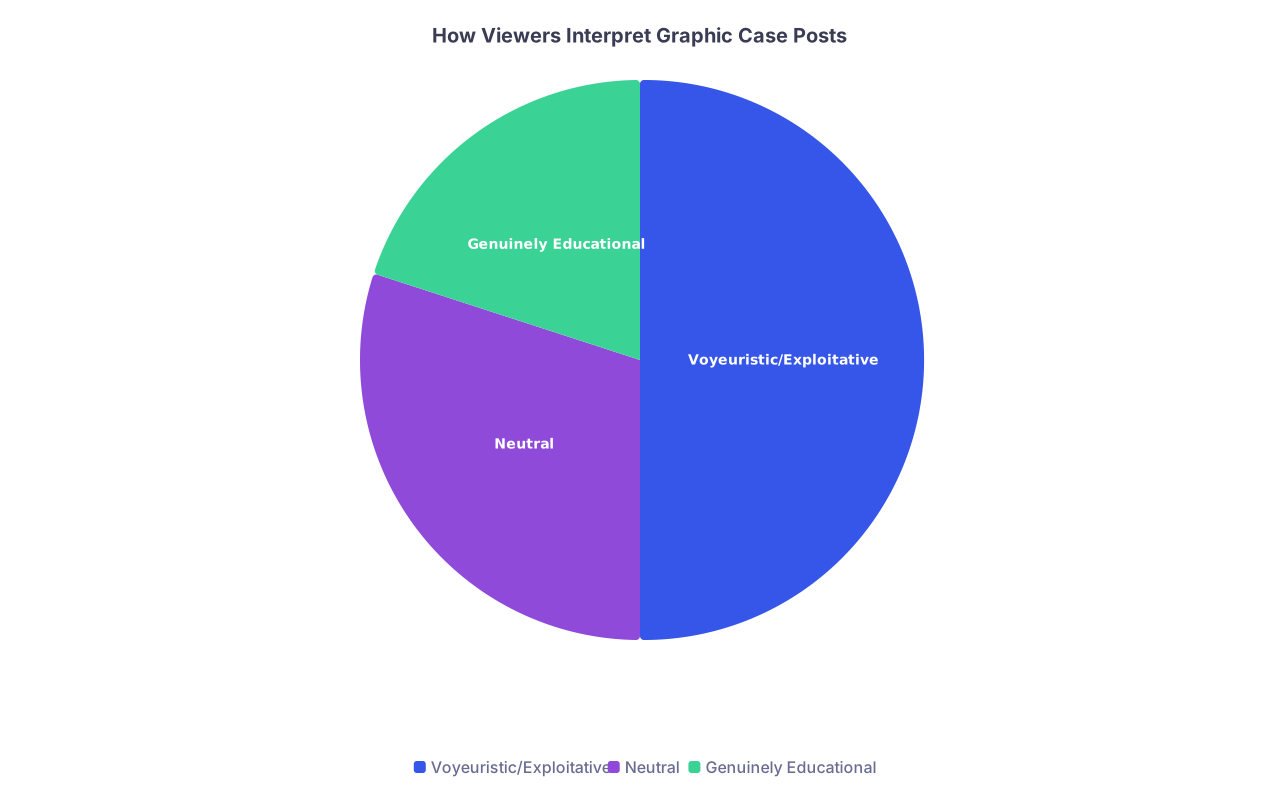
| Category | Value |
|---|---|
| Voyeuristic/Exploitative | 50 |
| Neutral | 30 |
| Genuinely Educational | 20 |
Safe vs unsafe “education”
Safer:
- De‑identified images with no face, no unique tattoos, no tags or captions that connect to a specific village or clinic.
- Diagrams or drawings instead of photographs.
- Closed professional spaces (case conferences, secure educational platforms) instead of open social feeds.
Risky:
- Posting to public platforms with your name, your institution’s name, and identifiable images from a small community.
- Tagging your university or hospital, pulling them into the risk with you.
- Sharing anything you would not be allowed to post if the patient were from your own country.
If your “teaching” case is something you would never show on your hospital’s official Instagram, why is it okay from a rural clinic an ocean away?
It is not.
7. Confusing Fundraising With Emotional Manipulation
Mission teams need money. That is reality.
The mistake is thinking: “High emotion = good fundraising = therefore justified.”
So teams post:
- The most dramatic, heartbreaking child photo.
- A caption about “if we do not help, no one will.”
- A quick link: “Donate now.”
Short term, it can work. Long term, it backfires.
What thoughtful donors and partners notice
- You use people’s suffering as leverage.
- You exaggerate your uniqueness: “We are the only hope,” which is almost never true.
- You are not transparent about what donations actually support (capacity building vs. 1‑week trips).
Over time, serious funders move toward organizations that:
- Use dignified imagery.
- Emphasize local leadership.
- Share specific, concrete use of funds.
If your fundraising strategy depends on demeaning visuals, your ethics are already off‑track.
8. Not Having a Social Media Policy at All
This is the systemic mistake behind all the others.
I have seen teams where:
- Everyone is free to post whatever they want.
- No one talks about photography until after a problem occurs.
- The only “policy” is a vague “use common sense.”
“Common sense” is not a policy. It is an alibi after the fact.
You need clear lines. Before the plane leaves.

| Step | Description |
|---|---|
| Step 1 | Before Mission |
| Step 2 | Create Media Policy |
| Step 3 | Train Team on Ethics |
| Step 4 | Design Consent Process |
| Step 5 | Limit Who Can Post Publicly |
| Step 6 | During Mission - Take Approved Photos Only |
| Step 7 | Post Trip Review of All Media |
| Step 8 | Approved Content Shared |
| Step 9 | Risky Content Deleted |
Non‑negotiable elements of a real policy
- Who is allowed to:
- Take clinical photos.
- Store them.
- Post anything on official channels.
- What is absolutely prohibited:
- Identifiable minors.
- Photos taken during procedures, codes, or emergencies.
- Images showing nudity, open wounds, or graphic trauma on public platforms.
- How consent is obtained:
- Language, interpreter use, documentation.
- Right to revoke consent later.
- Review process:
- No one posts clinical material without at least one senior review.
- Post‑trip vetting before anything is used in talks, newsletters, or fundraising.
If you do not have this, you are one impulsive Instagram Story away from an ethics complaint.
9. Red Flag Phrases You Should Stop Using Today
Watch your captions and “reflections” for these landmines:
- “They had nothing.”
- “We were the only doctors they had ever seen.”
- “They were so grateful for even the smallest things.”
- “I wish people back home appreciated what they have.”
- “These people are so simple and happy with so little.”
Every one of those:
- Flattens complex lives into cliché.
- Reinforces a power hierarchy.
- Signals that you came as a tourist of suffering, not a partner in health.
Replace with:
- Specific, concrete descriptions of systems challenges.
- Acknowledgment of existing local efforts.
- Humility about what your team actually contributed.
10. What to Share Instead (Without Compromising Ethics)
You do not have to go social‑media silent. You just have to be deliberate.
Safer, credibility‑building content:
- Photos of:
- Team meetings with local staff (faces only if consented and comfortable).
- Equipment, supplies, clinic spaces—without patients.
- Teaching sessions, workshops, simulations.
- Stories about:
- Local leadership and initiatives you are supporting.
- Process improvements, protocols, or training materials.
- Challenges that remain, told respectfully and without melodrama.
| Type | Safer Example | Risky Example |
|---|---|---|
| Patient imagery | Back view, non-identifiable exam scene | Close-up face of child with visible condition |
| Team photos | Group photo outside clinic, no patients | Selfie in ward with patients behind |
| Education content | Diagram of case with anonymized details | Graphic wound photo on public feed |
| Storytelling focus | Local nurse leading triage reform | “How this trip changed my life” story |
| Fundraising material | Systems needs, clear budget, dignified images | Emotional child photo with fear-based caption |
If you consistently choose the left column instead of the right, your mission’s reputation will age well instead of rotting in someone’s screenshots folder.
FAQs
1. If a patient or family member eagerly asks for a photo with me, is it ethical to post it?
Not automatically. Their desire for a photo does not erase the power imbalance or the global visibility of your feed. You still need informed consent that explains where the image may appear, the potential audience, and that saying no (or later asking for deletion) will not affect their care. If you cannot guarantee that clarity, keep the photo for their phone, not yours.
2. Can I share de‑identified clinical cases from missions for teaching on my personal Instagram or Twitter?
Public social platforms are the wrong venue for most case teaching, especially from small communities where even “de‑identified” cases can be recognized. Use closed, professional, secure channels instead. If the case is rare, visually obvious, or geographically unique, assume locals can identify the patient and treat it with the same or greater caution than at your home hospital.
3. Our organization already has lots of questionable old photos online. What should we do now?
Do not ignore them. Conduct a systematic review: remove or archive anything that shows identifiable patients without rock‑solid documented consent, portrays people in demeaning ways, or uses graphic imagery for impact. Then publish a brief, honest statement about updated media ethics, and change your policy going forward. Quiet course correction is far better than waiting until someone else calls you out.
Key points to remember:
- If you would not post it from your home hospital, you should not post it from a mission clinic.
- Patients are not content. Your “awareness” and “reflection” are never more important than their dignity and privacy.
- A clear, enforced social media policy is not optional if you care about long‑term credibility in medical missions.


