
The feel‑good glow of “going on a medical mission” tricks a lot of smart people into doing harmful work. You are not exempt.
If you want your skills to actually help people—and not just produce good photos—you must vet medical mission organizations ruthlessly. Sentimentality is how bad projects get funded. Structure, accountability, and humility are how good ones do.
Below is a step‑by‑step way to interrogate an organization before you give them your time, reputation, and clinical license.
1. Start With Three Non‑Negotiable Questions
Before you get lost in glossy websites and Instagram feeds, hammer these three questions:
- Who asked for this work?
- Who controls the money and decisions?
- What happens after you leave?
If an organization cannot answer each of these clearly, specifically, and in writing, you should walk away.
Let us translate those into practical checks.
A. Who asked for this work?
You are looking for locally driven rather than volunteer‑driven projects.
Ask directly:
- Which local institutions requested this partnership? (Name the hospital, ministry of health, NGO, or community group.)
- Do you have a written MOU (memorandum of understanding) with them?
- How long have you worked with this specific community?
Red flags:
- Vague answers: “The community really appreciates us,” with no names, no agreements.
- Projects started because “students wanted global health experience.”
- Short‑term trips to new sites every year with no continuity.
Green flags:
- Named local partners with titles and roles.
- Evidence that local partners set priorities (e.g., switching from surgery camps to diabetes programs because the district hospital requested it).
- Multi‑year engagement with the same site.
2. Analyze Their Model: Training vs. Tourism
If the organization’s core “product” is your experience rather than patient outcomes, be suspicious.
| Pattern | Volunteer Tourism Model | Ethical Mission Model |
|---|---|---|
| Primary Beneficiary | Foreign volunteers | Local patients/system |
| Duration of Engagement | 1–2 weeks, one‑off | Multi‑year, recurring |
| Emphasis in Marketing | Adventure and photos | Skills transfer, outcomes |
| Student Autonomy | High, poorly supervised | Limited, tightly supervised |
| Local Staff Role | Translators, helpers | Leaders, equal partners |
Concrete actions for you:
Read their website and newsletters. Count how often they talk about:
- Volunteer experience vs.
- Local outcomes, training, and system strengthening.
Ask: “What metrics do you report to your local partners?”
If the only numbers they quote are:- “We saw 3,000 patients in 7 days”
- “We did 200 surgeries”
…you are looking at volume, not value.
You want to hear things like:
- “X% of patients were followed up by local clinics within 3 months.”
- “We trained 20 nurses to run hypertension clinics.”
- “Stock‑out of essential meds decreased at partner site over 2 years.”
3. Verify Clinical Quality and Scope of Practice
This is where things can go very wrong, very fast. I have seen:
- Preclinical students running “their own” triage.
- Newly graduated nurses suturing without supervision.
- Surgeons operating in facilities with no ICU backup.
Your license and ethics do not pause because you got on a plane.
A. Ask about supervision and roles
Questions to send in an email:
- What is the exact clinical role of:
- Preclinical students
- Clinical students
- Residents
- Attendings / consultants
- Who provides direct supervision on site? Are they:
- Licensed in the host country?
- Present in the room for procedures?
- Are there written scope‑of‑practice guidelines for visiting staff and trainees?
Non‑negotiables:
- No organization should ever ask you to do more than you are allowed or trained to do at home.
- No unsupervised procedures by students “because it’s low‑resource and they don’t care.” That sentence alone is your cue to never talk to them again.
B. Ask about protocols and safety
You are looking for boring details. If they cannot provide boring details, they do not do safe medicine.
Ask:
- What infection prevention protocols are in place?
- Sterilization?
- Sharps disposal?
- PPE availability?
- How are emergency transfers handled?
- Is there a referral hospital?
- Who pays for transfer and higher‑level care?
- For surgeries:
- Do you use the WHO Surgical Safety Checklist?
- Is there post‑op follow‑up beyond the team’s departure?
Organizations that shrug off these questions often run unsafe “surgery camps” or chaotic clinics that look productive and are medically dangerous.
4. Examine Continuity of Care
The ethical question that ruins most “feel‑good” trips is simple: what happens to this patient when you are gone?
A. The referral and follow‑up system
You need clear answers here:
- Who owns the patient chart, and where is it stored?
- How do local clinicians access your notes, test results, and medication decisions?
- Is there a formal handoff for complex patients?
Look for:
- Integration into local medical records (paper or electronic).
- Written referral pathways:
- “All newly diagnosed diabetics are registered at X clinic.”
- “We see surgical candidates only if Hospital Y confirms they can manage follow‑up.”
Avoid:
- Pop‑up clinics with no record integration.
- Organizations that boast about “treating people who never see a doctor,” but have no plan for any of them to see one again.
B. Medication ethics
Disaster scenario I have seen repeatedly:
- Foreign team hands out 30‑day supplies of antihypertensives and antiepileptics.
- No local access to affordable refills.
- The organization leaves, and patients crash.
Ask:
- Do you prescribe chronic medications? If yes:
- Are these meds consistently available locally?
- Are they affordable at local income levels?
- Do you work with local pharmacies, supply chains, and governments to ensure continuity?
If the answer is fuzzy, you are being asked to participate in short‑term pharmacologic theater, not care.
5. Follow the Money Without Blinking
If you feel awkward asking financial questions, you are exactly the person exploitative organizations rely on.
You need to know:
- How they are funded.
- Where your fees (if any) go.
- How much money reaches local partners.
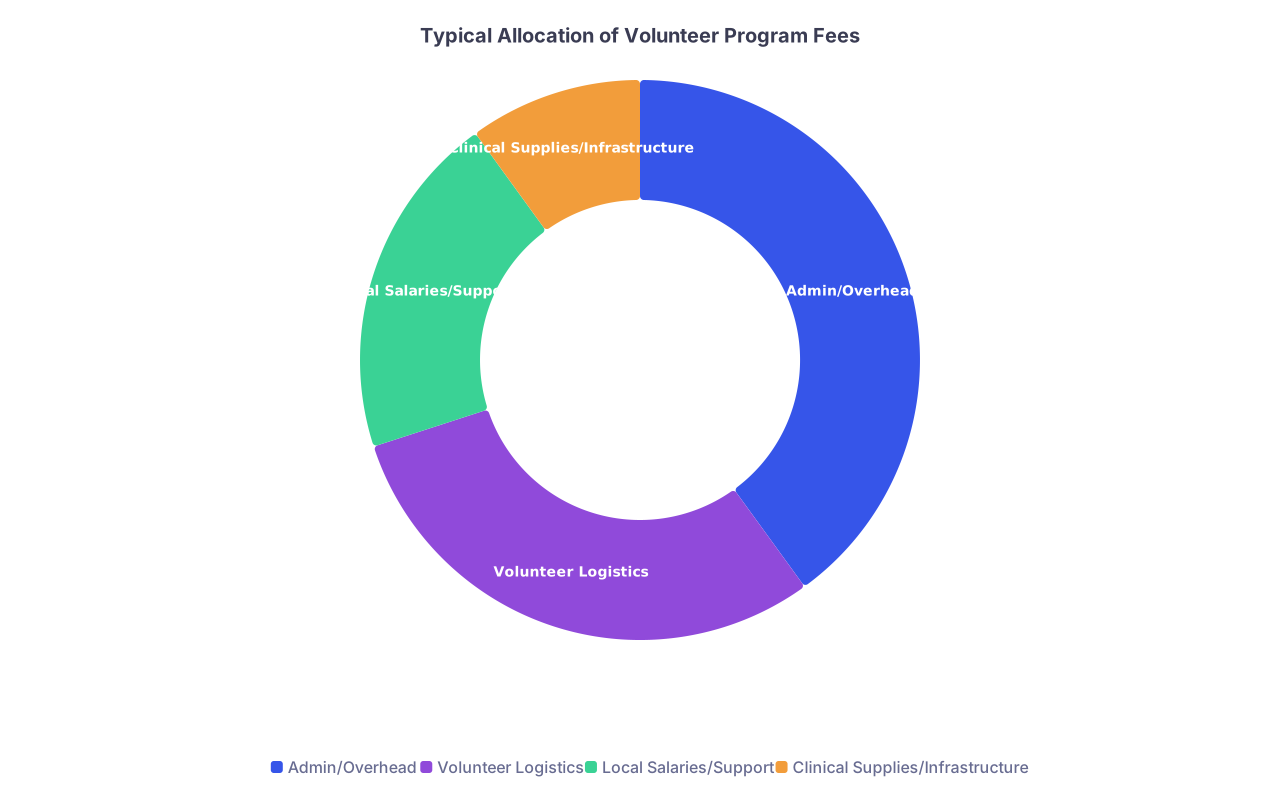
| Category | Value |
|---|---|
| Admin/Overhead | 40 |
| Volunteer Logistics | 30 |
| Local Salaries/Support | 20 |
| Clinical Supplies/Infrastructure | 10 |
Then you compare their reality to something like that.
Concrete steps:
- Read their latest annual report or ask for one.
- Ask specifically:
- What percentage of your total budget goes directly to local salaries and health system strengthening?
- What proportion of my program fee supports:
- My travel/housing/logistics
- Organizational overhead
- Local health services, infrastructure, or staff pay?
Green flags:
- Transparent breakdowns with numbers.
- Clear evidence of paying local staff competitive wages.
- Budgets that fund local infrastructure (lab equipment, training, supply chains).
Red flags:
- “We cannot share that level of financial detail.”
- No audited financials for years.
- Glamorous lodging for volunteers with underpaid or volunteer local staff.
6. Ask How They Relate to the Local Health System
Ethical organizations strengthen the existing system or, at minimum, do not undercut it.
Key questions:
- Do you coordinate with the Ministry of Health or district health authorities?
- Do local clinicians support your presence, or just tolerate it?
- Do you employ or displace local health workers?
Watch for:
- Free clinics that compete with local doctors and pharmacies, pulling away their paying patients.
- Organizations that brag “patients walk for hours to see our visiting doctors” while local clinics stand half‑empty because they have been delegitimized.
Better models:
- Working inside public hospitals or clinics.
- Supporting task‑shifting and training for community health workers.
- Integrating with existing public health campaigns (e.g., vaccination days, TB programs).
7. Evaluate Training, Orientation, and Humility
An organization that respects patients will invest heavily in preparing you before you touch anyone.
At minimum, your pre‑departure and on‑site orientation should include:
- Local:
- Health system structure
- Common diseases and guidelines
- Referral networks
- Cultural and language orientation:
- Communication norms
- Gender dynamics
- Consent practices
- Ethical frameworks:
- Power dynamics and colonial history
- Scope of practice expectations
- Data and photo ethics

| Step | Description |
|---|---|
| Step 1 | Apply to Program |
| Step 2 | Screening and Selection |
| Step 3 | Predeparture Training |
| Step 4 | Onsite Orientation |
| Step 5 | Supervised Clinical Work |
| Step 6 | Debrief and Evaluation |
| Step 7 | Ongoing Partnership |
Ask:
- How many hours of pre‑departure training are mandatory?
- Who teaches it? (Global health faculty, bioethicists, local partners? Or just volunteer alumni telling stories?)
- Can I see the curriculum outline?
If they say “We do a brief Zoom call to go over logistics,” they are not ready for serious work. They are staffing a trip.
8. Look For Real Accountability: To Whom Do They Answer?
An ethical organization is accountable to:
- Patients
- Local partners
- Professional standards
- Legal frameworks in both countries
You test this with questions about:
- Ethical review and approvals
- Are research or quality‑improvement activities reviewed by IRBs/ethics committees locally and, if applicable, abroad?
- Are clinical protocols aligned with national guidelines of the host country?
- Incident reporting
- How are adverse events handled?
- Is there a clear process for:
- Patient complaints
- Staff misconduct
- Clinical errors
You want:
- Documented policies.
- Written agreements with local authorities.
- A track record of adjusting programs based on feedback and evaluation.
You do not want:
- “We have never had any problems.”
- Defensive reactions to the idea of harms, complaints, or audits.
9. Assess Their Photography, Storytelling, and Power Dynamics
This might sound cosmetic. It is not. How they display patients tells you how they see them.
Red flags on their website and social media:
- Unconsented close‑ups of patients, especially children.
- Images of bloody procedures or dramatic suffering.
- Volunteers posing with patients as props.
- “Before and after” images of vulnerable people with no sense of privacy or dignity.
Ask:
- Do you have a written photography and social media policy?
- Is explicit consent obtained for all identifiable images?
- Are there restrictions on what volunteers can post?
Green flags:
- Focus on local staff as heroes, not foreign volunteers.
- Stories driven by local voices and perspectives.
- De‑identified or carefully consented images with clear respect for dignity.
10. Practical Email Template: How To Vet Without Sounding Like a Prosecutor
Use this as a base. Edit it to sound like you.
Dear [Program Director],
I am very interested in the possibility of joining your work in [country/site]. Before I apply, I want to ensure that my participation would be ethical, sustainable, and aligned with local priorities. Could you help me understand a few aspects of how your program operates?
Local Partnership and Governance
- Who are your primary local institutional partners (e.g., hospitals, clinics, ministries, NGOs)?
- Do you have formal agreements (MOUs) with them, and how do they participate in setting project priorities?
Clinical Roles and Supervision
- How are roles defined for students, residents, and attending physicians?
- What level of supervision is provided, and by whom (local vs visiting clinicians)?
Continuity of Care
- How is follow‑up arranged for patients seen during short‑term trips?
- How are clinical records shared with and owned by local providers?
Integration with Local Health System
- How do you coordinate with the local health system and avoid duplicating or undermining existing services?
Funding and Local Investment
- Could you share how program fees and donations are allocated between organizational overhead, volunteer logistics, and direct support for local staff and infrastructure?
Ethical Safeguards
- Do you have formal policies on photography, data use, and research or quality‑improvement ethics?
- How are patient complaints or adverse events handled?
Thank you for taking the time to answer these questions. I want to be certain that I contribute in a way that is respectful and genuinely beneficial to the communities you serve.
Sincerely,
[Your Name]
Their responses will tell you everything:
- How fast they answer.
- How defensive they sound.
- Whether they can produce concrete details instead of vague “we care a lot” talk.
11. Quick Screening Checklist You Can Use Tonight
Use this as a hard filter. If they fail multiple boxes, move on.
| Dimension | Green (Good) | Yellow (Caution) | Red (Avoid) |
|---|---|---|---|
| Local Partnership | Named partners, MOUs, multi‑year | Vague partners, short‑term | No local partner, pop‑up trips |
| Supervision | Clear roles, strong oversight | Some supervision gaps | Students unsupervised |
| Continuity of Care | Integrated records, referrals | Partial follow‑up | No follow‑up after trip |
| Funding Transparency | Public reports, clear breakdown | Basic info only | Refuses or cannot explain finances |
| Training & Orientation | Structured, mandatory curriculum | Minimal logistics‑only intro | None, “learn on the ground” |
If you are looking at a “red” organization that still tempts you because it is cheap or exciting, be honest: that is about your needs, not patients’ needs.
12. If You Still Want to Go But the Organization Is Flawed
Sometimes you are locked into a school‑sponsored program or have limited choices. You might not be able to control the organization, but you can control your behavior.
Your personal protocol:
- Define your own scope of practice in writing:
- “I will not perform any procedure I am not credentialed or supervised for at home.”
- Insist on supervision:
- Ask supervising clinicians to be present for anything beyond basic exams.
- Refuse unethical photography or data use:
- Do not post patient photos. Do not share dramatic stories that identify people.
- Prioritize teaching and listening:
- Ask local clinicians how you can support their work rather than designing your own projects.
- Document concerns:
- If something feels unsafe or exploitative, write it down and debrief with a trusted mentor when you return. Use that to push your school or institution to change partners.
You cannot fix a broken organization alone, but you also do not have to participate in its worst habits.
13. Long‑Term: Build Toward Real Partnership, Not One‑Off Trips
If you care about this for more than a season, start planning for real work:
- Seek programs embedded in:
- Academic global health departments
- Long‑standing NGO partnerships
- Government‑to‑government collaborations
- Work toward:
- Bilateral exchanges (local staff visiting your institution, not just you visiting theirs).
- Multi‑year commitments to the same site.
- Projects that train and equip local staff to replace you entirely.
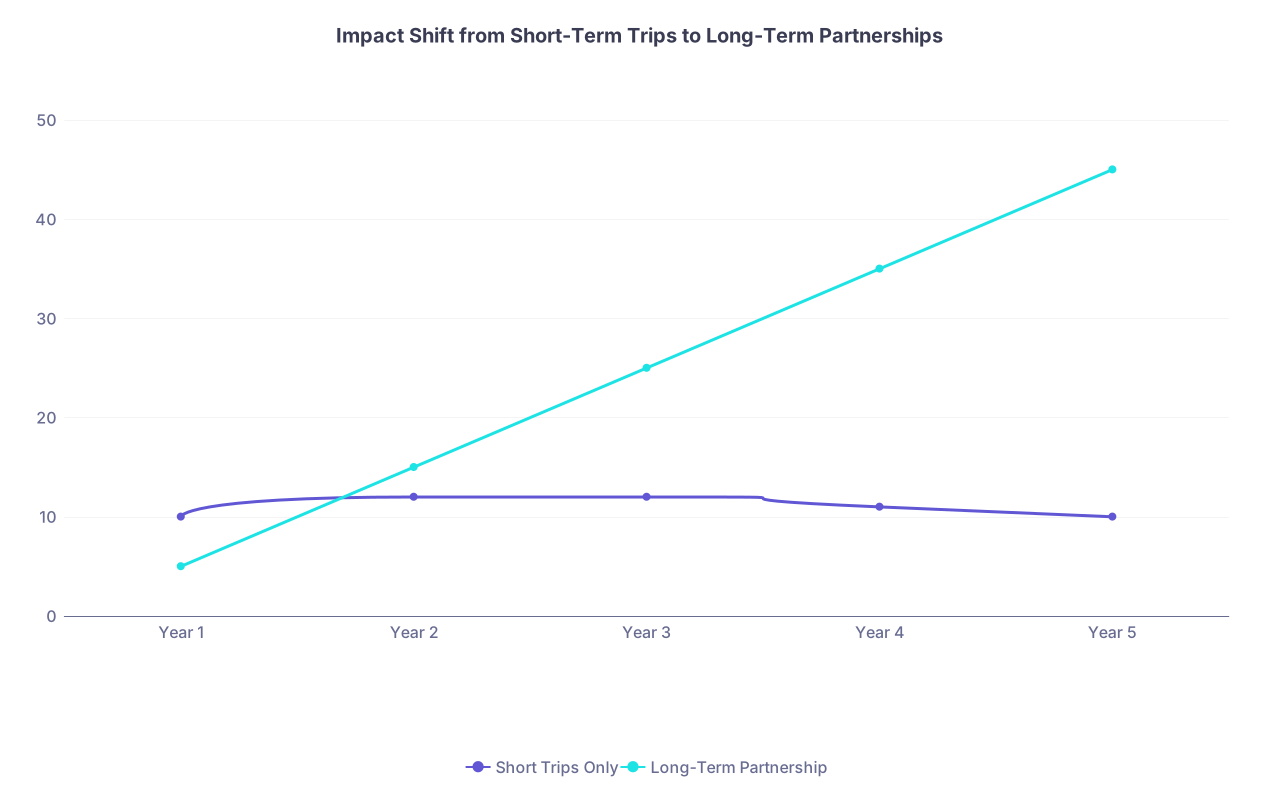
| Category | Short Trips Only | Long-Term Partnership |
|---|---|---|
| Year 1 | 10 | 5 |
| Year 2 | 12 | 15 |
| Year 3 | 12 | 25 |
| Year 4 | 11 | 35 |
| Year 5 | 10 | 45 |
The goal is straightforward: make yourself obsolete. If your presence is always essential, the system is weaker, not stronger.
FAQ (Exactly 2 Questions)
1. Is it ever ethical to join a one‑time, short‑term medical mission?
Yes, but only under strict conditions. The work must be requested and shaped by local partners, integrated into existing services, and have clear continuity of care. Disaster response with established NGOs (e.g., MSF, ICRC, major humanitarian agencies) can be appropriate because they have infrastructure, protocols, and long‑term presence in crisis regions. A random church‑sponsored “medical week” with no follow‑up is almost never ethical, no matter how sincere the volunteers.
2. I am a preclinical student with minimal skills. Can I still contribute meaningfully?
You can, but not by playing doctor. Look for roles in health education, data quality improvement, logistics, or research support under strong supervision. Help with chart organization, process mapping, or patient flow. Learn from local staff instead of trying to impress them. Your most ethical contribution at this stage is humility, careful observation, and refusing to participate in unsafe or performative clinical work.
Key points:
- Vet the organization hard on local partnership, supervision, continuity of care, and financial transparency.
- Refuse any role or activity you would not be allowed to perform at home, no matter how “underserved” the setting.
- Aim for long‑term, system‑strengthening work; if that is not possible yet, at least avoid doing harm in the name of “helping.”


