

You are standing in a crowded clinic in rural Honduras. The line of patients wraps around the building. Someone hands you a stethoscope and says, “Doctor, can you see the next patient?”
You are a second-year medical student. You have never managed a hypertensive crisis alone. You have never prescribed insulin. But here, everyone seems to expect you to act like an attending.
That is the problem.
Medical missions often create pressure to work above your training level “because the need is so great.” That mindset is dangerous—for patients, for you, and for the local system. The good news: you can prevent it by designing a mission role that matches your training and skills before you ever get on the plane.
This is the playbook for doing exactly that.
Step 1: Get Uncomfortably Clear on Your Real Skill Level
You cannot design an ethical role if you are fuzzy about what you can actually do safely.
Forget your title. Ignore what your friends are doing. Strip it down:
- What can you do independently and safely?
- Where do you still need direct supervision?
- What have you never done on your own in your home setting?
Break it down by domain:
Clinical Knowledge
- What conditions are you genuinely comfortable managing at your current level?
- Can you form a differential diagnosis without someone holding your hand?
- Do you understand when to escalate or say “I do not know”?
Procedural Skills
- List procedures you have:
- Performed alone
- Performed under direct supervision
- Only watched
- If you would not be allowed to do it solo in your home hospital, you do not suddenly get to do it solo on a mission. Full stop.
- List procedures you have:
Systems and Communication
- Have you ever:
- Led a patient encounter alone?
- Delivered bad news?
- Used an interpreter effectively?
- Are you comfortable writing complete, legible notes that another clinician could safely follow?
- Have you ever:
Here is the rule I use with trainees:
If you need supervision to do something at home, you need at least that level of supervision abroad—probably more.
To make this concrete, write a two-column list:
| Task Type | Boundary Rule for Missions |
|---|---|
| Independent at home | May perform independently if local system agrees |
| Supervised at home | Only with at least the same level of supervision |
| Not allowed at home | Do not do it on mission, even if asked |
| Never seen / only read about | Educational only, no direct performance on patients |
If you are not willing to say “no” to tasks in the last two rows, you are not ready to go. Or you are going for the wrong reasons.
Step 2: Map Your Training Level to Safe Mission Roles
Now we match reality to role. I am going to be blunt: a lot of mission trip advertising wildly oversells what students and early trainees should be doing. You must correct for that yourself.
Use this as a sanity check.
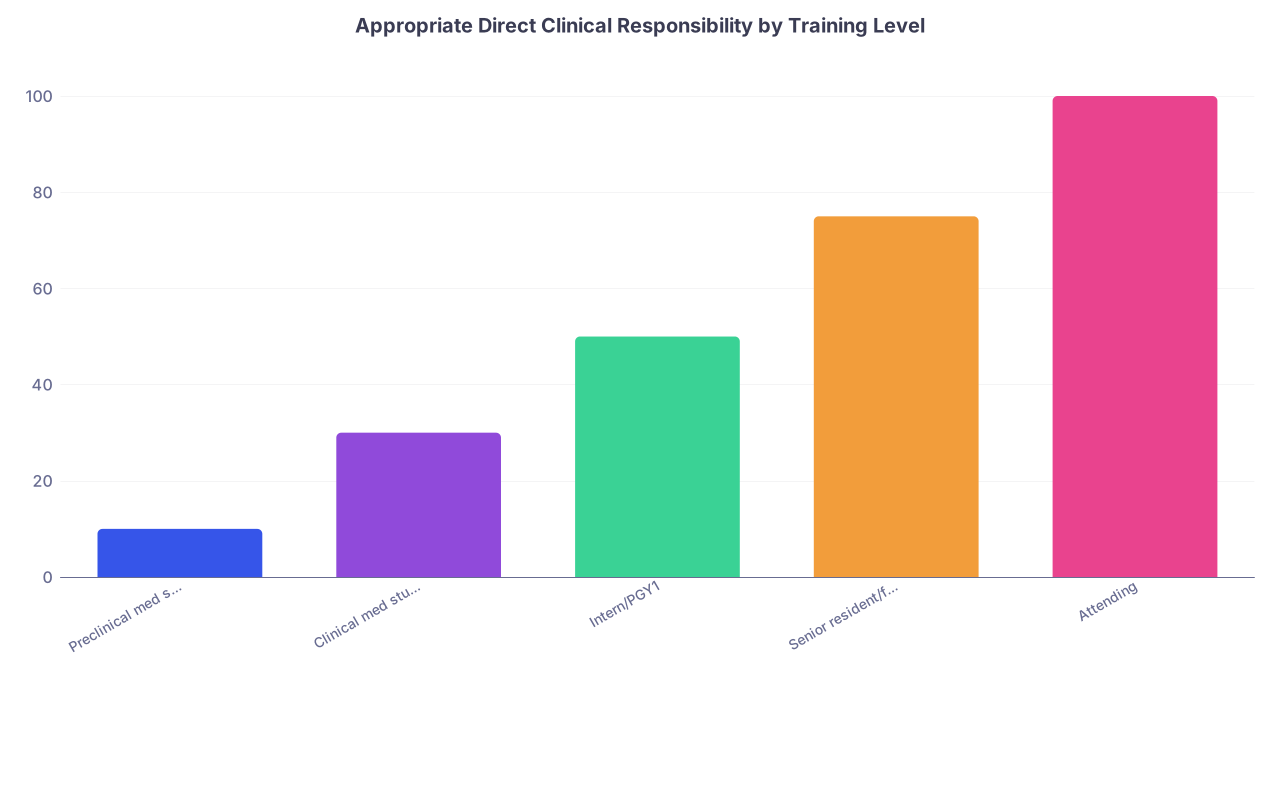
| Category | Value |
|---|---|
| Preclinical med student | 10 |
| Clinical med student | 30 |
| Intern/PGY1 | 50 |
| Senior resident/fellow | 75 |
| Attending | 100 |
Think of that “responsibility” number as the percentage of a full attending’s independent clinical role you should be taking on.
Preclinical Medical Students / Early Trainees
Your safe mission roles are primarily:
- Health education
- Screening with clear protocols
- Triage support under supervision
- Data collection, quality improvement, logistics
You are not there to “run your own clinic.” If anyone tells you that you will “get to do a lot more than at home,” that is a red flag, not a selling point.
Appropriate tasks:
- Take vitals, do basic history with structured templates
- Run group teaching on diabetes, nutrition, contraception, etc. with vetted materials
- Assist in triage following strict criteria: who is sick, who can wait
- Help with charts, inventory, pharmacy organization
Inappropriate tasks:
- Independently diagnosing and prescribing
- Doing procedures (IUD insertions, minor surgery, suturing complex wounds) that you do not do at home
- Making final decisions about who gets referred and who does not
Clinical Medical Students (Clerkship and Sub-I)
Now you can do more—as long as it is consistent with how you work at your home institution.
Appropriate roles:
- See patients first, present to supervising clinician
- Write notes and draft plans that are reviewed and co-signed
- Perform basic procedures you do at home with supervision (simple suturing, venipuncture)
- Discharge teaching, medication counseling, follow-up planning
Still not appropriate:
- Running an “independent” clinic
- Being the sole clinician on a shift, even in a “low acuity” area
- Making unilateral decisions about starting high-risk meds without review
Intern / Early Resident
Now you are in a higher risk zone. Why? Because this is the point where missions often start pushing you to function like an attending.
Here is the rule I hammer:
You are never more senior abroad than you are at home.
Appropriate roles:
- First-line clinician with immediately available supervising physician
- Managing bread-and-butter cases you handle at home (simple pneumonia, stable asthma, basic prenatal visits) with easy escalation
- Teaching students, but within your scope
- Participating in call systems where you are backed up by a local or mission attending
Inappropriate:
- Being the only doctor at a remote site, even for “just a clinic day”
- Performing procedures that only attendings do at home, even if local staff ask (e.g., C-sections if you only assisted, no solo experience)
- Making end-of-life or resource-allocation decisions on your own
Senior Resident / Fellow / Attending
If you are at this level, you can carry more responsibility—but the ethical constraints do not disappear.
Your role should be:
- Clinician within the local system, not above it
- Supervisor of trainees in ways that match your home roles
- Capacity builder—training local staff on what they request, not what you want to show off
But even as an attending, you do not suddenly practice outside your specialty. A US-trained internist does not become an obstetrician just because there is only one fetal heart doppler and three women in labor.
Step 3: Design Your Role With the Host, Not For the Host
This is the step people skip. They sign up, buy plane tickets, and then “figure it out when they get there.” That is how scope creep and harm happen.
You need a pre-departure role negotiation with the host institution. Not with the US sending organization alone. With the local clinical leadership.
Use a simple, explicit template and send it before you finalize anything.
Role Definition Checklist (Send This Email)
Subject: Proposed Role and Scope for [Your Name], [Training Level]
Your background
- Current role (e.g., 3rd year medical student, IM PGY2)
- Languages you speak and fluency level
- Specific skills and procedures you perform independently at your home institution
- Specific skills you perform only with supervision
Proposed core responsibilities
- Example for a 3rd year student:
- See patients with supervising clinician
- Perform H&P, propose plan
- Assist with charting
- Provide patient education sessions on [topics]
- Example for an IM PGY2:
- Staff general medicine clinic with local physician
- Manage stable chronic disease follow-ups
- Assist with inpatient rounds under local attending
- Example for a 3rd year student:
Explicit boundaries
- “I will not function as an independent attending physician.”
- “I will not perform procedures that I am not credentialed to perform at my home institution.”
- “All prescriptions and final management decisions will be made or co-signed by a licensed local clinician or designated supervising physician.”
Clarifying questions
- Who will be my direct clinical supervisor on site?
- What types of patients do you expect me to see?
- Are there tasks you were hoping I would perform that I have not listed?
If the host replies with “You can do whatever you are comfortable with,” you push back. Politely, but firmly. You ask them to specify what clinicians at your level usually do in their system.
Step 4: Build Yourself a Scope of Practice Document
Verbal agreements evaporate under pressure. People forget. The line gets longer. Someone urgent walks in. Suddenly, you are doing things you never agreed to.
You need a one-page scope of practice for yourself. Yes, like an advanced practice provider would have.
Sections to include:
Identity and Level
- “I am [Name], a [Training Level] from [Institution]. I am not licensed to practice independently.”
Supervision Structure
- “My direct clinical supervisor is [Name, Role]. They must be available for direct questions on-site whenever I see patients.”
Allowed Activities
- Assessment tasks you can do
- Procedures you can perform (if any)
- Teaching or non-clinical roles
Explicit Prohibitions
- Independent prescribing
- Independent procedures beyond your training
- Making triage or resource-allocation decisions alone
Escalation Triggers
- Examples:
- Any child under 5 with respiratory distress
- Pregnant patients with bleeding or severe headache
- Chest pain, altered mental status, suspected sepsis
- Examples:
Print this, carry it with you, and send it to your home institution and the host beforehand.
Step 5: Anticipate and Block the “Do More” Pressure
You will be pressured to work above your level. It will not always be malicious. Sometimes it will be a local nurse saying, “Doctor, please, just put in this chest tube, the surgeon is not here.” Sometimes it will be your own US team leader with a “this is your chance to really step up” speech.
You are responsible for your line. Not them.
Here is how you protect it.
Script Your Lines in Advance
When you are stressed, you will default to compliance. So prepare language ahead of time.
Examples:
- “I am a medical student; I am not licensed to treat independently. I need to discuss this with my supervising physician.”
- “Where I train, residents at my level do not do this procedure alone. I cannot safely do it here either.”
- “I want to help, but if I do this beyond my training, I increase the risk to the patient. We need someone with more experience or a different plan.”
If someone insists, you escalate:
- To your supervising physician
- To your home institution contact
- To the mission organization’s medical director
Set “Red Zone” Scenarios Beforehand
Write down a short list of automatic no situations. These are things you will refuse, no matter the circumstances.
Examples:
- Performing surgery you have never done independently at home
- Starting chemotherapy or high-risk medications you are not trained to manage
- Being the only clinician responsible overnight in a facility without backup
If you do not define your red zones, the mission setting will define them for you. Usually badly.
Step 6: Match Your Role to System Needs, Not Your CV
The mission is not about “maximizing your clinical experience.” It is about serving a local system ethically.
Sometimes that means the most ethical role for a PGY3 is running teaching sessions and protocol development, not seeing 60 patients a day.
You should be asking:
- What gaps has the local leadership identified?
- Where will my level of training actually add value without disrupting their system?
- What will continue after I leave?

| Step | Description |
|---|---|
| Step 1 | Self assessment |
| Step 2 | Map training to safe tasks |
| Step 3 | Discuss with host institution |
| Step 4 | Define written scope |
| Step 5 | Identify red zone scenarios |
| Step 6 | Execute role with ongoing reflection |
Examples of Ethically Appropriate Roles by Level
| Level | Sample Role Focus |
|---|---|
| Preclinical student | Education, screening, logistics |
| Clinical student | Supervised patient care, teaching |
| PGY1–2 | Direct care with strong backup |
| Senior resident/fellow | Complex care, local staff training |
| Attending | System support, supervision, QI |
You are allowed to decide that a trip that only offers unsafe roles is not one you will join. Walking away is not cowardice. It is ethics.
Step 7: Align With Ethical Guidelines and Your Home Institution
You should not be doing this alone in a vacuum. There is actual guidance out there: WHO, global surgery groups, major universities, etc. Almost all of them converge on a few points:
- Do not practice beyond your competencies.
- Respect local standards and supervision structures.
- Focus on sustainability and capacity building, not volume.
If your medical school or residency has a global health office, use them. Ask them to:
- Review the mission site and host organization
- Review your proposed role and scope document
- Confirm that your malpractice coverage applies (or does not)
If your institution has no idea what you are doing and provides no oversight, that is another red flag. Ethical global health work does not happen in a silo.
Step 8: Build Feedback Loops During and After the Trip
Even if you plan perfectly, reality is messy. Your role will drift if you do not keep pulling it back.
Daily Micro-Debriefs
At the end of each day, ask yourself:
- Did I do anything today I would not be allowed to do at home?
- Was there any moment I felt out of my depth but kept going anyway?
- Did I say “I do not know” and escalate when I should have?
If the answer to any of these makes you uncomfortable, you adjust the next day. You speak with your supervisor and move your line back to where it belongs.
Structured End-of-Trip Review
Within a week of returning, do three things:
- Write a short, honest reflection that includes:
- Specific situations where your role stayed in-bounds
- Specific situations where it drifted or was pressured
- Send that to:
- Your home institution mentor
- The host site contact (where appropriate)
- Adjust your scope and negotiation strategy for any future trips
This is not about guilt. It is about tightening the system for next time.
Step 9: Case Examples – What Right and Wrong Look Like
You learn faster from specifics than from abstract rules. So here are two composite cases I have seen versions of repeatedly.
Bad Scenario: The “Fake Attending” Med Student
- 4th year US med student
- Advertised role: “Assist local physicians in clinic”
- Reality on site: Local doc leaves after first day, student is told “You can handle follow-ups, we trust you”
- Student ends up:
- Adjusting antihypertensives alone
- Starting new diabetes meds without lab capacity for proper monitoring
- Being asked to “do a D&C” after only seeing one once in the OR at home
Ethical fix if this student had followed the protocol:
- Clear written scope: no independent prescribing, no procedures beyond home experience
- Pre-trip question: “Who is physically present to supervise daily?”
- On day 2, when doc leaves: student says, “I cannot safely continue to see patients without supervision,” calls home institution, and either:
- Gets different supervision arranged
- Restructures role to non-clinical support
- Leaves the clinical setting if no safe option
Better Scenario: The “Capacity Builder” PGY2
- Internal medicine PGY2 going to a district hospital in Malawi
- Pre-trip:
- Sends detailed skills list: comfortable with ward management of pneumonia, heart failure, TB with established protocols; not trained in HIV regimen selection
- Host responds: “We need help on inpatient ward, particularly with sepsis protocols and discharge planning.”
- Scope:
- Round on patients with local MO (medical officer)
- Propose plans; local MO makes final call
- Lead two teaching sessions per week on sepsis bundles and documentation
- On site:
- When night coverage is short, local staff ask PGY2 to take overnight call solo. PGY2 declines: “I do not provide solo overnight coverage at home; I would not be safe here. I can help during the day and assist with protocol development.”
Result: Patients are managed within a functioning supervision structure, local staff gain protocols they asked for, no one pretends the PGY2 is a consultant.
Step 10: Document Honestly on Your CV and In Interviews
One more piece people rarely talk about: how you present this later. The way you describe your mission work should reflect the same honesty and boundaries you practiced on site.
Do not write:
- “Ran independent clinic in rural Guatemala”
- “Performed minor surgeries in Uganda”
If you were supervised, say so:
- “Assisted in outpatient clinics under supervision of local physicians”
- “Participated in supervised management of inpatient medical patients”
- “Developed and delivered teaching on diabetes management to local nursing staff in collaboration with site leadership”
Interviewers who know global health will ask follow-ups. They will sniff out exaggeration. They will absolutely recognize if you practiced beyond your level and think it was impressive rather than concerning.
Quick Visual: What You Are Really Doing
You are not trying to maximize procedures or stories. You are trying to sit at the intersection of three circles:
- What the host system truly needs
- What your training and competency safely allow
- What is ethically defensible and sustainable
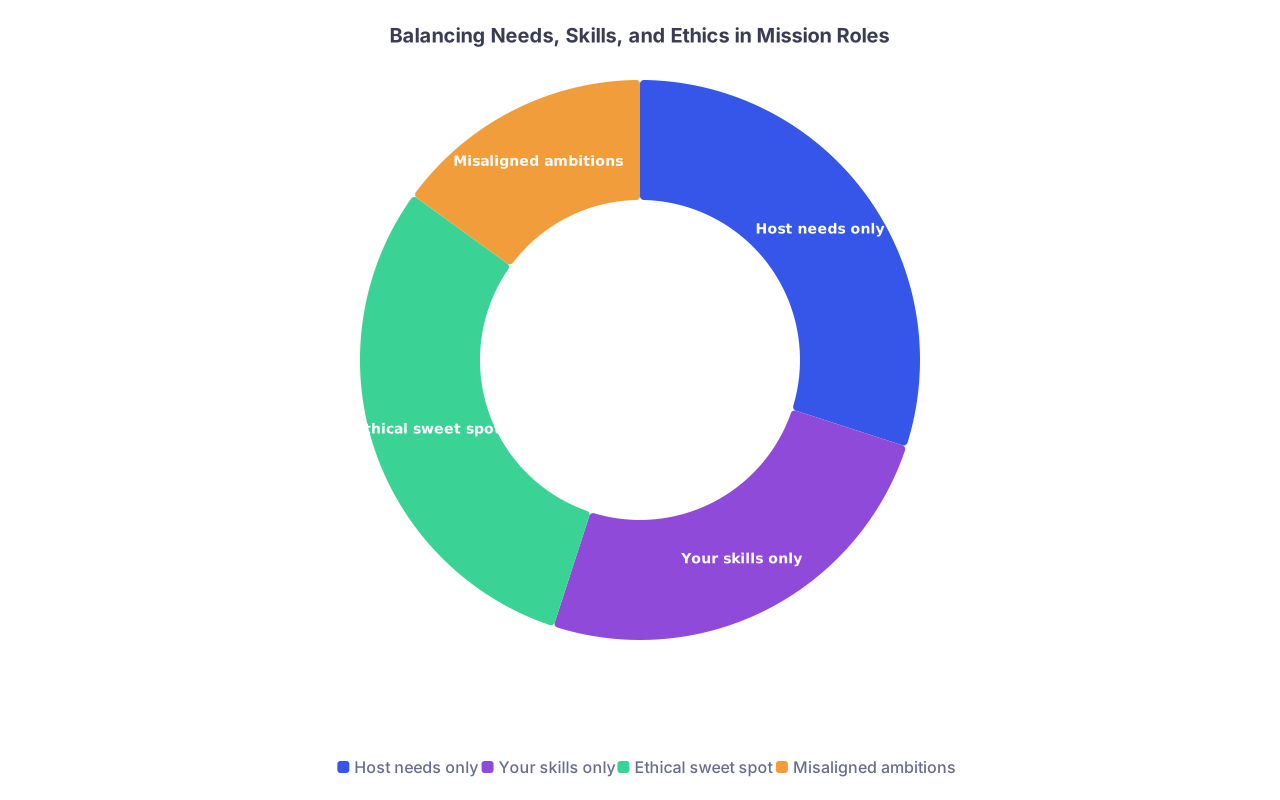
| Category | Value |
|---|---|
| Host needs only | 30 |
| Your skills only | 25 |
| Ethical sweet spot | 30 |
| Misaligned ambitions | 15 |
Your job is to live in that ethical sweet spot, even when the pressure pulls you elsewhere.
Two More Things Before You Go
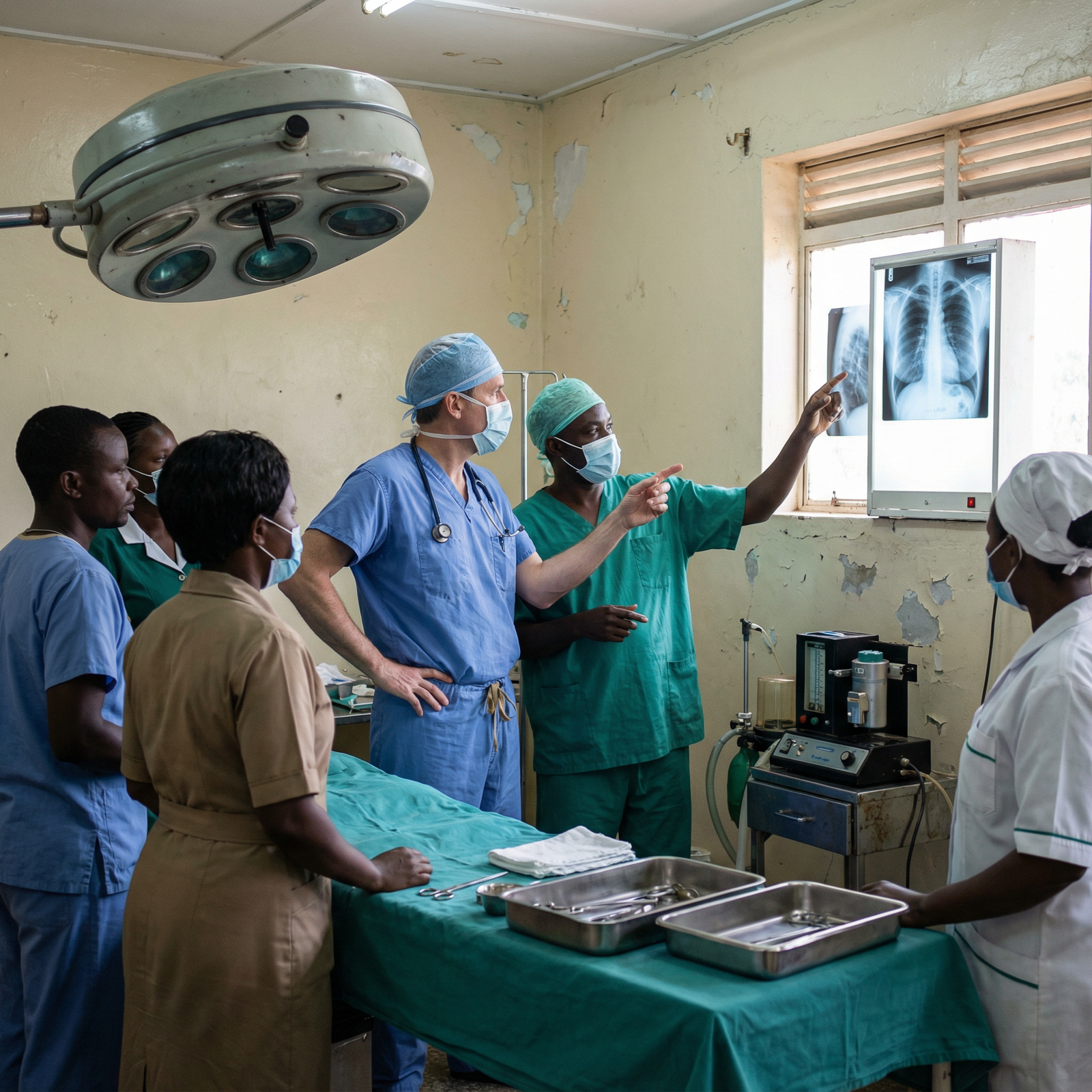
If the only way a mission trip makes sense is by letting trainees play attending, it is a bad mission model. You do not fix that from the inside by participating. You walk away.
“But they have nothing else” is not a justification for unsafe care. That line usually hides the real statement: “We did not invest the time to build a better system with them.”
Ethical global health is slower. Less glamorous. More honest. You will do fewer dramatic procedures and more boring teaching sessions, protocol reviews, and careful, supervised clinic days.
That is fine. That is medicine.
And if you design your mission role to match your training and skills, that is where you actually help.
Key points to keep:
- You are never more senior abroad than you are at home. Match your mission role to your actual supervised scope, not your ego or the marketing brochure.
- Define and document your scope of practice with the host before you arrive, including explicit “no-go” tasks and red-line scenarios.
- When pressure hits, stick to your lines. If a trip requires you to violate them to function, the problem is the trip design—not your ethics.


