

Most medical missions are one bad medication plan away from causing more harm than good.
You can have top-notch clinicians, great intentions, and plenty of funding. If your medication plan is sloppy, you risk unsafe prescribing, drug shortages mid-clinic, expired meds, resistance problems, and ethical landmines you will not fix with an apology later.
You want a mission that is safe, ethical, and actually helpful? Build a medication plan like a professional operation, not a last‑minute donation grab.
Here is a step‑by‑step framework I have seen work in real missions—including the messy ones with unreliable supply chains, language barriers, and no electronic records.
Step 1: Define Your Clinical Scope Before You Touch a Drug List
Most teams start at the wrong end: they compile a random “mission formulary” based on donations or what someone used five years ago in Guatemala. That is backwards.
You must define what you will and will not treat. Then build medications around that.
Ask and answer, in writing:
- What age groups will we see? (pediatrics, adults, pregnant women, all?)
- What top 10–15 conditions do we expect to treat?
- What will we explicitly not manage on site (e.g., chemotherapy, complex heart failure, long‑term insulin initiation)?
- What acute emergencies can we stabilize and transfer?
If you do not know what you are treating, you cannot rationally pick medications or quantities.
Talk to:
- Local clinicians (physicians, nurses, pharmacists)
- The local ministry of health representative if available
- Any partner clinic/hospital that will receive your referrals
Keep this scope tight. Mission creep is your biggest safety risk.
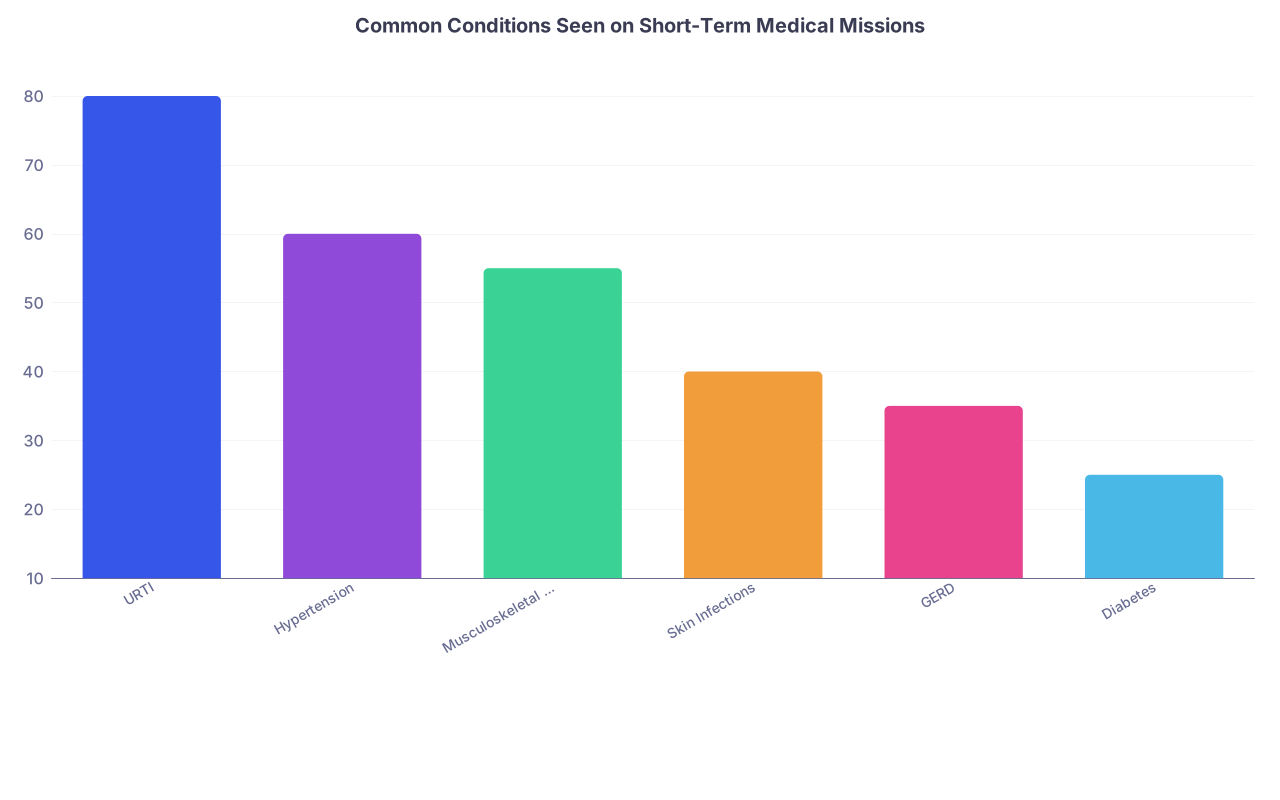
| Category | Value |
|---|---|
| URTI | 80 |
| Hypertension | 60 |
| Musculoskeletal Pain | 55 |
| Skin Infections | 40 |
| GERD | 35 |
| Diabetes | 25 |
From that scope, list:
- Conditions you will treat fully (e.g., uncomplicated UTI, scabies, mild asthma exacerbation).
- Conditions you will only stabilize and refer.
- Conditions you will not touch beyond counseling.
Put it on paper. Share it with your team. This becomes the fence for every medication decision.
Step 2: Build a Lean, Safe, Context‑Specific Formulary
Now you create a small, rational formulary matched to your defined scope and the local reality.
2.1. Anchor to local standards, not your home country
You are not importing a miniature US/UK/Canada clinic. You are stepping into an existing health system.
You need to know:
- What medications are on the local essential medicines list (EML)?
- What drugs are actually available locally in pharmacies and government facilities?
- What brands or formulations are commonly recognized?
Your rule of thumb:
If a medication cannot be reasonably continued or obtained locally, be very cautious about starting it.
Especially for:
- Antihypertensives
- Diabetes meds
- Antidepressants / antipsychotics
- Antiepileptics
- Inhalers
2.2. Prioritize fewer drugs, in safer classes
You want simplicity and redundancy. A tight list is safer than a broad one you barely understand in that context.
For each major condition (hypertension, GERD, UTI, etc.), pick:
- 1 first‑line drug
- 1 backup, only if you can justify it
Example for adult hypertension in a low‑resource setting:
- First‑line: amlodipine
- Backup: hydrochlorothiazide (if accepted locally)
Not 6 different blood pressure meds because “someone donated them.”
2.3. Use a structured formulary table
Create an internal formulary sheet with:
| Condition | Drug (Generic) | Form / Strength | Standard Adult Dose | Comments |
|---|---|---|---|---|
| Hypertension | Amlodipine | 5 mg tablet | 5–10 mg PO daily | First line |
| GERD | Omeprazole | 20 mg capsule | 20 mg PO daily | Limit to 30 days |
| Bacterial skin | Cephalexin | 500 mg capsule | 500 mg PO q6h | 5–7 days max |
You then expand this to pediatrics, special populations, and add “do not use in pregnancy / renal failure” flags.
Step 3: Quantify Safely—How Much to Bring and What to Refuse
Once you know what you want, you need to decide how much. Guessing is how you end up short of essential meds and stuck with suitcases of useless vitamins.
3.1. Start with realistic patient and condition estimates
Use:
- Planned clinic days
- Expected patients per day
- Local partner’s data from prior years or similar clinics
Example:
- 5 clinic days
- 120 patients per day
- Total ≈ 600 patient encounters
If prior missions or local partners tell you:
- ~30% respiratory / ENT
- ~20% musculoskeletal pain
- ~15% GI complaints
- ~20% chronic (HTN, diabetes)
- Rest mixed
Now you can estimate conditions and then map that to prescriptions.
3.2. Use a simple quantity calculator
Take, for a chronic med such as amlodipine:
- Suppose 15% of 600 patients have hypertension → 90 patients
- Conservatively assume you will initiate or adjust meds in half → 45 patients
- If you ethically limit to a 30‑day supply plus written local continuation plan:
- 45 patients × 30 tablets = 1350 tablets
- Add 15–20% buffer for breakage/extra need → ~1600 tablets
Do this for each core drug, especially:
- Antibiotics
- Analgesics
- Antihypertensives
- Diabetes meds
- Asthma meds
Document your calculation. When customs or donors question your numbers, you have a rational basis.
3.3. Say no to donations that do not fit the plan
This is where weaker teams cave.
You must reject:
- Near‑expiry drugs you cannot fully and safely use
- Medications unavailable locally for continuation (chronic meds especially)
- Drugs outside your scope (e.g., chemotherapy, advanced biologics)
- Multi‑ingredient “mystery” combinations with unclear dosing
Taking bad or off‑scope meds because “they are free” is ethically lazy. And it can be dangerous.
Step 4: Design an Ethical Policy for Chronic Medications
This is where medical missions routinely cross ethical lines. Starting chronic meds with no realistic continuity is not “kindness.” It is destabilization.
You need a written chronic care policy that answers:
- When will we initiate long‑term medications?
- Under what conditions will we not start them?
- How will follow‑up, refills, and monitoring happen after we leave?
Here is a practical structure.
4.1. Classify meds into 3 continuity categories
| Category | Description | Examples |
|---|---|---|
| A | Safe to start, good local continuity | Amlodipine, metformin, HCTZ |
| B | Start only with strong local linkage | Insulin, SSRIs, antiepileptics |
| C | Do not start on short mission | Biologics, complex anticoag plans |
For each Category A med, confirm:
- It is on the local EML.
- It is reliably available and affordable locally.
- Local clinicians agree with your use and dosing.
For Category B:
- Only start if you are handing off directly to a local clinician or facility that commits to follow‑up.
- Provide clear documentation and patient education.
For Category C:
- Manage symptomatically.
- Arrange referral if truly needed.
- Do not create therapy‑dependent situations the system cannot support.
4.2. Time‑bound prescriptions
For chronic conditions:
- Write for no more than 30–90 days of medication.
- Include a clear message to the patient and in your notes:
- “This is a temporary supply. You must see Dr. X at Clinic Y by [date] for ongoing management.”
Avoid six‑month or year‑long supplies. They look generous. They create false security and delay engagement with the local system.
Step 5: Build Safety into Your Prescribing Process
Let me be blunt: dosing errors, contraindicated combos, and allergy misses happen more on missions than in your home clinic. Because:
- New team members
- Fatigue
- Language barriers
- Paper charts
- Unfamiliar drug names/brands
You fix that by building guardrails.
5.1. Standardized dosing guides
Create mission‑specific dosing sheets, laminated and placed at every prescribing station and the pharmacy.
Each entry should include:
- Adult dosing
- Pediatric dosing by weight band (not by age guess)
- Maximum daily dose
- Pregnancy / breastfeeding cautions
- Renal adjustment notes if relevant
Example (trimmed):
- Amoxicillin (peds):
- 40–50 mg/kg/day divided q8h
- Weight bands: 10–14 kg → 125 mg TID, 15–19 kg → 250 mg TID, etc.
Do not trust people to “remember” correct pediatric dosing under pressure.
5.2. Required minimum data on every chart
For each patient, require:
- Weight (measured that day if possible)
- Pregnancy status (for women of childbearing age)
- Allergies and specific reactions
- Current medications (including traditional/herbal if relevant)
If any of these are blank, no prescription. This is your internal rule.

| Step | Description |
|---|---|
| Step 1 | Patient evaluated |
| Step 2 | Weight recorded |
| Step 3 | Allergies documented |
| Step 4 | Pregnancy status checked |
| Step 5 | Current meds noted |
| Step 6 | Hold prescribing and complete data |
| Step 7 | Use dosing guide and prescribe |
| Step 8 | All safety data complete |
5.3. Pharmacy‑level double check
Set up a system where:
- Prescriber writes a clearly legible order.
- Pharmacy team checks:
- Drug indication matches complaint/diagnosis.
- Dose is within the mission dosing guideline.
- Allergies and interactions are reviewed.
- Any concern triggers a quick question back to prescriber.
You want respectful friction here. Not rubber stamping.
Step 6: Make Patient Education Non‑Negotiable
Handing a bag of pills with no explanation is lazy. Or worse.
Your medication plan must include a robust, structured education process that is:
- Language‑appropriate
- Culturally realistic
- Repeated and reinforced
6.1. Use pictorial and simple written instructions
Most missions work with varied literacy levels. So:
- Use pictograms (“sun” for morning, “moon” for night).
- Draw simple dose diagrams (one tablet × 2 times per day).
- Use color codes on bags only if you can do it consistently and explain it clearly.

6.2. Teach-back method
Train everyone: no patient leaves with meds without teach‑back.
Basic script:
- Explain the medication and indication briefly.
- Ask: “Can you show me how you will take this medicine?”
- Correct any misunderstandings gently.
- Repeat once more if needed.
Yes, this takes time. It prevents overdoses, missed doses, and mixed‑up meds. It is also basic respect.
6.3. Align instructions with cultural and daily reality
Ask:
- When do people usually eat?
- Are there norms about medicines during fasting or religious events?
- How do they store medications at home (no refrigeration? children present?)
If refrigeration is unreliable, your insulin plan changes. If “three times daily with meals” does not map to how people actually eat, adjust.
Step 7: Integrate with Local Systems, Records, and Follow‑Up
You are not the main character in this story. The local health system is.
Your medication plan must feed into that system, not override it.
7.1. Use documentation that local providers can read later
Every patient should leave with:
- A simple summary sheet that includes:
- Working diagnosis
- Medications prescribed (generic name, dose, duration)
- Any chronic meds started or changed
- Next steps or referrals
And ideally, a copy stays with:
- The local clinic
- Or scanned/photographed into a simple records system (even if it is just a shared secure folder with local partners)
Avoid cryptic abbreviations and specialty jargon.
7.2. Pre‑arrange referral and follow‑up pathways
Decide before you travel:
- Which local clinic/hospital will receive follow‑ups from your mission?
- What is the process? Are there set days or contacts?
- Will your team debrief specific complex cases with them at the end?
Then bake this into your medication decisions.
Example:
- You see a new diabetic with very high sugars, symptomatic, but not in DKA.
- Your options:
- Start metformin with careful instructions and arrange follow‑up at Clinic X in 2 weeks.
- Or if follow‑up is uncertain, refer immediately to Clinic X the same week.
- What you do depends completely on the reliability of that pathway.
Step 8: Handle High‑Risk Drugs with Extra Discipline
Some medication classes deserve red flashing lights on missions. Because an error or misjudgment is not “small.”
8.1. Antibiotics
Misuse on missions is epidemic. The usual sins:
- Antibiotics for viral URTIs
- Wrong duration
- Using broad‑spectrum agents when narrow would work
- Using drugs that do not match local resistance patterns
Your protocol:
- Adopt local or WHO antibiotic guidelines as your default.
- Decide in advance:
- First‑line for UTI, skin infection, pneumonia, etc.
- Require a diagnosis or reasonable suspicion of bacterial infection, not just “they are sick.”
For each antibiotic, define:
- Indications
- Dose
- Duration (e.g., 5 days vs 7 vs 10)
No “PRN” antibiotics like a party favor.
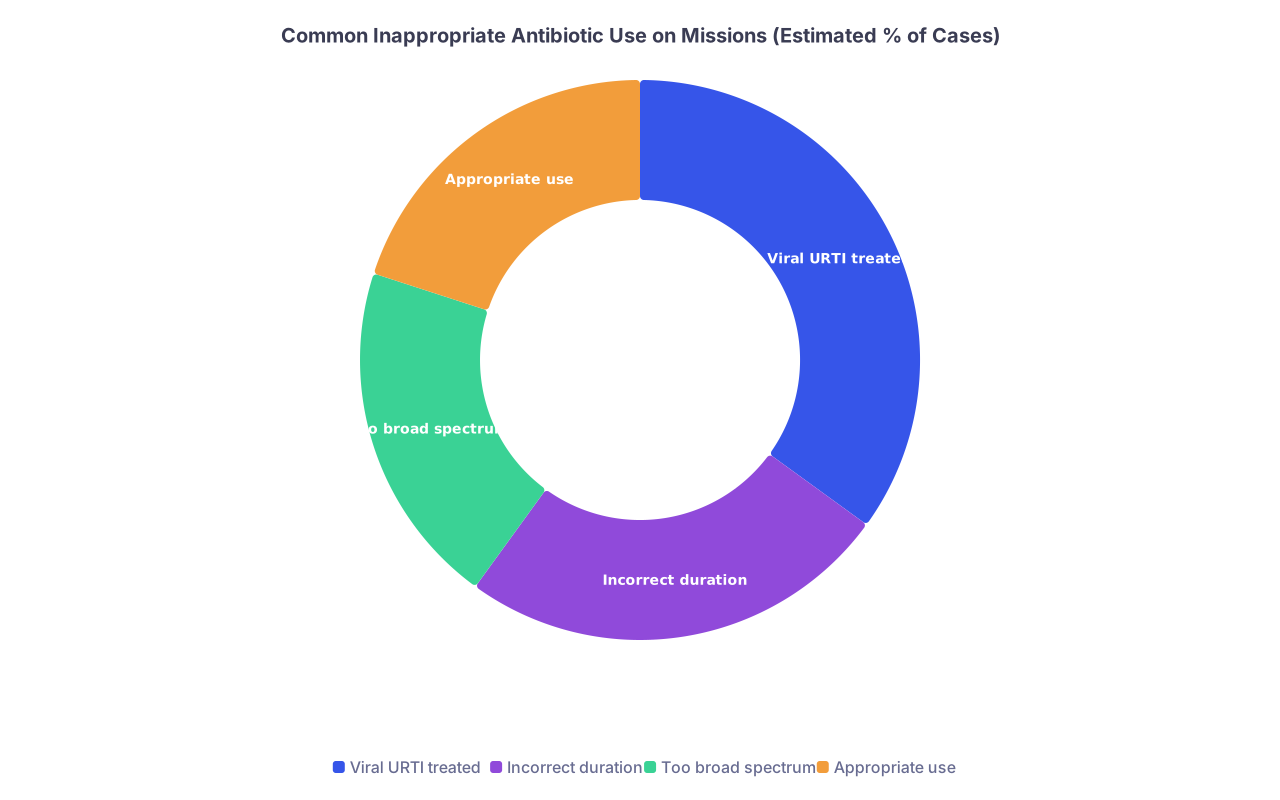
| Category | Value |
|---|---|
| Viral URTI treated | 35 |
| Incorrect duration | 25 |
| Too broad spectrum | 20 |
| Appropriate use | 20 |
8.2. Controlled substances and sedatives
Unless you have a clear, legally compliant system:
- Avoid bringing opioids for outpatient use.
- Avoid benzos for sleep or anxiety “because they are suffering.”
If used at all (e.g., for procedural sedation in a well‑equipped, partnered facility):
- Strict inventory logs
- Two‑person sign‑out
- Locked storage
- Clear indication logs
Otherwise, leave them home.
8.3. Insulin and complex endocrine regimens
Starting insulin on a 5‑day mission with no guaranteed follow‑up and unreliable refrigeration is often unethical. You might justify:
- Adjusting existing regimens
- Providing short‑term bridging with strong local linkage
But casually starting insulin with a paper instruction sheet and a handshake? That is how you create preventable hypoglycemia crises.
Step 9: Build a Real Supply Chain and Inventory System
You need pharmacy discipline, not “pile of pill bottles on a table.”
9.1. Separate storage, dispensing, and prescribing zones
At minimum:
- Storage area: bulk meds, temperature-aware, locked at night.
- Dispensing area: pre‑packing, labeling, patient handoff.
- Prescribing area: where clinicians write orders—not where patients pick them up.

This physical separation prevents chaos, theft, and errors.
9.2. Inventory logging
You at least need:
- A simple spreadsheet or logbook with:
- Drug name (generic)
- Strength
- Quantity received
- Quantity dispensed daily
- Quantity remaining
- Expiry date
At the end of each day:
- One person from the team + one local partner review the counts.
- Adjust if you are burning through critical meds too fast.
- Shift prescribing if needed (e.g., preserving a particular antibiotic for reserved indications).
9.3. Handling leftovers ethically
Your options at mission end:
- Transfer suitable meds (in-date, locally used, properly labeled) to a local clinic under their control.
- Document what you transfer, to whom, and what they agreed to do with it.
- Do not dump near‑expiry or unfamiliar meds on them just to clear your bags.
If a drug is not appropriate for local use or near expiry, you are responsible for proper disposal, not the host community.
Step 10: Train Your Team Before You Fly
A safe medication plan lives or dies on how well your team understands and follows it.
You cannot improvise this on the plane.
10.1. Pre‑departure training agenda
At least 2–3 dedicated sessions, covering:
- Scope of practice and “what we do NOT treat”
- The mission formulary and dosing guide
- Chronic medication policy
- Antibiotic stewardship rules
- Documentation standards
- Patient education and teach‑back
Use real cases:
- “50‑year‑old with chronic knee pain wants opioids.”
- “Parent requests antibiotics for a child with clear viral URI.”
- “Newly discovered BP 180/110, no access to regular follow‑up.”
Have people talk through what they would prescribe—or not—and why.
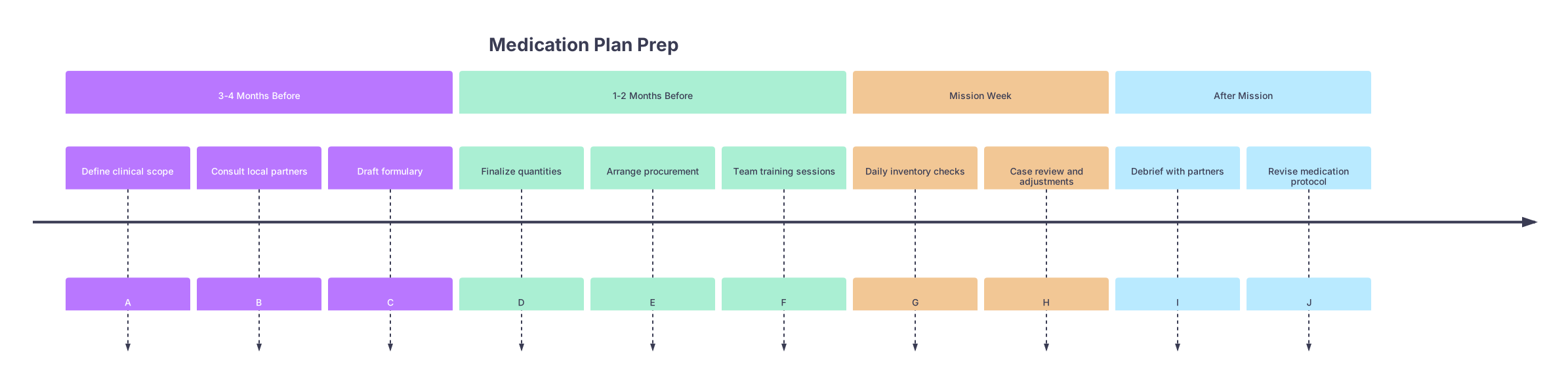
| Period | Event |
|---|---|
| 3-4 Months Before - Define clinical scope | A |
| 3-4 Months Before - Consult local partners | B |
| 3-4 Months Before - Draft formulary | C |
| 1-2 Months Before - Finalize quantities | D |
| 1-2 Months Before - Arrange procurement | E |
| 1-2 Months Before - Team training sessions | F |
| Mission Week - Daily inventory checks | G |
| Mission Week - Case review and adjustments | H |
| After Mission - Debrief with partners | I |
| After Mission - Revise medication protocol | J |
10.2. Give people tools, not just rules
Provide:
- Pocket dosing cards or a digital PDF that works offline.
- Sample scripts for difficult conversations:
- Turning down inappropriate antibiotic requests.
- Explaining why you will not start a risky chronic med.
- Clear escalation paths:
- “If you are not sure about a prescription, ask X or Y” (designate a clinical and a pharmacy lead).
Step 11: Monitor, Debrief, and Improve
If you do not review your medication use after the mission, you are guessing you did well. That is not enough.
11.1. Track a few key safety indicators
Even simple counts tell you a lot:
- Total antibiotic prescriptions / total patients
- % of visits where chronic meds were started
- Number of documented medication errors or near misses
- Number of cases requiring referral due to medication issues
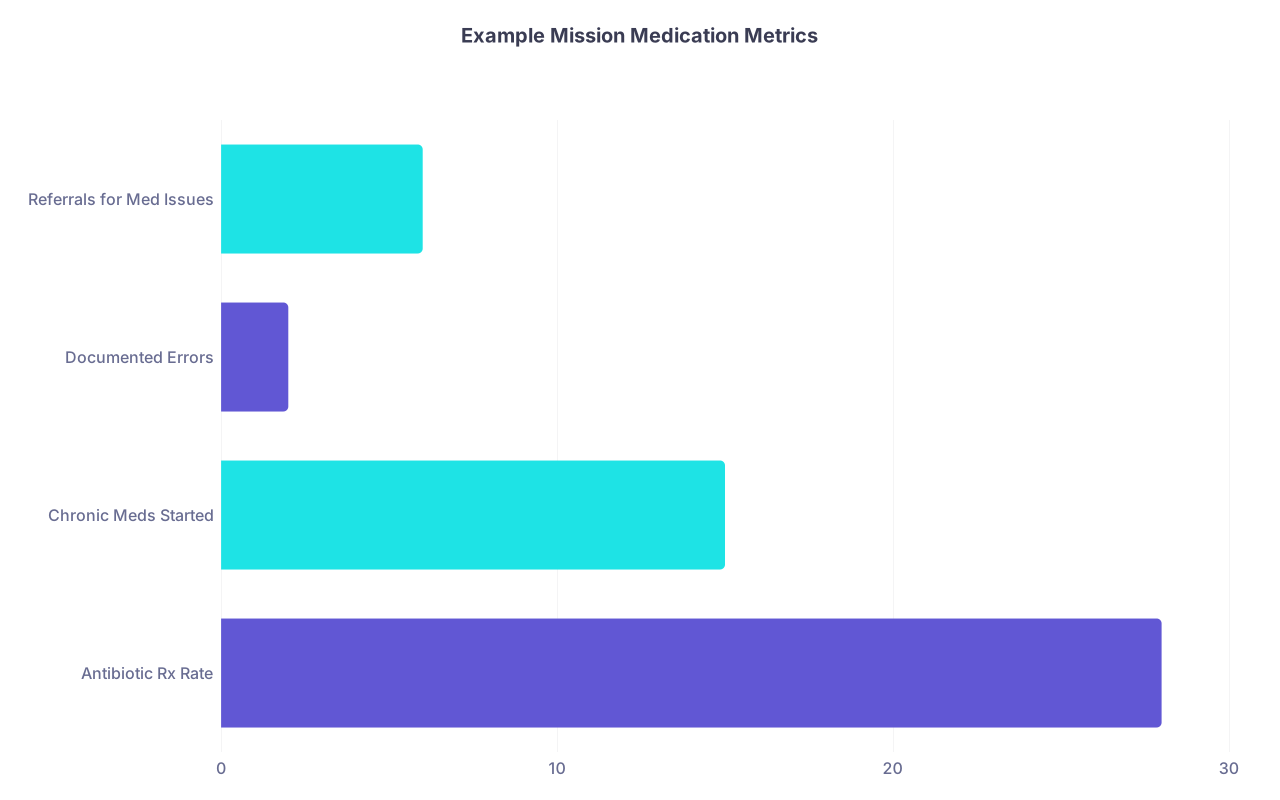
| Category | Value |
|---|---|
| Antibiotic Rx Rate | 28 |
| Chronic Meds Started | 15 |
| Documented Errors | 2 |
| Referrals for Med Issues | 6 |
Compare across missions. If your antibiotic rate is 70% of patients, something is badly off.
11.2. Debrief with brutal honesty
After returning:
- Hold a focused medication debrief:
- What went wrong?
- What surprised you?
- Where did you almost hurt someone?
- Involve:
- Local partners
- Pharmacists
- Nurses
- Interpreters (they often hear patient confusion you do not)
Use that to adjust:
- Your formulary
- Your chronic med policy
- Your education approach
This is how your “safe medication plan” becomes a progressively more ethical and effective system, not just a static document.
Your next move is simple.
Open a blank document and write three headings:
- Our Clinical Scope
- Our Mission Formulary (Draft)
- Our Chronic Medication Policy
Under each heading, write exactly what your team will do—and what you refuse to do. Then send that draft to your local partner and your team pharmacist (or most medication-savvy clinician) this week and ask them to mark it up.
Do that before you order a single pill.


