

The way most people pack for short-term medical work is unsafe, inefficient, and ethically shaky. You can do better with a deliberate low‑resource clinical toolkit.
I am going to walk you through exactly how.
Not the fantasy “mission trip” bag full of random donations. A lean, field‑tested setup that respects your hosts, protects patients, and keeps you clinically effective when everything around you is unfamiliar and under‑equipped.
1. Start With Ethics, Not Gear
Before you buy a single gadget or pill cutter, you need a framework. Otherwise you will build a vanity kit, not a clinical toolkit.
Here is the ethical checklist I use for every deployment:
Does this toolkit support local care, or compete with it?
- If your bag lets you offer things the local clinic cannot continue, that is a problem.
- If your gear lets you plug into the local system (diagnostics, documentation, meds they actually stock), you are on the right track.
Can what I start be safely followed up locally?
- No advanced chronic disease regimens you know will not be refilled.
- No short‑course “band‑aid” treatments for problems that clearly require longer management that does not exist.
Am I practicing within my usual scope, or am I “up‑scoping” because no one is watching?
- Your license and training did not change on the plane.
- Your toolkit must reflect what you are qualified to manage in a low‑resource context, not what you are curious to try.
Am I documenting in a way the local system can use?
- If your notes live only in your notebook, you are doing it wrong.
- The kit should include tools that make local documentation possible (forms, stamps, templates, etc.).
Am I privileging shiny tech over reliable basics?
- An ultrasound probe that dies in a week because there is no reliable power is not “innovative,” it is useless.
- Manual devices usually beat battery‑hungry gadgets in low‑resource short stints.
Keep this frame in mind as we build the kit. If something fails the ethics test, it does not go.
2. Core Principles of a Low‑Resource Toolkit
Design rules before shopping list. Otherwise you will overpack and underperform.
I use six principles:
- Modular – Small, labeled packs you can use independently: vitals, wound care, procedures, diagnostics, PPE, admin.
- Redundant for the essentials – Two ways to check a BP. Two penlights. Extra gloves.
- Low‑tech first, smart‑tech second – If it needs stable internet or daily charging, it must justify its existence.
- Standardized – Use equipment compatible with commonly available supplies (AA/AAA batteries, generic cuffs, Luer‑lock syringes where appropriate).
- Rapidly cleanable – Smooth surfaces, minimal textile gear that soaks up fluids and stains.
- Customizable per role – A surgeon, pediatrician, family doc, and PA will not carry the same add‑ons, but the base loadout is similar.
3. The Baseline Clinical Kit: What Everyone Should Carry
Think of this as your “personal clinic in a backpack.” It is not a replacement for a facility. It bridges the inevitable gaps.
3.1 Vital Signs and Basic Assessment
If you cannot reliably assess, you will mis‑treat. This is non‑negotiable.
Pack:
- Adult manual BP cuff (durable, no built‑in electronics)
- Pediatric BP cuff (if any chance of seeing kids)
- Aneroid sphygmomanometer (metal housing, shock‑resistant)
- Stethoscope you actually know well (not your third‑best one)
- Digital thermometer (oral/axillary) with probe covers
- Portable pulse oximeter with spare batteries
- Simple tape measure (for MUAC in children, edema, wound size)
- Penlights (2) with pupil gauge markings or separate pupil card
Configure this into a single, grab‑and‑go “assessment pouch.”
3.2 Minimal Diagnostics
You cannot bring a lab. You can bring targeted tests that actually change management on the spot.
Your job is to avoid the classic mistake: lots of kits, few that matter.
High‑yield, field‑proven options:
- Urine dipsticks (protein, glucose, nitrite, leukocytes, blood)
- Fingerstick glucometer with control solution and 2–3 vials of strips
- Rapid tests matched to local disease burden (coordinate with host):
- Malaria RDT
- HIV (if you and host have clear follow‑up pathways)
- Syphilis (pregnant women especially)
- H. pylori or FOBT if GI disease is a major issue and treatment/endoscopy pathways exist
- Pregnancy tests – almost always useful
- Hemoglobin measurement:
- If feasible, microcuvette device (HemoCue‑like) with enough cuvettes, or
- Even a simple color scale hemoglobin test, if validated locally
Do not bring: exotic rapid tests for diseases no one there will treat differently after your short visit.
4. Procedural and Wound Care Mini‑Kit
Short‑term missions often devolve into wound clinics. People line up with chronic ulcers, burns, infected lacerations.
If you are not equipped to treat those safely and simply, you will either under‑treat or burn through the facility’s meager supplies.
4.1 Basic Wound Care Loadout
Focus on reusables + a limited set of high‑value consumables.
Reusable instruments (high quality, autoclave‑safe):
- 2–3 straight hemostats
- 1–2 tissue forceps (with teeth)
- 1–2 dressing forceps (atraumatic)
- 1–2 needle drivers
- 2 scissors (sharp/blunt and bandage)
- Metal kidney dish or small tray (for procedure setups)
Consumables (compact but impactful):
- Non‑adherent dressings (e.g., Telfa type)
- Roll gauze and conforming bandages (multiple widths)
- Zinc oxide or barrier cream (especially for peds and chronic ulcers)
- Small number of hydrocolloid or foam dressings for selected cases – do not make these your default
- Saline pods or small bottles for irrigation when facility lacks clean solution
- A few skin staplers only if:
- You are trained and
- Local colleagues are comfortable with staple removal and follow‑up
4.2 Procedural Safety
Short‑term work tempts people into cowboy medicine. Fight that.
Protocol:
- Only do procedures the host clinicians also perform or clearly support.
- Only use anesthesia they can restock and know how to use.
- Strict sharps rules – you bring:
- Needle disposal jar or sharps container inserts (collapsible)
- Heavy gloves for cleanup
- Alcohol hand rub for when there is no sink
| Procedure Type | You Can Do If... | Better Left to Local Team |
|---|---|---|
| Simple laceration repair | Suture materials available, follow-up assured | Complex facial, tendon involvement |
| Incision & drainage | Sterile field and follow-up visits exist | Deep abscess, proximity to vital structures |
| Nail trephination | Tools and tetanus coverage available | Complex nailbed reconstruction |
| Basic joint injection | You regularly do it at home and have US or clear landmarks | Any spine or high‑risk joint |
If you cannot guarantee the right column, stay out of that lane.
5. Medications: What You Bring vs What You Do Not
This is where people go off the rails. Suitcases full of random samples, expired drugs, U.S.‑only combinations. That is not a blessing to your hosts, it is a disposal problem.
5.1 Rules for Mission Medication
-
- Before packing, get their current list. Bring small amounts of exactly those drugs if they have supply issues.
- No “exotic” meds they will never restock.
No orphans
- Do not bring a medication if:
- There is no clear protocol for use locally and
- There is no follow‑up for chronic dosing.
- Do not bring a medication if:
Label like a professional
- Generic name, strength, route, local language if possible.
- No loose pills in unlabeled bags. Ever.
Respect local regulation
- Some countries tightly restrict opioids, benzodiazepines, hormonal contraception.
- Coordinate through the host, not your personal moral crusade.
5.2 High‑Yield Medication Categories
Your deployment length is “short‑term.” Think days to a few weeks. You are not building a pharmacy. You are building a gap‑filler.
Commonly useful (if aligned with local practice):
- Analgesics: paracetamol, ibuprofen; topical lidocaine gel
- Antibiotics: one or two broad‑spectrum choices that match local guidelines (not your home hospital favorites)
- Antihypertensives: only if you know they are regularly stocked; adjust, do not initiate them wholesale
- ORS packets and zinc for diarrhea in children
- Inhalers: short‑acting bronchodilators if asthma/COPD care exists locally
- Basic dermatologicals: antifungal creams, hydrocortisone 1% for limited courses
Pushback:
If someone on your team insists on bringing a med that cannot be continued locally, ask:
“Who will prescribe the second and third month?”
If the answer is “no one,” it stays home.
6. Documentation, Communication, and Continuity
The most underrated part of a low‑resource toolkit is the paper.
If you cannot communicate clearly with local staff and with patients, your impressive diagnostic toys do not matter.
6.1 Paper and Templates
You do not need an EMR. You need simple, rugged forms.
What to carry:
- Carbon‑copy visit sheets designed with the host (one copy for patient, one for clinic)
- Pre‑printed medication instruction sheets with pictograms (morning/noon/night, days of week)
- Blank referral forms that clearly state:
- Your findings
- What you already did
- What you are worried about
- A basic “patient card” template for chronic issues you touch (BP, DM, epilepsy) so the patient can carry their essential data
6.2 Digital Tools – Carefully Chosen
Smartphones are powerful in the field, but fragile.
Reasonable digital items:
- Offline drug reference app matched to WHO EML or host country formulary
- Offline guideline PDFs (e.g., WHO IMCI, obstetric emergency algorithms) saved locally
- A password‑protected note app for personal learning log – not primary clinical documentation
Do not build a parallel digital record no one on the ground can access after you leave.
7. Personal Protective Equipment: Protecting You Without Draining Them
You bring your own PPE. You do not burn through theirs.
Baseline PPE loadout:
- N95 or equivalent respirators (enough for expected high‑risk exposures)
- Reusable eye protection / face shield
- Light, washable gown or lab coat that can take a beating
- Nitrile gloves for your own backup, not to replace the clinic supply entirely
- Hand sanitizer (travel bottles you can refill)
The trick: You use the local system first but you have your own fallback. You are not the person begging for gloves at 4 p.m. on day one.
8. Packing Architecture: How to Physically Build the Toolkit
Most people throw everything into one bag. Then spend half the day digging.
You want a layout that lets you operate in chaos.
8.1 The Three‑Layer System
On‑body (every clinical encounter)
- Minimal vitals: stethoscope, penlight, small tape measure
- Small notebook and two pens
- Alcohol hand rub
- One or two pairs of gloves
Clinic day‑bag (lives at your side)
- Assessment pouch
- Diagnostics pouch
- Wound/procedure mini‑kit
- PPE backup
- Documentation forms and clipboard
Base kit (stays at lodging or main clinic)
- Bulk supplies
- Extra meds and tests
- Spares and backups

| Step | Description |
|---|---|
| Step 1 | Base Kit at Lodging |
| Step 2 | Clinic Day Bag |
| Step 3 | On Body Essentials |
| Step 4 | Patient Encounter |
| Step 5 | Repack and Replenish |
This simple flow prevents you from walking around with a 20‑kg backpack and no plan.
8.2 Color‑Coding and Labeling
Do not rely on memory in a hot, crowded clinic.
- One color per pouch (red = procedures, blue = diagnostics, green = admin, etc.)
- Clear, large labels in English and local language if possible
- Content checklist inside each pouch lid so you know what to restock at night
9. Pre‑Deployment Protocol: Do This Before You Go
The worst time to discover your kit is flawed is on day one in front of a patient. You need a pre‑deployment shakedown.
9.1 Dry‑Run Your Kit
At home, simulate one afternoon clinic:
- Set up on a table as if it were a field desk.
- Run through 4–5 “typical” cases for your destination:
- Febrile child
- Pregnant woman with headache
- Older adult with chronic cough
- Trauma wound
- For each, ask:
- Can I assess properly?
- Can I treat anything safely that will need doing now?
- Can I document in a usable way?
Anything you reach for and do not have → consider adding.
Anything you never touch in the simulation → reconsider packing.
9.2 Co‑Design With Host Clinicians
If you skip this, you are guessing. That is how ethical lines get blurred.
Send a concise list to the host:
- “This is what I propose to bring.”
- “These are the procedures I commonly perform at home. Which of these do you want me to do there?”
- “Which medications and tests do you lack that are high priority for you?”
If they say, “We never treat X here,” you do not bring a big X‑treatment module just because you enjoy managing X back home.
10. On‑Site Use: How to Operate Ethically With Your Toolkit
You are deployed, bag in hand. Now the real test: daily discipline.
10.1 Daily Start‑Up Routine
Each morning:
- Check battery‑powered devices. Swap batteries proactively, not during codes.
- Confirm your day‑bag has:
- Full assessment tools
- Enough PPE for the session
- Core diagnostics and wound supplies
- Review 1–2 local protocols (e.g., malaria, TB, antenatal care) to keep your mental model local, not imported.
10.2 Real‑Time Ethical Guardrails
During the day, ask yourself three questions before using any “advanced” part of your kit:
- Will this change immediate management in a way that improves outcomes here?
- Can the local team understand and act on the results in my absence?
- Am I using this because it is truly needed, or because it feels impressive?
If the honest answers are “no, no, yes,” you stop.
10.3 End‑of‑Day Handover
At the end of each day:
- Restock each pouch to baseline (use your checklists).
- Hand off any unresolved cases explicitly to a local clinician:
- Verbally, and
- With written notes they can interpret.
- Review with a local colleague:
- “Did my tools help today?”
- “What felt mismatched with your usual practice?”
This feedback loop is where a decent kit turns into a truly aligned one.
11. Post‑Deployment: Leave Smart, Not Empty‑Handed
The temptation is to leave everything behind and feel generous. That can be harmful.
11.1 What You Should Leave
- Items the host explicitly wants and can maintain (e.g., good stethoscope, BP cuff, pulse ox).
- Consumables that seamlessly integrate with their supply chain (same sizes, same types).
- Printed guidelines and templates you co‑created and field‑tested.
11.2 What You Take Home
- Devices that require your expertise or your phone to function (e.g., app‑dependent ultrasound, specialized meters).
- Medications that do not match their formulary.
- Anything they say, “We will not be able to use that.”
You also take home your own debrief:
- What was always in your hands → consider upgrading or adding redundancy.
- What never left the bag → cut it next time.
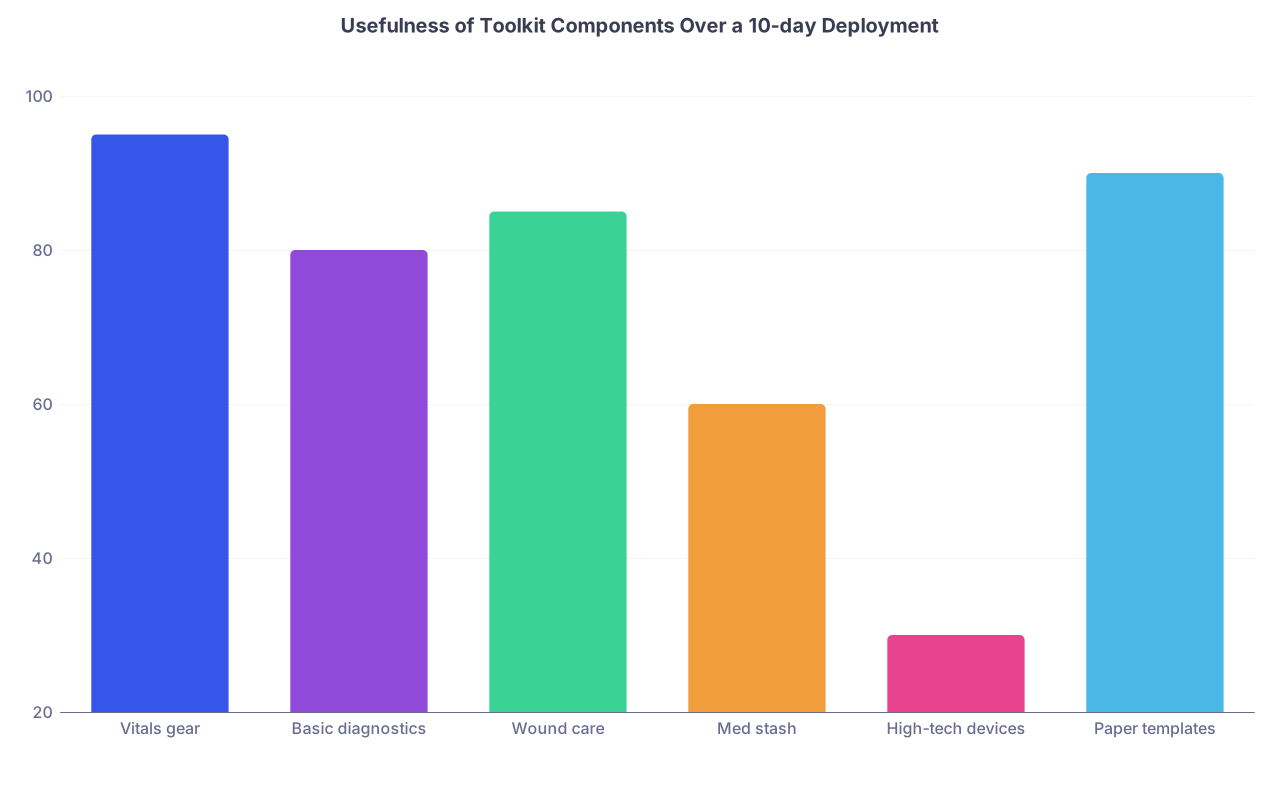
| Category | Value |
|---|---|
| Vitals gear | 95 |
| Basic diagnostics | 80 |
| Wound care | 85 |
| Med stash | 60 |
| High-tech devices | 30 |
| Paper templates | 90 |
If you are honest, your own bar chart will look roughly like this: basics and paper beat fancy gear.
FAQ (exactly 2 questions)
1. How do I balance bringing my own gear with not undermining the local health system?
Use the host’s system as the default and your toolkit as backup and augmentation. Co‑design your loadout with local clinicians before you travel, matching their formulary and protocols. During clinic, use local supplies and pathways first; pull from your kit only when something high‑yield is missing and the host agrees it is useful. Do not create parallel processes or “special” services that vanish when you leave. Anything you introduce should either be absorbed into their system or not be used at all.
2. I am a trainee. Should I even build my own clinical toolkit for short-term work?
Yes, but with narrower scope and tighter supervision. Your kit should focus on assessment, documentation, and very basic procedures you already do independently at home. No advanced diagnostics, no new procedures just because it is a mission, and no personal formulary of medications. Coordinate closely with your supervising physician and the host site; your toolkit becomes an extension of their practice, not a doorway for you to experiment. The ethical rule is simple: if you would not do it unsupervised in your home institution, you do not expand your toolkit to do it abroad.
Key points to keep:
- Design your kit around ethics and the host system, not your wish list.
- Invest in robust basics, modular organization, and documentation tools; they outperform tech toys.
- Build, test, refine: co‑design with hosts, dry‑run before you go, and brutally debrief when you return.


