

The fastest way to harm a community is to show up convinced you’re there to “save” it.
If you’re thinking about medical missions and your inner monologue includes words like “impact,” “transform,” or “save,” you’re already standing on a trapdoor. Good intentions don’t protect patients. Systems, humility, and ethics do.
Let me walk you through the mistakes I’ve watched students, residents, and even attendings make overseas—sometimes proudly, sometimes naively—and how you can avoid becoming another well-meaning liability.
Mistake #1: Treating a Mission Trip Like Your Personal Skills Lab
If your real motivation is “I can do more procedures abroad than at home,” stop. That mindset turns actual human beings into practice material.
I’ve seen it up close. A third-year student who had never done a solo delivery in the US suddenly “managing” labor in a rural clinic because, and I quote, “This is my chance to get experience.” Translation: doing things to patients you’d never be allowed to do at home.
Here’s the ethical line you must not cross:
If you’re not credentialed, trained, and legally allowed to do it in your home setting, you shouldn’t be doing it abroad on vulnerable patients. Period.
Common red flags:
- You’re being encouraged to “try” procedures outside your usual scope because “there is no one else.”
- The local team is sidelined so the visiting foreigners can “get hands-on.”
- Your group markets the trip to students using language like “huge opportunity to practice procedures.”

None of this is okay.
Ask yourself bluntly:
Would this be legal, ethical, and considered standard of care if I did it in my own hospital? If the answer is no, then doing it in a resource-poor setting isn’t “helping,” it’s exploiting.
How to avoid this mistake:
- Be explicit with your team lead before you go: “I will not perform outside my scope. I understand my role is to assist and learn, not to replace fully trained clinicians.”
- When someone offers you a procedure that’s beyond you, say: “I’m not trained to do that independently. How can I support you doing it instead?”
- Treat your scope of practice as fixed by your home institution, not by how desperate the situation feels on the ground.
If a trip’s value proposition is “You’ll get to do things you could never do at home,” that’s not a training opportunity. That’s a caution sign.
Mistake #2: Confusing Short-Term Trips With Long-Term Solutions
The “hero week” mentality is seductive: you fly in, see 300 patients in five days, post the group photo, then feel you “made a difference.”
Here’s the uncomfortable truth:
Short-term medical missions often create a spike of chaotic care that local systems then have to clean up for months.
I’ve seen post-mission clinics flooded with patients holding poorly labeled pill bags they don’t understand, new diagnoses with no follow-up plan, and treatment changes that conflict with local guidelines.
Let’s quantify this a bit.
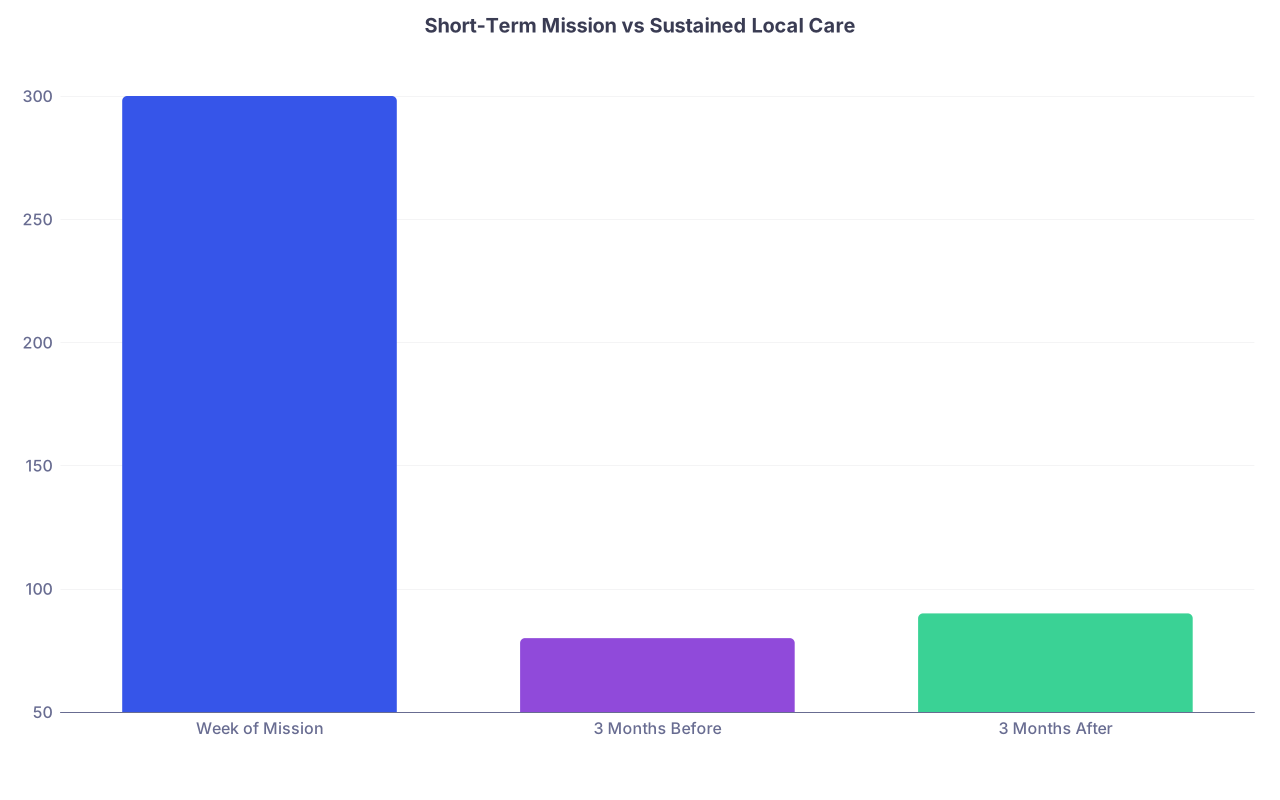
| Category | Value |
|---|---|
| Week of Mission | 300 |
| 3 Months Before | 80 |
| 3 Months After | 90 |
That “300 patients in a week” looks impressive until you notice: the clinic’s baseline of 80–90 a week is what actually matters—because that’s what is sustainable.
Common short-term mission pitfalls:
- No continuity of care. You start meds that require monitoring… then leave.
- No access to records. You can’t see prior labs, imaging, or long-term trends.
- No integration with public health. You treat symptoms without linking to vaccination, sanitation, or chronic disease programs.
The mistake is believing intense, short spurts of care are inherently good. They are not. They’re disruptive unless carefully integrated.
How to avoid this mistake:
- Ask before you go: “What happens to these patients after we leave? Who will follow them, and how are we documenting care?”
- Demand continuity mechanisms: shared records, written handoff plans to local clinicians, and protocols that match local guidelines.
- Narrow your scope. It’s far better to do a smaller number of things that can be continued locally than to blast through everything you’re trained to do one time.

| Step | Description |
|---|---|
| Step 1 | Plan Mission |
| Step 2 | Do Not Go Yet |
| Step 3 | Define Roles |
| Step 4 | Revise Scope or Cancel |
| Step 5 | Align With Local Guidelines |
| Step 6 | Implement Mission |
| Step 7 | Handoff to Local Team |
| Step 8 | Local Partner Exists |
| Step 9 | Local Continuity Plan |
If a trip can’t answer “who owns the follow-up?” clearly and credibly, it’s not ethical. It’s tourism with stethoscopes.
Mistake #3: Ignoring Local Expertise and Systems
One of the most arrogant forms of harm is assuming “they don’t know what they’re doing” because the clinic looks worn, the equipment is old, or the guidelines aren’t familiar.
I’ve watched visiting teams dismiss local nurses’ input because “they’re just nurses,” only to reinvent protocols that already existed—and worked—within that system.
Here’s what you’re probably underestimating:
- Local clinicians have deep knowledge of prevalent diseases and resistance patterns.
- They understand what meds are actually available year-round, not just when your suitcase arrives.
- They know cultural beliefs, health-seeking behavior, and which recommendations are realistic.
When you blow past that, you don’t just look foolish. You endanger patients.
Common manifestations:
- Rewriting medication regimens to match your home-country guidelines without checking local formularies or resistance data.
- Ignoring local referral pathways and instructing patients to do things the system can’t support.
- Running your own parallel clinic without integrating with the existing facility.
To make this concrete:
| Topic | Visiting Team Assumes | Local Team Actually Needs |
|---|---|---|
| Antibiotic choice | “Best” according to US/EU | What’s available, affordable, effective locally |
| Diagnostics | Try to mimic home standards | Realistic protocols using limited tests |
| Education | One-off patient teaching | Training local staff to amplify impact |
How to avoid this mistake:
- Start by asking: “What are your current protocols for X? Can we see your local guidelines?”
- Treat local clinicians as attendings, not as assistants. You’re the guest; they’re the core team.
- Before changing a treatment plan, ask: “Is this medication consistently available here? What do you typically use?”
You’re not there to impose a miniature version of your home hospital. You’re there—if you’re there at all—to strengthen what already exists.
Mistake #4: Letting Emotion Trump Ethics: The “But They Have Nothing” Trap
Nothing corrodes boundaries faster than seeing real suffering in a setting with painfully few resources. You will be tempted to say yes to things you know are wrong.
- “We don’t have imaging, so let’s just try the procedure.”
- “There’s no surgeon here—maybe I can do more than I usually would.”
- “They can’t afford labs anyway, so let’s just guess and treat.”
That voice in your head saying “do something, anything” is dangerous. It’s how people justify experiments they’d never call experiments.
You need a hard line before you get on the plane: need does not justify incompetence.
That doesn’t mean you do nothing. It means you stay within:
- Your training and supervision.
- Locally accepted practice and guidelines.
- What can be reasonably followed up and monitored.
Here’s the ethical tension laid bare:
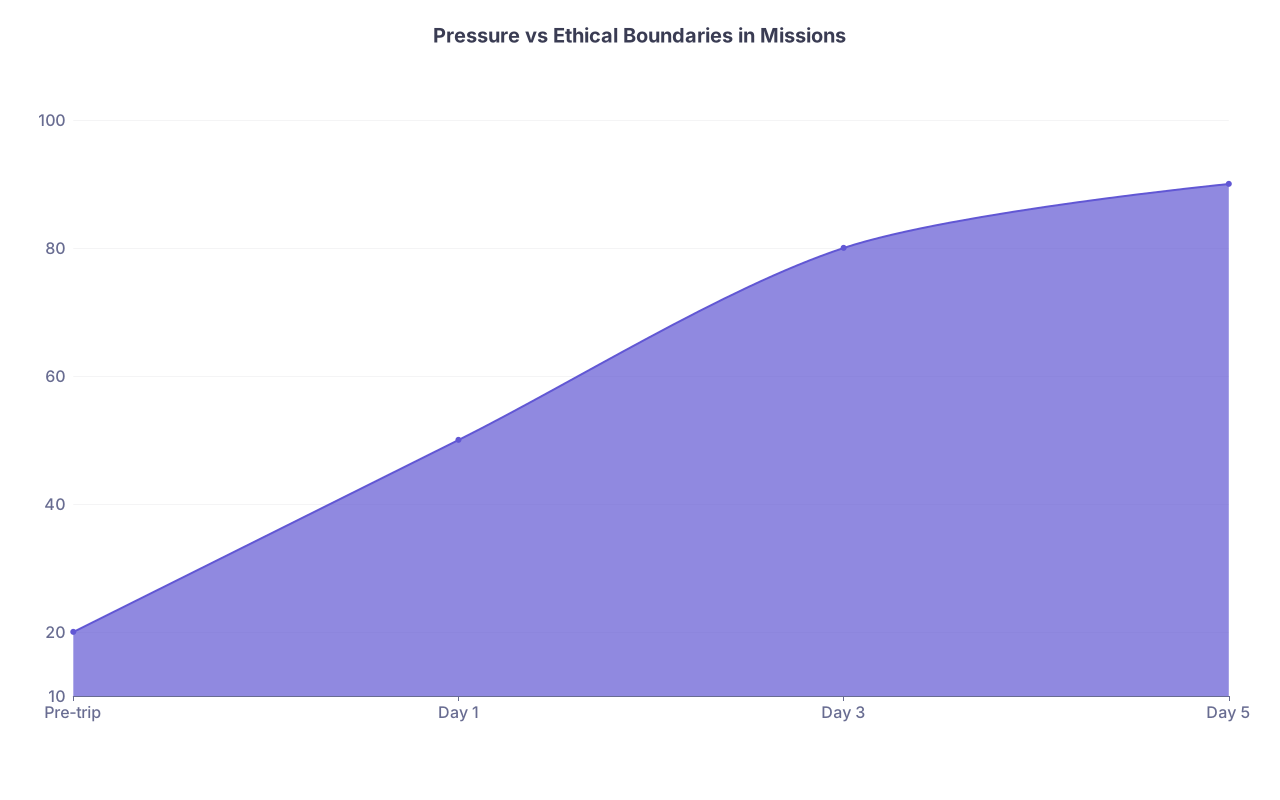
| Category | Value |
|---|---|
| Pre-trip | 20 |
| Day 1 | 50 |
| Day 3 | 80 |
| Day 5 | 90 |
As pressure (emotional and situational) increases, your boundaries will feel more negotiable. That’s when bad decisions happen.
How to resist:
- Say your boundaries out loud to a teammate: “I will not intubate, I will not do C-sections, I will not start chemo,” etc. Whatever is outside your competence.
- When asked to stretch, respond with: “I’m concerned this is beyond my safe scope. What is the safest option within local capacity?”
- Remember: doing less is sometimes the most ethical choice. Overtreatment with no follow-up is harm, not care.
If you find yourself thinking, “No one will ever know what I did here,” that’s a warning siren. Stop.
Mistake #5: Dropping In Without Deep, Genuine Local Partnership
A week-long visit without solid local partnership is not a mission. It’s disruption.
The pattern is depressingly common:
- Foreign group identifies “needy” location through a third party or online.
- They arrange a clinic, bring meds, set up shop.
- They leave, taking their data, photos, and donated meds with them.
- The local system is left fielding confused patients and unexpected changes in expectations.
A legitimate mission is built on relationships with:
- Local health ministries or health departments.
- Existing clinics and hospitals.
- Local professional societies or NGOs.
Without that, you’re bypassing local accountability and often undermining existing programs, whether you realize it or not.
Look at your trip’s structure:
| Aspect | Token Partnership | Real Partnership |
|---|---|---|
| Contact | One person, often non-clinical | Institutional, multiple clinical leaders |
| Planning | Done abroad, shared last-minute | Co-created months in advance |
| Authority | Foreign team decides everything | Local team has veto and final say |
| Continuity | None, maybe “see your doctor” advice | Built-in follow-up with named providers |

How to avoid this mistake:
- Refuse trips that cannot clearly articulate the local institution in charge and show documentation of formal agreements.
- Ask specifically: “What does the local health authority think about this project? Are they involved?”
- Let the local partner define the needs, not your group’s agenda or what looks good in photos.
If you can’t name the local lead clinician or organization by the end of the first planning call, that’s not a partnership. That’s a red flag.
Mistake #6: Using Poverty as a Backdrop for Your Narrative
This one’s ugly, but it must be said: if your trip’s social media presence looks like a charity catalogue—close-ups of children, misery shots, you in the center looking compassionate—you’re doing it wrong.
Patients are not props.
I’ve seen “after” photos of wounds posted without consent because “no one here uses the internet.” That’s delusional and disrespectful. People in low-resource settings do not lose their right to privacy and dignity because you bought a plane ticket.
Common boundary violations:
- Taking photos during procedures or intimate exams with no documented consent.
- Posting identifiable patient images to raise funds for next year’s trip.
- Framing yourself as the singular hero in every story.
If you wouldn’t do it in your home hospital without IRB-level scrutiny, don’t do it there.
How to avoid this mistake:
- Follow the same (or stricter) consent standards you would at home. Ideally written, clearly explained in the local language.
- Focus photos on systems, teamwork, and environment—not on patients’ faces or bodies.
- Let local clinicians and community members be centered in any success narrative, not you.
Crucial question: would I be comfortable if this patient or their family saw this exact photo and caption, translated into their language, with me in the room? If not, don’t take or post it.
Mistake #7: Ignoring Cultural Context and Autonomy
Thinking “medicine is universal, I’ll just practice good evidence-based care” is naive. Autonomy, family roles, and beliefs about illness vary—and you can easily bulldoze through them in the name of “good care.”
I’ve watched visitors insist on individually counseling a teen about contraception in a setting where decisions are deeply family-based and the clinic has protocols around involving caregivers. Not because they were wrong about contraception being important, but because they ignored the local framework for doing it safely.
You can absolutely advocate for patient autonomy and ethical standards. But you’re not there to reshape culture in one week.
Big missteps:
- Overriding local policies on consent and family involvement without understanding the rationale.
- Assuming Western-style autonomy (individual-first) is the only ethical model.
- Delivering “health education” that shames or alienates instead of respects and negotiates.
Your responsibility:
- Ask local staff how they handle sensitive issues: reproductive health, terminal diagnoses, mental illness.
- Phrase your contributions as questions: “In my setting we often do X. Does that fit here? What are the risks?”
- Remember that trust in the system after you leave matters more than your personal victory in one encounter.
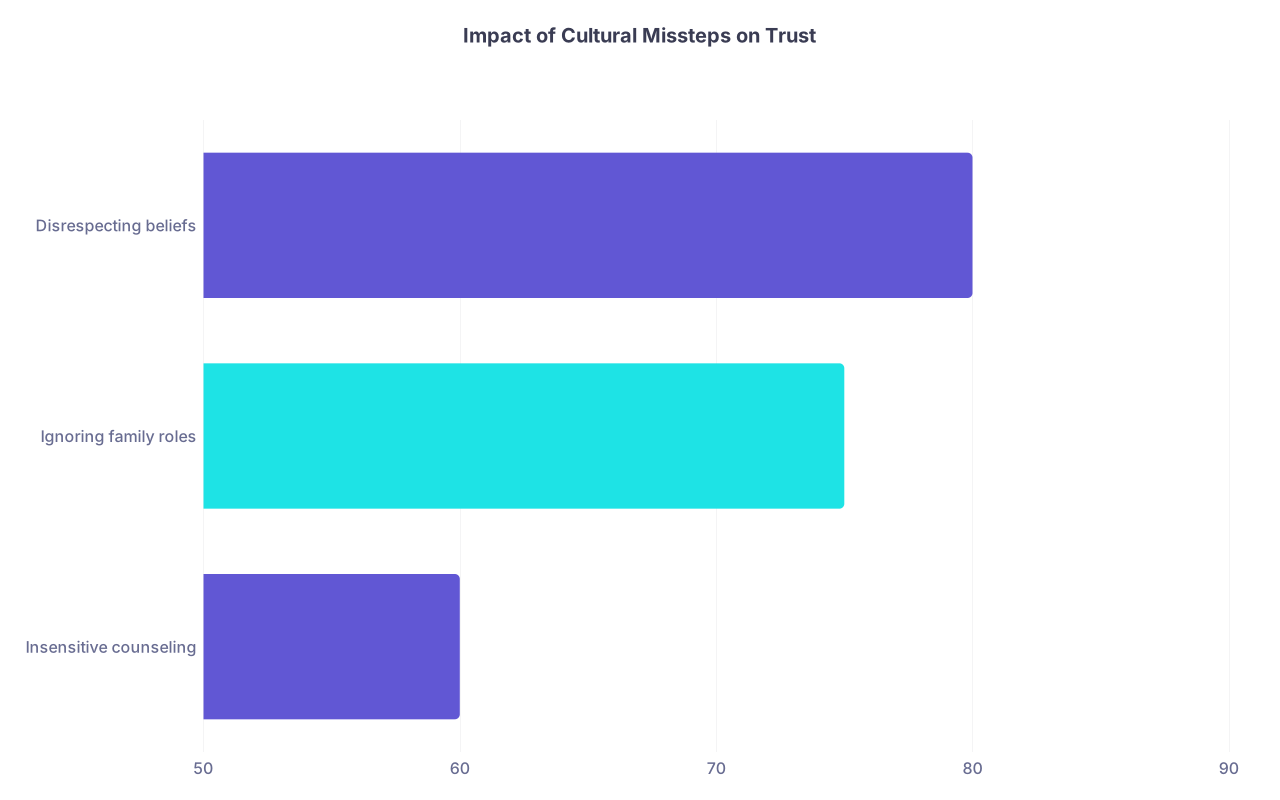
| Category | Value |
|---|---|
| Insensitive counseling | 60 |
| Ignoring family roles | 75 |
| Disrespecting beliefs | 80 |
Those numbers aren’t precise; they’re indicative. The point is: cultural missteps erode trust fast. And trust is a clinical resource you don’t have the right to waste.
Mistake #8: Not Taking Your Own Learning and Debrief Seriously
Here’s a more subtle pitfall: you go, you’re shocked, you’re moved, you come back… and you metabolize the whole thing as “eye-opening” and “life-changing” without doing the actual ethical work.
Unprocessed guilt and savior impulses often lead to repeat bad decisions: signing up for the same flawed trip again because “at least we’re doing something.”
Real growth looks uglier than that. It includes discomfort and criticism of your own role.
You should be asking on the flight home:
- Where did we likely cause harm or confusion?
- Where did we center ourselves instead of patients and local systems?
- Did we respect scope, consent, and partnership—or bend them because it felt urgent?
And then: what will I do differently next time? Including possibly: not going back with this organization.
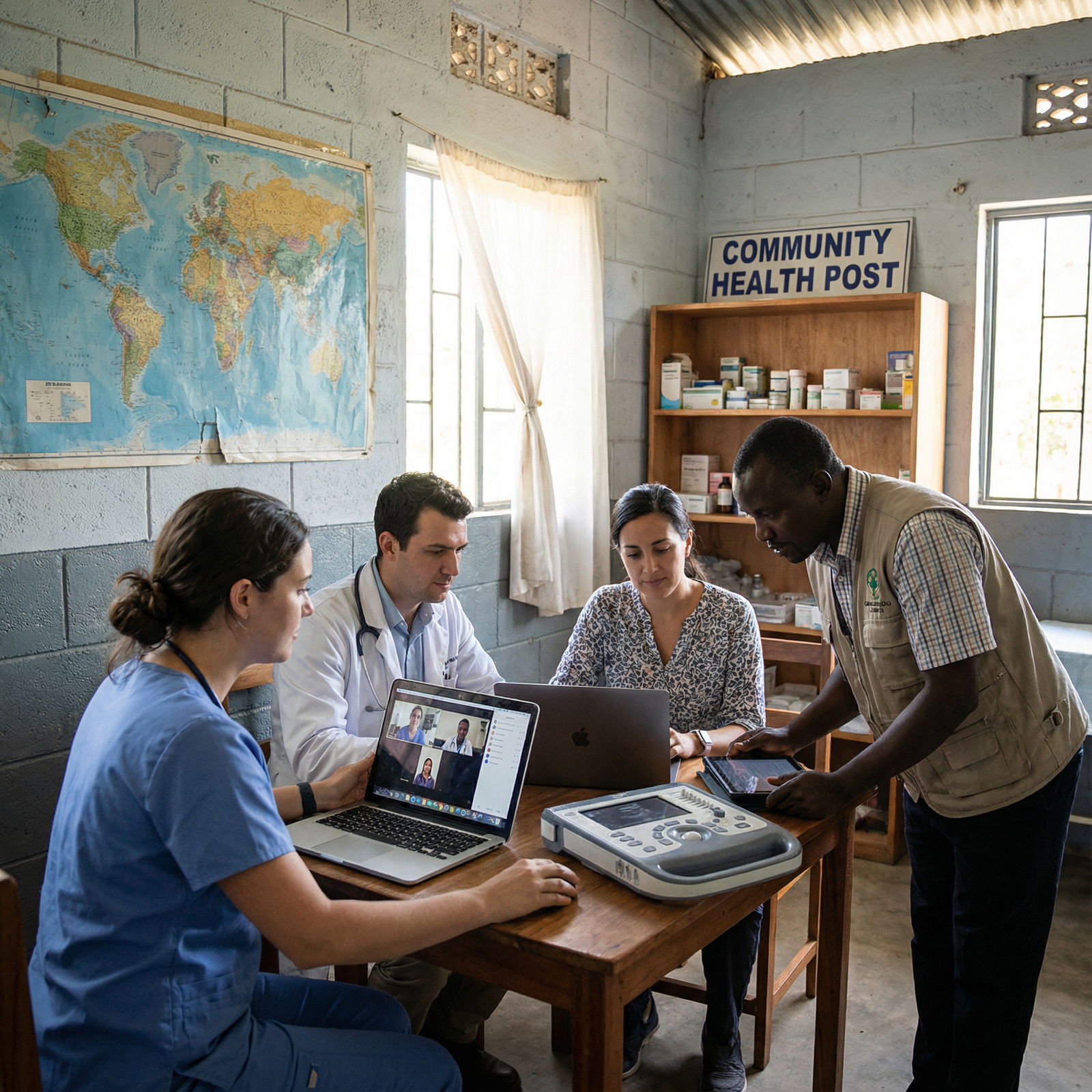
You’re not obligated to keep participating in a mission model you now see as flawed. In fact, staying just because it feels good to you is its own kind of ethical failure.
Putting It Together: A Simple Gut-Check Before You Go
Use this as a personal litmus test. If your honest answers fall on the wrong side, do not ignore that.
| Question | Safe Answer Example |
|---|---|
| Who leads clinical decisions? | Local attending or health authority |
| What is my scope of practice there? | Same as at home, maybe narrower |
| Who handles follow-up? | Named local clinic/physician |
| How is patient consent obtained? | In local language, consistent with home standards |
| How does this align with local guidelines? | Trip follows, not replaces, local protocols |
If your answers are vague (“we’ll figure it out when we get there”) or centered on your learning instead of patients’ needs, that’s not a small issue. That’s your sign to step back.
The Bottom Line: How Not to “Save” a Community
Keep it simple:
- You’re not there to save anyone. You’re there, if you go at all, to support local systems within your true level of competence.
- Short-term, ego-driven, skill-hunting trips cause real harm—even when everyone is smiling for the group photo.
- Real ethical missions are defined by local partnership, continuity of care, strict respect for scope and consent, and a willingness to do less flashy, more sustainable work.
If a mission opportunity can’t survive those standards, walk away. The community doesn’t need another savior. It needs partners who are humble enough not to become the next problem.


