

You are standing in a crowded clinic in rural Honduras. The line is already around the building. You have a suitcase full of donated meds, a stethoscope around your neck, and a translator who is also the clinic receptionist, triage nurse, and de‑facto crowd control.
You flew here to “help.” But within an hour, you are overruling local treatment habits, diagnosing aloud in English, and handing out three‑month supplies of meds with zero plan for follow‑up. People are grateful, smiling for photos.
You leave at the end of the week thinking, “That went pretty well.”
It did not.
This is exactly how well‑intentioned people do real harm on medical missions—by carrying in a suitcase full of dangerous assumptions.
Let me walk you through the most common cultural missteps that quietly undermine good intentions. These are the mistakes I have seen over and over again from students, residents, even attendings who should know better.
If you avoid these, your impact will improve dramatically. If you ignore them, you may ethically sabotage the very mission you think you are serving.
1. The “We Know Better” Assumption
The most destructive assumption: “Our way is modern, evidence‑based; theirs is outdated and wrong.”
You see it in the first 10 minutes. A visitor looks at the local formulary and says, just loud enough, “Wow, they are still using that?” Or they correct a local nurse in front of patients. Or they re‑write a management plan without asking a single question.
You cannot build trust on top of contempt.
Common manifestations
- Correcting local clinicians in front of patients
- Changing antibiotic choices because “this is what we use in the US”
- Dismissing traditional practices as “superstition”
- Rolling eyes (yes, people do this) at paper charts, no EMR, or “old” protocols
The reality: local clinicians are often managing disease patterns, resource constraints, and social realities you barely understand.
You show up for one week. They live with the consequences all year.
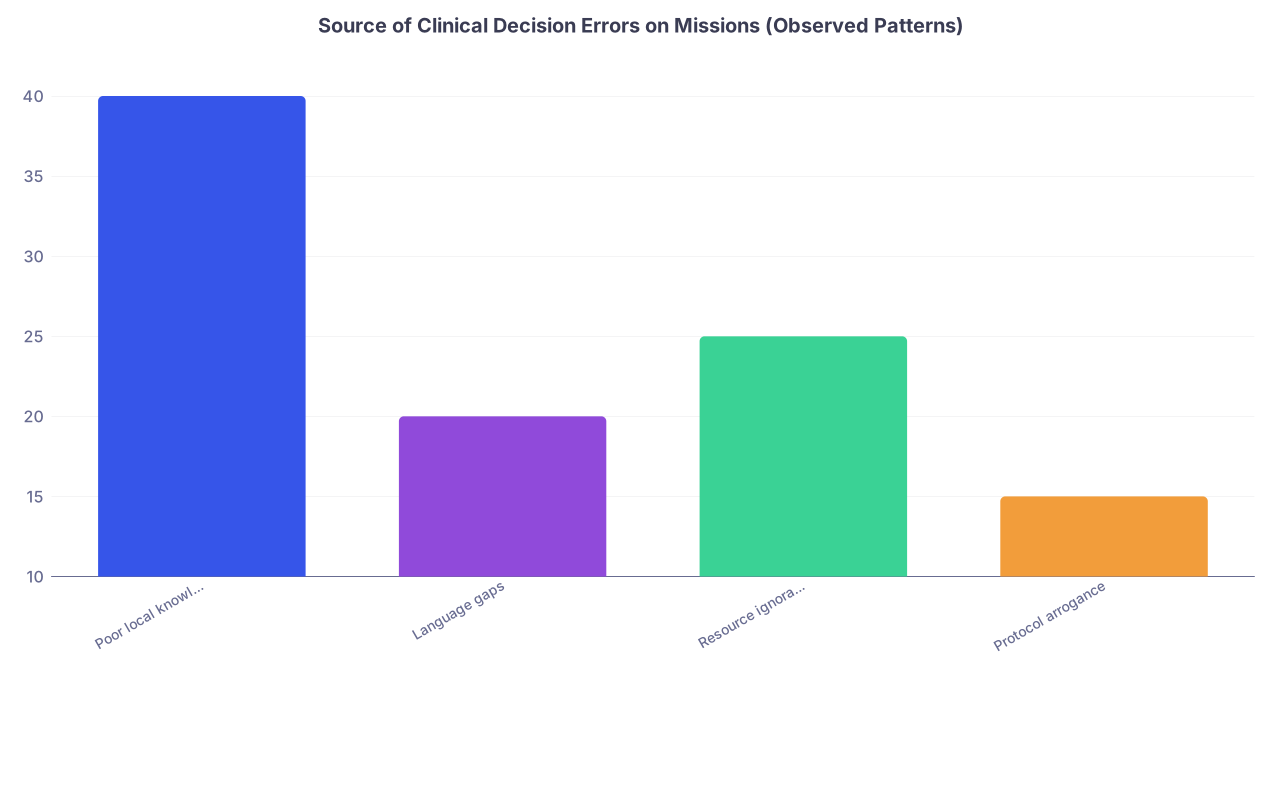
| Category | Value |
|---|---|
| Poor local knowledge | 40 |
| Language gaps | 20 |
| Resource ignorance | 25 |
| Protocol arrogance | 15 |
The biggest mistake here is assuming that “evidence‑based” automatically means “universally applicable.” Guidelines are written for specific systems: lab access, imaging availability, drug formularies, follow‑up capacity. Remove those, and many guidelines fall apart.
How to avoid this
- Ask before you change: “How do you usually manage this here?” Then shut up and listen.
- Clarify constraints: “What labs can we actually get today? What meds can the patient afford long‑term?”
- Disagree in private: If you need to question a practice, do it off‑stage, not in front of patients or staff.
- Assume there is a reason: If something looks “wrong,” assume there is at least a partial logic behind it and try to understand it.
The ethical problem: superiority destroys partnership. No partnership, no sustainable care.
2. The “Same Symptoms, Same Story” Assumption
You hear “chest pain” and your mind jumps to ACS algorithms. You hear “fever and cough” and think CAP. You pattern‑match like you were trained.
But your training is from a different epidemiologic universe.
I once watched a visiting intern confidently chase a pulmonary embolism diagnosis in a woman whose real problem was advanced TB and malnutrition. All the “correct” questions, totally wrong mental model for that setting.
Where people get burned
- Assuming disease prevalence mirrors US or European patterns
- Ignoring occupational exposures common locally (agricultural chemicals, mining, brick kilns)
- Missing endemic conditions because you did not bother to learn them ahead of time
- Over‑relying on technology you do not have (D‑dimer, CT, echo, etc.) in your thinking
You are not dangerous because you lack knowledge. You are dangerous because you assume your existing knowledge transfers cleanly.
How to avoid this
Before you ever see a patient, you should be able to answer three basic questions about the region:
- What are the top local causes of death and disability?
- What are the common endemic infections and their typical presentations?
- What diagnostics and treatments are realistically available to patients after you leave?
If you cannot answer those, you are guessing with other people’s lives.
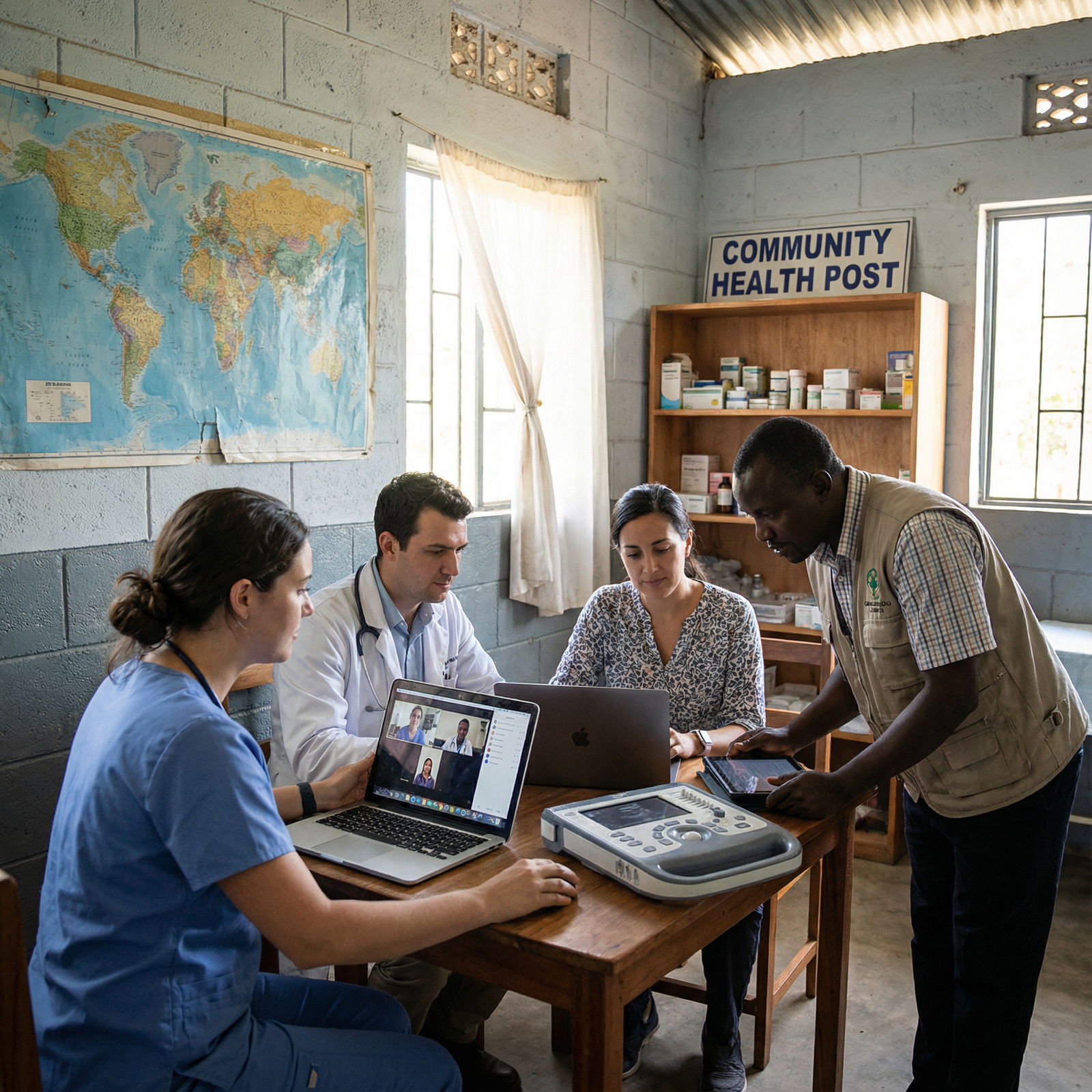
Do not show up and learn local epidemiology on the fly. That is lazy and unsafe.
3. The “English Plus Volume = Communication” Assumption
You have seen this. Someone speaks English at normal speed, then slightly slower, then louder, then with wild hand gestures. When that fails, they look at the translator and say, “Just tell her she needs to take this every day or she could die.”
Perfect recipe for misunderstanding.
Cultural missteps in communication
- Using fear‑based language that does not translate well or lands as threat
- Giving complex instructions that assume Western health literacy norms
- Ignoring non‑verbal cues from patients (shame, confusion, discomfort)
- Treating the interpreter as a piece of equipment instead of a professional
The big assumption: “If the translator is talking, the patient understands.” Absolutely not.
I have heard translators simplify a 5‑minute discharge explanation into “You are fine. Take this. Come back if worse.” Because they were overwhelmed, underpaid, or not medically trained enough to render nuance.
How to avoid this
You are responsible for communication quality, not the interpreter alone.
Use these habits:
- One sentence at a time. Then pause.
- Ask the patient to repeat back instructions in their own words (through the interpreter).
- Watch faces, not just mouths. Confusion looks the same in most cultures.
- Ask the interpreter privately: “Was anything I said confusing or culturally off?”
Translation is not the same as understanding. Pretending it is… that is how harmful errors slip in.
4. The “Gratitude = Effectiveness” Assumption
People will thank you. Profusely. They may bring you food, gifts, or tears. That emotional feedback is addictive.
Here is the trap: assuming gratitude means you actually helped.
Gratitude measures perception, not outcomes.
I remember a hypertension “mission” that gave out three‑month supplies of meds and felt heroic. Six months later, the local clinic had a line of patients angry and anxious because those meds were now unaffordable or unavailable. Blood pressures were high again, trust broken.
Were patients grateful the week of the mission? Absolutely. Was the mission ethical or effective? No.
| Signal from Patients | What It Often Really Means |
|---|---|
| Profuse thanks, gifts | Social obligation, power differential |
| Smiling in photos | Desire not to offend, cultural politeness |
| “Everything is good” | Fear of losing access to care/meds |
| No complaints voiced | No safe channel to criticize outsiders |
Gratitude can coexist with net harm.
How to avoid this
You need to separate emotional reward from ethical impact.
Ask hard questions:
- What happens to this care plan in 3 months? 6 months?
- Is this medication, device, or follow‑up accessible locally without outside help?
- Did we strengthen local systems, or create dependence on intermittent foreign teams?
If your model of “help” falls apart the moment you leave, that is not sustainable care. It is temporary relief plus long‑term confusion.
5. The “Poverty = Simple, Grateful, Non‑Autonomous” Assumption
One of the ugliest, quietest assumptions: that poor patients are so desperate they will take whatever is offered, however it is offered. That they do not really have preferences. That autonomy is some luxury of the educated middle class.
This is how well‑meaning volunteers drift into paternalism.
You see it when:
- Informed consent becomes “sign here so we can help you”
- Risks are minimized because “they do not have better options anyway”
- Procedures that would be unthinkable at home (given the setting) are done because “it is better than nothing for them”
- Children become photo props without explicit parental permission
I have watched visiting teams push for IUD insertions, sterilizations, and “research blood draws” with consent processes that would collapse under any serious ethical review back home.
Poverty does not cancel ethics.
How to avoid this
You have to actively fight your own savior narrative.
- Use the same ethical bar you use at home. If you would not do it to a US patient with a lawyer, do not do it to a Guatemalan farmer without one.
- Allow refusal. If you never hear “no,” you are not giving real choice.
- Involve local leaders and ethics committees (formal or informal) in any invasive or research‑related activity.
- Be explicit about voluntariness. Patients need to hear that saying “no” will not jeopardize their usual care.
If your mission model depends on people being too intimidated or grateful to refuse, shut it down. That is exploitation wearing a white coat.
6. The “One‑Week Miracle” Assumption
The short‑term medical trip has its own mythology: you fly in, see hundreds of patients, hand out bags of meds, snap some photos, fly home “changed forever.”
From a systems perspective, this is chaos.

| Step | Description |
|---|---|
| Step 1 | Team arrives |
| Step 2 | High volume clinics |
| Step 3 | Medications given |
| Step 4 | Team leaves |
| Step 5 | No follow up plan |
| Step 6 | Local clinic manages fallout |
| Step 7 | Next foreign team repeats |
The dangerous assumption: a short, intense burst of care is inherently better than the existing baseline.
Often, it is worse:
- Patients get fragmented care and conflicting advice
- Local clinicians get bypassed, undermining authority
- Supply chains are distorted by random donated meds
- Diagnoses are made that no one can follow up properly
You help for a week. Then the local system bleeds for months cleaning up.
How to avoid this
Short‑term presence is not the enemy. Disconnected short‑term presence is.
Before you go:
- Ask who is responsible for follow‑up of every new diagnosis you make.
- Confirm medication choices and durations with the local formulary reality.
- Limit yourself: if a disease needs long‑term management that does not exist locally, resist the urge to “start something” that will collapse later.
Sometimes the ethical choice is not to intervene. That is hard on the ego. Do it anyway.
7. The “We Are Guests, So We Cannot Question” Assumption
This one is more subtle. You tell yourself: “I should not ask about this; it is their culture. I am just a visitor.”
So you ignore obvious gender inequities in care decisions. You stay silent when a child’s pain is dismissed. You watch consent corners get cut because “that’s how it is done here.”
Cultural humility does not mean ethical paralysis.
There is a real danger in over‑romanticizing “respect for local norms” to the point where you enable abuse or rights violations.
On the other hand, barging in as the moral police is arrogant and counterproductive. The line is thin.
How to avoid this
You need two questions in your head at all times:
- Is this a true cultural difference, or just bad practice cloaked in habit?
- If this were happening in my hospital, would I feel compelled to speak up?
Then you use a partnership posture:
- Ask, do not accuse: “Can you help me understand why we are not explaining this procedure more to the mother?”
- Use “I” statements: “I feel uncomfortable doing this without clearer consent. How can we handle this together?”
- Be prepared to not participate. You might not have the power to change the system, but you always have the power to decline complicity.
If your “respect for culture” translates into abandoning your ethical spine, you are not being respectful. You are being cowardly.
8. The “Showing Up Is Enough” Assumption
A lot of people treat medical missions as personality polishing: “I want to be more empathetic / globally aware / a better person.”
Fine. But your self‑improvement is not why patients showed up.
One of the most quietly harmful assumptions is that enthusiasm and good intentions compensate for lack of preparation. They do not.
I have seen:
- Students doing procedures they are not competent in “because it is the only option here”
- Residents prescribing in drug classes they barely understand, with zero local oversight
- Volunteers running “health education” sessions based on Google searches and instinct

Here is the blunt truth: if you would not be trusted to do it unsupervised at home, you should be even more cautious abroad. Not less.
How to avoid this
- Get real pre‑departure training: cultural, clinical, ethical. Not just a packing list and a prayer circle.
- Define your scope before you arrive: “These are the things I can safely do; these are the things I will not do, even if asked.”
- Ask for supervision. If nobody on the ground can supervise you appropriately, that is a red flag about the mission structure itself.
Showing up is not the bar. Showing up prepared and bounded is.
9. A Quick Self‑Audit: Are You Carrying These Assumptions?
Here is a simple mental checklist you can run before or during a mission. If you answer “yes” to many of these, you are at high risk for cultural missteps:
| Question | Danger if Answer is “Yes” |
|---|---|
| Do I assume my training is superior? | Undermining local clinicians |
| Do I know little about local diseases? | Misdiagnosis, unsafe plans |
| Do I trust gratitude as proof of success? | Hidden harms ignored |
| Do I feel entitled to “practice more” here? | Ethical double standard |
| Do I avoid questioning bad practices as “cultural”? | Complicity in harm |
If that table stings a little, good. Better a sting now than regret later.
FAQ (Exactly 4 Questions)
1. Is it ever ethical to provide care you could not provide at home because of resource differences?
Yes, but with strict conditions. If the intervention is within your competence, aligned with local standards, has a realistic follow‑up path, and meets the same ethical bar you would require at home, resource differences alone do not make it unethical. What is not acceptable is using low‑resource settings as a loophole for training, experimentation, or risky shortcuts you would never defend in your own system.
2. How can students or residents push back against problematic mission structures without burning bridges?
You start by asking questions, not making accusations. “What is our follow‑up plan for these new diagnoses?” “How do local clinicians usually handle this?” “Who ensures continuity after we leave?” Put concerns in writing afterwards: a structured debrief email to organizers, describing specific incidents and offering suggestions. If a program is consistently unsafe or exploitative, you have a professional duty to step away and, if needed, alert your school or sponsoring institution.
3. Are short‑term trips always worse than funding local health workers directly?
Not always, but often. Money used to train and pay local clinicians tends to produce more durable impact than flying in outsiders repeatedly. That said, targeted short‑term visits that focus on skills transfer, technical support, or filling a clearly defined gap (requested by local leadership) can be very valuable. The key is that the local system defines the need and drives the agenda, not your desire for an “experience.”
4. What is one concrete way to respect culture without excusing harm?
Use a two‑step test. First, ask a trusted local clinician or community leader how they view the practice you are uneasy about; listen fully, without debating. Second, quietly ask yourself: “If this were my family member, would I accept this?” If the answer is no, you voice your concern using partnership language and you draw a personal line about your participation. Cultural humility does not override basic human rights.
Open a blank document right now and write down three assumptions you are bringing into your next (or current) medical mission. Circle the one that feels most uncomfortable to admit. That is the one most likely to hurt someone if you leave it unexamined.


