

You’re standing in a concrete hallway of a small community clinic. The power just cut out—again. There’s a brand‑new donated ultrasound machine sitting in the corner, still half-wrapped in plastic. No one here knows how to use it, the voltage is wrong, and there’s no maintenance contract.
Meanwhile, the clinic has no money for antibiotics, staff salaries are two months late, and the director is politely thanking yet another foreign team for “this very generous equipment.”
That’s the problem you’re walking into.
Everyone in medical missions thinks money and donations are the easy part. “We raised $50,000!” “We shipped a container of supplies!” “We brought $200,000 worth of donated meds!” People brag about the totals like it proves impact.
It doesn’t. And if you’re not careful, your funding and donations can actively damage the very clinics you’re trying to help.
Let’s walk through the traps—so you don’t become one more well‑intentioned disaster.
1. The “Shiny Project, Empty Payroll” Trap
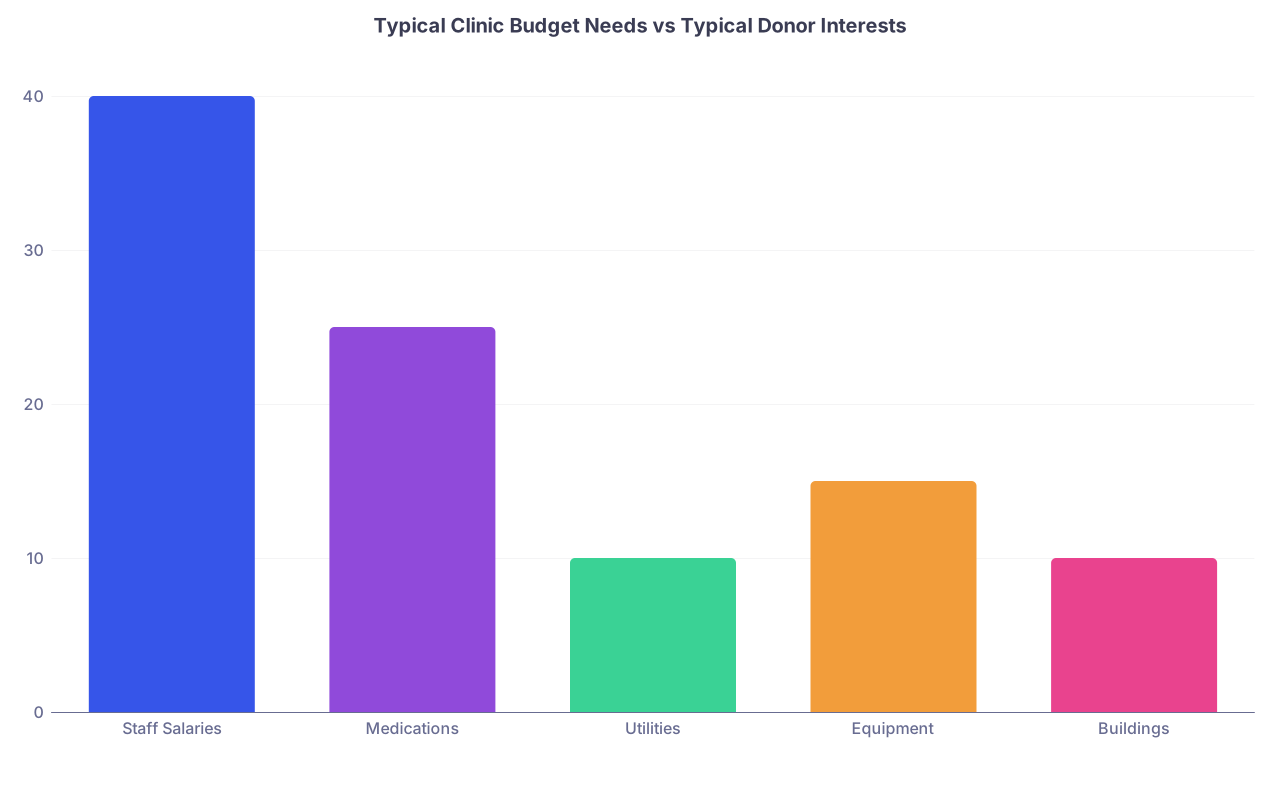
| Category | Value |
|---|---|
| Staff Salaries | 40 |
| Medications | 25 |
| Utilities | 10 |
| Equipment | 15 |
| Buildings | 10 |
Most local clinics need money for exactly three boring things:
- Salaries
- Essential meds
- Keeping the doors literally open (rent, electricity, water)
What donors prefer to fund:
- New buildings
- New equipment
- Named projects with plaques and photo ops
I’ve watched clinics that could not pay nurses for 3 months get turned down for salary support, then get “blessed” with a brand‑new wing they now have to staff, clean, light, and secure. It’s almost cruel.
The mistake: Funding only visible, exciting capital projects while ignoring core operating costs.
Why it hurts the clinic:
- Forces staff to work unpaid or leave
- Makes clinics expand beyond what they can sustain
- Creates dependency on short‑term mission teams to “fill the gap” with free labor
- Pushes leadership into survival mode, chasing any donor instead of planning long‑term
What you should do instead (even if it’s less glamorous):
Ask direct, uncomfortable questions:
- “How many months of payroll do you have secured?”
- “What percentage of your budget is reliably funded locally?”
- “What bills are the most stressful for you right now?”
Be willing to fund “boring” things:
- Nurse salaries
- Lab tech pay
- Fuel for generators
- Local health workers’ stipends
These are not luxuries. They’re the backbone.
Avoid funding expansion (new buildings, extra wards, new services) unless:
- There’s already a plan and budget for staffing, supplies, and maintenance
- The expansion was requested by local leadership—not suggested by your group
- You’re not the only financial pillar holding it up
If a clinic director says, “Honestly, we just need to make payroll,” believe them. Don’t “vision cast” them into a project they don’t have the capacity to sustain.
2. The Donated Junk and “Almost Expired” Drug Problem

You’ve seen this: mission teams proudly unloading pallets of supplies that look impressive on Instagram and are a logistical nightmare in reality.
Half-used boxes of dressings. Expired meds. Devices that need proprietary cartridges unavailable locally. Random brands no one recognizes. And bags of medications labeled in a language no one can read.
The mistake: Treating donations as “anything is better than nothing” instead of “only what is actually usable in this setting.”
Why this hurts:
- Staff waste hours sorting, checking, and discarding unsafe items
- Disposal of expired or hazardous waste costs money (and many clinics don’t have proper disposal systems)
- Confusion about unfamiliar drugs leads to medication errors or, more commonly, things sitting and expiring
- It trains donors to believe “cleaning out our closets” is “supporting global health”
The worst form? Donation of nearly expired medicines under the excuse “they’ll use them fast.” Usually, they won’t. And if they try, they may be pressured into unsafe prescribing to avoid “wasting” gifts.
You need a hard rule: If you wouldn’t use it in your own hospital, don’t dump it on a poorer one.
How to avoid becoming the junk-donor
Let the clinic write the list. You don’t decide the donations; they do.
You ask: “What specific items, with exact brands and doses, do you actually want? What do you already get locally?”Respect the country’s regulatory framework:
- Are there import restrictions on drugs or devices?
- Do meds need to be on a national essential medicines list?
- Do you need pre-approval for shipments?
Hard filters on supplies/meds:
- No expired or short-dated unless pre-agreed and realistic
- No unfamiliar brands or formulations they can’t replace locally
- No high‑maintenance tech without a concrete service/maintenance plan
- No partial boxes or opened steriles
Plan for cost of disposal. Because some of what you send will still be unusable. Own that, and budget for it.
If your volunteers are excited about “collecting supplies,” slow them down. Ask who is going to inventory, label, translate, verify expiry, and match to actual clinical practice patterns in that clinic.
3. The “Equipment Without Ecosystem” Trap
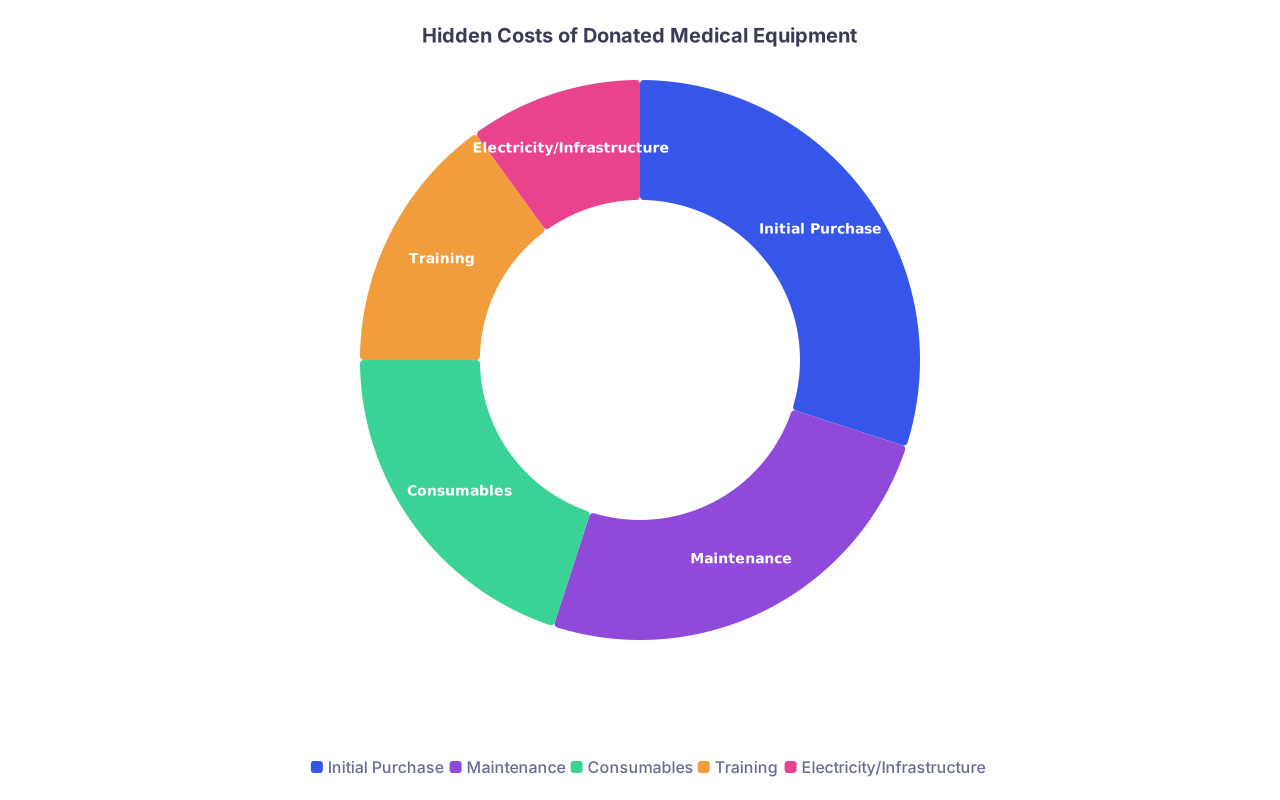
| Category | Value |
|---|---|
| Initial Purchase | 30 |
| Maintenance | 25 |
| Consumables | 20 |
| Training | 15 |
| Electricity/Infrastructure | 10 |
That unused ultrasound or ventilator in the corner is not a rare exception. It’s the rule.
I’ve walked into mission hospitals with:
- Multiple broken anesthesia machines
- Lab analyzers that no one knows how to calibrate
- X‑ray equipment incompatible with local voltage
- CPAP machines with no masks or tubing after three months
The donor pats themselves on the back. The clinic picks up the mess.
The mistake: Funding or donating stand‑alone equipment without planning for the entire ecosystem it needs to function.
“Ecosystem” means:
- Stable power and surge protection
- Consumables and replacement parts locally available
- Trained local staff
- Maintenance contracts or local bioengineering support
- Integration into existing workflows, records, and referral patterns
Without those, you’ve just funded a very expensive paperweight.
How to vet an equipment donation before you agree
Run through questions like a checklist:
- Who requested this equipment—clinic leadership or an enthusiastic outsider?
- Who will use it? Are they already trained or will they be? By whom?
- What consumables does it use, and are those available locally? At what cost?
- Who will service it when it breaks? Is there a local biomedical engineer familiar with this brand?
- What’s the realistic uptime you expect in that setting?
- What happens when your funding or presence ends?
If you can’t answer those without hand‑waving, you’re not ready to donate that machine.
Sometimes the better choice is to fund:
- Manual BP cuffs instead of automatic ones
- A basic ultrasound model that’s already common in the country
- Lab tests that can be done with existing gear rather than fancy analyzers
You’re not building a Western hospital in miniature. You’re strengthening what they already have.
4. Short‑Term Funding That Wrecks Long‑Term Systems

| Step | Description |
|---|---|
| Step 1 | Big Donor Arrives |
| Step 2 | New Services Started |
| Step 3 | Staff Hired With Donor Funds |
| Step 4 | Community Relies on New Services |
| Step 5 | Donor Leaves or Redirects |
| Step 6 | Staff Laid Off or Unpaid |
| Step 7 | Service Collapse and Community Distrust |
Here’s a pattern I’ve watched multiple times:
A mission group funds a new maternal health clinic, fully paid staff, free medications, all branded with their logo. The community shifts to using that clinic (because it’s better and free), and the government clinic nearby loses patients and legitimacy.
Three years later, the mission group shifts focus or runs out of money. Their clinic shrinks operations or closes. The government clinic has been hollowed out, and the community trusts no one.
The mistake: Funding parallel systems or time‑limited services without a credible handoff to local structures.
Why it’s so damaging:
- Undercuts local providers who have to charge small fees to survive
- Distorts local salary expectations (mission clinics paying 2–3× local rates)
- Creates dependence on your presence and your money
- Leaves clinics with more infrastructure than they can support
Smarter ways to support without destabilizing
- Fund within existing systems. Strengthen a government clinic rather than building your own “mission clinic down the road” just because it feels more efficient.
- Align salaries with local norms. A slight premium for hardship is fine. Paying triple is not.
- Tie new services to a multi‑year, explicit transition plan:
- When will local government or another sustainable source take over salaries?
- Is there a written agreement, not just “verbal support”?
- Are you willing to say no to starting things that cannot be sustained?
If your funding model implicitly says, “This only works as long as we’re here,” it’s not a partnership; it’s a time bomb.
5. Power Games, Strings Attached, and Ethical Red Flags

Money always shifts the power dynamic. Always.
If you pretend that’s not happening, you’ll miss the ethical landmines.
Common mistakes:
- Using funding to push religious, political, or ideological agendas subtly (or not so subtly)
- Demanding visibility, branding, or control that disrespects local leadership
- Expecting detailed data reporting the clinic has no capacity to provide, then punishing them for it
- Routing all decisions through the foreign partner because “we’re funding most of it”
Worst of all is the “conditional compassion” model: care, services, or access tied to attending a service, hearing a message, or complying with donor expectations.
That’s not partnership. That’s coercion wearing a humanitarian mask.
Guardrails you should impose on yourself
Let local leadership set priorities.
If every important decision requires your approval, the clinic is not locally led. Attention: you are now running a franchise, not supporting a partner.Be transparent and modest with branding.
A small plaque or line in an annual report is fine. Plastering your logo on exam rooms and every box of meds is about you, not patient care.Do not tie clinical services to belief or behavior.
If your faith is part of why you serve, fine. But the medicine must be unconditional. Patients should never have to wonder if their care depends on participation.Match reporting demands to capacity.
If the clinic has one overworked nurse and a paper register, don’t demand Excel dashboards and monthly impact reports with 12 indicators. Either help build that capacity or scale back your expectations.
Ask yourself a blunt question: If your name disappeared from this project, would you still support it? If the answer is no, your ego is driving more than you think.
6. Skipping the Boring Governance Questions
| Area | Critical Question |
|---|---|
| Governance | Who actually has decision-making authority? |
| Finances | Who controls the bank account and authorizes spend? |
| Accountability | How are fraud or misuse handled locally? |
| Strategy | Does this project align with an existing plan? |
You know what most short‑term teams never ask? Who signs the checks. Who sits on the board. Who audits the books. Who benefits when money moves.
They assume anyone running a clinic in a low‑resource setting must be noble and self‑sacrificing. Sometimes that’s true. Sometimes it’s not.
I’ve watched:
- Clinic directors pay themselves padded “consulting fees” from donor grants
- Equipment resold informally with no paper trail
- Medicines intended for free care diverted to private pharmacies
- Nepotism in hiring funded positions
You’re not “judging” anyone by asking governance questions. You’re protecting patients and honest staff from the damage of bad leadership.
Governance checks you should not skip
Ask to see:
- Organizational structure (who reports to whom)
- Basic financial controls (dual signatories, approvals, receipts)
- Any existing audits, even informal ones
- Written policies on fee structures and exemptions for the poor
- Who externally, if anyone, they’re accountable to (church body, NGO network, ministry of health)
Then ask yourself:
- Does this feel like a real organization, or like one charismatic person plus a bunch of informal helpers?
- Are there checks on power, or is everything dependent on one “visionary” leader?
If the answers look bad, your money will probably amplify whatever damage that system is already doing. Don’t rush in saying, “We’ll fix it from the outside.” Either you accept and work within that reality, or you stay out.
7. Data Worship, Metrics Theater, and Hidden Harms
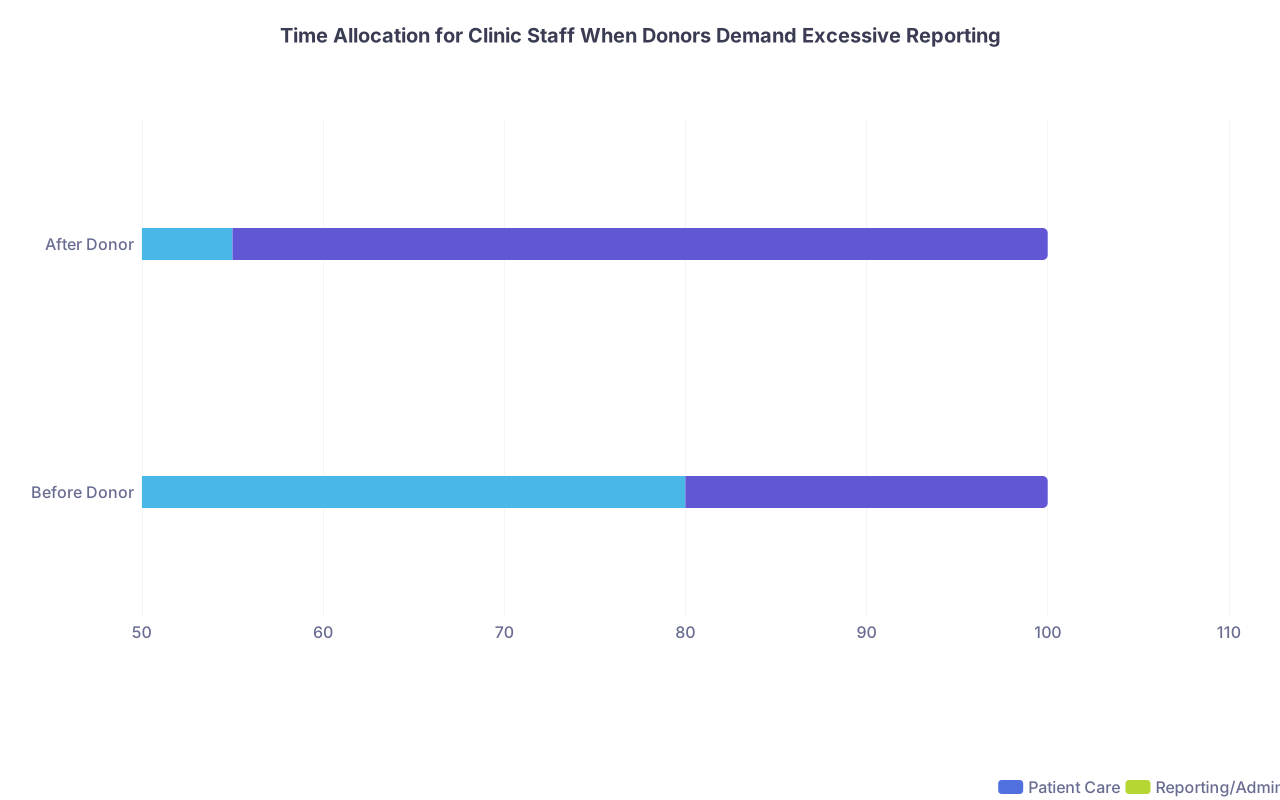
| Category | Patient Care | Reporting/Admin |
|---|---|---|
| Before Donor | 80 | 20 |
| After Donor | 55 | 45 |
Donors love numbers. Patients seen. Surgeries performed. Lives saved. Graphs that go up and to the right.
You absolutely need some data. But if you’re not careful, you’ll push clinics into “metrics theater”—pretty reports that distort care.
The mistake: Designing funding and donations around easily measurable outputs, then rewarding volume over thoughtful, appropriate care.
What this looks like on the ground:
- Clinics pressured to see more patients per day than is safe
- Short‑term surges in surgical volume with poor follow‑up tracking
- Programs focusing on what can be counted (like deworming) while ignoring complex chronic care (like diabetes) because it’s messy and nonlinear
And then, of course, time. Every minute a nurse spends tallying data for your quarterly report is a minute not seeing patients.
How to avoid metrics-driven harm
Track fewer, better indicators.
Three or four meaningful metrics that the clinic itself finds useful are better than fifteen you picked to please your board.Ask what they already report to government or other partners.
Align with existing systems instead of inventing your own parallel one.Fund administrative capacity if you’re demanding complex reporting.
That might mean paying for a part‑time data clerk, not assuming a nurse will “fit it in.”
If the reporting load grows faster than the care quality, you’re optimizing your program, not their patients.
8. Ignoring Local Markets and Undercutting Local Providers

Last one, and it’s subtle.
When you fund free medications, free surgeries, or free clinics without thinking about the local health economy, you can unintentionally wipe out small private providers and pharmacies that communities depend on the other 50 weeks of the year.
I’ve watched:
- Free mission “surgical camps” poach cases from local surgeons, who then lose income and reduce availability the rest of the year
- Donated free meds undermine local pharmacies, which then stock fewer essential drugs because demand swings wildly
- Patients delay care waiting for the “foreign doctors” to come, because that’s when it’ll be free and “better”
The mistake: Acting like the only thing that matters is your project’s impact, instead of the total health ecosystem.
Smarter moves
- Coordinate with local providers. Ask local doctors, pharmacists, and health officers: “How can we support what you’re already doing instead of competing with it?”
- Use sliding scales instead of free for all. Clinics that charge small, predictable fees and have clear exemption policies often serve communities more consistently than boom‑and‑bust free clinics.
- Fund behind the scenes. Supporting supply chains, training, or quality improvement can have more durable impact than bypassing local providers and doing everything yourself.
If your annual two‑week team is the main health event of the year, something’s wrong. Your ego may love it. The health system does not.
FAQ (Exactly 4 Questions)
1. Is it always wrong to donate equipment to a low-resource clinic?
No, but it’s very easy to do badly. Equipment donations are ethical and helpful only when they are specifically requested by local leadership, match existing infrastructure, have a clear plan for training, maintenance, and consumables, and fit into the clinic’s long‑term strategy and budget. If any of those pieces is missing, you’re probably better off funding simpler, more sustainable tools or core operating costs instead.
2. How can I tell if my funding is creating dependency?
Look at what would happen if your money stopped tomorrow. Would essential services collapse immediately? Would staff lose their entire salary instead of a small supplement? Would leadership feel unable to make decisions without asking you first? Those are signs of dependency. Healthy partnerships use external funding as a booster to strengthen systems that have some local ownership, local financing, and local decision‑making power already in place.
3. What’s the most ethical way for a small group or church to support a local clinic?
Start with listening, not proposing projects. Ask the clinic what their top three funding headaches are, be open to supporting unglamorous needs like payroll or utilities, and insist on shared decision‑making with clear governance and accountability. Fund modestly at first, avoid creating parallel services, and build in a realistic multi‑year plan rather than a one‑off “big gift” with no follow‑through. And be willing to hear “we don’t really need that” about your favorite idea.
4. Should I be worried about corruption when funding clinics overseas?
Yes, you should be realistic. “Worried” is less useful than “attentive and structured.” Corruption risk exists everywhere, including your own country. The answer isn’t paranoia, it’s clear agreements, simple and transparent accounting, dual signatories on accounts when appropriate, and third‑party or peer oversight where possible. If leadership resists any form of transparency or accountability, that’s a red flag. In that case, you either scale back to very limited, tightly scoped support—or you walk away.
Remember:
- Money and donations can hurt clinics just as easily as they help.
- Boring, unglamorous support (salaries, utilities, basic meds) often does more good than shiny projects.
- If what you’re funding cannot be maintained locally—financially, technically, or ethically—do not call it “sustainable mission.” It’s not.


