
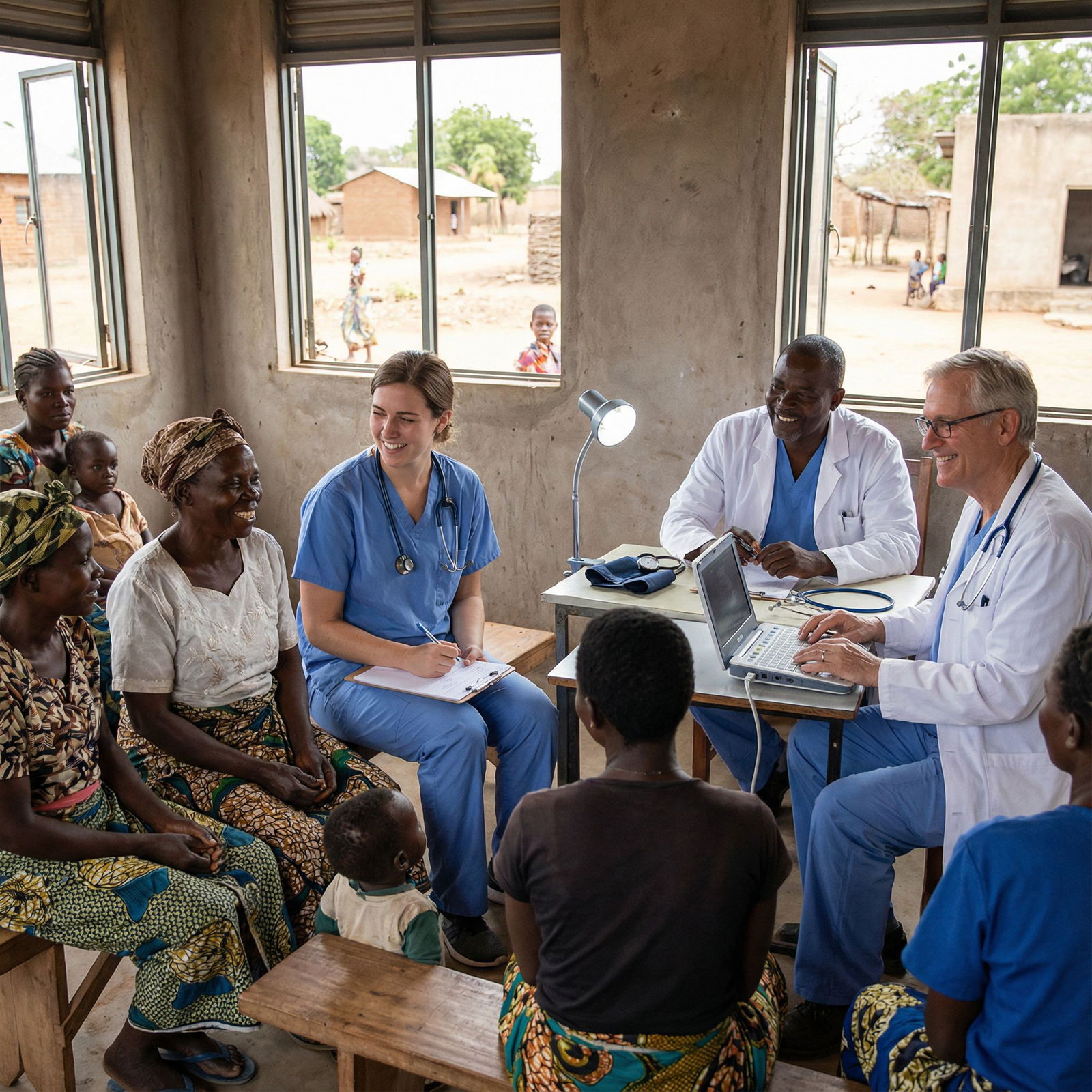
The most dangerous thing you can bring on a medical mission isn’t malaria or a needle-stick. It’s overconfidence in skills you do not actually have.
If you remember nothing else from this, remember this: students practicing medicine abroad instead of shadowing is one of the fastest ways to harm patients, destroy trust, and wreck their own careers. And it happens all the time.
You’re in the “Personal Development and Medical Ethics” phase. Good. That’s where this belongs. Because this isn’t about how to suture better. It’s about how not to become the horror story people tell at ethics grand rounds.
Let’s walk through the mistakes students make on medical missions when they confuse shadowing with practicing—and how you avoid becoming that person.
1. The Core Confusion: Shadowing Is Not “Practice Lite”
Shadowing means you are there to observe, learn, and maybe help with basic, non-clinical tasks. It does not mean you are providing care. That distinction gets obliterated on mission trips faster than anywhere else.
Here’s what too many students think:
- “They let me take blood pressure and start IVs. So I’m basically part of the care team.”
- “The local doctor said I could try the exam. That means I’m allowed to.”
- “I’m in a remote village. They need help. It’d be unethical not to pitch in.”
No. That’s how people slide from “extra set of hands” to “unlicensed, unsupervised provider” without even noticing.
Shadowing means:
- Watching histories, exams, procedures
- Asking questions
- Maybe doing vitals, logistics, charting under supervision
- Staying within what you’re already competent at and allowed to do at home
Practicing (what you must not do as a student):
- Independently making diagnoses
- Prescribing or choosing treatments
- Performing procedures you’re not already trained and licensed/cleared to do in your home setting
- Being the primary or only clinician for a patient encounter
| Activity | Shadowing Role | Practicing Role (Not OK) |
|---|---|---|
| Taking a history | Listen, maybe assist | Lead, decide diagnosis |
| Physical exam | Observe, practice basics | Perform and interpret solo |
| Procedures (e.g., IV, sutures) | Watch; maybe assist closely | Do independently |
| Medications | Hear rationale | Choose/dose/prescribe |
| Plan of care | Learn the reasoning | Set or change the plan |
If you would not be allowed to do it in your home hospital under your current status, doing it on a medical mission is not “experience.” It’s scope-of-practice creep. And it’s unethical.
2. The Classic Scope-of-Practice Mistakes Students Make Abroad
Let’s get specific. I’ve seen versions of all of these:
2.1 “I Was the Only One There, So I Had To…”
You’re at a pop-up clinic in a rural area. The attending steps out. A long line of patients is waiting. A local coordinator turns to you: “Can you see the next patient? We are very busy.”
Common student mistakes here:
- Taking the patient alone into a room and doing a full H&P
- Telling them what they “probably have” (malaria, pneumonia, diabetes)
- Suggesting over-the-counter meds or leftover antibiotics
- Writing notes that look like you made the plan
That’s practicing medicine without license, regardless of geography.
How to avoid this mistake:
- You say: “I’m a student. I can take a basic history while they wait, but the clinician must see you.”
- You put the decision back where it belongs: on the supervising physician or local provider.
- If no qualified clinician is available at all, you do not step into that role. The system failing them doesn’t magically make you qualified.
2.2 Procedures You Have No Business Doing
This is where things get scary fast.
Common examples:
- Doing your first IV placement on a child because “they don’t get this chance at home”
- Trying to suture a facial laceration because someone said, “Great learning case”
- Performing pelvic exams or Pap smears when you’ve never done one under supervision at home
- “Helping” with a delivery when you’re barely through OB in school
The usual rationalization: “They needed care and I’m supervised… sort of.”
“Sort of” is not good enough when you’re dealing with someone’s body, fertility, infection risk, scarring, or death.
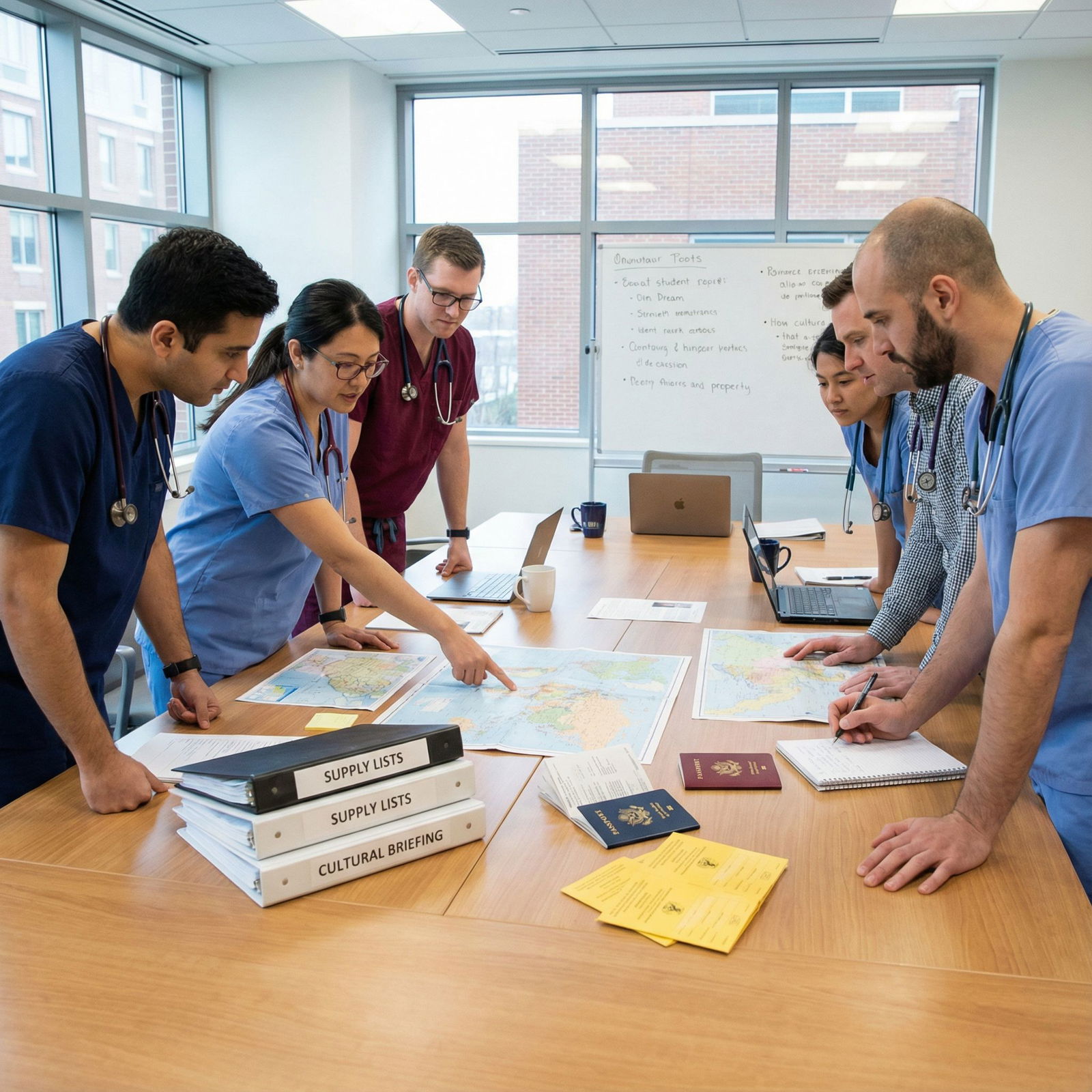
Safe rule:
- If you have not already done it competently multiple times under strict supervision in your home system, and you would not be allowed to do it alone at home, you do not “learn it fresh” on a stranger in another country.
You want procedural exposure? Great. Watch closely. Ask questions. Practice on models and simulations back home. But don’t turn another human’s body into your practice dummy because flights were expensive and you “want to get your hands dirty.”
2.3 Writing Orders or Prescriptions
Students abroad get sucked into this one all the time:
- Filling out prescription pads
- Picking antibiotic regimens from a local list
- Adjusting doses for kids because “the doctor is busy”
- Telling the local nurse, “Give 500 mg twice daily.”
Here’s the legal and ethical problem: you’re not licensed. In many places, this is straight-up illegal. And even where oversight is porous, the risk to the patient is real: drug interactions, allergies, wrong dose, wrong duration, resistance.
If your name wouldn’t go on an order in your home hospital, your mind should not be the one deciding the medication anywhere.
3. The “Low-Resource Setting” Trap: Why Good Intentions Backfire
Students often think: “But they need me more here. Isn’t that different?”
No. That thinking is the foundation of ethical disaster.
3.1 Different Standards? Absolutely Not.
Ethical principles don’t evaporate when you cross borders:
- Respect for persons – Patients are not training tools.
- Nonmaleficence – “Do no harm” does not mean “do less harm than nothing.” It means don’t experiment with people because you feel useless otherwise.
- Justice – You don’t get to offer worse standards of training and supervision to poor patients than you would to insured, English-speaking patients at home.
When poor, rural, or non-English-speaking patients become the population on which you “practice,” that’s not volunteering. It’s exploitation.
3.2 The “Hero Narrative” That Gets People Hurt
You’ve heard it:
- “I delivered 15 babies in rural Guatemala!”
- “I ran a little clinic by myself in Kenya between the physician’s visits.”
- “I got to suture all the lacerations because they didn’t have enough doctors.”
No, you “got to” because the system was too weak to stop you. That’s not a badge of honor.
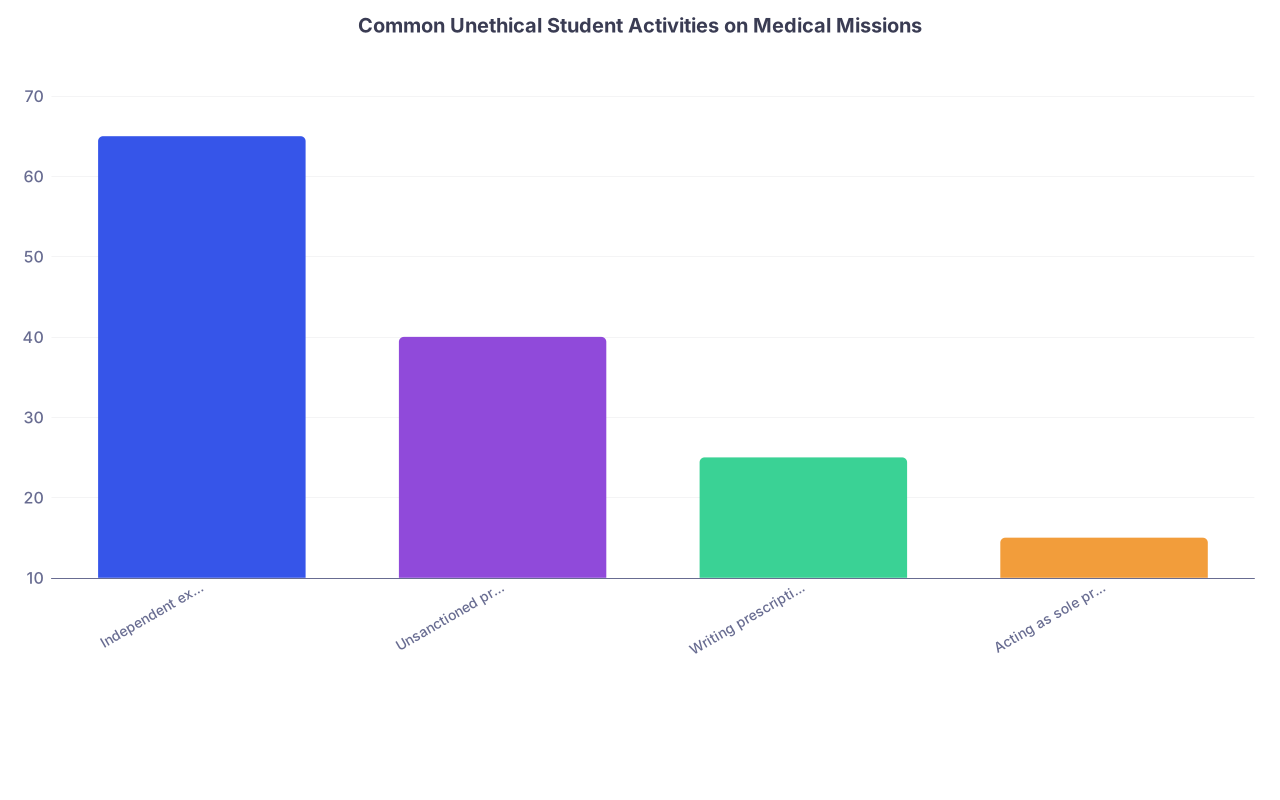
| Category | Value |
|---|---|
| Independent exams | 65 |
| Unsanctioned procedures | 40 |
| Writing prescriptions | 25 |
| Acting as sole provider | 15 |
These numbers aren’t exact for your site, but the trend is consistent in published surveys and internal reviews: a large chunk of students admit doing things abroad they’d never be allowed to do at home.
You do not want to be one of them.
4. Red Flags: When Your “Medical Mission” Is Actually Unethical
You can avoid half the scope-of-practice mess by choosing decent programs in the first place. Most of the horror happens in badly structured “voluntourism” setups.
Here are bright red flags:
- No clear local medical leadership. You can’t identify a named local physician responsible for patient care.
- Students are marketed as “providers,” “healthcare workers,” or “serving patients” without qualifiers.
- There’s no explicit written scope-of-practice guideline for students.
- You’re told, “You’ll get to do more here than you ever could at home!”
- Supervisors are physically present but barely in the rooms, signing off blindly on what you do.
- There’s no plan for continuity of care after you leave. No handoff, no local follow-up.

Programs that brag, “You can suture, you can do deliveries, you can run triage yourself!” are advertising unethical practice. That’s the point where you should seriously consider walking away.
5. How to Stay in Your Lane Without Being Useless
Here’s the thing: you can have a powerful, meaningful experience abroad while strictly staying within your role. Students who say, “If I can’t do procedures, what’s the point?” are missing what real clinical learning actually is.
5.1 What You Actually Can Do
You can:
- Watch how local clinicians practice with limited resources
- See different disease patterns and presentations
- Learn how social determinants and health systems shape care
- Practice culturally sensitive interviewing (with supervision and translation)
- Help with:
- Triage logistics (directing patient flow under guidance)
- Taking basic vitals (if trained: BP, HR, temp)
- Education stations: handwashing demos, safe water, basic nutrition messages—non-diagnostic, non-prescriptive
- Data entry, organization, inventory
- Basic public health tasks the program clearly permits for volunteers
This isn’t glamorous. It’s not Instagram material. But it’s real. And it’s ethical.
5.2 The Script You Need Ready
You will be pressured—by staff, patients, even your own peers—to go beyond your scope. Have your refusal lines preloaded so you don’t freeze and agree.
Examples:
- “I’m a student, not a doctor. I can help take a history, but the clinician needs to examine and decide.”
- “I’ve never done that procedure before, and I can’t safely start here. I’m happy to observe.”
- “I’m not licensed to prescribe medications. The doctor needs to make that decision.”
- “That’s outside my scope. Who’s the right person here to handle this?”
Say it calmly. Repeat as needed. If someone pushes—especially a non-clinical coordinator—escalate to the supervising physician or walk away.
6. Legal, Professional, and Career Consequences Students Ignore
You might think, “Nobody’s going to sue in this community,” or “Who will ever know?” Dangerous mindset.
6.1 Legal & Institutional Risk
- Your home school can sanction you. Some have pulled students from rotations or put professionalism flags in their file based on reports from abroad.
- If a patient is harmed and the story reaches media, your name can absolutely surface. Programs scramble to protect themselves; students are expendable.
- Future licensing boards care about professionalism issues, not just criminal charges. A documented pattern of boundary violations can follow you.
6.2 Reputation and Trust
Faculty talk. Program directors talk. When a mission report reads, “Student X repeatedly acted outside scope despite redirection,” you’ve just created a narrative you will spend years trying to erase.
Compare that with: “Student X consistently prioritized ethical standards, refused unsupervised clinical work, and advocated for local autonomy.” Guess which one programs want.
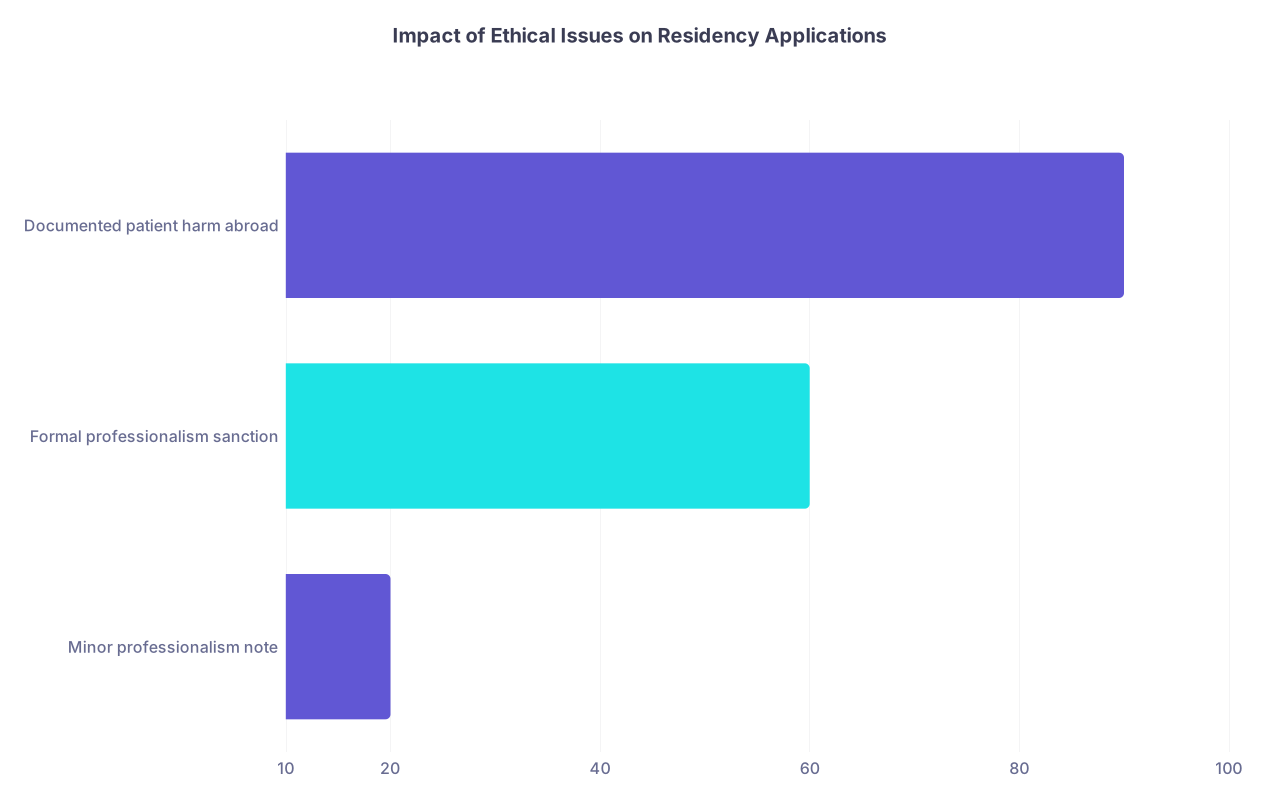
| Category | Value |
|---|---|
| Minor professionalism note | 20 |
| Formal professionalism sanction | 60 |
| Documented patient harm abroad | 90 |
Again, not exact numbers, but the pattern is real: the more serious the ethical breach, the more heavily it weighs in residency and licensing decisions.
7. How to Vet a Medical Mission Before You Sign Up
Let’s prevent the problem at the source. Before you send any money or commit time, interrogate the program like a skeptic.
Questions you should ask directly:
Who is the local clinical authority?
- Name, credentials, role.
- Are they on-site during clinics?
What exactly is the student scope-of-practice?
- Written guidelines?
- Who enforces them?
What tasks have students done in the past?
- Ask for concrete examples.
- If they brag about independent procedures, that’s your cue to leave.
How is supervision structured?
- Ratio of supervising clinicians to students.
- Do clinicians review every patient encounter and decision?
What happens to patients after we leave?
- Is there a local clinic or provider taking over?
- Are records handed off?
If answers are vague, defensive, or salesy (“You’ll get amazing hands-on experience!”) instead of concrete and boundaries-focused, you’ve likely found a voluntourism mill, not a serious partner.

| Step | Description |
|---|---|
| Step 1 | Offered clinical task abroad |
| Step 2 | Do not do it |
| Step 3 | Proceed within scope |
| Step 4 | Allowed at home? |
| Step 5 | Supervised directly? |
| Step 6 | Local clinician responsible? |
Use that decision tree ruthlessly. If any step fails, you stop.
FAQ (Exactly 3 Questions)
1. What if the local doctor explicitly tells me to do something beyond my usual scope? Isn’t that their responsibility?
No, you don’t get to outsource your ethics. Local clinicians may overestimate your training or feel pressure to “use” foreign volunteers. Your responsibility is to honestly state your level of competence and decline tasks you’re not trained and authorized to perform at home. “The doctor told me to” won’t fix the damage to a patient—or to your professional record—if something goes wrong.
2. Is it ever okay to do a procedure abroad for the very first time on a real patient?
Only under the same or stricter conditions than at home: direct, real-time supervision by a qualified clinician, clear informed consent (patient knows you’re a trainee, knows your role), and the ability of the supervisor to immediately take over if needed. What’s not acceptable is “We’re in a remote setting, so standards are lower.” If the only reason you’re allowed to try is that the patient is poor and far from oversight, that’s unethical.
3. How do I explain to my peers or trip leaders that I’m refusing to work outside my scope without looking lazy or arrogant?
You make it about patient safety and honesty, not about you. “I’m a student, and doing X would be dishonest to the patient about my training and could harm them. I’m here to learn and help within my actual skills.” If a group ridicules you for that, that’s not a team you want your name attached to. Programs that value ethics will respect you more, not less, for drawing a hard line.
Key points to leave with you:
- If you wouldn’t be allowed to do it at home, you don’t do it to a stranger abroad.
- Poor, remote, or vulnerable patients are not your practice material—ever.
- The most professional thing you can do on a mission is know your limits and protect patients from your inexperience, even when everyone else seems to have forgotten theirs.


