
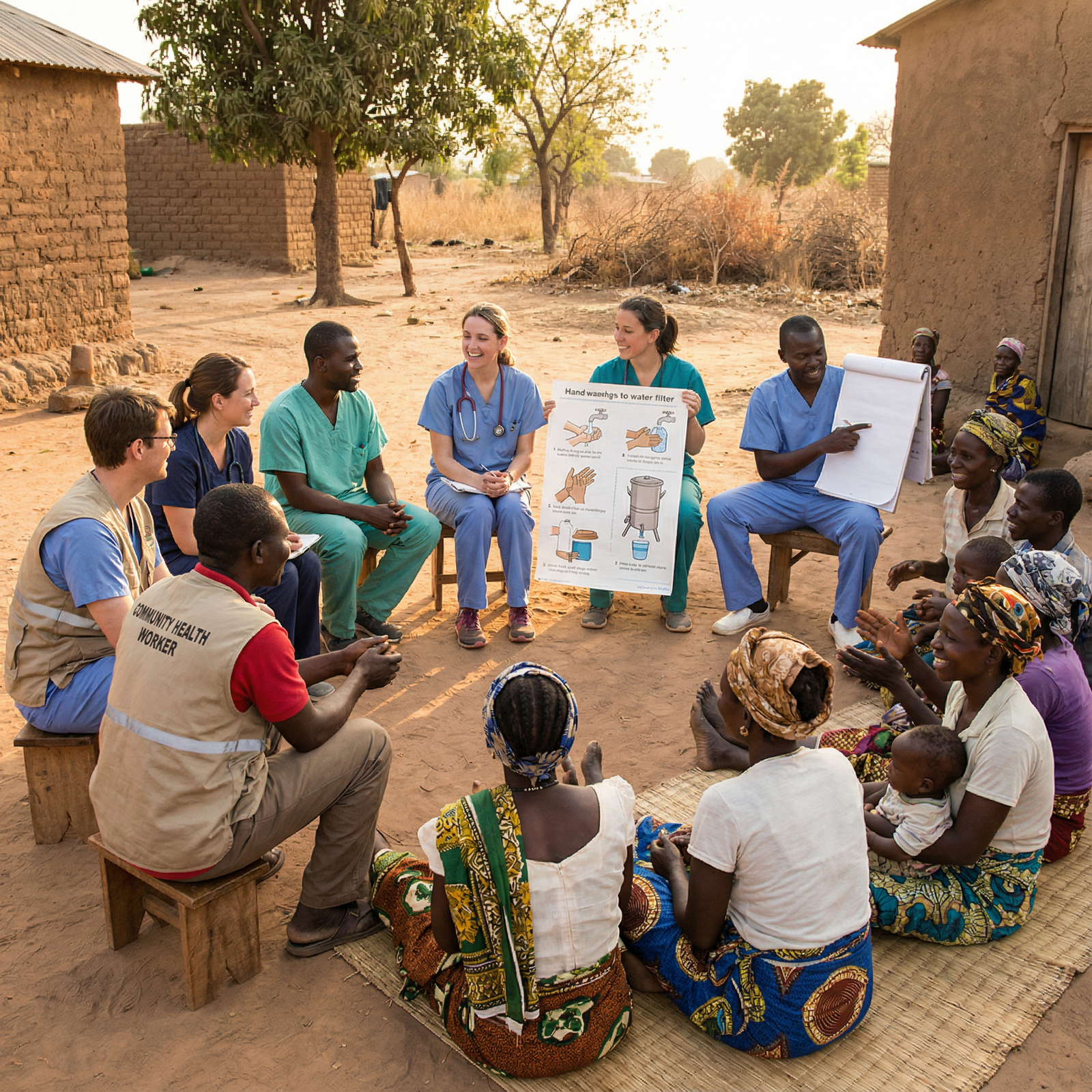
Why Some Medical Missions Quietly Get Blacklisted by Residency PDs
It’s late November. You’re on a Zoom interview for internal medicine.
Your interviewer is flipping through your ERAS pdf. They pause.
“I see you did a two‑week medical mission in Guatemala with… ‘Global Health Outreach Institute.’ Tell me about what you actually did there.”
You launch into the polished story you put in your personal statement. The one with “serving the underserved,” “global health,” and “cultural humility.”
The attending’s face doesn’t move. When you finish, they ask very quietly:
“Who supervised you? What procedures did you personally perform? And how did they handle follow‑up care afterward?”
You feel it. The mood shift. That slight tightening around the eyes.
You just triggered one of the quiet red flags on some program directors’ internal lists.
Let me tell you what’s really going on.
There’s an entire category of medical missions that residency PDs, faculty, and hospital legal departments consider toxic. They will not publish this anywhere. But they talk about it in selection committee meetings. They share “do not recommend” names in side emails. They remember certain organizations and silently dock applicants who brag about them.
Not because they hate service.
Because they hate liability, ethical train wrecks, and evidence of poor judgment.
You need to know the difference.
The Missions That Get Whisper‑Blacklisted
Let’s cut to it. There are patterns. Certain types of trips make PDs’ shoulders tense up the second they recognize the name or the description.
, detail-light mission, Research-based, faculty-led project](https://cdn.residencyadvisor.com/images/articles_svg/chart-common-pd-reactions-to-short-term-mission-descript-4681.svg "Common PD Reactions to Short-Term Mission Descriptions")
| Category | Value |
|---|---|
| Clinic shadowing with clear supervision | 85 |
| Short-term trip with procedures, vague oversight | 20 |
| Repeated long-term partnership site | 90 |
| [Instagram-heavy](https://residencyadvisor.com/resources/medical-missions/photography-and-social-media-mistakes-that-damage-mission-credibility), detail-light mission | 30 |
| Research-based, faculty-led project | 95 |
Those percentages are directionally what I’ve heard around actual selection tables: how often a description lands as “generally positive” rather than “uh oh, keep probing.”
Here are the types that get quietly blacklisted.
1. The “Vacation with Needles” Trips
Two weeks. No real pre‑departure training.
You fly in, throw up a makeshift clinic in a church or school, see 200 patients a day, and then vanish.
Classic red flags PDs recognize instantly:
- You were a pre‑clinical student, but “assisted with minor procedures” (read: sutured, did I&Ds, or injected meds without fully appropriate supervision).
- You were allowed to “see patients independently” despite having zero license and often limited language skills.
- There is no mention of local partners, local physicians, or any continuity of care.
On a selection committee, I’ve literally heard:
“This is the pop‑up clinic stuff. Liability nightmare. And it tells me the student either didn’t recognize the ethical problems or didn’t care enough to ask.”
The worst part? A lot of these trips market exactly what PDs hate—“Hands-on! Do more than you can at home!” On some internal lists I’ve seen: those org names are basically kryptonite.
2. For‑Profit or “Pay to Touch Patients” Models
Here’s what many mission coordinators won’t spell out:
Some companies make a lot of money selling you the fantasy of being a global health hero. They package:
- Round-trip airfare
- Lodging in a “safe but authentic” area
- A set number of “clinic days” where you get to “participate in patient care”
You pay thousands. They give you access to human beings as “experience.”
PDs know these companies. Faculty who’ve cleaned up their messes know them even better.
Internally, I’ve heard things like:
“This is the one where the MS2s did pelvic exams on women who thought they were seeing doctors.”
or
“They had students prescribing antibiotics without charting or follow-up. I will not rank anyone who worked with that group unless they show me in the interview they understand how messed up it was.”
When your “global health experience” is really you paying for unearned clinical authority in a jurisdiction with weak regulation, PDs categorize that as poor ethics plus poor judgment. Double hit.
3. Unlicensed Practice + Scope Creep
The quiet line that gets crossed all the time is this:
Would you have been allowed to do the same thing legally in the US at your training level?
Program directors pay attention to phrases like:
- “learned how to do ultrasound‑guided procedures”
- “performed multiple lumbar punctures”
- “practiced surgical skills”
- “saw obstetric patients independently”
When this is coming from a pre‑clinical student, or even a clinical MS3 with no local license and no clear documentation of attending oversight? That’s a screaming siren behind the polished story.
The unspoken thought on the other side of the Zoom call is:
You were okay doing things over there that would have gotten you unlicensed, sued, or expelled over here.
So what corners will you cut when I’m responsible for you?
I’ve seen applicants glow with pride describing how much autonomy they had on a mission. I’ve watched PDs’ faces go neutral and their rank list comment read: “Ethics concerning. Over‑valorizes unsupervised care. Would not rank to match.”
4. No Local Partnership. No Continuity. No Respect.
This is where seasoned global health faculty get visibly angry.
Ethically serious global health work almost always centers:
- strong local partners (clinics, hospitals, NGOs)
- local leadership deciding priorities
- continuity of care beyond your selfie window
The blacklisted trips?
They helicopter in, run high‑volume clinics with US students or residents at the center, hand out a bag of meds, and disappear. No follow-up. No EMR. No handoff.
Local physicians often hate these groups. They see the aftermath: partially treated conditions, antibiotic resistance, confused patients, and disruption of established care patterns.
PDs pick up on this when they hear descriptions like, “We were the only medical care these people ever see,” or “There was only one local doctor but we took the lead.”
I can tell you flatly: those lines read as arrogant and naive in a global health‑literate audience.
How PDs Actually Talk About These Trips
Let me give you a view from behind the committee room door.
Applications are sorted. Filters are applied. A pile of “borderline but interesting” candidates gets full committee review. This is where your mission story can either rescue you or bury you.
The mission‑trip‑red‑flag conversation sounds like this (these are paraphrased but very close to what I’ve actually heard):
“She went with [well‑known problematic org]. They let undergrads examine patients. That’s the same group we complained about through the med school last year.”
→ Outcome: “Pass. Too many other strong applicants without that baggage.”“He talks about doing procedures he didn’t have training for, and there’s zero mention of supervision.”
→ Outcome: “Fine, give him an interview if you want, but someone needs to grill him on this.”“This just looks like voluntourism. No depth, no continuity, no reflection. He describes it like a photo shoot.”
→ Outcome: “We’re not ranking this person above anyone with real sustained service.”
On the flip side, here’s how a good mission experience gets discussed:
- “She did three summers at the same site, worked under local physicians, and then did a formal elective with our global health department. That’s legit.”
- “He explicitly mentions the ethical tension of being allowed to do more than in the US and how he pushed back. I like that judgment.”
The mission itself isn’t always the problem.
Your awareness of the ethical issues—and whether you grew from them—is what saves or sinks you.
Concrete Signs Your Mission Might Be a Problem
You want a rough litmus test? Ask yourself:
If you described exactly what you did, in detail, to hospital risk management or a medico‑legal board, would you feel confident or defensive?
Here’s what PDs quietly use as pattern recognition.
| Category | Green Flag | Yellow Flag | Red Flag |
|---|---|---|---|
| Supervision | On-site licensed attending, documented | Occasional oversight, not always present | Students running clinics with minimal licensed presence |
| Scope of practice | Same as US level for training | Slightly expanded, with close supervision | Doing procedures or prescribing far beyond training |
| Local partnership | Strong, long-term, local leadership | Some coordination, mostly US-led | No clear local partners or ongoing presence |
| Continuity of care | Clear follow-up system and records | Limited arrangements, ad-hoc follow-up | No follow-up, no records, “one-and-done” clinics |
| Reflection in app | Honest, critical, shows growth | Generic “service” talk | Self-congratulatory, blind to ethical issues |
If you’re in the red column more than once, that experience is exactly what some PDs have in mind when they say, “I’m tired of these unethical medical missions.”
How to Talk About a Questionable Trip Without Blowing Yourself Up
Maybe you already went on one of these glossy, ethically gray trips. Too late to change that.
What you can change is how you frame it. I’ve seen applicants salvage problematic experiences by being honest and reflective instead of defensive and oblivious.
Here’s what works.
1. Drop the Savior Narrative
If your essay sounds like this—
“I brought medical care to people who otherwise had none, and it inspired me to pursue global health to help those less fortunate”—
you’re already losing the people who know how complicated global health actually is.
Reframe to something like:
- “I realized quickly how limited short-term care is without local partnerships or systems to ensure continuity.”
- “I struggled with being asked to do more clinically than I was trained for, and that tension reshaped how I think about global health.”
That tells an interviewer: you saw the cracks. You didn’t just enjoy the hero costume.
2. Name the Ethical Problems Out Loud
Faculty respect this more than you think.
Example in an interview:
“I went with a group I chose poorly, frankly. At the time I didn’t grasp how problematic it was that students were doing procedures beyond their usual scope in settings without robust follow-up. I’ve since sought out more structured global health education and, if I went again, I’d insist on strong local leadership and defined roles.”
That answer disarms a lot of skepticism. It shows growth instead of stubborn justification.
3. Emphasize What You Stopped Doing
I’ve seen multiple applicants win over skeptical PDs by saying, in effect:
“I learned enough to walk away from that model.”
For instance:
- You went once as an undergrad on a shady trip, then in med school you chose only faculty-led, university-affiliated global health work.
- You declined to do certain procedures on the trip and can explain why.
Actions like that demonstrate exactly the judgment PDs want in a resident.
What Strong, PD-Approved Global Health Looks Like
Let’s be practical. You want genuine, ethical global health experience that PDs actually respect. This is what it tends to look like from their side of the table.
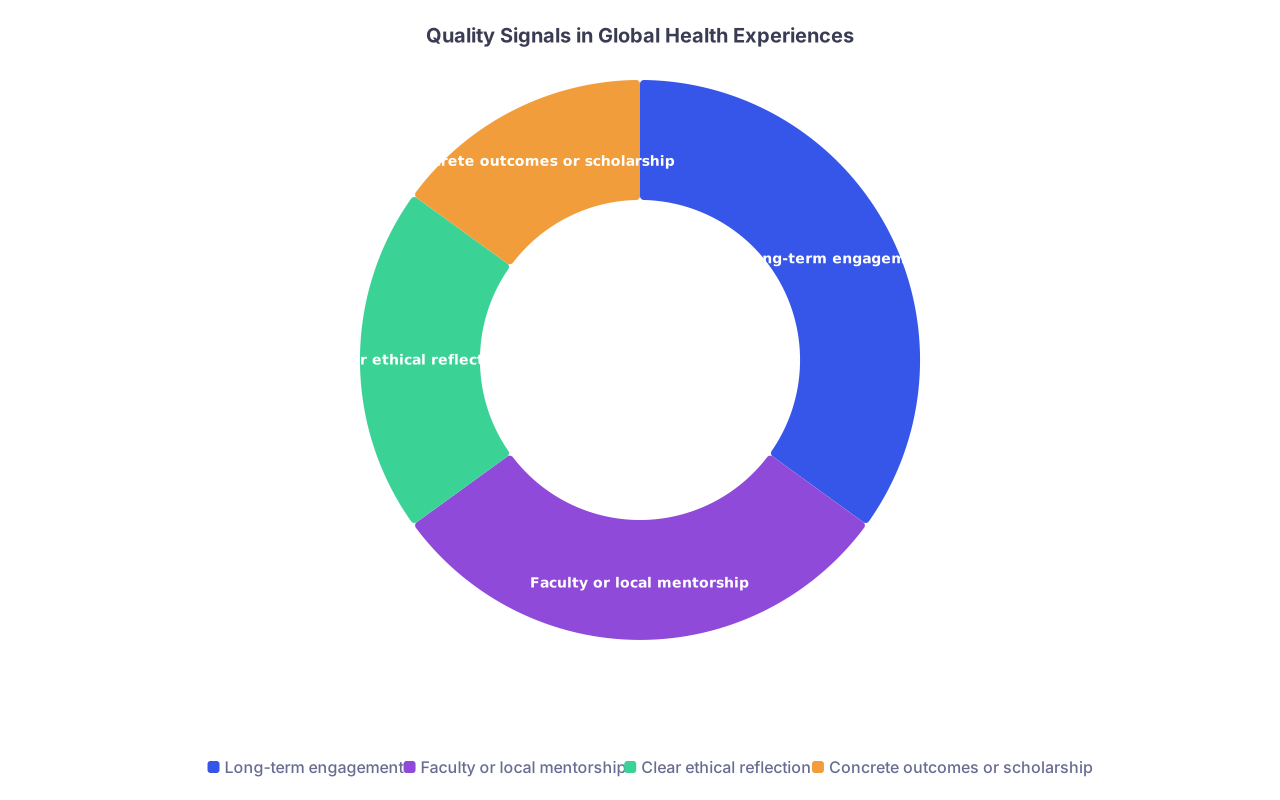
| Category | Value |
|---|---|
| Long-term engagement | 35 |
| Faculty or local mentorship | 30 |
| Clear ethical reflection | 20 |
| Concrete outcomes or scholarship | 15 |
Patterns faculty like:
- You worked with the same site or community multiple times. Continuity over postcard variety.
- It was tied to your med school, a reputable NGO, or a major academic global health partner.
- There was real curriculum: pre‑departure training, reflection, structured debriefing.
- You can describe, specifically, how local clinicians led the work and what your role actually was.
- You produced something: QI project, small research poster, protocol development, training materials.
One IM PD I know keeps a short list of organizations and sites that they’ve seen produce excellent, grounded residents. Another has an informal blacklist. Same idea, opposite purpose.
If you’re still planning a mission, choose the first group. Obviously.
The Legal and Institutional Backstory You Never Hear
There’s a reason the mood around missions has shifted over the last decade. It’s not just ethics. It’s risk.
Hospitals and med schools have been burned by:
- Students returning with photos of them doing procedures they were absolutely not credentialed for.
- Whispers of adverse outcomes abroad tied to visiting teams.
- Local partners complaining directly to US institutions about unethical behavior.
Legal and compliance teams now ask annoying questions:
- Who is the local licensing authority?
- Who is responsible if there’s a bad outcome?
- What documentation exists of supervision and informed consent?
Residency PDs live in that same ecosystem. They’re not just evaluating your heart. They’re evaluating whether you’re going to get their program—or their hospital—sued.
And yes, word travels. I’ve seen emails forwarded across institutions warning:
“Be cautious with applicants from [X mission org]. We had major concerns after multiple students reported unsafe practices there.”
Nobody ever posts that list on a website. But it absolutely shapes impressions.
If You’re Planning a Mission Now: How Not to Screw It Up
If you haven’t gone yet and you’re reading this before clicking “pay deposit,” good. You have options.
Quick, ruthless filters:
- If the website brags “you’ll do more hands‑on procedures than in the US” and you’re a student? Walk away.
- If there’s no mention of local partner organizations or long‑term projects, just “bring care to remote villages!”? Walk away.
- If there’s no structured pre‑departure training, and your main communication is with a sales rep, not a faculty member or clinician? Walk away.
Instead, aim for:
- University‑affiliated global health electives.
- Established NGOs that partner with ministries of health and local hospitals.
- Roles appropriate to your level: data collection, QI, education, supervised clinical work with clear boundaries.
If you genuinely care about global health, you’ll be in it for the long game anyway. Two‑week heroics won’t impress the people you actually want to work with.
A Simple Frame for Your Application
If you’re stuck with a mixed‑bag mission experience and you have to include it, structure how you present it around three beats:
What happened, factually, without inflation.
“I assisted in triage and basic exams under the supervision of local and US physicians. I did not independently perform procedures.”What you noticed that troubled you.
“I became uncomfortable with how much autonomy students were given and the lack of clear follow-up.”What you changed after that.
“That experience pushed me to seek structured global health training and to prioritize projects with strong local leadership and continuity.”
That story reads very differently from:
“I learned I love global health and serving the less fortunate.”
Same trip. Completely different signal to a PD.
FAQs
1. Should I completely leave a sketchy mission trip off my ERAS if I’m worried?
If the trip was short, ethically questionable, and you gained little legitimate clinical or scholarly value, I’d seriously consider leaving it off or demoting it to a minor “volunteering” line without fanfare. The worst move is centering a problematic mission as your flagship “global health passion” when it mostly shows poor judgment. If you do list it, keep the description brutally honest and limited to ethically clean activities (health education, logistics, shadowing), and be ready to discuss what you learned about its limitations.
2. What if my school sponsors a trip that fits some of these red flags?
I’ve seen that too. A university name doesn’t magically sanitize bad structure. If you’re already committed, protect your own ethics: stay within your US scope of practice, ask about local partners and follow-up, and debrief with a trusted faculty member afterward. On your application, you can emphasize the parts that were well‑run and explicitly acknowledge any concerns you had. PDs respect someone who can see flaws even in institution‑branded experiences.
3. How do I know if an organization is on a “blacklist”?
There’s no public list, and there never will be. But you can triangulate: ask your school’s global health office if they work with that group, talk to faculty who’ve done serious global health work, and Google the org alongside words like “ethics,” “voluntourism,” and “criticism.” If experienced people consistently wince or say, “We don’t send our students there,” believe them. And if the org markets itself by promising lots of hands‑on procedures to unlicensed trainees in short time frames? Assume it’s on somebody’s blacklist already.
Two points to walk away with.
First, not all “medical missions” are created equal. Some build systems and capacity. Others sell you a photo op and exploit patients as training props. Residency PDs know the difference even if premed advisors don’t.
Second, what matters now is not whether you were naive at 20. It’s whether, by the time you’re applying for residency, you’ve developed the judgment to see the ethical fault lines—and choose differently going forward.


