
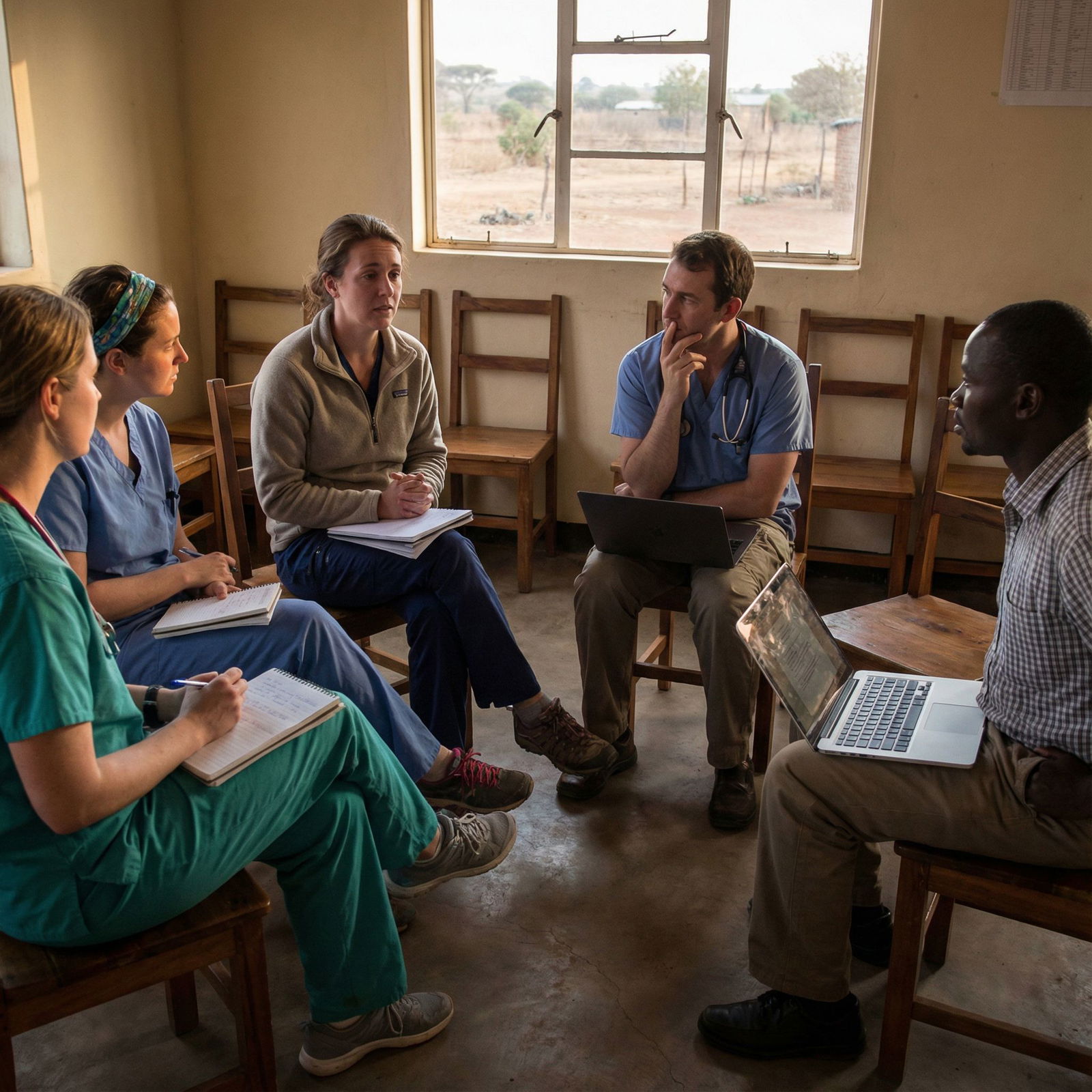
What if the essay you think makes you look “global” and “service‑oriented” is actually the essay that makes adcoms quietly write, “No ethical insight”?
Let me be direct: the biggest mistake pre-meds make when writing about medical missions is turning someone else’s hardship into their personal highlight reel.
Not in a cartoonishly evil way. In the subtle, socially acceptable way everyone around you seems to do it: “This trip changed my life,” “They were so grateful,” “I realized how privileged I am.”
You have probably seen those essays. You may have drafted one.
If you write about a medical mission like a savior story, you signal three things that terrify people who actually work in global health and ethics:
- You do not understand power.
- You do not understand scope of practice.
- You do not understand that good intentions are not enough in medicine.
And that combination is exactly what admissions committees are screening out.
Let’s break down the specific, repeated mistakes pre-meds make when they write about medical missions—and how to avoid each one without sounding fake, defensive, or like a walking ethics textbook.
Mistake #1: Centering Yourself Instead of the Patients and Community
The classic pre-med mission essay structure goes like this:
- “I went to [country] on a medical mission trip.”
- “We saw such terrible conditions—no running water, few supplies.”
- “I helped [dramatic procedure or scene].”
- “They were so grateful, even though they had so little.”
- “I realized how fortunate I am and decided to become a doctor.”
If that outline looks uncomfortably familiar, good. You need to fix it.
The core problem: you are the protagonist, and the patients are props. Their poverty, illness, and lack of resources exist in your writing to make you look compassionate, dedicated, and humble. That is a red flag.
I have watched admissions readers literally groan when they hit lines like:
- “Despite having so little, they were so happy.”
- “Their smiles showed me that material things do not matter.”
- “I went there to change their lives, but they changed mine.”
Why this is a problem:
- It reduces complex lives to inspirational scenery.
- It treats structural violence—colonial history, resource extraction, broken health systems—as atmospheric background.
- It sounds almost identical to thousands of other essays. Unoriginal and ethically shallow.
The fix:
Write with the assumption that the reader already knows conditions were difficult. You do not need to sell the drama. You need to show respect and specificity.
Bad version: “I will never forget the poor villagers who had nothing but still smiled and hugged us.”
Better version: “I met a woman, Ana, who walked three hours with her sister to the clinic because there was no local maternity care. She already knew more about managing high-risk pregnancies than I did. My role was to fetch supplies and translate simple instructions, while the local nurse-midwife led the exam.”
Notice the difference:
- No vague “villagers.”
- No “they had nothing.”
- No emotional harvest of their gratitude.
- Clear: you are support staff, not the hero.
If every paragraph about your mission trip could be summarized as “I did something and felt something,” you are doing it wrong. At least half of what you write should be about what you saw, what you did not do, and what that revealed about the limits of short-term missions.
That last part—limits—is where most pre-meds lose the plot.
Mistake #2: Romanticizing “Helping” While Ignoring Harm
Another common essay move: describe “providing care” in glowing terms, with zero acknowledgment that short-term medical missions can be ethically messy or outright harmful.
You know the sentences:
- “We brought medical care to people who otherwise had none.”
- “Without our clinic, these patients would never have seen a doctor.”
- “We were their only hope.”
Dangerous thinking. And completely out of step with current conversations in global health.
Here is what seasoned faculty and clinicians know about a lot of short-term missions:
- They can undermine local health systems.
- They can create dependency or expectations the team cannot sustain.
- They sometimes let underqualified students do things they would never be allowed to do at home.
- They often skip continuity of care and follow-up.
If you write as if your presence was unambiguously good, you signal that you have not considered any of this. That you think “helping” is automatically virtuous. That is the mindset that leads to ethical disasters once you have real power.
The fix is not to trash the trip. The fix is to show you have a grown-up understanding of complexity.
Bad version: “Our free clinic saved countless lives during that week.”
Better version: “Our team treated many patients we would not have reached otherwise, but I became increasingly uncomfortable knowing that we were leaving in five days. A child we diagnosed with probable rheumatic heart disease needed long-term antibiotics and follow-up. The local clinician and NGO partners were working to secure those, but I saw clearly that our short presence created needs we could not personally meet. That tension stayed with me.”
That sentence—“That tension stayed with me”—tells an ethics-aware reader: this applicant is not naive. They recognize that feel-good service is not the same thing as sustainable care.
Mistake #3: Exaggerating Your Role and Scope of Practice
This is the one that gets whispered about in committee rooms:
“Did you see how they described what they did on that trip? That does not sound like appropriate student work.”
Nothing will sink your credibility faster than implying you did physician-level tasks, made diagnoses, or performed procedures that clearly exceed pre-med training.
Tell-tale phrases:
- “I diagnosed…”
- “I sutured…”
- “I delivered a baby…”
- “I decided to prescribe…”
If you were a pre-med on a one-week mission and you really did all that, the correct reaction is not pride. It is concern.
Either:
- You are exaggerating. Dishonest.
- You are telling the truth. Then the trip was reckless and exploited patients.
Neither helps your application.
You have to be precise and modest about your role. In global health, that is not a weakness. It is a sign of maturity.
Bad version: “I helped deliver a baby in a village that had never seen a doctor before.”
Better version: “I stood in the corner of a one-room clinic while the local nurse-midwife and our supervising physician managed a complicated delivery. My job was to pass instruments, monitor the fetal Doppler when asked, and keep the area as clean as we could. I learned more from watching their calm communication than from anything I physically did.”
This version:
- Clearly states you were assisting, not performing.
- Centers the trained professionals.
- Does not pretend your presence alone transformed the outcome.
If you are tempted to inflate your role because “everyone else does it,” remember: admissions readers see the pattern. The exaggerations blend together and become noise. Honest specificity stands out.
Mistake #4: Using Poverty as a Backdrop for Your Personal Epiphany
This one is subtle but ugly once you see it.
The entire essay becomes a before-and-after story:
- Before: You were privileged, naive, maybe a bit self-centered.
- After: You saw “true suffering” and were “forever changed.”
And somehow, the change is mostly about your personal growth. Not about any meaningful shift in how you think about justice, systems, or your obligations in medicine.
Common lines:
- “I used to take my life for granted, but now I appreciate everything I have.”
- “I realized material wealth does not buy happiness.”
- “I learned that even without modern technology, we can still do so much good.”
From an ethics lens, this is shallow. You went somewhere with limited resources, and the most concrete outcome is that you feel more grateful for hot water and iPhones. That is not a moral achievement. It is a vacation revelation.
The deeper problem: it frames the community’s hardship as an educational tool for you.
The fix is to shift from “This changed me” to “This forced me to reconsider what responsible care actually means.”
Bad version: “Seeing children play happily in dirt streets showed me that happiness does not depend on material possessions.”
Better version: “I struggled with the dissonance of playing soccer with children outside the clinic, knowing that several had untreated chronic illnesses because there was no local pediatrician. It pushed me to think less about my own sense of gratitude and more about how I can engage with long-term, locally-led solutions rather than one-off trips.”
That is the difference between a tourist insight and ethical reflection.
Mistake #5: Erasing Local Clinicians and Systems
Another red flag: writing as if your group of students and American doctors parachuted into a health vacuum and single-handedly created care where there was none.
Real life is almost never like that.
There are usually:
- Local nurses
- Community health workers
- Traditional healers
- Government clinics (underfunded, yes, but present)
- NGOs doing slow, unglamorous work
When you write as if your team was the only source of medical care, you erase local expertise and agency. That is textbook savior narrative.
Bad version: “We set up the only clinic these villagers had ever seen.”
Better version: “We joined a long-standing mobile clinic run by a local NGO and community health workers. Our attending physicians provided extra hands for a week, but the health workers knew the patients, their histories, and the social dynamics we did not. When I tried to suggest changes to a hypertension medication regimen, one of the nurses quietly explained that the nearest pharmacy only carried two drugs consistently. That conversation humbled me.”
That last sentence is exactly what ethics-aware readers look for: realizing that knowledge without context is dangerous.
If your essay does not mention:
- Who invited your team
- Who continues the work after you leave
- How local clinicians guided your actions
then the default assumption is that you have not thought about any of that.
Mistake #6: Treating Ethical Questions as Optional
A lot of pre-meds treat ethics as a checkbox course, not a lens. That shows up in mission essays as total silence around critical questions like:
- Were we asked to be there by local partners?
- Were we practicing within an appropriate scope?
- How was follow-up arranged for patients we saw?
- Who paid, and who benefited most?
If your essay makes your mission trip sound like a simple feel-good volunteer experience, you signal that these questions barely crossed your mind. That is exactly the mindset that leads to shortcuts and rationalizations later in training.
You do not need a PhD in bioethics to show you care about this. You need curiosity and some discomfort.
For example:
“I noticed that patients were often told to come back next week for lab results, but our team was leaving in three days. When I asked the local physician about this, she explained their system of partnering with a regional hospital to ensure continuity. It corrected my assumption that outside volunteers were the backbone of care; in reality, we were an extra layer for a very short time.”
That is one sentence of ethical attention. It goes a long way.
Mistake #7: Using Vague, Overused Language That Hides Shallow Thinking
Admissions committees are allergic to certain phrases because they have been abused into meaninglessness in mission essays:
- “Underprivileged communities”
- “Less fortunate than us”
- “Third-world country”
- “They had so little, yet were so grateful”
- “Giving back”
- “Making a difference”
When you lean on this language, you sound like you copied from a 2010 volunteer website. It suggests you have not engaged with current thinking in global health or even basic respectful phrasing.
The cure is specificity and plain language.
Instead of “underprivileged,” say what is actually going on:
- “Rural community with one understaffed clinic serving 20,000 people.”
- “District with high rates of untreated hypertension due to medication shortages.”
Instead of “third-world,” name the country, region, or just “low-resource setting.”
Instead of “making a difference,” describe a specific, small concrete outcome:
- “I spent most of my time weighing infants and recording growth data that the local team uses to track malnutrition trends over years.”
That last one is not flashy. Which is exactly why it reads as honest.
Mistake #8: Failing to Connect the Experience to Your Long-Term Responsibilities
Here is the final, quiet mistake: ending your mission essay at the airport.
“I boarded the plane home with a full heart and a renewed commitment to medicine.”
That tells the reader nothing about what you did with that experience besides feel moved. Reflection without action is self-indulgence.
You need to show some continuity:
- Did you change how you volunteer locally?
- Did you seek coursework in global health or ethics?
- Did you become more cautious about what kinds of trips you join?
- Did you start learning the language spoken where you served?
Do not list activities just to pad your CV. Show a coherent line between “I saw this tension” and “I now approach X differently.”
Bad ending: “This trip confirmed my desire to become a doctor and serve the underserved.”
Better ending: “Since returning, I have shifted from short-term trips to working weekly at a free clinic in my city, where I see some of the same access issues—interrupted medication, transportation barriers, mistrust of institutions—without the gloss of travel. The mission trip did not make me an expert in global health, but it did convince me that if I work abroad again, it must be part of a long-term, locally-led project where my role is defined and limited.”
That is what maturity looks like on the page.
| Category | Value |
|---|---|
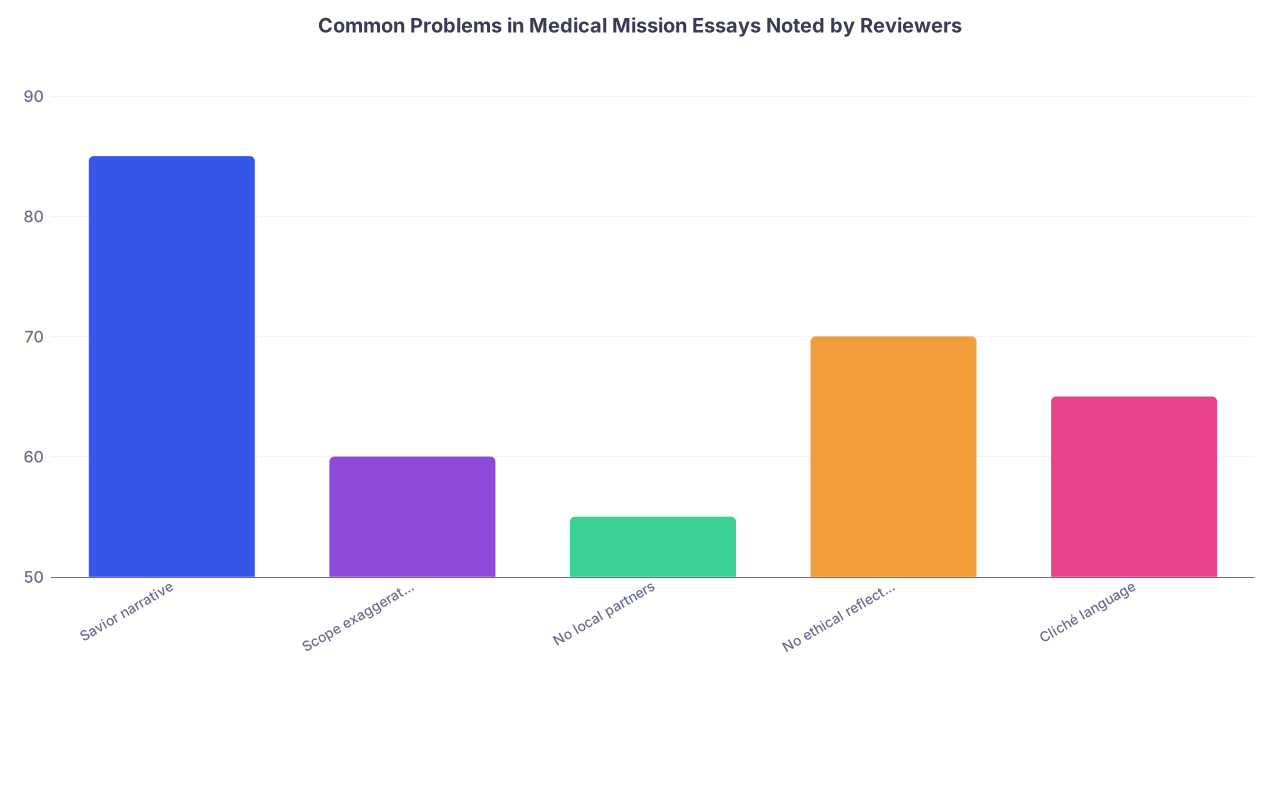
| Savior narrative | 85 |
| Scope exaggeration | 60 |
| No local partners | 55 |
| No ethical reflection | 70 |
| Cliché language | 65 |

| Step | Description |
|---|---|
| Step 1 | Start Draft |
| Step 2 | Recenter patients and local staff |
| Step 3 | Scale back to true role |
| Step 4 | Add local partners and follow up |
| Step 5 | Add one concrete ethical concern |
| Step 6 | Connect to long term actions |
| Step 7 | Revise for clichés and vague language |
| Step 8 | Final Essay |
| Step 9 | Am I the hero? |
| Step 10 | Any scope exaggeration? |
| Step 11 | Mention local systems? |
| Step 12 | Engage with ethical tension? |
| Aspect | Weak Essay Version | Strong Essay Version |
|---|---|---|
| Main focus | Applicant’s emotions and heroics | Patients, local staff, systems, and limits |
| Description of role | Vague, inflated, procedure-focused | Specific, modest, clearly supervised |
| View of mission | Purely positive, “we saved them” | Mixed, acknowledges benefits and tensions |
| Ethical awareness | None, or generic “I learned to be grateful” | Concrete questions about harm, follow-up, power |
| Language | Clichés, “underprivileged,” “third-world” | Precise, respectful, context-rich |
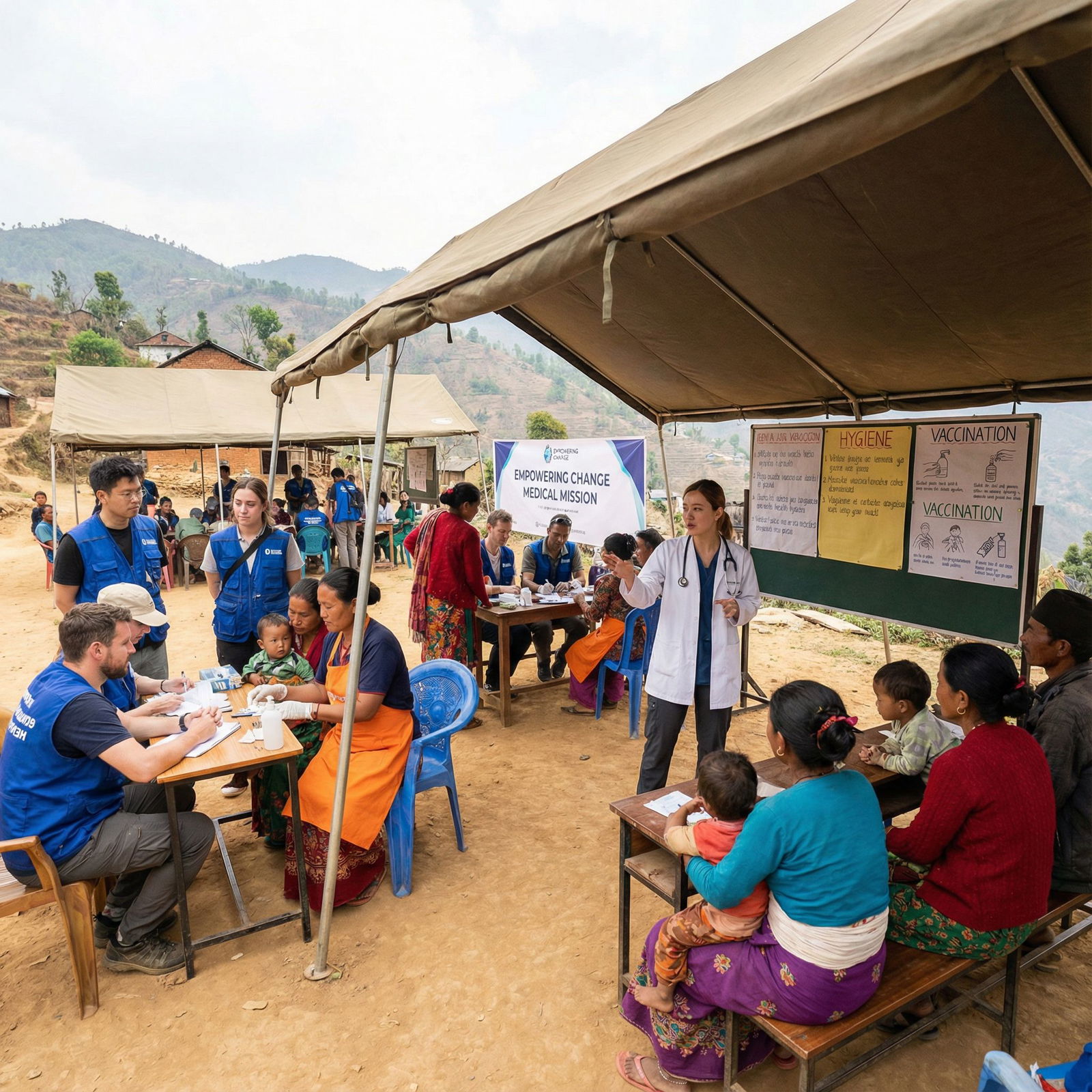
How to Salvage a Mission Essay You Have Already Written
If you already have a draft and you are now realizing it is exactly the kind of essay I am warning you about, do not panic. Fix it systematically.
Read your essay and mark every sentence that:
- Begins with “I” and describes you doing something “impressive.”
- Mentions how “grateful” or “happy” people were.
- Uses vague group labels instead of names or roles.
- Claims impact you cannot actually verify (“saved lives,” “only chance for care”).
Then:
- Cut at least a third of those sentences.
- Replace a few with concrete details that show limits, not heroics.
- Add at least one moment of discomfort or conflict you did not resolve neatly.
- Name a local clinician or organization and describe what they taught you.
- End with a change in your behavior, not just in your feelings.
You are not trying to prove you were perfect. You are proving that you have the humility and ethical reflexes medicine requires.
The Bottom Line
Three points to keep front and center:
- Do not turn someone else’s hardship into your personal transformation story or hero narrative. Center patients, local clinicians, and the limits of what you actually did.
- Be brutally honest about your role and the ethical complexity of short-term missions—scope of practice, local systems, follow-up, and power dynamics all matter.
- Connect the experience to concrete changes in how you act now, not just how you felt then. Ethical reflection without changed behavior is just ego dressed up as service.


