
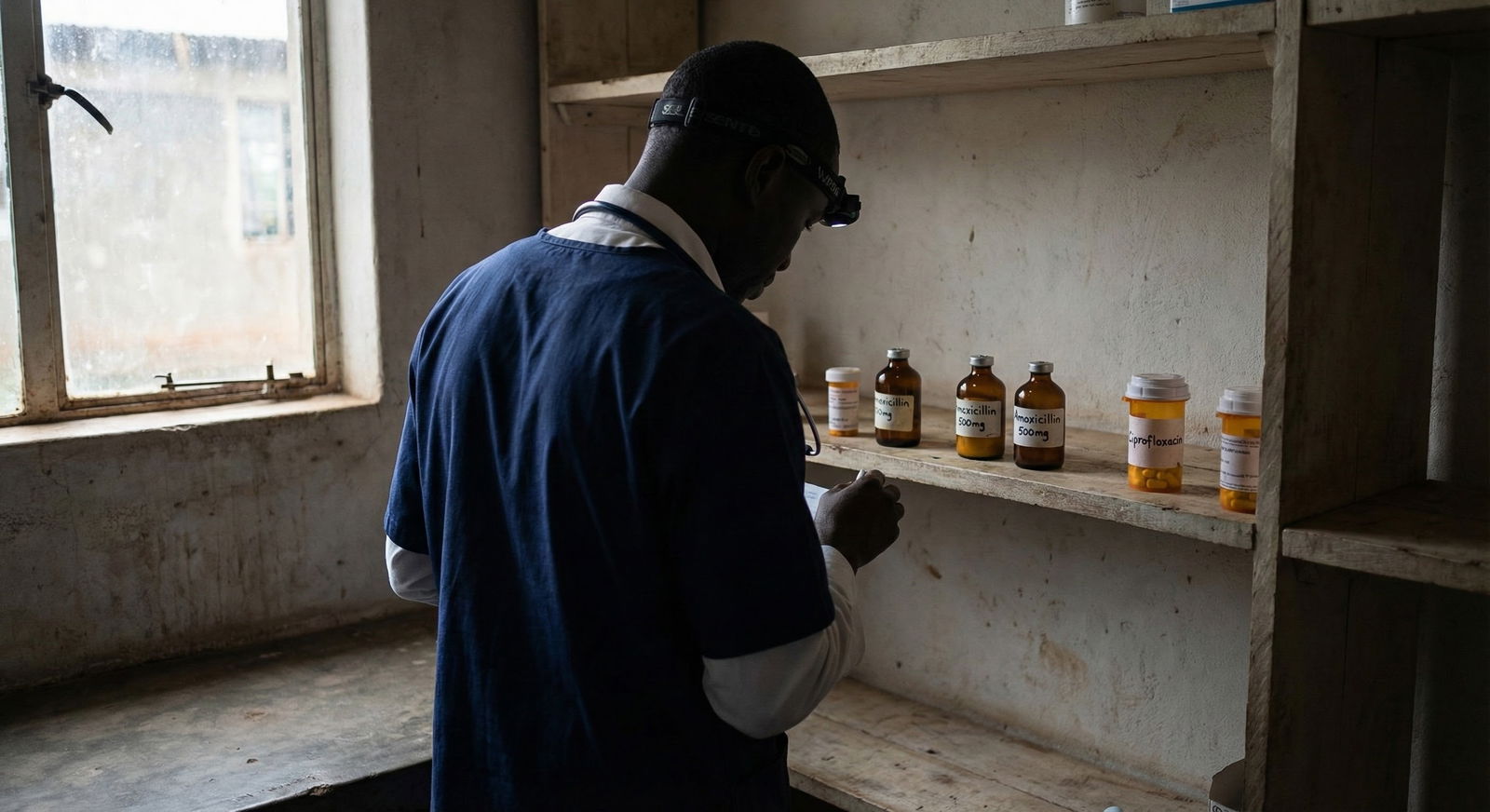
Most “antimicrobial stewardship programs” collapse the moment the pharmacy shelves are half empty. That is exactly when yours has to get sharper.
You are not at a large academic center with ID consults, susceptibility reports, and pharmacy intervention alerts. You are in a mission hospital, a district facility, or a mobile clinic where “formulary” means a plastic bin with four antibiotics, two of which expired last month.
This is where stewardship becomes real medical ethics, not a committee project.
Let me break this down specifically.
1. The Ethical Frame: Stewardship When Saying “No” Can Harm
Antimicrobial stewardship in a resource‑rich setting is mostly about reducing overuse. In a severely limited formulary, you face a different tension:
- Overuse today will harm future patients.
- Under‑treatment today will harm the patient in front of you.
You live in that tension every day.
Four core ethical questions you are actually answering
Whether you say it out loud or not, each antibiotic decision in a low‑resource mission setting hits these four questions:
Justice:
Am I using a scarce antibiotic in a way that is fair to other current and future patients?Non‑maleficence (do no harm):
Will this choice create resistant organisms that will make later infections essentially untreatable here?Beneficence:
Am I giving this specific patient the best realistic chance with what we actually have, not what a guideline PDF from Boston says?Respect for persons:
Does the patient understand the limitations and the reasoning behind my choice—or my refusal?
In a stocked tertiary center, you can hide behind “ID recommended this.” In a mission hospital with five drugs, you are the guideline, like it or not.
Let’s anchor this with a simple but brutal example I have seen repeatedly:
Pharmacy stock: benzylpenicillin, ampicillin, gentamicin, metronidazole.
Ceftriaxone is backordered for 3 weeks. No vancomycin. No carbapenems. No culture capability beyond a Gram stain if you are lucky.Patient A: 22‑year‑old with classic meningitis—fever, neck stiffness, altered mental status.
Patient B: 60‑year‑old with presumed pneumonia, O2 sat 88%, but ambulatory and conversant.
If you use your limited injectable third‑generation cephalosporin (maybe you have two vials left) on every pneumonia, you will not have it for the meningitis case that shows up at 2 a.m. And you cannot “borrow” ceftriaxone from the next town. There is no “next town” in any meaningful sense.
Stewardship here is front‑loading your ethical obligation to the sickest, highest‑benefit indications, not to “anyone with a fever and a cough.”
2. Reality Check: What “Formularies Barely Stocked” Actually Looks Like
Let us be concrete. A typical under‑stocked mission hospital pharmacy might reasonably have:
- Oral: amoxicillin, cotrimoxazole, doxycycline, ciprofloxacin (intermittent), azithromycin (rarely, often donor‑dependent).
- Parenteral: ampicillin, benzylpenicillin, gentamicin, metronidazole, sporadic ceftriaxone.
- Almost never available: vancomycin, piperacillin‑tazobactam, carbapenems, linezolid, daptomycin.
No susceptibility testing. No local antibiogram. Maybe a rusted microscope and a tech who can sometimes do a Gram stain.
You cannot practice “IDSA guideline” medicine in that environment. Trying to do so will either deplete what little you have or leave you paralyzed.
The question becomes: How do you construct a practical stewardship framework with this kind of formulary?
3. First Pillar: Diagnostic Stewardship When Labs Are Primitive
If you have almost no drug choice, your main “lever” is not which antibiotic. It is who actually receives any antibiotic at all and for how long.
That is diagnostic stewardship.
Step 1: Ruthless clinical classification
You need a mental triage system that sorts patients into three groups within minutes:
- Probably viral / no antibiotic indicated
- Uncertain but stable / can watch, possibly no immediate antibiotic
- Clearly or highly suspicious for bacterial / antibiotic now
This is not pretty. You will be wrong. But if you do not build this reflex, everyone with a cough leaves with amoxicillin “just in case,” and your mission pharmacy will be empty by Thursday.
Examples:
- Child with 3 days of cough, rhinorrhea, good oral intake, no chest indrawing, no tachypnea by WHO criteria: viral until proven otherwise. No antibiotic.
- Adult with focal consolidation on exam, high fever, tachypnea, hypoxia, or sepsis markers clinically: bacterial pneumonia highly likely. Treat.
- Young adult with watery diarrhea, afebrile, no blood, no severe dehydration: supportive care only. No antibiotic.
Step 2: Use the “poor man’s” diagnostics you do have
You may not have CRP or procalcitonin, but you usually have:
- Vitals and trend (improving or worsening over 6–12 hours).
- Point‑of‑care tests: malaria rapid tests, HIV rapid tests, urine dipsticks, sometimes pregnancy tests.
- Simple microscopy: thick and thin smears, occasional Gram stain.
Use them aggressively.
Examples of micro‑stewardship:
Fever + cough in a malaria‑endemic area:
Rule out malaria first. Treat malaria if positive; do not reflexively add antibiotics “for the lungs” without evidence of pneumonia.Dysuria + positive nitrites/leukocyte esterase in an otherwise well young adult: short course oral antibiotic is reasonable. No need for IV ceftriaxone.
Febrile neutropenia in a known HIV patient with low CD4: if all you have is ceftriaxone and gentamicin, use them; this is not where you “save” drugs.
You are trying to avoid the lazy habit: “We cannot test, so we will just give antibiotics.” That habit is how resistance gets exported and amplified in mission settings.
4. Second Pillar: Narrow Spectrum by Force, Not by Preference
In a wealthy setting, “narrow the spectrum” means de‑escalating from piperacillin‑tazobactam plus vancomycin to cefazolin after culture results. You do not have that ladder.
Your “narrow step” is choosing:
- Benzylpenicillin instead of ceftriaxone.
- Amoxicillin instead of ciprofloxacin.
- Ampicillin + gentamicin instead of ceftriaxone for neonatal sepsis.
Even if guidelines from high‑income countries scream ceftriaxone for almost everything, you have to treat ceftriaxone like gold. Use it for:
- Suspected meningitis.
- Severe community‑acquired pneumonia failing ampicillin + gentamicin.
- Severe sepsis of unknown source in the sickest patients.
- Pelvic inflammatory disease with high concern for tubo‑ovarian abscess where oral is impossible.
Everyone else? They get something “less pretty,” and that is ethically correct for the community.
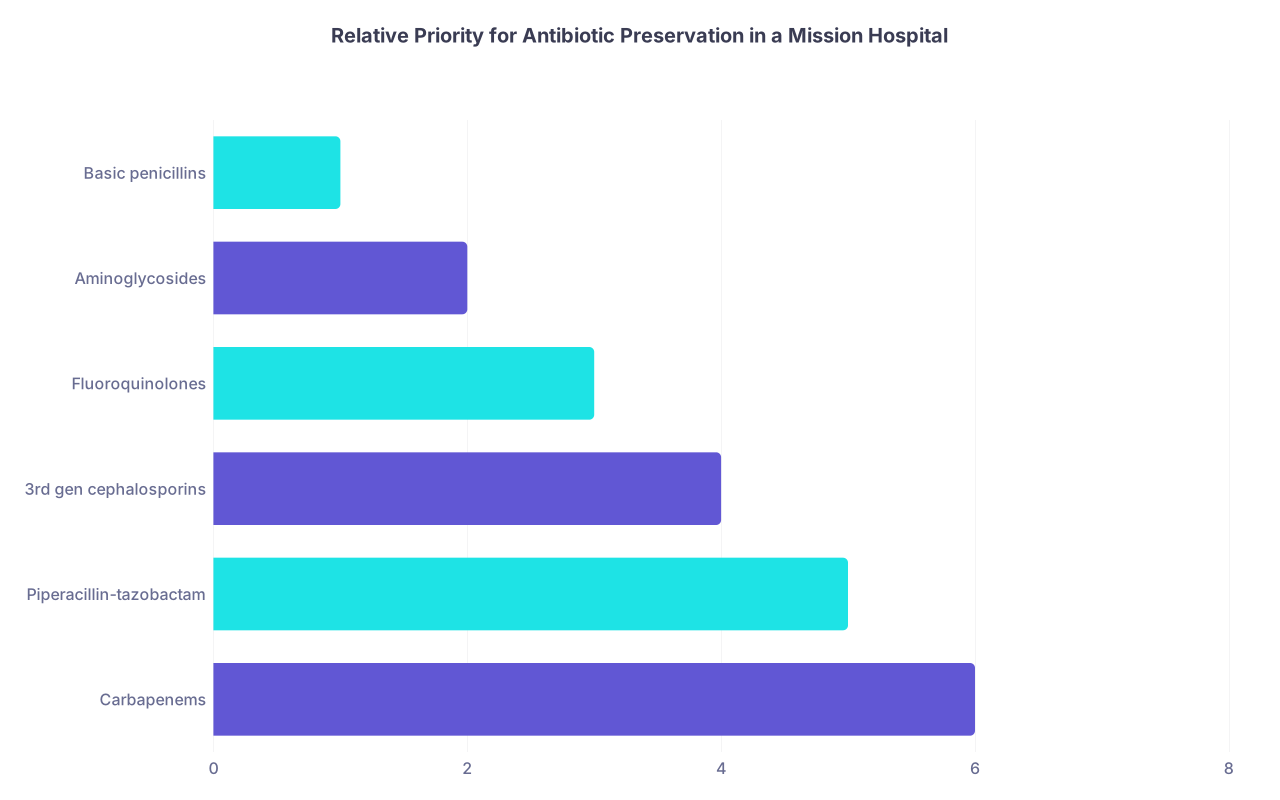
Practical hierarchy of “protect the following drugs”
Most mission settings will want to protect, in this rough order:
- Any carbapenem (if present at all)
- Piperacillin‑tazobactam (rarely present)
- Third‑generation cephalosporins (ceftriaxone)
- Fluoroquinolones (ciprofloxacin, levofloxacin)
- Aminoglycosides (gentamicin, amikacin) – protect ototoxicity and renal function
- Your last line oral agents (linezolid, if some NGO donated a few boxes)
Often you will only have #3–5 from that list. Still, you treat ceftriaxone like ICU‑only, not outpatient bronchiolitis.
| Category | Value |
|---|---|
| Carbapenems | 6 |
| Piperacillin-tazobactam | 5 |
| 3rd gen cephalosporins | 4 |
| Fluoroquinolones | 3 |
| Aminoglycosides | 2 |
| Basic penicillins | 1 |
The “priority score” is not scientific; it is a visual reminder: the higher the score, the more carefully you should guard and justify use.
5. Third Pillar: Duration, Review, and the Discipline of Stopping
When the formulary is thin, every extra day of antibiotic matters. Every extra 3‑day “just in case” course that you hand out at discharge is someone else’s missing treatment next week.
You need a hard habit of stop‑dates and daily review.
Build three rules into your brain (and ideally into your notes)
Always write a stop‑date
Do not write “ceftriaxone 1 g IV daily.” Write “ceftriaxone 1 g IV daily x 5 days, STOP DATE: 12 Jan.”Force a 48–72 hour Re‑assessment
On day 2–3, if the patient is stable or improving, ask explicitly:- Can I step down from IV to oral?
- Can I narrow the agent?
- Can I stop entirely earlier than the old textbook 10‑14 days?
Shorter is usually safe when you have carefully diagnosed
For uncomplicated lower UTI in women: 3–5 days oral.
Community‑acquired pneumonia improving rapidly: 5 days total is often enough.
Skin and soft tissue abscess after adequate drainage: maybe no antibiotic, or 3–5 days max.
Your biggest enemy here is inertia. Once ceftriaxone starts, nobody wants to be the one to stop it. In a mission setting, that inertia is unethical.
6. Building a Local “Mini‑Guideline” from Almost Nothing
You will not build a 60‑page antibiogram‑based protocol. But you can absolutely build a 2–3 page locally realistic antimicrobial guide tailored to your bare formulary.
Do not overcomplicate it. Focus on high‑yield syndromes.
| Syndrome | First-line Choice | Reserve / Escalation |
|---|---|---|
| Neonatal sepsis | Ampicillin + gentamicin | Add ceftriaxone if failing |
| Pediatric pneumonia (severe) | Ampicillin + gentamicin | Ceftriaxone if failing |
| Adult CAP (hospitalized) | Benzylpenicillin or ampicillin | Ceftriaxone if failing |
| Suspected meningitis | High-dose ceftriaxone | Add vancomycin if available |
| Uncomplicated cystitis (female) | Cotrimoxazole or nitrofurantoin if available | Ciprofloxacin if no alternatives |
You adjust this to your reality. If your cotrimoxazole resistance is obviously sky‑high based on clinical failures, you modify. If HIV prevalence is enormous, prophylactic cotrimoxazole might make sense for select patients but not for everyone with a sore throat.
The key point: write it down. When you are exhausted, you will fall back to habits. A one‑page wall chart saves you from lazy broad‑spectrum reflexes.
7. Working with Non‑Physician Prescribers and Visiting Volunteers
Mission settings are often a mix of:
- Local nurses and clinical officers doing the bulk of prescribing.
- A handful of long‑term physicians.
- A rotating circus of short‑term volunteers from high‑income countries, some of whom have never practiced without CT scanners.
If you do not manage this mix, your stewardship will disintegrate in two days.
For local staff
They carry the place on their backs. They also have deeply ingrained prescribing habits—often shaped during eras when certain drugs were cheap and widely donated.
You cannot just lecture them about “resistance.” You have to:
Show, case by case, where withholding antibiotics is safe.
Work one‑on‑one on the ward. “This child with viral URI: let us document why no antibiotic, and we will follow them together.”Give clear, simple criteria.
“No ceftriaxone for outpatient pneumonia unless: O2 sat < 90, or severe respiratory distress, or failure after 48 hours of high‑dose amoxicillin.”Celebrate appropriate non‑use.
When a nurse avoids reflex amoxicillin in a viral‑looking case, make a point of approving that decision publicly.
For short‑term visitors
This is where things can go really wrong. I have seen:
- A visiting surgeon from the US ordering 10 days of ceftriaxone prophylaxis for clean hernia repairs “because that is how we did it in residency.”
- A pediatric volunteer treating every upper respiratory infection with azithromycin “since we have a lot of it from a donation.”
You must have the spine to intervene. That means:
A one‑page orientation document handed to every visitor on day 1 explaining:
- Which antibiotics are scarce.
- Which are “protected” and require justification.
- Local resistance concerns if you have any data at all.
A cultural norm: local rules supersede home‑country habits. The mission leadership must back this publicly.
If a visitor argues “but this is standard of care at home,” the honest ethical answer is:
“Your home has susceptibility testing, ICUs, and unlimited access to newer agents. We do not. If we adopt your prescribing habit here, we will make our patients sicker in the long run. So no, that is not our standard of care.”
That is uncomfortable. Do it anyway.
8. Personal Development: How to Grow Ethically in This Mess
Let us talk about you. Because working stewardship in an under‑resourced mission setting will stretch you in ways that guidelines never mention.
Skill 1: Tolerating diagnostic uncertainty without panic‑prescribing
You will not “know” the pathogen in most cases. You will be wrong sometimes. The immature response is to cover everything with broad‑spectrum antibiotics forever.
The more mature, ethical response is:
- Accept uncertainty as baseline.
- Lean heavily on serial exams and clinical trajectories.
- Be willing to start narrow and escalate if the patient worsens, instead of starting broad and never de‑escalating.
You will have to practice this like a muscle. Early on, you will feel a knot in your stomach each time you withhold antibiotics from a febrile child. Over time, as you follow up and see them recover, your pattern recognition sharpens, and that anxiety becomes more focused and rational.
Skill 2: Communicating “no” without losing trust
Patients and families often equate “good care” with “more medicine.” In some cultures, an IV antibiotic is perceived as the highest form of care.
You must learn to say:
- “Your child has an infection that antibiotics do not help. They will get better faster without unnecessary drugs that carry harm for them and other children.”
And say it with calm confidence, not apology.
You also need to explain, in simple terms, why you are careful with stronger drugs:
- “This medicine is so powerful that if we use it for every cough today, it may not work at all for very serious infections tomorrow. We have to keep it for those severe cases.”
You will not win every argument. But you owe patients an honest, respectful explanation, not a silent paternalistic “no.”
Skill 3: Owning your decisions in a moral gray zone
There will be nights where you will genuinely not know whether you chose correctly. Maybe you reserved ceftriaxone for meningitis and used ampicillin + gentamicin on a very sick pneumonia patient who died. You will lie awake wondering if ceftriaxone would have saved them.
Here is the hard truth: the ethics of stewardship are not judged case by case. They are judged at the population level, over months and years.
Your duty is to:
- Make the best call you can with available data.
- Apply your framework consistently, not whimsically.
- Reflect and refine, rather than getting paralyzed by retrospective guilt.
That is personal development in the real sense. Not another certificate course. Actual moral muscle built over time, often painfully.
9. Practical Systems: Simple Stewardship Infrastructure That Actually Works
You do not need a full ASP committee. You need three simple systems that can function even with intermittent electricity and staff turnover.
1. A visible, updated antibiotic stockboard
On the wall, in the ward office or near the pharmacy window:
- List key antibiotics with color codes:
- Green: adequate stock
- Yellow: low stock
- Red: critical / almost out
Tie prescribing rules to that reality. If ceftriaxone is in the red zone, everyone knows: meningitis and the very sick only. No one should be surprised when their “routine” order is questioned.
2. A weekly 20‑minute “stewardship huddle”
Not a grand rounds. A practical quick run:
- Review:
- Any cases where antibiotics were clearly overused.
- Any deaths where under‑treatment might be suspected.
- Stock levels of key agents.
Ask one simple question each time: “Is there one prescribing rule we should tighten or relax based on this week?”
That is how you adapt locally instead of living in some imported guideline fantasyland.
3. A paper or simple digital log of “protected drug” use
For 1–2 highest‑value agents (for most, ceftriaxone and maybe a fluoroquinolone), require a one‑line justification in a logbook:
- Patient ID
- Indication
- Prescriber initials
Review that log weekly. Pattern recognition appears quickly:
- One volunteer ordering ceftriaxone for every malnourished child “just in case.”
- Routine POST‑op prophylaxis exceeding 24 hours.
Then you intervene specifically, not abstractly.

| Step | Description |
|---|---|
| Step 1 | Patient presents |
| Step 2 | Clinical assessment |
| Step 3 | Supportive care only |
| Step 4 | Select narrowest available |
| Step 5 | Write indication and stop date |
| Step 6 | Reassess at 48-72 hours |
| Step 7 | De-escalate or stop |
| Step 8 | Escalate within formulary |
| Step 9 | High suspicion bacterial? |
| Step 10 | Improving? |
10. Mission Ethics: Not Exporting Resistance and Bad Habits
You are not just treating this village. You are influencing the microbial ecosystem of an entire region.
Two ethical points often ignored by well‑meaning teams:
Antimicrobial resistance exported from mission hospitals is real.
If your hospital becomes a reservoir of ESBL‑producing organisms because every mild illness got ceftriaxone, those organisms do not respect your hospital boundaries. They spread through families, markets, and regional referrals.Your prescribing behavior teaches the next generation.
Local trainees will copy how you practice, not what you preach. If they watch you prescribe fluoroquinolones for every traveler’s diarrhea “because it is quick,” they will do the same long after you leave. That is your legacy.
So, stewardship when the formulary is bare is not optional. It is one of the main ethical responsibilities of any medical mission.
You decided to come. You do not get to shrug and say, “Well, we did the best we could,” if you ignored the downstream impact of your antibiotic choices.
FAQ (Exactly 5)
1. Is it ever ethical to give a broader‑spectrum antibiotic than “necessary” when follow‑up is uncertain?
Yes, sometimes. If you have a patient who is very unlikely to return and is high risk for deterioration (for example, an immunocompromised patient in a remote village), using a somewhat broader agent briefly can be justified. The key is that you consciously recognize the trade‑off and do not apply this logic to everyone with a mild infection “just in case.”
2. How do I handle pressure from local leaders who want “strong injections” given liberally because it reassures the community?
You have to negotiate. Explain that if you use your strongest injections on minor illness, they may not work when someone truly critical arrives. Offer compromise: for some culturally sensitive situations, use an IV route with a still‑narrow agent (e.g., benzylpenicillin) while reserving ceftriaxone for strict indications. But do not simply give in; you are the one who sees the stock levels and clinical consequences.
3. Should mission hospitals ever refuse donated antibiotics if they are not ideal choices?
Sometimes, yes. Massive donations of near‑expiry broad‑spectrum agents can do more harm than good, because staff feel compelled to “use them up.” If you accept them, you must pair the donation with strict use protocols. If that is impossible, refusing or redirecting them to a more controlled program can be more ethical.
4. How can I build any kind of local resistance data without a real microbiology lab?
Start crude. Track obvious clinical failures: which empiric regimens repeatedly fail for common syndromes (UTI, pneumonia, skin infections). If you have even limited ability to culture at a referral center (once a month), send a small number of well‑selected, recurrent infection cases to build anecdotal but valuable data. Over a year, patterns will emerge that can guide your empiric choices better than guesswork.
5. Is it wrong to use “shorter than guideline” antibiotic courses just to save drugs?
Not automatically. Many traditional durations (10–14 days “for everything”) are poorly evidence‑based. If the patient is clearly improving and you have reasoned clinical judgment that a 5‑day course is sufficient, shortening is both clinically defensible and ethically sound in a resource‑limited context. The wrong approach is to shorten blindly without watching the patient’s trajectory.
Key takeaways:
First, in a mission setting with a thin formulary, antimicrobial stewardship is not a luxury project; it is core medical ethics tied directly to justice and non‑maleficence. Second, your main levers are not fancy drugs or diagnostics but strict patient selection, narrowest effective choices, and disciplined stop‑dates. Third, how you and your team prescribe today will shape both resistance patterns and local practice habits for years after you leave—so treat every antibiotic order as part of your legacy, not just today’s problem.


