

You are standing in a church hall in rural East Africa at 7:15 a.m. Tables are lined with donated medications. A line of patients already reaches the gate. Yesterday, you saw blood pressures of 210/110 like it was nothing and random blood sugars in the 300s on people who walked two hours to get here. Local leaders are thrilled you came. Your team is enthusiastic.
And you have a sinking realization: if you run this the way most short-term mission clinics run, you will give a month of meds, a few pamphlets, some vague lifestyle advice, and then disappear. The same people will be back next year—worse. Maybe with a stroke. Maybe not back at all.
That is the problem. Now let me walk you through how you design a disease-specific mission clinic for hypertension and diabetes that is clinically sound, ethically defensible, and actually useful to the community—rather than an annual feel-good event for visiting teams.
1. Start With a Ruthless Reality Check: Should You Even Do This?
Before planning flowcharts or drug lists, you need one brutal conversation with yourself and your sending organization:
Are you building a sustainable hypertension/diabetes service, or are you doing a one-off “chronic disease carnival”?
If you cannot meet the minimum ethical bar below, you should not run a disease-specific NCD (noncommunicable disease) clinic at all. General acute care? Maybe. Hypertension/diabetes? No.
Minimal ethical requirements
You need all of the following, not “as many as possible”:
A stable local partner
A local clinic, hospital, or health authority that:- Existed before you came.
- Will exist after you leave.
- Is willing to co-own the clinic model and clinical decisions.
A continuity plan
Written, specific, and realistic answers to:- Who will refill medications when the team leaves?
- Where will patients go if they have side effects or complications?
- How will follow-up BP/sugar checks be done?
- Who is responsible if your treatment choices cause harm three months from now?
Medication continuity
You must be able to:- Use drugs that are locally available (or soon will be).
- Stick to a formulary the local system can maintain.
- Avoid “mission-only” miracle drugs that vanish when you do.
Data handoff
- A system so local partners know: who was seen, what was started, and what follow-up is needed.
- Records that are understandable and usable in their language and system.
If any of these are impossible, the ethical move is to scale back: provide screening and counseling, refer to existing local NCD programs, and resist the urge to “start people on something” just because you can.
2. Define Your Clinic’s Actual Scope: Be Narrow, On Purpose
The most common mistake: trying to do everything. Full endocrine practice in a church basement. That is how you create chaos and harm.
You need a strict scope of care. Put it in writing. Agree on it with the local partner clinic.
Reasonable scope for a hypertension/diabetes mission clinic
You are generally safe if you focus on:
Screening
- Blood pressure screening on all adults.
- Blood sugar screening on high-risk adults (age, obesity, symptoms, family history, prior diagnosis).
Diagnosis using simple, well-defined criteria
- Hypertension: repeated severe readings, or documented prior diagnosis with uncontrolled values.
- Diabetes: random glucose + classic symptoms; or known diabetics with poor control.
Basic, protocol-driven management
- Hypertension: stage-appropriate, up-titrated over time, using 2–3 drug classes max.
- Type 2 diabetes: metformin-first strategy; very cautious and limited insulin use unless there is guaranteed follow-up infrastructure.
High-yield lifestyle counseling
- Salt reduction, weight management, physical activity, foot care, and recognition of danger signs.
- Culturally tailored, realistic changes—not Western diet fantasies.
And what you explicitly will not do (unless you are integrated into a proper local chronic care system):
- Insulin-heavy regimens without follow-up.
- Complex multidrug regimens that cannot be continued locally.
- Routine management of advanced complications (retinopathy treatment, dialysis decisions, complex heart failure titration) on a short-term basis.
Put this “will do / will not do” list on a one-page guideline sheet that every clinician carries. It keeps you honest.
3. Build a Simple, Rigid Clinical Protocol
Protocols are not optional here. Hypertension and diabetes care need consistency, especially when different clinicians rotate through.
You want a 2–3 page, laminated protocol on:
- BP thresholds for action
- Drug choices and dose ranges
- When to refer
- When to say “no, we are not starting meds today”
Example: Hypertension protocol skeleton
Local guidelines should dominate. But a typical bare-bones structure might look like this (adapted to WHO/low-resource style):
Diagnose hypertension if:
- BP ≥160/100 on at least two readings during the visit; or
- History of hypertension on meds + uncontrolled readings today.
Initial approach:
- Recheck BP after 5–10 minutes seated, feet flat, no talking.
- Document at least two readings, same arm, appropriate cuff size.
Treatment starting rules:
- If systolic ≥180 or diastolic ≥110: treat today, arrange urgent local follow-up.
- If 160–179 / 100–109 and local partner supports starting meds: start low-dose medications if long-term refills are feasible.
- If 140–159 / 90–99: in short-term clinics, focus heavily on lifestyle and referral to existing NCD programs rather than starting meds you cannot sustain.
First-line drugs (example only – must match local formulary):
- Thiazide(-like) diuretic (e.g., hydrochlorothiazide, chlorthalidone).
- ACE inhibitor (e.g., enalapril) especially with diabetes or CKD.
- Calcium channel blocker (e.g., amlodipine).
You then specify max doses you will use in this setting, absolute contraindications (e.g., pregnancy, severe renal impairment), and referral flags (chest pain, neurologic deficit, pulmonary edema, BP not responding to 3 drugs if long-term follow-up exists).
Example: Type 2 diabetes protocol skeleton
Again, simplified and linked to what can be sustained:
Suspect diabetes if:
- Classic symptoms (polyuria, polydipsia, weight loss) + random glucose ≥200 mg/dL (11.1 mmol/L).
- Or known diabetic with uncontrolled sugars (e.g., random >250–300 mg/dL repeatedly).
Treatment priorities:
- Metformin as first-line, if:
- eGFR is reasonably preserved (use local creatinine estimates when available).
- No severe GI intolerance or contraindication.
- Metformin as first-line, if:
Insulin:
- Only if:
- There is a local provider willing and able to manage it over time.
- Patient has safe access to food, refrigeration (if needed), and monitoring.
- Clear documentation and education are provided.
- Only if:
If that infrastructure is not present, you do not create new insulin-dependent patients. That is a hard ethical line. You manage what you can safely and hand off what you cannot.
4. Design the Clinic Flow Around Hypertension and Diabetes Realities
This is where most mission teams get it backwards. They design flow around what is convenient for volunteers, not what makes chronic disease care safe.
You need a flow that:
- Separates screening from chronic disease management.
- Allows rechecks and counseling without clogging the physician line.
- Captures data in a way that can be handed off.
Basic flow structure

| Step | Description |
|---|---|
| Step 1 | Registration |
| Step 2 | BP and Glucose Screening |
| Step 3 | Health Education Only |
| Step 4 | Clinician Evaluation |
| Step 5 | Counseling and Medication Plan |
| Step 6 | Pharmacy and Final Instructions |
| Step 7 | Data Handoff to Local Partner |
| Step 8 | Abnormal? |
Let me break down each station and what matters for HTN/DM.
1. Registration
- Assign a unique patient ID (simple: date + sequence number, or use local system).
- Capture:
- Demographics
- Whether patient is new or follow-up
- Known diagnoses (HTN, DM, CKD, stroke, MI)
Keep it fast, but accurate. The ID ties everything together.
2. Screening station (BP + glucose)
Non-physician staff can run this if they are well trained.
BP:
- Proper cuff sizes.
- Standardized position.
- At least two readings, spaced a few minutes apart if high.
Glucose:
- Point-of-care glucometers with quality control.
- Clear labeling of fasting vs random if known (do not pretend you have perfect conditions—most mission clinics do randoms only).
This station flags:
- Hypertensive urgency/emergency (you need a predefined “red flag” path to the front of the line or to a referral facility).
- Markedly high glucose with symptoms (possible DKA/HHS referral).
- Patients who just need lifestyle counseling versus those needing full MD evaluation.
3. Clinician evaluation
You do not need to examine every person with BP 145/90 once. Focus physician time on:
- Newly identified severe hypertension
- Known hypertensives with very poor control
- New or poorly controlled diabetics
- Suspected complications: chest pain, shortness of breath, neuropathy, foot ulcers, visual changes, TIA/stroke symptoms.
Use a short, structured encounter form:
- 6–10 key history questions (duration, meds, adherence, symptoms of end-organ damage, smoking, alcohol, diet basics).
- Focused exam (heart, lungs, pulses, edema, foot exam for diabetics).
- Clear decision boxes: start / adjust / no change / refer.
4. Counseling and education station
This is where you win or lose on long-term impact.
Most mission clinics treat counseling as an afterthought. A leaflet and “reduce salt.” That is lazy.
You need:
- Trained local health workers or community volunteers.
- Simple, scripted messages on:
- What hypertension/diabetes are and why they matter.
- What the specific patient’s numbers mean.
- What medications they are getting, how to take them, and common side effects.
- Concrete, culturally matched diet changes (not “avoid all carbs,” but “swap X for Y,” “reduce this specific salty condiment,” “limit sugary tea from 3 cups to 1”).
- Foot care and danger signs for diabetics.
Make it interactive. Ask them to repeat back key points.
5. Pharmacy and documentation
Pharmacy in NCD clinics is not just pill counting.
You need:
- Consistent labeling (name, drug, strength, dosing, duration).
- Written schedules that make sense to people with limited literacy (use symbols, sun/moon for morning/evening if needed).
- A record of what was given that stays:
- One copy with the patient.
- One copy (or entry) for the local clinic.
5. Choose Medications Like You Will Not Be There Next Month
Because you probably will not.
The most unethical pattern I see: teams bring fancy donated meds, start half the village on them, and leave. Local clinics stock one or two generics. That is malpractice dressed up as charity.
Your drug list must be:
- Short
- Generic
- Affordable locally
- Familiar to local clinicians
Here is how that typically looks.
| Category | Example Generic Options |
|---|---|
| Thiazide diuretic | Hydrochlorothiazide, Chlorthalidone |
| ACE inhibitor | Enalapril, Lisinopril |
| CCB (dihydropyr.) | Amlodipine |
| Beta blocker* | Atenolol, Metoprolol |
| Oral diabetes med | Metformin |
| Insulin** | NPH, Regular |
* Use beta blockers where indicated (e.g., ischemic heart disease), not as your first-line in uncomplicated HTN unless local guidelines differ.
** Only if you have strong local continuity, as already discussed.
Key point: if the local partner regularly uses cheaper regional generics, match their exact agents and strengths whenever possible. You are not there to impose your favorite brand.
6. Data, Follow-up, and Handover: The Non-Negotiables
Hypertension and diabetes are chronic. A one-week clinic without handover is half-built scaffolding on a crumbling building.
You need a data and follow-up strategy that respects that reality.
Minimum data set for each hypertensive/diabetic patient
- Patient ID, name, age, contact info.
- Diagnosis (HTN, DM, both) with approximate duration.
- Key vitals:
- BP readings today (all of them, not just the lowest).
- Weight, if possible.
- Glucose values (and whether random or fasting).
- Medications:
- What they were taking before.
- What you prescribed (name, dose, frequency, quantity).
- Counseling done (tick-boxes are fine).
- Plan:
- Duration of supply.
- Where they should return and when.
- Referral recommendations if any.
This can be on paper forms or simple Excel/Google Sheets, but the rule is: the local partner must receive a copy in a format they can actually use.
Follow-up logistics
If you are honest about what happens after you leave, several models can work:
Direct integration into existing NCD clinic
- Best case. Your clinic functions as an intensive “screen and start” week that feeds into a standing local hypertensive/diabetes clinic.
- Local nurses/clinicians see these patients monthly or quarterly, adjust meds, renew prescriptions.
Community health worker model
- If there is no formal NCD clinic, train CHWs to:
- Check BP and sometimes random glucose in the community.
- Reinforce adherence and lifestyle advice.
- Flag red-flag symptoms and refer up.
- If there is no formal NCD clinic, train CHWs to:
Limited refill partnership
- Local pharmacy or clinic agrees to honor your regimen for X months, using their stock.
- You may subsidize cost for a defined period, but you plan from day one how subsidies will taper or transition.
What you never do: start people on lifelong medicines and pretend a vague, “Come back when the next team arrives” is a follow-up plan.
7. Ethics: Where This Goes Wrong Fast
This is a “Personal Development and Medical Ethics” category, so let us talk about the parts that actually keep you up at night once you have seen the downstream harm.
Here are the main ethical failure modes in NCD mission clinics, and how to avoid them.
1. Creating dependency without continuity
You create a “hypertension club” that only exists when the foreign team shows up. Patients begin to wait for you instead of seeing local providers. Local clinics get sidelined.
How to avoid it:
- Everything runs under the name and authority of the local partner. Your team is “visiting staff,” not the main show.
- Every chronic patient is formally “owned” by a local provider or clinic in the records. You are a consultant, not the primary provider.
2. Practice beyond competence
Residents doing things they would never be allowed to do at home: managing insulin regimens in patients with zero monitoring capacity, for instance.
If you are not comfortable managing it in your home setting with full resources, you have no business improvising it where the risk is higher and the follow-up weaker. That applies double to pediatric diabetes and complex endocrine issues.
3. Hidden inequity
Treating mission patients to a higher standard than the average local clinic can support, then leaving them no way to maintain that standard.
That feels compassionate in the moment. It is not. It quiets your conscience and then shifts a long-term burden to people with no power.
Design your clinic to be slightly better organized, maybe better stocked, but still fully compatible with what local systems can realistically sustain. Think “catalyst,” not “parallel universe.”
4. Skipping informed consent
Mission settings often slide into paternalism. “These people are grateful; just do what is best.”
No.
You still explain what hypertension is, what the medications can do and their side effects, what follow-up is available—and what is not. If you cannot explain those honestly through a good translator in understandable language, you should not be starting complex long-term therapies.
8. Training the Team: You Cannot Wing Chronic Disease
Most short-term teams prepare more for cross-cultural icebreakers than for managing chronic HTN/DM in resource-limited settings. That is backwards.
Pre-trip training must cover:
- Local guidelines and formularies (actually read them).
- The specific protocol your clinic will use.
- Ethical boundaries—especially around insulin, advanced complications, and high-risk decisions.
- Clear referral pathways and emergency plans (where do we send hypertensive emergencies, DKA, stroke, ACS?).
Run case-based drills before you go:
- 55-year-old woman, BP 190/120, on unknown meds she ran out of a month ago.
- 45-year-old man with random glucose 320 mg/dL, polyuria, weight loss, but no insulin access locally.
- 70-year-old stroke survivor with uncontrolled BP and limited mobility.
Walk through what your team will actually do under your agreed protocols, not in ideal Western conditions.
9. Measuring Impact Without Lying to Yourself
Hypertension and diabetes do not change in a week. So you need to be realistic—and still serious—about measuring impact.
You are not going to produce miracle A1c drops in 5 days. But you can measure things that really matter, like:
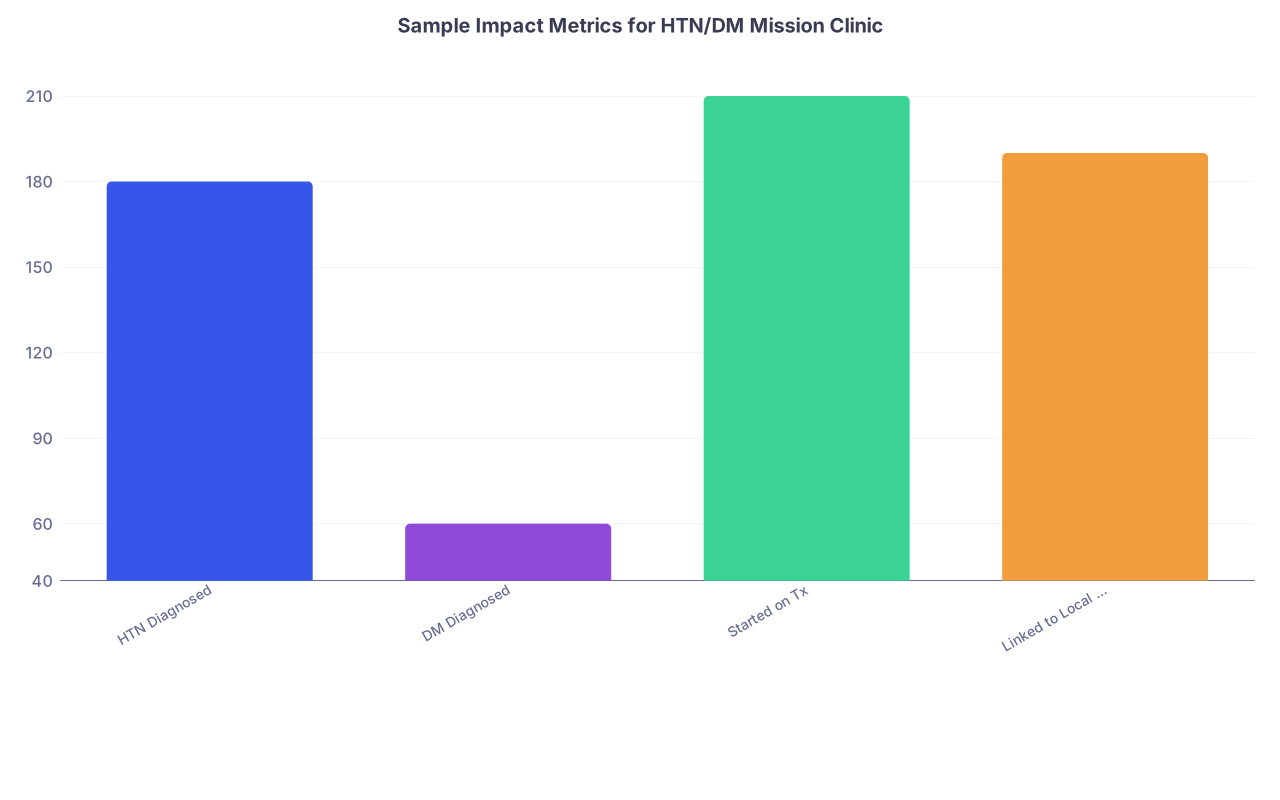
| Category | Value |
|---|---|
| HTN Diagnosed | 180 |
| DM Diagnosed | 60 |
| Started on Tx | 210 |
| Linked to Local Follow-up | 190 |
More sophisticated (if your partner is engaged):
- Percentage of patients who attend at least one local follow-up visit within 3 months.
- Change in BP control rates or basic glucose control among those who follow up.
- Reduction in inappropriate polypharmacy or inconsistent regimens after introducing standardized protocols.
But here is the key: you measure what happens after you are gone. That requires genuine partnership, not parachute care.
10. Personal Development: What This Does To You, If You Pay Attention
Let me be blunt. Designing an ethically sound disease-specific mission clinic for hypertension and diabetes will change how you practice medicine at home.
Why?
Because it forces you to confront questions you usually avoid:
- What does “first, do no harm” actually mean when you control the starting point of a chronic therapy, but someone else (or no one) controls the follow-up?
- Are you doing this for them—or to make yourself feel like a “global health person”?
- Would you still choose a treatment if you had to personally guarantee its long-term availability out of your own pocket?
If you engage those questions honestly, you will come back less impressed by quick fixes and more committed to system-level work. You will also have a sharper internal compass about when to say no—even when everyone is pressuring you to “just do something.”

FAQs
1. Is it ever ethical to run a one-time hypertension/diabetes clinic with no local follow-up?
Ethical and wise are both “no” here for anything beyond screening and counseling. For chronic diseases like HTN and DM, a one-time therapeutic clinic without a continuity plan is irresponsible. You can ethically do:
- Screening (BP, glucose).
- Risk communication and counseling.
- Referral to existing local services.
But you should not start or significantly adjust long-term medications if there is no realistic way for those patients to obtain continued prescriptions and monitoring after you leave.
2. How much insulin use is acceptable in a mission hypertension/diabetes clinic?
Insulin is not forbidden, but it should be rare and carefully restricted. Appropriate situations:
- You are integrated into a local system that already manages insulin regularly.
- There is clear local follow-up, access to syringes, safe storage, and education.
- A local clinician will own the regimen moving forward.
You should avoid being the one who first “converts” large numbers of patients to insulin in a setting that cannot support safe long-term use. If in doubt, coordinate with the local partner and err on the side of less complexity.
3. What if local practice is poor or outdated—do I override it with my own approach?
You do not bulldoze local practice, but you also do not blindly copy bad care. The right move is collaborative protocol development. Sit with local clinicians before clinic starts, review national guidelines, map them to available meds and tests, and agree on simplified, evidence-informed protocols neither of you will sabotage.
If something is clearly harmful (for example, routine use of a drug with known major side effects when safer alternatives exist locally), you address it respectfully with data and consensus. You are a partner, not a colonial supervisor.
4. How do I push back when my team wants to “treat aggressively” to show impact?
You anchor the discussion in ethics and reality. Remind them:
- You will not be here to manage complications or refill meds.
- Starting a drug is a long-term commitment, not a feel-good act.
- Your job is to integrate with local capacity, not outperform it for a week.
Use your written scope-of-practice and protocols as the “bad cop.” You are not refusing care; you are following a deliberate, ethically grounded model agreed upon with local partners. If necessary, elevate these concerns to your mission organization leadership before you get on the plane.
Key points to leave with:
- A disease-specific mission clinic for hypertension and diabetes is only ethical if it is tightly integrated with local systems, uses locally sustainable drugs and protocols, and has a concrete follow-up and handover plan.
- You must design rigid, simple clinical workflows and protocols that respect local guidelines and capacity, and you should be prepared to say “no” to interventions you cannot safely sustain.
- Your role is not to create a parallel, superior micro-clinic for one week; it is to strengthen or extend what can reasonably exist when you are gone.


