
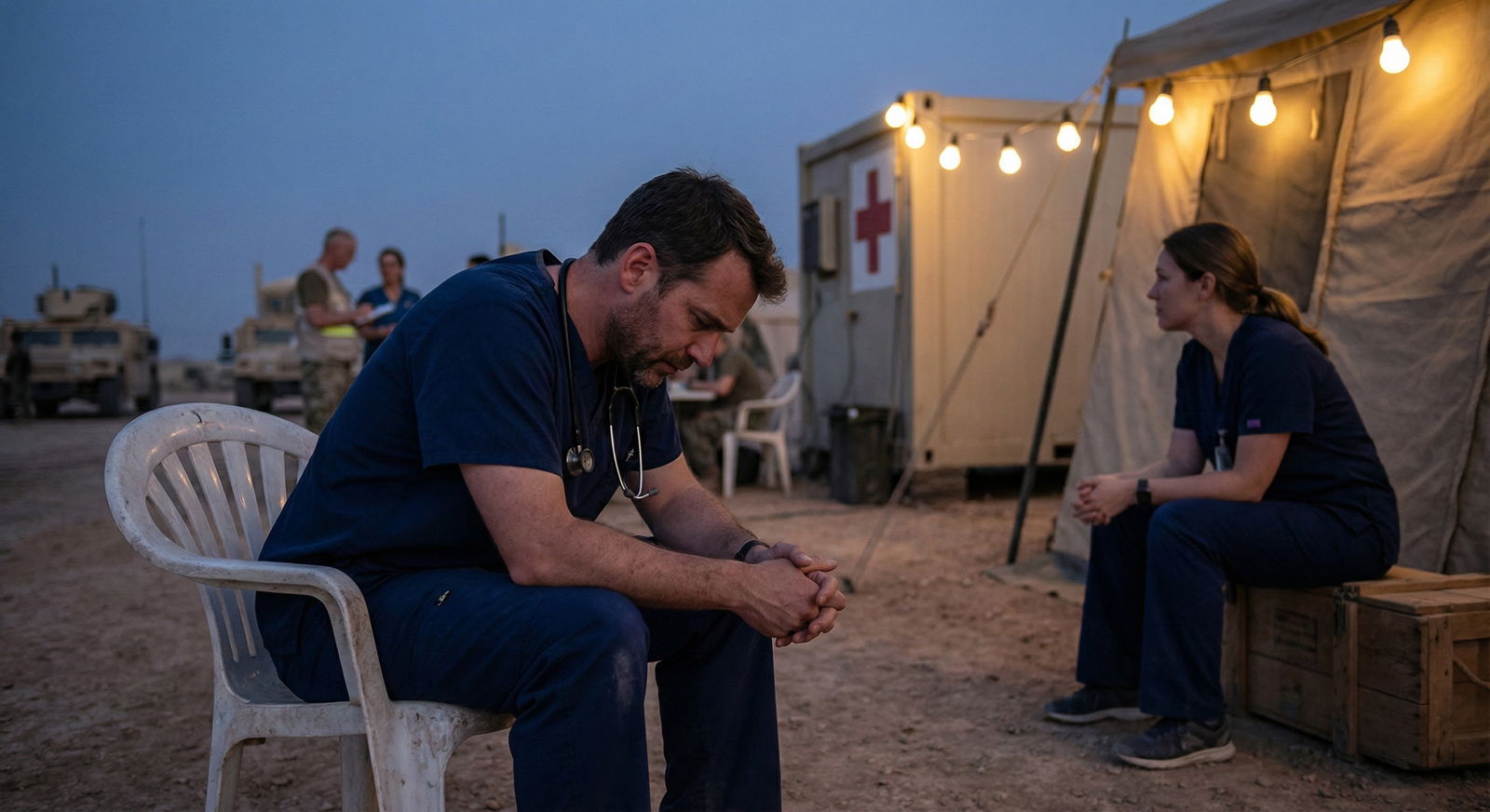
The feel‑good, “I saved lives on a mission trip” narrative is exactly what gets a lot of applicants in trouble.
Especially the ones who didn’t feel like heroes. The ones who, like you (and honestly, like me), mostly felt over their head, undertrained, and slightly sick to their stomach that they were even in that position.
So the question that keeps circling your brain:
“I felt over my head on a mission. If I talk about that honestly… are interviewers going to think I’m unsafe, unethical, or just not cut out for medicine?”
Let me be blunt: your story can absolutely help you. Or it can hurt you. The difference is how you frame it and whether you show that you understand the ethical landmines instead of casually stepping on them with a smile.
Let’s pull this apart, because right now you’re probably replaying specific scenes in your head and catastrophizing each one.
What You're Really Afraid They're Thinking
You’re not just worried they’ll “judge you.” You’re worried they’ll put you in one of these mental boxes:
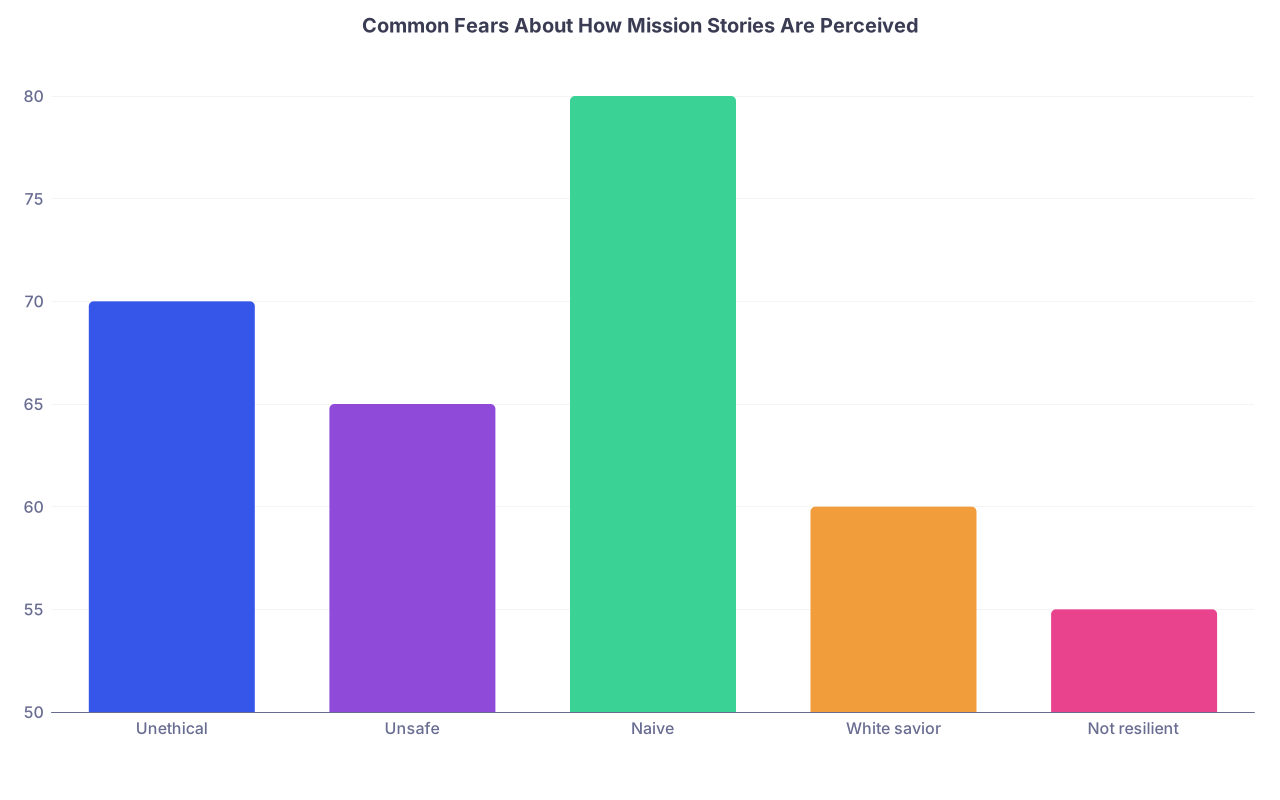
| Category | Value |
|---|---|
| Unethical | 70 |
| Unsafe | 65 |
| Naive | 80 |
| White savior | 60 |
| Not resilient | 55 |
You’re scared they’ll see you as:
- The Unethical Student – who crossed scope-of-practice lines
- The Naive Tourist – who paid to play doctor and then “discovered herself”
- The White Savior – who centered herself more than the community
- The Weak One – who “couldn’t handle it” emotionally
So you start editing your own experience in your head. “Maybe I just… don’t mention it.” Or you flip to the other extreme: “Maybe I only share the positive parts so they don’t think I messed up.”
Both instincts are understandable. Both can backfire.
Because here’s the uncomfortable truth: a lot of traditional “missions” stories already set off quiet red flags in interviewers’ minds. The smiling photos with kids, the “we saw 400 patients in 3 days” brag, the vague “we helped with procedures” line. People who review apps have seen the ugly side of this stuff.
What they’re looking for is exactly what you’re terrified to admit: “I wasn’t ready for parts of this. And that matters.”
That’s actually your way out.
Feeling Over Your Head Isn’t the Problem. Pretending You Weren’t Is.
I need you to hear this very clearly: feeling over your head is not what hurts you.
Everyone who’s ever done real clinical work has had a “what the hell am I doing here?” moment. Interns have it. Residents have it. Attendings have a more subtle version of it when something goes sideways.
What gets applicants into trouble is one of two things:
- They glamorize doing too much.
- They minimize the ethical issues like they’re side notes.
If your story sounds like, “I was totally out of my depth, but I just stepped up and did the suturing / delivering babies / diagnosing malaria because there was no one else,” you’re basically waving a giant flag that says:
“I don’t understand scope of practice. I think ‘need’ justifies anything.”
On the other hand, if your story sounds like, “It was challenging but amazing; I grew a lot,” with zero acknowledgment of the ethical messiness, they quietly mark you as someone who hasn’t thought deeply about global health at all.
You don’t want either of those.
You want something like:
“I realized, painfully, that my desire to help didn’t automatically make my presence ethical. Here’s what I did (and didn’t do) about that. Here’s what’s changed since.”
That’s the arc they’re actually hoping to hear.
The Ethical Landmines You’re Scared You Already Stepped On
Let’s list the worst‑case stuff that might be looping in your head when you think about that mission:
- “I took a blood pressure and kind of… offered advice? I wasn’t supervised the way I’d be in the US.”
- “They asked me to assist with procedures, and I wasn’t sure if that was okay.”
- “We saw so many patients in a day it felt like a conveyor belt, not real care.”
- “There was no real follow‑up plan. We flew in, did a bunch of stuff, and left.”
- “I worried the trip was about the volunteers’ experience more than the community’s needs.”
You’re worried an interviewer will hear one detail, decide you’re irredeemably unethical, and mentally toss your file in the trash.
But this is how it usually goes in their head instead:
- Did this student recognize the ethical problems?
- Did they show any discomfort with gray areas, or did they sound proud of overstepping?
- Can they articulate what appropriate scope and supervision should look like?
- Did this experience actually shape how they think about power, privilege, and patient safety?
They know you didn’t design the trip. They know students get pushed into weird roles by poorly structured programs. They’re more interested in whether you’re now the type of person who would question that structure.
If anything, your anxiety about it is a sign your moral compass is working.
The real red flag is the person who brags about doing things they should clearly not have been doing.
How to Talk About Being Overwhelmed Without Sounding Unsafe
So how the hell do you tell the truth without nuking your own application?
You focus on three things: boundaries, reflection, and change.
Here’s what that actually means.
1. Be specific about your role and limits.
Instead of:
“I helped diagnose and treat patients in rural clinics.”
Say something closer to:
“I took vitals, collected histories with a translator, and presented them to the physician. I was careful not to offer independent diagnoses or treatment recommendations because I wasn’t trained for that.”
You can still admit you felt like people expected more from you, or that it was uncomfortable to say “I don’t know,” but the key is that you did hold the line. Or, if you didn’t, you clearly see now that you should have.
2. Name the moment you felt over your head.
You don’t need a dramatic complication. It can be very human:
- The mom asking you if her child was going to die and you realizing you had zero real training
- The local doctor casually handing you a procedure and your heart racing
- The massive gap between what people needed and what your team could actually offer
Describe that visceral moment honestly. But then move quickly to what you learned, not just how awful you felt.
3. Show your ethical growth, not your guilt spiral.
You do not want to sit there in an interview and just self‑flagellate: “I was so privileged, it was terrible, I hate myself.”
You want something like:
“I left that clinic with this pit in my stomach that we might have felt better about ourselves than we actually helped. When I got back, I started reading more about short‑term medical missions and the critiques around them. I realized I’d romanticized the idea of ‘helping’ without understanding local systems or sustainability. That’s changed how I think about service now.”
You’re not asking for absolution. You’re demonstrating that you don’t brush past ethical discomfort. You sit with it and let it change you.
The “Will They Grill Me on This?” Panic
You’re probably picturing some ethics‑obsessed surgeon staring you down going:
“So, did you practice beyond your training in a low‑resource setting for your own benefit?”
Let’s be honest: you might get someone like that. And they might push. That doesn’t mean you’re doomed.
Here’s what makes you look strong rather than guilty:
You don’t get defensive. You don’t say, “Well, there was no one else,” as a justification. You say:
- “There were times I felt pressure to act beyond my training. Looking back, that makes me uncomfortable.”
- “I tried to draw clear boundaries: I gathered information and supported the team, but I didn’t independently diagnose or treat.”
- “One of the reasons I want formal training is precisely so I’m never relying on ‘good intentions’ instead of competence.”
That’s a completely mature answer. You’re showing self‑awareness, humility, and a strong ethical compass.
And if they press on the bigger picture—“Do you think these trips do more harm than good?”—you don’t need a perfect policy brief. Just a grounded answer like:
“I think a lot of short‑term missions are designed more around student experience than sustainable care. Being part of one made me uneasy, and it pushed me to look into programs that are locally led and longitudinal. I’m now much more cautious about what I sign up for.”
That’s not risky. That’s exactly the kind of nuance people wish more applicants had.
When Your Story Could Hurt You (And How to Fix It)
I’m not going to sugarcoat it: there are versions of this story that are dangerous to tell unedited.
These patterns make interviewers tense up:
- You brag about procedures: “I did sutures / delivered babies / pulled teeth.”
- You equate resource scarcity with moral permission: “They had no one else so I had to step up.”
- You use “we” to blur responsibility: “We treated…” when “I observed while licensed clinicians treated…” is closer to the truth.
- You center the emotional high: “It was so rewarding,” without talking about outcomes, follow‑up, or systemic issues.
The fix isn’t to lie. It’s to reframe.
If you genuinely did something that now makes you uncomfortable, you can say:
“At the time, I thought I was being helpful by assisting with X. Looking back, I see that as a serious boundary issue—I didn’t have the training I should have. That realization has really shaped the way I think about scope of practice and patient safety.”
Is that fun to say? No. Does it feel like you’re confessing a crime? Yes.
But if you stop there and just stew in guilt, it sounds like a confession with no rehabilitation.
So you tack on: “Here’s what I’d do differently now.” Or, “Here’s how that changed what opportunities I say yes to.” And then you actually show that your behavior has changed.
How This Ties Into Your Future Ethics as a Physician
Mission trips are like a stress‑test for your early ethical wiring. Chaotic environment, poor oversight, tons of need, big power differentials, emotional intensity.
Sound familiar? It should. Hospital medicine isn’t that different. Just has more paperwork and Wi‑Fi.
Interviewers are silently asking: If this student is on a high‑pressure night shift, exhausted, with a family begging them to “please just do something,” do they:
- Collapse into people‑pleasing and violate scope?
- Numb out and stop seeing ethical complexity at all?
- Or pause, set boundaries, communicate clearly, and ask for help?
Your mission story, told well, can show that you’re becoming the third kind of person.
The one who feels the tension and still chooses the ethically uncomfortable right thing instead of the superficially heroic wrong thing.
How to Decide if You Should Use This Story At All
Quick sanity check. Ask yourself:
- Can I explain what I actually did, concretely, without needing to exaggerate?
- Can I talk about my discomfort without making the whole thing about my feelings?
- Can I articulate at least one clear ethical principle I took from it?
- Has it actually changed anything about how I approach service or global health?
If you’re honestly a “no” on most of those, maybe don’t build your application around this story yet. You can still mention the trip in passing, but you don’t need to spotlight the messiest part.
On the other hand, if your brain is spinning with all the ethical questions this raised and how you’ve wrestled with them since? That’s not a liability. That’s material.
Use it.
One Concrete Step You Can Take Today
Open a blank document and write out the exact mission story you’re afraid to tell—scene by scene, with all the messy details and emotions. Don’t edit for “what sounds good.” Just dump the truth.
Then, go back and highlight three things in different colors:
- What you actually did (actions, roles, behaviors)
- What you felt (overwhelmed, guilty, proud, confused)
- What you learned and changed (ethics, boundaries, future choices)
If the last color—the “learned and changed” part—is thin or vague, that’s where you work. Flesh that out until it’s as concrete as everything else.
That’s the version of your story that won’t hurt you in interviews. That’s the version that proves you’re not just a worried applicant; you’re someone with a functioning moral compass who’s actually paying attention.


