
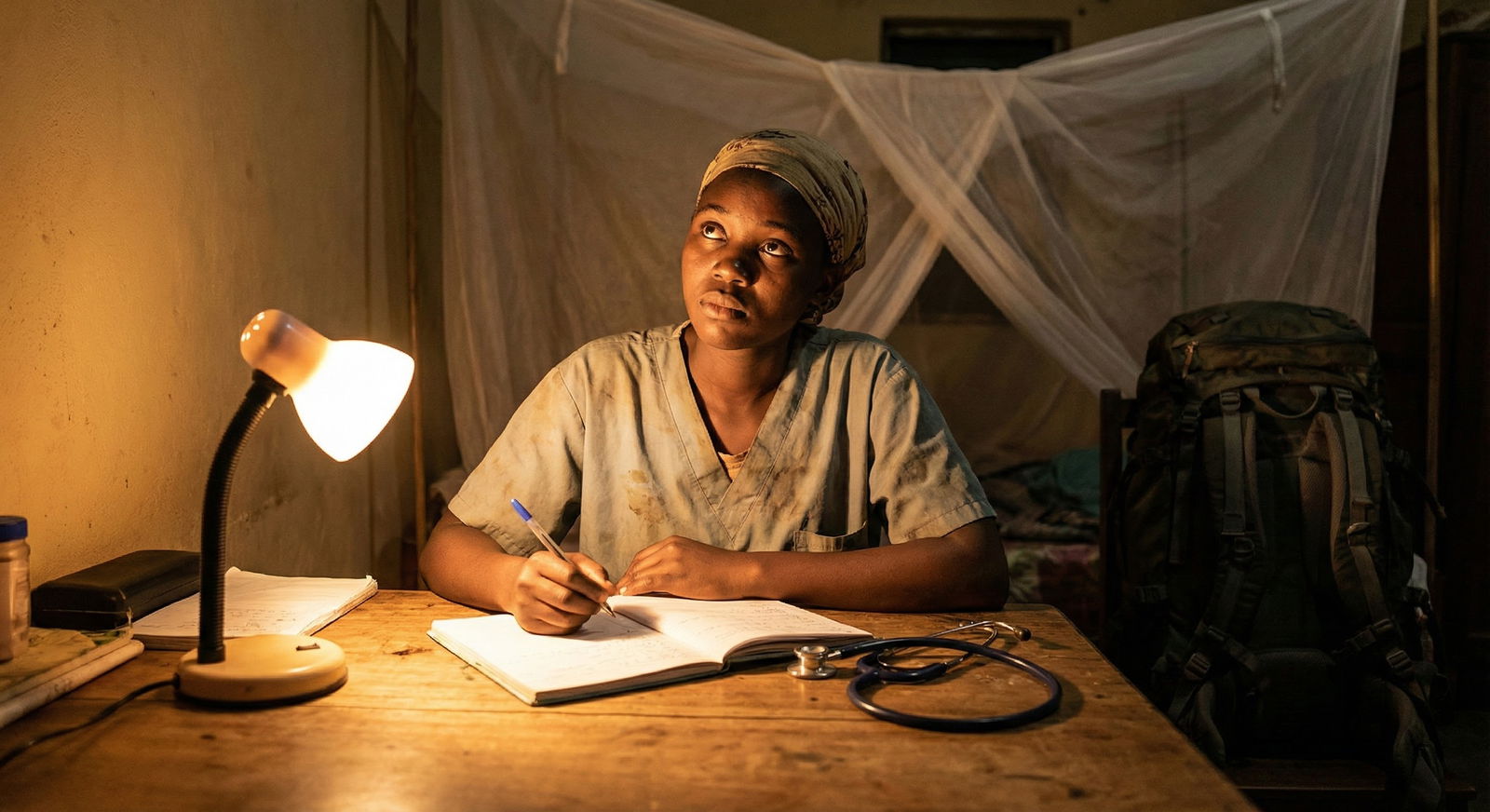
Last week, someone sent me a message that’s probably close to what’s sitting in the back of your brain: “I went on a medical mission my sophomore year. At the time I thought it was amazing. Now I’m realizing it was probably unethical. Do I still put it on my application? Or am I basically outing myself as a bad future doctor?”
And once you think that thought, it snowballs. If you leave it off, are you hiding something? If you put it on, will they think you’re dangerous? Is there any version of this where you don’t get quietly flagged as “moral liability”?
Let’s walk through this like two people staring at the same mess on the floor and figuring out what to do with it.
First, you’re not the only one who’s realized this too late
You’re not uniquely terrible. You’re just… late to understanding.
I’ve seen this exact pattern over and over:
- Pre-med goes on a short-term mission trip.
- At the time: “Life changing! So much impact! I helped so many people.”
- A couple years later after ethics lectures, global health articles, and maybe a few harsh Twitter threads: “Oh. That might’ve been harmful. Or illegal. Or both.”
The guilt hits hard because:
- You meant well.
- You posted about it. Your family bragged about it.
- Now you’re seeing it through an entirely different lens and it feels gross.
That feeling—discomfort, regret, that little pit in your stomach—is actually a sign of growth. It just doesn’t feel like growth. It feels like evidence that you’re fundamentally flawed and every adcom will see that instantly.
They won’t. What they’ll see—if you handle it right—is either:
- A maturing applicant with real ethical insight
or - A normal pre-med who left one generic activity off their application and moved on.
The only true disaster scenario is pretending nothing was wrong and bragging about it like it was pure, unproblematic “service.”
Step 1: Was it actually unethical, or are you catastrophizing?
I know your brain goes straight to “I committed a crime in another country and now I’m doomed.” Let’s slow that panic down a little and sort the situation.
Ask yourself some very blunt questions:
- Did I do anything I wasn’t trained or licensed to do?
- Giving injections, suturing, prescribing meds, diagnosing without supervision.
- Were we replacing local providers instead of supporting them?
- Pop-up clinics with no continuity, no local staff involved, no follow-up.
- Did the trip feel more like “experience for students” than actual sustainable care?
- Did we take photos of patients (especially children) for social media, sometimes without real informed consent?
- Was there any real system for:
- Translators
- Follow-up care
- Medical records
- Adverse event management?
If you’re thinking, “Uh… yes to several of those,” yeah. That’s problematic. It doesn’t mean you’re evil; it means the structure of the trip was bad and you were a naive student who got sold a “global health experience.”
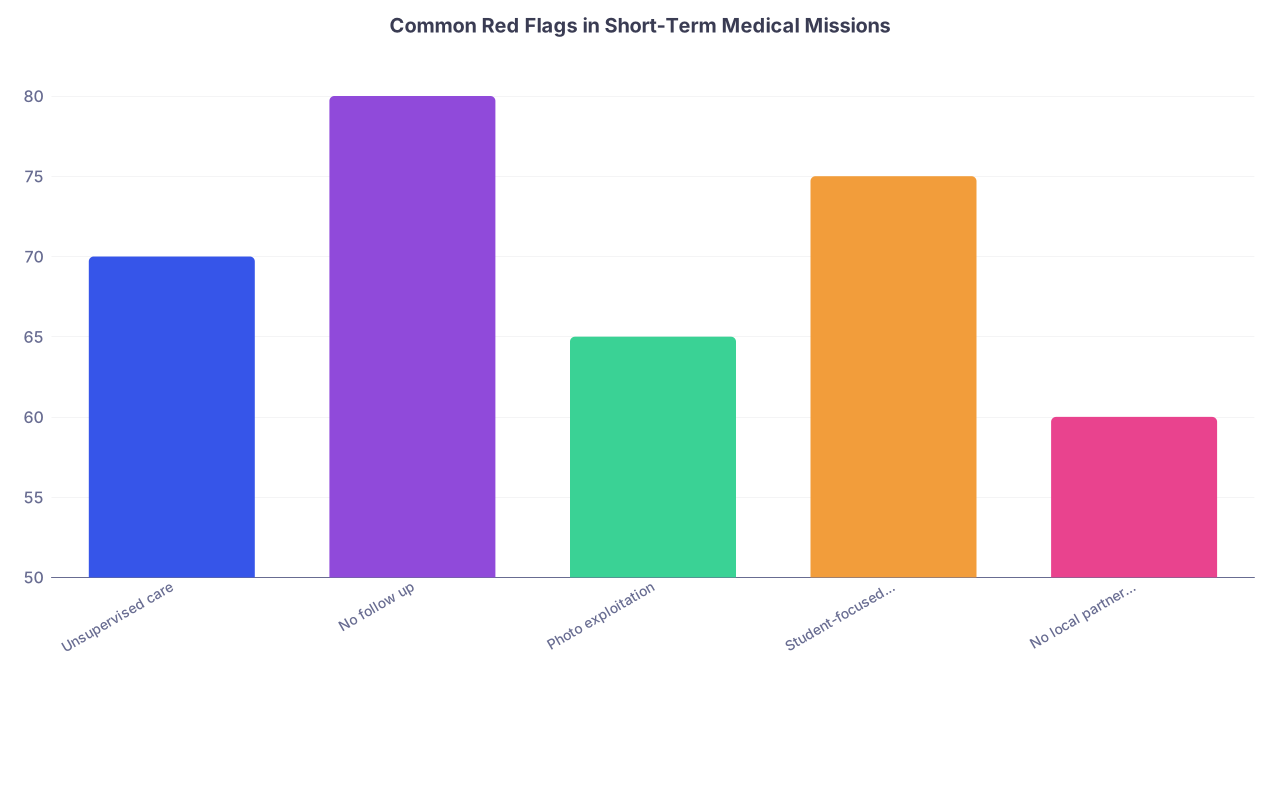
| Category | Value |
|---|---|
| Unsupervised care | 70 |
| No follow up | 80 |
| Photo exploitation | 65 |
| Student-focused marketing | 75 |
| No local partnership | 60 |
Quick distinction that matters:
- Unethical structure, ethically confused student = recoverable, growth opportunity.
- Unethical structure, and you’re still proudly oblivious about it = actual concern.
You’re clearly not in the second category. You’re literally here, spiraling about it.
Step 2: Do you even need to list this mission at all?
Here’s the thing nobody says out loud: most mission trips are not the golden ticket you think they are. They are not required. They do not automatically impress anyone.
So the core question becomes:
Does this experience meaningfully strengthen your application, given what you now know?
Use this very practical filter:
| Question | If Answer is YES | If Answer is NO |
|---|---|---|
| Is it one of my top 4–5 most meaningful experiences? | Consider listing, with critical reflection | Safer to leave off |
| Can I discuss it honestly as a lesson in ethics and growth? | Strong potential positive | Do not list |
| Did I avoid doing clearly illegal/dangerous procedures? | More flexibility | Extreme caution / probably omit |
| Do I have other strong clinical/community experiences? | Easy to deprioritize mission | May still omit, but find alternatives |
| Is this mainly on my app to “look global”? | Huge red flag | That’s better already |
If this was:
- Just one week in undergrad
- Light on actual skills
- Mostly there to show “service”
You can absolutely choose not to list it. That’s not “lying.” That’s curating your application.
Applications are not full autobiographies. You are not obligated to expose every ethically questionable thing you did as a 19-year-old with a travel brochure and a savior complex printer.
Step 3: If you DO list it, how you frame it makes or breaks you
If you decide to list it, you lose the option of pretending it was flawless. If you try to present it as “I helped underserved populations and it was beautiful,” a halfway awake reviewer will roll their eyes and mentally file you under “doesn’t get global health.”
So what does an honest, mature description look like?
Basic structure:
- Briefly describe what you did (factual, not self-congratulatory).
- Name the ethical concerns you later recognized.
- Show what you’ve done since to align better with ethical practice.
- Connect it to the kind of physician you want to be.
Example (rough, not word-for-word to copy):
- “During a one-week volunteer trip to [Country], I helped organize patient flow and observed clinicians in temporary pop-up clinics. At the time, I saw it as purely positive. In the following years, through coursework in global health ethics and reading critiques of short-term missions, I’ve become aware of serious concerns about sustainability, patient autonomy, and the risk of prioritizing student experience over community needs. That discomfort has pushed me to seek out long-term, locally led service work in my own community and to think more critically about how I’ll approach global health as a physician.”
Notice what that’s doing:
- You’re not bragging.
- You’re not oversharing every ugly detail.
- You’re not making yourself the hero of “I realized it was bad, so now I’m perfect.”
- You’re owning the mistake and showing a behavioral shift.
What not to do:
- “This trip taught me I love global health and helping the poor.”
- “I administered vaccines to children” (if you were unlicensed and didn’t really understand what you were doing).
- “We changed lives” without any acknowledgment of the power imbalance or follow-up.
If your honest version of the experience sounds damning—like, “I played doctor in a rural village doing procedures I was obviously unqualified for”—then I’d lean strongly toward not listing it at all. You don’t need to hand them a smoking gun.
Step 4: Legal and safety red flags you can’t just spin away
There are some scenarios where my advice tightens up a lot.
If any of these are true, I’d be extremely cautious about listing this, especially with details:
- You performed invasive procedures with no licensed supervision.
- You prescribed or dispensed prescription medications independently.
- There’s any documented complaint, incident report, or legal issue related to the trip.
- Your name is attached online to clearly unethical conduct (like you bragging in a blog post about “getting to do sutures on my own”).
In those cases:
- Don’t lie. Don’t fabricate a different role.
- But you are not required to hand them an incriminating narrative wrapped in a bow.
You can:
- Leave it off the primary application.
- If it’s on your CV somewhere (like a school activity list), and they ask, you tell the truth but emphasize:
- Your level of training at the time.
- Your lack of understanding then.
- Your clear, specific, current understanding of why it was wrong.
- Concrete ways you’ve changed (different types of service, speaking up when similar trips are advertised, etc.).
The vibe you want is:
“I was naive, I learned hard lessons, and here’s how that learning shows up in my behavior now”
NOT
“I committed medical tourism and now I’d like a residency position, please.”
Step 5: Your anxiety about this is actually a selling point—if you let it be
You know what freaks me out more than someone who did a sketchy mission trip?
Someone who did a sketchy mission trip and still thinks it was flawless.
Your anxiety here is doing two important things:
- It proves you care deeply about patient welfare and ethics.
- It forces you to articulate your values instead of regurgitating “I want to help people.”
If you choose to talk about this in a personal statement or secondaries (not required, but sometimes powerful), you can do it without turning the whole essay into a confessional.
One approach:
- Mention it briefly as a turning point in your understanding of service.
- Spend more time on what you’ve done since—like longitudinal volunteering at a free clinic, advocacy work, ethics committee involvement, or just very grounded community service that isn’t sexy or Instagrammable.

| Step | Description |
|---|---|
| Step 1 | Past Mission Trip |
| Step 2 | Omit from App |
| Step 3 | Describe Honestly |
| Step 4 | Name Ethical Concerns |
| Step 5 | Show Growth Actions |
| Step 6 | Link to Future Practice |
| Step 7 | List It? |
What you absolutely don’t need to do:
- Write your entire application around self-flagellation.
- Turn every answer into “I once went on an unethical mission and now I’m sorry.”
- Confess to things that no one is asking about in excruciating detail.
You can acknowledge harm and still allow yourself to be a multi-dimensional human.
Step 6: What if they ask about it in an interview?
This is the nightmare scenario your brain keeps replaying: you’re sitting in an interview, and they narrow their eyes and say, “Tell me more about this mission trip… It looks problematic.”
If that happens (and honestly, it probably won’t), your job is to:
- Avoid defensiveness.
- Avoid over-explaining and digging a deeper hole.
- Land clearly on your current ethical stance.
Something like:
- “At the time, I didn’t have the framework to see the problems. I thought any care was better than none. Since then, I’ve learned a lot about the risks of short-term medical missions—especially around sustainability and using patients as learning opportunities. That experience is actually one of the reasons I’ve focused my recent work on long-term, locally led initiatives here at home, and why I’m committed to approaching any future global work in partnership with local providers, not as a quick volunteer experience.”
That answer shows:
- Humility
- Learning
- Concrete behavioral change
If someone pushes—“So do you regret going?”—you can say:
- “I regret the impact those trips can have when they’re not structured ethically. I also know I can’t undo it. What I can do is let the discomfort from that experience keep me honest about my motivations and make me much more critical of any future international work.”
Short. Direct. Not a meltdown.
Step 7: How to stop this from eating your brain 24/7
You’re not going to fully “logic” your way out of the discomfort. Some of it is just the cost of waking up ethically. But you can make it less paralyzing.
Today, you could:
- Write out the story in one page, including what happened and what you learned.
- Then cut it down to three sentences that sound like something you could actually say in an interview without crying.
- Decide: list or not list. Put a decision date on it (e.g., by Sunday night) so you don’t drag this out for months.
- Act on that decision and don’t reopen it every 48 hours.
Also: talk to someone real. An advisor, faculty member you trust, or a mentor who is actually blunt. Ask them directly: “Given this, would you list it? And if yes, how?”
FAQ – Exactly 5 Questions
1. If I don’t list the mission trip, am I being dishonest?
No. You’re not legally or morally required to include every activity you’ve ever done. Applications are curated snapshots, not confessions. Dishonesty would be:
- Claiming you never did it if directly asked.
- Inventing a different, more ethical version of what happened.
Omitting a weak, ethically messy one-week experience that doesn’t add much is just… smart curation.
2. What if my school or premed club website still has my name with a photo from that trip?
You don’t have to panic-delete your entire online presence. But if it’s clearly exploitative (like close-up photos of patients, especially children, without context), it’s reasonable to:
- Ask whoever runs the site if they can remove or crop those images.
- At minimum, stop using those photos yourself on social media or in application materials.
If an interviewer somehow finds it and asks, you answer honestly and use the same growth framing we talked about.
3. Could this actually keep me from matching later if programs find out?
If you’re not out there still bragging about unethical short-term missions, it’s extremely unlikely this alone will tank your future. What hurts you is:
- A pattern of poor ethical judgment.
- Zero evidence of growth or reflection.
- Ongoing behavior that repeats the same harm.
One uncomfortable trip in undergrad, owned and learned from, is not some permanent stain that follows you forever.
4. Should I write a whole essay about realizing my trip was unethical?
Probably not as your main personal statement. It’s heavy, it can easily spiral into self-punishment, and you risk centering yourself instead of patients.
Where it can work:
- As part of a secondary essay about ethics, failure, or a time you changed your perspective.
- As a short section in a longer narrative about how your understanding of service has matured.
Use it as a turning point, not the entire story.
5. What’s one concrete thing I can do to “balance out” the harm I might’ve contributed?
You can’t retroactively fix what happened there, but you can change what you do now. For example:
- Commit to sustained, local, community-informed service (like 1–2 years at a free clinic, harm reduction program, or school-based health initiative).
- Educate younger pre-meds about the ethical issues with “voluntourism” instead of silently watching them repeat your path.
- If you feel up to it, politely challenge organizations at your school that run these trips and ask about supervision, continuity, and local partnerships.
That won’t magically erase the past, but it turns your guilt into something actually useful.
Open your activities list today and look at that mission entry—real or hypothetical. Ask yourself, out loud: “If I stripped my ego out of this, would I still want it on here?” Then either delete it and move on, or rewrite it in a way that’s brutally honest and grounded in growth. Don’t leave it as a vague, glowing paragraph that your future self will regret even more.


