
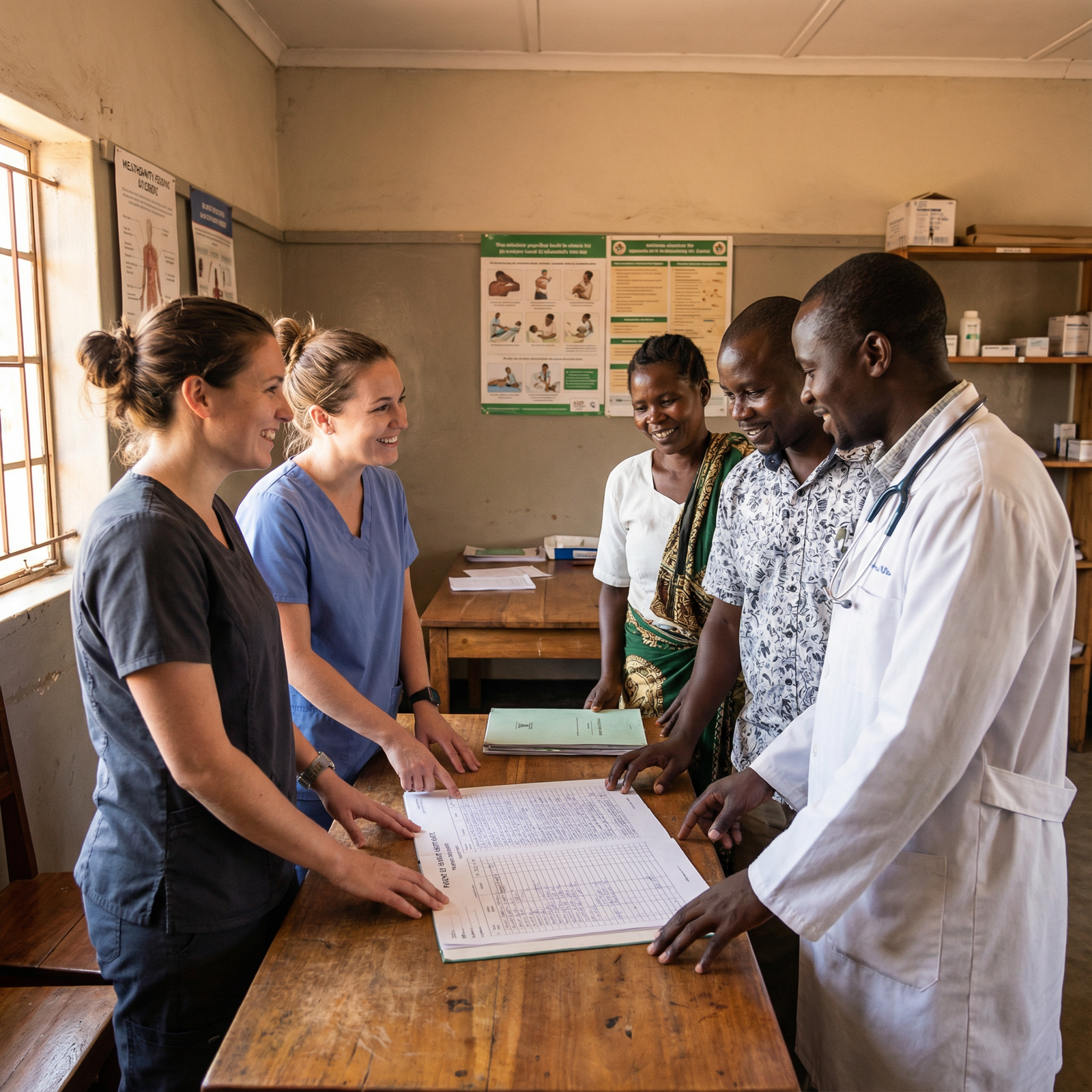
It’s May of MS2. Your school’s global health club just blasted an email: “Two-week medical mission to Central America! Clinical experience, global health exposure, cultural immersion.” You’re staring at your CV and thinking: Would this actually help my residency application—or just look performative and ethically questionable?
Here’s the answer: short-term medical missions are at best neutral for your residency application and at worst a red flag if they look like “voluntourism.” Longitudinal, ethical global health work can be a genuine asset. The key is how you do it and why.
Let’s break it down like an honest advisor, not a brochure writer.
1. Do PDs Actually Care About Medical Missions?
They care about what medical missions represent, not the trip itself.
Program directors are looking for signals of:
- Judgment and ethics
- Cultural humility
- Ability to work in resource-limited settings (for some fields)
- Follow-through on interests (depth, not tourism)
A two-week “I held babies in another country” entry on your CV with no follow-up? That’s white noise. Everyone has that now. It doesn’t distinguish you.
A pattern of:
- Long-term global health involvement
- Concrete outputs (QA projects, QI, research, curriculum work)
- Thoughtful reflection about ethics and systems
That can help. Especially in:
- EM
- IM
- Family Medicine
- Pediatrics
- OB/Gyn
- Some surgical programs with global health tracks
But you need to understand the risk side as well.
2. The Big Problem: Voluntourism and Ethical Red Flags
Residency leadership has gotten more skeptical. They’ve seen the Instagram missions. They’ve read the critical editorials. Some have had to clean up after poorly thought-out short-term trips.
Red flags they notice:
Scope of practice creep
You implying (or actually doing) things you’re not trained to do: “I was doing procedures because there were no doctors” is not impressive. It’s terrifying.Savior language
“I wanted to help people who have nothing.”
“They were so grateful for our American care.”
This screams lack of cultural humility and self-awareness.No local partnership
Trips not clearly run by or integrated with local health systems, no continuity, just parachuting in for a week.No reflection on harm
Programs expect you to understand that short-term care can disrupt local systems, create dependence, or expose patients to low-quality care.
If your experience looks like that, it can absolutely hurt you—especially on interviews with faculty who do serious global health or ethics work.
3. When Medical Missions Help Your Application
They help when they’re not really “missions” in the Instagram sense, but rather sustained, structured global health or underserved care work.
Here’s what tends to read well to PDs:
- You worked with a legitimate, longstanding partner (university hospital, NGO, ministry of health).
- You had clearly defined, appropriate responsibilities for your training level.
- You focused not just on “helping” but on learning systems, culture, and equity issues.
- You converted the experience into something durable:
- A QI project (e.g., improving hypertension follow-up in a community clinic)
- Research or poster
- Educational materials or training for local staff, in collaboration with them
- A sustained relationship (return trips, remote collaboration, continued advocacy)
| Type of Experience | Likely Impact on Application |
|---|---|
| One-off, 1–2 week mission, no follow-up | Neutral to slightly negative |
| Repeated trips with same partner site | Mildly positive |
| Longitudinal global health track + projects | Moderately to strongly positive |
| Unsupervised invasive procedures abroad | Negative, potential red flag |
| Local underserved, longitudinal clinic | Consistently positive |
Put bluntly: a longitudinal free clinic in your own city often impresses PDs more than a single flashy trip abroad, because it screams reliability and commitment, not tourism.
4. How Different Specialties View Medical Missions
Different fields read this stuff differently.
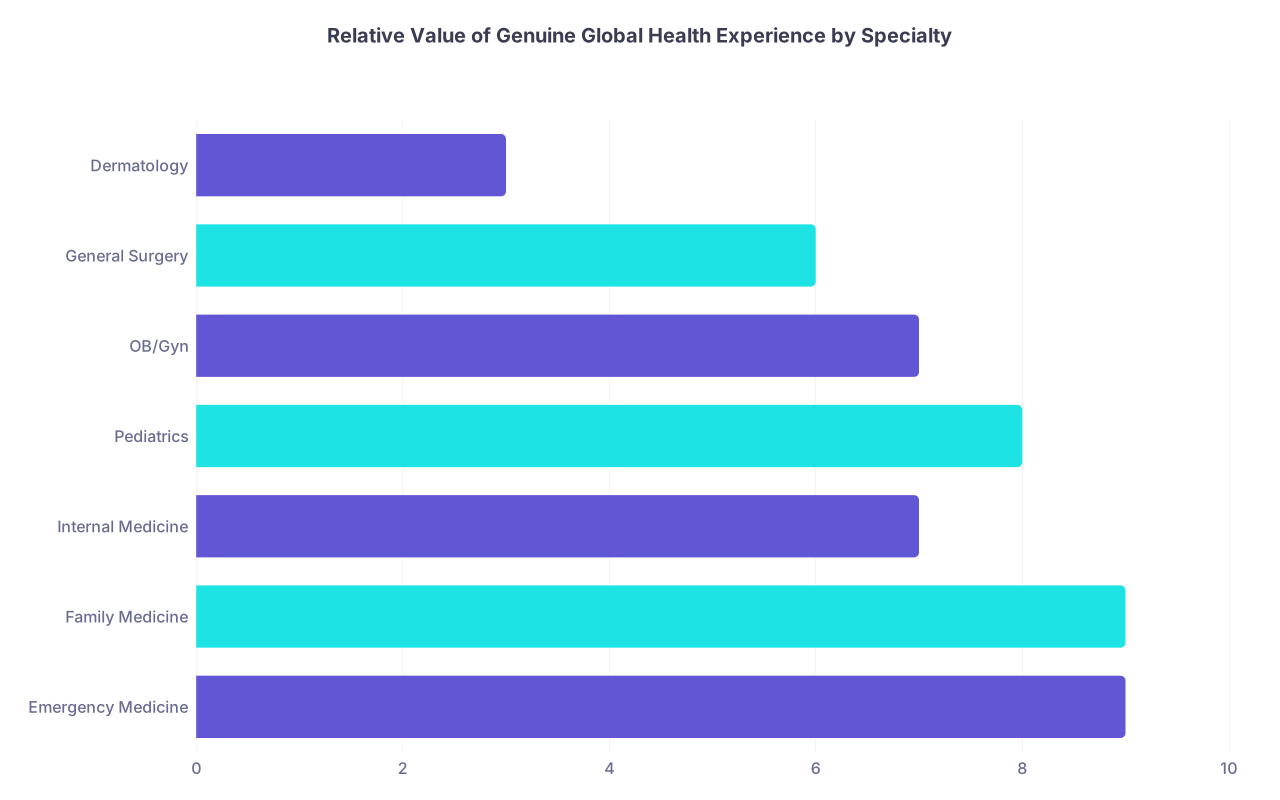
| Category | Value |
|---|---|
| Emergency Medicine | 9 |
| Family Medicine | 9 |
| Internal Medicine | 7 |
| Pediatrics | 8 |
| OB/Gyn | 7 |
| General Surgery | 6 |
| Dermatology | 3 |
Scale 1–10: 10 = highly valued if done well, 1 = mostly irrelevant.
A quick rundown:
Family Medicine / EM / Peds
Strong alignment with underserved and global work. If your missions are ethical and longitudinal, these programs like it. They also like humility and realistic talk about limits and harm.Internal Medicine / OB/Gyn
Mixed but often positive, especially if connected to research, QI, or a global health pathway. A random trip with no depth? Meh.Surgery and subspecialties
They care more if it ties into sustainable surgical capacity building, not “we did 100 hernia repairs in a week.” Serving at an international training site with local surgeons can be meaningful. Cowboys are not.Derm, ophtho, radiology, path
Could help if integrated into research or specific global health work. Otherwise, it’s not moving the needle.
Bottom line: missions don’t rescue a weak application. They can differentiate a strong one—if done right.
5. Ethics: The Questions You Have To Ask Yourself
If you’re even halfway serious about medicine as a profession, you need to wrestle with the ethics. Not performatively. Actually.
Key questions:
Who asked for this trip?
Was it designed by the local community/health system, or by your school/NGO because “students need global exposure”?Is there continuity of care?
What happens after you leave? How are follow-ups handled? Are you dumping work on an already overburdened local clinic?What’s my scope of practice?
Would I be allowed to do this at home, under my license/training? If not, why am I doing it there?Who benefits the most?
Be honest. If the main benefit is your CV and your photos, that’s a problem.Would I be comfortable having my entire interview panel review this trip in detail?
If that thought makes you sweat, your instincts are probably right.
This is not abstract. I’ve seen interviewers drill applicants on lines like: “Conducted pelvic exams in rural clinic” or “Independently managed patients due to lack of physicians.” That can go very badly.
6. How To Talk About Medical Missions in Your Application
Let’s assume you’ve done (or will do) a relatively ethical, structured experience. How you frame it on your application and in interviews matters as much as the trip itself.
Here’s how to do it right.
On ERAS / CV
Bad:
“Medical mission trip to Honduras. Provided care to underserved communities and treated many patients.”
Better:
“Global health elective, Honduras – Worked with local clinicians in a Ministry of Health clinic on non-communicable disease management. Assisted with triage, patient education, and basic clinical tasks appropriate to training level. Participated in a small QI effort on hypertension follow-up documentation.”
Notice the shifts:
- “With local clinicians” → humility and partnership
- “Appropriate to training level” → ethical awareness
- Concrete focus (NCDs, QI) → substance over vague “helping”
In your Personal Statement
Do not center the essay on “this trip changed my life” unless you show serious reflection and follow-through.
You want to hit:
- What you learned about systems, inequity, and your own limitations
- How it shaped your career interests (e.g., underserved care, health systems, primary care, EM)
- What you did after the trip (local clinics, advocacy, research, QI)
Weak framing: “I realized I wanted to help the less fortunate.”
Stronger framing: “I realized quick fixes feel good but change little. That pushed me toward work that strengthens primary care access in my own city and abroad.”
In Interviews
Expect questions like:
- “Tell me about the ethical challenges of short-term global health work.”
- “What would you do differently next time?”
- “How did you ensure continuity for the patients you saw?”
- “How do you think local doctors viewed your team?”
If your answer is all self-congratulation and zero self-critique, sharp faculty will notice.
7. If You Haven’t Done a Mission Yet: Should You Go?
So you’re early enough to still decide. Here’s the decision framework I’d actually use.

| Step | Description |
|---|---|
| Step 1 | Considering medical mission |
| Step 2 | Skip - focus on local underserved |
| Step 3 | Ask hard questions or decline |
| Step 4 | Do something else meaningful |
| Step 5 | Proceed and commit long term |
| Step 6 | Is there a long term partnership? |
| Step 7 | Clear scope for students? |
| Step 8 | Fits your goals and schedule? |
Ask these concrete questions before you sign up:
- Is this run through a university-affiliated global health program or a reputable NGO with long-term presence?
- Will you be supervised by licensed clinicians who know your training level?
- Is there a clear plan for continuity of care?
- Are students observers/helpers, or are they being pushed into unsupervised care?
- Can you reasonably have an ongoing relationship with this site (return, projects, remote work)?
If the program dodges these questions or gives vague “you’ll be helping so much” answers? Walk away. That’s a CV trap and an ethical headache.
And if you do go: commit to one place and one team. Year after year if you can.
8. What If You Already Did a “Cringey” Mission?
You went on the classic preclinical mission trip. Pictures with kids. Questionable supervision. You’re now realizing it may not have been great.
Fine. You can’t undo it, but you can choose how to present it and what you learned.
Do this:
Be honest with yourself about the problems.
Acknowledge that scope-of-practice and sustainability were issues.Do not exaggerate your role.
If you mainly shadowed and did vitals, say that. Do not inflate it.Show growth.
“That trip made me realize how problematic short-term missions can be. It pushed me to work in our local free clinic where I could be better supervised and build ongoing relationships with patients.”Shift your focus to better experiences.
Spend more application “real estate” on longitudinal, ethical work you’ve done since. Let the mission be a footnote, not the centerpiece.
Handled this way, the mission becomes a story of maturing judgment, not arrogance.
9. Concrete Moves That Look Better Than a Random Mission
If your primary question is “What actually helps my residency application and still lets me care about global/underserved health?”, here’s the honest hierarchy.
If you have X hours to invest:
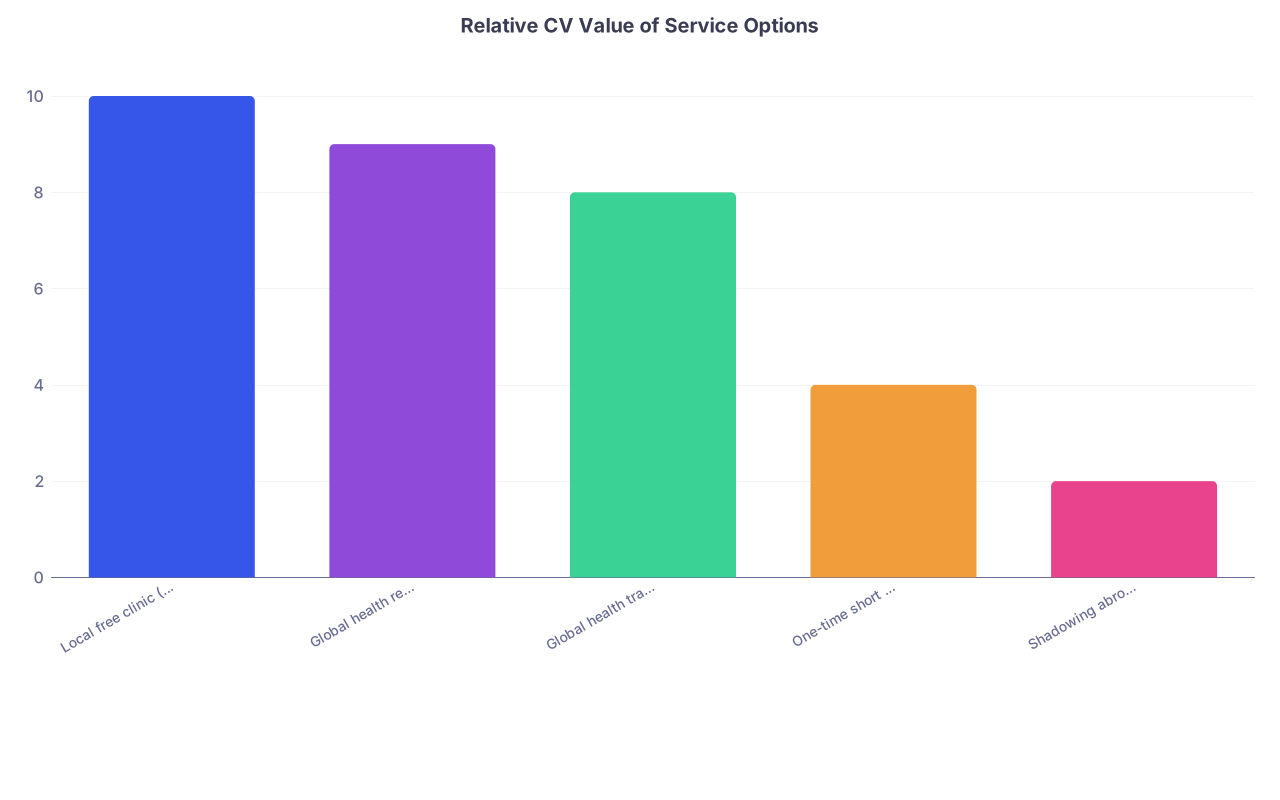
| Category | Value |
|---|---|
| Local free clinic (longitudinal) | 10 |
| Global health research/QI | 9 |
| Global health track/elective | 8 |
| One-time short mission | 4 |
| Shadowing abroad, no structure | 2 |
Again 1–10 scale, with 10 = highly valued if done well.
High-yield options:
- Longitudinal work at a local free/charity clinic
- Domestic global-health-adjacent work (refugee health, migrant farmworker clinics, Native health, urban underserved)
- Formal global health tracks or electives with academic oversight
- Global health research or QI tied to a partner site (registry building, tele-education, etc.)
I’d pick any of those over a one-off mission every time if your goal is both ethics and residency competitiveness.
FAQ: Medical Missions and Residency Applications
1. Will a single two-week medical mission significantly boost my chances of matching?
No. A single short mission trip is, at best, a minor plus and often completely neutral. Programs care much more about your grades, exams, letters, and sustained commitment to something (research, teaching, underserved care). If it is your only clinical service outside of required rotations, it can even raise questions about depth and judgment.
2. Is it ever okay to talk about doing procedures abroad that I could not do at home?
Be very careful. If you were pushed into doing unsupervised or above-scope procedures, you can acknowledge the situation as ethically problematic and emphasize what you learned about boundaries and patient safety. Do not brag about it. Never present it as a positive example of your skills; most PDs will see it as a serious red flag.
3. Do program directors look down on all medical missions as “voluntourism”?
No. Many PDs do global health work themselves. They distinguish between ethically grounded, long-term, collaborative global health and superficial “mission tourism.” If your experience is clearly integrated with local partners, supervised, and part of a broader commitment, it’s usually respected. If it looks like a photo-op, not so much.
4. What if my only clinical volunteering is a mission trip I did years ago?
Then you need to add more. Use that realization as a prompt to start local, longitudinal service now—free clinics, refugee health, mobile outreach. On your application, mention the mission briefly but put your narrative weight on the more recent, sustained, and better-structured experiences. Show that you’ve matured and shifted toward more responsible, continuous care.
5. I care deeply about global health. How do I show that without looking performative?
Build a track record, not a highlight reel. Commit to one or two populations or sites and stick with them. Seek out mentors in global health at your institution. Join or start projects that have continuity—registries, QI, telehealth education, curriculum development. Talk about systems, equity, and partnership more than “helping the poor.” Programs can tell the difference.
Key takeaways:
- Short-term, one-off medical missions rarely help your residency application and can hurt if they look unethical or self-serving.
- Longitudinal, structured global or underserved work—local or abroad—actually matters, especially when it shows humility, systems thinking, and follow-through.
- If you’re going to do missions, do them with real partners, real supervision, and a long view—otherwise, your time is better spent closer to home.


