
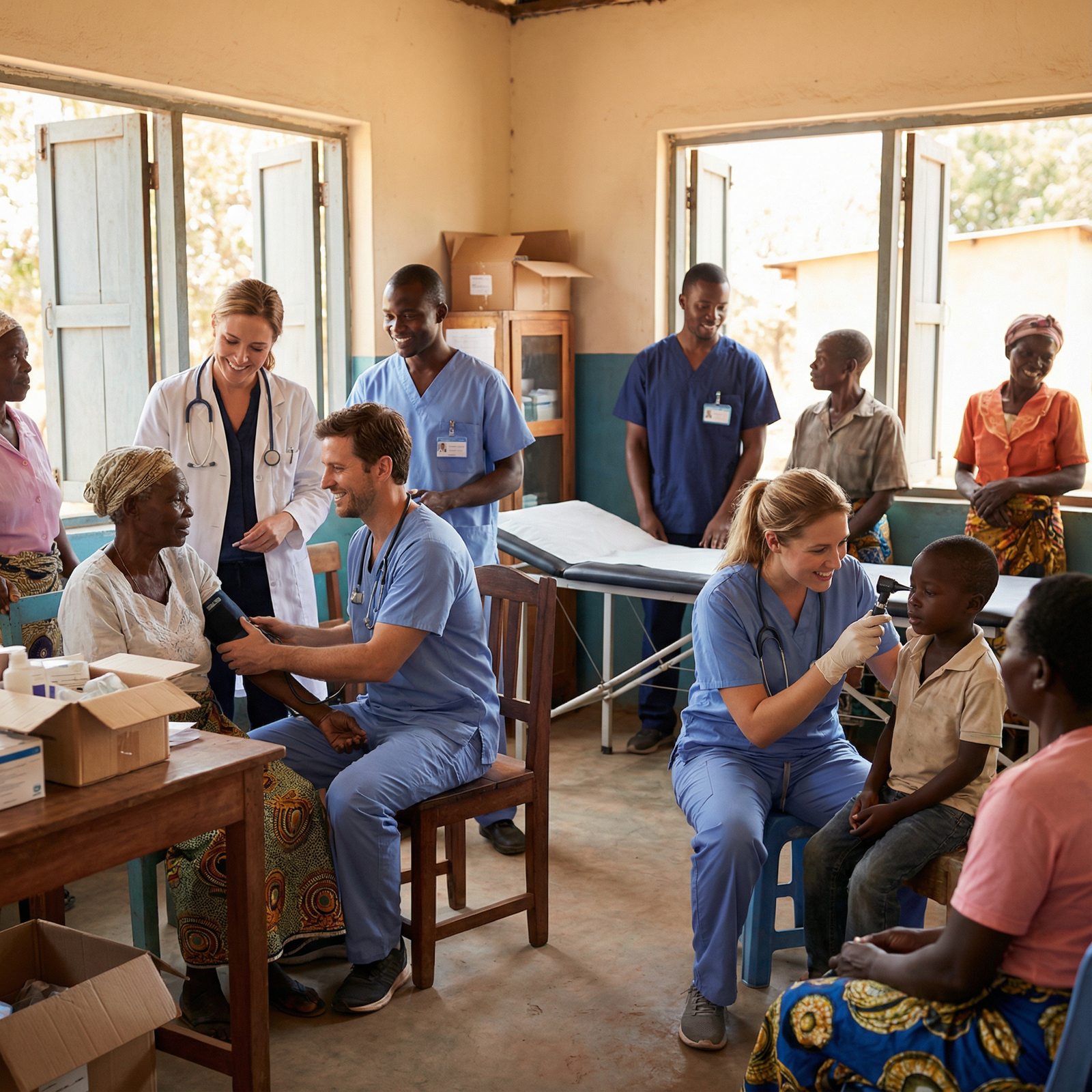
The biggest ethical risk in medical missions isn’t bad people. It’s good people working inside bad systems they never bothered to question.
You asked the right question. Here’s how to actually evaluate whether a mission organization is ethically responsible—before you donate your time, skills, or license to them.
1. Start With Their Core Posture: Who Is Centered?
The first ethical test is simple: Who’s actually at the center of their work—the sending organization or the local community?
Look for this in how they talk and how they operate.
- “We brought healthcare to…”
- “We treated X thousand patients in Y days.”
- Photos of foreign volunteers front and center, locals in the background as props.
- No mention of local health systems, ministries of health, or local partners.
Healthier language:
- “We support local clinicians and health systems in…”
- “In partnership with [local hospital/NGO/Ministry of Health]…”
- Stories where local staff are the protagonists, not visiting teams.
- Honest acknowledgment of limitations, learning, and long-term goals.
Concrete questions to ask:
- “Who requested this work—did the community/health facility invite you, or did you decide to show up?”
- “Who sets priorities for your projects—the organization or local partners?”
- “Who leads on the ground—local clinicians or visiting teams?”
If they struggle to answer those directly, that’s not nuance. That’s a problem.
2. Clinical Standards: Do They Practice What They Preach?
Being “on mission” isn’t a license to lower the standard of care. If they’d never do it at home, they shouldn’t be doing it abroad.
You want to see:
- Clear clinical guidelines that match or exceed local national standards
- Evidence-based practice, written protocols, and some form of peer review
- A defined scope of practice for visiting clinicians (what you will and will not do)
Ask very specific questions:
- “How do you ensure visiting clinicians work within their training and local regulations?”
- “Do you have written clinical protocols? Can I see them?”
- “How do you handle cases that need long-term management or follow-up?”
If you hear:
- “We do the best we can with what we have” (with no detail)
- “It’s different over there, you can’t expect the same standards”
- “We just trust our volunteers to use their judgment”
…then you’re looking at improvisation, not responsible medicine.
3. Licensure, Legal Compliance, and Accountability
If an organization is casual about legal and regulatory issues, walk away. They’re gambling with patients’ safety and your professional license.
You should be able to get clean answers to:
“How do you handle medical licensure in the host country?”
- Best answer: “We obtain temporary or full licensure through the Ministry of Health or relevant board. Here’s how the process works…”
- Red flag: “We work under the radar” or “The local clinic covers us, it’s fine.”
“What malpractice or liability coverage do you provide for clinicians?”
- Best answer: Organization + local facility policies + guidance on your own coverage.
- Red flag: “You’re volunteering, so it’s not really a malpractice issue.”
“Do you have an ethics committee, medical director, or board-level clinical oversight?”
- Best answer: Named individuals, roles, and how they make decisions.
- Red flag: Vague mentions of “our leadership team” with no clinical oversight.
| Area | What You Want To Hear |
|---|---|
| Licensure | Formal process with host-country authorities |
| Scope of practice | Clear written limits for visiting clinicians |
| Malpractice coverage | Defined policy + guidance |
| Clinical oversight | Named medical director/committee |
| Incident reporting | Formal process, reviewed and acted upon |
If they can’t answer those in writing, don’t let them use your credentials as decoration.
4. Short-Term Trips: Are They Building or Disrupting?
Short-term medical missions are where ethics go to die if nobody’s watching.
Key questions here:
- “What happens to patients who need follow-up after your team leaves?”
- “How do you coordinate with local clinics or hospitals about our presence?”
- “Are short-term trips part of a longer-term strategy with the same partners?”
Look for:
- Long-term partnerships with the same sites, years deep
- Written referral pathways for surgical complications, chronic disease, etc.
- Involvement of local clinicians in clinics, surgery, teaching—not as spectators
Red flags:
- “We go to a new village every year.”
- “We see as many patients as possible in X days” (production metrics over continuity).
- Clinics built around foreign teams instead of strengthening existing systems.
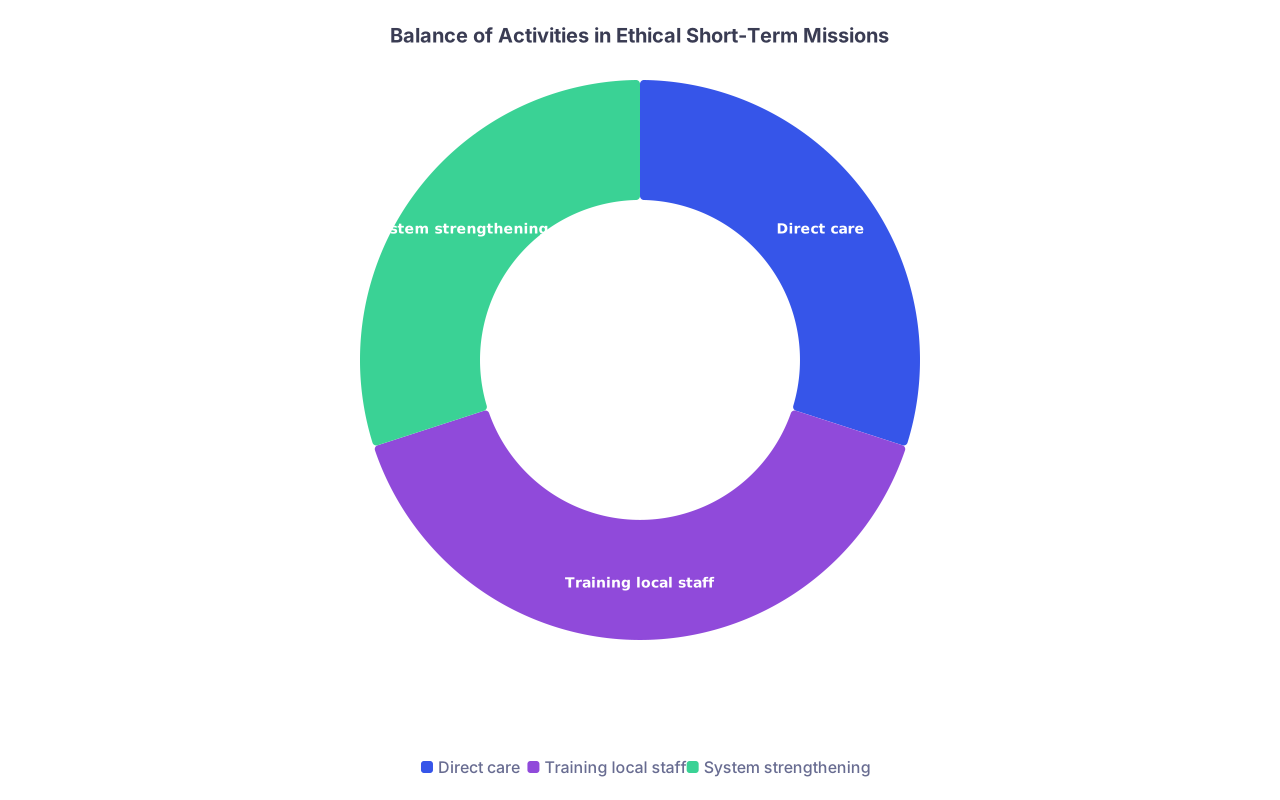
| Category | Value |
|---|---|
| Direct care | 30 |
| Training local staff | 40 |
| System strengthening | 30 |
If the model is essentially “medical tourism plus a sermon,” it’s not ethically responsible, no matter how inspiring the slideshow.
5. Relationship With Local Systems: Partner or Parallel Universe?
Ethically responsible organizations don’t build a parallel health system. They slot into the one that exists.
You want to see:
- Formal partnerships with local hospitals, clinics, NGOs, or the Ministry of Health
- Alignment with national health strategies and guidelines
- Local leaders in decision-making positions, not just advisory roles
Ask:
- “Who are your primary local partners, and how do they describe your role?”
- “Do you have written MOUs with local facilities or authorities?”
- “How do you avoid undermining local clinicians or services?”
Disaster scenario I’ve seen: mission group offers free hernia repairs right next to a local surgeon who charges modest fees. Patients wait for the free team, local surgeon loses income, then leaves. Short-term “generosity,” long-term damage.
That’s what you’re trying to avoid.
6. Training, Humility, and Power Dynamics
Ethical missions require humility on day one and every day after.
Check how they prepare volunteers:
- Is there mandatory pre-departure training on:
- Local culture, history, and health system
- Power dynamics and colonialism in missions
- Scope of practice and ethics in low-resource settings
- Is there clear guidance on what you should NOT do?
Ask:
- “What pre-trip training do you require from clinical volunteers?”
- “What behaviors or attitudes will get someone benched or sent home?”
- “How do you handle conflicts between visiting volunteers and local staff?”

| Step | Description |
|---|---|
| Step 1 | Apply to Volunteer |
| Step 2 | Review Credentials |
| Step 3 | Interview |
| Step 4 | Pre-trip Training |
| Step 5 | Decline or Redirect |
| Step 6 | On-site Orientation |
| Step 7 | Ongoing Supervision |
| Step 8 | Clinical fit and attitude OK |
If their process is “fill out a form and buy a plane ticket,” then don’t expect sophisticated ethics on the ground.
7. Money, Transparency, and the “White Savior” Problem
Money reveals priorities very quickly.
You want to know:
- “What portion of the budget goes to:
- Administration
- Salaries (foreign vs local)
- Direct support of local partners
- Short-term trips vs long-term work”
- “Are local staff paid fairly and comparably for their context?”
- “Do you publish financial statements or annual reports?”
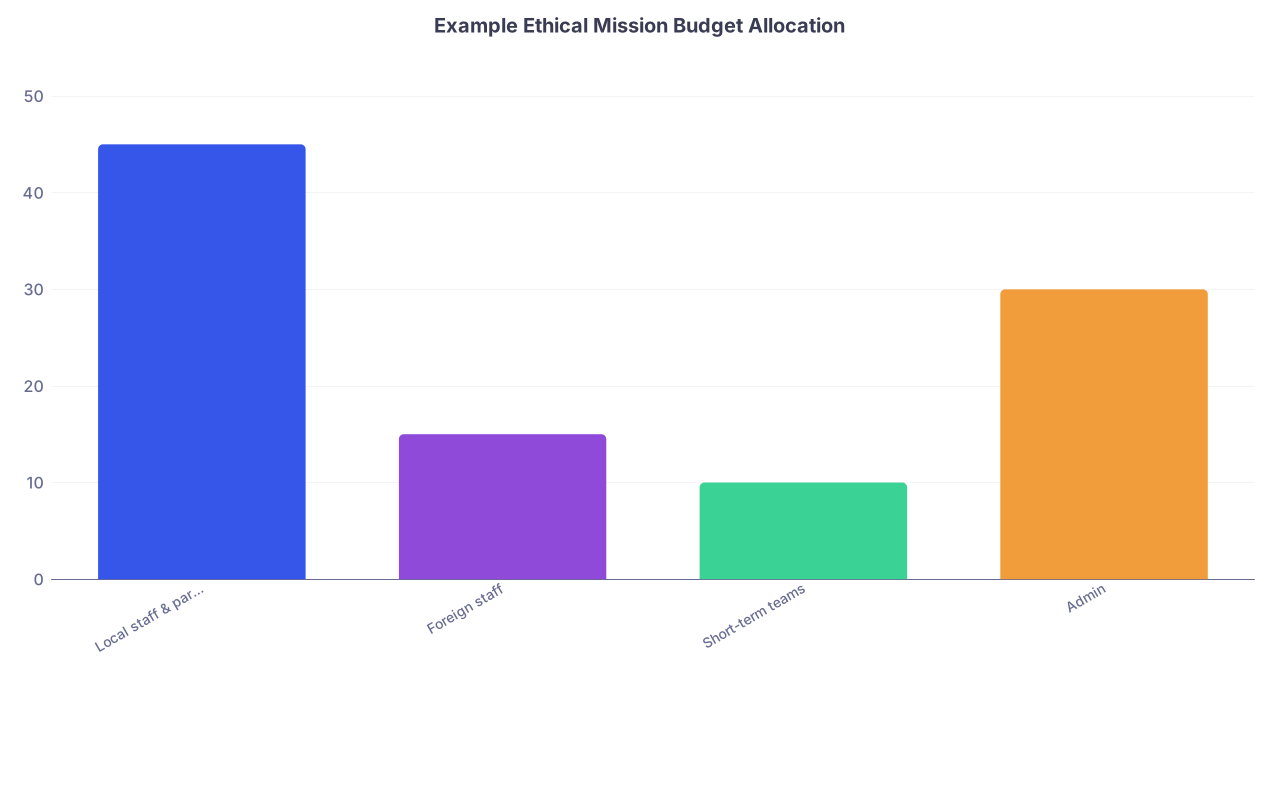
| Category | Value |
|---|---|
| Local staff & partners | 45 |
| Foreign staff | 15 |
| Short-term teams | 10 |
| Admin | 30 |
Red flags:
- Glamorous overseas headquarters, poor pay for local staff
- Heavy spending on foreign volunteers’ travel and marketing vs. local capacity
- No public financials, vague budget language
On top of that, check their storytelling:
- Do they use images of suffering patients and children to raise money?
- Do they get informed consent for photos and stories?
- Do they portray communities as helpless and backward, or as capable partners?
If the social media feed screams “white savior,” don’t expect quiet humility inside the clinic.
8. Ethics in Faith-Based Contexts
Since you’re asking in a medical missions context, let’s hit the religion piece head-on.
Evangelism plus healthcare is ethically loaded. It can be done responsibly, but many don’t even try.
You should ask:
- “Is any service conditional on listening to religious messages, prayer, or church attendance?”
- “Are clinicians expected to share faith as part of the clinical encounter?”
- “How do you prevent coercion when patients are vulnerable?”
Ethically responsible answers:
- Care is never contingent on beliefs, behavior, or participation in religious activities.
- Spiritual conversation is patient-led and clearly optional.
- There are separate spaces for worship/teaching vs. clinical care.
Red flags:
- Required prayer before treatment.
- Pressure on volunteers to “use every patient encounter as a witnessing opportunity.”
- Refusal to collaborate with local providers of different faiths.
If their theology requires blurring clinical and spiritual boundaries, your medical ethics are going to be compromised.
9. What To Actually Do: A Practical Evaluation Checklist
Let’s make this usable. Here’s a quick, blunt framework.
Before you commit, try to get clear, written answers (or at least detailed verbal ones) to these:
-
- Named local partners, not “the community” in abstract.
Who’s in charge of clinical quality?
- Named medical director, ethics or quality committee, local input.
How do you handle:
- Licensure and legality
- Malpractice and liability
- Scope of practice
What happens to patients after you leave?
- Concrete referral and follow-up systems.
How are local staff involved and paid?
- Fair wages, leadership roles, not token involvement.
What training do volunteers get?
- Real preparation, not just packing lists and devotionals.
How do you measure success?
- Health outcomes, capacity built, satisfaction of local partners—not just number of patients seen or photos taken.
If you can’t get real answers, assume the answers aren’t good.
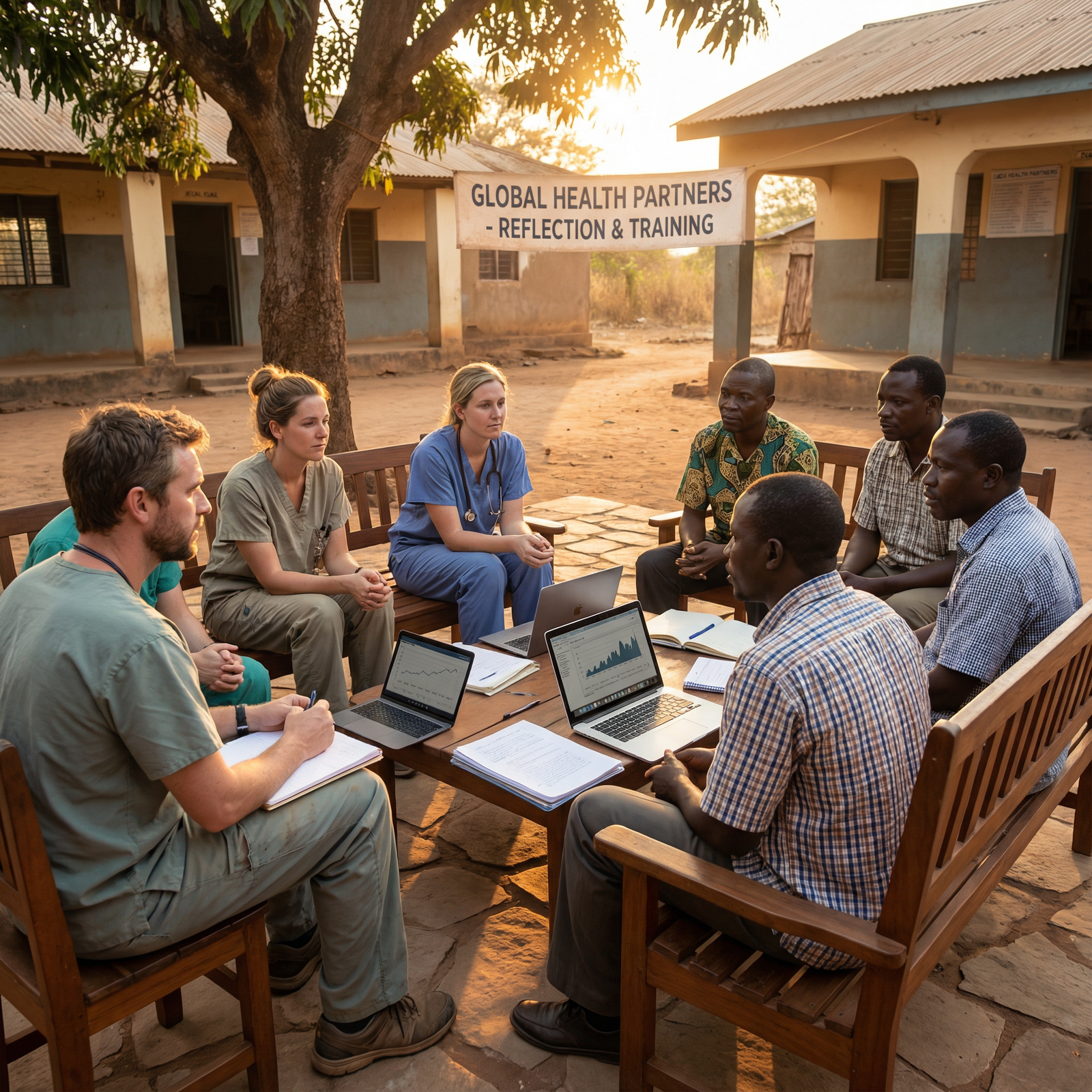

10. When the Organization Is “Almost There”
You might find a group that’s ethically messy but teachable. They’re not malicious; they’re just operating off outdated models. Then what?
You have three options:
- Join and push for better standards from inside (this is slow and political).
- Join but strictly limit your activities to what you’re ethically comfortable with.
- Walk away and find a group already doing better work.
My view: as a trainee or early-career clinician, you don’t need the headache of fixing someone else’s entire model. Lean toward option 3 unless leadership is clearly serious about change and invites your input.
FAQs
1. Is it ever okay to do procedures abroad that I’m not credentialed for at home?
No. If you’re not trained and credentialed to do it in your own system, doing it on vulnerable patients in poorer settings is unethical. “They have nothing else” is not a justification for experimenting on people.
2. What if the organization has amazing spiritual impact but mediocre clinical systems?
Then it’s a church, not a healthcare provider. If you’re going as a clinician, your first duty is to do no harm medically. Spiritual impact doesn’t excuse sloppy or unsafe care.
3. How do I politely decline if I find red flags?
Be direct and brief:
“After reviewing your clinical and ethical policies, I’m not comfortable practicing in this setting. I appreciate the opportunity but will need to decline.”
You don’t owe them a thesis, but you can offer feedback if they ask sincerely.
4. Is it unethical to go on a one-week medical mission at all?
Not automatically. It’s unethical to go on a one-week trip with no integration into local systems, no follow-up, no accountability, and a tourism mindset. If a short trip is nested inside long-term partnerships and capacity-building work, it can be appropriate.
5. What if the local staff seem totally fine with lower standards?
You can’t outsource your ethics. Power dynamics, financial dependence, and cultural deference can all mask disagreement. Respect local norms, but don’t abandon fundamental safety, consent, or honesty because “they’re okay with it.”
6. How do I evaluate an organization if they’re small and don’t have polished policies?
Small isn’t bad. Look for substance over polish. If they can articulate clear answers verbally that show thoughtfulness, respect for local partners, and a willingness to be accountable, that’s workable. If it’s all vibes and no structure, be cautious.
7. Are secular organizations automatically more ethical than faith-based ones?
No. I’ve seen excellent and terrible versions of both. The difference isn’t religion; it’s whether they’re honest about power, serious about clinical standards, and accountable to local partners and external reviewers.
Bottom line:
- Don’t let “good intentions” blind you to bad systems.
- Demand clear answers on clinical standards, local partnerships, and accountability.
- If they can’t show they’re safe for patients, they’re not safe for your conscience—or your license.


