
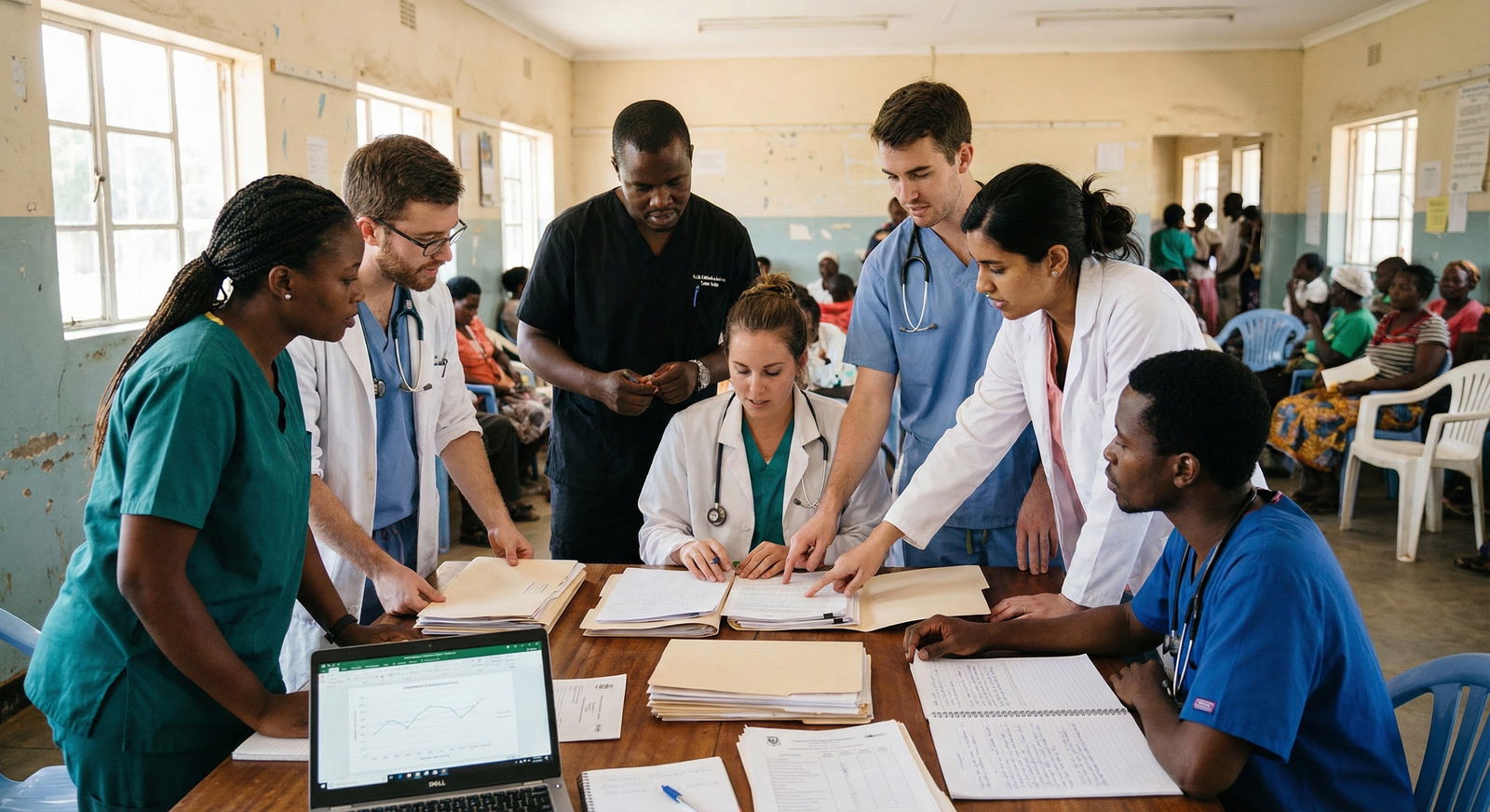
It’s June. Your pre-med club group chat is blowing up with links to “medical mission” trips: 10 days in Guatemala, 2 weeks in Kenya, “shadow doctors and make a real impact.” You’re staring at the brochure thinking: this looks incredible… but also maybe a little sketchy? And the big question in your head:
Should you, as a pre-med with basically zero clinical training, join a medical mission trip?
Here’s the direct answer:
You can — but it has to be the right kind of trip, and you need a hard line:
If they expect you to act like a clinician, it’s a red flag. Full stop.
Let’s unpack that.
The Core Question: Is It Ethical for Pre-Meds to Go on Medical Missions?
Short version:
Ethical observation and support = yes.
Unethical clinical work beyond your training = no.
If you’re going to a low-resource community and:
- You’re being told you can “practice medicine,” “suture,” “pull teeth,” or “see your own patients” as a pre-med
- There’s no clear supervision by locally licensed clinicians
- The trip is marketed heavily as a résumé booster, not as partnership or long-term service
…that’s not ethical. It’s what a lot of global health folks now call “voluntourism” dressed up in scrubs.
The ethical standard is simple and non-negotiable:
You don’t do anything there that you’re not legally and ethically allowed to do at home.
If you can’t do it in a U.S. hospital as a college student, you shouldn’t be doing it in a rural clinic in Peru just because nobody’s watching.
What Pre-Meds Should Be Doing on Medical Missions
Here’s what’s appropriate for a pre-med on a well-run medical mission:
- Observing licensed clinicians (shadowing, not “assisting” beyond your level)
- Taking vitals only if you’re properly trained, supervised, and it’s within program policy
- Non-clinical tasks: logistics, registration, data entry, crowd flow
- Health education (under supervision) — e.g., handwashing demos, basic nutrition talks
- Translating if you’re fluent and paired with clinicians
- Helping with public health activities (surveys, basic screening) under guidance
If the trip is structured around solid local partnerships, long-term follow-up, and you’re clearly in a learner / support role, that’s the kind of experience that can be ethical and genuinely valuable.
Why So Many Premed “Medical Missions” Are Problematic
I’ve seen the same pattern more times than I’d like:
- A pre-med comes back bragging they “sutured patients” in a country they’d never been to before.
- Someone posts on Reddit: “Is it normal that I pulled teeth on my mission trip as a freshman?”
- A club advisor quietly cringes but doesn’t want to rock the boat.
Let me be blunt:
If you’re being asked to touch a scalpel or prescribe something as a pre-med, you’re part of a bad system.
Here’s what’s usually wrong with those trips:
They exploit the power imbalance.
Patients in low-resource settings might assume you’re a trained doctor because you’re wearing a white coat and you came with the “foreign medical team.”They prioritize your experience over patient safety.
“We want students to get hands-on experience” sounds great… unless you realize that “hands-on” means “on someone who didn’t consent to being your practice body.”They ignore sustainability.
Pop-up brigades that show up for 5 days, hand out meds with no follow-up, then vanish? That’s not health care. That’s optics.They encourage unethical scope of practice.
If their model depends on untrained undergrads doing tasks that would be illegal at home, that’s all you need to know.
How to Evaluate a Medical Mission Program (Before You Pay a Cent)
Use this like a filter. If a program fails multiple items here, don’t go.
| Question | Green Flag Answer |
|---|---|
| Who leads clinical care? | Local licensed clinicians |
| Role of pre-meds? | Observing and non-clinical work |
| Long-term local partnership? | Yes, multi-year ongoing work |
| Scope clearly defined? | Yes, written roles and limits |
| Cost breakdown transparent? | Yes, itemized and reasonable |
Now the deeper dive. Ask these questions directly — email them if it’s not clear.
Who’s legally responsible for patient care?
You want to hear: local licensed physicians, nurses, or other licensed providers. Not “our U.S. attendings fly in once a year and supervise everyone.”What exactly will students be doing?
Wrong answer:- “You’ll get to do real procedures!”
- “You’ll be like a doctor for a week!”
Right answer: - “You’ll observe, help organize patient flow, assist with patient education, and possibly help with vitals under supervision.”
What happens when your group leaves?
If there’s no local clinic, no referral system, no long-term follow-up, you’re patching holes in a sinking ship and calling it a victory.Who invited you?
Strong programs are invited by — and designed with — local partners (clinics, NGOs, ministries of health).
Weak programs parachute in because an American org “had an idea.”How’s the money used?
If you’re paying $3,000–$5,000 for a week, and they can’t explain where that goes beyond “lodging and logistics,” you’re funding a tourism business.
What You Actually Gain From a Good Medical Mission as a Pre-Med
Let’s assume you find a solid, ethical program. What’s the upside?
You can gain:
Perspective on health systems.
You see what it’s like when there’s one ultrasound machine for an entire region. Or when “go see a specialist” isn’t an option because there isn’t one.Clarity about why you want to practice medicine.
Watching a local physician improvise care without the toys you’re used to hearing about — CTs, MRI, endless labs — can be grounding. You figure out quickly whether you’re drawn to status or service.A better sense of global health ethics.
You’ll see how messy “helping” can be. That’s good. It’ll shape how you practice later so you’re not the attending doing short-term missions that cause more chaos than value.Humility.
The best missions end with you thinking, “I don’t know anything yet. I need more training before I can truly help.” That’s the right reaction.
What you should not be aiming to gain:
- “Amazing hands-on clinical experience”
- “Cool pictures of me with a stethoscope and local kids”
- “A killer story for my personal statement about how I saved someone”
You’re not going to save anyone. You’re going to learn.
How Adcoms Actually View Pre-Med Medical Missions
Let me be crystal clear here:
Admissions committees are not automatically impressed by “medical mission trips.”
They’ve seen hundreds of essays that go:
“I went to [country] and realized how privileged I am, and now I want to be a doctor.”
That story is tired.
What does impress them:
- You can articulate the ethical tension you saw.
- You’re brutally honest about your role (“I mostly observed and helped with logistics.”)
- You show respect for local clinicians rather than centering yourself.
- You connect it to a sustained commitment (global health coursework, long-term volunteering with underserved populations at home, language study, etc.).
What raises red flags:
- You clearly worked above your training (“I performed procedures” as a sophomore).
- You talk like you “gave” health care to people who were “so grateful” without mentioning systemic issues.
- It’s a one-off 7-day trip and the only global or underserved work you’ve ever done.
Better (And Often More Ethical) Alternatives at the Pre-Med Stage
If you want impact + ethics + real learning, these are often better than a random overseas mission:
- Long-term volunteering in a free clinic or FQHC near you
- Working as a medical assistant, scribe, or EMT once eligible
- Public health internships with local health departments or NGOs
- Research in global health, infectious disease, or health equity
- Language immersion (Spanish, French, Portuguese, etc.) with a plan to use it in care later
You can absolutely build a strong, globally-minded application without ever leaving your country. That’s not a cop-out. It’s often more ethical.
If you do decide to go abroad, aim for programs that look like extensions of that long-term mindset, not a medical-themed vacation.
A Simple Decision Framework: Should You Go?
Here’s the quick decision flow.

| Step | Description |
|---|---|
| Step 1 | Offered medical mission trip |
| Step 2 | Would those tasks be legal for me at home |
| Step 3 | Non clinical support role |
| Step 4 | Do not go |
| Step 5 | Consider going |
| Step 6 | Will I do clinical tasks? |
| Step 7 | Program well supervised and ethical |
Bottom line rule:
If the program only gets exciting when they start promising you “hands-on medical work” you’re absolutely not qualified for, walk away.
If the program stays compelling even when you imagine yourself mostly observing, carrying boxes, helping patients sign in, and learning quietly, then it might actually be the real thing.
What Preparation You Need If You Decide to Go
If you do find an ethical, supervised, observation-heavy trip and choose to go, prep like this:
Get your mindset right.
Your main job is to learn and not cause harm. You are not going to impress anyone by playing mini-doctor.Build cultural humility.
Read about the country’s history, health system, and common health issues. Learn key phrases if you don’t speak the language. Assume you understand less than you think you do.Clarify boundaries ahead of time.
Tell the team lead: “I don’t want to do anything outside my training. Please let me know if expectations change.” Put that line in the sand early.Debrief afterward.
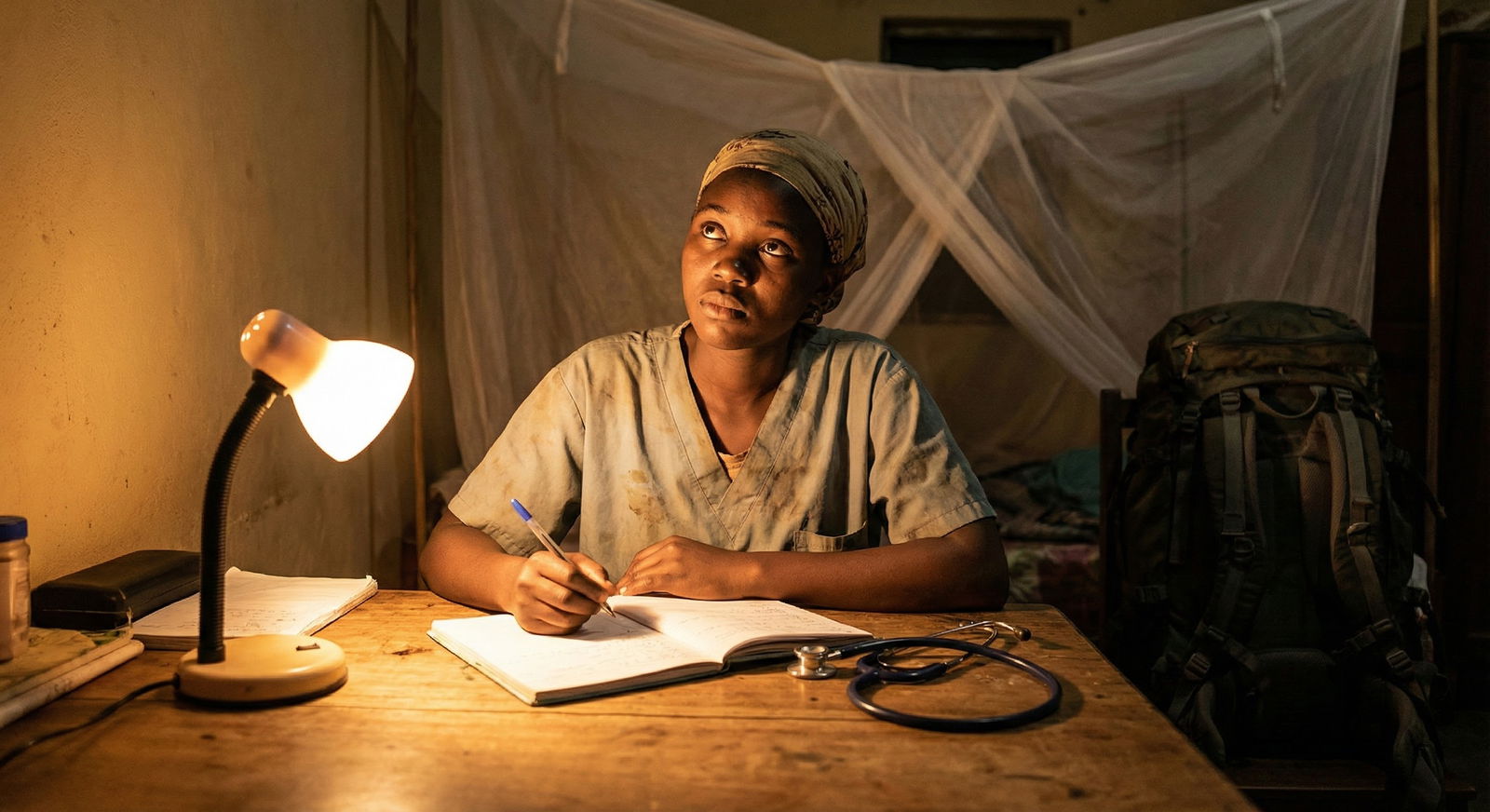
Journal. Talk to mentors who understand global health. Ask yourself:- What felt right?
- What felt off?
- Would I support this model as a physician?
If you come home with more questions than answers, that’s normal. Healthy, even.
Visual: How Time Should Be Spent on a Pre-Med Mission
Just to set expectations on what a healthy balance looks like.
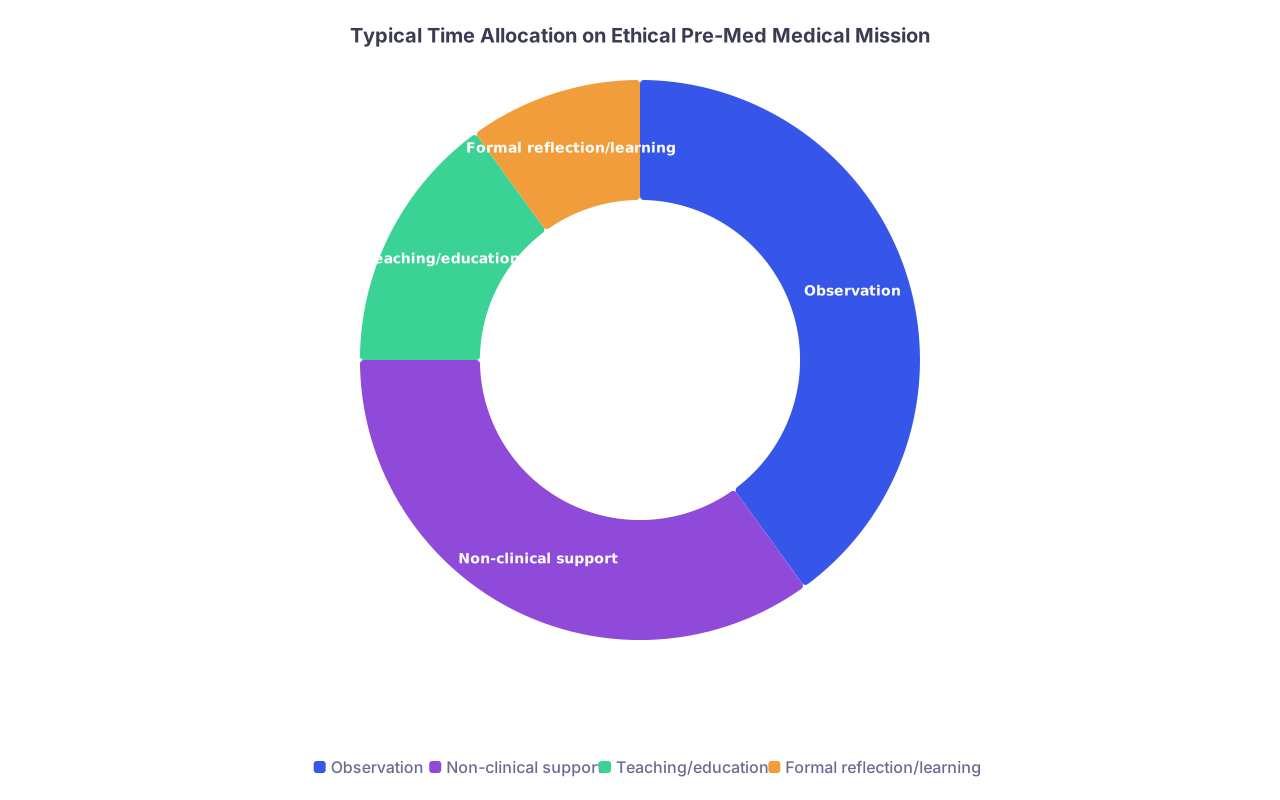
| Category | Value |
|---|---|
| Observation | 40 |
| Non-clinical support | 35 |
| Teaching/education | 15 |
| Formal reflection/learning | 10 |
If most of your time is “independent clinical work,” that chart’s upside down — and so is the ethics.
One More Thing Nobody Tells You
Patients aren’t props in your pre-med story.
That sounds harsh, but it’s the line that should run in the back of your head every time you’re tempted by a glossy flyer with smiling kids and white coats.
If a program’s marketing materials talk more about you (experience, adventure, photos, résumé) than about the community, the local partners, and the ongoing work, that’s the tell.
Look for the programs where you’re clearly a minor character.
Those are the ones more likely doing it right.
FAQs: Pre-Meds and Medical Missions
1. Will going on a medical mission help my med school application?
It can, but only if:
- The trip is ethical and your role is appropriate
- You can talk about it with nuance, not savior narratives
- It fits into a broader pattern of service and global/underserved interest
A single 10-day trip with questionable ethics will hurt you more than help you if an interviewer starts asking pointed questions.
2. Is it ever okay for pre-meds to do clinical tasks like taking vitals on these trips?
Sometimes, yes — if:
- You’ve been properly trained
- It’s something you’d be allowed to do in a U.S. clinical volunteer/assistant role
- You’re directly supervised
- It’s clearly part of the program’s policies and patient safety standards
But suturing, prescribing, doing procedures, or independently managing patients? Hard no.
3. Are all short-term medical trips unethical?
No. Some are excellent: long-standing partnerships, local leadership, strong follow-up, clear roles. Short-term doesn’t automatically mean bad; unaccountable and unsupervised does.
The critical question: “If this team stopped coming, what would happen to patient care?” If the answer is “Everything collapses,” that’s a problem.
4. How can I tell if a program is just “voluntourism”?
Red flags:
- Heavy marketing on “hands-on clinical experience” for undergrads
- No clear local partner named on the website
- No explanation of follow-up care
- Vague mention of “making a huge impact in just one week”
- You can sign up and go with zero screening or preparation
If it sounds like a vacation with scrubs, treat it that way — and don’t label it clinical work.
5. Should I ever mention doing procedures if I already did them on a trip?
If you were pushed into inappropriate roles, don’t brag about it.
You can mention it as an ethical learning point only if you frame it as:
- “I now understand that was outside my scope and I wouldn’t do it again.”
- “That experience made me rethink how short-term trips are designed.”
If you frame it as a flex, some adcoms will mentally put your application in the “poor judgment” pile.
6. What’s a better way to show interest in global health as a pre-med?
Do this:
- Take global health or medical anthropology courses
- Volunteer or work with immigrant/refugee communities locally
- Learn a language and use it in patient-facing settings when possible
- Join or assist with research in global or public health
Then, if you add an ethical, well-structured overseas experience on top of that foundation, it actually means something.
7. Bottom line: Should I, as a pre-med, join a medical mission before clinical training?
Yes — only if:
- Your role is observation and non-clinical support
- The program is clearly ethical, supervised, and locally grounded
- You’re going to learn, not to “be a doctor for a week”
If the trip asks you to cross lines you know would be illegal or unsafe at home, walk away. Your integrity and the patients’ safety are worth more than a line on your CV.
Key takeaways:
- Ethical pre-med missions exist, but your role should be observer and supporter, not junior doctor.
- If you wouldn’t be allowed to do it at home, you shouldn’t be doing it abroad.
- The best trips change you more than they change the health system — and that’s fine, as long as you’re honest about it and you don’t harm patients in the process.


