
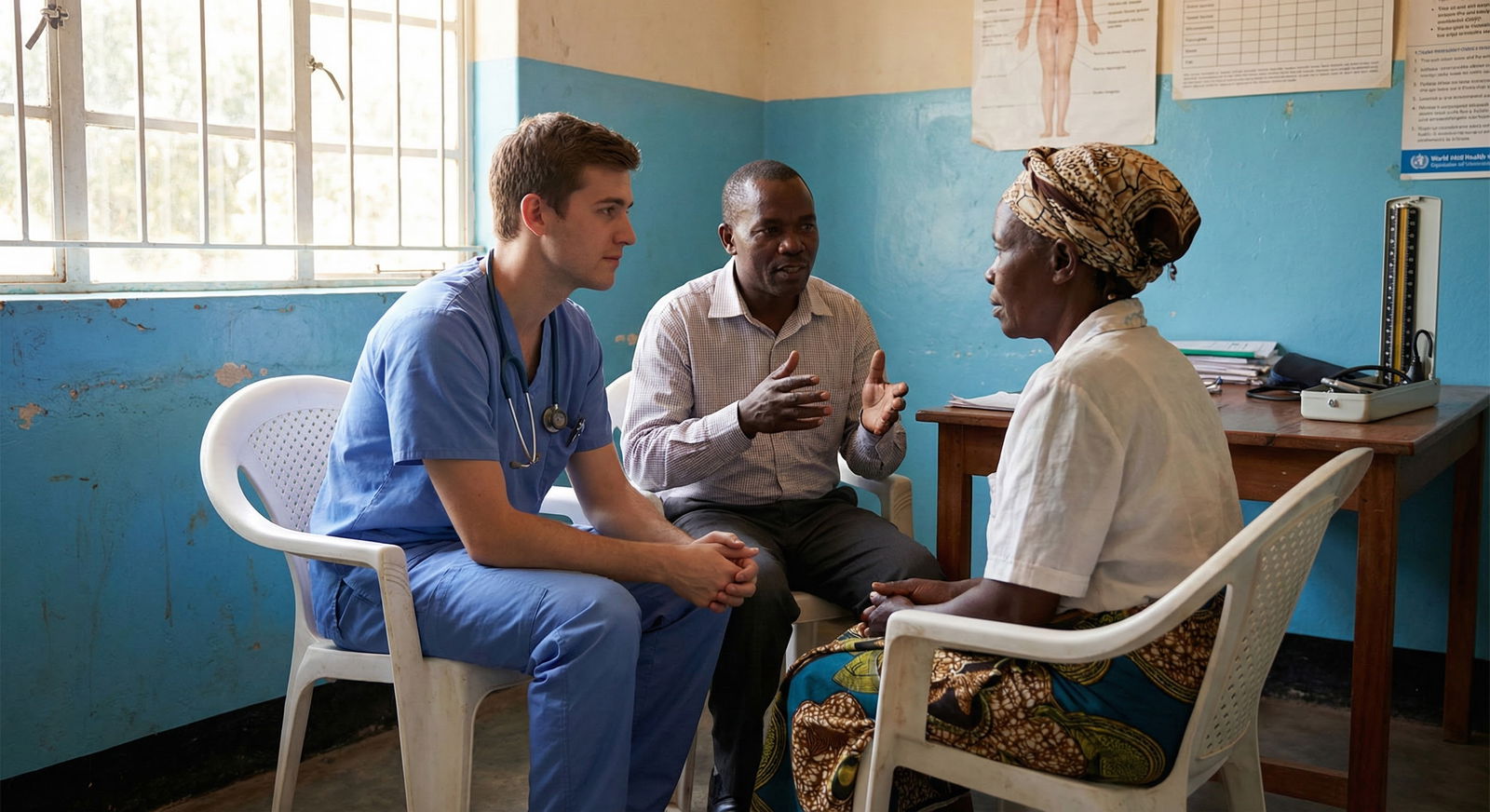
Most personal statements about “medical missions” unintentionally sound unethical.
If you write it the way you’ve heard classmates talk—“I went to X country and helped so many grateful patients”—you’ve already lost points with thoughtful readers.
Let me walk you through how to do this right.
The Core Principle: You Are Not the Hero
You are not the protagonist of the trip. The community is. The local clinicians are. The larger health system is.
If your personal statement sounds like:
- “I brought healthcare to…”
- “They had nothing, and we were able to…”
- “I realized how fortunate I am…”
…you’ve centered yourself and turned people’s lives into your backdrop. Ethically, that’s weak. Admissions committees are tired of it.
Here’s the frame you want instead:
- You observed more than you did.
- You followed more than you led.
- You learned more than you “gave.”
- You see the limits and risks of short-term work.
Start from there, and almost everything else falls into place.
What Ethical vs Unethical Descriptions Look Like
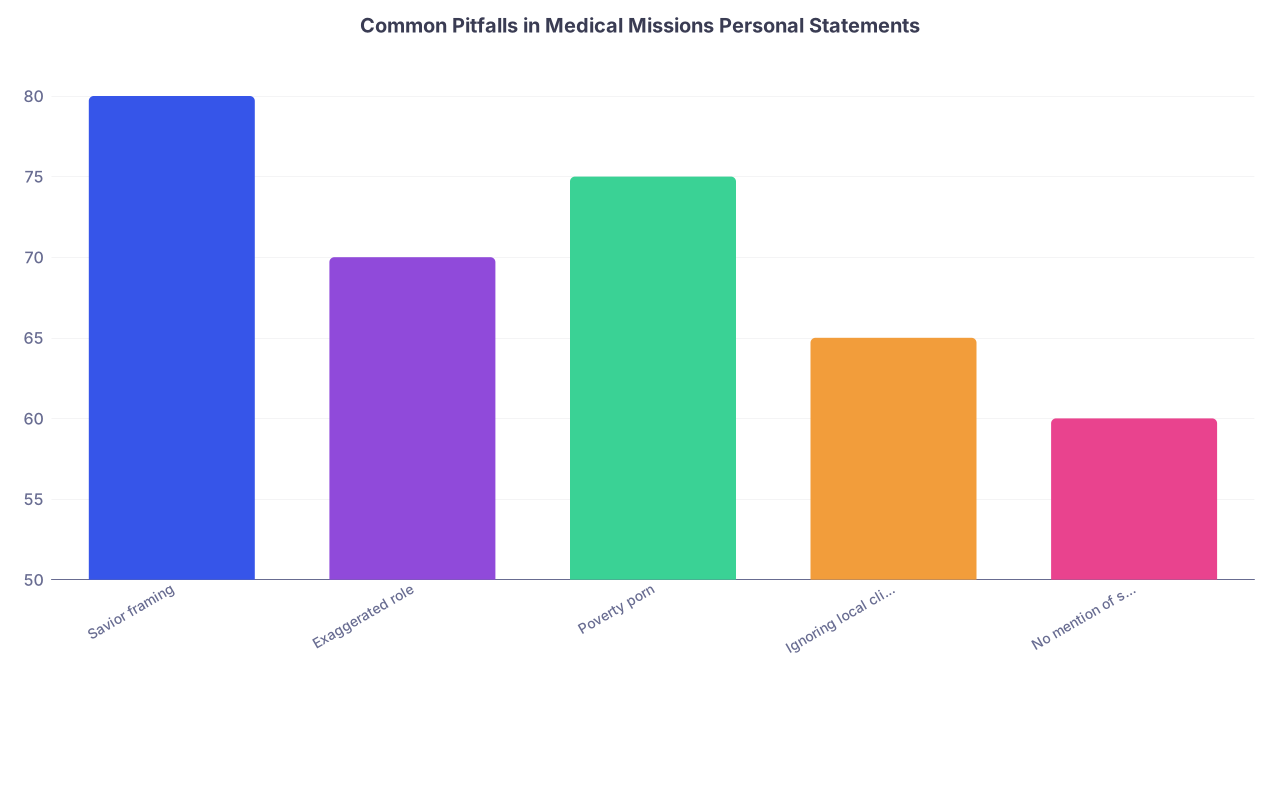
| Category | Value |
|---|---|
| Savior framing | 80 |
| Exaggerated role | 70 |
| Poverty porn | 75 |
| Ignoring local clinicians | 65 |
| No mention of supervision | 60 |
You do not need a degree in ethics to spot the red flags. Your readers see them in seconds.
Here’s the basic comparison:
| Aspect | Unethical / Weak Framing | Ethical / Strong Framing |
|---|---|---|
| Who is centered | You as savior or hero | Patients, local clinicians, and systems |
| Your role | “Provided care,” “treated patients” | “Observed,” “assisted under supervision,” “learned from” |
| Community description | Exotic, poor, helpless | Complex, resource-limited but with strengths and agency |
| Impact claims | “Changed lives,” “transformed the community” | Humble, specific, acknowledges limits of short-term trips |
| Reflection | “I realized how lucky I am” | Grapples with power, privilege, sustainability, and ethics |
If your draft leans left in that table, you have work to do.
Step‑by‑Step: How To Ethically Describe Your Experience
Think of this as a checklist. If you hit these points, you’re in good shape.
1. Be Precise About Your Role and Training Level
Do not inflate your responsibilities. Ever. I’ve seen adcoms instantly sour on an applicant for one sentence like: “I sutured several lacerations on my own” as a premed.
Instead of:
“I treated many children with severe infections.”
Write:
“As a premedical volunteer, I shadowed local physicians in a rural clinic, recorded vital signs under supervision, and helped with logistics like patient flow and basic health education.”
Key moves:
- Name your level: premedical student, first-year medical student, RN student, etc.
- Use verbs that match your training: observed, shadowed, assisted, supported, recorded, helped organize.
- Specify supervision: “under the supervision of Dr. ___,” “as part of a team led by local nurses.”
If you did do hands-on procedures, be bluntly honest about context and oversight: “I performed basic wound dressing and blood pressure measurements under direct supervision of a local nurse who guided each step.”
2. Describe the Setting Without Exoticizing Suffering
You’re not writing travel literature.
Unethical tone: “The villagers lived in tiny shacks with no electricity, grateful for any help.”
Better: “The clinic served a rural farming community where access to consistent primary care and medications was limited, and patients often traveled several hours on foot or by shared transport.”
Your aim:
- Focus on systems, not spectacle.
- Mention resource limitations, but also local strengths: community health workers, local clinicians, family networks.
- Avoid language that makes people sound pitiful, childlike, or passive.
This small language shift signals whether you see patients as fully human or as props.

| Step | Description |
|---|---|
| Step 1 | Describe trip factually |
| Step 2 | Reduce scope and clarify supervision |
| Step 3 | Check community framing |
| Step 4 | Focus on systems and local strengths |
| Step 5 | Add ethical reflection |
| Step 6 | Add honest self critique |
| Step 7 | Connect to future practice responsibly |
| Step 8 | Did I exaggerate my role |
| Step 9 | Am I exoticizing poverty |
| Step 10 | Do I address power and privilege |
What You Should Actually Emphasize
Most people try to prove impact. That’s the wrong game. You won’t impress anyone by claiming to have “changed” a health system in two weeks.
You will impress them by showing:
- Ethical awareness
- Humility
- Capacity for critical reflection
- Understanding of systems and sustainability
- How the experience reshaped your questions, not just your feelings
Here’s how to build that.
1. Focus on What You Learned, Not What You “Gave”
Example of weak reflection: “This experience taught me the value of gratitude and made me appreciate all that I have.”
That sounds like a tourism lesson, not a medical one.
Stronger: “Watching patients return repeatedly for preventable complications because follow-up care or medications were unaffordable made me question the meaning of ‘access’ and ‘charity care.’ It pushed me to think about what ethical, sustainable involvement looks like as a trainee with limited skills.”
You’re showing:
- You noticed structural issues.
- You’re wary of oversimplified “we helped them” narratives.
- You’re starting to think like a future professional, not a volunteer tourist.
2. Acknowledge Power, Privilege, and Limits
Ethical personal statements do not pretend you “solved” anything.
You might say things like:
- “I arrived with the naive belief that our short stay would meaningfully improve long-term outcomes.”
- “I struggled with the discomfort of flying home while patients I met remained in the same fragile circumstances.”
- “I realized that without consistent local infrastructure, our presence offered temporary relief, not durable change.”
Then pivot: What responsibility does that create for your future practice? For how you choose to engage globally?
Do not wallow in guilt. But do not sidestep it either. Admissions committees respect people who can sit with tension.
3. Highlight Collaboration With Local Teams
If your essay suggests that you, as an outsider, had the answers, that’s a red flag. Real global health work is led by local people.
Name them.
- “I followed Dr. L., a family physician trained locally who had been working in the region for over a decade.”
- “The nurses and community health workers taught me more about triaging and resource allocation than any textbook could.”
- “Our role was to support ongoing local initiatives rather than design our own short-term projects.”
This shows you get the hierarchy: local clinicians and systems first, visiting trainees second.
Concrete Example: Rewriting a Problematic Paragraph
Here’s how this plays out on the page.
Problematic version: “During a medical mission to Honduras, I treated countless patients who otherwise had no access to healthcare. The people lived in extreme poverty, in huts made of scraps, and were incredibly grateful for our help. I gave out medications and diagnosed illnesses alongside the doctors. This experience showed me how much of a difference I can make as a physician and inspired me to pursue medicine so I can continue helping underserved people around the world.”
Ethical rewrite: “During a two-week trip to rural Honduras as a premedical volunteer, I spent most of my time taking vital signs, organizing patient lines, and observing local physicians and nurses who had been serving the community for years. The clinic faced chronic shortages of medications and staff, and many patients traveled hours for a brief visit that might be their only contact with a clinician for months. I initially felt proud to be ‘providing care,’ but it became clear that my clinical skills were extremely limited and that any short-term benefit depended entirely on the long-term work of the local team.
What stayed with me was not the number of patients we saw but the questions it raised about sustainability and justice: What happens when we leave? How do you practice ethically when you hold a passport that lets you come and go while your patients cannot? This experience did not convince me that I had made a large impact; it convinced me that if I pursue medicine, I have a responsibility to engage with global health work that is locally led, structurally informed, and honest about the limits of short-term involvement.”
Notice the difference:
- Honest about duration and role.
- No hero narrative.
- No poverty porn imagery.
- Clear ethical tension and thoughtful future orientation.
Advanced Moves That Impress Ethically Minded Readers
If you want to go beyond “not problematic” and into genuinely strong:
Connect missions to domestic inequities.
“The under-resourced clinic abroad felt disturbingly similar to safety-net clinics I’ve seen at home, where insurance status and zip code carry more weight than biology.”Show you’ve updated your own thinking.
“I applied for the trip thinking it would be ‘service.’ I left uncomfortable with that word and more interested in partnership and advocacy.”Reference specific frameworks or ideas (briefly).
Mentioning concepts like “structural violence,” “task-shifting,” or “capacity-building”—correctly and in plain language—signals that you’ve actually read something beyond trip flyers.Admit what you won’t do again.
“I no longer see value in parachuting into short-term, student-led trips without strong local partnerships or longitudinal engagement. Future global work for me needs to meet a higher ethical bar.”
That level of honesty and self-critique is rare. And memorable.

Quick Checklist Before You Submit
Use this as your final scrub:
- Do I clearly state my role, training level, and supervision?
- Have I removed any suggestion that I independently diagnosed/treated beyond my scope?
- Do I center local clinicians, systems, and patients instead of myself?
- Do I avoid romanticizing or dramatizing poverty?
- Do I acknowledge limits, power dynamics, and sustainability issues?
- Do I connect this experience to how I want to practice ethically in the future?
If you can honestly check all of those, you’re in a good place.
FAQ: Ethically Describing Medical Missions in Personal Statements
1. Is it ever okay to mention that I “helped” or “provided care”?
Yes, but with precision. If you’re a licensed nurse giving vaccines under standing orders, saying you “provided vaccinations” is fine. If you’re a premed taking blood pressures, “assisted with patient intake under supervision” is more accurate than “provided care.” When in doubt, understate rather than overstate.
2. Should I mention if I now think the trip itself was problematic?
If that’s true and you can explain it clearly, yes. Many reviewers respect applicants who say, in effect, “I participated in something I now see as ethically limited, and that realization shaped how I think about global health.” Just don’t spend the whole essay attacking the program; focus on what you learned and how it changed your future choices.
3. What if it was a faith-based mission trip—can I talk about that?
You can, but keep the focus on medicine, ethics, and patient care, not on conversion or spiritual “impact.” Admissions committees care that you respect patient autonomy and pluralism. Frame faith as part of your motivation and support system, not as a tool you brought to “fix” patients or communities.
4. I did hands-on procedures as a premed. Do I mention that or leave it out?
Mention it only if you can make it ethically reflective, and be clear you now understand the concerns. For example: “I was asked to perform tasks beyond what I’d be allowed to do at home, which made me increasingly uncomfortable and sparked my interest in global health ethics.” If you present over-scoped practice as a point of pride, that’s damaging.
5. Is it better to skip medical missions entirely and write about something else?
If your only angle is “I went, I helped, I felt grateful,” then yes—pick something else. But if this experience genuinely reshaped how you think about health equity, systems, and your own responsibilities, it can be excellent material. The bar is just higher than most people realize.
6. How do I show genuine passion for global health without sounding naïve?
Anchor your passion in specifics and humility. Reference local partners, long-term models of care, and your intention to pursue training (e.g., global health tracks, health policy work, language learning) that actually prepares you to contribute responsibly. Passion plus grounded realism beats passion plus grandiosity every time.
Keep three things in focus: be brutally honest about your role, center the community rather than yourself, and show that the trip expanded your ethical questions, not just your passport stamps. Do that, and your “medical missions” story becomes a strength instead of a liability.


