
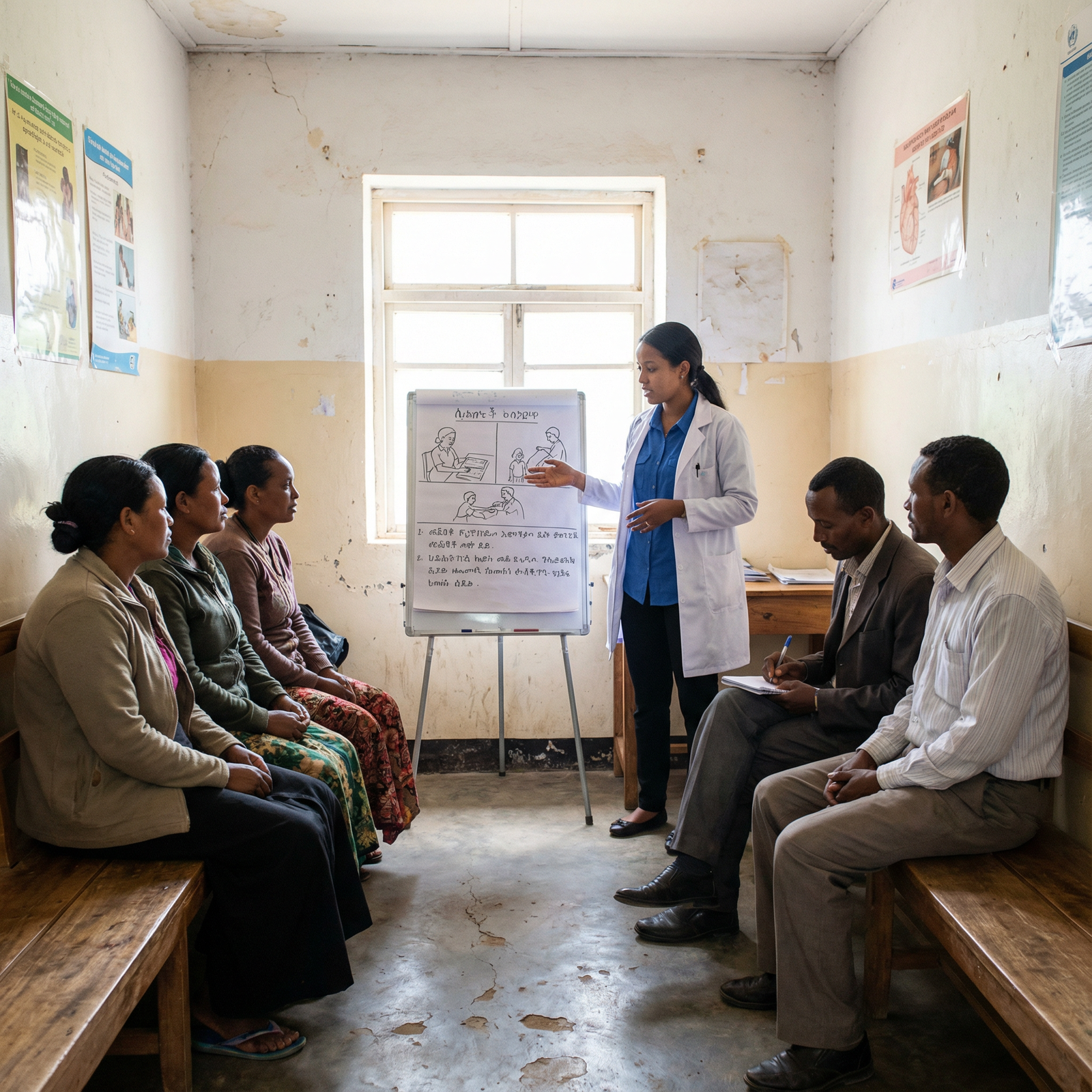
Last summer, a third-year med student pulled me aside after clinic in rural Central America. Eyes red, voice low, she said: “I just watched a surgeon do a tubal ligation on a woman who clearly didn’t understand what was happening. They called it ‘population control.’ What am I supposed to do with that?”
If you stay in global health long enough, you’ll see something that makes your stomach drop. Not a bad outcome. Not a simple mistake. Unethical care. And then you’re stuck: far from home, low on power, unsure who you can trust, wondering whether speaking up will help anyone or just get you sent home.
Here’s how to handle that situation like an adult professional—not a helpless bystander and not a reckless hero.
Step 1: Name What You Saw — And Be Precise
Your first job is not to report. It’s to get crystal clear on what actually happened.
Most people skip this and go straight to outrage. That’s how you lose credibility.
Ask yourself, and write it down privately that same day:
- What exactly did I see or hear?
- Who was involved? (Names, roles if you know them.)
- What was done or not done?
- Who was affected? (Patients, specific groups, staff.)
- Was this a one-time event or part of a pattern?
Use concrete language, not interpretation.
Bad: “The doctor was abusive and racist.”
Better: “Physician told the patient, ‘People like you don’t deserve this treatment,’ in front of others, then refused to provide indicated antibiotics despite availability.”
If you’re not sure whether something is unethical or just different practice in a low-resource setting, anchor on a few non-negotiables:
- Clear lack of consent or understanding for invasive procedures
- Coercion (using power, threats, money, or force to push a decision)
- Discrimination by race, ethnicity, gender, disability, religion, social status
- Clear disregard for basic safety (reused needles, no sterilization when possible alternatives exist)
- Sexual misconduct or boundary violations
- Theft or diversion of medications/supplies intended for patients
- Falsifying records or research/data
You don’t need to be fully “right” to move forward. But you do need to be specific.
Step 2: Check Immediate Risk — Is Anyone in Danger Right Now?
Before you think about formal reporting channels, you look at harm. Right now. Today.
Ask yourself three questions:
- Is a patient in immediate danger right this minute?
- Is there a realistic chance the same thing will be done again tomorrow?
- Is anyone (including you) at risk of physical retaliation if you say something locally?
If the answer to #1 is yes—someone’s about to be harmed or is currently being harmed—you act fast and locally if at all possible.
Examples:
- A non-consented procedure is about to start.
- A severely septic patient is being denied available antibiotics because “she’s an addict.”
- A nurse is about to reuse a non-sterile needle because “we’re short.”
In those cases, you’re not doing a formal whistleblower move. You’re intervening to stop immediate harm, and you use the fastest, least explosive option:
- Speak to the person quietly: “Can we pause for a second? I’m concerned she doesn’t understand what’s happening. Can we explain again?”
- Grab the most senior person you trust on site: “I think this patient is at risk right now—can you come quickly?”
- Offer a face-saving alternative: “I think we might have some extra syringes in the other box—could we check before reusing that one?”
You will not fix the system in a day. You are trying to prevent the worst harm while keeping enough trust and access to act again tomorrow.
If the danger is ongoing but not “right this second,” you have a bit more room to plan. Which brings us to the real work.
Step 3: Map Your Reporting and Escalation Options
Most mission settings have messy, overlapping chains of authority. You can’t just “tell someone” and assume it’ll land where it should.
You need to map who exists in this ecosystem:
| Level | Who this usually is | When to use first |
|---|---|---|
| Local | Site lead, local physician, head nurse | When you trust them and issue is isolated |
| Mission Org | Trip leader, NGO medical director, board member | When pattern involves multiple staff or policies |
| Home Institution | Elective director, global health office, dean's office | When you’re a trainee/employee and need protection |
| External / Legal | Licensing board, IRB, human rights group | When severe abuse, crime, or cover-up is likely |
You’re probably dealing with at least three of these at once: local host, sending organization, and your home school or hospital.
Step 4: Start Local – If (and Only If) It’s Safe and Plausible
If you have any confidence in the local leadership, you start there. Not because they’re always better—but because they have the most direct control over what’s happening.
How to do it without getting instantly labeled “the arrogant foreigner”:
Pick the right person.
Usually the medical director, lead local physician, or site/clinic manager. If the problem is that person, skip this level.Ask for a private conversation.
“Could I talk with you briefly this evening about something I’m concerned about clinically?”Use a calm, fact-based frame.
Example script:“I wanted to bring something to your attention because I’m worried a patient was harmed and that it could happen again. Yesterday, I saw Dr. X perform a procedure on a young woman who did not appear to understand what was happening. When asked to sign, she said in [local language] that she thought she was getting an injection for pain. No one explained the permanent nature of the procedure in her language that I could see. In my training, that would be considered a violation of informed consent. I’d like to understand how these decisions are usually made here, and whether there’s a better way to protect patients in similar situations.”
You’re naming the thing without moral grandstanding. You’re also giving them a way to address it without losing face in front of their staff.
Ask directly what they plan to do.
“What steps do you think we can take so this doesn’t happen again?”
If you get evasive nonsense, file that away. It matters later.
If speaking locally will clearly make things worse—for patients or for you (think: authoritarian setting, open retaliation norms, pervasive corruption)—you don’t force “local first” just to feel pure. You move to your sending organization or home institution.
Step 5: Use Your Sending Organization Like a Grown-up
If you came with:
- A university elective
- A church or NGO
- A big-brand mission group
…then they owe you more than a t-shirt and a group photo. They owe oversight and a way to report.
You want to separate two things in your head:
- Dealing with the specific incident
- Exposing the pattern and stopping it from repeating with future teams
Your email or written report to them should include:
- Who you are (name, role, where you’re from)
- Dates and location of the mission
- Who was involved (roles, not just names)
- What happened (neutral, specific description)
- How you tried to address it locally, if at all
- What you’re worried will happen if nothing changes
Keep it professional, not chatty. You’re documenting for people who might need to take legal or policy actions.
Example opening:
“I’m writing to report serious ethical concerns about patient care during the recent trip to [location] from [dates]. I believe certain practices violated basic standards of informed consent and non-discrimination, and pose ongoing risk to patients.”
If the “sending organization” is essentially one charismatic surgeon with a website and zero governance structure? You still send the email—but you lower your expectations. And you increase your effort on the home-institution side.
Step 6: Engage Your Home Institution – Protect Yourself and the Next Person
If you’re a med student, resident, or faculty, your strongest shield is your home institution. I’ve seen too many trainees sit on horrendous experiences for years because they “didn’t know who to tell.”
You have more options than you think:
- Elective or global health director
- Office of global health or international programs
- Student affairs / GME office
- Ombuds or confidential advisor
- Title IX / equity office (if discrimination or harassment)
- Institutional compliance or risk office
- Human subjects / IRB office (if research was involved)
Pick one. Start.
Send a concise, factual summary—the same bones as your message to the mission organization. Ask for a real conversation, not just “noted.”
Phrase it like this:
“I’d like to discuss some serious ethical concerns from an international elective. I’m worried about harm to patients and about ongoing affiliation with this site.”
Your goals here:
- Create a formal record
- Trigger internal review of the partnership
- Get advice and some degree of protection if there’s blowback
If your home institution shrugs and says “this is just how it is in other countries,” that’s not cultural sensitivity. That’s cowardice. And it’s a sign you may need to go external.
Step 7: Decide If and When to Go Outside the System
There are lines you don’t ignore:
- Sexual abuse of patients
- Criminal neglect
- Coerced sterilization or abortion
- Experimentation without consent
- Physical violence against patients
- Systematic fraud or falsification of research
If what you saw lives squarely in that territory, and internal channels (local, mission org, home institution) are unresponsive or complicit, then yes—you look at external options.
These might include:
- National medical council or licensing body (if they exist and aren’t completely corrupt)
- Research ethics / IRB boards (if funded research is involved)
- Donor agencies (USAID, major foundations, faith-based funders)
- Reputable human rights or medical ethics organizations
- In extreme cases: the press
But use your head. Going external in a fragile setting can put local staff or patients at risk. It can destroy an otherwise useful clinic if done recklessly.
Before you go nuclear, you should:
- Have detailed, contemporaneous notes
- Have tried at least one internal or semi-internal route, unless doing so is clearly dangerous
- Be very clear about what remedy you’re asking for (stop a program? remove one provider? overhaul consent processes?)
This is where talking to someone with real global health ethics experience at your home institution helps. They’ve seen it before. They know where complaints go to die and where they actually change things.
Step 8: Document Like a Person Who Might Be Deposed Later
Sounds dramatic. But if the situation is bad enough, someone, someday, may ask you to back up what you’re saying.
While you’re still on site (carefully, and respecting privacy):
- Keep a daily log: dates, times, events, names, exact quotes if you remember them
- Save relevant emails or written instructions
- Do not take identifiable patient photos or sensitive images without clear permission and absolute necessity
When you’re back home:
- Write a clean, chronological narrative from your notes
- Remove gossip and speculation; keep observations and direct evidence
- Store this securely (encrypted if possible), not on a shared drive
This isn’t about building a career-making whistleblower story. It’s about not relying on your memory three years from now when someone finally takes it seriously.
Step 9: Manage the Personal Fallout – Because This Stuff Stays With You
Watching unethical care is one kind of trauma. Watching everyone shrug when you raise it… that’s another.
Common reactions I see in trainees:
- Guilt for not doing more in the moment
- Anger at the “system” and everyone in it
- Cynicism about global health or missions in general
- Isolation (“No one wants to hear this; they just want cool mission photos.”)
A few things that help:
- Debrief with someone who actually gets it—global health faculty, an ethics consultant, a mentor who’s not financially tied to the mission
- Separate “what I could have done” from “what any one person reasonably can do in that setting”
- Turn the experience into specific commitments: what you’ll ask before joining future trips, what you’ll refuse to participate in, how you’ll mentor younger students about these issues
You’re allowed to be angry. Just don’t get stuck at “everything is terrible, and nothing matters.” That’s a lazy endpoint. Use what you saw to sharpen your standards, not to abandon them.
Step 10: Prepare Differently Next Time
Most students vet mission trips like they’re picking an Airbnb. Photos, dates, cost. That’s it. Then they’re shocked when they land in an ethical dumpster fire.
Next time, before you sign up, ask blunt questions:
- Who is the local partner? How long has this relationship existed?
- Who owns clinical decisions—local clinicians or visiting teams?
- How is informed consent handled for procedures? In what language, by whom?
- Has your institution ever had ethical complaints about this site or program?
- What’s the formal process if I see something unsafe or unethical?
If people get defensive or vague? Walk away. There are plenty of places to do good work without selling your soul.
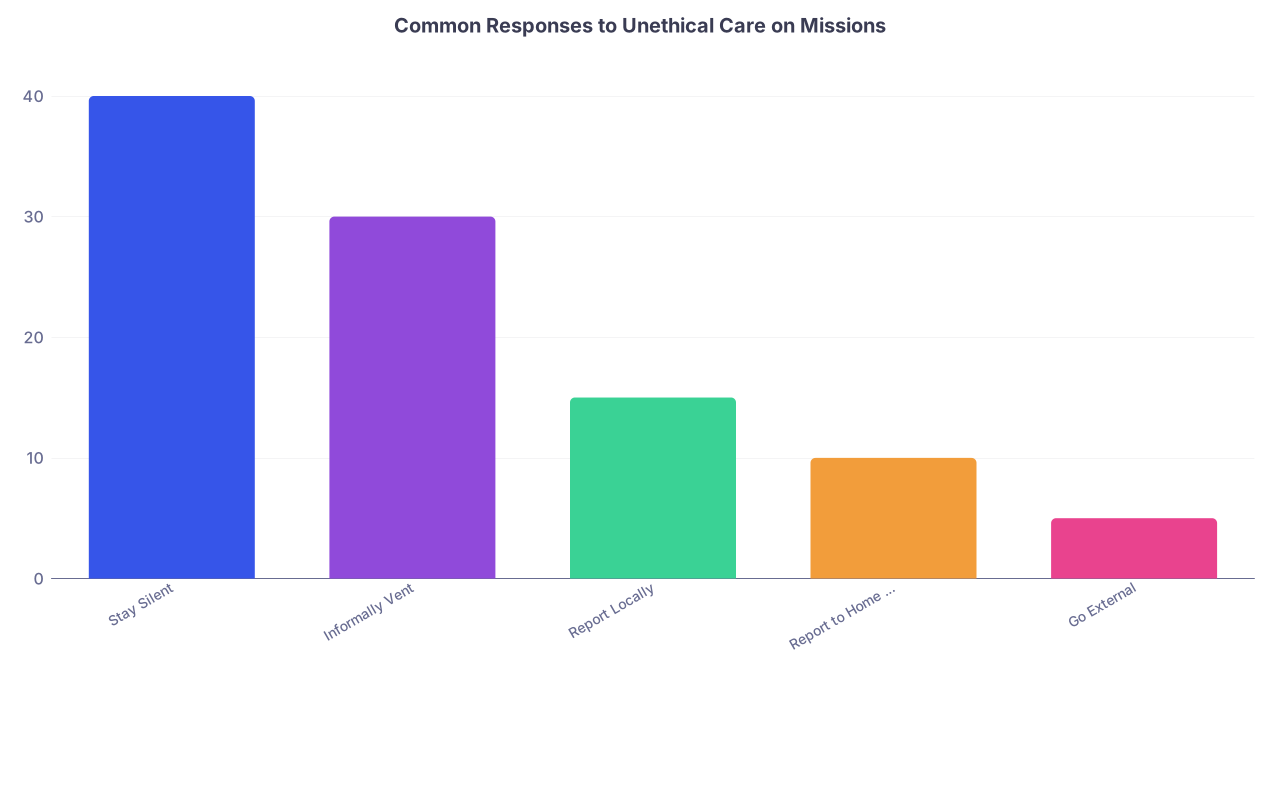
| Category | Value |
|---|---|
| Stay Silent | 40 |
| Informally Vent | 30 |
| Report Locally | 15 |
| Report to Home Institution | 10 |
| Go External | 5 |

| Step | Description |
|---|---|
| Step 1 | Witness unethical care |
| Step 2 | Check immediate risk |
| Step 3 | Intervene locally if safe |
| Step 4 | Document details |
| Step 5 | Report to site lead |
| Step 6 | Contact sending organization |
| Step 7 | Contact home institution |
| Step 8 | Consider external report |
| Step 9 | Monitor, follow up |
| Step 10 | Local leadership trustworthy |
| Step 11 | Severe abuse or crime |
Quick Case Walkthrough: What This Looks Like In Real Life
You’re a fourth-year on an elective in East Africa. You notice:
- Women getting C-sections consented in English, which they don’t speak.
- No mention of risks, no chance to ask questions.
- When you ask a resident, he says, “They’re poor. They should be grateful for free surgery.”
What you do:
- Write down specific cases: date, patient age (no names in your notebook), what was said, who consented.
- Ask the local senior midwife privately: “How is consent usually done here? Does anyone explain in [local language]?” You learn it’s often skipped for speed.
- Talk to the visiting faculty supervising you: some are surprised and concerned; one shrugs.
- With a supportive faculty member, you meet the hospital medical director. You frame it around patient safety and trust. He admits the problem, agrees to trial a new process using midwives as interpreters.
- You report the experience to your school’s global health office, describing both the problem and the hospital’s willingness to address it.
- A year later, that site has a brief consent script in the local language and requires documentation that interpretation occurred.
Is it perfect? No. Is it better than before? Absolutely. And it happened because a student didn’t just swallow her discomfort and go home with nice photos.
FAQs
1. What if I’m not 100% sure it was unethical and not just culturally different?
You rarely get 100% certainty on site. Use a simple test: Would this be clearly unacceptable where you train if adjusted for resources? (Meaning: ignore fancy technology, focus on consent, non-discrimination, and basic safety.) If yes, treat it as a concern. You can absolutely say, “I might be misunderstanding, but this is what I saw and why I’m worried.” Good institutions don’t require you to be a bioethicist before you’re allowed to raise a flag.
2. Will speaking up ruin my relationship with my program or hurt my career?
It might create friction with people who prefer silence. That’s true. But serious programs and decent mentors do not punish you for raising good-faith concerns. If they do, that’s a data point about where you’re placing your career. The real career risk is being known as the person who looked away while patients were harmed. Word spreads both ways.
3. Should I ever confront the offending clinician directly?
Sometimes. If it’s a single event, relatively lower stakes, and you have some standing (resident to resident, faculty to faculty), a calm one-on-one can be useful: “Can I ask about what happened with that patient? I was worried about consent.” But if you’re a student from abroad and the person is a senior local surgeon with a fragile ego? Marching in solo to “confront” them is more self-righteous than strategic. Use the chain of command and allies.
4. What if the patient or community seems fine with what happened?
Patients being resigned or quiet doesn’t make something ethical. Power dynamics, low expectations, and lack of options all blunt reactions. A woman who nods along to a forced sterilization because she thinks it’s required to get food aid is not “fine with it.” You respect local values, yes. But you do not hide behind “they don’t mind” when the reality is they were never given a real choice.
Key takeaways:
First, be specific and honest with yourself about what you saw; vague outrage won’t change anything. Second, use a stepwise escalation—local if safe, then your sending organization, then your home institution, and external only when truly necessary and thoughtfully done. Third, do not walk away from these experiences unchanged: tighten your standards for where you work, how you consent, and what you’ll refuse to be part of, because that’s how you stop being a tourist and start being a professional.


