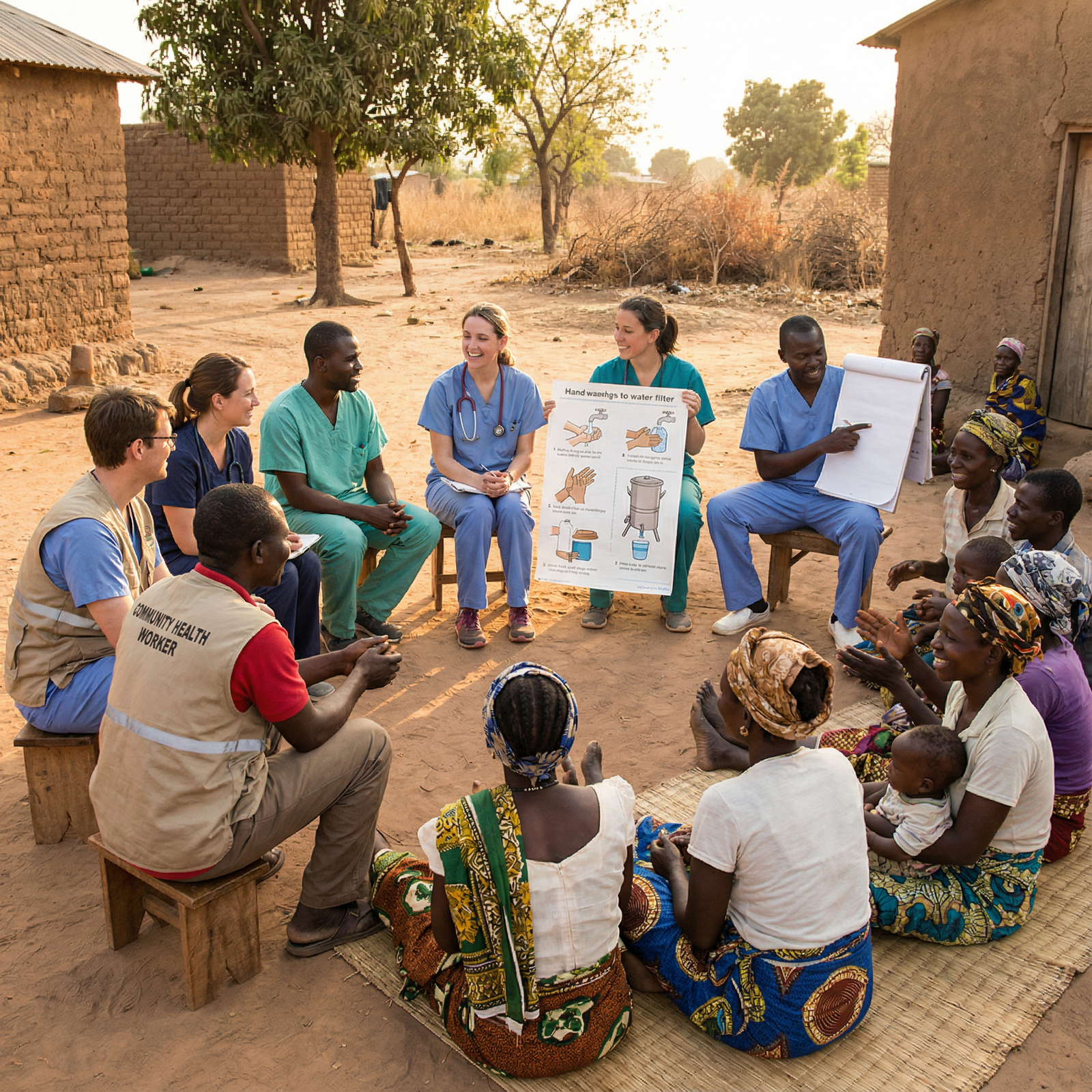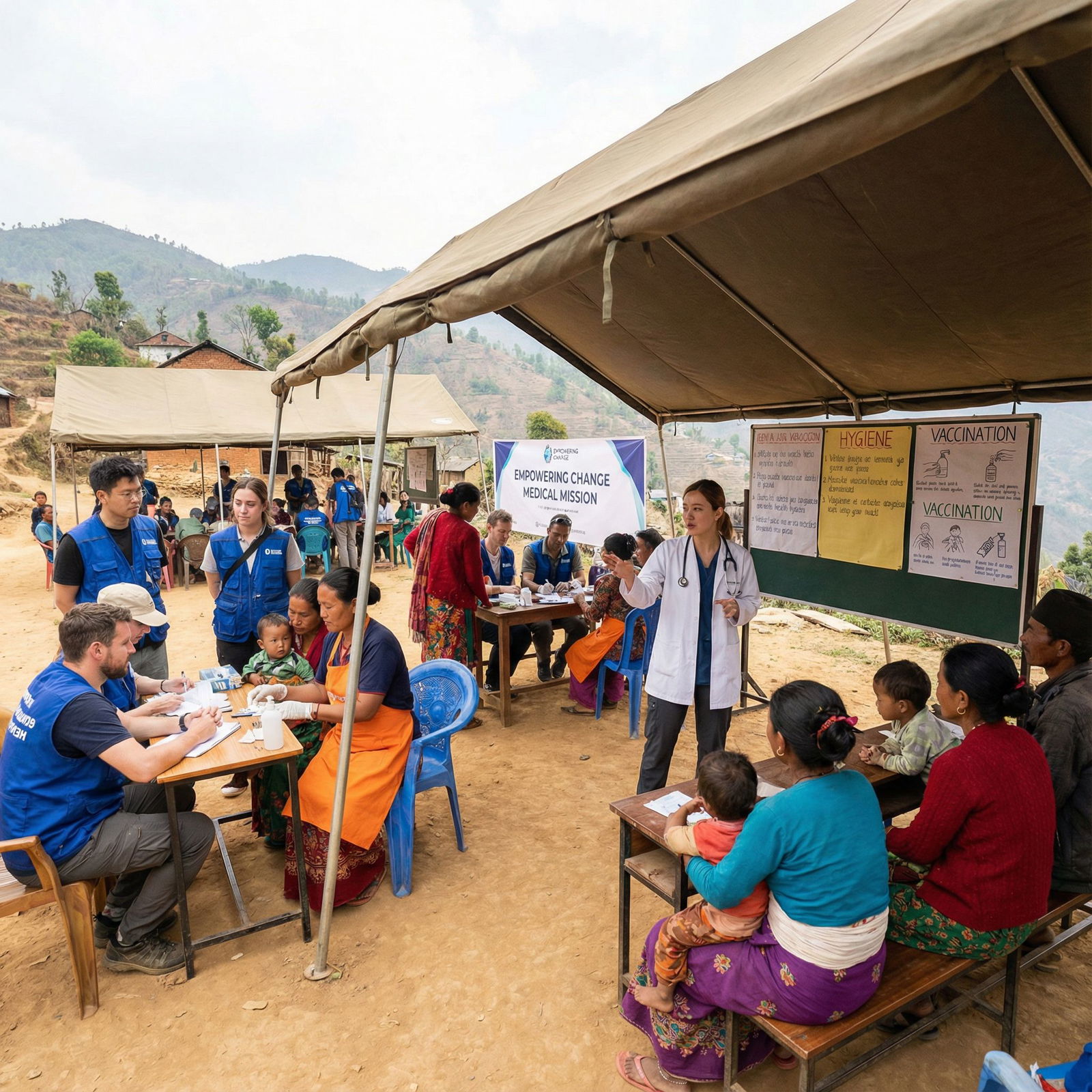
The way most applicants talk about “medical missions” in their applications is exactly what makes fellowship directors distrust them.
You think the week in Guatemala, the selfie with the village kids, the “I realized how privileged I am” paragraph is helping you. At most global health fellowships, it is a liability unless it is framed correctly and backed by substance.
Let me walk you through how your “mission trips” actually land in the room where decisions are made.
What Fellowship Committees Really Think When They See “Medical Missions”
On a fellowship review committee, when someone opens a file and reads “multiple medical mission trips,” here are the unfiltered reactions you do not hear:
- “Short-term savior work?”
- “Did they help or just practice on poor people?”
- “Any continuity, or just voluntourism?”
- “Who supervised? Anyone local? Any capacity building?”
- “Is this ethical global health or a photo op?”
Nobody says this in the promotional brochures. I’ve heard it in closed-door recruitment meetings at places like UCSF, Duke, and smaller but serious global health tracks in internal medicine, EM, OB/GYN, and pediatrics. The vocabulary changes, the skepticism does not.
For most serious global health fellowships, “medical mission” is already a red flag phrase. They prefer: longitudinal partnerships, bidirectional exchanges, capacity building, implementation projects, health systems strengthening, or community-engaged work.
You can still recover from the “mission trip” label. But only if you understand how they judge it.
The First Filter: Duration, Continuity, and Power Dynamics
Before anyone even reads your beautiful reflection, they’re scanning for three things: time, repetition, and who held the power.
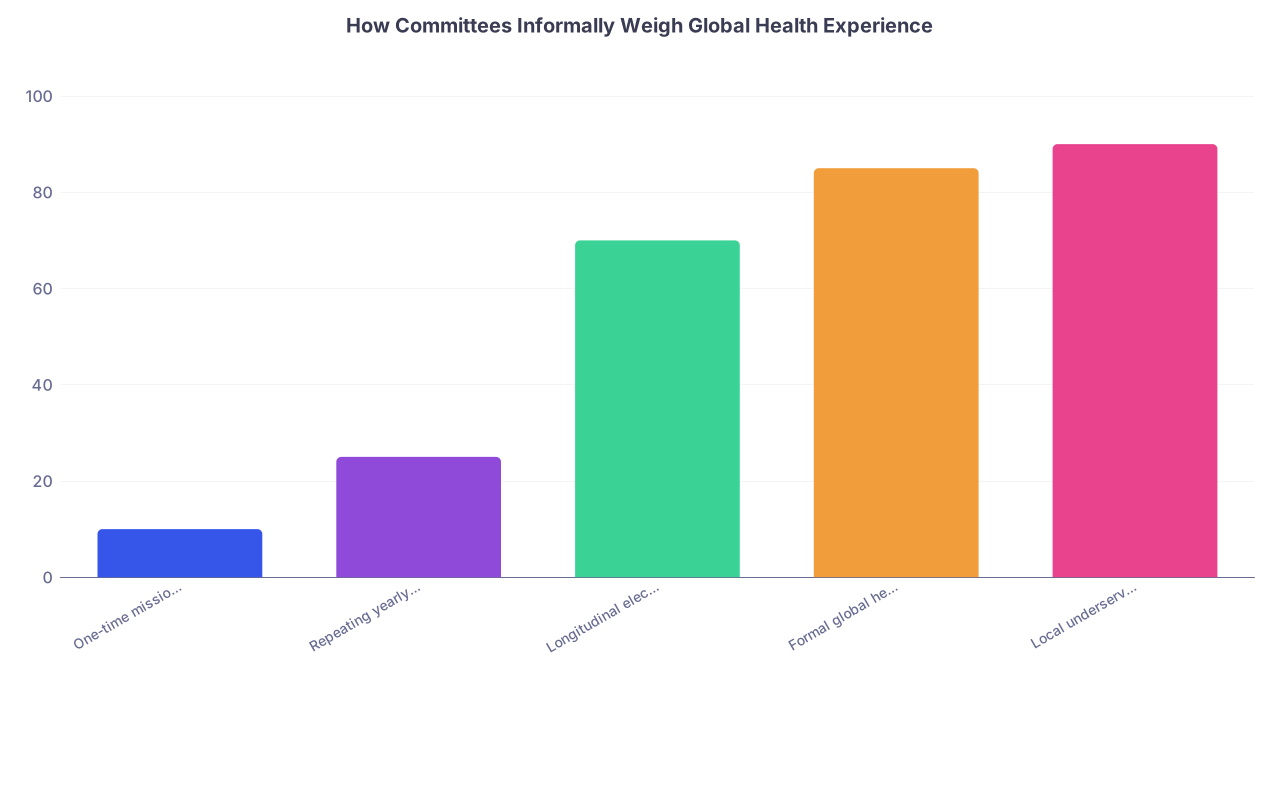
| Category | Value |
|---|---|
| One-time mission week | 10 |
| Repeating yearly trips | 25 |
| Longitudinal elective (2-3 months) | 70 |
| Formal global health track | 85 |
| Local underserved continuity clinic | 90 |
That “score” is not an official algorithm. But it’s the mental weighting I’ve watched over and over.
Duration
A 7–10 day trip is not global health. It’s exposure. At best, it shows curiosity. At worst, it shows poor judgment and ethical blindness.
When directors scan your CV, they immediately ask: How long?
- Less than 2 weeks → “Probably student mission / church trip / NGO blitz.”
- 2–8 weeks → “Could be a structured elective, let’s see who ran it.”
- 3 months or more (or repeated trips over years) → “Now we’re talking. There’s a chance of real relationship and learning.”
If your longest stint was a 10-day mission, you’re not automatically disqualified. But they will not treat you like you have “global health experience.” They will treat you like you had a short exposure and then they will look for what you did with that exposure in terms of ethics, humility, and trajectory.
Continuity
This is where applicants fail.
You list:
- Honduras – 1 week, 2nd year of med school
- Guatemala – 10 days, 3rd year
- Kenya – 1 week, 4th year
In your mind, that’s three international trips. To a serious global health fellowship director, that reads: “Serial short-term work, no continuity, probably no accountability to any community.”
They look for continuity in any of these forms:
- Same site or same region over years
- Ongoing remote work with partners (tele-education, research, program evaluation)
- Progression in responsibility (student → organizer → resident mentor)
If you can’t show continuity abroad, continuity at home helps: long-term commitment to a refugee clinic, FQHC, migrant farmworker program. That demonstrates you understand relationships and systems, not just stamps in a passport.
Power and Supervision
The scariest phrase for a global health committee is: “I got to do procedures I would never be allowed to do in the US.”
They know what that usually means: you practiced on poor brown bodies because regulation was looser and no one was watching.
They will ask themselves:
- Who supervised you?
- Were you working under local clinicians or American attendings parachuting in?
- Did local health workers lead, or were they props for your photos?
If your experience was heavily top-down, foreign-led, with minimal local ownership, you are going to need to do serious ethical reflection in your application and interviews to convince them you get the problem now.
The Ethical Scorecard They Never Show You
Directors do not literally pull out a rubric labeled “Ethical Assessment of Mission Trips.” But there is a mental scorecard. I’ll lay it out the way I’ve seen people talk about it in ranking meetings.
| Dimension | Red Flag Version | Neutral Version | Strong Version |
|---|---|---|---|
| Duration/Continuity | 1 week, one-off | 1–4 weeks, structured elective | Months or repeated over years |
| Supervision | Minimal, unqualified, or vague | Clear US faculty supervision | Strong local + US supervision, clear roles |
| Ethics & Humility | “I helped so many people” | “I learned a lot” | “I questioned what we were doing and changed” |
| Capacity Building | Purely direct care, no follow-up | Some teaching or follow-up | Focus on training, systems, or sustainable change |
| Local Partnership | Foreign team designs and delivers everything | Some collaboration with local clinic | Long-term, locally driven partnership |
Nobody gets “strong” across the board as a med student. That’s not what they’re expecting. What they want to see is that you can see the problems and you’ve changed your behavior and goals because of that awareness.
The application that goes straight to the top is the one that says, in so many words:
“I realized the way I first engaged with global health was ethically shaky. Here’s how I’ve grown and what I do differently now.”
How They Read Your Personal Statement and Essays About Missions
Here’s the uncomfortable truth: most fellowship faculty have read hundreds of “I went to [low-income country] and it changed my life” essays. They blur together.
They scan yours with a specific mental checklist:
1. Who is centered: you or the community?
If your essay is mostly:
- “I learned…”
- “I realized…”
- “This opened my eyes…”
with no concrete description of what the local system needed or wanted, you’re telling them this was about your self-discovery, not health equity.
They’re looking for writing that shows:
- You know the name and role of local partners.
- You understand the health system (referral patterns, financing, workforce issues).
- You know what happened after you left.
2. Do you acknowledge harm or limitations?
The strongest essays contain at least one moment of discomfort or critique, such as:
- Realizing that your presence disrupted normal clinic flow.
- Noticing that medications you wrote for couldn’t be filled after you left.
- Feeling uneasy about doing procedures that locals weren’t trained or equipped to maintain.
I’ve watched directors light up when a candidate writes something like:
“On my first trip, I proudly tallied the number of patients ‘we treated.’ By the third day, I noticed that the same elders were queued for hours while we rushed through visits, and that our post-op patients had no realistic follow-up options. That unease has stayed with me far longer than the photos.”
That’s someone who might survive a career in global health without causing more damage than good.
3. Is there a trajectory?
Committees absolutely judge whether your mission experience was a phase or the beginning of a path.
Positive trajectory looks like:
- Early: short mission, ethically naive.
- Later: formal global health coursework, ethics seminars, MPH, or at least deliberate reading and discussion.
- Now: focus on partnership, local agency, sustainable programs.
If your story stops at “I realized how lucky I am,” they assume you’re done growing.
Behind Closed Doors: How They Compare Two Applicants With “Missions”
Let me walk you through an actual-style conversation from a ranking meeting. Names changed, but the tone is real.
Applicant A:
- 3 one-week trips to Central America with a church group
- Lots of procedures abroad, limited at home
- Personal statement heavy on “we were so grateful to help”
- No ongoing relationship with any site
- No written reflection on ethics
Applicant B:
- One 10-day trip as an MS1
- Uncomfortable with what they saw (unlicensed care, photos, lack of follow-up)
- Then: joined the school’s global health pathway, engaged in seminars on decolonizing global health
- Did a 2-month rotation in an established partnership site as a senior resident
- Personal statement explicitly critiques short-term missions and describes how they changed their approach
How the conversation goes:
“A has ‘mission trip’ all over their CV, lots of procedures abroad. I’m a bit worried about judgment.”
“Yeah, the essay doesn’t show any critical reflection. Reads like voluntourism.”
“B only has one early mission, but then they course-corrected and did serious structured work.”
“Right. B gets it now. That’s who we can trust in our partner sites.”
Applicant A thought more stamps and more “service” would make them competitive. Applicant B admitted their early mistakes and showed ethical growth. B wins every time at serious programs.
What You Can’t Fake: How We Catch Performative Global Health
There’s a particular kind of applicant who reads about “decolonizing global health” the month before applications, sprinkles in buzzwords, and assumes that will satisfy ethics boxes.
Faculty can smell this from a mile away.
Here’s what gives you away:
- You use words like “sustainable,” “capacity building,” and “bidirectional partnership” but can’t explain one tangible example of each when probed.
- Your LORs say nothing about your global health ethics or collaboration. They just say you’re “compassionate” and “hard-working.”
- You talk big about social justice but have zero sustained commitment to underserved communities locally.
In interviews, experienced global health attendings will ask deceptively simple questions:
- “Tell me about something you would not do again on a mission.”
- “How did you make sure your care was safe and appropriate for that setting?”
- “What happened after you left?”
- “Did anyone in the host community ever disagree with your team’s approach?”
If you answer with generic platitudes, they know you haven’t really wrestled with the ethical side.
Salvaging a Problematic Mission Experience
Let me be blunt: if you participated in a sketchy mission trip—as many students do—you are not doomed. But you cannot pretend it was something it wasn’t.
Here’s what strong applicants do with ethically messy experiences:
They own the discomfort.
They might say (in some version):
- “Looking back, I’m not proud of X.”
- “I didn’t fully understand the implications of Y at the time.”
- “Since then, I’ve sought mentorship and education to do this differently.”
They then show concrete steps:
- Participating in formal global health curricula or ethics workshops
- Shifting from direct patient care abroad as a trainee to research, education, or systems work under strong local leadership
- Choosing to invest in long-term, locally led initiatives rather than one-off missions
Programs are not looking for saints. They’re looking for people who can recognize harm, learn, and change course. That’s the currency that matters most in global health.
What Fellowship Directors Really Love to See
Let me flip this to the positive: what makes a committee member fight for you when your “medical mission” experience hits the table?
A few reliable patterns:
You moved from hero to partner.
Early photos look like you “saving” people. Later experiences look like you taking notes, listening, and letting local staff lead.You advanced your skills at home, not on vulnerable bodies abroad.
You learned procedures in your residency, with proper supervision and safety, and then brought well-honed skills into a partnership that asked for them.You can name names.
You talk about Dr. X, the local MOH official; Nurse Y, who ran the rural clinic; or Community Health Worker Z, who shaped the program. That shows real relationships, not safari medicine.Your global and local work match.
You care about maternal mortality in Uganda and you’ve also worked in a high-risk OB clinic in your own city. That tells them this is a worldview, not tourism.Your letters back you up.
The best LORs say things like:- “She consistently raised ethical questions about our role in partner sites.”
- “He prioritized the local team’s goals over his own case log.”
- “They turned down procedures when they felt it exceeded an ethical scope for a trainee.”
You can’t manufacture that last one. Either you behaved this way, or you didn’t. People remember.
Concrete Moves You Should Make Now
If you’re still in training and worried your mission experience looks shallow or ethically naive, here’s what actually helps. Not buzzwords. Not Instagram.
Seek out someone locally who’s respected in global health ethics and ask for blunt feedback.
Show them exactly what you did. Ask: “What would you highlight? What would you critique? How do I talk about this honestly?” Most faculty will respect the question.Engage in real education, not just another trip.
Global health ethics course, implementation science seminar, or a formal GH track. These show up on your CV and send a signal: you took this seriously after your first exposure.Anchor your interest in a problem, not a place.
Example: You’re interested in TB/HIV co-infection. You’ve seen it in Haiti, but you’ve also worked on a TB clinic at home, read the WHO guidelines, maybe helped with a QI project. That’s serious. “I love Africa” is not.If you’re going abroad again, choose rigor over romance.
A 4–8 week rotation with a vetted academic partnership where you might do less “heroic” medicine but more structured, supervised learning is vastly better than another pop-up brigades clinic where you’re handed a scalpel on day two.
Mission Trips and Your Moral Development
This all sounds harsh. Let me zoom out for a second.
The point of global health fellowships is not to reward you for altruism points. It’s to entrust you with partnerships and communities that have already been burned by outsiders.
Your short-term mission experiences are not judged on hours logged. They’re judged as evidence of your moral development:
- Did you notice what was wrong?
- Did you listen when local people pushed back?
- Did you change how you think about power, race, money, and medicine because of it?
- Are you safer for vulnerable communities now than you were on your first trip?
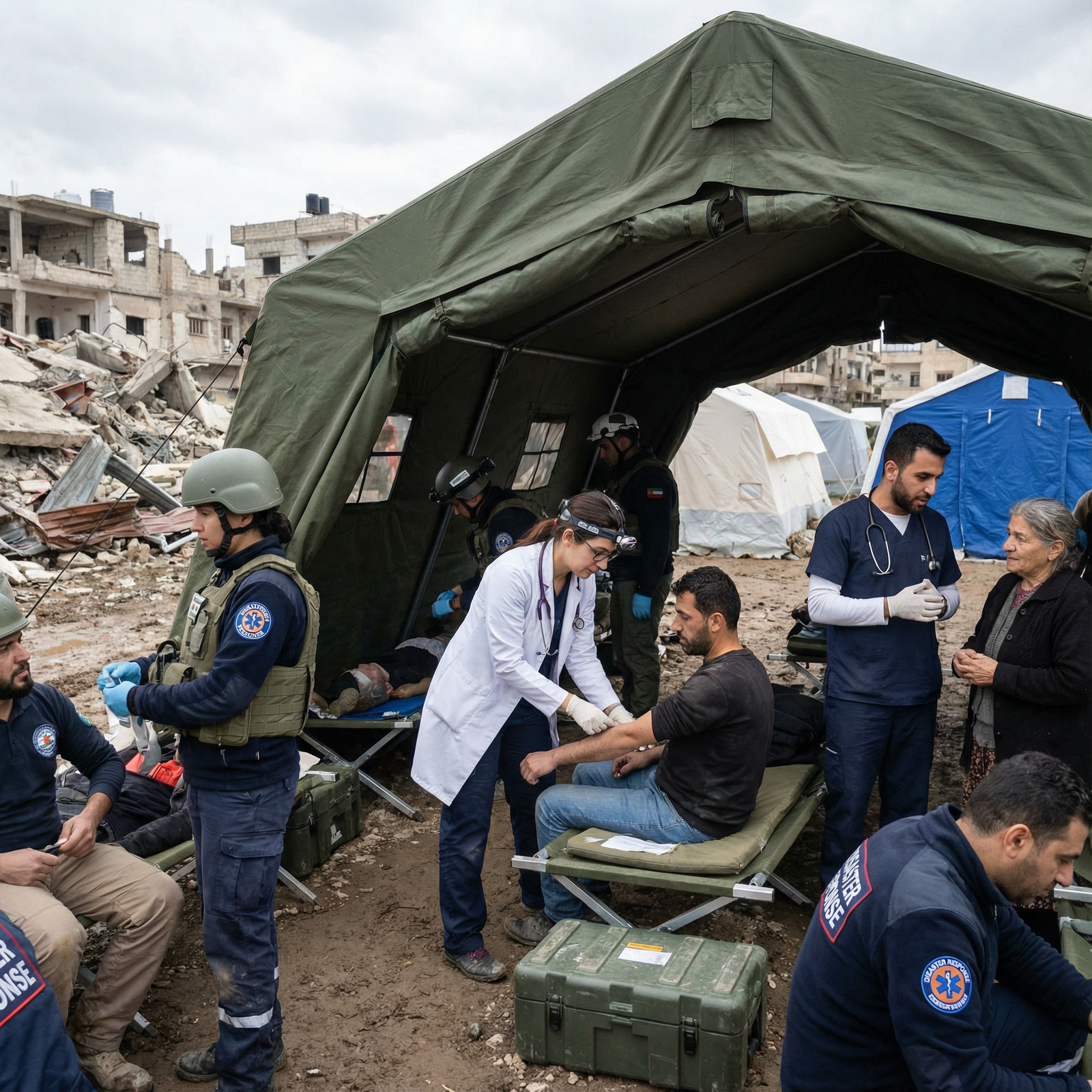
If you can show that arc—naive enthusiasm → discomfort → reflection → changed practice—you’ll stand out more than the person who has twice as many stamps and half as much insight.
Years from now, you won’t be proud that you did “so many missions.” You’ll measure yourself by whether the communities you touched would actually want you back.

| Step | Description |
|---|---|
| Step 1 | Short mission trip |
| Step 2 | Discomfort and questions |
| Step 3 | Seek mentorship and education |
| Step 4 | Structured global health work |
| Step 5 | Focus on partnership and systems |
| Step 6 | Competitive for ethical global health fellowship |
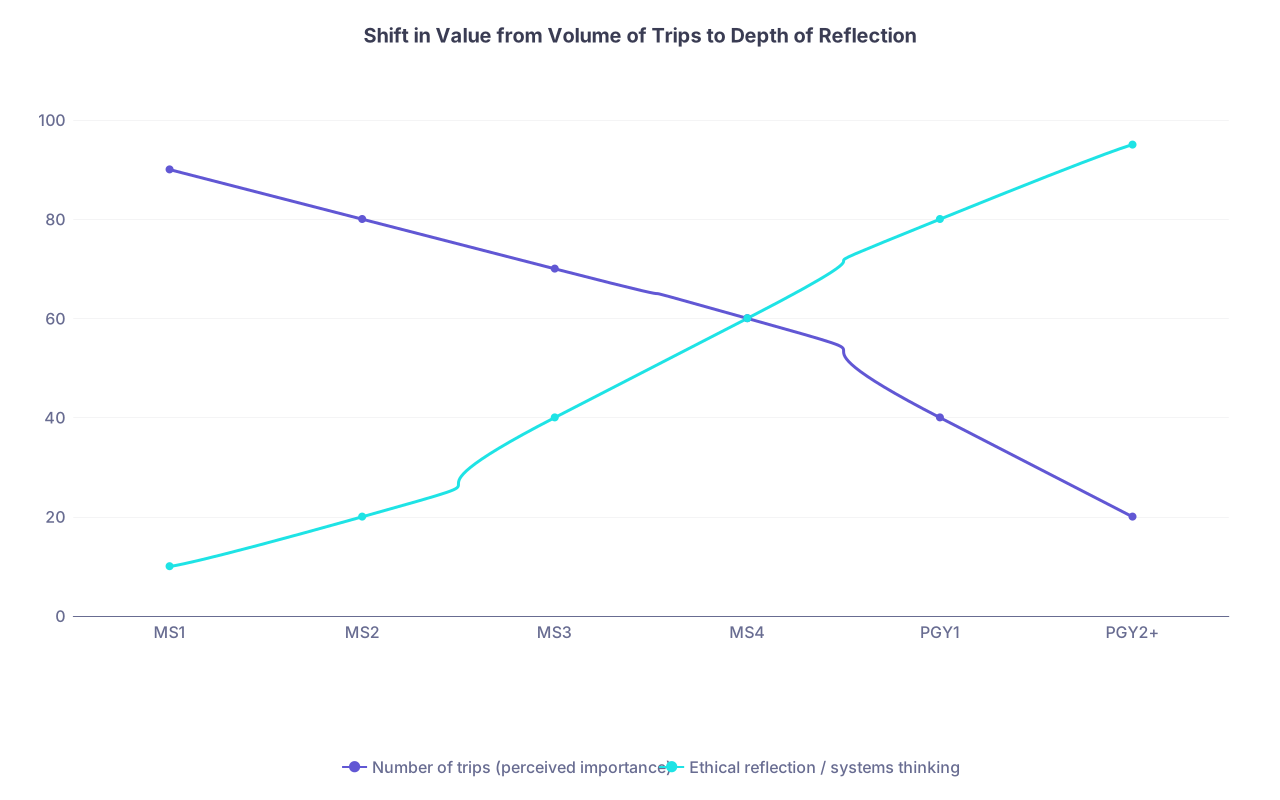
| Category | Number of trips (perceived importance) | Ethical reflection / systems thinking |
|---|---|---|
| MS1 | 90 | 10 |
| MS2 | 80 | 20 |
| MS3 | 70 | 40 |
| MS4 | 60 | 60 |
| PGY1 | 40 | 80 |
| PGY2+ | 20 | 95 |