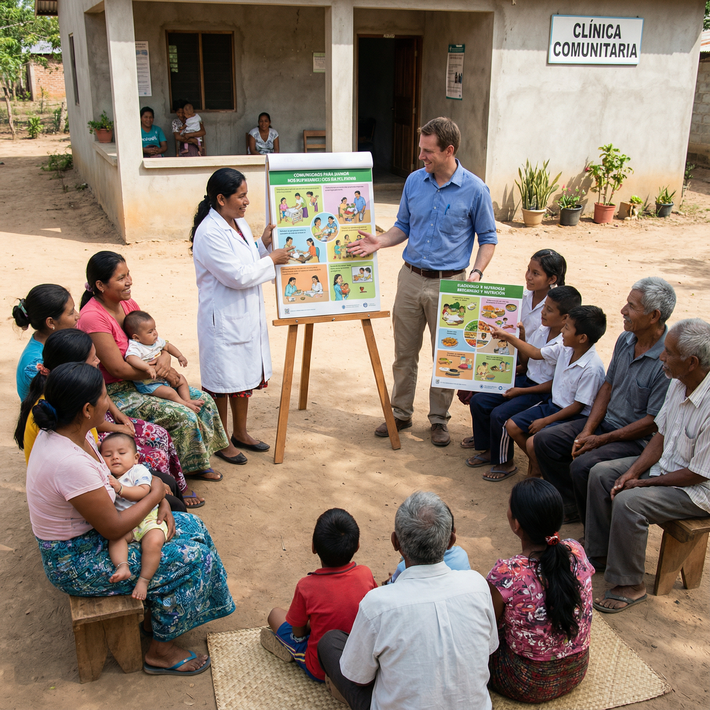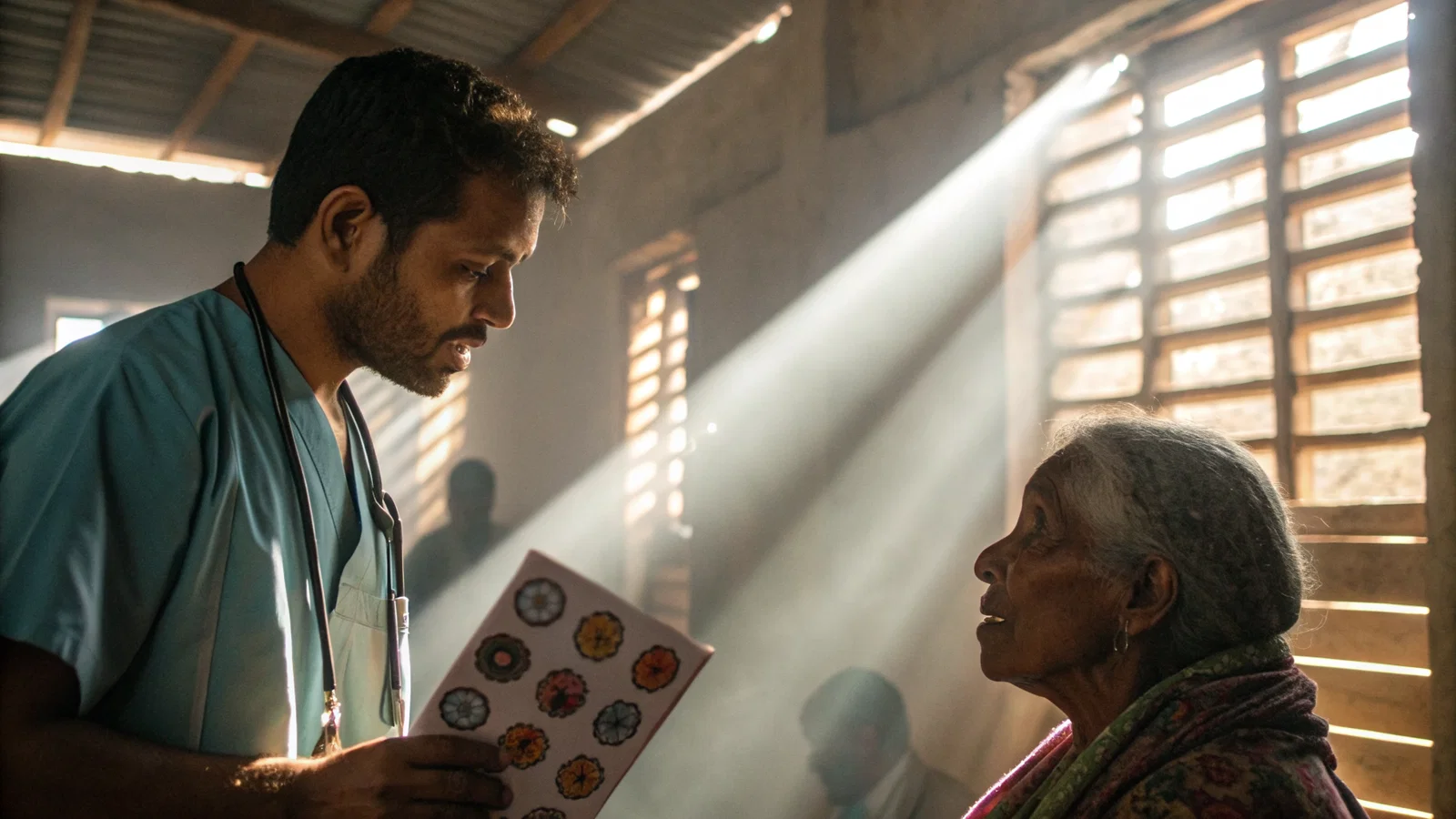
You're standing in a sweltering cinderblock clinic. The line of patients wraps around the building. A local fixer grabs your arm, points to an elderly woman, and says, "She says her stomach hurts, but also her cousin is cursed, and by the way, can you translate this land dispute document for the village chief?"
You speak zero of the local dialect. Your high school Spanish is useless here. You are completely out of your linguistic depth.
This is the reality of global health missions. You will be asked to translate, interpret, and mediate in languages you don't speak, often with high stakes and zero preparation. When you aren't fluent, every conversation is a game of medical telephone. A misunderstood word isn't just an awkward silence; it's a misdiagnosis, a wrong prescription, or a deeply offended community leader.
Getting this right matters to your medical career because it forces you to confront the limits of your own competence. In a sterile hospital back home, you have a certified medical interpreter on speed dial. On a mission, you are the final safeguard. If you can't manage the language barrier safely, you have no business practicing in that environment. You need a rigid, practical system to handle these requests without compromising patient care or your own sanity.
This article is for educational purposes only. It is not financial advice, not legal advice, and not tax advice. Figures vary by individual circumstances, so consult a qualified professional before acting.
The Core Challenge
The biggest trap on a medical mission is the illusion of communication. You nod. The patient nods. The translator smiles. Everyone feels good. But nobody actually understands each other.
I've seen this exact scenario play out disastrously. A well-meaning volunteer relied on a bilingual teenager to translate a medication history. The teen translated a mild, expected side effect of a previous drug as a "severe allergy." The patient was denied a first-line antibiotic because of a linguistic mix-up, and her simple UTI escalated into pyelonephritis. Bad translation is bad medicine. Period.
Here are the common pitfalls you will face, and how to manage them successfully.
Pitfall 1: The Child Translator
Using a bilingual twelve-year-old to translate a gynecological history or a psychiatric evaluation isn't just lazy. It's malpractice. Children lack the medical vocabulary, the emotional maturity, and the cultural authority to handle sensitive health information. They will omit details to protect their parents, or they will invent symptoms because they don't understand the question.
The Fix: Draw a hard line. No minors translating for adults. If a child is the only English speaker in the family, you must politely but firmly request an adult. Tell the family, "For the safety of your mother's care, I need to speak with an adult." If the clinic doesn't have one, you wait, or you use visual aids. No exceptions.
Pitfall 2: Scope Creep and the "Favor" Translation
You are there to practice medicine. You are not there to translate legal documents, negotiate business deals for the local NGO, or interpret for the village pastor. Mission organizers and local leaders will test your boundaries. They will see a Westerner with a stethoscope and assume you can also read a complex contract in English and explain it in the local tongue.
The Fix: Compartmentalize ruthlessly. If the request isn't strictly related to the direct clinical care of the patient in front of you, it's not your job. Say, "I am only qualified to translate medical issues for my patients. I cannot help with this document." Be polite, but be a brick wall.
Pitfall 3: The "Nod and Smile" Trap
When the translation breaks down, the human instinct is to save face. You smile, nod, and prescribe a broad-spectrum antibiotic just to keep the line moving. You assume the translator got the gist of it.
The Fix: Stop the line. If you aren't 100% sure you understood the chief complaint, do not write a prescription. Use the teach-back method. Ask the translator to have the patient repeat the plan back to you. If the patient looks confused, start over. It is better to hold up the clinic for ten minutes than to send a patient home with the wrong instructions.
Actionable Next Steps
You can't learn a new language in the three weeks before your flight. But you can build a bulletproof operational framework. Here is your step-by-step plan to handle translation when you aren't fluent.
Step 1: Pre-Trip Tech and Tool Prep
Do not rely on cellular data. Rural clinics rarely have Wi-Fi, and your roaming plan will fail you when you need it most.
- Download offline dictionaries: Get the specific regional dialect, not just the national language.
- Pre-load medical pictograms: Download and print high-quality visual aids. Pain scales, anatomical diagrams, and pictograms for symptoms (nausea, dizziness, bleeding) bridge the gap when words fail.
- Build a cheat sheet: Write down the top 50 phrases you will use daily in the local language. "Where does it hurt?" "Take one pill in the morning." "Are you pregnant?" Memorize them. Pronunciation matters less than the attempt; the effort builds immediate rapport.
Step 2: Establish the "Triangle" Protocol on the Ground
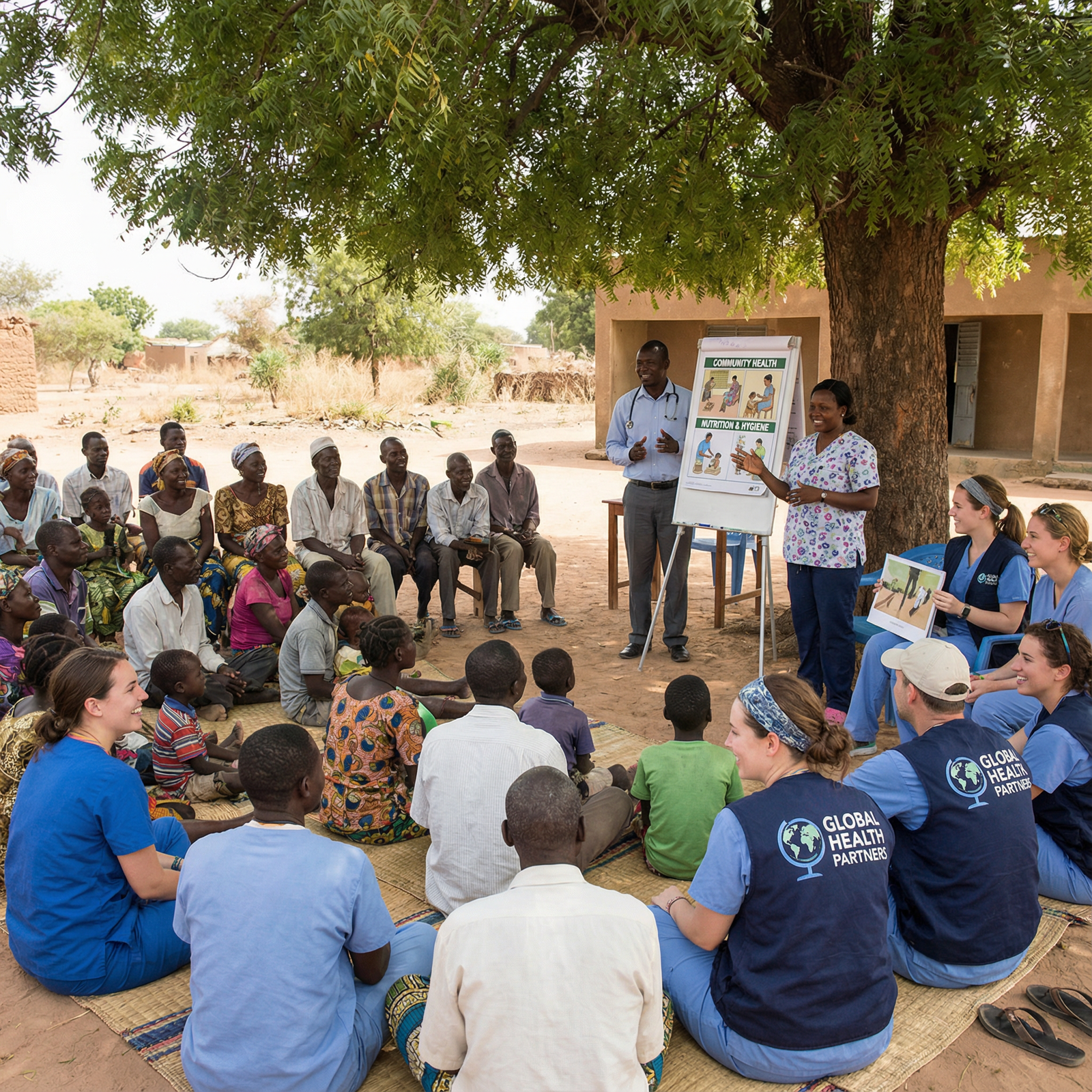
When you sit down with a patient and a translator, physically arrange yourselves in a triangle. You should be facing the patient, not the translator.
- Speak to the patient: Say, "Where is your pain?" not "Ask her where her pain is."
- Watch the patient: Look at their body language, their facial expressions, and their gestures while the translator speaks. You will catch non-verbal cues that the translator might miss or misinterpret.
- Keep it short: Speak in short, simple sentences. No medical jargon. No idioms. Say "heart attack," not "myocardial infarction." Say "high blood pressure," not "hypertension."
Step 3: Audit Your Translators
Not all adult translators are created equal. You need to quickly assess the reliability of the local staff assigned to you.
- Test their medical vocabulary: Ask them how they would say "allergy," "infection," and "pregnancy" in the local language before you see your first patient.
- Check for bias: Local translators often filter out information they deem embarrassing or irrelevant. If a patient gives a long, animated answer and the translator says, "She says her head hurts," stop. Ask, "What else did she say? Please translate everything, even if it doesn't seem medical."
Step 4: Leverage the Right Resources
Stop using generic translation apps for clinical encounters. They are notoriously bad at medical context.
Use tools built for the job:
- Canopy Innovations or similar medical translation apps: These have pre-translated medical phrases vetted by physicians.
- Médecins Sans Frontières (MSF) clinical guidelines: MSF publishes excellent, free, low-resource visual consultation guides. Print these out and laminate them.
- Universal pain and symptom scales: Use the Wong-Baker FACES scale. It transcends language barriers entirely.
Key Takeaways
- Be prepared: You cannot wing cross-cultural medicine. Download offline tools, print pictograms, and memorize your top 50 phrases before you board the plane.
- Focus on high-yield areas: You don't need to be fluent in conversational pleasantries. You need to be highly accurate in asking about allergies, current medications, pain location, and red-flag symptoms. Master the clinical essentials.
Looking Forward
Handling translation requests when you aren't fluent is frustrating, exhausting, and humbling. It strips away the arrogance of the stethoscope and forces you to rely on basic human connection, sharp observation, and rigid safety protocols.
But here is the payoff. When you return home to your sterile, well-staffed hospital, you will be a vastly superior physician. You will listen more closely. You will watch body language more acutely. You will realize that even when a patient speaks perfect English, they are still speaking a different language than you are. Mastering the art of the medical mission translation doesn't just make you safer in the field. It makes you a better doctor everywhere.