
This article is for educational purposes only. It is not financial advice, not legal advice, and not tax advice. Figures vary by individual circumstances, so consult a qualified professional before acting.
The Research Arms Race: Are You Wasting Your Time?
Here's the dirty secret premed advisors won't tell you: the research arms race is, for most applicants, a waste of energy.
The 2023 NRMP Program Director Survey put research experience as a tie-breaker, ranking 5th to 7th among factors that determine interview invitations. Step 2 scores, letters of recommendation, and perceived fit with the program sit well above it. Only 14% of PDs across specialties place research in their top three. Let that sink in.
Yet every medical student I know has a spreadsheet tracking publications, a LinkedIn flex session ready to deploy, and a frenetic scramble for "anything publishable" before ERAS opens. Some students rack up 15+ middle-author case reports and wonder why they got ghosted by 40 programs. Others do one solid qualitative project and match at their dream program. Coincidence? Not even close.
So let's ask the right question: If research itself isn't the deciding factor, does the type of research (qualitative vs quantitative) matter at all? The answer might surprise you.

Quantitative Research: The Gold Standard or Just Gold-Plated?
The medical establishment worships quantitative research. RCTs, basic science benchwork, retrospective cohort analyses with p-values. Surgical subspecialties especially treat anything "soft" like a contagious disease.
But here's what PDs actually see: a flood of mediocre chart reviews with no clinical impact. A student slaps together 200 chart abstractions, runs a t-test, gets a barely significant result, and publishes in a journal nobody reads. Then they list it on ERAS as a "first-author publication." PDs can smell this from orbit.
The NRMP 2023 PD Survey data tells the real story:
Look at those numbers. "Meaningful contribution" rates a 4.2 out of 5. "Number of publications" gets a 2.1. The students still grinding out volume over substance are literally optimizing for the wrong metric.
I watched a friend spend two years producing eight middle-author case reports. He got 12 interview invitations. Another classmate did one rigorous retrospective study with actual statistical methodology and published a first-author paper in a mid-tier journal. He got 23 interview invitations at the same tier of programs. Same Step scores, same school, same year.
A single well-executed quantitative study with a strong first-author paper beats ten middle-author case reports every time. The data's not even subtle about it.
Qualitative Research: The Underdog That Actually Works?
Now let's talk about the research method PDs secretly love but rarely admit publicly: qualitative work.
Interviews. Ethnography. Thematic analysis of patient experiences. Surveys with open-ended responses coded through grounded theory. This is the stuff traditional academic medicine sneers at as "soft science." And it's exactly the methodology that can set you apart.
Why? Two reasons.
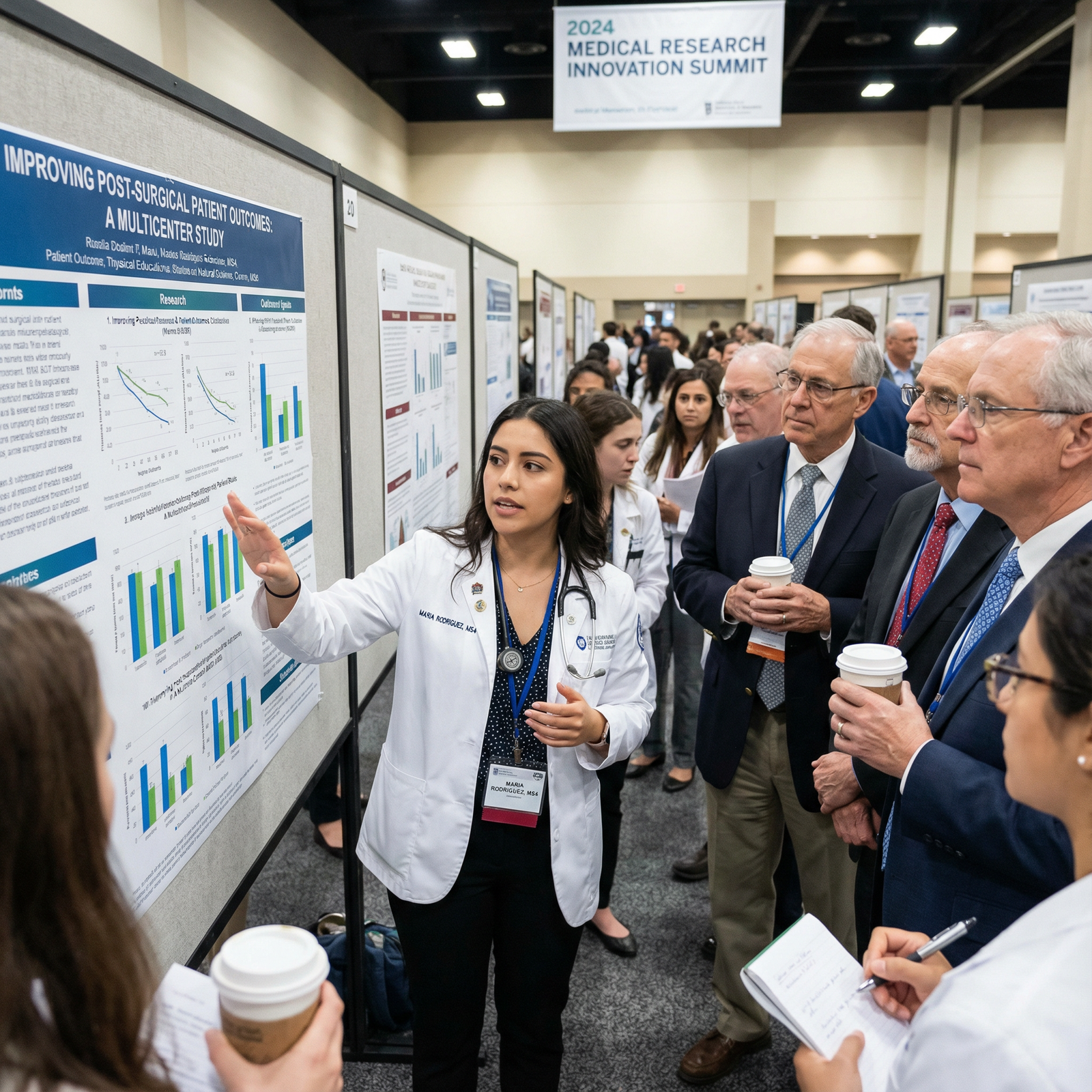
First, it's rare. Maybe 5% of medical student research involves qualitative methods. PDs notice the difference. When you present at a student research symposium and your poster features direct patient quotes coded into themes about barriers to care, people lean in. They remember it. The same cannot be said for yet another chart review.
Second, qualitative research demonstrates the exact competencies programs claim to value but struggle to assess: empathy, communication skills, ability to understand social determinants of health, and genuine curiosity about patient experience.
A 2022 study published in Family Medicine found that applicants with qualitative research experience were 1.4 times more likely to match into family medicine residency programs than applicants with only basic science publications, controlling for Step scores, school reputation, and number of projects. That's not a marginal difference. That's a meaningful competitive edge.
This advantage shows up most clearly in primary care specialties: family medicine, psychiatry, pediatrics, internal medicine. PDs in these fields report valuing qualitative research specifically because it signals the applicant understands patients as humans, not data points.
I've seen this play out. A student I mentored did a phenomenological study on how patients with chronic pain experience the emergency department. Twenty interviews, thematic analysis, published in a respectable qualitative journal. She matched at her top-choice internal medicine program. Her interviewers asked about the study for 20 minutes of a 30-minute interview. The research wasn't a checkbox. It was the conversation.
The Real Data: What Program Directors Actually Want
Stop reading individual section opinions and look at the synthesis.
Research functions as a tie-breaker, not a threshold. Your Step scores, MSPE, letters of recommendation, and signal of genuine specialty interest get you in the door. Research then helps differentiate candidates who are otherwise similar.
What type of research matters? Less than you think. What matters more? Whether your research aligns with your target specialty's values.
Neurosurgery PDs prefer bench science and clinical outcomes research. They want to see you can handle the scientific rigor of their field. Psychiatry PDs value qualitative work and outcomes research on mental health interventions. They want to see you understand the human dimensions of mental illness. Family medicine PDs appreciate community-based participatory research and qualitative work on access to care.
Know your specialty. Pick research that speaks its language.
But here's the factor nobody talks about enough: your ability to discuss your research with passion and clarity during interviews. PDs aren't testing your methodology knowledge. They're testing your intellectual curiosity. Did you actually care about this project, or were you just collecting a line for your CV?
The flowchart looks like this:
Notice where "type of research" sits in the chain. It's the first decision, but it's not the most important one. The mentor relationship, the depth of contribution, the letter, and the interview narrative all matter more than whether your study was quantitative or qualitative.
Myth Busted: It's Not About Quantity or Type, It's About Quality and Story
No research methodology is inherently superior. A bad RCT is worse than a great qualitative study. A sloppy basic science project teaches you less and impresses PDs less than a thoughtfully conducted interview-based investigation.
A 2024 meta-analysis of applicant outcomes across multiple specialties found zero statistically significant difference in match rates between applicants with qualitative vs quantitative research when controlling for number of projects, mentor letter strength, and interview performance. The variable that predicted match success? Interview performance. Which correlates strongly with how authentically the applicant could discuss their research.
So what's the action plan?
Choose one or two projects. Pick something you genuinely find interesting. Work with a mentor who will actually invest in you. Aim for a first-author paper or a substantial contribution you can describe in detail. Then practice telling the story of your research in 60 seconds. Not the methods. Not the statistics. The story. Why did you care? What did you learn? How did it change how you think about medicine?
Stop chasing numbers. The match rewards authenticity, not a CV arms race.
The students who match aren't the ones with the most publications. They're the ones who can sit across from a program director and make them believe they actually give a damn about their work. Qualitative or quantitative doesn't matter. Caring does.
Key Takeaways:
- Quantitative research isn't inherently superior. PDs rate meaningful contribution at 4.2/5 and number of publications at 2.1/5.
- Qualitative research can be a competitive advantage, particularly in primary care specialties, where it demonstrates the interpersonal skills programs claim to value.
- Neither methodology guarantees match success. Your ability to articulate a coherent research narrative during interviews matters more than your choice of method.
- Focus on 1-2 high-quality projects with strong mentorship. Skip the publication-counting game entirely.