Mindfulness Techniques in Medicine: Transforming Patient Care and Provider Well-Being
In a healthcare system defined by time pressure, complex patients, and constant electronic alerts, it is easy for the human connection at the heart of medicine to get lost. Mindfulness offers a practical, evidence-based way to reclaim that connection—enhancing patient care while protecting the mental health of clinicians in training and in practice.
Mindfulness, in the medical context, is the intentional, non-judgmental awareness of the present moment—whether you are taking a history, placing a central line, or breaking bad news. When thoughtfully integrated into medical training and daily clinical work, mindfulness can improve communication, reduce burnout, and strengthen the therapeutic alliance that underpins effective patient care.
This article explores the science of mindfulness, specific techniques tailored for healthcare providers, and concrete ways to weave these practices into clinical work and medical education.
Understanding Mindfulness in Modern Healthcare
From Ancient Practice to Clinical Tool
Mindfulness has roots in ancient contemplative traditions—especially Buddhist meditation—but it has been rigorously studied and adapted to modern Healthcare over the past several decades. Pioneering programs such as Mindfulness-Based Stress Reduction (MBSR) and Mindfulness-Based Cognitive Therapy (MBCT) have brought structured, secular mindfulness training into hospitals, clinics, and universities worldwide.
For medical professionals, mindfulness is not about spirituality or belief systems; it is an evidence-informed skill set that supports:
- Clearer clinical thinking
- More attuned patient interactions
- Healthier emotional regulation
- Sustainable engagement with demanding work
These skills are especially relevant in an era of increasing burnout, moral distress, and mental health challenges among physicians, residents, and medical students.
The Science Behind Mindfulness in Medicine
Neuroscience and behavioral research provide a strong rationale for including mindfulness in medical training and patient care:
Brain structure and function
- Regular mindfulness practice is associated with changes in brain regions involved in:
- Emotional regulation (prefrontal cortex)
- Attention and focus (anterior cingulate cortex)
- Empathy and perspective-taking (temporoparietal junction, insula)
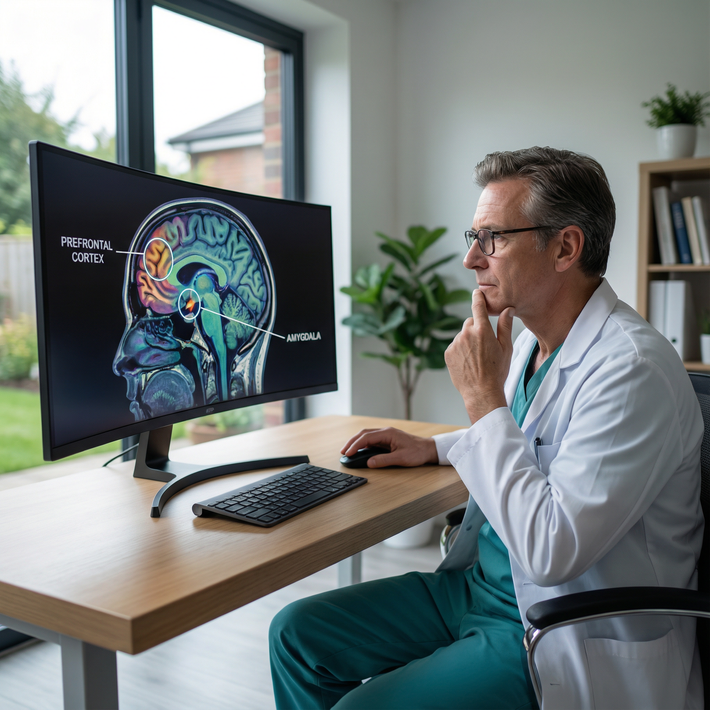
- Reduced activity and reactivity in the amygdala (the brain’s threat and fear center) supports calmer responses to stress—critical in high-stakes clinical situations.
- Regular mindfulness practice is associated with changes in brain regions involved in:
Stress physiology
- Mindfulness has been shown to:
- Lower cortisol levels
- Decrease physiologic arousal
- Improve heart rate variability (a marker of stress resilience)
- Mindfulness has been shown to:
Clinical outcomes for providers
- Studies in physicians, residents, and nurses demonstrate:
- Reduced symptoms of burnout and depression
- Improved job satisfaction and meaning in work
- Enhanced empathy and patient-centered care
- Fewer self-reported medical errors in some cohorts
- Studies in physicians, residents, and nurses demonstrate:
Benefits for patients
- For patients, mindfulness-based interventions have been linked to:
- Reduced anxiety and depression
- Better coping with chronic illness and pain
- Improved adherence to treatment plans
- Enhanced quality of life in conditions such as cancer, cardiovascular disease, and chronic pain syndromes
- For patients, mindfulness-based interventions have been linked to:
In short, mindfulness supports both sides of the stethoscope: the well-being of clinicians and the experiences and outcomes of patients.
Core Mindfulness Techniques for Healthcare Providers
Mindfulness does not require long retreats or hours of meditation each day. Many evidence-based practices can be integrated into the natural rhythm of medical training and clinical shifts—even in 30–90 second intervals between tasks.

1. Mindful Breathing: A Reset Between Patients
Technique
- Pause for 3–5 breaths before entering a room, logging into the EMR, or starting a procedure:
- Inhale slowly through your nose for a count of 4.
- Gently hold the breath for a count of 2–4.
- Exhale through your mouth for a count of 6–8.
- Notice the sensation of air moving in and out, the rise and fall of the chest and abdomen.
- If the mind wanders, gently return to the sensation of breathing.
Even a 30–60 second breathing pause can shift you from autopilot to presence.
Application in Patient Care
Before entering the exam room or patient’s bedside:
- Let go of the previous encounter.
- Set an intention such as, “I am here to listen fully to this person.”
- Arrive in the room physically and mentally, not still preoccupied with the last page or lab result.
With patients:
- Teach a simple breathing technique to:
- Reduce pre-procedure anxiety
- Calm panic or acute distress
- Help patients manage pain and uncertainty
- Teach a simple breathing technique to:
This simple practice can transform rushed, fragmented interactions into more grounded, attentive encounters—improving both patient satisfaction and clinician well-being.
2. Body Scan Meditation: Reconnecting with Your Own Body
As clinicians, you are trained to assess others’ bodies while often ignoring your own fatigue, tension, or pain. A brief body scan helps you reconnect with your physical state and intervene early when stress accumulates.
Technique
You can do a shortened body scan in 2–5 minutes between tasks:
- Sit or stand comfortably with both feet on the floor.
- Close your eyes if appropriate, or soften your gaze.
- Bring awareness to your feet: notice sensations (pressure, temperature, contact with the floor).
- Slowly move attention up:
- Calves, knees, thighs
- Pelvis and lower back
- Abdomen and chest
- Shoulders, arms, and hands
- Neck, jaw, face, and scalp
- Notice areas of tightness without judgment; if possible, gently relax or adjust posture.
Application in Patient Care
For healthcare providers:
- Reduces somatic tension accumulated during long hours standing or sitting.
- Increases awareness of early signs of exhaustion, emotional overload, or irritability—allowing proactive self-care.
- Supports better posture and ergonomics, which can prevent musculoskeletal injuries over time.
For patients:
- Teaching a simplified body scan can help:
- Individuals with chronic pain differentiate between pain and tension.
- Anxious patients ground themselves during examinations or procedures.
- Patients with somatic symptoms develop a less fearful, more curious relationship with bodily sensations.
- Teaching a simplified body scan can help:
3. Mindful Listening: Elevating Clinical Communication
In busy clinics and wards, it is common to listen just enough to prepare the next question or response. Mindful listening counters this habit and deepens patient-centered communication.
Technique
- During patient or colleague conversations:
- Intentionally place your full attention on the speaker.
- Notice:
- Their words and key phrases
- Tone, pace, and emotional content
- Non-verbal cues (facial expression, posture, movement)
- Refrain from:
- Mentally rehearsing your response
- Interrupting unless necessary for safety or clarity
- Briefly summarize or reflect back:
“What I’m hearing is that the pain has been especially bad at night, and that’s making you worried about your ability to keep working. Did I get that right?”
Application in Patient Care
- Patients who feel genuinely heard are more likely to:
- Share important details (e.g., medication non-adherence, social stressors).
- Disclose sensitive information such as substance use, mental health symptoms, or domestic violence.
- Trust the treatment plan and follow through with recommendations.
For clinicians, mindful listening reduces misunderstandings, improves diagnostic accuracy, and strengthens the therapeutic alliance—a cornerstone of effective Patient Care in all specialties.
4. Observing Thoughts and Emotions: Managing the Inner Critic
Medical training can amplify perfectionism, self-criticism, and imposter syndrome. Mindfulness helps you notice these mental patterns without becoming overwhelmed by them.
Technique
- When you notice a strong emotion or thought (e.g., “I’m not good enough,” “I’m going to make a mistake”):
- Pause and label the experience:
- “Worry is present.”
- “Self-criticism is present.”
- “Anger is arising.”
- Observe it like a cloud passing in the sky or a train passing through a station.
- Avoid arguing with the thought; simply acknowledge and return attention to the present task (patient, note, procedure).
- If needed, pair this with a few mindful breaths.
- Pause and label the experience:
Application in Patient Care
For clinicians:
- Reduces emotional reactivity during:
- High-stress codes or emergencies
- Critical feedback from supervisors
- Challenging patient encounters (e.g., demanding, non-adherent, or angry patients)
- Creates space between stimulus (stressful event) and response (your behavior), allowing more skillful action.
- Reduces emotional reactivity during:
For patients:
- Teaching patients to observe thoughts as mental events rather than facts can:
- Help those with anxiety, depression, or chronic illness.
- Support healthier coping when receiving serious diagnoses or navigating long treatments.
- Complement psychotherapy and other mental health interventions.
- Teaching patients to observe thoughts as mental events rather than facts can:
5. Gratitude Journaling: Building Resilience in Clinical Training
Healthcare can be emotionally heavy. A structured gratitude practice can buffer against negativity bias and help clinicians and trainees notice what is still meaningful and good, even on hard days.
Technique
- At the end of a shift or before bed, spend 2–5 minutes writing down:
- 3–5 things you are grateful for that day, which can be small:
- “A patient thanked me for listening.”
- “A senior resident took time to teach me a procedure.”
- “I had five minutes to drink coffee in peace.”
- Optional: Note what role you played in each event, to reinforce agency.
- 3–5 things you are grateful for that day, which can be small:
Application in Patient Care
For healthcare providers:
- Enhances resilience and reduces symptoms of burnout.
- Reconnects you with your “why” for going into medicine.
- Encourages recognition of positive patient interactions—not just the difficult ones.
For patients:
- Gratitude journaling can:
- Shift focus from solely symptoms and limitations to strengths and supports.
- Improve mood and engagement with rehabilitation or chronic disease management.
- Complement Mindfulness and Mental Health interventions for conditions like depression.
- Gratitude journaling can:
How Mindfulness Transforms Patient Care and Clinical Practice
Mindfulness is not merely a personal wellness tool. When consistently practiced, it changes how medicine is delivered—moment by moment.
Enhanced Communication and Trust
- Mindful presence allows:
- More accurate assessment of patient concerns and priorities.
- Better alignment of treatment plans with patients’ values and circumstances.
- A sense of safety and respect that encourages honest disclosure.
Patients who perceive their clinician as attentive and non-judgmental are more likely to ask questions, voice fears, and clarify misunderstandings—leading to more effective shared decision-making.
Improved Patient Engagement and Adherence
When patients are invited to practice mindfulness themselves—through breathing, body awareness, or cognitive observation—they often:
- Become more aware of their symptoms, triggers, and habits.
- Feel more ownership of their health and treatment plans.
- Are more likely to adhere to medications, lifestyle changes, and follow-up visits.
For example:
- A patient with diabetes using mindful eating techniques may:
- Slow down at meals.
- Notice fullness cues more clearly.
- Recognize emotional eating patterns.
This awareness can make standard medical advice more actionable and sustainable.
Reduced Anxiety and Stress in Clinical Settings
Mindfulness interventions can be integrated into routine patient care:
Preoperative settings:
Short guided breathing or body scans in the pre-op area can lower pre-surgical anxiety and reduce perceived pain post-op.Oncology and chronic illness clinics:
Mindfulness groups help patients cope with uncertainty, fear of recurrence, and the emotional rollercoaster of long treatments.Emergency departments and acute care:
Micro-practices (1–3 minutes) can help patients in distress feel more grounded and supported, even when time is limited.
Lower anxiety and stress not only improve patients’ subjective experience but can also influence physiologic processes relevant to healing.
Better Clinical Outcomes and Satisfaction
While more research is ongoing, existing studies suggest:
- Mindfulness training for clinicians is associated with:
- Higher patient satisfaction scores.
- Fewer complaints about communication or bedside manner.
- Patients who receive mindfulness-based interventions often report:
- Better symptom control (e.g., pain, insomnia).
- Improved functional status and quality of life.
- Greater satisfaction with their care teams.
Mindfulness supports a culture of compassion and presence that is at the core of high-quality Healthcare.
Cultivating Empathy Without Burning Out
A major concern in medicine is the tension between empathy and emotional exhaustion. Mindfulness helps clinicians:
- Maintain empathic attunement without over-identifying with patients’ suffering.
- Recognize and process their own emotional responses.
- Sustain compassion over the long term.
Instead of emotional shutdown as a defense against burnout, mindfulness offers a “wise compassion” that is engaged, boundaried, and sustainable.
Bringing Mindfulness into Medical Training and Healthcare Systems
To truly transform Patient Care, mindfulness must be supported not just at the individual level but also within medical education and healthcare organizations.

Embedding Mindfulness in Medical Education
1. Mindfulness Workshops and Electives
- Offer regular workshops during:
- Orientation for new medical students and residents.
- High-stress rotations (ICU, emergency medicine, oncology).
- Include:
- Experiential practices (breathing, body scans, mindful communication).
- Discussion of evidence linking mindfulness and Mental Health in clinicians.
- Practical strategies for integrating practices into busy schedules.
2. Longitudinal Curriculum Integration
Rather than a one-off session, incorporate mindfulness into:
- Professionalism, ethics, and communication skills courses.
- Clerkship orientation and debriefing sessions.
- Wellness and resilience curricula.
Assess impact through:
- Self-reported stress and burnout measures.
- Reflective writing and narrative medicine assignments.
- Feedback on perceived relevance to Patient Care.
3. Protected Time for Practice
- Build short, protected mindfulness periods into:
- Noon conferences (start with a 2–3 minute grounding exercise).
- Pre-clinic huddles or multidisciplinary rounds.
- Normalize taking 60–120 seconds to reset before high-stakes tasks or codes.
Role Modeling and Department Culture
Faculty and senior clinicians play a crucial role:
- Demonstrate brief mindfulness practices before difficult conversations (e.g., family meetings, goals-of-care discussions).
- Share personal experiences with stress, errors, and recovery, emphasizing:
- Self-compassion
- Mindful reflection instead of harsh self-criticism
- Encourage open conversation about burnout, Mental Health, and the role of mindfulness in sustaining a career in medicine.
System-Level Support
Healthcare organizations can support mindfulness by:
- Offering institution-sponsored MBSR or similar courses for staff.
- Providing quiet reflection spaces in hospitals and clinics.
- Integrating mindfulness-related metrics into wellness initiatives.
- Encouraging interdisciplinary participation (physicians, nurses, social workers, therapists, etc.) to promote a shared culture of presence and compassion.
FAQs: Mindfulness, Medical Training, and Patient Care
What is mindfulness in the context of healthcare?
In healthcare, mindfulness is the intentional, non-judgmental awareness of the present moment during clinical work and patient interactions. It means:
- Being fully engaged when listening to patients.
- Noticing your own thoughts, emotions, and bodily sensations without immediately reacting.
- Bringing deliberate attention and compassion to each encounter, even in a busy or stressful environment.
This mindset enhances empathy, communication, and clinical judgment—core elements of high-quality Patient Care.
How can mindfulness benefit medical students, residents, and practicing clinicians?
For individuals in all stages of Medical Training and practice, mindfulness can:
- Reduce stress, anxiety, and symptoms of burnout.
- Improve emotional regulation and resilience.
- Enhance focus, attention, and decision-making under pressure.
- Strengthen communication skills and empathy.
- Foster a stronger sense of meaning and satisfaction in clinical work.
These benefits support both personal Mental Health and professional performance.
Are there quick mindfulness techniques I can realistically use during a busy shift?
Yes. Mindfulness practices can be adapted to the realities of clinical life. Examples include:
- 3 mindful breaths before entering a patient’s room.
- A 1–2 minute body scan while washing your hands.
- Silent labeling of emotions (“frustration is here”) during difficult interactions.
- A brief gratitude note at the end of the day.
Even short practices, done consistently, can make a meaningful difference.
Can mindfulness practices directly improve patient outcomes?
While outcomes are influenced by many factors, research suggests that mindfulness can contribute to better patient outcomes by:
- Improving patient-clinician communication and trust.
- Reducing patient anxiety and distress before and during treatments.
- Enhancing adherence to treatment plans through greater engagement and self-awareness.
- Supporting clinicians’ presence and clinical judgment, which may reduce errors and improve overall quality of care.
Mindfulness is not a cure-all, but it is a powerful adjunct to evidence-based medical treatment.
How can I start integrating mindfulness into my medical training or practice today?
You can begin with small, concrete steps:
- Choose one practice (e.g., 3 mindful breaths between patients) and commit to doing it daily for a week.
- Use existing transitions—elevators, handwashing, walking between units—as cues for brief mindful awareness.
- Explore structured resources, such as:
- Mindfulness apps designed for healthcare professionals.
- Local or online MBSR courses.
- Workshops or electives offered by your institution.
- Invite colleagues to join you in a 2-minute pre-meeting or pre-rounds grounding practice.
Over time, these small practices can fundamentally change how you experience your work and how your patients experience your care.
Mindfulness is not an “extra” task to add to an overloaded schedule. It is a way of doing what you already do—taking a history, writing a note, performing a procedure—with more awareness, compassion, and presence. In doing so, it helps protect the mental health of clinicians and elevates the quality and humanity of Patient Care, restoring the heart of medicine in a demanding Healthcare environment.