
In contemporary healthcare, physicians, residents, and other medical professionals are expected to deliver flawless care in environments defined by constant interruptions, heavy cognitive load, and emotional intensity. At the same time, rates of burnout, depression, and medical error remain unacceptably high. Within this reality, mindfulness has emerged not as a luxury, but as a practical, evidence-based tool for stress reduction, focus enhancement, and sustainable well-being in medicine.
Mindfulness is no longer confined to meditation retreats or wellness apps. It is being integrated into medical school curricula, residency programs, and hospital wellness initiatives worldwide. Understanding the science behind mindfulness—and how to apply it in the real world of clinics, wards, and operating rooms—can help medical professionals protect their mental health while improving patient care.
This article explores the scientific foundations of mindfulness, its specific impact on cognitive performance and clinical focus, and practical strategies for weaving mindfulness into even the busiest medical schedule.
Understanding Mindfulness in the Medical Context
Mindfulness is often discussed in broad, wellness-oriented terms, but for medical professionals, it is especially helpful to view it as a trainable cognitive and emotional skill—one that supports clinical performance and ethical practice.
Defining Mindfulness for Medical Professionals
Mindfulness is the intentional practice of bringing non-judgmental awareness to the present moment—your thoughts, emotions, bodily sensations, and environment—exactly as they are.
Jon Kabat-Zinn’s widely cited definition captures this: mindfulness is “paying attention in a particular way: on purpose, in the present moment, and non-judgmentally.”
In a clinical setting, this might look like:
- Noticing your rising frustration when the EHR freezes, without being swept away by it
- Bringing full attention to a patient’s words and body language, instead of mentally composing your next note
- Recognizing fatigue or cognitive overload early enough to take a brief reset, rather than pushing through to error
Core Components of Mindfulness
For medical professionals, three components of mindfulness are particularly relevant:
Attention Regulation
The capacity to direct and sustain attention on a chosen object (e.g., the patient in front of you), and to gently redirect it when distracted. This is fundamental for:- Accurate history taking
- Safe procedures
- Critical decision-making under time pressure
Open, Non-Judgmental Awareness
Observing internal experiences (thoughts like “I’m failing,” emotions like anxiety, bodily states like fatigue) without immediately reacting or suppressing them. This:- Reduces emotional reactivity with patients and colleagues
- Helps prevent rumination after difficult cases
- Supports ethical reflection and self-awareness
Present-Moment Orientation
Engaging fully with what is happening now, rather than being consumed by:- Regrets about past decisions
- Anxiety about future exams, evaluations, or lawsuits
This present focus is critical for maintaining situational awareness in dynamic clinical environments.
These three components can be systematically trained through mindfulness practices that are both brief and feasible in a busy medical schedule.
The Scientific Foundations of Mindfulness: What the Brain and Body Reveal
Mindfulness is supported by a robust and growing body of research in neuroscience, psychology, and medicine. For clinicians, understanding why it works can increase motivation to integrate it into practice.
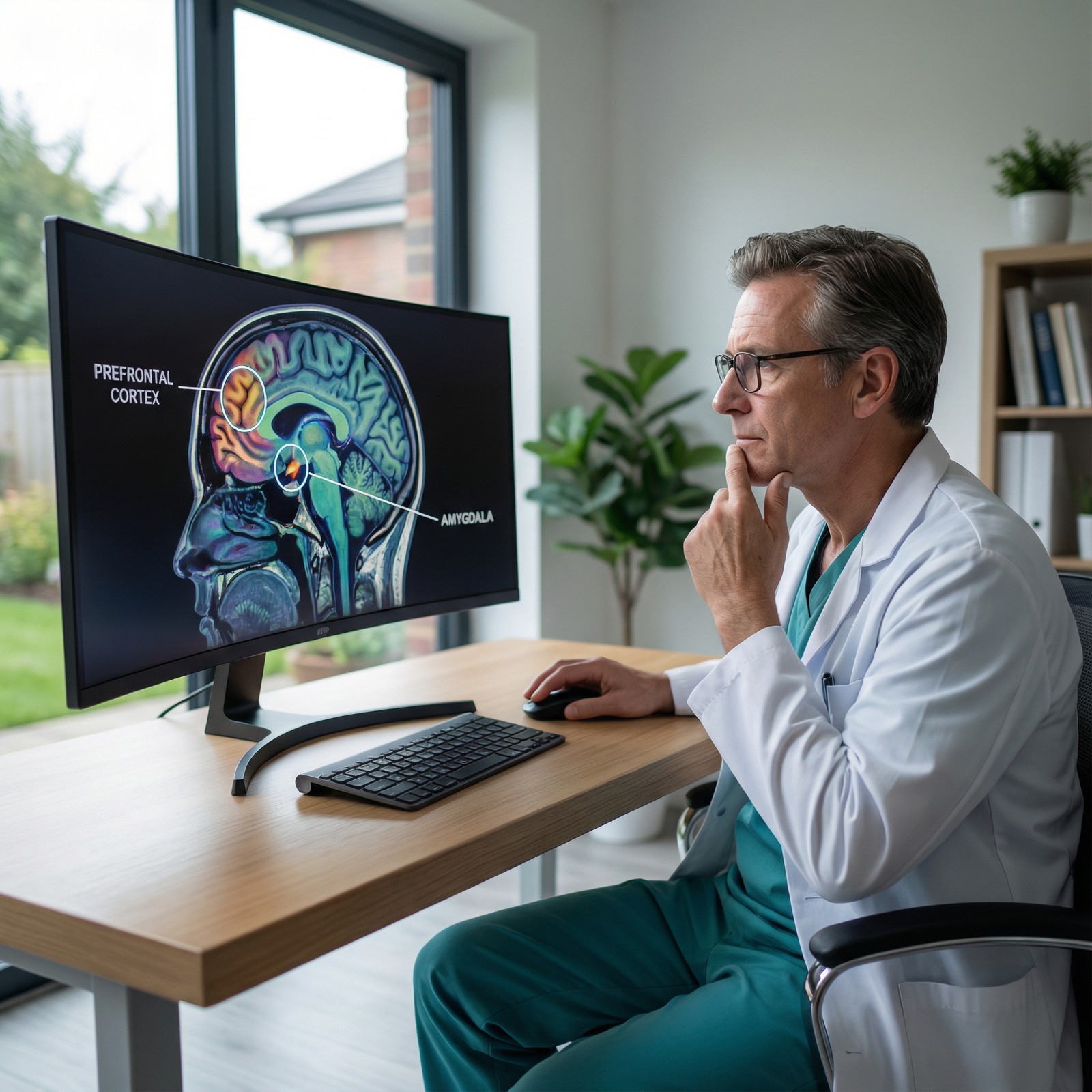
1. Neuroplasticity: Structural and Functional Brain Changes
Repeated mindfulness practice induces measurable changes in brain structure and function—a phenomenon known as neuroplasticity.
Structural Changes
A well-known 2011 Harvard study on participants in an 8-week mindfulness-based stress reduction (MBSR) program found:
- Increased gray matter density in regions associated with:
- Learning and memory (hippocampus)
- Self-referential processing
- Empathy and perspective-taking
- Decreased gray matter density in the amygdala, a key structure in the stress and fear response
For medical professionals, this suggests that regular mindfulness can:
- Enhance emotional regulation under pressure
- Support memory and learning in high-stakes environments
- Improve empathic engagement with patients without becoming overwhelmed
Functional Changes
Other studies using functional MRI (fMRI) and EEG show that mindfulness:
- Reduces default mode network (DMN) activity (the “mind-wandering” network), associated with rumination and distraction
- Enhances connectivity between the prefrontal cortex (executive control) and limbic regions (emotion), improving regulation of strong emotional responses
In practice, this can translate to:
- Less reactivity during a code blue or difficult family meeting
- Greater ability to stay task-focused during long shifts
- Improved recovery from emotionally intense encounters
2. Stress Reduction and Burnout Prevention
Healthcare professionals operate under chronic stress—long hours, high responsibility, emotional exposure, and administrative demands. Mindfulness offers a biologically grounded way to buffer these effects.
Physiological Stress Markers
Mindfulness has been linked with:
- Lower cortisol levels (the primary stress hormone)
- Reduced sympathetic nervous system activation (less “fight-or-flight”)
- Increased parasympathetic activity (enhanced “rest-and-digest” state)
These changes:
- Improve sleep quality
- Support cardiovascular health
- Enhance overall feelings of well-being
Psychological Outcomes in Healthcare Workers
Key studies and reviews have found:
- A 2016 meta-analysis in JAMA Internal Medicine reported significant reductions in anxiety, depression, and perceived stress among individuals practicing mindfulness-based interventions.
- A systematic review in the International Journal of Environmental Research and Public Health showed that mindfulness-based interventions:
- Decrease burnout, emotional exhaustion, and depersonalization
- Improve personal accomplishment and job satisfaction
In the context of medicine, this matters because:
- Burnout is strongly linked with increased medical errors, reduced patient satisfaction, and attrition from the profession.
- Mindfulness offers a non-pharmacologic, scalable strategy to support individual resilience and institutional well-being initiatives.
3. Enhancing Core Cognitive Functions Critical to Medicine
Medicine is cognitively demanding. Mindfulness affects several functions directly tied to clinical performance:
Attention and Concentration
- Studies from the University of California, Santa Barbara, found that even brief mindfulness training (as little as two weeks) improves:
- Sustained attention
- Working memory
- Ability to recover from distraction
- This is essential for tasks such as:
- Monitoring multiple patients in an ICU
- Reading complex imaging or pathology reports
- Performing procedures that require meticulous focus
- Studies from the University of California, Santa Barbara, found that even brief mindfulness training (as little as two weeks) improves:
Working Memory and Clinical Reasoning
Improved working memory helps clinicians:- Hold and manipulate complex clinical data
- Integrate new lab or imaging information in real time
- Avoid “anchoring” and premature closure in diagnostic reasoning
Cognitive Flexibility and Decision-Making
Mindfulness supports:- Shifting attention when new information emerges
- Updating decisions under uncertainty
- Recognizing bias and emotional influence on judgment
Collectively, these benefits contribute to:
- Better diagnostic accuracy
- Fewer cognitive errors under time pressure
- More thoughtful, ethical decision-making in complex cases
How Mindfulness Enhances Focus and Clinical Performance
Beyond theory, how does mindfulness show up in the lived experience of medical professionals?
Reducing Distractions and Mental Clutter
Clinical environments are filled with interruptions—pages, alarms, EHR notifications, consult calls, and patient requests. Internally, clinicians may also be distracted by:
- Self-criticism after a difficult case
- Personal worries or fatigue
- Task-switching between documentation, orders, and patient care
Mindfulness trains the mind to:
- Notice when attention has drifted
- Gently redirect focus to the chosen task
- Accept distractions without getting entangled in them
Example in practice:
During ward rounds, a resident notices their mind drifting to an upcoming exam. Using a simple grounding technique (e.g., feeling the contact of feet on the floor, one slow intentional breath), they re-anchor their attention to the patient’s story and examination findings. Over time, this becomes more automatic.
Deepening Patient-Clinician Communication and Presence
Mindfulness also enhances communication, which is central to high-quality, ethical care.
Active Listening and Empathic Presence
Mindfulness fosters:- Genuine curiosity about the patient’s experience
- Reduced tendency to interrupt or “script” the encounter prematurely
- Greater attunement to subtle nonverbal cues
This leads to:
- More accurate histories
- Stronger therapeutic alliances
- Higher patient satisfaction and adherence
Managing Emotional Responses in Difficult Encounters
With challenging patients (angry, non-adherent, or distressed), mindfulness helps clinicians:- Notice their own rising irritation, defensiveness, or helplessness
- Pause briefly before responding
- Choose a response aligned with their professional values, rather than reacting impulsively
This capacity is key to maintaining professionalism and compassion over a long career.
Supporting Team Dynamics and Ethical Culture in Healthcare
Mindfulness is not solely an individual practice; it can transform team interactions and workplace culture.
Reduced Interpersonal Conflict
Research suggests mindfulness is associated with:- Less automatic defensiveness
- Improved emotional regulation
- More constructive conflict resolution
Enhanced Team Cohesion and Psychological Safety
Teams that normalize brief pauses, reflective check-ins, and non-judgmental communication:- Foster trust and openness
- Are more likely to speak up about safety concerns
- Create environments where errors can be discussed and learned from rather than hidden
Ethical Reflection and Professional Identity
Mindfulness supports more intentional alignment with core professional values, such as:- Beneficence and non-maleficence
- Respect for patient autonomy
- Integrity and humility
Practical Strategies: Integrating Mindfulness into a Busy Medical Schedule
A frequent concern among trainees and attending physicians is: “I barely have time to eat, how can I possibly add mindfulness?” The key is micro-practices—brief, integrated exercises that support focus and well-being without requiring long retreats or hour-long sessions.

1. Short Mindful Breathing Practices (1–5 Minutes)
Mindful breathing is one of the most accessible and powerful techniques for stress reduction and focus enhancement.
How to practice (anywhere, even at the nurses’ station):
- Sit or stand comfortably; if possible, soften your gaze or close your eyes.
- Bring attention to the physical sensations of breathing (air at the nostrils, chest or abdomen rising and falling).
- When the mind wanders—as it will—gently notice where it went (to-do list, worry, memory) and guide it back to the breath.
- Continue for 1–5 minutes.
Clinical applications:
- Before entering a high-stakes family meeting
- Just after a code or difficult resuscitation
- During a brief pause before starting complex documentation
Over time, many clinicians report that even 60–90 seconds of mindful breathing can reset their nervous system and sharpen focus.
2. Mindful Transitions Between Patients and Tasks
Medical work is defined by rapid transitions: room to room, clinic to OR, patient to documentation. These “in-between” moments are powerful opportunities for micro-mindfulness.
Transition practice example:
- As you sanitize your hands before the next patient:
- Feel the temperature and texture of the sanitizer.
- Take one intentional breath.
- Silently set an intention: “For the next 10 minutes, I will be fully present with this patient.”
This:
- Clears mental residue from the last encounter
- Refocuses attention
- Enhances the quality of presence and communication
3. Body Scan and Somatic Awareness During Long Shifts
The body often signals overload before the mind. Brief body-awareness scans can help prevent stress from accumulating unnoticed.
Micro body-scan (2–3 minutes):
- While sitting at a computer or in a call room, bring attention to physical sensations from head to toe.
- Notice areas of tension (jaw, shoulders, lower back, abdomen).
- On each exhale, allow those areas to soften by 5–10%.
- Do not try to “fix” anything; just observe and gently release.
Benefits include:
- Early detection of fatigue, headache, or muscle strain
- Prevention of chronic tension patterns
- A sense of grounding even amid chaos
4. Mindful Documentation and EHR Use
Documentation is a major source of frustration and distraction. Applying mindfulness here can:
- Reduce errors in orders and notes
- Decrease cognitive fatigue
Strategies:
- Before entering orders, take one slow breath and silently name the task: “Ordering medications for Mr. X.”
- Single-task when possible: finish one note before toggling between multiple charts.
- When you notice the urge to multitask, pause briefly and decide deliberately whether switching is truly necessary.
5. Formal Training: Courses, Workshops, and Apps
For deeper practice, consider structured training:
- Mindfulness-Based Stress Reduction (MBSR) programs, often adapted for clinicians
- Institutional wellness initiatives offering:
- Regular guided sessions
- Short on-site or virtual workshops
- Mindfulness-informed debriefings after critical events
Digital tools (e.g., Headspace, Calm, Insight Timer, or institution-specific apps) can support:
- 5–15 minute guided practices before or after shifts
- Sleep-focused meditations for post-call recovery
- The development of habit through reminders and tracking
6. Integrating Mindfulness into Medical Education and Ethics
For educators and program directors, mindfulness can be woven into training to:
- Prepare students and residents for the emotional and cognitive demands of practice
- Support professionalism and ethical reflection
Examples:
- Brief guided mindfulness at the start of ethics or communication skills sessions
- Reflective exercises after simulated or real patient encounters
- Teaching mindfulness as part of resilience, wellness, or humanism in medicine curricula
Long-Term Benefits: A Sustainable Career with Clarity and Compassion
When practiced consistently—even in small doses—mindfulness can contribute to a more sustainable, satisfying career in medicine.
Common long-term outcomes reported by clinicians include:
- Greater clarity and focus during complex clinical situations
- Improved emotional balance and less reactivity
- Enhanced sense of meaning and connection with patients
- Reduced risk of burnout and compassion fatigue
- Stronger alignment with personal and professional values
Mindfulness does not eliminate stress or suffering; medicine will always involve both. Instead, it transforms the relationship to stress and difficulty, allowing medical professionals to show up with greater stability, presence, and humanity.
FAQ: Mindfulness for Medical Professionals

1. Is mindfulness compatible with evidence-based, high-tech medicine?
Yes. Mindfulness is an evidence-based cognitive and emotional training tool, supported by numerous randomized trials and neuroimaging studies. It does not replace clinical guidelines, diagnostics, or treatments. Instead, it enhances the quality of how medical professionals apply their knowledge—supporting clearer thinking, reduced stress, and more ethical decision-making in complex situations.
2. I’m extremely busy. What is the minimum effective dose of mindfulness for stress reduction?
Even very brief practices can be beneficial. Research suggests:
- 5–10 minutes per day of formal practice can improve attention and emotional regulation over time.
- Micro-practices (30–90 seconds) during transitions, hand hygiene, or while waiting for lab results can reset your nervous system and sharpen focus.
The key is consistency. Start small and integrate mindfulness into activities you already do, rather than adding a completely new task.
3. Do I have to sit in silence or be “good at meditation” for mindfulness to work?
No. Mindfulness is not about achieving a blank mind or a particular feeling. It is about:
- Noticing where your attention is
- Gently guiding it back to a chosen focus (like the breath, the patient, or a specific task)
- Observing thoughts and emotions without immediate judgment or reaction
You can practice:
- While walking between wards
- During a brief pause before a procedure
- While listening to a patient describe their symptoms
The goal is relationship to experience, not perfection.
4. Can mindfulness really reduce burnout among medical professionals?
Evidence indicates that mindfulness-based interventions:
- Decrease emotional exhaustion and depersonalization
- Improve sense of personal accomplishment and engagement
However, burnout is multi-factorial. Mindfulness is a powerful personal tool, but it works best alongside system-level changes—such as reasonable workloads, supportive leadership, and efficient workflows. Both individual and institutional efforts are needed for sustainable change.
5. How can I introduce mindfulness to my team or training program without resistance?
A few strategies:
- Frame mindfulness in scientific and performance terms: improved focus, fewer errors, better team communication—rather than as a purely “wellness” or “spiritual” practice.
- Start with very brief, optional practices (e.g., a 60-second grounding before complex cases or debriefs).
- Share data on reduced stress and improved cognitive performance.
- Highlight that mindfulness is secular, adaptable, and respects diverse beliefs.
Inviting curiosity, rather than prescribing a rigid program, usually leads to more engagement.
Mindfulness offers medical professionals a practical, scientifically grounded toolkit for managing stress, enhancing focus, and sustaining well-being in demanding clinical environments. By integrating even small moments of mindful awareness into daily practice, clinicians can support their own health and, in turn, provide safer, more compassionate care to their patients.