In contemporary healthcare training and practice, medical teams are expected to deliver precise, compassionate care in environments defined by high stakes, rapid decision-making, and chronic workload pressures. These demands place clinicians at substantial risk for burnout, moral distress, and reduced quality of care.
Mindfulness and resilience are not “nice-to-have” wellness extras; they are evidence-informed, trainable skills that directly support safer care, stronger team collaboration, and sustainable careers in medicine. When embedded thoughtfully into healthcare training and daily workflows, these practices can transform how teams respond to stress, communicate, and recover from adversity.
This article explores how mindfulness and resilience intersect in high-pressure clinical environments, why they matter for healthcare teams, and how to implement practical, realistic strategies at the individual, team, and organizational levels.
Understanding Mindfulness and Resilience in Healthcare Training
What is Mindfulness in a Clinical Context?
Mindfulness is the deliberate practice of bringing your full, non-judgmental attention to the present moment—your thoughts, emotions, bodily sensations, and environment—exactly as they are. In medicine, this often means:
- Noticing your stress response during a code or rapid response
- Being fully present with a patient in a brief encounter
- Recognizing early signs of fatigue, irritability, or cognitive overload
- Responding with intention rather than reacting on autopilot
Contemporary mindfulness training is secular and evidence-based. It can include practices such as breath awareness, body scans, brief meditations, mindful walking, and reflective pauses built into clinical routines.
For healthcare professionals, mindfulness is particularly valuable because it enhances:
- Attention and working memory during complex tasks
- Emotional regulation under pressure
- Awareness of cognitive biases that can affect clinical judgment
- Capacity for compassion—for patients, colleagues, and oneself
What is Resilience for Medical Teams?
Resilience is the ability to adapt, recover, and grow in the face of adversity, uncertainty, and ongoing stress. In high-pressure healthcare environments, resilience is more than individual toughness; it is a team and systems property as well:
- Individual resilience: Managing stress, maintaining perspective, and using healthy coping strategies to prevent burnout.
- Team resilience: The ability of a clinical team to function effectively under strain, support each other, learn from setbacks, and maintain performance over time.
- Organizational resilience: Leadership, culture, and structures that allow the system to absorb stressors (e.g., surges, crises) while protecting clinicians and patients.
Resilient medical teams:
- Maintain situational awareness during crises
- Communicate clearly and collaborate efficiently
- Debrief and learn after adverse events or near misses
- Support each other emotionally, reducing shame and isolation
The Synergy Between Mindfulness and Resilience
Mindfulness and resilience are deeply interconnected:
Mindfulness builds the foundation of resilience
- Enhances self-awareness (noticing early warning signs of emotional and cognitive overload)
- Promotes cognitive flexibility and reduces rigid thinking under stress
- Supports emotional regulation, allowing clinicians to stay grounded in difficult encounters
Resilience, in turn, supports sustained mindfulness
- When teams are supported, rested, and psychologically safe, they can more easily engage in mindful practices
- Resilient cultures normalize reflection, debriefing, and continuous learning—all inherently mindful processes
Research across physicians, nurses, and trainees shows that mindfulness-based interventions can decrease burnout, symptoms of depression and anxiety, and improve empathy, patient-centered communication, and job satisfaction. For residency applicants and trainees, developing these skills early is a powerful form of career-long burnout prevention.
Why Mindfulness Matters in High-Pressure Healthcare Environments
Reducing Stress and Preventing Burnout
Burnout Prevention is now a central goal in healthcare training and workforce planning. Persistent emotional exhaustion, depersonalization, and reduced sense of accomplishment have been linked to:
- Higher medical error rates
- Poorer patient satisfaction
- Increased turnover and early career exit
Mindfulness offers:
- Acute stress reduction: Even 3–5 minutes of focused breathing can lower heart rate and perceived stress before or after difficult encounters.
- Chronic stress buffering: Regular practice rewires stress reactivity patterns, making clinicians less vulnerable to being overwhelmed by daily pressures.
For example, studies of residents and attendings in Mindfulness-Based Stress Reduction (MBSR) programs report improved emotional well-being and reduced burnout scores, with some benefits persisting months after training.
Enhancing Clinical Decision-Making and Patient Safety
High-acuity situations—codes, emergency surgeries, critical care decisions—require rapid yet accurate clinical judgment. Under stress, physicians and trainees are prone to:
- Tunnel vision and narrowed attention
- Cognitive errors (anchoring, premature closure, confirmation bias)
- Emotional reactivity that impairs teamwork
Mindfulness directly supports safer decision-making by:
- Increasing awareness of cognitive and emotional states
- Allowing a brief pause (“mindful gap”) between stimulus and response
- Supporting deliberate reflection under pressure, rather than automatic reaction
A brief centering breath before communicating a critical lab result or deciding on a high-risk intervention can make the difference between rushed, fragmented thinking and calm, structured reasoning.
Strengthening Communication and Team Collaboration
Mindfulness is a powerful tool for improving communication within healthcare teams and with patients:
- Mindful listening: Fully attending to the speaker without rehearsing your response or multitasking.
- Mindful speaking: Choosing words intentionally, being aware of tone, and aligning message with shared goals.
In team settings, this leads to:
- Fewer misunderstandings in high-stress handoffs or pages
- Greater psychological safety—team members feel heard and respected
- More effective conflict resolution when disagreements arise
For patients, clinicians who are more present and attuned are better able to:
- Recognize subtle concerns or emotional cues
- Build trust and rapport, even in short visits
- Communicate difficult news with compassion
Fostering Team Cohesion and a Supportive Culture
Mindfulness practiced at the team level strengthens professional relationships and team collaboration:
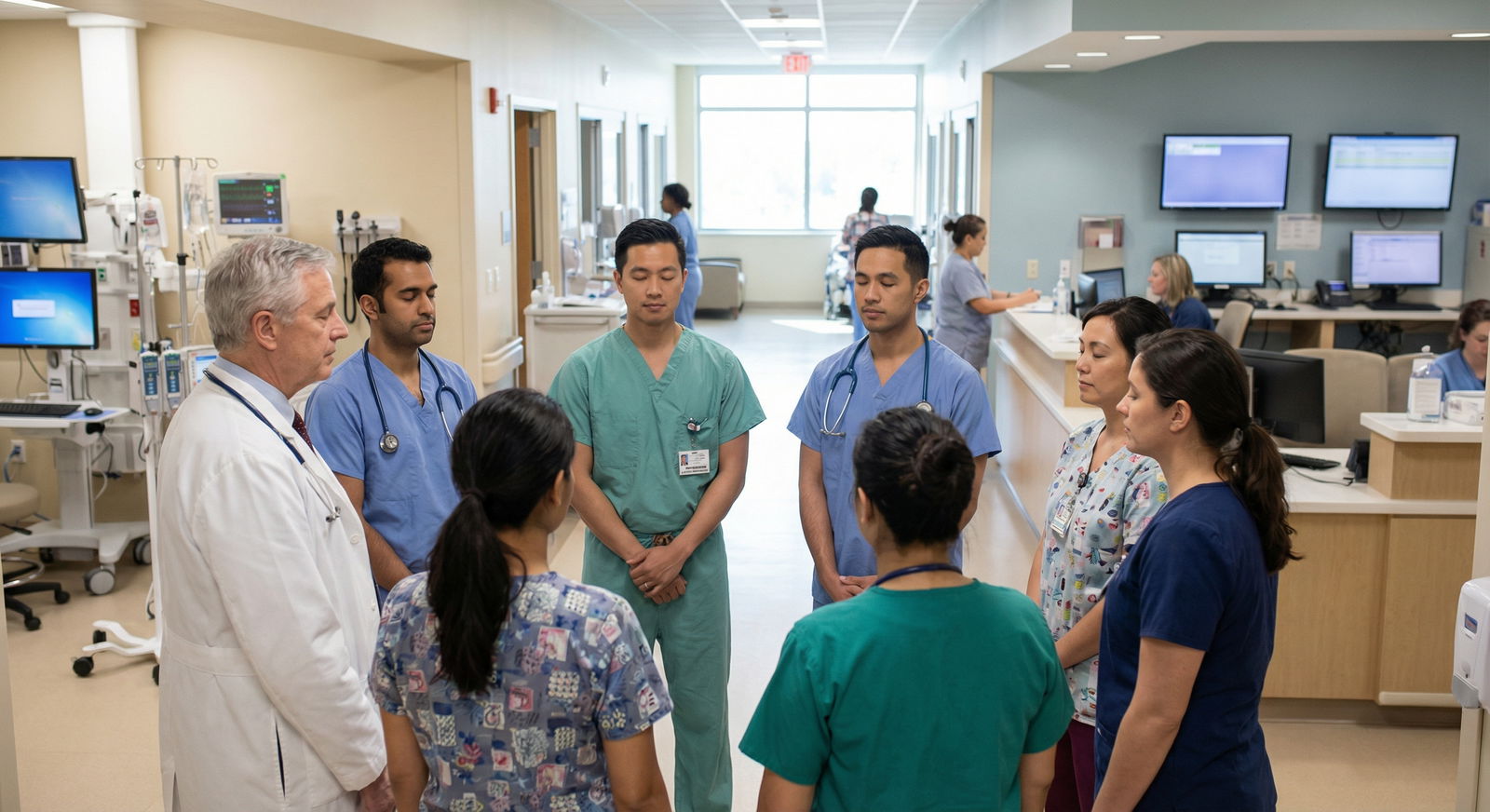
- Shared brief practices (e.g., 60-second centering before rounds) create a sense of collective focus.
- Mindful check-ins normalize talking about workload, emotions, and support needs.
- A culture of reflection and nonjudgment reduces blame and promotes learning from errors.
Over time, this builds a resilient, cohesive team that can weather surges, crises, and emotionally intense cases more effectively.

Practical Strategies to Cultivate Mindfulness and Resilience on Medical Teams
Integrating mindfulness into Healthcare Training and clinical practice does not require hour-long meditations or unrealistic time commitments. The key is to embed brief, repeatable practices into existing workflows.
1. Formal Mindfulness-Based Training Programs
Structured programs help clinicians build foundational skills and shared language.
Recommended Program Types
Mindfulness-Based Stress Reduction (MBSR)
Eight-week program involving meditation, gentle movement, and stress awareness. Adapted versions exist specifically for clinicians.Mindfulness-Based Cognitive Therapy (MBCT)
Combines mindfulness practices with cognitive strategies to manage rumination and low mood. Helpful for clinicians experiencing early signs of burnout or depression.Short Clinical Mindfulness Curricula
Many hospitals and residency programs now offer 4–6 week courses (in-person or virtual) designed for shift-based, rotating schedules.
Practical Implementation Examples
- Integrate a short mindfulness elective or workshop series into residency or nursing orientation.
- Offer CME-accredited mindfulness or resilience courses for attendings and advanced practice providers.
- Provide access to vetted apps designed for healthcare professionals (e.g., sessions tailored for on-call schedules, night shifts, or post-code decompression).
2. Micro-Practices: Brief Mindfulness for Busy Clinicians
When time is scarce, “micro-practices” can be powerful.
Breathing Techniques for Acute Stress
Box Breathing (4–4–4–4)
- Inhale for 4 seconds
- Hold for 4 seconds
- Exhale for 4 seconds
- Hold empty for 4 seconds
Repeat for 3–5 cycles between patient encounters, before calling a family with bad news, or after a challenging interaction.
Physiological Sigh (2-part inhale, slow exhale)
- Short inhale
- Second quick inhale to fully expand lungs
- Long, slow exhale
Repeat 3–5 times; useful during high-anxiety moments such as standing outside a difficult patient room.
Other 1–3 Minute Micro-Practices
Three-Breath Check-In
- First breath: Notice physical sensations (heart rate, muscle tension).
- Second breath: Notice emotions (anxious, frustrated, tired, calm).
- Third breath: Set a brief intention (listen fully, speak clearly, be kind).
Mindful Handwashing
Use the 20–30 seconds at the sink to feel the water, notice sensations, and intentionally release tension.Doorframe Pause
Each time you touch a door handle or curtain before entering a patient room, take one slow breath and consciously “reset” your attention.
3. Mindful Communication and Team Rituals
Embedding mindfulness into standard team processes strengthens resilience and Team Collaboration.
Mindful Huddles and Check-Ins
Start-of-Shift Huddle
- 2–3 minutes for the team to:
- Share priorities and anticipated challenges
- Take a collective 30–60 second breathing pause
- Voice any constraints (fatigue, emotional load, learning needs)
- 2–3 minutes for the team to:
End-of-Shift Micro-Debrief
- 5 minutes to review:
- One thing that went well
- One challenge or learning point
- Brief acknowledgment of emotional impact (e.g., a difficult case or loss)
- 5 minutes to review:
These rituals normalize reflection and foster psychological safety.
Mindful Communication Techniques
SBAR + Pause
Incorporate a single mindful breath before delivering SBAR (Situation, Background, Assessment, Recommendation) during critical communications to improve clarity.Reflective Listening
When a colleague expresses distress or disagreement:- Reflect back what you heard: “So you’re feeling… because…”
- Pause before responding, to avoid reactive or dismissive replies.
4. Reflective Practices and Debriefing for Emotional Processing
High-pressure environments often involve trauma exposure, moral injury, and grief. Reflective practices help clinicians metabolize these experiences.
Individual Reflective Tools
Brief Journaling (5 minutes/day)
- “What did I notice in myself today?”
- “When did I feel most connected to my work?”
- “What is one thing I can let go of from today?”
Guided Reflections via App or Audio
Short prompts tailored to code events, end-of-life discussions, or medical errors can guide clinicians through structured processing.
Team-Based Debriefs
Hot Debriefs (Immediately After Critical Events)
Focus on facts, emotions, and quick learning points:- What went well?
- What could we do differently next time?
- How is everyone feeling right now?
Cold Debriefs (Scheduled Follow-Up)
Allow more in-depth reflection on emotionally impactful cases:- Discuss ethical dilemmas, communication challenges, and emotional responses.
- Normalize vulnerability from leaders and senior clinicians.
These practices build resilience at both individual and team levels and reduce the risk of unresolved trauma accumulating.
5. Supporting Work-Life Integration and Sustainable Schedules
Mindfulness cannot compensate for chronically unsafe workloads or toxic cultures. Genuine resilience requires structural support.
Organizational Strategies
Flexible Scheduling Where Possible
- Thoughtful design of night-float and call schedules to protect circadian rhythms.
- Protected days off following particularly intensive rotations (ICU, ED, oncology).
Protected Time for Rest and Learning
- Realistic expectations for documentation and patient volumes.
- Scheduled wellness or reflection sessions that are truly protected, not added on top of existing duties.
Individual Strategies
Boundary Setting
- Limiting after-hours charting when possible.
- Practicing saying “no” to non-essential tasks that compromise rest or learning.
Intentional Recovery
- Treating off-duty time as essential “recovery time” rather than optional luxury.
- Incorporating short, enjoyable activities that replenish energy: walks, social time, creative hobbies.
When systems and individuals align, mindfulness and resilience practices have far greater impact.
6. Leadership Role Modeling and Culture Change
Leaders—program directors, chiefs, charge nurses, senior residents—strongly influence whether mindfulness and resilience are embraced or dismissed.
Mindful Leadership Behaviors
- Opening meetings or M&M conferences with a 30–60 second pause
- Acknowledging uncertainty and emotional impact after adverse events
- Sharing their own strategies for stress management and reflection
- Inviting feedback on workload, staffing, and psychological safety
Training Leaders in Mindful Leadership
Programs can offer:
- Workshops on mindful leadership, conflict resolution, and coaching
- Training in trauma-informed supervision and debriefing
- Coaching for chiefs and attendings on modeling healthy work habits (using vacation, setting boundaries, seeking support)
When leaders embody mindfulness and resilience, it signals that well-being is a professional responsibility, not a personal indulgence.
Creating a Supportive Environment for Sustainable Mindfulness and Resilience
For mindfulness to be more than a trend, it must be integrated into the fabric of the healthcare organization.
Building Infrastructure and Access
- Resource Hubs: Centralized digital pages listing mindfulness apps, internal courses, recordings of brief practices, and local mental health resources.
- Physical Spaces: Small “quiet rooms” or reflection corners where staff can decompress for 3–5 minutes between challenging encounters.
- Peer Support Networks: Trained peer supporters or “wellness champions” within departments who can facilitate brief practices and connect colleagues to resources.
Normalizing Help-Seeking and Mental Health Support
Resilience is not about enduring everything alone. Organizations should:
- Clarify confidentiality and limits regarding mental health services for clinicians.
- Proactively communicate that seeking counseling or coaching is encouraged, not stigmatized.
- Offer sessions at times compatible with clinical schedules (evenings, virtual options).
Measuring Impact and Refining Programs
To sustain support:
- Track participation in mindfulness and resilience programs.
- Monitor burnout, engagement, and turnover trends over time.
- Gather qualitative feedback from trainees and staff to refine content and format.
By treating mindfulness and resilience initiatives like any quality-improvement intervention—plan, implement, measure, adapt—organizations can ensure long-term success.

FAQs: Mindfulness, Resilience, and Burnout Prevention in Medical Teams
1. How can a busy medical team start integrating mindfulness without adding to their workload?
Begin with micro-practices that fit into existing workflows: a 30-second breathing pause before rounds, mindful handwashing, or a one-minute centering at the start of team huddles. These require no extra time outside of clinical duties and can be initiated by any motivated team member—resident, nurse, or attending.
2. How quickly can clinicians notice benefits from mindfulness practices?
Some benefits—such as feeling slightly calmer or more focused—can appear after just a few brief sessions. More substantial effects on stress, emotional regulation, and burnout typically develop over weeks of consistent practice (e.g., 5–10 minutes most days). Like physical conditioning, mindfulness builds over time; small, regular efforts are more effective than occasional intense efforts.
3. Can mindfulness really help with burnout prevention, or does it just make people tolerate unhealthy systems?
Mindfulness is one tool in burnout prevention, not a replacement for fair staffing, reasonable workloads, or supportive leadership. It helps clinicians:
- Recognize early signs of distress
- Make clearer decisions about boundaries and career choices
- Communicate needs more effectively
For true burnout prevention, mindfulness must be paired with systemic changes that address workload, culture, and psychological safety.
4. What are some accessible mindfulness resources specifically for healthcare professionals?
Options include:
- Hospital- or university-based programs (MBSR, resilience workshops)
- Apps with clinician-focused content (e.g., short sessions for on-call staff)
- Professional societies (many now host webinars and toolkits on physician well-being)
- Peer-led mindfulness groups within departments (brief sessions before grand rounds or conferences)
When exploring digital tools, prioritize those with evidence-based practices, short modules, and options for brief use during breaks.
5. How can leaders encourage mindfulness and resilience without it feeling mandatory or performative?
Leaders can:
- Model practices themselves rather than simply promoting them
- Offer multiple participation options (live sessions, recordings, apps, written prompts)
- Frame mindfulness and resilience as patient-safety and professionalism tools, not just “wellness extras”
- Create genuine protected time for participation, signaling that well-being is valued, not an after-hours burden
When clinicians see that these efforts are supported by structural changes—improved schedules, better staffing, supportive supervision—mindfulness is more likely to be received as authentic and helpful.
By integrating mindfulness into healthcare training, daily clinical routines, and leadership culture, medical teams can build robust resilience, strengthen team collaboration, and meaningfully advance burnout prevention. These skills not only protect clinicians—they also enhance patient care, safety, and the long-term sustainability of the healthcare workforce.