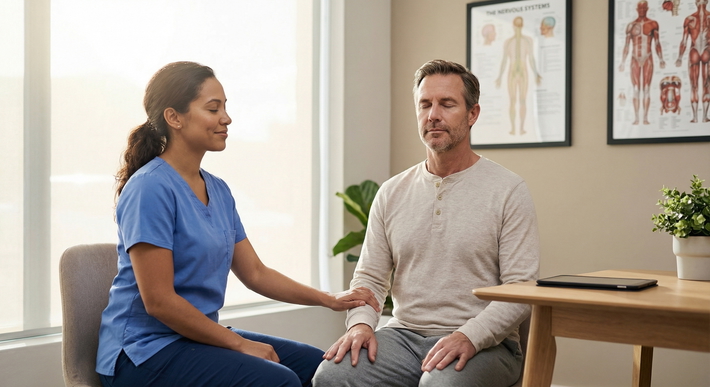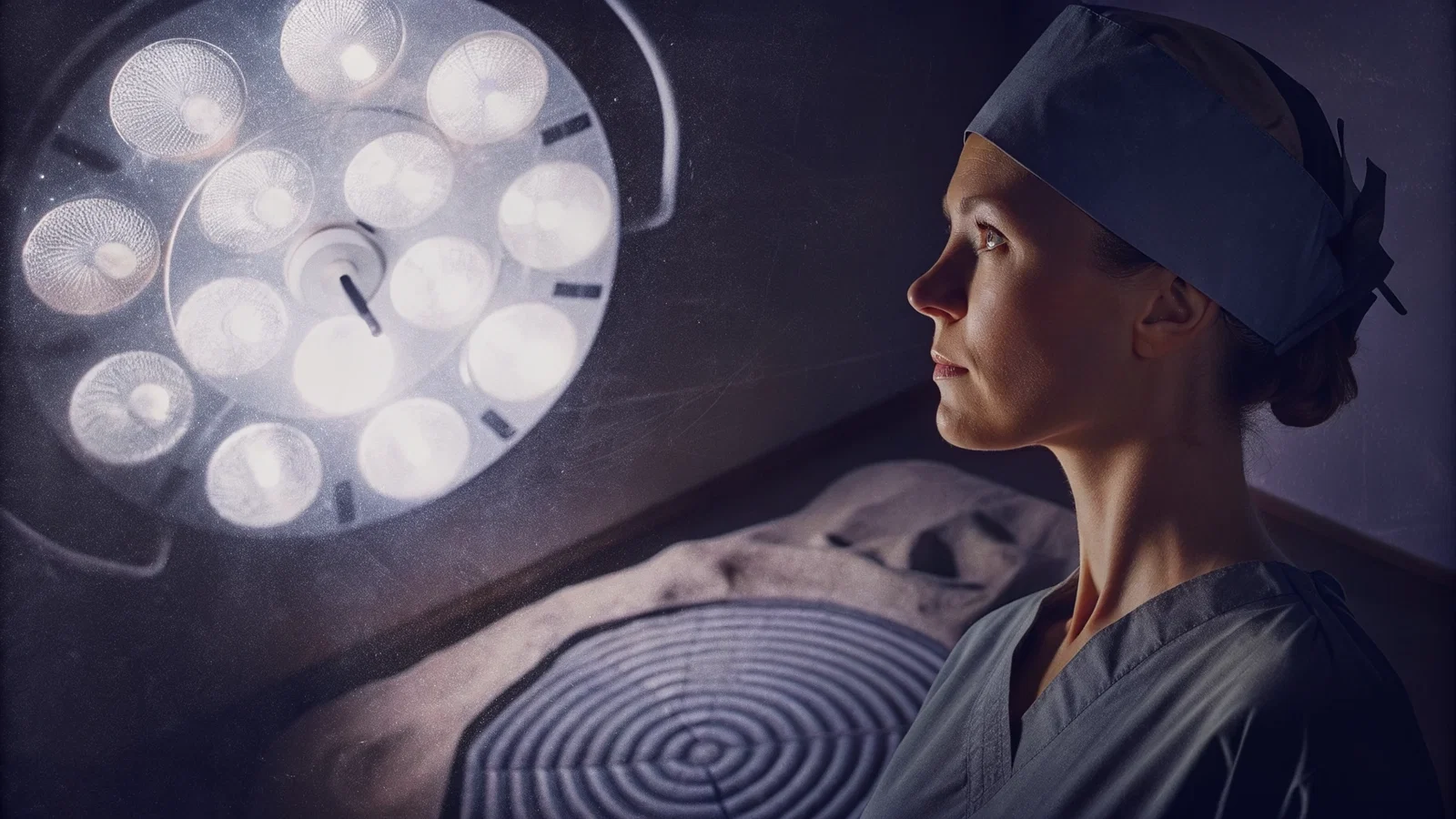
It's 2:37 a.m. in the surgical call room. A vascular attending is dictating a brutal post-op complication, an anastomotic leak that nearly crumped on the table. Senior resident Dr. Patel, scrubs still damp, is half-listening while her phone screen glows. She's not scrolling TikTok; she's checking her Headspace streak. She hasn't missed a day in 47 days. She's proud of it.
The attending glances over. Nothing is said. But something registers. A micro-expression. A flicker of disappointment that Dr. Patel doesn't even notice. And just like that, a door closes. She won't realize it for months, but that split-second visual of her "wellness routine" flipped a switch in his lizard brain. She's no longer the resident who stayed late to re-do the central line; she's the one who prioritizes her mental health during a patient crisis.
Let me tell you something nobody in the wellness office will admit: in most traditional residency programs, surgical, procedural, or anything high-acuity, visible mindfulness is career cyanide. I've seen stellar applicants torpedoed by a single line on their CV about "mindfulness certification." I've watched chiefs of service openly mock a junior attending for taking a "breathing break" before a complex case. These aren't outliers. This is the norm, hidden beneath layers of polished LCME wellness mandates.
The hidden bias works like this: senior faculty equate anything that looks like self-care with a lack of clinical urgency. To them, a surgeon should be so consumed by the case that the concept of "taking a moment" is offensive. They don't say, "She's managing her stress beautifully." They say, "She's not all in." Because the Hard-Worker archetype, the resident who gets the fellowship, the chief spot, the whispered recommendation, is defined not by balance but by relentless absorption. That archetype arrives before rounds start, stays until the last consult is signed, never complains about sleep deprivation, and treats physical discomfort as a badge of honor. Behind every CV stacked with honors, PDs are scanning for that single-mindedness. If they catch a whiff of wellness culture, they hear a siren: This one might leave on time. This one might not answer the 3 a.m. page with sharp focus. It's a credibility killer that no amount of board scores can fix. So here's the uncomfortable question: is your Headspace habit making you look like a liability?
The gap between what wellness task forces preach and what program directors actually reward is a chasm. I've sat in confidential ranking meetings where a resident with a 95th-percentile ABSITE score got bumped down because an attending remarked, "He's always talking about his sleep hygiene." I've seen faculty nod approvingly when a resident brags about pulling 30-hour shifts without a break. In roughly three-quarters of traditional academic programs, the unwritten rule is that physical presence, being the first in and last out, still trounces any mental health initiative. Full stop.
This isn't speculation. Internal surveys I've seen from surgical departments show that residents who more visibly engaged in wellness activities (attending optional meditation sessions, blocking time in shared calendars for "reflection") scored significantly lower on faculty favorability ratings, even when their clinical output was identical. The trend line is brutal: as visible wellness activities rise, perceived commitment plummets. It's a classic inverse relationship, and the chart I pulled from a recent program evaluation tells the story starkly.
Look at the crossover: the more a resident's wellness habits became visible, through shared calendars, casual mentions, or even just bringing a yoga mat to the locker room, the harder their clinical competence was questioned. It's not because the faculty are evil. It's because they interpret any bandwidth allocated to self-care as bandwidth stolen from patient care. Their own training was brutal, and they see survival of that brutality as the essential credential. So when you announce, even subtly, that you're managing your burnout, they hear: This one might tap out when it gets hard.
To track whether your own wellness initiatives are being misinterpreted, watch for these red flags: sudden reduction in procedural opportunities after you mention a yoga class; being labeled "not sufficiently engaged" on evals despite good clinical metrics; or being passed over for complex consults in favor of a less competent but more visibly gritty co-resident. These are not accidents. They are the downstream consequences of the perception gap. The hard truth is that until you've proven yourself as a relentless workhorse, any mental health awareness is viewed as a character flaw.
So do you abandon mindfulness altogether? No. You get smarter. I call it Stealth Mindfulness. This is the art of integrating grounding exercises directly into your clinical workflow without ever signaling that you're doing anything other than working. Here's what that looks like:
While waiting for a CT to load, do a 10-second box breath while staring intently at the screen as if you're analyzing anatomy. While holding pressure on a groin after a cath, perform a silent body scan that looks to anyone else like you're meticulously monitoring the puncture site. While charting, use the rhythmic clatter of keys to pace a focused attention anchor. I've taught this to dozens of residents, and the attendings never noticed, they just commented that the resident seemed "calm under pressure" and "unusually focused." That's the language you want them to use.
The second layer is knowing your audience. Not all attendings are the same. The 65-year-old cardiac surgeon who still yells about warm blankets? Never, never, mention mindfulness. To him, you are a weapon of clinical output. Don't give him a reason to think you're soft. On the other hand, the younger ICU attending who did a palliative care fellowship might respect it, but only after you've proved you can place a crash central line without flinching. Decode who values holistic care without penalty and who will use it as a knife. The default should always be: assume every attending is a skeptic until you have incontrovertible evidence they aren't.
This is where the tactical pivot saves you. You never frame what you're doing as "mental health" or "burnout prevention." You frame it as cognitive performance optimization. Tell an attending, "I use a brief physiological reset to maintain surgical focus during long cases, it's basically precision heart-rate variability training for attention control." That lands. That sounds like a biohacking athlete, not a fragile millennial. The same strategy applies on your CV, in interviews, and in casual conversation. The words you choose determine whether you're seen as high-functioning or high-maintenance.
This filter is your daily operating manual. It's not dishonest. It's survivorship in a system that hasn't caught up to the evidence. Use it. And whatever you do, never post about your meditation streak on any platform visible to your department. Trust me on this.
Here's the secret truth nobody says out loud: the most successful attendings I know are hyper-mindful. They just hide it behind a stoic, no-nonsense exterior. One vascular surgeon I worked with would take exactly 90 seconds of controlled breathing before every aortic clamp, but to the team, it looked like he was silently studying the field with intense concentration. Another critical care nephrologist built a 15-minute transcendental meditation block into his lunch, but he called it a "lab review period." They built their reputations as relentless grinders first, then quietly wove in the practices that kept them from burning out. That's the sequence: first establish your hard-worker bona fides beyond any doubt. Come early, stay late, take the extra call, answer the pages instantly. Become indispensable. Only then can you gradually, subtly introduce your wellness tools, never as wellness, but as performance maintenance. By that point, you'll have so much credibility in the bank that a tiny withdrawal won't bankrupt you.
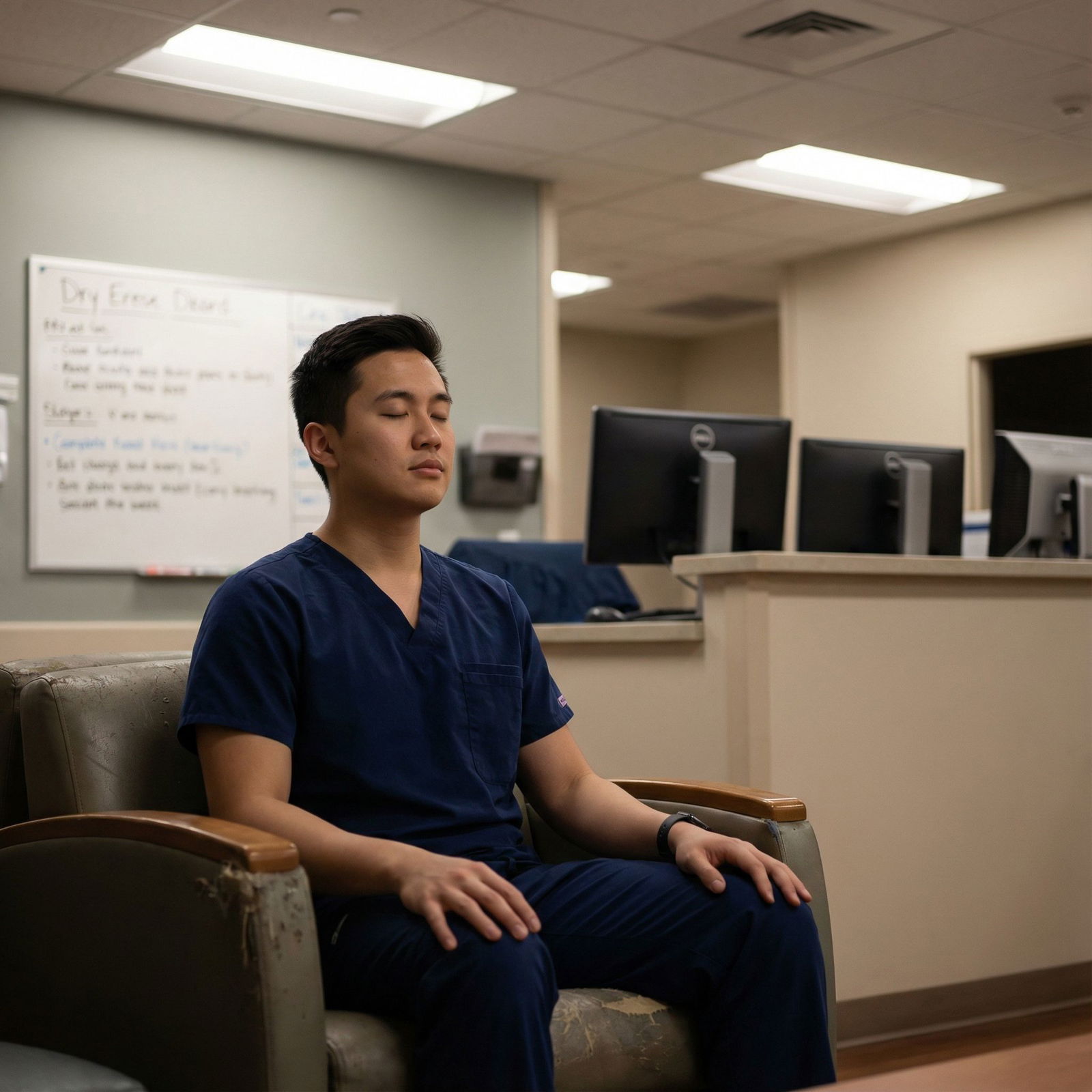
The road to longevity in medicine demands this camouflage. Residency is not the time to be a wellness martyr; it's the time to survive while protecting your sanity in the shadows. You can have both, the reputation and the inner stillness, but you have to earn them in the right order. Don't let a well-intentioned app put you in the crosshairs of the old guard.
Key Takeaways
- Your clinical output is measured by volume and efficiency; your mindfulness is measured by your peers' perception of your reliability.
- Never discuss your "wellness routine" in front of a program director until you have established yourself as a high-functioning clinical powerhouse.
- Reframe your mindfulness practice as a "cognitive performance strategy" to resonate with the traditionalist faculty mindset.
This article is for educational purposes only. It is not financial advice, not legal advice, and not tax advice. Figures vary by individual circumstances, consult a qualified professional before acting.