

The way we’re taught to “be present” with patients is half the story—and it’s why you’re scared you’ll forget things.
I’m just going to say the thing that’s been stuck in your head:
“If I really focus on connecting with the patient, I’m going to forget the meds, the timeline, the red flags… and I’ll look incompetent. Or worse, I’ll miss something dangerous.”
You’re not the only one thinking that.
People just don’t admit it out loud.
You’ve probably heard some version of: “Put the computer aside, look patients in the eye, be fully present.” And at the exact same time, you watch residents hammer out perfect notes, remember every lab trend since 2019, and somehow still crack jokes and make small talk.
So your brain goes: Cool, so I’m supposed to be a human and an EMR robot. At the same time. With no errors. Great.
Let’s unpack this, because your fear isn’t stupid. It’s actually logical. It just needs structure.
The Real Fear Behind “Being Present”
Let me translate what you’re actually worried about:
- “If I don’t write it down right now, I’ll lose it.”
- “If I stare at them and really listen, my brain will stop tracking the checklist.”
- “Everyone says patients can tell when you’re distracted. But attendings will definitely tell when you miss details.”
- “What if I hurt someone because I prioritized eye contact over accuracy?”
That last one is the killer. The “what if I harm someone because I’m trying to be a good, mindful physician?”
Here’s the uncomfortable truth:
Early on, your working memory is garbage for clinical medicine. You’re holding:
- Their story
- Their meds
- Their past history
- Your differential
- The “what does my attending want to hear” soundtrack
- The EMR demons
- And your own self-criticism, constantly narrating everything
Of course your brain is screaming, “DON’T LET GO OF ANY DETAIL OR WE ALL DIE.”
You’re not bad at mindfulness. You’re overloaded.
Mindfulness Is Not “Turn Off Your Clinical Brain”
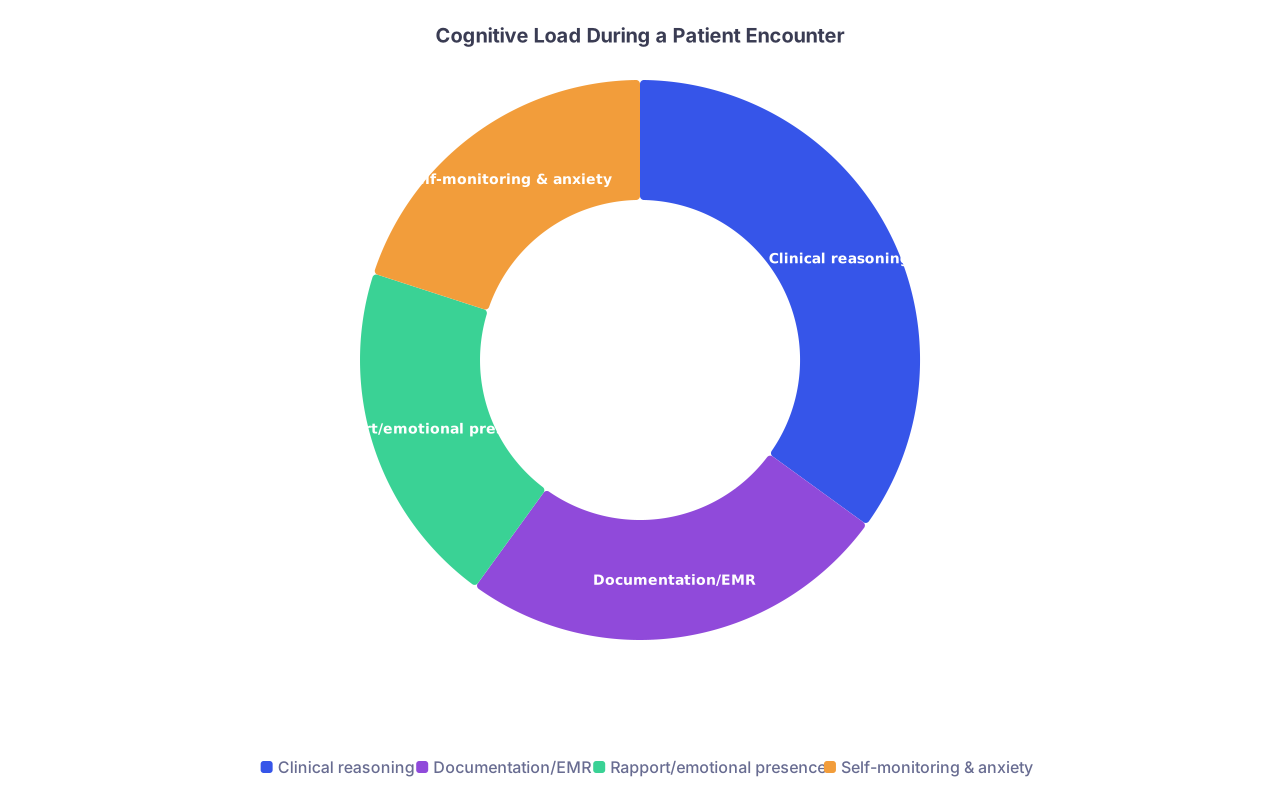
| Category | Value |
|---|---|
| Clinical reasoning | 35 |
| Documentation/EMR | 25 |
| Rapport/emotional presence | 20 |
| Self-monitoring & anxiety | 20 |
People throw around “be present” like it means “empty your mind and sit in the moment.” That’s great for a meditation app. It’s not how real clinic works.
In medicine, “presence” is not:
- zoning out into empathy land
- ignoring clinical details to feel all the feelings
- silently panicking while pretending to look calm
Presence in medicine is more like: “I can anchor myself enough in this moment that I’m not completely hijacked by anxiety, and I can flex between listening deeply and capturing what I need.”
Flexible attention. Not permanent zen.
You’re scared you’ll forget details because you’re imagining a binary choice:
Either:
- I’m fully present.
Or: - I’m fully analytical.
That’s the wrong model. Good clinicians oscillate—they move in and out of deep connection and structured data collection, very quickly and very deliberately.
You just haven’t been taught how that actually looks in real time.
What It Actually Looks Like in the Room
Picture this. Outpatient internal medicine. You’re a student.
You walk into the room. 65-year-old woman. Diabetes, HTN, some vague “I’ve been tired” complaint. Here’s how an attending might actually toggle presence vs data:
First 30–60 seconds: full presence spike.
No note-taking. No typing.
“Hi Ms. Ramirez, I’m [Name], a medical student working with Dr. X…”
Quick genuine connection: something about how she’s doing today, a brief smile, normal human tone. This is where trust gets built.Then: presence with a safety rope.
As she starts explaining, the attending listens, but also occasionally glances at the screen and drops a few anchor words into the note:
“3 months fatigued, worse AM, +SOB stairs, no chest pain.”
They’re not writing the novel. They’re laying breadcrumbs.Micro-pauses to clarify.
“Let me just make sure I’ve got that right,” they say, turning to the computer for 5–10 seconds, typing, then turning back. Their body faces the patient. They narrate what they’re doing so it doesn’t feel like they disappeared into the EMR black hole.Later: data clean-up outside the room.
After stepping out, they take 1–2 minutes to expand those breadcrumbs into full sentences while the story is still warm in their mind.
That’s not “either present or precise.” That’s a rhythm.
And yes, the rhythm feels clunky and fake at first. You feel like you’re performing medicine, not doing it. But this is how your brain learns: repeatable patterns.
Your Brain Is Not Designed to Hold a Whole HPI Raw
You’re not failing because you can’t retain all the details without writing. Human working memory is brutally limited.
You know this from studying: you never tried to read a whole chapter once and then recite it word for word. You spaced, chunked, highlighted, scribbled in the margins. You used external supports.
You are allowed to do that with patients.
You’re imagining an impossible standard:
“I should be able to sit, listen, take in their entire story, hold it all in my mind, and only later translate it into the note, like some enlightened clinician monk.”
No. The people who look like they’re “just listening” are often taking notes on paper in their lap, or mentally chunking and then immediately dictating after the visit, or they’ve done this exact type of visit 7,000 times and their brain auto-pilots the structure.
So if you’re thinking, “If I look away to write, I’m not being mindful,” that’s the trap.
You can be deeply respectful and present and still write as you go. Presence is about your intention and quality of attention, not about never touching a pen.
Concrete Strategies So You Don’t Forget Stuff (While Still Being Human)
Let me give you actual tactics. Not vague “breathe and ground yourself” nonsense.
1. Use micro-notes, not full narratives, in the room
You don’t need full sentences while they’re talking. You need triggers.
Write things like:
- “fatigue 3 mo – worse AM – stairs – no CP / palps”
- “new med? – SSRI 6w ago”
- “red flag? wt loss? fevers? night sweats?”
You can flesh them out right after you leave.
2. Say out loud what you’re doing
Patients get confused or feel ignored when you silently turn to the computer. Fix that with a single sentence.
Examples:
- “I really don’t want to miss any parts of your story, so I’m going to jot a few notes as you talk. If I look at the screen, I’m still listening.”
- “Let me pause you for a second and make sure I’ve captured that correctly.”
You know what this does? It reassures them. And it gives you permission, in your own head, to split your attention.
3. Use the “3 Buckets” mental checklist
Before you walk out of the room, run a fast scan in your mind:
- Symptoms & story
- Relevant history/meds/allergies
- What’s worrying me (or them) the most right now
If you can name something for each bucket—even if it’s rough—you’re 90% ahead of “oh my god, I totally blanked.”
You can even say to the patient, “I want to make sure I didn’t miss anything. We talked about your fatigue and shortness of breath, your diabetes and blood pressure meds, and the thing you’re most worried about is your heart. Is that right?”
Double win: memory check + rapport.
4. Create a post-encounter ritual
The moments right after you leave the room are gold. That’s when the story is most vivid.
Try this:
- Step out. Don’t open your phone. Don’t immediately dive into the next task.
- Take literally 30–60 seconds to expand your breadcrumbs into full phrases.
- Ask: “If I read this in 3 hours, would I remember this patient clearly?”
If you build this habit early, your fear of forgetting will calm way down, because you’ve given your brain a predictable outlet.
The Ethical Guilt Layer: “Am I Cheating My Patients?”
Here’s the extra bit that keeps you up at night:
“If I’m thinking about my note, am I betraying the patient’s trust? Am I being less compassionate by not giving them 100% of my mind?”
I’m going to be blunt: the 100%-of-your-mind fantasy is not only impossible, it’s dangerous. It sets you up for chronic shame.
Your mind will wander. You will think about:
“Did I ask about that?”
“What’s my attending going to grill me on?”
“Did I forget to sign that order?”
“Why is my heart pounding right now?”
Your job isn’t to stop that. Your job is to notice it and steer back. Over and over.
Ethically, you’re doing right by your patient if:
- You’re transparent about note-taking or computer use.
- You circle back when you realize you got lost.
- You build systems (like checklists, anchors, rituals) so your care is reliable, not just vibes-based.
Patients don’t need you to be a perfect empathic statue. They need you to care enough to be honest, careful, and willing to correct yourself.
What If I Actually Miss Something Big?
The nightmare scenario:
You try to be more “present,” you don’t write as much, and later you realize you forgot to clarify something important. A red-flag symptom, a med interaction, a key detail.
Here’s the scary but honest reality: even hyper-vigilant, note-obsessed people miss things. Residents with 15 templates open miss things. Attendings with 20 years’ experience miss things.
Forgetting one question is not the same as negligence.
The line is: do you build processes so that systematic misses become rare?
Things like:
- Having a consistent order you take the history in, even if it’s flexible.
- Using dot phrases or templates for common complaints so you remember key questions.
- Debriefing after clinic: “What did I miss today that I want to catch next time?”
You’re worried that presence will cause misses. What actually causes misses most of the time is unstructured chaos plus exhaustion plus pretending you can do it all in your head.
You’re already ahead of the curve because you’re thinking about this now.
You Don’t Have to Earn Your Humanity After You Prove Your Competence
This is the trap:
“I’ll be hyper-focused on details now, and later when I’m competent, I’ll be more human and present.”
Bad plan. That “later” never comes unless you train both muscles together.
If you only train your “capture every detail” muscle, here’s what happens:
- You become the person who can’t tolerate even 2 seconds of silence without typing.
- Your anxiety about forgetting details never drops, because you’ve never tested your memory with any slack.
- Being present feels like a threat instead of a resource.
You don’t have to flip a switch to become “mindful.” You can start with 10-second experiments:
- 10 seconds at the beginning of the visit where you do nothing but meet them as a person.
- 10 seconds at the end where you summarize and really look at them: “How does that plan sit with you?”
Those tiny windows are presence training wheels. Your brain learns: I can loosen my grip for a moment and the world doesn’t collapse.
A Quick Reality Check From the Other Side
I’ve watched attendings after a long clinic say to a nurse, “Can you call Mr. X back? I realized I never asked about his home glucose readings.” No one screams “you’re unethical and inattentive.” They fix it. They move on.
I’ve seen residents admit to patients: “I want to make sure I didn’t miss something earlier—can I ask one more question?” Patients don’t get mad. They’re usually grateful for the thoroughness.
You’re holding yourself to an imaginary, crushing standard that no one else is actually meeting.
Competent, ethical medicine is not zero mistakes. It’s:
- less random error
- more catch-and-correct
- clear, honest communication
Presence helps with all three. Because when you’re less panicked, you actually think better.
So What Do You Do With This Fear, Right Now?
Today, don’t try to become the perfectly mindful, perfectly precise student. That’s fantasy.
Instead, pick one change:
- Before your next patient interaction (even if it’s simulated or with a standardized patient), decide: “I’m going to start with 20–30 seconds of full focus on them, then I’ll let myself take micro-notes.”
- Or: “At the end of the visit, I’ll summarize out loud and ask, ‘Is there anything I missed that you want to make sure I know?’”
Then after, ask yourself:
- Did I actually forget more?
- Or did my brain just feel more exposed because I wasn’t white-knuckling the whole time?
Do this a few times. Track it. Treat it like a personal experiment, not a moral test.
You’re allowed to be scared of missing details. You just don’t have to let that fear dictate the kind of clinician you become.

| Step | Description |
|---|---|
| Step 1 | Enter room |
| Step 2 | 30 sec full presence |
| Step 3 | Start story |
| Step 4 | Take brief notes |
| Step 5 | Clarify key points |
| Step 6 | Summarize to patient |
| Step 7 | Leave room |
| Step 8 | Expand notes immediately |

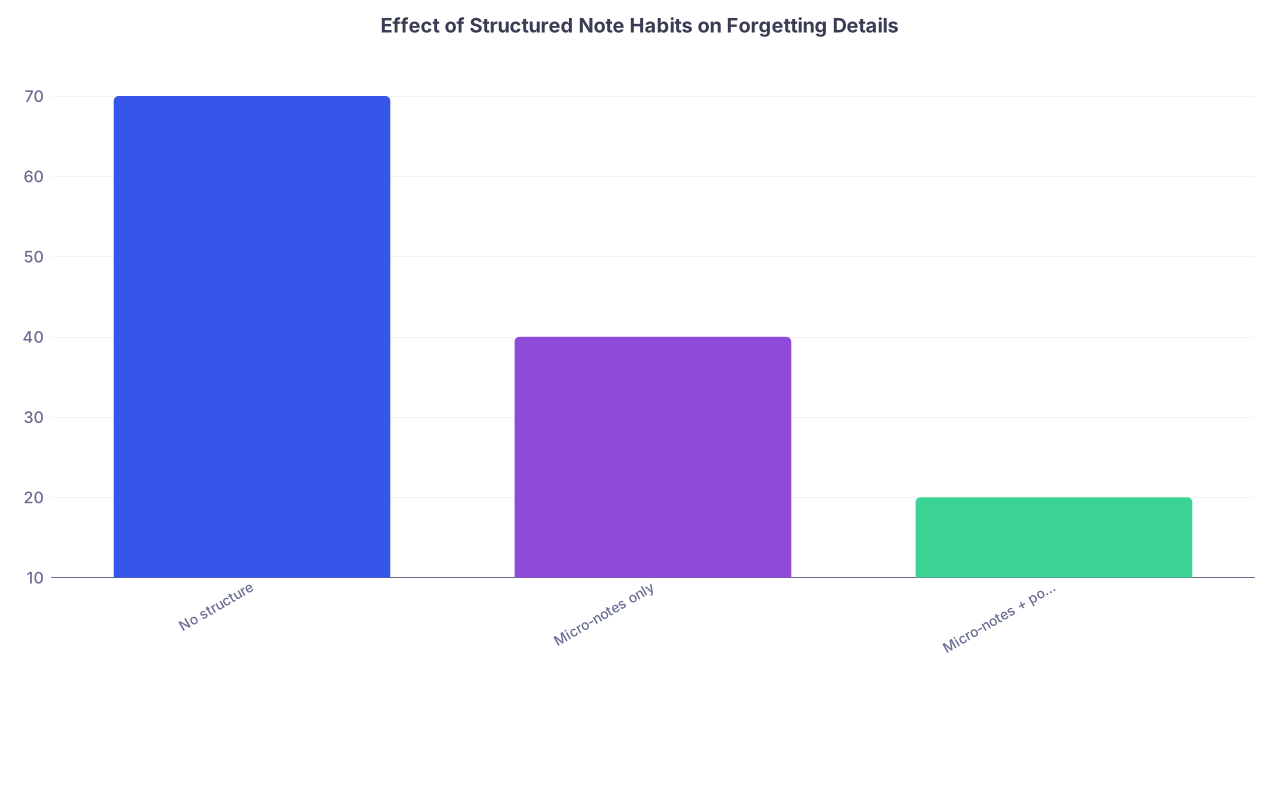
| Category | Value |
|---|---|
| No structure | 70 |
| Micro-notes only | 40 |
| Micro-notes + post-encounter ritual | 20 |

FAQ (You’re Not the Only One Thinking These)
1. Is it wrong to type during the patient’s story if I want to be “mindful”?
No. Mindfulness isn’t about pretending the EMR doesn’t exist. It’s about being intentional. If you tell the patient, “I’m going to type a few notes so I don’t miss what you’re saying,” that’s actually respectful. The problem isn’t typing; it’s silently disappearing into the screen without explanation.
2. What if I genuinely can’t remember details when I try to focus more on the patient?
Then you adjust the structure, not your humanity. Shorten the “just listening” window at first. Maybe it’s 10–15 seconds before you jot notes. Use anchor words instead of full sentences. Build a quick “3 bucket” review at the end of the encounter. Over time, your working memory for clinical stories will grow, but you don’t have to brute-force it now.
3. Will attendings judge me if I pause to think or check my notes in front of patients?
Most attendings are relieved when students show they care about accuracy more than pretending to be slick. Saying, “Give me a second, I want to make sure I say this correctly,” is way better than rambling confidently and being wrong. The students who worry me are the ones who never pause and never admit uncertainty, not the ones who take 5 seconds to reorient.
4. Is it unethical if I realize later I missed an important question but don’t say anything?
If it’s clinically meaningful, the ethical move is to try to close the loop: send a message, ask a nurse to call, bring it up at the next visit. You’re not required to be omniscient in real time. You are responsible for acting when you realize there’s a gap. Quietly feeling guilty but doing nothing helps no one.
5. How can I practice this balance before I’m seeing real patients on my own?
Use any interaction as practice. Standardized patients. Role-play with classmates. Even conversations with friends or family: try 30 seconds of full presence, then mentally summarize what they said in 3 bullet points. You can also record yourself taking a practice history (with consent) and see where your attention drops. You’re not waiting for some magical “later” to build this skill—you can start with the next conversation you have today.
Open your next practice HPI or think of your last patient encounter. Write one sentence at the top of the page: “Here’s how I’ll spend the first 60 seconds with this patient.” Then underneath, script exactly what you’ll do and say. Give your brain a plan instead of a panic.


