

The idea that you shouldn’t teach mindfulness unless you’re a certified meditation guru is wrong.
If you’re a clinician with basic training and good boundaries, it’s absolutely appropriate to teach simple mindfulness skills to your patients—provided you stay in your lane, know your limits, and present it as one tool among many, not a miracle cure.
Let’s cut through the noise and get practical.
1. The Core Answer: Yes, But With Clear Boundaries
Here’s the short version you’re probably looking for:
Teaching simple, brief, low‑risk mindfulness skills to patients is ethically appropriate if:
- You understand the basic principles (and have practiced them yourself)
- You don’t oversell benefits or imply it replaces medical care
- You screen for red flags (severe trauma, psychosis, acute instability)
- You stay within your scope and refer for deeper work when needed
- You obtain clear, informed, non‑pressured consent
If you’re thinking “5 minutes of breath awareness or grounding at the end of a visit” — yes, that’s typically fine.
If you’re thinking “leading a 45‑minute deep trauma meditation in my office with a suicidal patient” — absolutely not.
So the real question isn’t “Is it appropriate?”
It’s “What exactly is appropriate, and how do I do it safely and ethically?”
2. What Counts as “Simple Mindfulness Skills”?
Let’s define what we’re talking about so you’re not guessing.
These are generally appropriate for brief medical encounters:
- Basic breath awareness (e.g., 3 slow breaths, feeling the air)
- 5‑senses grounding (naming what you see, hear, feel, etc.)
- Short body scan from head to toe (2–3 minutes max)
- Noticing thoughts and letting them pass (“leaves on a stream” style)
- Micro‑pauses: “Let’s take 10 seconds and just notice your feet on the floor”
These are usually NOT appropriate to improvise in a general medical visit unless you have specialized training:
- Intense “inner child” or trauma‑focused meditations
- Long silent retreats or extended guided imagery with emotional excavation
- Practices that deliberately evoke distressing memories or sensations
- Complex contemplative frameworks (karma, past lives, etc.) in secular care
You’re not becoming a meditation teacher. You’re integrating small, evidence‑based skills that support health, just like teaching sleep hygiene or diaphragmatic breathing.
3. Why This Makes Sense Clinically (and Isn’t Fluffy Woo)
If you’re going to offer something, you should know it’s not nonsense.
Here’s the reality: basic mindfulness skills have solid evidence for several medical contexts:
- Chronic pain: Mindfulness‑based treatments show modest but real improvements in pain interference and quality of life.
- Anxiety/depression: MBCT and MBSR reduce relapse risk and symptoms, especially as adjuncts to standard care.
- Stress‑related conditions: Hypertension, IBS, headaches often benefit when stress is addressed.
- Adherence and self‑management: More awareness = better recognition of early warning signs, triggers, health behaviors.
Is a 3‑minute breathing exercise the same as an 8‑week MBSR program? Of course not. But it’s a foothold. A door you open.
Ethically, this can be framed as:
- A skill patients can try, not a treatment guarantee
- An adjunct, not a substitute for meds, procedures, or therapy
- A way to increase agency (“here’s something you can practice yourself between visits”)
You’re not giving them magic. You’re giving them a simple, low‑cost, low‑risk self‑regulation tool.
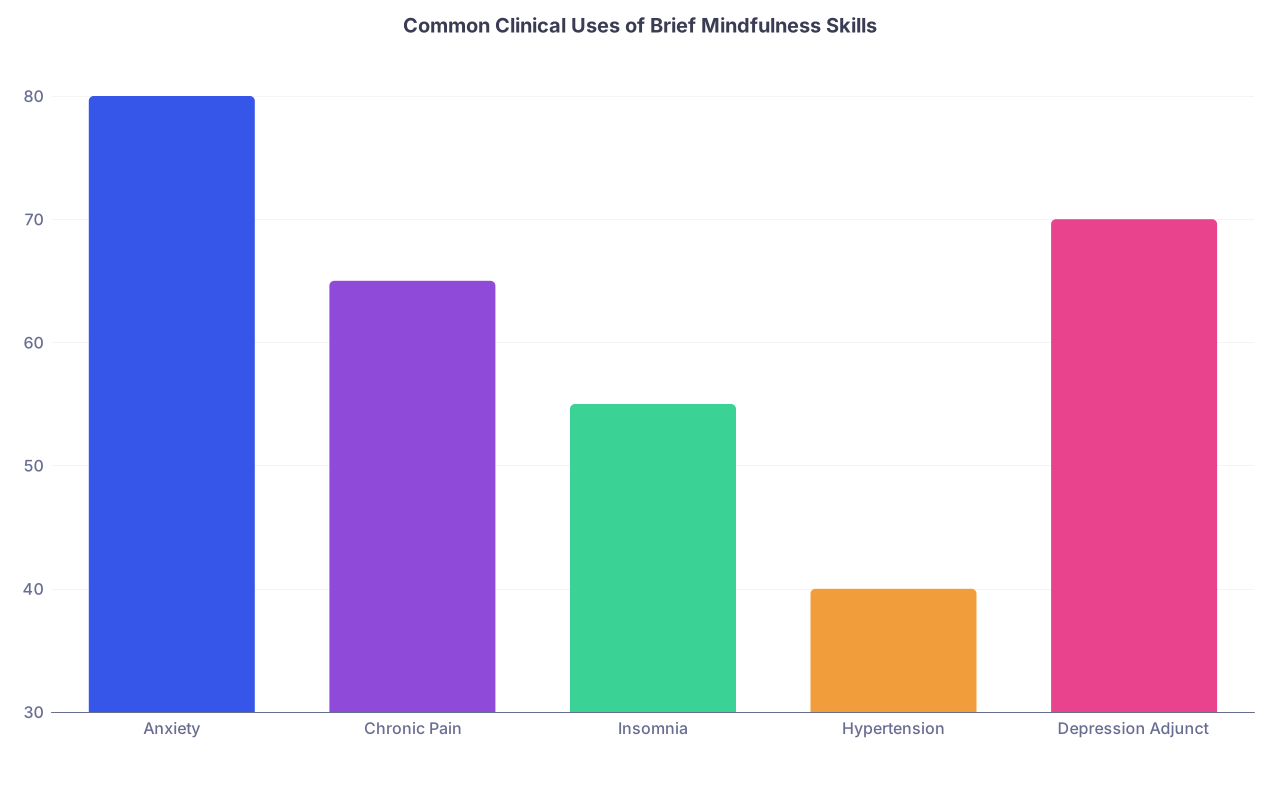
| Category | Value |
|---|---|
| Anxiety | 80 |
| Chronic Pain | 65 |
| Insomnia | 55 |
| Hypertension | 40 |
| Depression Adjunct | 70 |
4. The Ethical Framework: How to Stay on Solid Ground
You’re in the Personal Development and Medical Ethics space here. That means two tracks: how you grow, and how to not harm people while you’re experimenting.
Autonomy: Real Choice, Not Subtle Pressure
Patients should feel free to say no without fearing you’ll judge them.
Plain language version you can steal:
“Some people find brief mindfulness‑type exercises helpful for stress or pain. Totally optional. Would you be interested in trying a 2‑minute version together, or would you prefer we stick to other strategies?”
That’s informed consent: clear, optional, time‑limited, and framed as one tool.
Beneficence and Nonmaleficence: Help Without Harm
Most mindfulness harms come from:
- Going too fast, too deep, or too long
- Ignoring trauma or psych history
- Presenting it as a cure‑all (“you won’t need meds if you meditate”)
- Abandoning standard treatments
Ethically, you should:
- Ask: “Have you ever done meditation or mindfulness before? Any bad experiences with it?”
- Start small: 30–120 seconds, not 20 minutes
- Monitor: “How was that? Any discomfort come up?”
- Normalize stopping: “If at any point this feels too much, we’ll stop immediately.”
If someone feels worse, that’s feedback, not failure. You adjust. Or you don’t use it with them.
Scope of Practice: Don’t Play Therapist If You’re Not
Where people get into trouble is when a 2‑minute breathing cue turns into an impromptu therapy session they’re not trained for.
If you’re not a mental health professional, your role with mindfulness is:
- Teach skills (breathing, grounding, awareness)
- Offer referrals for structured mindfulness‑based therapy if appropriate
- Support practice as part of lifestyle/health behavior change
The line you shouldn’t cross: deep emotional processing, trauma work, or long‑term psychotherapy masked as “mindfulness.”

5. Red Flags: When You Should NOT Lead Mindfulness Yourself
This is the part people under‑appreciate.
Use serious caution (or avoid leading mindfulness altogether) if the patient:
- Has active psychosis or strong dissociation
- Has severe, untreated PTSD with frequent flashbacks
- Is acutely suicidal or in a major crisis
- Reports past worsening with meditation or similar practices
- Has strong cultural or religious objections to practices they perceive as “Buddhist,” “New Age,” or spiritually conflicting
You can still:
- Acknowledge their stress
- Offer standard medical/psych treatments
- Refer to trained mental health or trauma‑informed mindfulness providers
What you don’t do is push through: “Just breathe, you’ll be fine.” That’s sloppy and potentially harmful.
You’re allowed to say: “Mindfulness is not the right tool for right now. Let’s focus on safety and stabilization first.”
That’s good medicine.
6. What You Can Safely Teach (With Scripts)
Let’s get concrete. Here are examples of simple, appropriate techniques and exactly how you might present them.
A. Three-Breath Pause (60–90 seconds)
Use it for: anxiety in clinic, pre‑procedure stress, pain flares.
How to introduce:
“Before we go on, can we try a super short exercise—three slow breaths—to see if it takes the edge off? It only takes about a minute.”
How to guide:
- “Sit with your feet on the floor if that’s comfortable.”
- “We’ll take three slow breaths together. You don’t have to breathe deeply, just a bit slower than usual.”
- “First breath – notice the air coming in… and going out.”
- “Second breath – notice your shoulders. Let them drop a little on the exhale if they want to.”
- “Third breath – notice your feet on the floor while you breathe out.”
Then: “How was that—any change at all, even 5%?”
You’re building awareness, not promising miracles.

| Step | Description |
|---|---|
| Step 1 | Consider mindfulness skill |
| Step 2 | Do not lead exercise |
| Step 3 | Offer standard care and referral |
| Step 4 | Explain brief optional exercise |
| Step 5 | Respect choice and move on |
| Step 6 | Guide 1 to 3 minute exercise |
| Step 7 | Check in about experience |
| Step 8 | Offer home practice suggestions |
| Step 9 | Stop, validate, adjust plan |
| Step 10 | Any red flags? |
| Step 11 | Patient interested? |
| Step 12 | Helpful or neutral? |
B. 5‑Senses Grounding (2–3 minutes)
Use it for: panic, rumination, pain catastrophizing, pre‑procedure anxiety.
Script idea:
“When anxiety is high, your mind goes into the future. One way to pull it back is to use the five senses. Want to try a quick version?”
Then:
- “Look around and silently name 5 things you can see.”
- “Now 4 things you can feel (like your clothing, chair, air on your skin).”
- “3 things you can hear.”
- “2 things you can smell.”
- “1 thing you can taste or imagine tasting.”
This is mindfulness. You don’t even need to use the word.
C. Micro Body Scan (2 minutes)
Use it for: pain, somatic symptoms, sleep issues.
Script:
“Let’s take 2 minutes and just scan from your head to your toes, noticing any tension without trying to fix it. If it relaxes, great. If not, we’re just gathering information.”
Guide head → shoulders → chest → abdomen → legs → feet.
Always end with a grounding cue: “Feel the chair under you, your feet on the floor, and the room around you again.”

7. Presenting Mindfulness Without Being Weird or Pushy
The cringe factor is real. Plenty of patients (and clinicians) are allergic to anything that sounds like self‑help fluff.
Here’s how to keep it grounded:
- Use normal language: “paying attention on purpose,” “noticing what’s happening right now,” “a way to calm your nervous system.”
- Link it to concrete goals: “sleep better,” “get through pain flares,” “handle cravings,” “prepare for a procedure.”
- Own the limits: “This isn’t magic, but some people find it gives them a little more control.”
- Offer options: “Some people prefer apps, audio recordings, or just a simple reminder phrase. We can test what fits you.”
If you sound like you’ve joined a wellness cult, you’ve lost them. If you sound like you’re offering a practical skill, they’ll usually at least try.
| Situation | You Can Teach Brief Skills | Strongly Consider Referral |
|---|---|---|
| Mild to moderate stress | Yes | Maybe |
| Chronic pain, stable | Yes | Yes, for structured MBIs |
| Well‑controlled anxiety/depression | Yes | Yes, if patient interested |
| Severe PTSD or dissociation | Usually no | Yes |
| Active psychosis | No | Yes |
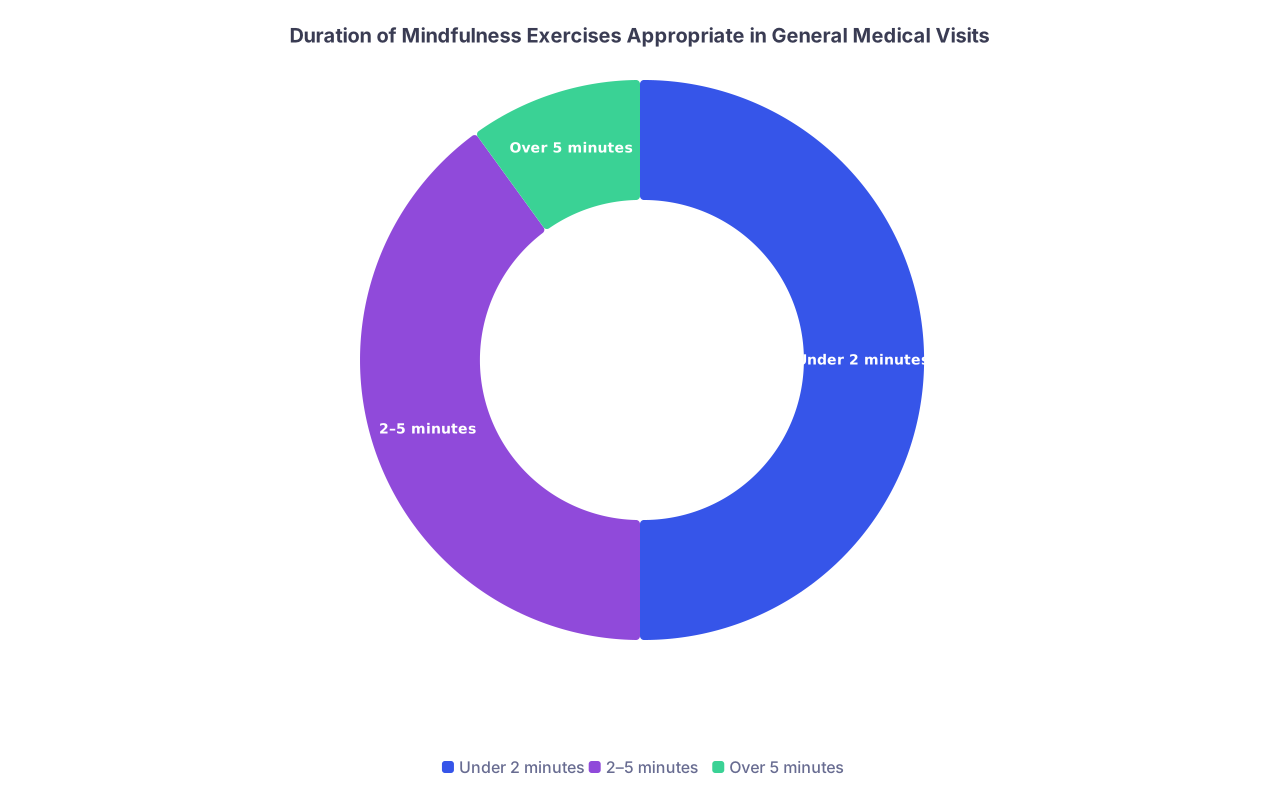
| Category | Value |
|---|---|
| Under 2 minutes | 50 |
| 2–5 minutes | 40 |
| Over 5 minutes | 10 |
8. Your Side of the Equation: You Need Your Own Practice
Here’s the uncomfortable truth: teaching mindfulness you don’t practice yourself usually feels hollow—and patients can tell.
You don’t need to be a monk. But you should have:
- Some personal experience with the exact practices you’re teaching
- A sense of what they feel like when you’re anxious, tired, or in pain
- A realistic picture of how hard it is to “just notice your breath” when you’re distressed
If you’re serious about integrating this ethically:
- Start a tiny personal practice: 3–5 minutes a day of breath awareness or body scan.
- Try one evidence‑based program or resource (e.g., MBSR course, quality app like Headspace or Ten Percent Happier).
- Do at least a short training geared to clinicians (there are many “mindfulness in medicine” workshops and online courses).
You don’t have to be perfect. But you should be honest:
“I use some of these practices myself, and they help me sometimes. Not all the time. But enough that I think they’re worth trying.”
That lands much better than textbook preaching.

9. Documentation and Legal Common Sense
No, you don’t need a separate 3‑page mindfulness consent form.
But you should treat this like any other brief clinical intervention:
- Note it: “Introduced brief breath awareness exercise; patient tolerated well, reported slight decrease in anxiety.”
- If it goes badly, document that too: “Attempted 60‑second grounding; patient became more distressed, so exercise stopped and crisis protocol initiated.”
- Don’t deviate from standard of care: Mindfulness is an adjunct. You still follow guidelines, prescribe meds when indicated, refer to therapy when needed.
And avoid promising outcomes in writing like “taught patient mindfulness to cure insomnia.” That’s just inviting trouble.
10. Putting It All Together: A Simple Framework to Use Tomorrow
Here’s a quick mental checklist you can run in under 10 seconds:
Is this patient relatively stable right now?
If yes → proceed. If no → prioritize safety and stabilization.Have I framed it as optional and brief?
If yes → offer. If no → rephrase.Is this a 1–3 minute, low‑intensity skill?
If yes → teach. If it’s longer/deeper → not in a standard visit.Did I check in afterward?
Ask: “How was that? Helpful, neutral, or not for you?”Do I know where to refer if they want more?
Have at least one pathway: therapist, MBSR group, vetted app.
If you can say yes to those five, you’re on solid ethical ground.
FAQ: Teaching Mindfulness to Patients
1. Do I need formal certification to teach basic mindfulness skills?
No. For brief, simple practices (breath awareness, grounding, short body scans), formal certification isn’t required. What you do need is: personal familiarity with the practice, a basic understanding of indications/contraindications, and clear boundaries. For running full MBSR/MBCT groups or trauma‑focused mindfulness, formal training is strongly recommended or essential.
2. Should I call it “mindfulness” or just describe the exercise?
Either is fine. For some patients, “mindfulness” sounds legit and familiar. For others, it sounds vague or woo. You can say, “There’s a technique from mindfulness research where we focus on the breath for a minute. Want to try it?” Or skip the label entirely and say, “Let’s take three slow breaths together to calm your system.”
3. What if a patient has a bad reaction during a mindfulness exercise?
Stop immediately. Ground them in the present: ask them to open their eyes, look around the room, feel their feet on the floor. Validate their experience: “Thank you for telling me—that’s a sign this isn’t the right tool for you right now.” Then pivot to other coping strategies and consider referral to a mental health professional, especially if they disclose trauma, dissociation, or intense distress.
4. Can I use mindfulness instead of prescribing medication?
Not responsibly. Mindfulness can sometimes reduce reliance on meds over time, but it shouldn’t be used as a sole treatment when guidelines clearly support pharmacotherapy or structured psychotherapy. Ethically, you frame it as an adjunct: “We can use medication, therapy, lifestyle changes, and skills like mindfulness together to improve your outcome.”
5. How do I handle patients who see mindfulness as religious or conflicting with their beliefs?
Respect that fully. You might clarify: “The way we use these skills in medicine is secular—mostly about attention and breathing—but I completely respect if it doesn’t fit your beliefs.” Offer alternatives: relaxation exercises, paced breathing, prayer (if they’re religious and open to that), or cognitive strategies. Don’t push. Your job isn’t to sell mindfulness; it’s to support the patient’s health within their value system.
6. What’s one simple script I can start using tomorrow?
Try this: “I know this is a lot. Some people find a 1‑minute breathing reset helpful. Totally optional—would you like to try it?” If they say yes: “Okay. Sit however is comfortable. We’ll take three slow breaths together. You don’t have to do anything special—just notice the air going in and out. Afterward, you can tell me whether it helped even a little, or not at all.”
Open your schedule for tomorrow and choose one patient you see regularly who struggles with stress or pain. Plan a 2‑minute, clearly optional breathing or grounding exercise for that visit—and script your exact words in advance.


