

It’s 3:12 a.m. You’re on a night shift (or imagining yourself on one), the ED feels like controlled chaos, and somewhere in the back of your mind there’s this nagging thought you can’t shake:
“If I really let myself feel what’s happening… what if I fall apart right when someone needs me? What if mindfulness makes me too emotional to function?”
You’re picturing a code blue where everyone’s composed and decisive, and you—because you’ve been “practicing awareness” and “connecting with your feelings”—are suddenly overwhelmed by the weight of it all. Hands shaking. Voice cracking. Frozen.
And under that is a much darker fear:
“What if I’m not cut out for this if I’m not naturally detached? What if being a sensitive, reflective person is actually a liability in medicine?”
Let me say this bluntly: you are not the only one thinking this. I’ve heard versions of this whispered in call rooms, outside wellness workshops, and at the end of those mandatory “resilience” seminars where everyone pretends they’re fine and then googles ‘emotional detachment medicine’ later.
Let’s walk through this properly.
The Core Fear: “If I Feel More, I’ll Fall Apart”
You’re basically imagining two paths:
- Old-school “tough” doctor: armored, detached, doesn’t cry, gets things done.
- Mindful doctor: open, aware of suffering, connected… and maybe crumbling when the pressure spikes.
And you’re afraid mindfulness pushes you toward the second one when medicine seems to reward the first.
Here’s the problem: that first image—the cold, unflappable, zero-feelings robot—is mostly a myth. Or, more accurately, it’s a mask that eventually cracks. I’ve watched it crack in residents at 2 a.m. in stairwells, in attendings after a bad outcome, in classmates who prided themselves on “not letting things get to them” until burnout hit like a truck.
The people who last are not the ones who feel less. They’re the ones who learn to:
- Feel what they feel
- At a time and intensity that doesn’t sabotage their performance
- And then process it instead of stuffing it down forever
That’s the actual goal. Mindfulness, when done right, is exactly about that.
Where your fear comes from is this: you’re imagining mindfulness as ripping the dam open in the middle of a flood. No filters, no boundaries. Just “let it all in” while you’re trying to intubate someone.
That would be insane. That’s not mindfulness practice; that’s emotional self-destruction.

What Mindfulness Actually Trains (When It’s Not Instagram-Fluff)
Strip away the buzzwords. Mindfulness in a medical context trains three things that actually protect your functioning in emergencies:
Attention control
Not “feel all the feelings.”
More like: “Notice what your mind is doing and bring it back to what matters right now.”Emotion regulation
Not “have no emotions.”
More like: “I feel fear/sadness/anger, and I have tools not to let it run the show in this moment.”Cognitive flexibility under stress
Translation: you’re less likely to completely lock up or go blank when things go sideways.
If your mindfulness practice is literally just “I sit and marinate in my feelings and drown in them,” yeah, that absolutely could make you feel more raw and less functional. But that’s not what any halfway decent evidence-based program is teaching.
Most clinical mindfulness programs (like MBSR, ACT, MBCT, or the stuff built into physician wellness curricula) emphasize:
- Grounding in the body (breath, feet on floor, posture)
- Very brief on-the-spot skills you can use mid-shift
- Separating the internal reaction from the external task
The core move is:
“I notice I’m scared/panicked/sad, and I still can choose my next action.”
Not:
“I notice I’m scared, so I should probably curl into a ball and write a poem about it instead of doing compressions.”
“But What If I Freeze in a Code Because I’m Too Aware?”
This is the nightmare scenario you’re probably replaying:
Patient crashes. Alarms blaring. Family crying. You suddenly become hyper-aware:
- “This is someone’s father.”
- “I can’t mess this up.”
- “Holy crap, this is real, this isn’t a sim.”
And then boom—you imagine yourself emotionally overloaded and useless.
Here’s what actually happens to most people the first few crashes they see, regardless of whether they meditate or not:
- Heart rate shoots up
- Hands a bit shaky
- Mind partially blank, partially racing
- You cling to protocol and whoever’s in charge
That’s just human neurobiology.
Mindfulness doesn’t make that response worse. It usually makes it more manageable because it gives you muscle memory for things like:
- Micro-grounding: “Feet on floor. Feel the stethoscope in my hand. One slow breath.”
- Noticing catastrophic thinking and parking it: “I see the ‘I can’t mess this up’ thought. Right now: step 1–2–3.”
This isn’t theoretical. I’ve had residents tell me things like:
- “In my first code I heard myself thinking ‘I’m going to screw this up’ and then I literally remembered my therapist saying ‘name the thought and go back to the task.’ It kept me from spiraling.”
- “I felt my hands shaking, noticed it, did one slower exhale, and they steadied just enough to do the central line.”
Those are mindfulness moves. They’re not dramatic. They’re not poetic. They don’t look like anything from the outside. They just keep you from going over the edge.
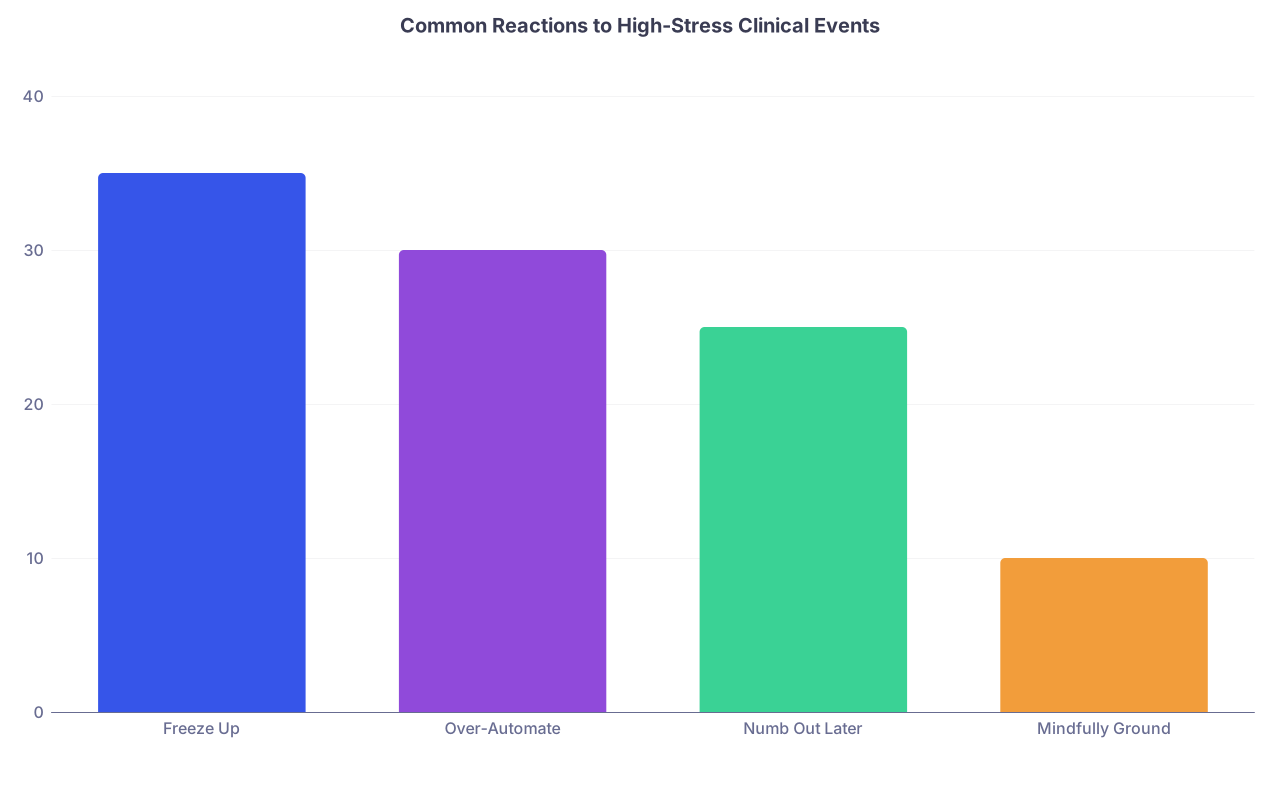
| Category | Value |
|---|---|
| Freeze Up | 35 |
| Over-Automate | 30 |
| Numb Out Later | 25 |
| Mindfully Ground | 10 |
(Those numbers aren’t exact research data—just a rough sketch of what people feel like is happening. Notice how few people even think of “mindfully ground” as an option.)
The Really Ugly Alternative: Emotional Numbing
You’re afraid of being “too emotional to function.”
Fair. But look at the other extreme.
If you don’t train any kind of awareness or regulation, medicine has a nasty way of training you into this pattern:
- Suppress feelings during the crisis (“not the time, keep it together”).
- Never come back to them because there’s always another patient, another note, another page.
- Build up this low-grade internal pressure of unprocessed grief, guilt, and stress.
- Cope by:
- Cynicism
- Dark humor that stops being funny
- Emotional distancing from patients
- Eventually, burnout or a breakdown
I’ve watched EM and ICU people hit that wall. Surgery residents. Even peds. The “nothing touches me” persona works… until it doesn’t. Then sometimes it’s “I woke up and realized I don’t feel anything about anyone anymore.”
That’s not functioning. That’s shutting down.
Mindfulness—properly integrated—is a pressure valve. It gives you a way to:
- Acknowledge what hit you
- Feel enough of it to stay human
- Not so much in the moment that you derail
- And then have somewhere to put it after your shift
That’s the actual balance.

“But I Cry Easily. What If I Cry in Front of a Patient or in a Code?”
This is the part nobody wants to say out loud: “What if they see me cry and decide I’m weak, unprofessional, or incompetent?”
Let me separate two things:
Crying during a high-acuity procedure or critical decision point
That’s understandably terrifying. You want full motor control and clear thinking.
Mindfulness helps here not by making you cry more, but by delaying emotional overflow until you’re safe to feel it. You can absolutely feel your throat tighten or eyes sting and still choose: “Not yet. Focus. I’ll let this out later.” The skill is awareness + timing.Tearing up with a family during bad news or aftermath
This is not unprofessional. At all. A single tear, a quiet pause, a changed tone of voice—those can be deeply human and appropriate. Patients and families read that as “you care,” not “you’re lost.”
Where it becomes a problem is if you:
- Fully lose your ability to speak
- Make them take care of you
- Shift the emotional center of the room from their loss to your distress
That’s a boundary issue, not a “you felt feelings” issue.
If your mindfulness practice includes honest reflection, you can learn your patterns: “How does emotion show up in my body? What’s my early warning sign?” That’s exactly what gives you more control, not less.
The Real Risk: Badly-Guided Mindfulness
Here’s where your fear is actually on to something:
There are versions of “mindfulness” taught in medicine that are:
- Superficial (“just breathe!” slapped on real trauma)
- Unguided (“be aware of everything!” with no containment)
- Ignorant of your existing mental health history (anxiety, trauma, etc.)
If you do a 10-day silent retreat mid-ICU rotation with no therapist, then come back to nonstop death and suffering… yeah, you might feel cracked open and raw in a way that’s hard to function with. That’s not imaginary.
So some very blunt rules:
- If you have a history of trauma, panic attacks, or depression, treat mindfulness like any other mental health intervention: structured, cautious, supervised if possible.
- Start with short, grounded practices (2–5 minutes) rather than hour-long emotional excavations.
- Focus on body + breath + simple noticing, not “let me re-experience everything painful that’s ever happened to me while I’m on call.”
Ethically, medicine owes you better than corporate “resilience training.” But until that catches up, you have to protect yourself by choosing how you practice.
| Aspect | Helpful Practice | Risky Practice |
|---|---|---|
| Duration | 2–10 minutes daily, brief on-shift resets | Long, intense sessions right before or during stressful rotations |
| Focus | Breath, body sensations, simple noting | Deep emotional excavation without support |
| Timing | Before/after shifts, short pauses between patients | In the middle of a code or procedure as primary focus |
| Support | Guided apps, therapists, trained instructors | Random YouTube mixes, no context, no debrief |
Ethics Piece: Are You Obligated to Stay Detached?
You’re probably also worrying about the ethical angle:
“Is it unprofessional—almost unethical—to be emotionally affected if someone’s life is on the line? Aren’t I supposed to put the patient first, no matter what?”
Here’s the twist:
Putting the patient first doesn’t mean erasing yourself as a human. It means organizing your response so your feelings don’t hijack patient care.
Ethically:
- You are obligated to stay competent enough to provide safe care.
- You are not obligated to be emotionally numb to do it.
- You are responsible for seeking help if your emotional response repeatedly interferes with functioning. That’s part of professionalism.
Mindfulness, when integrated well, supports that responsibility. It makes it easier to notice:
- “I am beyond my limit right now.”
- “I need backup.”
- “I need to debrief after this before I see the next 10 patients like nothing happened.”
That self-awareness is an ethical strength, not a weakness.
So What Do You Actually Do With This Fear?
Let’s turn this from vague anxiety into concrete steps. You can test this without wagering your future on a philosophical guess.
Start tiny and neutral.
3–5 minutes a day. Not “feel all your grief,” just:- Sit.
- Notice your breath.
- Notice sounds.
- When your mind wanders, label it “thinking,” come back.
Add one on-shift micro-skill (even as a student).
Before entering a room, or before pre-rounds:- One slow breath
- Feel your feet in your shoes
- Notice one visual detail in the room
That’s it. No crying, no soul-searching. Just presence.
Pay attention to your actual data.
Over a few weeks, ask:- Do I freeze more, or less?
- Do I ruminate more, or less?
- Do I feel more functional in stress, or less?
If things get worse, adjust—shorter practices, more grounding, maybe therapist-guided.
Keep some compartments on purpose.
You’re allowed to say: “I will not fully process this case until after my shift.” That’s not denial; that’s sequencing. Mindfulness can honor that boundary instead of bulldozing it.
Your Next Step (Today, Not Someday)
Do something very small and very specific right now. Nothing dramatic.
Open a notes app or grab a scrap of paper and write two headings:
- “What I’m Afraid Mindfulness Will Do To Me”
- “What I Hope Mindfulness Might Do For Me”
Under each, write 3 bullet points—honest, unfiltered. Then look at that list and pick one hope you’d be okay testing over the next week. Just one.
Example: “Help me not spiral before presentations,” or “Let me fall asleep faster after tough days.”
Then commit to a 3-minute grounding practice once a day for 7 days, aimed at that one hope, not at “becoming more emotional.” Use whatever: Headspace, Calm, Insight Timer, YouTube, whatever doesn’t annoy you.
Seven days. Three minutes. One concrete benefit you’re testing.
See what actually happens in your real nervous system, not just in your 3 a.m. worst-case scenario brain.
You don’t have to choose between being mindful and being functional in emergencies. The whole point is to learn how to be both.


