
What actually happens to your malpractice risk if you start meditating for 10 minutes a day? Does a Headspace subscription make a plaintiff attorney less interested in you?
Let me spoil it: the popular story — “do mindfulness, get fewer lawsuits” — is wildly oversimplified. Parts of it are supported. Parts are marketing. And a big piece is completely missing from the conversation: your behavior changes matter more than your brain waves.
Let’s go piece by piece.
The Myth: “Mindful Doctors Don’t Get Sued”
You’ve heard some version of this:
“Mindfulness reduces physician burnout, improves empathy, and therefore reduces malpractice risk.”
Sounds clean. Almost too clean.
The truth:
- There is very little direct evidence that mindfulness training itself lowers malpractice claims.
- There is solid evidence that things mindfulness can influence — communication, emotional regulation, burnout — are strongly tied to malpractice risk.
- Systems, workload, and culture often matter more than whether you meditate.
So mindfulness is not snake oil. But it’s not a legal force field either.
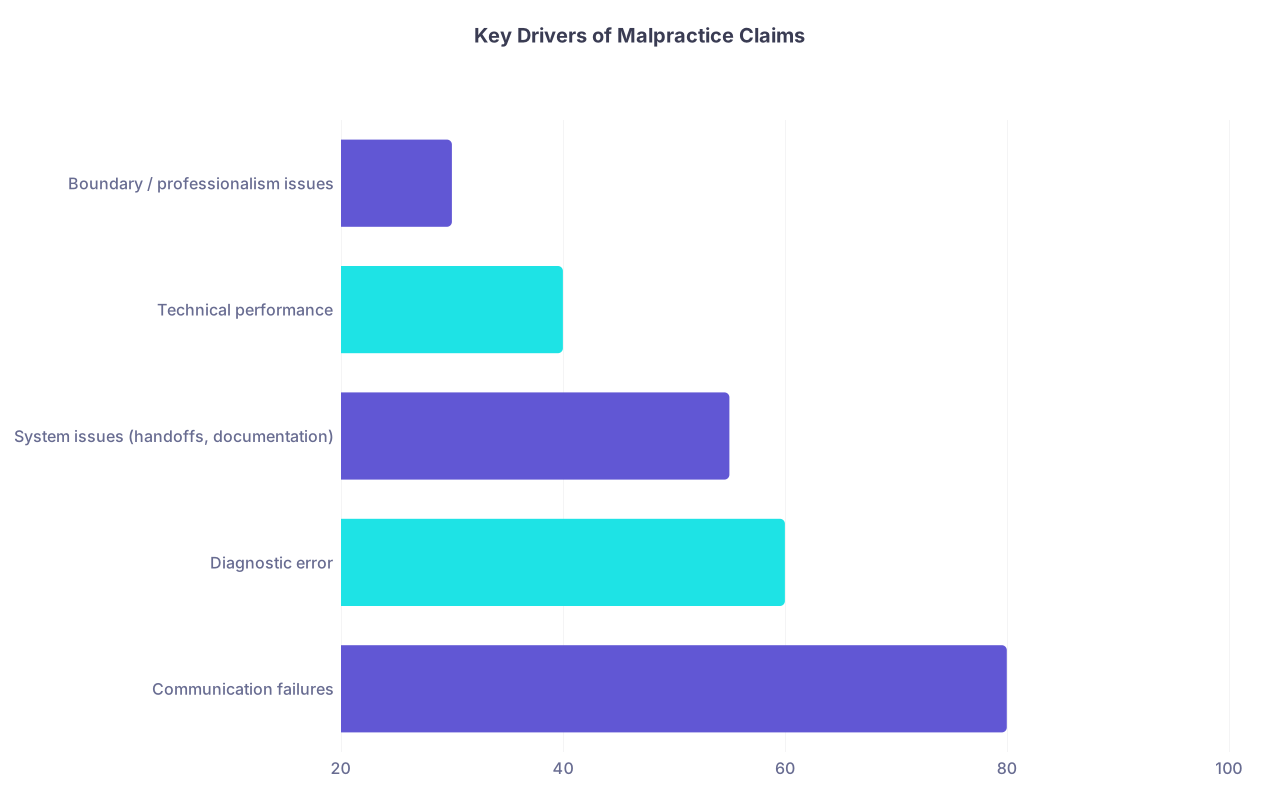
| Category | Value |
|---|---|
| Communication failures | 80 |
| Diagnostic error | 60 |
| System issues (handoffs, documentation) | 55 |
| Technical performance | 40 |
| Boundary / professionalism issues | 30 |
Those percentages are approximate relative contributions pulled from multiple malpractice analyses: communication and diagnostic issues dominate. Not your lack of a mindfulness app.
What the Data Actually Shows
Let’s separate three things people constantly mash together:
- Mindfulness → physician wellbeing
- Mindfulness → physician behavior (especially communication)
- Physician behavior → malpractice risk
The logical leap is assuming #1 automatically fixes #3. That’s the sloppy part.
1. Mindfulness and physician wellbeing
Here the evidence is decent.
Multiple randomized and quasi-experimental studies in residents and attendings show:
- Modest reductions in burnout and emotional exhaustion
- Small to moderate improvements in stress and mood
- Sometimes better sleep and reduced depersonalization
Classic example: Krasner et al., JAMA 2009 — 8‑week mindfulness/communication course for primary care docs:
- Decreased burnout and mood disturbance
- Increased empathy and patient-centered care scores
- Effects persisted for months for many participants
So yes, structured mindfulness-based interventions can improve how you feel and how you report functioning.
But: that’s not the same as “you’ll get sued less.”
2. Mindfulness and actual behavior
Here it gets murkier.
Some studies show:
- More patient-centered communication patterns
- Better listening behaviors in simulated or recorded encounters
- Reduced hostility / reactivity during conflict
You see things like:
- Longer patient speaking time before interruption
- More reflective statements (“So what I’m hearing is…”)
- Fewer abrupt topic changes
I’ve watched a pre- and post-training clinic recording where a hospitalist went from steamrolling an upset family to actually pausing, letting silence hang, and responding with, “I can see this has been really frightening.” That’s behavior change. That matters.
But these are often small samples, single institutions, mostly primary care, and short follow-up. Good signals, not conclusive proof.
3. Behavior and malpractice risk
Here, the evidence is brutal and consistent.
Physicians who get sued more often don’t just have worse outcomes; they communicate differently:
- Interrupt faster
- Spend less time overall
- Provide less orientation and signposting (“First we’ll talk about…”)
- Show less warmth, less apology, less partnership language
Classic work from Levinson and others: physicians with no malpractice claims were more likely to:
- Use humor
- Educate more about what to expect
- Engage patients in decision-making
- Check understanding
This link is strong. Communication behaviors are not window dressing; they’re risk modifiers.
So the real chain looks like this:
Mindfulness (sometimes) → better regulation and presence
Better regulation and presence → better communication, more patience
Better communication → lower risk of being sued for the same clinical outcome
Reasonable. But that’s still a few steps removed from “mindfulness lowers malpractice.”
Where the Evidence Stops (and the Hype Begins)
You’ll notice what doesn’t exist in the literature in any convincing way:
- No large, controlled, longitudinal studies on mindfulness training and actual malpractice claims or payouts over years.
- No credible malpractice carrier actuarial models using “mindfulness training completed” as a rating factor.
- No regulatory or insurer guidelines saying: “Mindfulness CME = lower premium.”
When you see programs or speakers promising “reduced malpractice risk” from mindfulness, ask for:
- The study
- The sample size
- The follow-up period
- The claims data, not just self-report surveys
You will mostly get hand-waving and references to second-order links (“less burnout” → “less risk”). That’s not the same thing.
There’s a reason insurers provide premium discounts for specific risk-reduction courses:
- Disclosure and apology training
- Communication and shared decision-making training
- Documentation improvement
- Safe opioid prescribing modules
Those have actual outcome data connected to claims.
Mindfulness, on its own, does not.

How Mindfulness Actually Might Affect Your Malpractice Risk
Here’s the honest, unromantic view: mindfulness is useful only if it translates into different choices in real clinical conflicts.
Think about high-risk moments:
- You’re behind, the clinic is stacked, a complex patient is on minute 23 of a 15-minute slot.
- You just made or discovered an error — wrong dose, missed finding — and your stomach is in your shoes.
- A family is furious in the ICU and wants answers now.
- You’re on your third admission after midnight, a nurse is calling with a subtle change, and you’re dead tired.
In those moments, what increases malpractice risk?
- Cutting off explanations
- Sounding dismissive or defensive
- Avoiding difficult disclosure conversations
- Documenting sloppily because you just want to be done
- Snapping at staff and creating fragmented care
Mindfulness training, when it works, gives you a small gap between impulse and action. Enough to do things like:
- Notice “I’m getting irritated” before it leaks into your tone.
- Pause and take two breaths before responding to an angry statement.
- Catch the urge to minimize an error and instead say, “I need to be transparent with you about what happened.”
- Recognize fatigue and ask a colleague to double-check something rather than bulldozing through.
That gap — not the meditation cushion — is where risk moves.
Mindfulness vs. Real Risk Management: Complement, Not Substitute
If you’re serious about malpractice risk, mindfulness is a support tool for the real work, which looks like this:
| Domain | Mindfulness Helps With | But You Still Need |
|---|---|---|
| Emotional regulation | Less reactivity, more patience | Formal communication training |
| Burnout | Better coping, reduced depersonalization | Reasonable workload, staffing |
| Error disclosure | Tolerating shame/fear to speak honestly | Structured disclosure/apology protocols |
| Documentation | Not rushing from avoidance or fatigue | Clear templates, legal awareness |
| Team dynamics | Less blaming, better listening | Handoff checklists, escalation pathways |
You can be deeply mindful and still be a malpractice magnet if:
- Your documentation is terrible.
- You practice outside guidelines without clear rationale.
- You ignore abnormal results and lose follow-up.
- Your system has gaping holes in handoffs and test tracking.
Insurers and plaintiffs do not care about your meditation streak. They care about the record, the communication, the outcomes, and the story a jury hears.
Where Mindfulness Genuinely Shines in This Context
There are malpractice-adjacent areas where mindfulness can be a real asset. Not mystical — practical.
1. Handling the aftermath of errors
Every physician with real experience has a “that case” they still remember at 2 a.m.
After an adverse event, mindfulness skills can:
- Let you actually feel and process the shame, guilt, and fear instead of going numb.
- Reduce defensive overreactions — e.g., over-ordering every test forever to soothe your anxiety.
- Help you stay present and honest with the patient/family rather than disappearing or stonewalling (which is lawsuit fuel).
I’ve watched attendings who practiced mindfulness sit with a grieving family and say, clearly and calmly, “This is not the outcome any of us wanted, and I am sorry for my part in this,” instead of delivering a sterile non-apology. That’s meaningful.
2. Surviving depositions and legal processes
If you do get sued:
- Being able to notice reactive anger when opposing counsel needles you.
- Maintaining calm, measured speech rather than escalating.
- Staying grounded enough to think clearly under pressure.
All of that matters. Your demeanor under oath gets judged, formally and informally.
Mindfulness here is like mental strength training. You won’t suddenly become a perfect witness, but you will be less likely to self-sabotage.
3. Preserving empathy over a long career
Burned out, cynical doctors make more errors, communicate worse, and get sued more. Not because they’re bad people; because they’re running on fumes.
Mindfulness is one tool (not the only one, and often not the first one you need) that can:
- Keep you from fully sliding into depersonalization.
- Help you notice, “I am starting to not care,” and seek help or adjust.
That long-term preservation of empathy has downstream effects on how patients experience you. Patients rarely sue doctors they feel deeply connected to, even when outcomes are bad.

| Step | Description |
|---|---|
| Step 1 | Mindfulness Practice |
| Step 2 | Better Emotion Regulation |
| Step 3 | Improved Communication |
| Step 4 | More Honest Error Disclosure |
| Step 5 | Higher Patient Trust |
| Step 6 | Lower Lawsuit Likelihood |
Notice the key: no direct arrow from A to F. There shouldn’t be.
Common Myths You Should Drop Now
Let’s clean up some popular nonsense.
“Mindfulness will protect you from being sued.”
False.
- You can be sued with excellent care and flawless communication.
- You can avoid lawsuits for years while practicing sloppy medicine in a low-litigious environment.
Mindfulness changes probabilities at best, and only indirectly.
“Mindfulness is just wellness fluff — it has nothing to do with malpractice.”
Also wrong.
If it meaningfully changes how you show up in conflicts, disclosures, and tense discussions, it absolutely touches risk — just not in the simplistic “risk score −25%” way wellness brochures suggest.
“If I just stay calm and kind, I don’t need to worry about documentation.”
Dangerous.
Juries and insurers do not rely on your vibe. They rely on the record.
Mindfulness doesn’t excuse poor record-keeping. If anything, use that extra awareness to slow down enough to document cleanly.
“Mindfulness is a cure for burnout, and burnout is the root cause of malpractice.”
Overstated.
- Burnout is a risk amplifier, not the sole cause.
- System design, staffing, policies, and leadership matter at least as much.
- Mindfulness cannot compensate for a toxic or unsafe system.
You still have to fix the environment. Meditation is not a substitute for adequate nursing ratios and functioning EMRs.
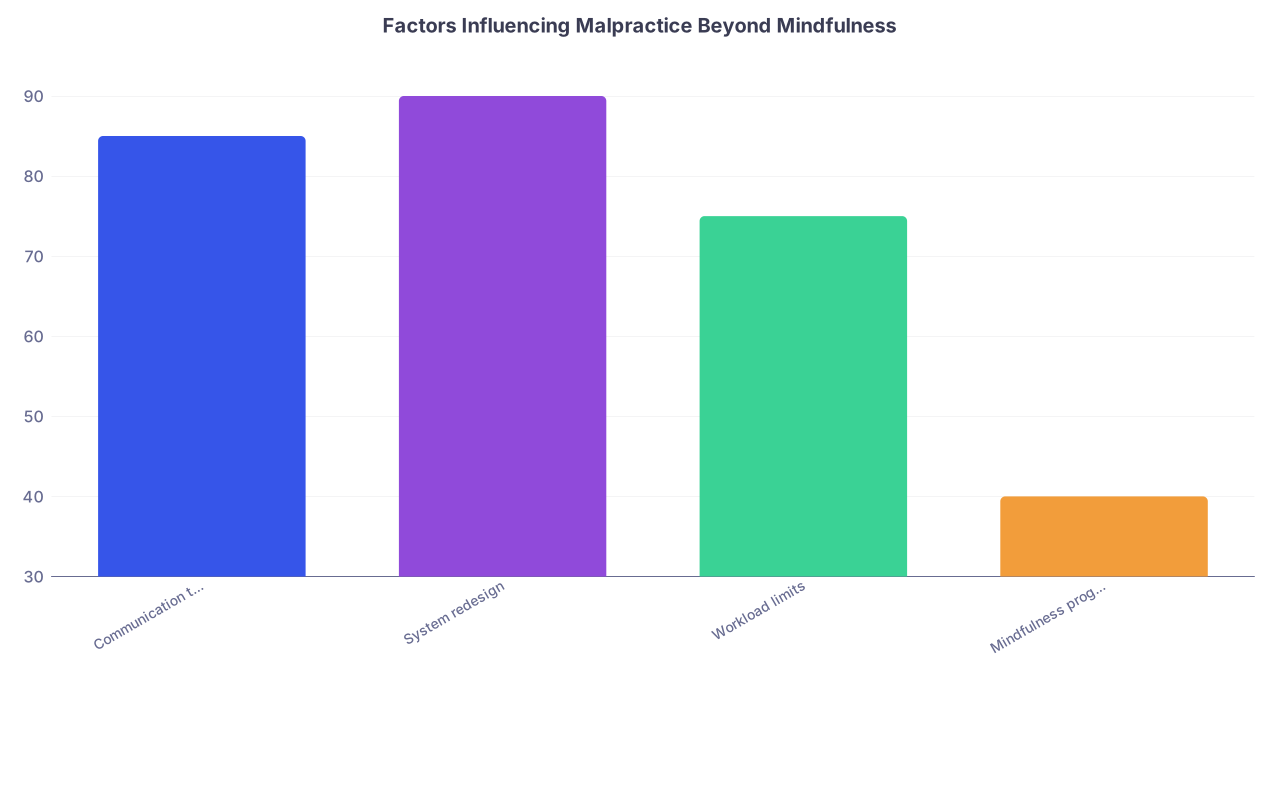
| Category | Value |
|---|---|
| Communication training | 85 |
| System redesign | 90 |
| Workload limits | 75 |
| Mindfulness programs | 40 |
These values are a rough reality check: impact on risk based on actual evidence and policy adoption, not marketing.
Putting This Into Practice Without Drinking the Kool-Aid
If you want to be less of a malpractice target and also stay sane:
Take a real communication course
Not a generic “bedside manner” lecture. Something focused on:- Delivering bad news
- Shared decision-making
- Apology and disclosure after error
- Managing angry patients/families
Actually learn your institution’s disclosure policy
If a serious event happens, know:- Who to call
- How to document
- How and when to meet the patient/family
- What your legal/risk team recommends
Use mindfulness as a micro-skill, not a lifestyle brand
Very concrete:
- Before entering any obviously tense room: one breath at the door, consciously drop your shoulders, decide, “I’m going to listen for 60 seconds before responding.”
- When you feel defensive: silently label it (“defensive, scared”) rather than acting from it.
- After an error: 5 minutes alone, feel the gut punch, then deliberately choose your next step instead of reflexively hiding.
Address system issues you can actually change
- Build or refine follow-up systems for abnormal results.
- Clean up your documentation templates.
- Standardize handoffs with your team.
Use mindfulness to help you tolerate the discomfort of pushing for those changes instead of shrugging and going numb.

FAQ (4 Questions)
1. Can I realistically expect fewer malpractice suits if I start a mindfulness practice now?
You can realistically expect better stress tolerance and potentially better communication if you commit to mindfulness and link it to concrete behavior changes. That may lower your odds of being sued over the long term, but there’s no guarantee and no clean number. Think of it as shifting probabilities slightly, not installing legal armor.
2. Do malpractice insurers give discounts for mindfulness or wellness courses?
Generally, no. They offer discounts for risk management activities with documented impact: communication and disclosure training, prescribing safety, documentation, patient safety courses. I have yet to see a mainstream carrier that treats “completed mindfulness program” as an actuarial factor in pricing.
3. Is there any harm in hospitals pushing mindfulness as a way to reduce malpractice?
Yes, if it’s sold as the primary solution. It can become a distraction or even a gaslighting tool: “You’re burned out and getting complaints? Here’s a meditation app,” instead of fixing staffing, scheduling, or unsafe workflows. As an adjunct, fine. As a replacement for systemic fixes, it’s harmful.
4. I’m not into meditation. Are there non-mindfulness ways to get the same malpractice benefits?
Absolutely. You can train specifically in communication skills, error disclosure, and conflict management. You can work on emotional awareness through therapy, coaching, or peer groups. The malpractice-relevant piece is not sitting on a cushion; it is how calm, present, honest, and clear you can stay under pressure. Mindfulness is one path, not the only one.
Key points:
- Mindfulness improves wellbeing and can shift your behavior in high‑risk situations, but there is no solid direct evidence it independently lowers malpractice rates.
- Communication quality, documentation, system design, and honest disclosure drive malpractice risk far more than whether you meditate.
- Use mindfulness as a tool to support better behavior and system advocacy, not as a magical malpractice shield.