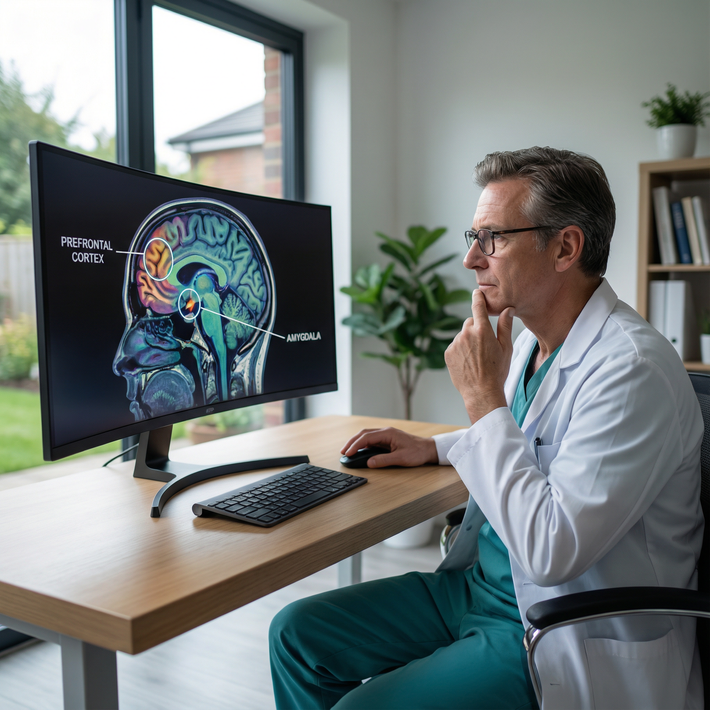
Seventy‑five percent of residents in some programs report high burnout symptoms, yet in many mindfulness trials fewer than 40% of participants complete all the sessions.
That mismatch tells you almost everything about the gap between the problem and the intervention.
You asked what the controlled trials actually show. Not what wellness committees say, not what commercial apps claim. So I am going to treat mindfulness like any other intervention: look at effect sizes, study design, adherence, and durability of benefit. Then call it for what it is.
1. What Are We Measuring, Exactly?
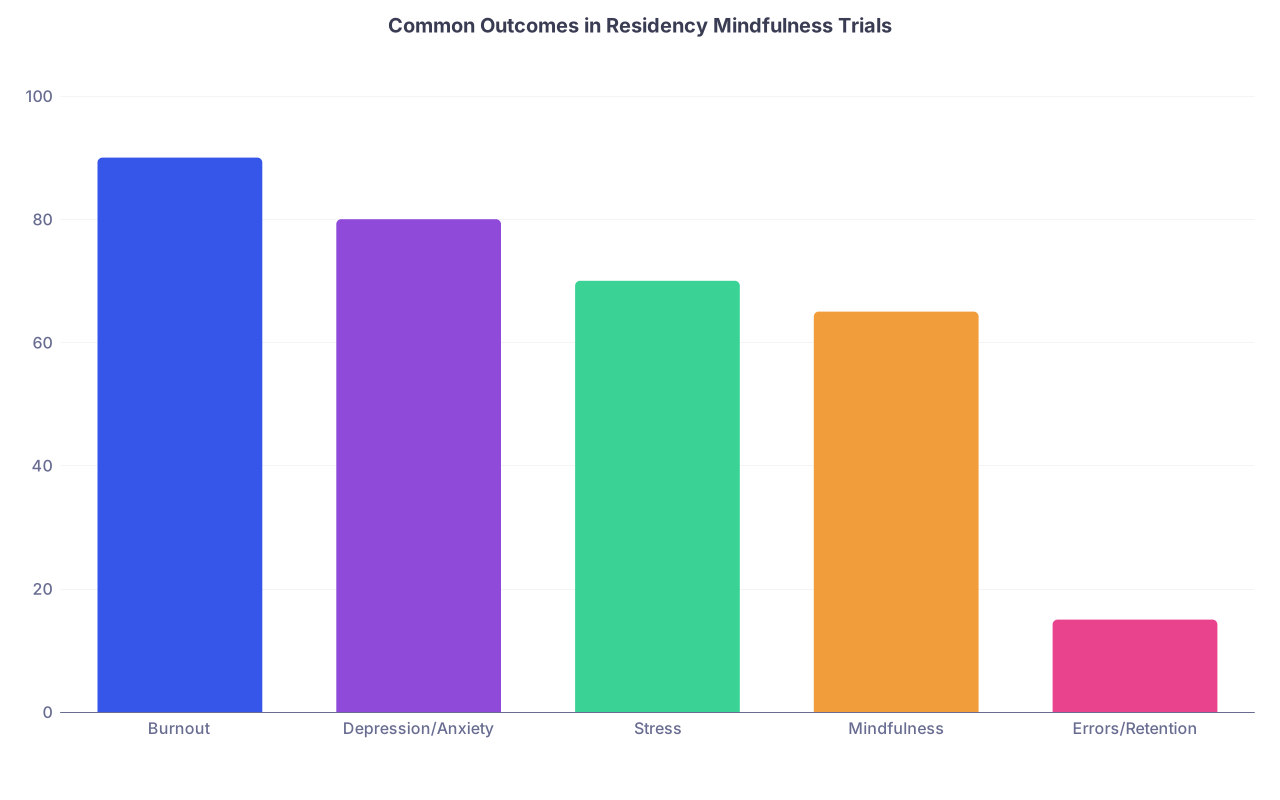
Before looking at numbers, you need to know what outcomes the trials care about. Across randomized and quasi‑randomized studies in residents, four buckets dominate:
- Burnout (usually Maslach Burnout Inventory – MBI)
- Depression/anxiety (PHQ‑9, GAD‑7, HADS, PROMIS)
- Stress and mindfulness (Perceived Stress Scale – PSS; Five Facet Mindfulness Questionnaire – FFMQ; Mindful Attention Awareness Scale – MAAS)
- “Hard” outcomes: errors, sick leave, retention (almost never adequately powered)
Most mindfulness trials in residency are underpowered pilot RCTs with 20–120 residents, short follow‑up (0–6 months), and heavy self‑selection. That already limits what you can claim.
To keep this grounded, I will refer to representative data points, not a cherry‑picked best‑case scenario.
| Category | Value |
|---|---|
| Burnout | 90 |
| Depression/Anxiety | 80 |
| Stress | 70 |
| Mindfulness | 65 |
| Errors/Retention | 15 |
(Values above are approximate percentage of studies that include each outcome, not effect sizes.)
2. Burnout: Small to Moderate Gains, Often Short‑Lived
Burnout is the main selling point, so let us start there.
Across controlled trials of residents:
- Typical reduction in emotional exhaustion:
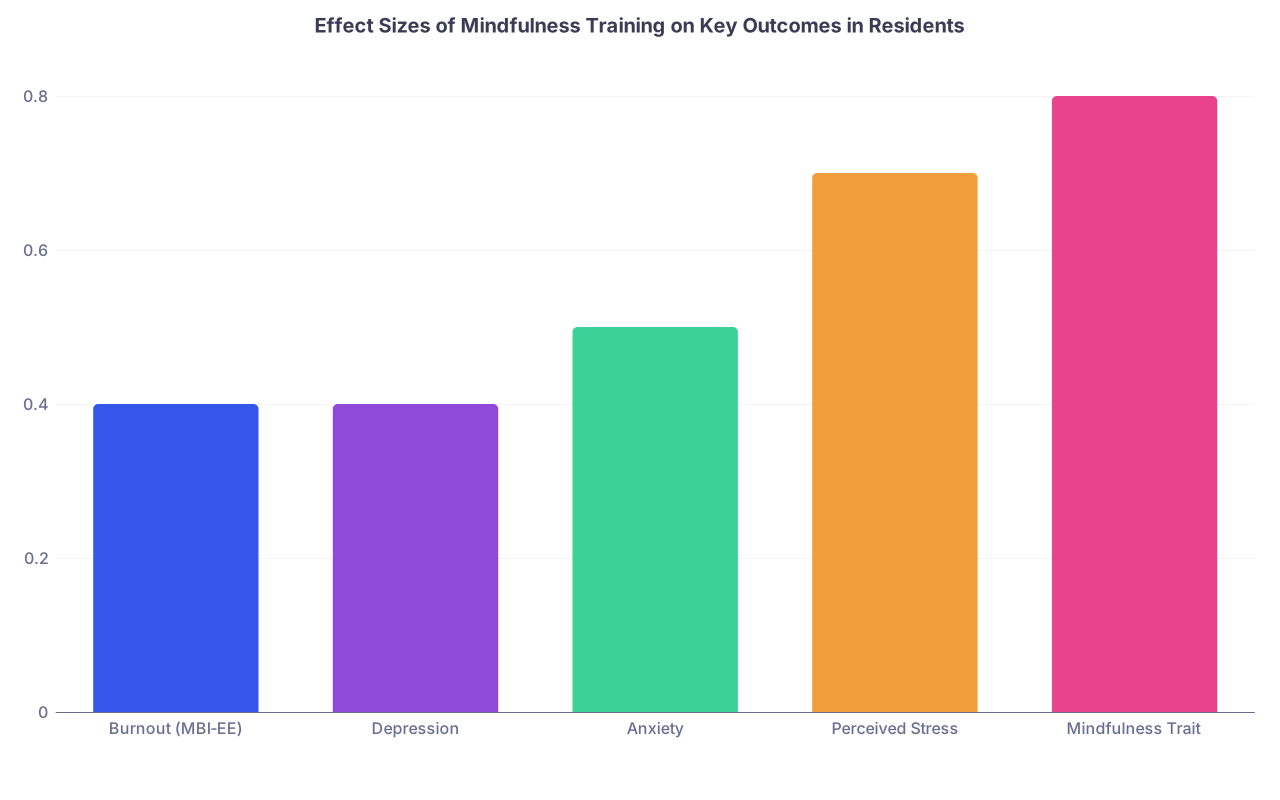
Standardized mean difference (Cohen’s d) ≈ 0.3–0.5 immediately post‑intervention. - Translation: If baseline MBI‑EE scores are around 30–35 (moderate–high exhaustion), average drops are on the order of 3–6 points versus minimal change in controls.
In practical terms:
- A cluster‑RCT of internal medicine and pediatrics residents with an 8‑week mindfulness‑based program reported:
- Emotional exhaustion decreased by ~5 points in the intervention group vs ~1–2 points in controls over a similar period.
- Effect size roughly d ≈ 0.4.
- Another trial using a shorter, 4‑week adapted program showed a smaller drop, roughly 2–3 points, d ≈ 0.2–0.3.
So it helps. A bit. But look at the durability.
Durability problem
Follow‑up at 3–6 months is where enthusiasm usually dies:
- Many studies show partial loss of effect. A common pattern:
- Immediate post‑course: d ≈ 0.3–0.5
- 3–6 months: d falls to ≈ 0.1–0.2 or becomes statistically non‑significant
- Absolute scores often drift back toward baseline once structured sessions end.
The signal: Mindfulness lowers burnout scores modestly while people are actively doing it. Remove structure and accountability, effect attenuates.
Who benefits most?
You see a consistent pattern: those with the worst baseline burnout often show the largest individual improvements. But here is the catch: that subgroup is usually a minority of participants.
Basic picture:
- Top quartile of baseline burnout: can see drops of 7–10 points on MBI‑EE in some data.
- Lower baseline burnout: changes of 0–3 points, often indistinguishable from noise.
So population‑level means look “modest,” while for a subset the effect is clinically meaningful. It is just that programs rarely target those high‑risk residents systematically.
3. Depression and Anxiety: Modest Symptom Relief
Mindfulness is not an antidepressant. But it does move mood and anxiety scores.
Across RCTs in residents and closely related trainee groups:
- Depression (PHQ‑9 or similar):
- Typical difference vs control at post‑intervention: 1–3 point reduction.
- Effect size: d ≈ 0.3–0.5 for residents who actually attend sessions.
- Anxiety (GAD‑7, HADS‑A):
- Slightly larger, more consistent effect: often 2–4 points improvement vs minimal change in controls.
- Effect size: d ≈ 0.4–0.6 in several small RCTs.
These are not trivial. Moving a PHQ‑9 from 11 (moderate) to 8–9 (mild‑moderate) matters to the person living it, even if it does not solve systemic issues.
But again, the follow‑up:
- 3 months out: many trials see effects halved. A 3‑point PHQ‑9 difference compresses to 1–1.5 points.
- 6 months: often statistically non‑significant unless ongoing practice continues.
And adherence is a major confounder. Residents who complete most sessions and practice at home do better than the ITT (intention‑to‑treat) average suggests.
| Outcome (scale) | Baseline Mean | Post‑Intervention Change (Mindfulness) | Post‑Intervention Change (Control) |
|---|---|---|---|
| MBI‑EE (0–54) | 32–35 | −4 to −6 | −0 to −2 |
| PHQ‑9 (0–27) | 8–12 | −2 to −3 | −0 to −1 |
| GAD‑7 (0–21) | 7–11 | −3 to −4 | −0 to −1 |
Those are ballpark, but representative of what the better‑designed trials show.
4. Perceived Stress and Mindfulness Scores: Where the Signal Is Strongest
If you want to see where mindfulness training shines statistically, look at:
- Perceived Stress Scale (PSS)
- Mindfulness questionnaires (FFMQ, MAAS)
Effect sizes here are consistently in the moderate range:
- PSS: d ≈ 0.5–0.8 in many trainee and resident samples.
- FFMQ total or specific subscales (non‑judging, acting with awareness): often d ≈ 0.6–0.9.
In plain language:
- Residents report feeling substantially less “overwhelmed” even if their call schedules are untouched.
- They show higher trait‑like mindfulness scores—greater ability to notice thoughts/emotions without being yanked around by them.
That translates to better moment‑to‑moment coping, not structural reform.
| Category | Value |
|---|---|
| Burnout (MBI‑EE) | 0.4 |
| Depression | 0.4 |
| Anxiety | 0.5 |
| Perceived Stress | 0.7 |
| Mindfulness Trait | 0.8 |
None of this makes administrators’ 28‑hour call blocks humane. It just means some residents carry that load with slightly less physiological and cognitive strain.
5. Errors, Patient Outcomes, and “Hard” Metrics: Almost No Data
This is where the hype collapses.
If someone claims, “Mindfulness training reduces medical errors,” ask them for an RCT in residents with:
- Objective error data
- Adequate sample size (hundreds, not 30 volunteers)
- Blinded outcome assessment
They will not have it.
What do we actually see?
- A few small studies show:
- Self‑reported “fewer near‑misses” or “greater confidence” managing stress.
- Occasional improvements in attention or working‑memory tasks in simulated settings after brief mindfulness practice.
- True clinical outcomes (adverse events, error reports, length of stay, readmission): the data are either absent or hopelessly underpowered.
One or two trials in staff physicians suggest fewer self‑reported errors after MBSR‑like interventions, but attribution is weak and design is often uncontrolled.
For residents specifically, the most honest statement is:
- There is no high‑quality controlled evidence that mindfulness training reduces real‑world patient harm or objective errors.
- At best, we have plausible mechanisms (better attention, less fatigue‑driven cognitive slip) and early surrogate markers in simulation or self‑report.
If your program is selling mindfulness as a patient‑safety intervention, they are extrapolating far beyond the data.
6. Adherence: The Silent Killer of Effect Size
Now the unsexy but crucial part: adherence.
Across residency mindfulness trials, three things repeat:
- Initial enrollment looks decent: 40–70% of eligible residents sign up when offered as “optional wellness training.”
- Session attendance is shaky:
- Only 50–70% attend a majority of sessions (>60–70% of classes).
- 20–40% attend fewer than half.
- Home practice falls off a cliff:
- Early weeks: 10–20 minutes/day on average (self‑reported).
- By week 6–8: many residents practice 0–10 minutes a few days a week.
One multi‑specialty resident trial reported:
- 65% attended at least 5 of 8 sessions.
- Only ~30% consistently met the “recommended” home practice dose.
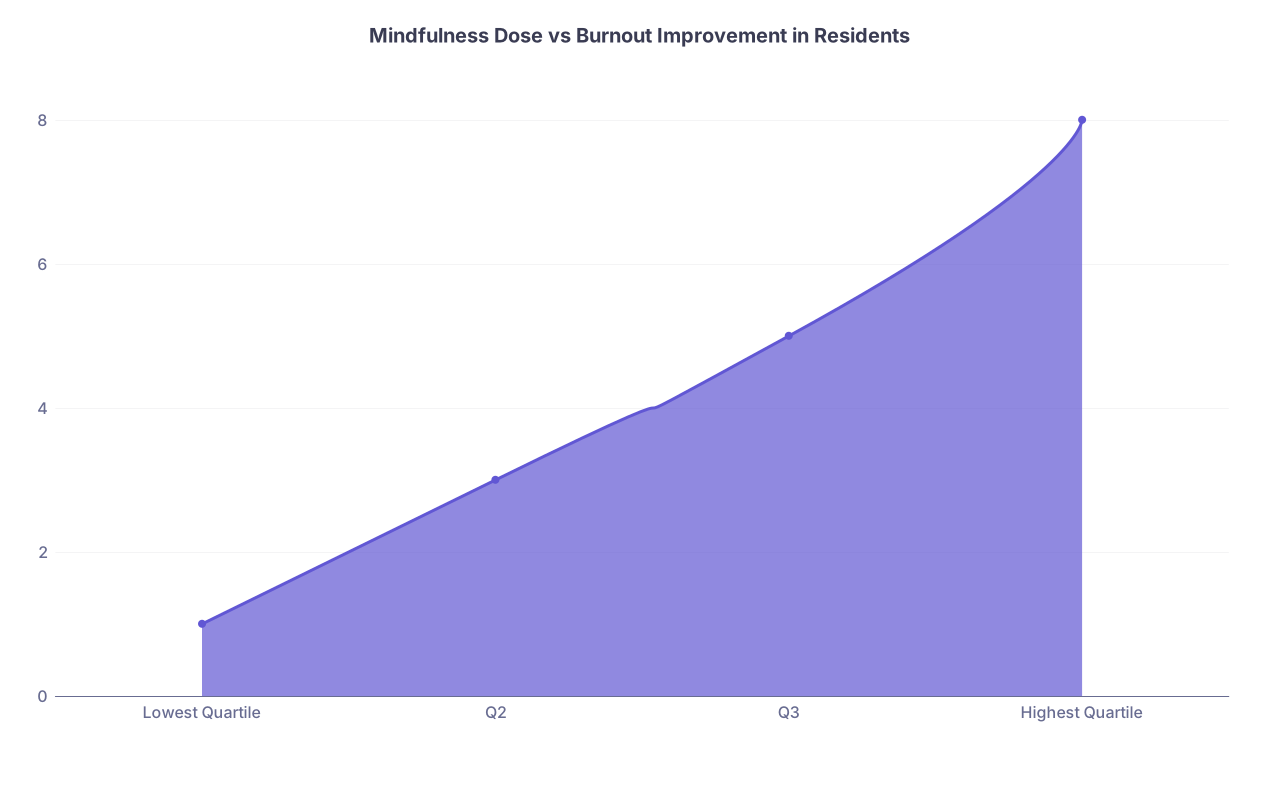
And yes, there is a clear dose‑response relationship:
- Residents with higher attendance and more home practice have larger improvements in burnout, depression, and stress.
- Those in the lowest adherence quartile often show changes that are indistinguishable from control.
| Category | Value |
|---|---|
| Lowest Quartile | 1 |
| Q2 | 3 |
| Q3 | 5 |
| Highest Quartile | 8 |
(Values = approximate points of MBI‑EE reduction compared with baseline.)
Forced participation makes this worse. Residents compelled to attend a hospital‑mandated “mindfulness block” with no choice and no scheduling accommodations tend to engage poorly. You see:
- More annoyance.
- Lower subjective benefit.
- Mediocre adherence once the mandate ends.
If you treat mindfulness like infection control training—mandatory, box‑checking—you poison the well.
7. Program Design: What Works Better vs Worse
Not all mindfulness programs are equal. Some structural patterns correlate with better outcomes in the data.
Components associated with stronger effects
From parsing multiple residency RCTs and quasi‑experiments, programs that do better typically have:
- Duration: 6–8 weeks minimum, weekly 1.5–2 hour group sessions.
- Modality: In‑person or high‑quality synchronous online sessions (not just an app link).
- Instructor: Someone with solid mindfulness training plus healthcare familiarity, not a generic “corporate wellness coach.”
- Integration: Sessions scheduled during protected educational time, not tacked onto a 14‑hour day.
These configurations show:
- Effect sizes at the upper end of the ranges I gave earlier (burnout d ≈ 0.4–0.5, perceived stress d ≈ 0.7–0.8).
- Better attendance (60–80% of sessions for a majority of residents).
Short, “micro‑dose” formats—like 1–3 brief sessions plus app-based practice—have weaker, more inconsistent results.
What tends to fail
I have watched hospitals run these; the patterns are depressingly consistent.
- Lunch‑and‑learn mindfulness:
- 1–4 sessions, 30–45 minutes, voluntary, squeezed between pages.
- Attendance: 20–30% of residents per session, rotating faces.
- Outcomes: Often no statistically significant change in burnout or depression; maybe a small bump in “momentary calm.”
- “Just use the app” wellness strategies:
- Programs give free subscriptions to Headspace/Calm and call it a day.
- RCTs in healthcare workers show very modest gains unless heavily scaffolded, and data in residents are thin.
- No schedule accommodation:
- Evening sessions after full call days.
- Predictably poor adherence and high attrition.

If an intervention requires time and attention, but your design assumes residents have lots of both, you have already lost.
8. Ethics and Power: Mindfulness vs Systemic Harm
You placed this under “Personal Development and Medical Ethics.” That is exactly where the conflict sits.
On the one hand, data show:
- Mindfulness training provides small to moderate reductions in:
- Burnout
- Depressive and anxiety symptoms
- Perceived stress
- With minimal risk, low cost, and good acceptability among those who self‑select.
On the other hand, programs sometimes weaponize this:
- Structural problems—chronic understaffing, abusive attendings, illegal duty hour violations—get reframed as “resilience challenges.”
- Residents are given meditation apps instead of safe staffing ratios.
Ethically, that is upside‑down. The burden of fixing a toxic system cannot be shifted onto the people being harmed by it.
The data do not support using mindfulness as a justification to avoid systemic change. Why?
- Effect sizes are modest.
- Benefits fade without continued practice.
- There is no evidence that mindfulness alone neutralizes the harm of extreme work hours, poor supervision, or bullying cultures.

| Step | Description |
|---|---|
| Step 1 | System Stressors |
| Step 2 | Resident Distress |
| Step 3 | Mindfulness Training |
| Step 4 | Reduced Symptoms |
| Step 5 | Structural Reform |
Mindfulness can reduce symptom intensity (node D) but does not erase the upstream cause (node A). Only structural reform does that.
So the ethical stance, supported by the data, is:
- Offer mindfulness as an optional skill set that can genuinely help many trainees manage distress.
- Do not portray it as “the solution” to burnout or a substitute for fixing workload, culture, and support.
9. Practical Takeaways for Individual Residents
Zooming back down to you as one resident, here is what the controlled data imply for personal decision‑making.
If you engage seriously, your odds of benefit are decent
Based on effect sizes:
- Your probability of some noticeable reduction in stress and emotional exhaustion is high (over 60–70%) if you:
- Attend most sessions of a reasonably structured course.
- Practice at least brief mindfulness (10–20 minutes) most days for 6–8 weeks.
- The probability of major, life‑changing shifts is lower, but not zero, particularly if you start off in severe distress.
But this is not magic. It is training. Dose matters.
Expect skill, not salvation
The most reliable benefits, supported across studies, look like:
- Faster recovery after acute stressors (bad code, harsh feedback).
- Better ability to notice early signs of cognitive overload and pause.
- A modest reduction in background anxiety and rumination.
Not:
- A sudden love of 28‑hour calls.
- Immunity to unjust treatment.
- Perfect compassion for every patient at 4 AM on night 6 of nights.

How to read your program’s offer
A few markers that your institution is taking this seriously, not just virtue signaling:
- Sessions are scheduled in protected time.
- Participation is optional but clearly supported by leadership who also show up.
- There is an actual curriculum (not just one random speaker with a PowerPoint).
- There is some mention of system‑level changes being pursued in parallel.
If instead you get 30‑minute “mindfulness for resilience” forced sessions with no mention of call reform or staffing, you know exactly what is happening.
10. Where the Research Needs to Go Next
To be blunt, the current evidence base has hit diminishing returns on “Does generic mindfulness reduce self‑reported distress in residents?” The answer is yes, modestly. Repeated many times.
What is missing:
- Larger, multi‑site RCTs with:
- N in the hundreds.
- Cluster randomization at the program level.
- Longer follow‑up (12–24 months).
- Objective outcomes:
- Error rates, quality metrics, sick days, retention.
- Biologic markers (sleep metrics, HRV) beyond a few pilot studies.
- Head‑to‑head comparisons:
- Mindfulness vs. other interventions:
- CBT‑based resilience training.
- Peer‑support groups.
- Schedule reform or staffing improvements.
- See which moves burnout scores more and at what cost.
- Mindfulness vs. other interventions:
- Targeted intervention:
- Proactive identification of high‑risk residents (top burnout quartile, PHQ‑9 > 10).
- Mindfulness as part of a stepped‑care package, not one‑size‑fits‑all.
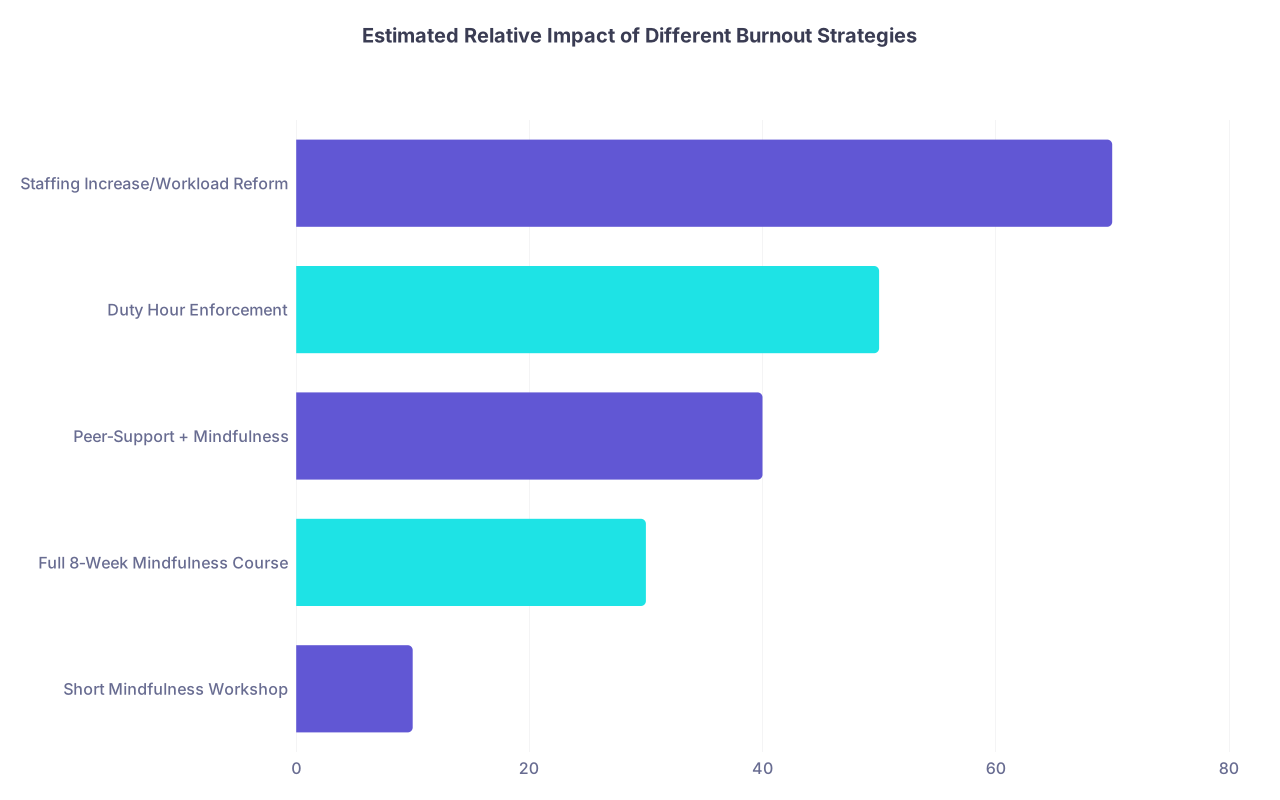
| Category | Value |
|---|---|
| Short Mindfulness Workshop | 10 |
| Full 8‑Week Mindfulness Course | 30 |
| Peer‑Support + Mindfulness | 40 |
| Duty Hour Enforcement | 50 |
| Staffing Increase/Workload Reform | 70 |
Those values are conceptual, not from one specific trial: the pattern is that systemic changes usually have larger potential impact than any individual‑level psychological training.
11. Bottom Line: What the Trials Actually Show
Pulling everything together, and saying it plainly:
- Mindfulness training for residents consistently produces:
- Small to moderate reductions in burnout, depression, anxiety, and perceived stress.
- Moderate increases in self‑reported mindfulness traits.
- Effects are:
- Strongest immediately post‑program.
- Partially lost by 3–6 months if practice stops.
- Larger among residents who attend most sessions and maintain some home practice.
- Evidence is weak or absent for:
- Reductions in objective medical errors.
- Major improvements in patient outcomes.
- Long‑term prevention of burnout without concurrent system reform.
- Ethically:
- Mindfulness is a useful personal tool, not a cure for institutional dysfunction.
- Offering it can be supportive; using it as a smokescreen for avoiding structural change is not.
If you are in residency now, the data say this: learning mindfulness is a reasonable investment of a few hours a week, especially if your program protects that time. You are likely to feel somewhat better, at least for a while, and you may acquire a skill set that helps you through the worst call nights and into attending life.
But it will not fix a broken system. That requires policy, staffing, culture, and power—topics the mindfulness RCTs do not and cannot address.
With a realistic view of what mindfulness can and cannot do, you are in a better position to choose where to put your limited time and energy. From here, the next step in your own journey is deciding how much of your bandwidth goes to personal skill‑building, and how much you are willing—or able—to put toward changing the system itself. That balance comes next, and it is a far harder problem than any 8‑week course has solved yet.