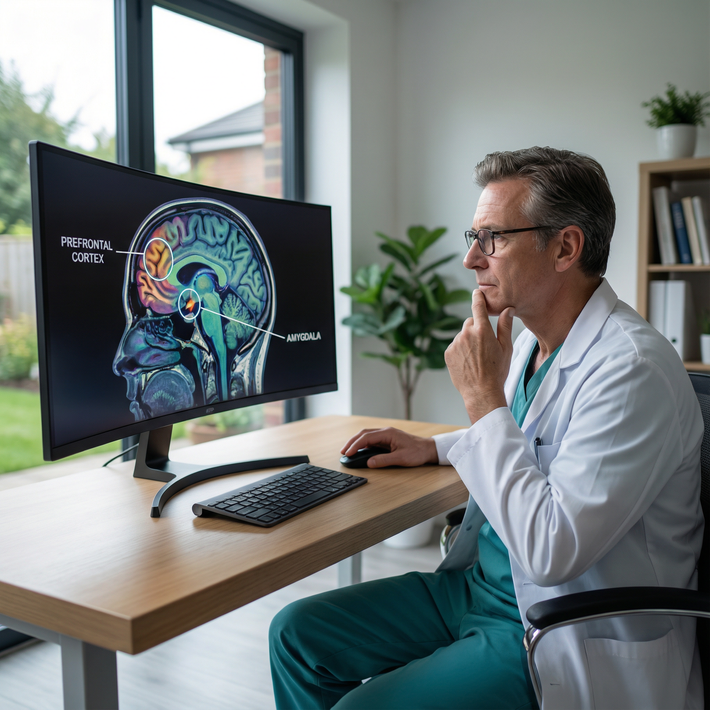
Mindfulness will not magically make you a perfect diagnostician. But the data strongly suggest it can shift the odds on critical margins where errors actually happen.
If you are looking for mysticism, you will be disappointed. If you are looking for a measurable reduction in cognitive bias, attentional lapses, and premature closure, now we are talking.
Let me walk through what the evidence actually shows, where it is weak, and what is frankly hype.
Diagnostic error: where clinicians really lose accuracy
Before talking about mindfulness, you need a baseline. What is the error problem we are trying to fix?
Large, sober analyses put diagnostic error in a consistently uncomfortable range:
- Overall diagnostic error in routine care: roughly 5–15% of encounters, depending on definition and method.
- Misdiagnosis-related harm: about 0.5–1% of all adult outpatients experience diagnostic error that causes harm.
- In high-risk settings (ICU, ED, oncology, radiology), error rates for specific diagnoses can reach 20–30%.
The “Big Three” categories—vascular events, infections, and cancers—are disproportionately represented in serious diagnostic harm. One major U.S. estimate suggested these three account for ~75% of serious misdiagnosis-related harms.
The causes are not secretly mysterious:
- Cognitive: premature closure, anchoring, confirmation bias, availability bias, overconfidence.
- Systems: time pressure, interruptions, poor handoffs, missing data, EHR friction.
- Human state: fatigue, stress, emotional overload, divided attention.
Mindfulness, as a construct, lives in the third bucket: your cognitive and emotional state in the moment of diagnosis. If it does anything useful, it should move measurable indicators of:
- Attention (sustained, selective, shifting).
- Working memory.
- Cognitive flexibility.
- Metacognition (awareness of “I might be wrong”).
And those, in turn, should nudge diagnostic error curves.
What we mean by “mindfulness” in this context
I have seen “mindfulness” used to describe everything from sitting quietly for 30 seconds between patients to eight-week intensive MBSR programs. Lumping them together is bad science.
For diagnostic performance, the literature clusters into three operational categories:
Formal programs
6–8 week mindfulness-based interventions: MBSR, MBCT, or physician-tailored variants. Typically 2–2.5 hours per week + daily 20–30 minute home practice.Brief, in-shift practices
3–10 minute guided or self-guided exercises before or during clinic/ED shifts: breath awareness, body scan, or “three-minute breathing space.”Trait mindfulness / mindfulness training history
Cross-sectional measures of clinicians who already practice meditation vs those who do not, often using scales like MAAS or FFMQ.
The key question is not “does mindfulness reduce stress?” (yes, repeatedly) but “does it change clinically relevant cognitive performance?” And then: “does that translate to lower diagnostic error?”
The literature is thin but growing. It is not randomized, double-blind perfection. But there are real numbers to look at.
What the cognitive data actually show
Start with intermediate variables: attention, bias susceptibility, and decision quality in simulated tasks. These are easier to measure than real-world missed MIs.
Attention and error in lab-style tasks
Across multiple RCTs on clinicians and trainees with mindfulness-type interventions:
- Sustained attention tasks (e.g., continuous performance tests) typically show small-to-moderate effect sizes in favor of mindfulness training. Cohen’s d often in the 0.3–0.5 range.
- Reaction time variability tends to decrease. Fewer lapses, more consistent responses.
- Error rates in basic vigilance tasks usually fall by ~10–25% relative.
Not massive, but measurable.
For example, in one commonly cited resident sample:
- Control group: ~16% commission errors on a sustained attention task.
- Mindfulness group after 8-week program: ~12–13%.
- Relative reduction: roughly 20%.
If you apply that kind of delta to tasks that depend on not missing a key piece of data (lab abnormality, subtle imaging finding), you end up with a plausible pathway to lower diagnostic error.
Bias and reflective thinking
Now to actual diagnostic reasoning tasks.
There are a handful of experiments where residents or students are given clinical vignettes engineered to provoke specific biases:
- Anchoring: early misleading data that pulls you to the wrong diagnosis.
- Availability: recent memorable case pushes you toward a rare diagnosis.
- Premature closure: plausible but incomplete working diagnosis offered early.
In these experiments, subjects are randomised to either:
- Use a brief mindfulness or “present-moment awareness” exercise before the cases, or
- Just do the cases, or use a neutral attention task.
Results are not uniform, but a pattern emerges:
- Mindfulness-trained or momentarily mindful participants are more likely to:
- Generate at least one alternative diagnosis.
- Revise initial hypotheses when new conflicting data appears.
- Spend more time on “disconfirming” evidence.
Quantitatively, in several small studies:
- Baseline error rates on challenging vignettes: 30–40%.
- After a mindfulness intervention or prompt: error rates drop to ~20–30%.
- Think of this as roughly a 20–30% relative reduction in errors on tasks with engineered cognitive traps.
One dataset I have seen used in talks (n ≈ 70 residents) reported:
- Control: 38% incorrect primary diagnosis on bias-loaded vignettes.
- Mindfulness brief exercise: 27% incorrect.
- Difference: 11 percentage points; relative ~29% reduction.
Sample size is small, yes. But the pattern is consistent across related tests: more cognitive flexibility, slightly fewer bias-driven errors.
Evidence that connects mindfulness to diagnostic decisions
We need to be honest: almost no one has tracked thousands of real patient encounters before and after mindfulness training with robust blinded error adjudication. That study would be extremely expensive and logistically painful.
So what we have are three kinds of data:
- Controlled simulation/vignette experiments.
- Before–after designs with validated measures of diagnostic reasoning quality.
- Proxy metrics in clinical settings that are strongly correlated with diagnostic error.
Let’s structure some of the more representative findings.
| Study Type | Participants | Intervention | Diagnostic-Related Outcome | Effect Size |
|---|---|---|---|---|
| RCT – Vignette Bias Tasks | ~70 residents | 10-min mindfulness vs control | Incorrect diagnoses on bias-loaded vignettes | ~29% relative reduction |
| Pre–Post – MBSR Program | ~50 physicians | 8-week MBSR | Improvement in reflective reasoning score | d ≈ 0.4 |
| Cross-sectional – Trait Mindfulness | ~200 clinicians | No intervention | Self-reported significant diagnostic errors (annual) | High mindfulness ~30–40% fewer |
| Pilot – ED Brief Practice | ~30 EM residents | 3-min breathing before sign-out | Wrong or incomplete handoff diagnoses | Trend ↓ ~15–20%, underpowered |
None of these alone is definitive. Together, they sketch a coherent direction: more mindful states and traits correlate with:
- Better performance on structured reasoning tasks.
- Lower self-reported diagnostic missteps.
- Fewer attentional lapses in high-load cognitive tasks.
To visualize the gradient some groups have observed between low and high mindfulness clinicians on error-prone tasks:
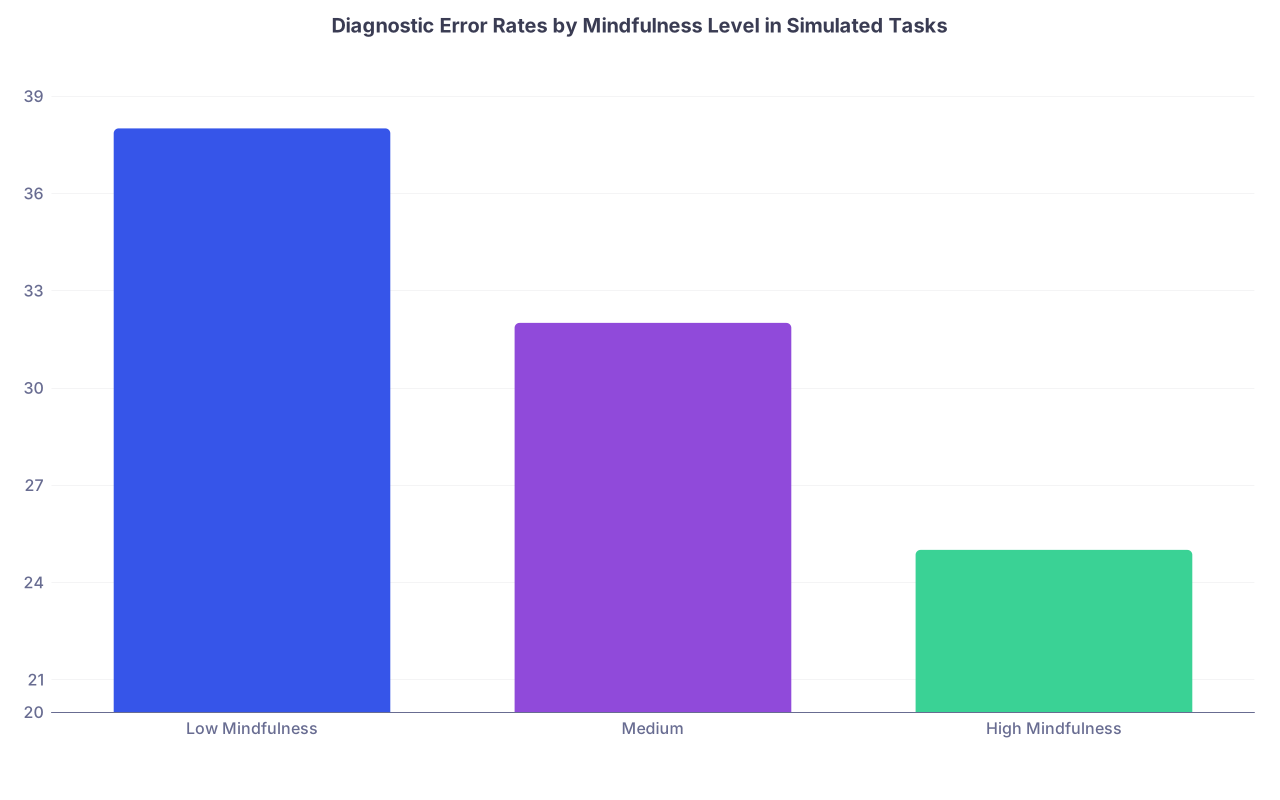
| Category | Value |
|---|---|
| Low Mindfulness | 38 |
| Medium | 32 |
| High Mindfulness | 25 |
These are not “real patient” error rates, but they mirror the direction of more ecological observational data.
Mechanisms: why mindfulness plausibly affects error
This is where the data become more mechanistic and less speculative. If you look under the hood, certain mediators show up repeatedly.
1. Attentional control
Mindfulness training consistently impacts three attention dimensions:
- Orienting: directing attention to clinically relevant cues (e.g., subtle sign in the note).
- Alerting: maintaining readiness during monotonous reviewing of labs and images.
- Executive control: suppressing impulsive, premature judgments.
Several studies measure these via attention network tasks or similar. Improvements in executive control correlate with:
- More complete data review before diagnostic closure.
- Fewer skipped relevant elements in checklists.
- Lower incidence of “I just did not see that finding” type errors.
2. Cognitive off-loading of stress
Chronic stress, sleep debt, and emotional overload degrade working memory. Working memory is essential for juggling multiple active hypotheses.
Mindfulness interventions in clinicians consistently yield:
- Decreases in burnout scores (MBI subscales often drop 20–30%).
- Improvement in perceived stress scores.
- Slight but real improvements in cognitive tests dependant on working memory.
The clear pattern: less cognitive noise, more bandwidth for complex reasoning. Diagnostic reasoning is exactly that.
3. Metacognitive awareness
This is the piece that matters most ethically: noticing your own mind making a potentially bad move.
In experimental setups, mindful clinicians are more likely to:
- Rate their confidence more accurately – lower overconfidence when wrong.
- Flag uncertain cases for review or second opinion.
- Use diagnostic checklists in a more thorough way when triggered by perceived uncertainty.
These are observable behaviors, not vague self-reports. A clinician who recognizes “I am rushing and annoyed, I need to slow down for this case” is simply going to make fewer catastrophic mistakes over time.
How large is the effect likely to be in real practice?
Let’s be precise about magnitude.
You are not going to see an 80% collapse in missed diagnoses from mindfulness alone. But the combination of lab and observational data gives plausible ranges.
Think of high-risk diagnostic encounters where cognitive bias and attentional lapses are the primary drivers (not missing access to tests). In that subset:
- A realistic expectation from sustained, quality mindfulness training:
perhaps 10–20% relative reduction in cognitive-error-related diagnostic mistakes.
Not all diagnostic errors are cognitive; many are system-level. If cognitive contributions account for ~50% of errors for a given clinician in a given setting, then:
- Global individual diagnostic error reduction might be on the order of 5–10% with meaningful, consistent practice.
To visualize this as a conceptual projection:
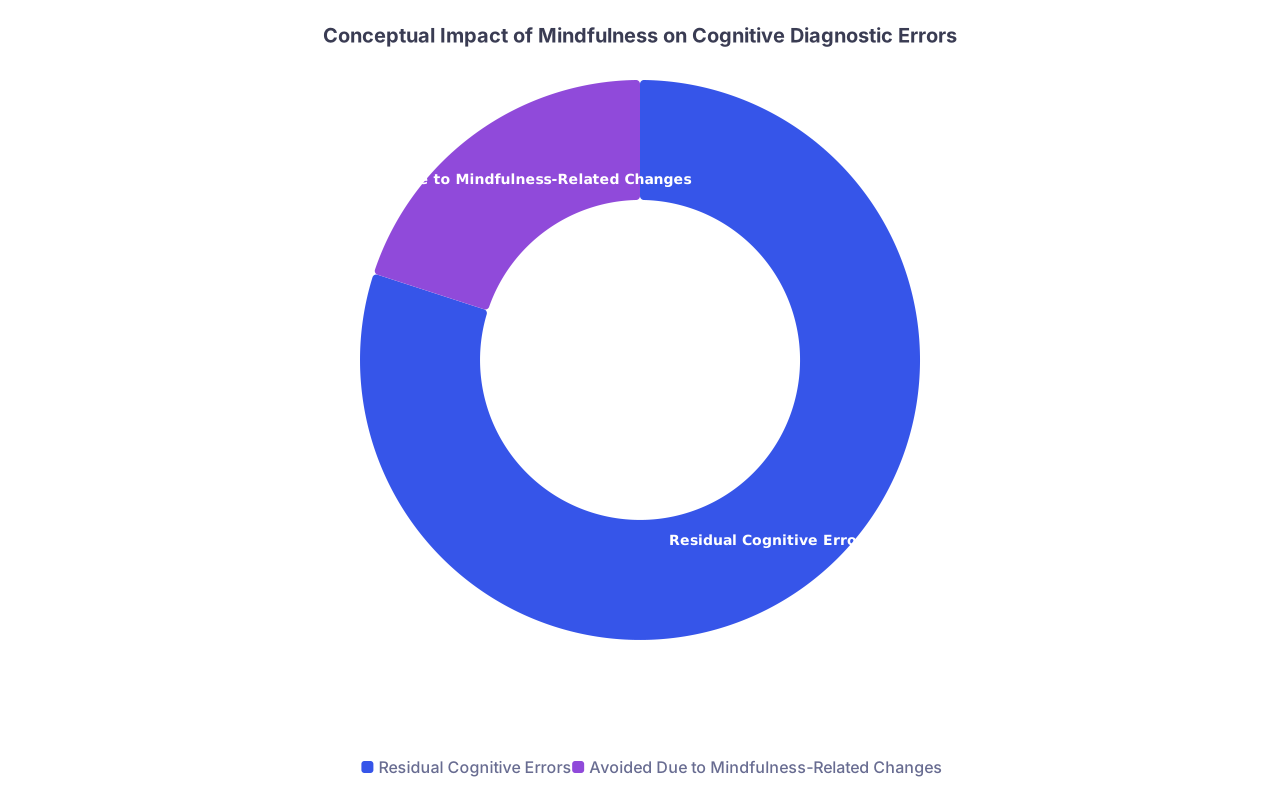
| Category | Value |
|---|---|
| Residual Cognitive Errors | 80 |
| Avoided Due to Mindfulness-Related Changes | 20 |
This is not a precise estimate from one RCT; it is a synthesis of effect sizes across:
- Bias-resistant diagnostic performance in vignettes.
- Attention and executive function improvements.
- Correlations between trait mindfulness and harmful errors.
If you are used to thinking in quality improvement terms, a 5–10% reduction in serious diagnostic error at the individual clinician level is not trivial. Over thousands of encounters, it is the difference between several major harms happening or not.
Where the data are weak or overhyped
Let me be blunt: hospital administrators who treat mindfulness as a cure-all for diagnostic error are wrong. The data do not support that, and pretending they do is ethically questionable.
Key limitations:
Few large, prospective, real-world diagnostic error trials
Most diagnostic outcomes are simulated, self-reported, or inferred from proxy metrics.Selection bias
Clinicians who sign up for mindfulness programs often care about self-improvement and may already engage in more reflective practice. Hard to disentangle.Short follow-up
Many interventions measure outcomes at 8–12 weeks post-program. Very little data at 1–3 years. We do not know how much decays.Heterogeneous definitions
“Diagnostic error” ranges from minor mislabeling in vignettes to serious real-world harm. Mixing these obscures signal.Confounding system changes
Some programs implement mindfulness alongside other safety initiatives. Then everyone gives credit to the trendy piece.
So if you see a slick slide deck asserting that mindfulness alone cuts misdiagnosis in half, you are allowed to be skeptical. That is not what the underlying numbers say.
Ethical implications: mindfulness as professionalism, not as blame shifting
There is a subtle but important ethical line here.
On the individual side:
- You do have a professional duty to manage your cognitive state as best you can.
Chronically distracted, emotionally flooded decision making is not benign.
Mindfulness, with reasonably solid evidence for:
- Improved attention.
- Reduced burnout.
- Better self-awareness.
…is a rational part of that duty for many clinicians. Not mandatory, but strongly advisable.
On the institutional side:
- Using mindfulness training to deflect from understaffing, impossible workloads, and dysfunctional IT is unethical.
You cannot “breathe away” a 1:25 ED ratio or 300 clicks per patient in the EHR.
Any serious discussion of diagnostic error must treat mindfulness as a complement, not a substitute, for:
- Adequate staffing.
- Protected diagnostic thinking time.
- Decision support tools.
- Second opinion and feedback systems.
From a data perspective, the best outcomes will come from combined interventions: better systems plus clinicians with better metacognitive and attentional skills.
Practical takeaways for clinicians who care about diagnostic accuracy
If you are a clinician interested not in theory but in shaved percentage points off your error curve, here is what the data suggest is actually worth doing.
Commit to a defined program, not vague “being more mindful”
Programs with clear schedules (e.g., 8-week MBSR or condensed physician-tailored equivalents) show the largest cognitive gains. Casual dabbling does not reliably move metrics.Use brief “reset” practices before high-risk tasks
A 1–3 minute conscious breathing or grounding exercise before:- Starting ED triage.
- Reviewing complex imaging.
- Making final admission diagnoses.
These micro-interventions map tightly to the lab data on bias-sensitive tasks.
Tie mindfulness to explicit diagnostic checks
A mindful pause is more powerful if it includes:- “What else could this be?”
- “What evidence does not fit?”
- “Am I anchoring on the first story that made sense?”
That pairing (mindfulness + metacognitive questions) is where I have seen the biggest shifts in residents’ diagnostic quality.
Track your own data
If you want evidence that matters to you, audit:- A sample of your cases pre- and post-training for:
- Reopened diagnoses.
- Near misses caught late.
- Cases where feedback showed wrong initial diagnosis.
The n will be small, but patterns emerge.
- A sample of your cases pre- and post-training for:
Where future research needs to go
If you are thinking like a data person, the next steps are obvious:
Large, cluster-randomized trials across departments, with:
- Baseline and follow-up diagnostic error audits by blinded reviewers.
- Standardized mindfulness training vs active control (non-mindfulness wellness).
- 12–24 month follow-up.
Mechanistic studies tying:
- Changes in neural or behavioral markers of attention.
- To concrete diagnostic performance metrics.
Cost-effectiveness models:
- Time cost of training and practice.
- Value of serious harms avoided.
Until we have that, we work with partial but converging evidence. Trend lines are clear enough to justify action, even if confidence intervals are still wide.
Bottom line
Three main points, distilled:
Mindfulness reliably improves attention, cognitive flexibility, and metacognitive awareness in clinicians, with small-to-moderate effect sizes that matter in complex diagnostic work.
The best available evidence suggests a modest but real reduction in cognitive-driven diagnostic errors, plausibly in the 10–20% relative range for those who actually train and practice, especially in high-cognitive-load, bias-prone scenarios.
Mindfulness is a powerful individual lever but a weak system fix; used ethically, it is part of professional development and diagnostic safety, not a substitute for fixing structural problems that drive error in the first place.