You’re standing outside Bed 12’s glass door. The vent is alarming, a family is crying in Bed 10, and your pager just went off for a new septic shock admit. You’ve been in the unit for 7 hours and you haven’t actually finished a cup of coffee yet. You swipe your badge to go back in—and then you see your attending.
She’s just standing there. One hand on the rail, eyes soft, not on the monitor. Three slow breaths. Five seconds, maybe eight. Then she walks in and takes control of absolute chaos like she slept twelve hours and just did yoga on a mountain.
You think, “How the hell does she do that?”
Here’s the answer nobody explains to you on rounds: elite ICU teams are not calm because they are born calm. They brute‑forced and then systematized something most of you still treat like a TED talk buzzword.
Micro‑mindfulness. In 5–30 second chunks. Between codes and rounds. Embedded into the actual workflow, not added as homework at 10 p.m. when you are already dead.
Let me walk you through what really happens in high‑functioning ICUs and how they use these tiny, almost invisible practices to keep from mentally crashing while the unit is burning down.
What “Micro‑Mindfulness” Actually Looks Like in an ICU
Forget candles, cushions, and 20‑minute apps with soothing ocean sounds. That’s not what I see in high‑acuity units that actually work.
In elite ICUs, micro‑mindfulness looks like this:
You step out of a room after proning a 140‑kg ARDS patient. Before you touch the computer, you plant both feet, feel the floor, one slow exhale out the mouth. Label the last 30 seconds in your head: “That was intense.” Then chart.
Or:
You’re about to call a family to tell them their loved one is not going to leave the hospital. Before you dial, you deliberately relax your shoulders, feel your hand on the phone, take two normal breaths with attention. Then you speak.
These are not big, performative practices. They’re small nervous‑system resets baked into existing transitions: doorways, chairs, gloves, hand hygiene, walking from bed to bed.
The best teams do it so routinely that they look “naturally calm.” They are not. They’ve just stopped leaving their mental state up to chance.
Why The Top Teams Bother With This (And The Rest Burn Out)
The data backs this up, but more importantly, so do the attendings who’ve actually lasted 15–20 years in the unit.
Here’s the part residents don’t see: program directors talk about this stuff in faculty meetings and leadership retreats.
“Why are our night folks burning out?” “Why are we losing our best nurses at year five?” “Why does Team A make fewer errors on the same census than Team B?”
They rarely call it mindfulness out loud. They call it “emotional regulation,” “cognitive bandwidth,” “team climate.” But they’re pointing at the same thing.
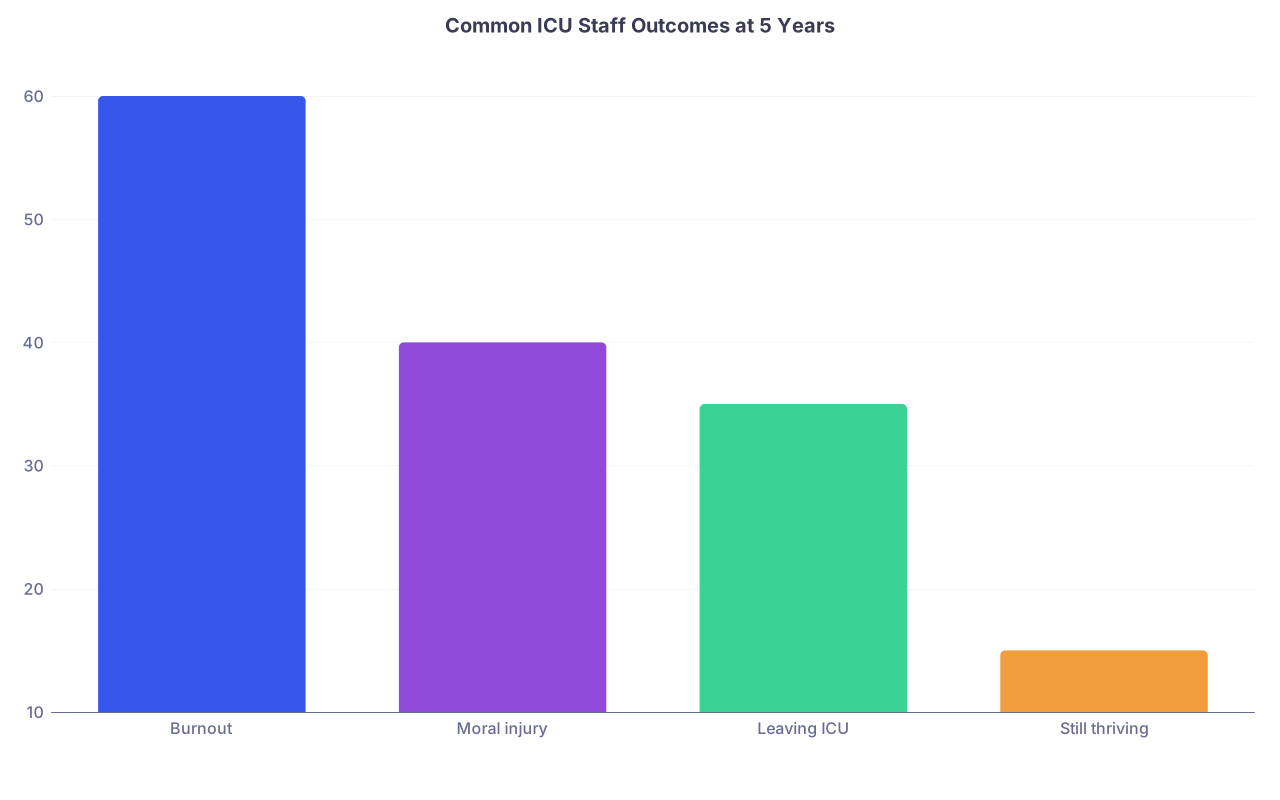
So what’s really at stake?
| Category | Value |
|---|---|
| Burnout | 60 |
| Moral injury | 40 |
| Leaving ICU | 35 |
| Still thriving | 15 |
Those numbers are pretty close to what I’ve seen discussed informally by ICU chiefs at large academic centers. Not published glossy brochure stats—the “over beer after the critical care conference” numbers.
The people who end up in that “still thriving” slice aren’t magically tougher. They’ve built invisible habits that keep them from running in a continuous fight‑or‑flight state for an entire 12‑ or 24‑hour shift.
Micro‑mindfulness is one of the only tools that:
- Takes seconds
- Can be done in PPE
- Doesn’t require a break room, a couch, or a free 30 minutes you’ll never have
And it directly affects performance. Attending‑level performance. Decision‑making at 3 a.m. with a crashing patient when your cognitive reserve is near zero.
Where The Pros Hide Micro‑Mindfulness in the Day
Let me show you how this actually embeds into an ICU day. Not aspirational nonsense, but what people who survive this work actually do.
1. The 10‑Second “Reset” Before Stepping Into a Room
The doorway pause is almost cliché in some elite centers now—but the residents often miss what’s going on.
You’ll see an attending, senior resident, or ICU nurse do something that looks like “thinking” right before they enter.
What’s actually happening:
- One exhale longer than the inhale
- Brief body scan: face, jaw, shoulders
- Internal label: “Next patient is X. Let’s be present.”
This is a micro‑transition ritual. It breaks the cognitive bleed‑through from the last disaster you were just in.
I’ve watched teams where the attending models this explicitly:
“Stop in the doorway. One breath. Forget Bed 7, we’re here for Bed 9 now.”
The units that skip this? You see it. The emotional spillover is obvious. Anger from a conflict with a consultant leaks into a delicate family meeting. Frustration from a difficult central line shows up as impatience with a nurse asking a perfectly reasonable question.
Micro‑mindfulness at the doorway is not “zen.” It’s infection control for your psyche. Keeps the last room’s chaos from contaminating the next room’s care.
2. Between Codes: The 30‑Second Debrief That Is Really Mindfulness
After codes, the official line is “debrief for learning and systems improvement.” That’s fine. But I’ve been in rooms where the real value of the debrief was giving everyone a structured 30 seconds to actually feel the damn thing.
Watch the best attendings:
- They insist people sit or lean if they can.
- They ask one short, clear question: “How is everyone?”
- They pause. Actually wait. Let silence hang for 5–10 seconds.
That silence is micro‑mindfulness for the whole team. No one is saying “let us be mindful now,” but everyone is suddenly aware of their body, their breathing, their emotional state.
I’ve seen fellows say, “Can we just take one breath before we talk about the meds?”
They’re half‑joking. But they do it. And it works.
And then—they do the classic: “What went well? What can we improve?” But now you’ve snapped everyone out of autopilot and fight‑or‑flight. You get genuine answers instead of reflexive self‑blame or deflection.
The rougher units skip this and sprint back to the board. The unspoken rule: “Feelings later, chart now.” Those are the teams that look “efficient” until month eight of the academic year when everyone is numb or sniping at each other.
3. On Rounds: The Silent Skill of “Single‑Tasking” for 60 Seconds
Here’s a secret program directors talk about when they evaluate fellows:
“Can this person actually be present at the bedside, or are they just hustling data around?”
Elite ICU attendings are very good at micro‑mindfulness during rounds. They’ve learned to single‑task in tiny, deliberate bursts.
At the bedside, before speaking to the family, they stop scrolling in Epic. They physically look away from the computer, orient body and attention to the human. Ten seconds of pure presence.
You think: “They’re being compassionate.” They are. But they’re also protecting their cognitive channel from constant task‑switching, which absolutely wrecks performance.
We’ve all seen the opposite: residents refreshing the labs while the nurse is asking something crucial, half listening to both, responding to neither well.
The veterans do something different internally:
- “Right now I am only listening.”
- “Right now I am only examining.”
- “Right now I am only deciding vent settings.”
That “only” is mindfulness. It is deliberate attention to a single target for 30–90 seconds in a world that wants to rip your focus apart.
4. Hand Hygiene as a Mental Anchor (Yes, Really)
This one sounds rinky‑dink until you’ve seen it work at scale.
A critical care director at a large academic hospital told me outright: “We used the hand‑rub moment to train people into micro‑pauses. Compliance went up, and so did sanity.”
Every time you foam in or out:
- Feel the temperature of the sanitizer.
- Notice the smell for one breath.
- Feel the sensation between your fingers.
- One slow exhale while you do it.
You’re already doing the movement. You’re just hijacking it as an attentional anchor.
Some places have explicitly taught this in resident wellness sessions. Others just have attendings who model it and mention it casually: “Use the pump as your cue to reset. Same way you use it to reset infection risk.”
Sounds small. It is. That’s the point.
5. The “Micro‑Boundary” Before and After Bad Conversations
ICU life is one long ethical minefield. Withdrawing care. Disagreeing with surgeons who want to keep going. Family members demanding non‑beneficial treatment. Everyone thinks they’re the only one suffering.
The people who don’t implode after years of this almost always have a micro‑mindfulness boundary around these moments.
Before tough conversations:
- They name their own emotion clearly: “I feel dread,” “I feel anger,” “I feel sad.”
- One breath.
- Then they decide how they want to show up, instead of being dragged by the emotion.
After the conversation, they do a tiny “off‑ramp”:
- Leave the room.
- Two breaths in the hall.
- “That was hard. And it’s over for now.”
This is ethics hygiene. You are preventing emotional residue from turning into chronic moral injury.
The attendings who “don’t believe in all that touchy‑feely stuff” are often the ones who wake up five years later bitter, detached, and wondering why every new family feels like an enemy.
How This Quietly Changes Performance, Ethics, and Culture
This is not just wellness theater. It has hard operational consequences.
| Domain | Without Micro-Mindfulness | With Micro-Mindfulness |
|---|---|---|
| Error rate under stress | Higher | Lower |
| Team tone on busy days | Irritable, fragmented | Focused, contained |
| Moral distress over time | Accumulates, festers | Processed in small doses |
| Family perception | Rushed, distracted | Present, trustworthy |
Attendings talk about this when they’re deciding who they want as future faculty. They might not call it mindfulness. They say:
- “She’s unflappable, but not cold.”
- “He thinks clearly in chaos.”
- “She has range—can go from joking with residents to being fully locked in minutes later.”
What they’re actually describing is someone who has a high baseline of mental training. Micro‑mindfulness is one of the only ways to build that in a real ICU workday.
Ethically, this matters. Chronic reactivity leads to bad decisions: over‑treating because you can’t sit with discomfort, under‑treating because you’re exhausted and cynical, snapping at nurses so they stop voicing concerns.
Being able to regulate yourself in 10–20 second intervals lets you:
- Hear dissenting opinions instead of feeling attacked.
- Sit with a family’s grief without rushing to “fix” it with procedures.
- Admit uncertainty without shame, which is where real ethical practice starts.
Implementing This Without Looking Like a Wellness Influencer
You are not going to announce on the unit: “Everyone, let us practice mindfulness.” You will be ignored, or worse.
You do this like the pros: quietly, personally, embedded in things you already do.
Here’s what I’ve seen work for residents, fellows, and attendings who are not naturally “woo‑woo” but want to keep their sanity.
Pick 3 Anchors You Already Do 100 Times a Day
- Doorways
- Hand hygiene
- Sitting down to chart
Assign each a micro‑practice:
Doorway: one slow exhale and “arrive” at the next patient.
Foam: feel the sensation in your hands for one breath.
Chair: feel the weight of your body on the seat before you touch the keyboard.
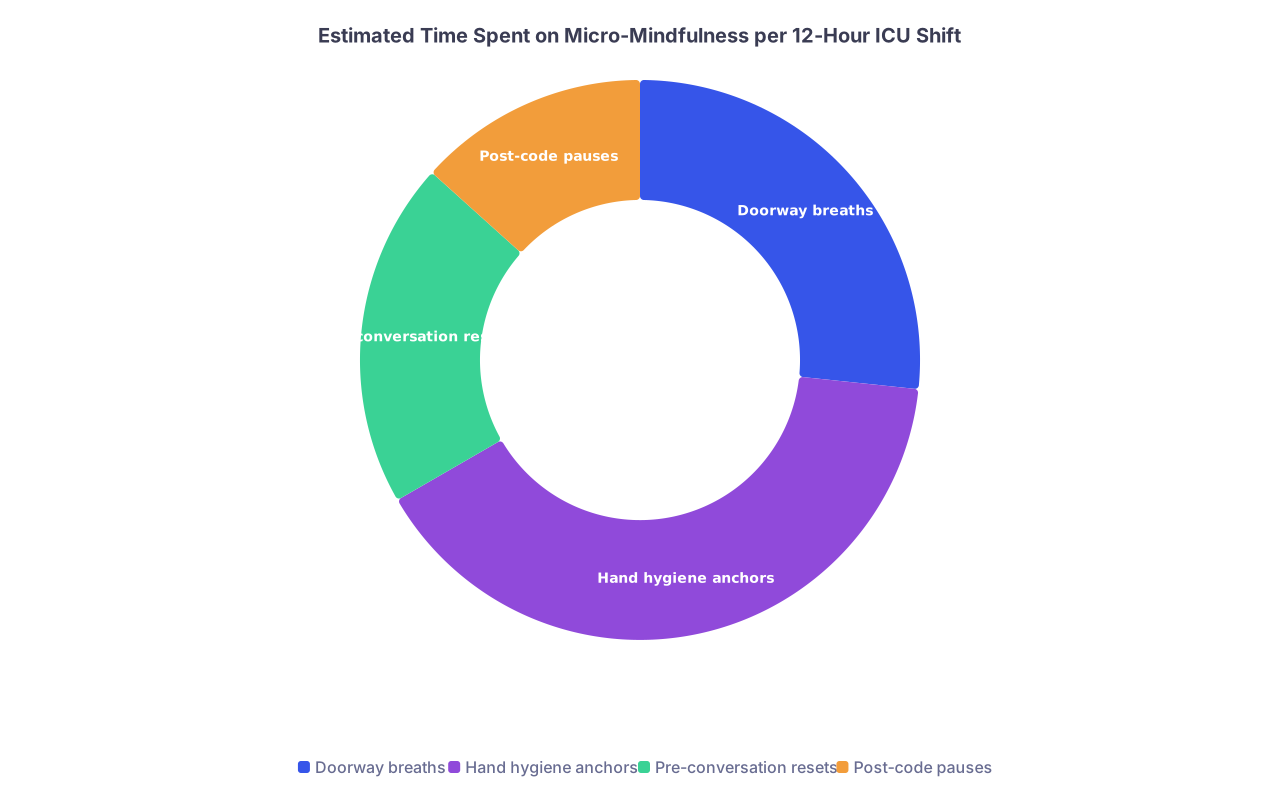
That’s it. You’re not reciting mantras. You’re not meditating. You’re paying attention on purpose for 3–5 seconds.
| Category | Value |
|---|---|
| Doorway breaths | 4 |
| Hand hygiene anchors | 6 |
| Pre-conversation resets | 3 |
| Post-code pauses | 2 |
Fifteen minutes of total “mindfulness” in a 12‑hour shift, spread across micro‑moments, will do more for your brain and your ethics than a single exhausted meditation session at midnight.
Use Team Moments As Covert Practice
Code debriefs, safety huddles, pre‑round huddles—these are all excuses to insert a collective, short pause.
I’ve seen a fellow say before a rough shift:
“Let’s just take one breath together and then tackle the list.”
Nobody objects. Some roll their eyes once. Then they feel how different the room is after that breath and never complain again.
Rounds? You can be the one that says, “Let’s put the computers down for one minute while we talk to this family.” That’s micro‑mindfulness disguised as professionalism.
The Part No One Says Out Loud: This Is Ethics Training
You’re in the “personal development and medical ethics” phase whether anyone told you or not. ICU is where your values collide with reality on a daily basis.
Mindfulness is not a spa treatment here. It’s how you keep enough clarity to make decisions you can live with two years later.
When you are constantly hijacked by adrenaline, fear, guilt, sleep deprivation, you will:
- Over‑identify with some families and abandon others.
- Do procedures because they’re active, not because they’re right.
- Say things in family meetings that haunt you later.
Micro‑mindfulness is how you insert a half‑second wedge between “stimulus” and “reaction.” In that sliver, ethics lives.
You notice: “I’m angry at this family.”
Because you noticed, you do not let that anger write your next sentence.
That’s the whole game.

| Step | Description |
|---|---|
| Step 1 | Trigger event |
| Step 2 | Automatic response |
| Step 3 | Micro pause |
| Step 4 | Choose response |
| Step 5 | Action you can live with |
| Step 6 | Notice reaction |
People love to talk about “professionalism” like it’s a checklist. It’s not. It’s these tiny internal moves that no one sees but everyone feels the consequences of.
How To Start Tomorrow Without Announcing Anything
You do not need anyone’s permission to start this. And you don’t need to overcomplicate it.
Tomorrow in the ICU, do this:
- First patient: stop at the doorway, one breath, silently say their name before you enter.
- First code: after it ends, before walking away, feel your feet on the floor for two breaths. No one will notice.
- First family meeting: before you speak, feel your hands resting on your legs or table for one breath.
That’s it. No apps. No journals. No hashtags.
If you’re serious, pick one attending or senior you respect and quietly watch them for a day. Notice where they pause, where they slow their speech, how they reset between disasters. You’ll see the micro‑mindfulness fingerprints all over their day once you know to look.
And if you are in a position of authority—chief resident, fellow, junior attending—understand this: the way you handle these micro‑moments is teaching everyone under you what’s “normal” in medicine.
You can teach them to be slightly more regulated, more humane, more precise. Or you can teach them to white‑knuckle their way through and burn out like the last generation.
You choose.

FAQ (5 Questions)
1. Isn’t this just “deep breathing” with fancy branding?
No. Deep breathing for its own sake is fine, but micro‑mindfulness is broader: it’s any deliberate, brief shift from autopilot to awareness, tied to a real clinical moment. Sometimes it’s a breath. Sometimes it’s noticing your emotion before you enter a room. Sometimes it’s focusing only on one conversation for 60 seconds. The power is in the timing and context, not the breathing itself.
2. I’m a resident and my team is chaotic. Can this still help or will it just frustrate me?
It actually matters more in chaotic teams. You may not be able to change the culture yet, but you can change your internal bandwidth. Micro‑mindfulness lets you think a little clearer when everyone else is spiraling. You become the person who remembers a key detail in sign‑out or catches an early deterioration because your mind wasn’t completely flooded.
3. How do I keep this from becoming another thing to feel guilty about when I forget?
If you’re turning mindfulness into a performance metric, you’ve missed the point. This is not a streak to maintain. It is a tool to use when you remember it. Forget 50 times and remember 3? Those 3 still helped. Treat each remembered moment as a win and move on. Guilt is just another mental load you do not need in the ICU.
4. Does any of this actually change patient outcomes, or is it just for staff well‑being?
It bleeds into outcomes. More regulated clinicians communicate more clearly, catch subtle changes earlier, and make fewer impulsive decisions under stress. Families trust you more when you’re present, which means less conflict and more aligned care plans. Will a single 5‑second breath move a mortality curve? No. But 5‑second breaths embedded into a team culture absolutely change how that team practices over months and years.
5. How do I introduce this without sounding like a wellness preacher?
Never lead with the word “mindfulness.” Lead with performance and clarity. Say things like, “Let’s pause a second so we’re all on the same page,” or “Let’s take one breath before we start this code review so we can think straight.” Model it quietly at doorways and during hand hygiene. When people notice you’re oddly calm in chaos and ask how, then you tell them.
Key takeaways:
Micro‑mindfulness in elite ICUs is not a side project; it’s woven into doorways, codes, hand hygiene, and conversations, giving clinicians tiny windows to reset their nervous systems and think clearly. Done consistently, these 5–30 second practices don’t just protect you from burnout—they sharpen your judgment and anchor your ethics in the middle of chaos.