

How Much Mindfulness Is ‘Enough’ for Physicians to See Real Benefits?
How much mindfulness do you actually have to do before it stops being wellness theater and starts changing your life as a physician?
Let me give you a straight answer first, then we’ll unpack it.
For most physicians:
- About 10–15 minutes a day, at least 5 days a week, for 6–8 weeks is the threshold where you start seeing reliable, measurable benefits.
- If you can’t do that, 3–5 minutes before or after shifts, done consistently, is still worthwhile and not a waste of time.
- You do not need 45-minute silent retreats every day to see results. But you do need repetition and intentional practice, not just “trying to be more mindful.”
Now let’s talk details, evidence, and how to hit the “enough” mark without adding one more impossible demand to your already overloaded day.
What Does “Enough Mindfulness” Even Mean?
You are not trying to become a monk. You’re trying to get specific benefits:
- Less emotional exhaustion and depersonalization
- Better emotional regulation with patients, staff, and yourself
- Fewer stress-related symptoms (sleep, blood pressure, anxiety)
- More clarity during difficult decisions and ethically messy situations
“Enough” mindfulness means: enough practice to reliably shift your baseline, not just feel slightly calmer once in a while.
Three key levers matter:
- Dose per day (how many minutes)
- Frequency per week (how often)
- Duration in weeks (how long you keep it up)
There’s solid data on this from MBSR (Mindfulness-Based Stress Reduction), MBCT, and physician-specific interventions.
What the Evidence Actually Shows About “Dose”
Let’s anchor this in what’s been studied, and then translate it into realistic options for you.
The classic: 8-week MBSR-style dose
Most of the robust data in healthcare professionals comes from programs similar to MBSR:
- Length: 8 weeks
- Formal practice: typically 30–45 minutes per day
- Format: weekly group session + home practice
That’s the “gold standard” used in many trials. But there’s a problem: most physicians can’t maintain 45 minutes a day during a normal work week, let alone during residency or high-volume practice.
The good news? When you actually look at the data, many participants do not hit 45 minutes daily—and they still get benefits. The relationship is dose-responsive, but not binary (all or nothing).
So let’s break it down more practically.
The Practical Thresholds: What Seems to Work in Real Life
Here’s the pattern I’ve seen clinically and in the research:
1. The “Minimum Effective Dose”: 10–15 minutes a day
If you want consistent, noticeable change in stress, reactivity, and clarity:
- Aim for 10–15 minutes per day
- Do it 5–6 days per week
- Commit to at least 6–8 weeks before judging it
That’s the level where physicians often report:
- “I still get stressed, but I don’t get hijacked as much.”
- “I can catch myself before snapping at a nurse or my kids.”
- “I notice tension and can course-correct during the day instead of crashing at night.”
You don’t have to be perfect. But you do have to be regular.
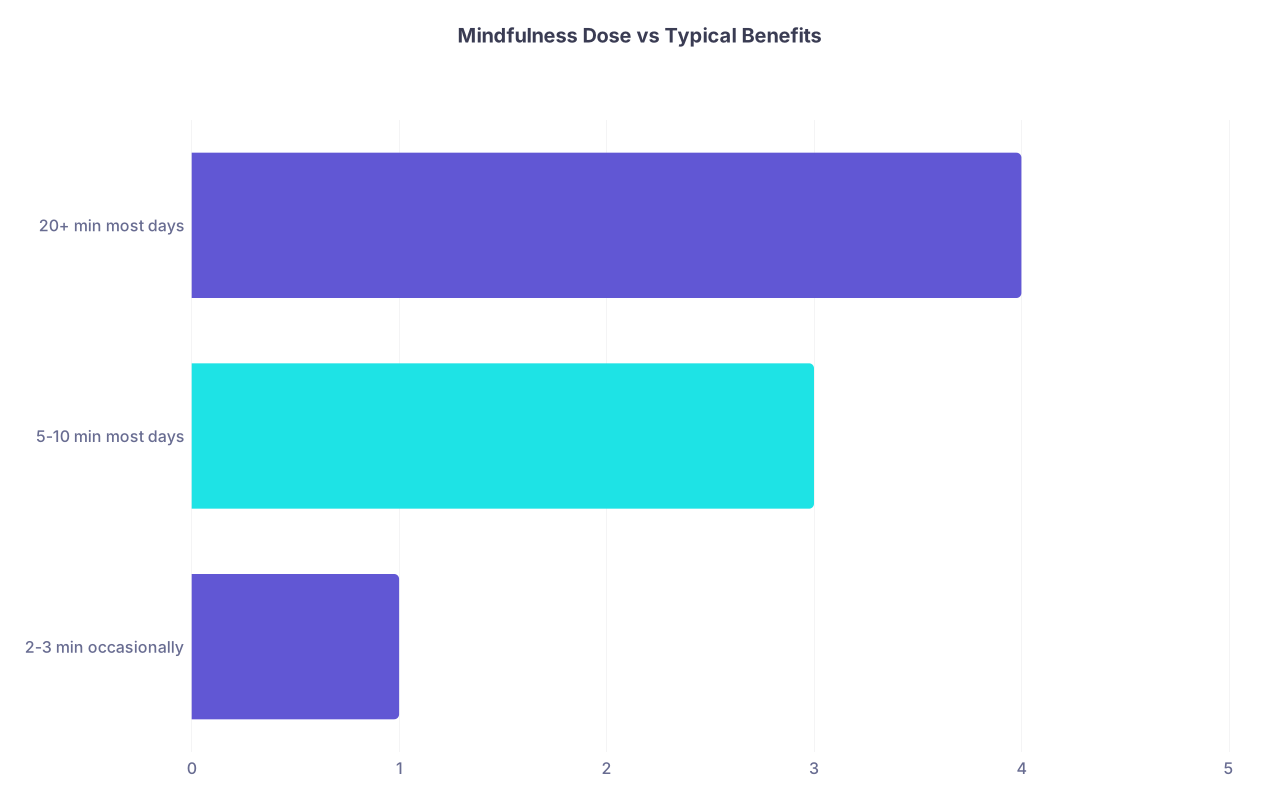
| Category | Value |
|---|---|
| 2-3 min occasionally | 1 |
| 5-10 min most days | 3 |
| 20+ min most days | 4 |
(Scale of 1–5: 1 = minimal sustained benefit, 5 = substantial sustained benefit. Rough illustration, not a formal metric.)
2. The “Micro-Dose That Still Matters”: 3–5 minutes
Maybe you’re on trauma call. Maybe you’ve got toddlers and a flooded inbox and a pager that never shuts up.
Fine. Then your realistic target might be 3–5 minutes at a time.
This can still be meaningful if:
- You do it daily or nearly daily
- You treat it as real practice, not just zoning out or scrolling
- You anchor it to something stable (before first patient, after last chart, in your parked car)
Benefits at this level:
- Better moment-to-moment awareness
- Slightly more space between trigger and reaction
- Early improvements in emotional regulation
Is it as powerful as 20–30 minutes? No. But it’s not pointless.
3. The “Deep Training Dose”: 20–45 minutes
This is closer to what the full MBSR programs use:
- 20–45 minutes per day, most days
- 8+ weeks
At this level you’re more likely to see:
- Stronger changes in trait mindfulness (not just state)
- More durable impact on anxiety, depression, and burnout scores
- Better integration into how you handle ethics-heavy decisions, difficult conversations, end-of-life care, etc.
But again, this is aspirational for many physicians. It’s worth considering if:
- You’re in a lighter rotation
- You’re already burned out and need a serious reset
- Your institution is sponsoring a structured program
How Long Until You Notice Anything?
Most physicians expect immediate calm. That’s not how this works.
Think of mindfulness like strength training:
- Session 1: You feel something, but your life is not transformed.
- Week 2–3: You start noticing small but real changes.
- Week 6–8: Others start noticing you’re “different.”
Typical timeline:
- Week 1–2: You notice how distracted and stressed you are. This can feel worse before it feels better.
- Week 3–4: You occasionally catch stressful spirals earlier. Maybe you pause before firing off that angry email.
- Week 6–8: Your baseline reactivity is lower. Sleep, mood, and focus often improve.
- 3–6 months: The practice starts to show up during hard patient encounters and ethical dilemmas without you forcing it.
If you quit before 4–6 weeks, you almost always leave before the real payoff.
Different Goals, Different “Enough”
You’re not all chasing the same thing. “Enough” depends on what problem you’re solving.

1. Burnout and emotional exhaustion
For noticeable improvement in burnout:
- Aim for 10–20 minutes most days
- Stick with it for 8–12 weeks
- Combine with at least one structural change if possible (schedule, boundaries, workload)
Physician studies show reductions in burnout and improved mood with this level of practice, especially when coupled with group-based or structured programs.
2. Stress and anxiety symptoms
If you want fewer stress symptoms (palpitations, rumination, tension):
- 10–15 minutes daily is usually enough to move the needle
- Expect 4–8 weeks before it’s clearly noticeable
If you’re dealing with significant anxiety or depression, mindfulness is helpful, but it should sit alongside therapy, meds when indicated, and addressing systemic causes—not replace them.
3. Better ethical clarity and presence with patients
This is the “medicine plus ethics” side.
To be more present during tough conversations, consent discussions, end-of-life decisions, and high-stakes calls:
- You need both formal practice and informal application.
- Formal: 10–20 minutes, 4–6 days/week
- Informal: Pause-and-check-in moments before big decisions or serious patient/family discussions
That might look like:
- One minute of breath awareness before entering a room where you have to break bad news
- A short body scan in your chair before responding to an angry family member
- A brief check-in with your own motives and emotions before making a contentious triage or resource-allocation decision
Mindfulness won’t magically resolve ethical complexity. But it lowers noise and reactivity so your judgment is clearer and less contaminated by unrecognized fear, fatigue, or anger.
What Doesn’t Count As “Enough”
Let me be blunt about what does not work long term.
- Random mindfulness app use once every few weeks – That’s like going to the gym once a month and wondering why nothing changes.
- Only using mindfulness in crisis – If your only practice is when you’re about to melt down, you’re always late to the party.
- Endless “mindful” scrolling with a podcast in the background – That’s dissociation, not mindfulness.
You need repeated, intentional reps where attention is:
- Anchored (breath, body, sounds, etc.)
- Redirected when it wanders
- Held with a non-judgmental stance
If that’s happening for at least a few minutes most days, you’re in the game.
The Most Realistic Physician-Friendly Framework
Here’s a practical structure that works in real life. Not in a wellness brochure.
Baseline Program (for most physicians)
- Time per day: 10 minutes
- Frequency: 5 days per week
- Duration: Commit to 8 weeks
- When: Tie it to something you already do:
- Right after morning coffee
- Before first charting block
- In your parked car after shift before driving home
If 10 minutes feels impossible today, start with 5 minutes but protect the routine ruthlessly. You can increase later.

| Step | Description |
|---|---|
| Step 1 | Pick a 5-10 min daily slot |
| Step 2 | Choose simple practice |
| Step 3 | Practice at least 5 days weekly |
| Step 4 | Track for 4 weeks |
| Step 5 | Extend to 8 weeks |
| Step 6 | Adjust timing or type |
| Step 7 | Option to increase to 15-20 min |
| Step 8 | Feeling some benefit? |
“On Shift” Micro-Practices
Layer short practices into your job:
- 3 breaths at the door before entering each exam room on clinic days
- 60 seconds of feeling your feet on the floor while scrubbing
- One-minute reset after a code, before the next patient
That’s not your whole practice. It’s the integration piece that turns formal training into professional skill.
Matching “Enough” to Your Training or Career Phase
| Stage | Daily Target | Frequency | Initial Commitment |
|---|---|---|---|
| Preclinical med | 10–15 min | 5–6 days | 8 weeks |
| Clinical rotations | 5–10 min | 5 days | 8 weeks |
| Residency | 3–10 min | 5 days | 6–8 weeks |
| Early attending | 10–15 min | 5–6 days | 8–12 weeks |
| Senior attending | 10–20 min | 5–6 days | 12+ weeks |
You’ll notice the numbers aren’t gigantic. The barrier is not the minutes. It’s the consistency.
How to Know If What You’re Doing Is “Working”
Don’t just trust vague impressions. Physicians like data, so give yourself some.
Track 3 things weekly (simple 0–10 scales are enough):
- Stress reactivity: How often do you feel overwhelmed or out of control at work?
- Emotional spillover: How much does work leak into your mood at home?
- Presence with patients: How often do you feel fully there vs. on autopilot?
If after 6–8 weeks of real practice (not half-hearted attempts):
- All three are unchanged → increase dose (time or frequency) or switch practice style.
- One or more have improved → you’re near or above “enough.” Keep going or very gradually increase.
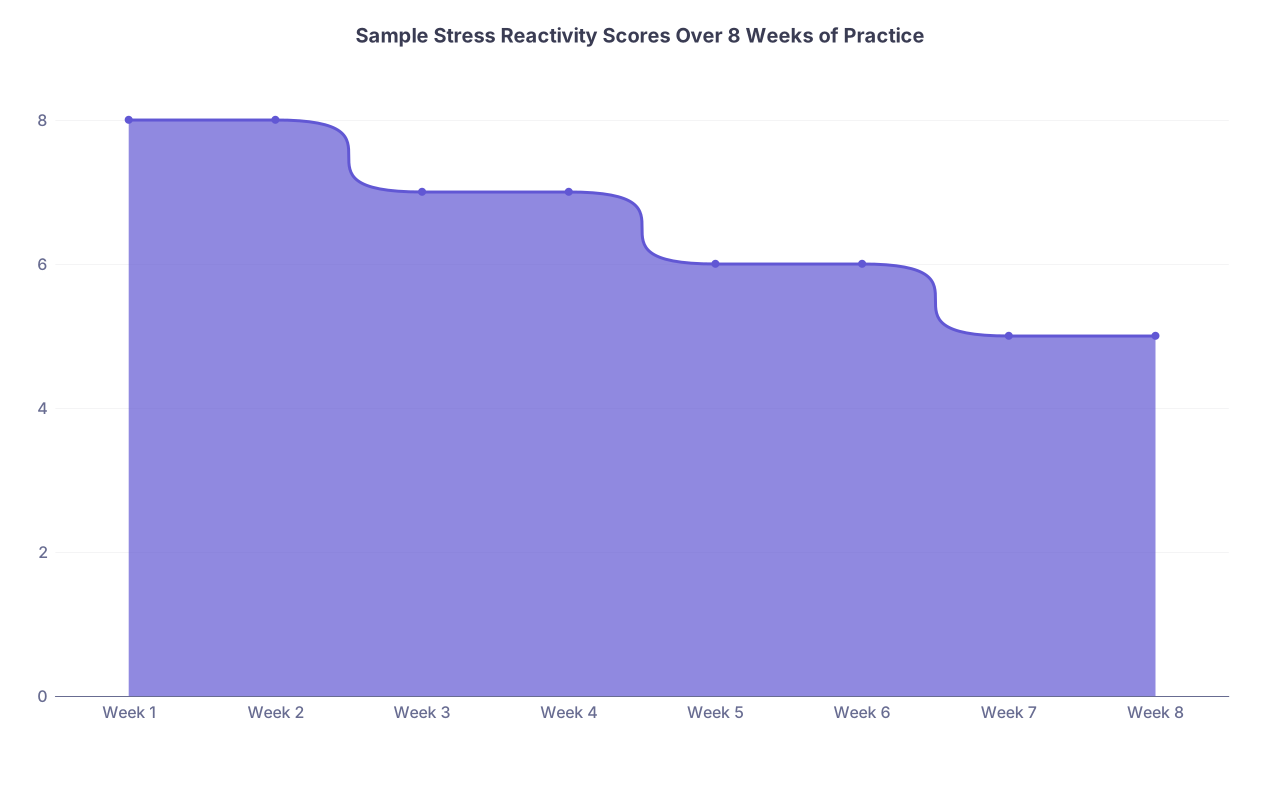
| Category | Value |
|---|---|
| Week 1 | 8 |
| Week 2 | 8 |
| Week 3 | 7 |
| Week 4 | 7 |
| Week 5 | 6 |
| Week 6 | 6 |
| Week 7 | 5 |
| Week 8 | 5 |
The Ethical Angle: Why “Enough” Matters Beyond Your Own Sanity
This isn’t just self-care. There’s an ethical dimension.
As a physician, you’re expected to:
- Make decisions under uncertainty
- Hold space for patient suffering
- Communicate clearly and compassionately
- Recognize and manage your own biases and emotions
If you’re constantly in a state of unregulated stress, your ethical reasoning, empathy, and clinical judgment slip, even if your intentions are good. You become more vulnerable to:
- Knee-jerk decisions
- Avoidant behavior with complex patients
- Depersonalization (“the gallbladder in room 4”)
- Poor communication with families in crisis
“Enough” mindfulness, ethically, is whatever dose allows you to:
- Notice your internal state before it hijacks your behavior
- Stay present enough to truly listen
- Think clearly in morally charged situations instead of reacting from exhaustion or fear
For many, that’s the same 10–15 minutes most days. Not extravagant. Just consistent.

Bottom Line: So What Should You Actually Do?
Here’s the answer you’re looking for, distilled.
If you want solid, reliable benefits:
Do 10–15 minutes of mindfulness a day, at least 5 days a week, for 8 weeks. That’s “enough” for most physicians to see real, meaningful change.If that’s impossible right now:
Start with 3–5 minutes daily, plus brief in-shift pauses. Treat it as a serious practice, not a token gesture. Build up over time.Judge it after several weeks, not several days:
Expect noticeable benefits in 4–8 weeks, with deeper shifts beyond that.
That’s the actual threshold. Not perfection. Not monastic silence. Just a small, consistent slice of your day, protected like any other critical piece of your practice.


